Tag: Donald Trump

  • Pakistan’s decision to recommend Trump for Nobel leaves internet divided

    Pakistan’s decision to recommend Trump for Nobel leaves internet divided

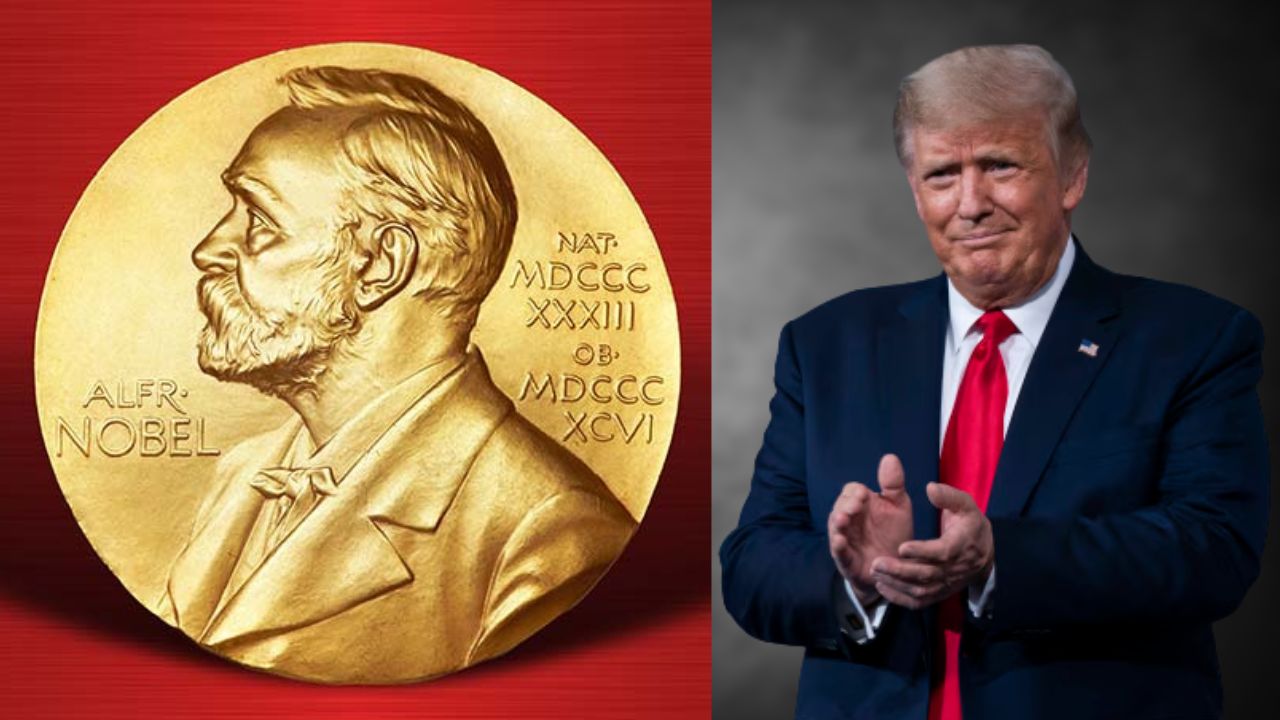
    The Government of Pakistan has decided to formally recommend United States (US) President Donald J. Trump for the 2026 Nobel Peace Prize for “his decisive diplomatic intervention and pivotal leadership during the recent India-Pakistan crisis,” a move that has sparked mixed reactions on social media.


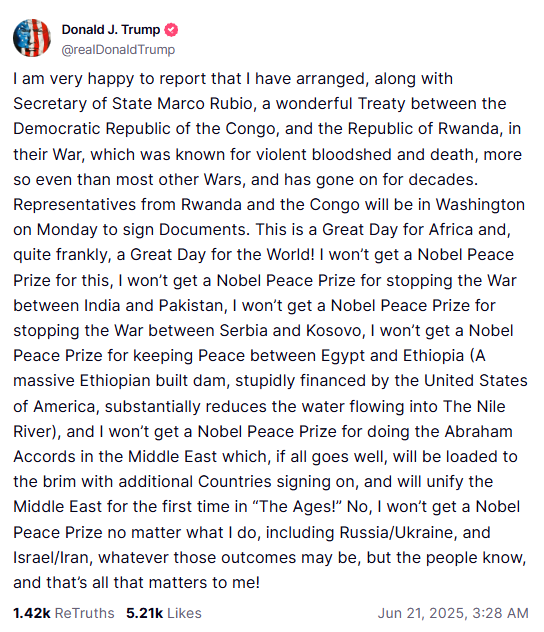
    The recommendation comes hours after the US president, in a post on Truth Social on Friday, announced that he has arranged, along with Secretary of State Marco Rubio, a wonderful treaty between the Democratic Republic of the Congo and the Republic of Rwanda in their war, “which was known for violent bloodshed and deaths”.

    “I won’t get a Nobel Peace Prize for this. I won’t get a Nobel Peace Prize for stopping the war between India and Pakistan. I won’t get a Nobel Peace Prize for stopping the war between Serbia and Kosovo. I won’t get a Nobel Peace Prize for keeping peace between Egypt and Ethiopia, and I won’t get a Nobel Peace Prize for doing the Abraham Accords in the Middle East… I won’t get a Nobel Peace Prize, no matter what I do,” reads Trump’s post.
    In a post on X (formerly Twitter) earlier Saturday, the government of Pakistan said, “The international community bore witness to unprovoked and unlawful Indian aggression, which constituted a grave violation of Pakistan’s sovereignty and territorial integrity, resulting in the tragic loss of innocent lives, including women, children, and the elderly.” 

    The post further read, “In exercising its fundamental right to self-defence, Pakistan launched Operation Bunyanum Marsoos, a measured, resolute, and precise military response, carefully executed to re-establish deterrence and defend its territorial integrity while consciously avoiding civilian harm.”

    The post noted that at a moment of heightened regional turbulence, the US president demonstrated “great strategic foresight and stellar statesmanship” through robust diplomatic engagement with both Islamabad and New Delhi.

    Additionally, it said that President Trump de-escalated a rapidly deteriorating situation, ultimately securing a ceasefire, “averting a broader conflict between the two nuclear states that would have had catastrophic consequences for millions of people in the region and beyond”.

    “This intervention stands as a testament to his role as a genuine peacemaker and his commitment to conflict resolution through dialogue,” the post read.

    The Government of Pakistan acknowledges and greatly admires President Trump’s “sincere offers to help resolve the longstanding dispute of Jammu and Kashmir between India and Pakistan”, an issue that lies at the heart of regional instability. 

    “Durable peace in South Asia would remain elusive until the implementation of United Nations Security Council resolutions concerning Jammu and Kashmir,” it emphasised.

    The post concluded by saying that President Trump’s leadership during the 2025 Pakistan-India crisis manifestly showcases the continuation of his legacy of pragmatic diplomacy and effective peace-building.

    “Pakistan remains hopeful that his earnest efforts will continue to contribute towards regional and global stability, particularly in the context of ongoing crises in the Middle East, including the humanitarian tragedy unfolding in Gaza and the deteriorating escalation involving Iran,” read the post.

    The recommendation for Trump’s Nobel Peace Prize sparked mixed reactions on social media platforms, with some praising the government for making a smart move amid rising tensions in the Middle East, following Israel’s illegal attacks on Iran, while others are not pleased with the decision.

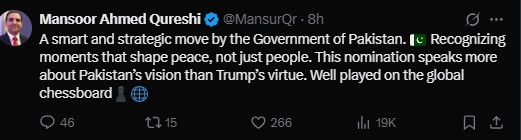
    “A smart and strategic move by the Government of Pakistan. Recognizing moments that shape peace, not just people. This nomination speaks more about Pakistan’s vision than Trump’s virtue. Well played on the global chessboard,” a user wrote on X.

    “President Trump is the greatest peacemaker in the history of mankind,” another user said. One of the users opined, “Finally, a President that actually deserves it.”

    A user said, “Trump the peacemaker! Peace through strength! Very good of Pakistan to step up and do this. And very well deserved by Trump!”

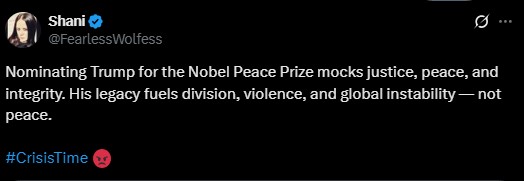
    Others expressed displeasure with the government’s decision. One person opined, “Nominating Trump for the Nobel Peace Prize mocks justice, peace, and integrity. His legacy fuels division, violence, and global instability — not peace.”
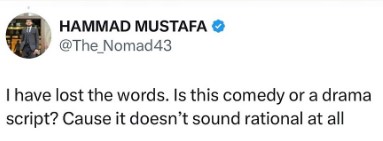
    Another user called the government decision “irrational”. The user wrote, “I have lost the words. Is this the comedy or a drama script? Cause it does not sound rational at all.”
    “That’s it. I’m off to watch the family guy. It’s more realistic (sic),” said one of the users.

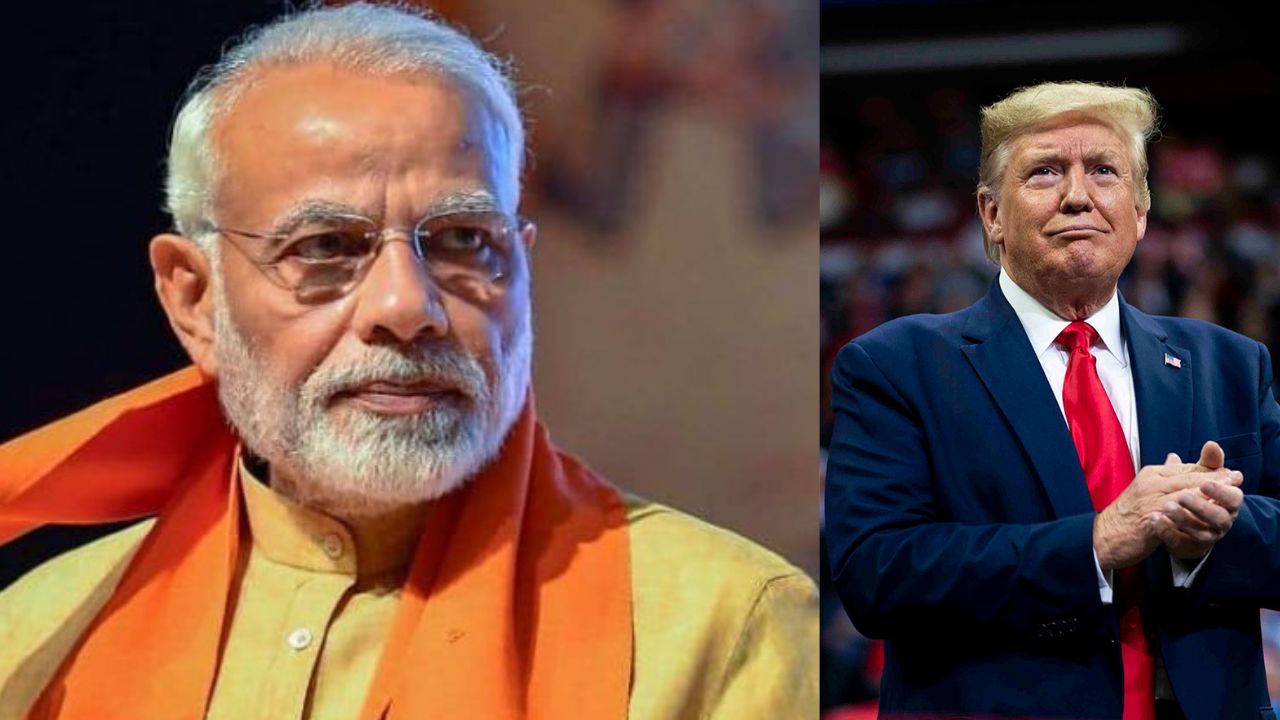
  • Here’s what Trump, Modi talked about before US President meets COAS Asim Munir

    Here’s what Trump, Modi talked about before US President meets COAS Asim Munir

    Indian Prime Minister (PM) Narendra Modi held  a 35-minute telephonic conversation with United States (US) President Donald Trump on Wednesday, telling the latter that the ceasefire in May was made between New Delhi and Islamabad without any mediation by the US, Indian Foreign Secretary Vikram Misri has said in a video statement.

    Misri quoted the Indian premier as telling Trump that “India has never accepted mediation, does not and will never do so.” He said that Modi further told Trump that the decision by India and Pakistan to halt military actions last month was made directly during talks between the armies of the two sides.

    Additionally, the diplomat said that Modi made it clear to Trump that in the entire episode of the four days of military clashes between the two nuclear-armed countries in last month, issues such as the “India-US trade deal or mediation by the US between India and Pakistan” were not discussed “at no time [or] at any level”.

    The Indian PM’s denial comes after the US president has multiple times reiterated that he, using the trade option, brokered the ceasefire between the two countries, which, according to him, were on the brink of a potential nuclear war last month.

    Following the US president’s statement on Truth Social on May 10, in which he announced the ceasefire brokered by the US, Islamabad extended thanks to Trump, acknowledging his role in brokering the ceasefire between the two countries. 

    However, India has repeatedly objected to Trump’s role in the understanding made between India and Pakistan to stop the hostilities that erupted after New Delhi launched illegitimate strikes on the night of May 6-7, targeting civilians in Pakistan in response to the Pahalgam militant attack in held Kashmir on April 22 that killed 26 civilians.


    The Indian foreign secretary said that a meeting between Modi and Trump was scheduled on the margins of the G7 Summit but couldn’t be held when the US President returned to America early. “Subsequently, at the request of President Trump, the two leaders spoke on the phone today,” he maintained.

    The diplomat said that New Delhi also made it clear that it would “respond to Pakistan’s bullet with a cannon shell”, adding that on the night of May 9, US vice president JD Vance called Modi, telling him that Pakistan “could launch a major attack on India”. 

    He reiterated that the decision to halt military action was made directly between India and Pakistan, through existing channels of the two armies, adding that PM Modi stressed that “India has never accepted mediation, does not and will never do so. There is complete political consensus in India on this issue”.

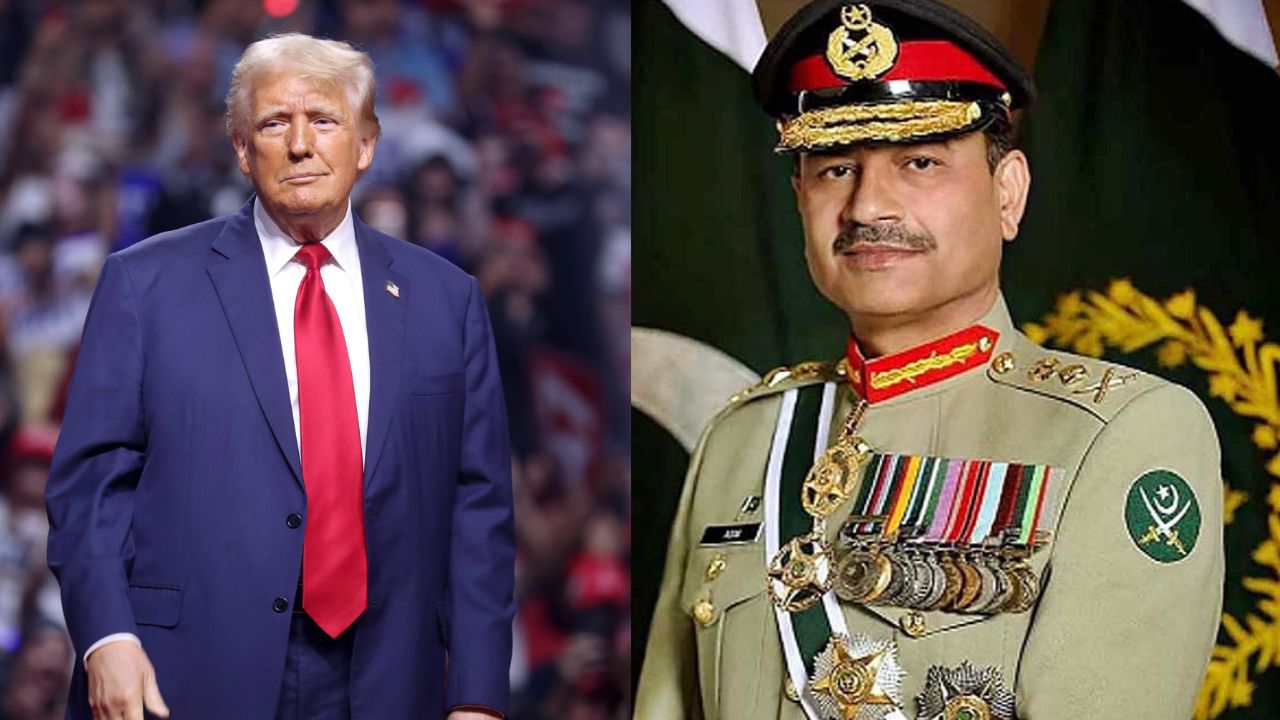
  • Trump to host Field Marshal Asim Munir at lunch today

    Trump to host Field Marshal Asim Munir at lunch today

    United States (US) President Donald Trump is scheduled to host Chief of Army Staff (COAS), Field Marshal Syed Asim Munir, for lunch at the White House today (Wednesday).

    According to the president’s official schedule, the meeting will be held in the Cabinet Room and will be closed to the press.

    This development marks a notable diplomatic win for Pakistan in the ongoing contest following last month’s aerial clash with India, which nearly pushed South Asia to the brink of nuclear conflict.

    During his five-day official visit to the US, the Field Marshal addressed members of the Pakistani American community on Monday evening in Washington, D.C. The army chief categorically rejected Indian claims that Pakistan was behind the April 22 militant attack in Pahalgam in Indian Illegally Occupied Jammu and Kashmir (IIOJK), calling it a pretext for cross-border aggression.

    He accused New Delhi of seeking to establish a dangerous “new normal” of violating international borders, which Islamabad had forcefully rejected. “We would rather embrace martyrdom than accept this dishonour,” he added.

    Addressing the broader regional landscape, the Field Marshal declared Pakistan’s “clear and strong” support for Iran in its war with Israel. He also backed US efforts to de-escalate the situation, stressing, “We want this war to end immediately.”

    The army chief emphasised Pakistan’s gratitude for the role overseas Pakistanis play in bolstering the national economy. He dismissed concerns over brain drain, describing it instead as a “brain gain.”

    One of the consequential outcomes of Munir’s visit has been the deepening of Pakistan’s counterterrorism cooperation with the US, particularly in efforts against the Islamic State Khorasan (IS-K) group.

    Last week, Chief of United States Central Command (CENTCOM) General Michael Kurilla declared Pakistan a “phenomenal partner” in the fight against IS-K, praising Islamabad’s operations along the Pakistan-Afghanistan border.

    Gen. Kurilla revealed to the House Armed Services Committee that Pakistani operations, supported by US intelligence, had killed dozens of IS-K militants and captured multiple high-value individuals, including Mohammad Sharifullah, one of the masterminds of the Abbey Gate bombing in Kabul that claimed the lives of 13 American troops.

    “The first person Munir called was me. He said, ‘I’ve caught him ready to extradite him back to the US. Please tell the Secretary of Defence and the President’”, he added.

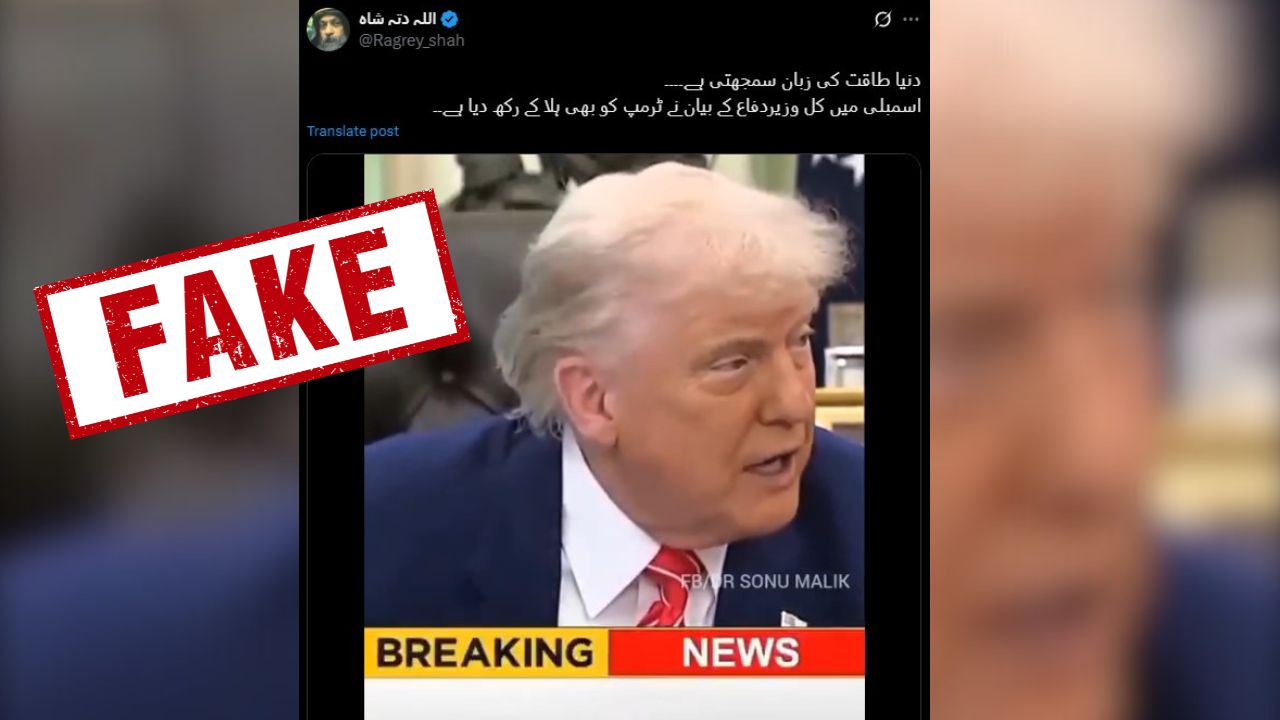
  • Fact Check: Viral video of Donald Trump saying ‘Pakistan will destroy Israel if Iran attacked again’ is FAKE

    Fact Check: Viral video of Donald Trump saying ‘Pakistan will destroy Israel if Iran attacked again’ is FAKE

    A video of US President Donald Trump saying that if Israel attacks Iran again, “Pakistan will totally destroy Israel” has gone viral across social media platforms. 

    However, is the video real? The Current has taken a deeper look at the clips being shared on social media. 

    The audio in the viral video is not real, and it has been generated with the help of Artificial intelligence (AI). 

    Upon close examination, using the InVID Verification Plug-in tool, The Current noticed visual distortions and noticeable lip-sync issues around Trump’s mouth, indicating possible cloning. 

    Trump is further heard saying in the video that Pakistan had also threatened the US of an attack, along with Israel.

    “Pakistan has also warned Israel and the US, because Isarel has mistakenly said that Pakistan is number 2 after Iran [in its hit list]. Pakistan is fully alert with its air, land, and marine forces. Pakistan Defence Minister Khawaja Asif said if Israel attacks Iran again, Pakistan will totally destroy Israel. When I say Pakistan should not do that, Pakistan has no problem with us; their army is already on very high alert.

    In my opinion, Pakistan should not get involved. This is Israel and Iran’s war. We need peace in the region, we need to stop the fighting, not get in the middle that’s a truth that is the smart move (sic)”

    Many social media users shared Trump’s fake video, which can be seen here, here, here and here.

    The claim attributed to the Pakistani defence minister that Pakistan will destroy Israel if Iran is attacked again is also fabricated. 

    Speaking during a session in the National Assembly on Saturday, Asif actually said, “[…] we will protect Iran’s interests at the international level in whatever way they need. Iranians are our brothers and neighbours… their sorrow and joy, their pain and happiness is ours.” 

    Conclusion: The Current found in its investigation that the entire US president’s audio in the viral video is fake and that it was created with the help of AI.

  • Trump says US knew in advance about Israeli strikes on Iran

    Trump says US knew in advance about Israeli strikes on Iran

    US President Donald Trump confirmed that his administration had been informed about Israel’s military actions against Iran and claimed that he had attempted to prevent the conflict through diplomatic means.

    In a phone interview with Reuters, Trump remarked, “We were aware of everything, and I made efforts to spare Iran from humiliation and death. I genuinely wanted to see a deal reached.”

    He also mentioned that there is a chance for an agreement, despite the recent tensions. “They can still finalize a deal, but it’s not too late.”

    Trump had been attempting to broker a deal with Iran to cease its uranium enrichment activities. He indicated that Iran was given a 60-day timeframe for negotiations, which has now elapsed. “We knew nearly everything. We knew enough to grant Iran 60 days to reach a deal, and today is day 61, right? So, you know, we knew everything,” he stated.

    The strikes, which Trump characterised in several media interviews as “very successful,” reportedly targeted nuclear sites, missile infrastructure, and high-ranking military officials within Iran. Israel has claimed this marks the beginning of an extensive operation intended to prevent Iran from developing nuclear weapons.

    The president reaffirmed his support for Israel and highlighted the diminished likelihood of a broader conflict. “We have always been very close to Israel. We are their foremost ally by a large margin,” Trump said, adding, “We’ll see what unfolds.”

    When asked if the US would support Israel in the event of retaliation from Iran, Trump confirmed his support but did not elaborate further.

    Subsequently, two American officials confirmed that the US military had aided in intercepting Iranian missiles directed at Israel.

    Despite the military developments, Trump noted that nuclear negotiations with Iran were technically still on the table. A US delegation, headed by special envoy Steve Witkoff, was scheduled to meet with Iranian officials in Oman. However, Trump acknowledged uncertainty regarding whether the talks would proceed.

    “They’re not off the table,” he stated about the negotiations. “We have a meeting with them on Sunday. Now, I’m uncertain if that meeting will actually happen, but we have a meeting with them on Sunday.”

    He also confirmed that he had maintained regular communication with Israeli Prime Minister Benjamin Netanyahu throughout the week and had discussed the situation during a security briefing at Camp David.

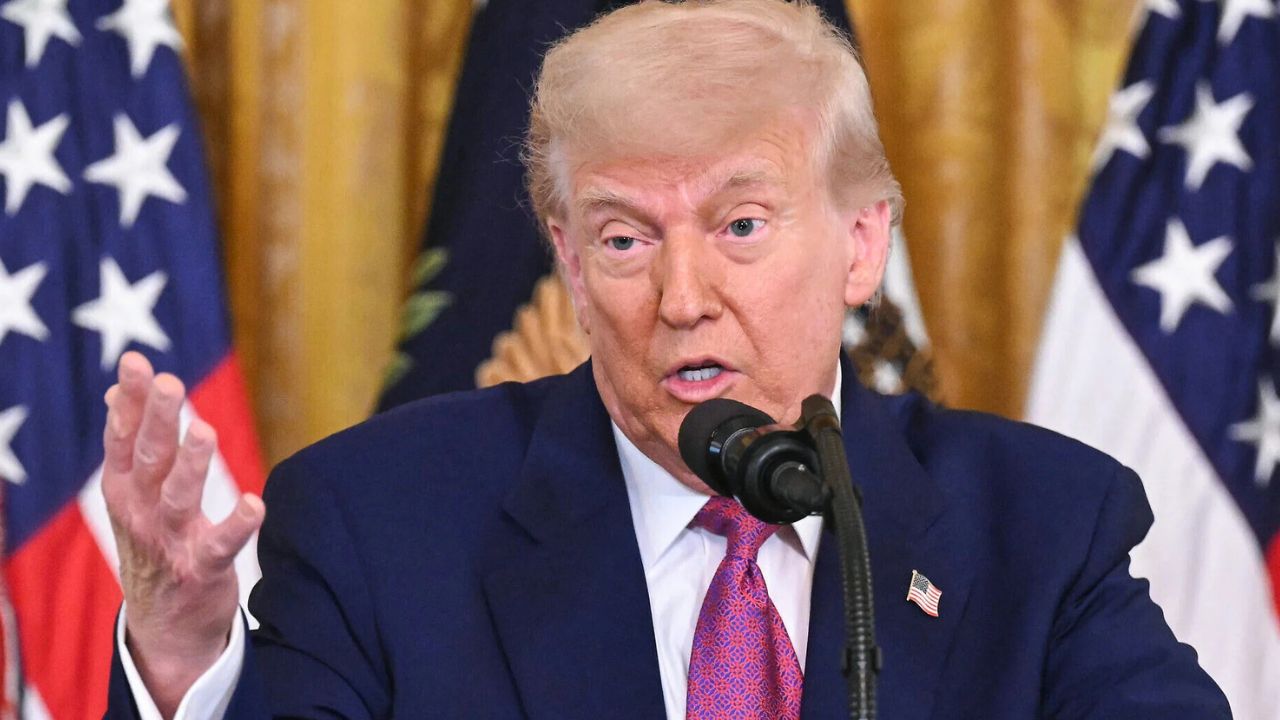
  • ‘I can solve anything’: Trump once again offers to sort Kashmir dispute between Pak, India

    ‘I can solve anything’: Trump once again offers to sort Kashmir dispute between Pak, India

    United States President Donald Trump has once again offered to arbitrate the Kashmir dispute between Pakistan and India on Thursday.

    “I told them, India and Pakistan, they have a long-time rivalry over Kashmir, I can solve anything. I’ll be your arbitrator,” President Trump remarked while speaking to reporters before signing a bill in the White House’s East Room.

    Underscoring his role in mediating between Islamabad and New Delhi during their military and diplomatic standoff in May, following the April 22 Pahalgam incident in Indian Illegally Occupied Jammu and Kashmir (IIOJK), the US President said, “Eventually they were gonna go nuclear … and I stopped it, I called each leader … and I spoke to them and talked about trade.”

    “I said, ‘You’re not trading with us if you go to war … if you’re going to start throwing nuclear weapons around,” he added.

    President Trump also revealed that India is negotiating a trade deal in Washington, and a Pakistani delegation would arrive, possibly next week.

    On April 22 this year, a militant attack in Pahalgam, a tourist spot in IIOJK, killed 26 tourists. New Delhi, without providing any evidence to date, blamed Islamabad for orchestrating the assault. Pakistan strongly denied the allegation and offered to allow a neutral investigation. The two neighbouring nations engaged in an 87-hour conflict before the United States brokered a ceasefire on May 10.

    President Trump’s statement comes a day after US State Department spokesperson Tammy Bruce expressed hope that the Kashmir dispute might be resolved during his tenure.

    During the weekly press briefing on Tuesday, a journalist posed a question: “After the ceasefire between India and Pakistan, President Trump offered to mediate on the Kashmir dispute. So, what kind of follow-up are we expecting? How the state department moves forward?” referring to the possibility of inviting the leadership of both countries or supporting the UN resolution on Kashmir.

    In response, the spokesperson said that while she could not speak about President Trump’s intentions or plans, his actions are always “aimed at resolving long-standing international disputes.” 

    “So, it shouldn’t surprise anyone that he’d want to manage something like that,” Bruce added, stating that “he is and has been the only one to bring certain people to the table to have conversations that nobody thought were possible.”.

  • From partnership to public feud: Trump and Musk face off

    From partnership to public feud: Trump and Musk face off

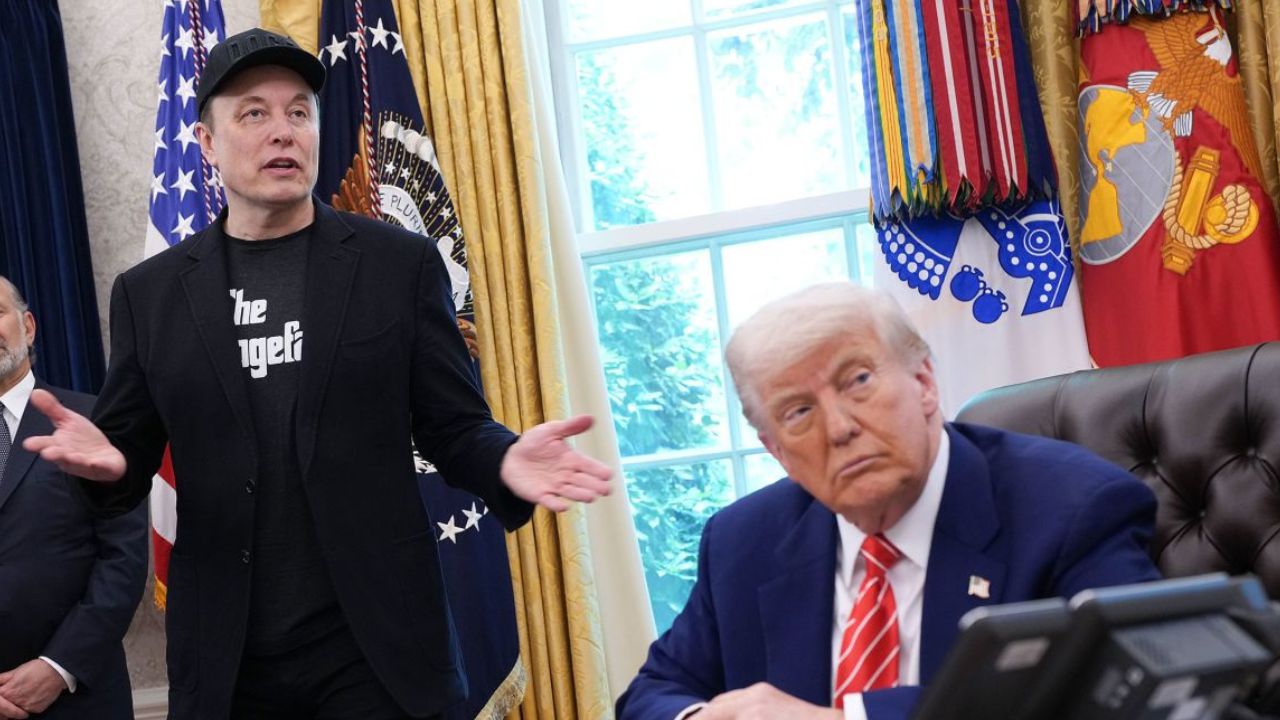
    A public showdown between US President Donald Trump and Tesla CEO Elon Musk has escalated into a significant political and financial conflict, causing ripples throughout Washington and wiping billions off Tesla’s market value.

    The turmoil began after Musk criticised Trump’s recent tax and spending legislation, which has been central to the administration’s domestic priorities. Musk labelled the bill a “disgusting abomination” on his platform X, accusing Republican lawmakers of irresponsible spending and urging his followers to pressure Congress into rejecting it.

    President Trump, during a press conference with German Chancellor Friedrich Merz, expressed his “disappointment” with Musk’s comments and suggested that their long-standing partnership might be coming to an end. He questioned Musk’s motivations, implying that his criticism stemmed from the bill’s removal of electric vehicle incentives, a decision that could adversely affect Tesla.

    Musk countered, stating that personal benefit was not his concern. In a post on X, he remarked, “Keep the EV/solar incentive cuts, even though oil & gas subsidies remain, but get rid of the mountain of disgusting pork in the bill,” referencing what he believes to be unnecessary expenditures aimed at buying votes.

    The friction worsened on Thursday after Trump took to Truth Social to warn Musk against his government-associated ventures, stating, “The easiest way to save billions in our budget is to cancel Elon’s subsidies and contracts.” His threat specifically targeted companies like SpaceX and Starlink, which heavily depend on government financing.

    Musk retaliated, dismissing the threats and revealing that SpaceX would start shutting down its Dragon spacecraft operations vital for US missions to the International Space Station. He also hinted at potentially financially supporting political challengers to Trump-aligned Republicans, stirring concerns about fractures within the party ahead of the upcoming election cycle.

    Matters escalated further after Musk, without providing evidence, linked Trump to unreleased documents related to convicted sex offender Jeffrey Epstein. The White House dismissed the allegation, describing it as a distraction from Musk’s grievances regarding policy.

    Meanwhile, Tesla shares plummeted, losing 14% of their value, equating to a $150 billion loss. Analysts labelled it one of the company’s most challenging days in recent times. Dan Ives of Wedbush Securities noted that the public dispute had shaken investor trust and created uncertainty regarding Tesla’s regulatory outlook.

    Musk, who had been part of Trump’s administration as the head of the Department of Government Efficiency (nicknamed “Doge”), resigned from his role last week after 129 days. During his time in office, he implemented significant cuts, disbanding agencies like USAID and claiming to have saved $180 billion — a figure that critics dispute.

    The alliance between Trump and Musk began with Musk’s major financial support for Trump’s 2024 election campaign. Their partnership survived several controversies, including Musk’s unpredictable behaviour and clashes with top officials. But now, it has fallen apart, turning into mutual attacks and political fallout.

    Trump has attempted to mitigate tensions by refraining from mentioning Musk during a public event, but his social media updates indicated otherwise: the bond is severed. “Elon and I had a great relationship,” he remarked noticeably in the past tense.

    Some Republicans fear Musk’s rising influence and considerable wealth might encourage dissent within their party. Meanwhile, Democrats have largely kept quiet, seemingly pleased to observe two influential adversaries undermine each other.

    Musk concluded the day by reminding Trump and the public that although a presidency lasts four years, his own impact could extend for decades. “Trump has 3.5 years left as president,” he tweeted. “But I’ll be around for 40-plus years.”

  • Trump imposes travel bans on 12 countries, Pakistan not included

    Trump imposes travel bans on 12 countries, Pakistan not included

    After weeks of speculation, President Donald Trump has signed a new travel ban, restricting the nationals of 12 countries, including Afghanistan, from entering the United States (US).

    Myanmar, Chad, Congo, Equatorial Guinea, Eritrea, Haiti, Iran, Libya, Somalia, Sudan and Yemen are among the countries affected by the latest travel ban.

    US President Trump also imposed a partial ban on travellers from seven countries: Burundi, Cuba, Laos, Sierra Leone, Togo, Turkmenistan and Venezuela. However, some temporary work visas from these countries will be allowed.

    The bans go into effect on Monday, the order said.

    The US president said the measure was spurred by a makeshift flamethrower attack on a pro-Israel demonstrator in Colorado that US authorities blamed on a man they said was in the country illegally.

    He was alluding to Egyptian national Mohamed Sabry Soliman who has been charged with perpetrating the attack. 

    “We will not allow people to enter our country who wish to do us harm,” Trump said in a video posted on the official X (formerly Twitter) handle of The White House. He added that the list could be revised and new countries could be added.

    According to the US president’s order, the ban will not apply to athletes participating in the 2026 World Cup, which is co-hosted by the US, Canada, and Mexico or the 2028 Olympic Games in Los Angeles.

    Trump, during his first term, announced a ban on travellers from seven Muslim-majority nations, a policy that went through several iterations before it was upheld by the Supreme Court in 2018.

    In 2021, then-US President Joe Biden removed the ban on citizens from Iran, Libya, Somalia, Syria and Yemen, calling it “a stain on our national conscience.”

    Trump said the countries subject to the most severe restrictions were determined to harbor a “large-scale presence of terrorists,” fail to cooperate on visa security and have an inability to verify travelers’ identities, inadequate record-keeping of criminal histories and high rates of visa overstays in the United States.

    “We cannot have open migration from any country where we cannot safely and reliably vet and screen those who seek to enter the United States,” Trump added.

    It may be noted that Trump administration was earlier claimed to be weighing a significant expansion of travel restrictions that would impact citizens from dozens of countries.

    According to an internal memo, which was seen by Reuters, identified 41 countries and proposed a full visa suspension for a first group of nations, including Afghanistan, Iran, Syria, Cuba, and North Korea.

    In the second group, five countries were likely to face partial suspensions that would impact tourist and student visas as well as other immigrant visas, with some exceptions.

    In the third group, a total of 26 countries that included Belarus, Pakistan and Turkmenistan among others were to be considered for a partial suspension of US visa issuance if their governments “did not make efforts to address deficiencies within 60 days”.

  • Trump secures over $2 trillion in Gulf investments

    Trump secures over $2 trillion in Gulf investments

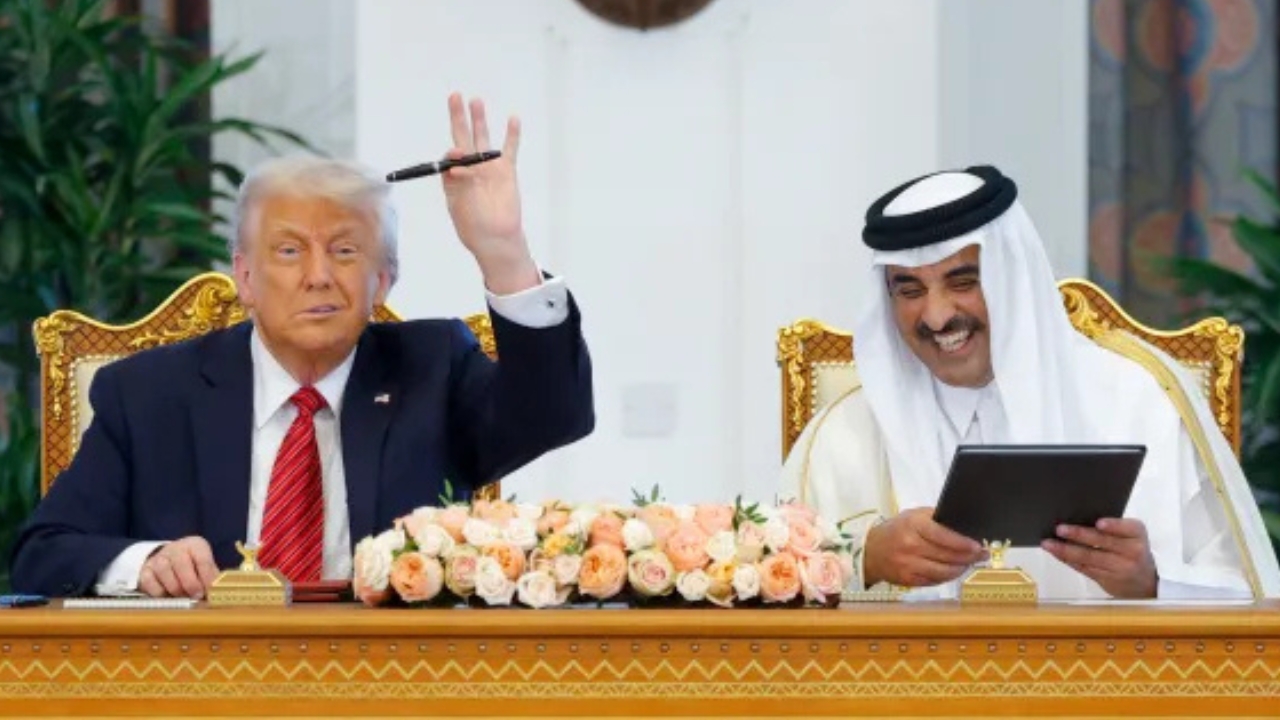
    US President Donald Trump is currently on a four-day trip to the Middle East to secure large investments from the oil-rich Gulf countries. According to reports, Trump’s tour has been extremely successful, with the Kingdom of Saudi Arabia (KSA) and Qatar both promising to potentially add upwards of $2.2 trillion in investments into the US.

    The trip started in the KSA and is expected to end in the United Arab Emirates (UAE). As per reports, Trump’s visit to the KSA has enabled the US to unlock $1 trillion in investments following multi-billion-dollar commercial agreements with large companies. These companies include household names such as Amazon and Oracle, among others.

    Trump’s visit to Doha has proved fruitful as well, with initial agreements bringing in $243.5 billion. However, reports indicate that the wider US-Qatar economic exchange following Trump’s visit to Doha is worth a staggering $1.2 trillion.

    Investments from Doha alone are expected to support over one million jobs in the US, an attractive prospect for Trump, as he intends to re-industrialise the economy. Trump’s concerns echo a broader fear gripping the US economy as manufacturing employment in the US continues to decline steadily. 

    According to experts, the decline in manufacturing-related employment has not given way to white collar high tech jobs as it should have, being overshadowed by rising employment in the poorly paid service sector.

    However, with the US and Qatar reportedly inking deals concerning the aviation, defence, energy and quantum technology sectors, economic activity is expected to witness a significant boost. A statement released by the White House reiterated Trump’s talking points, outlining Washington-Doha ties by highlighting the recent sale of “Boeing aircraft and GE Aerospace engines to Qatar Airways.”

    Qatar Airways’ order, worth a whopping $96 billion, will allow the airline to reportedly obtain 210 Boeing 787 Dreamliners and 777x aircraft that utilise GE Aerospace engines – both of which are manufactured in the US.

    The agreement spells great news for Boeing as it has allowed the company to get its largest widebody and 787 order to date. According to details from reports, this deal alone will support over 150,000 jobs in the US, allowing for 1 million jobs to be supported throughout the production of the aircraft.

    The White House’s statement hailed the deals as a way for the US to boost its manufacturing capabilities. Moreover, the statement outlined how the aforementioned deals have “put America on the path to a new Golden Age”.

  • Trump says he doesn’t want Apple manufacturing products in India

    Trump says he doesn’t want Apple manufacturing products in India

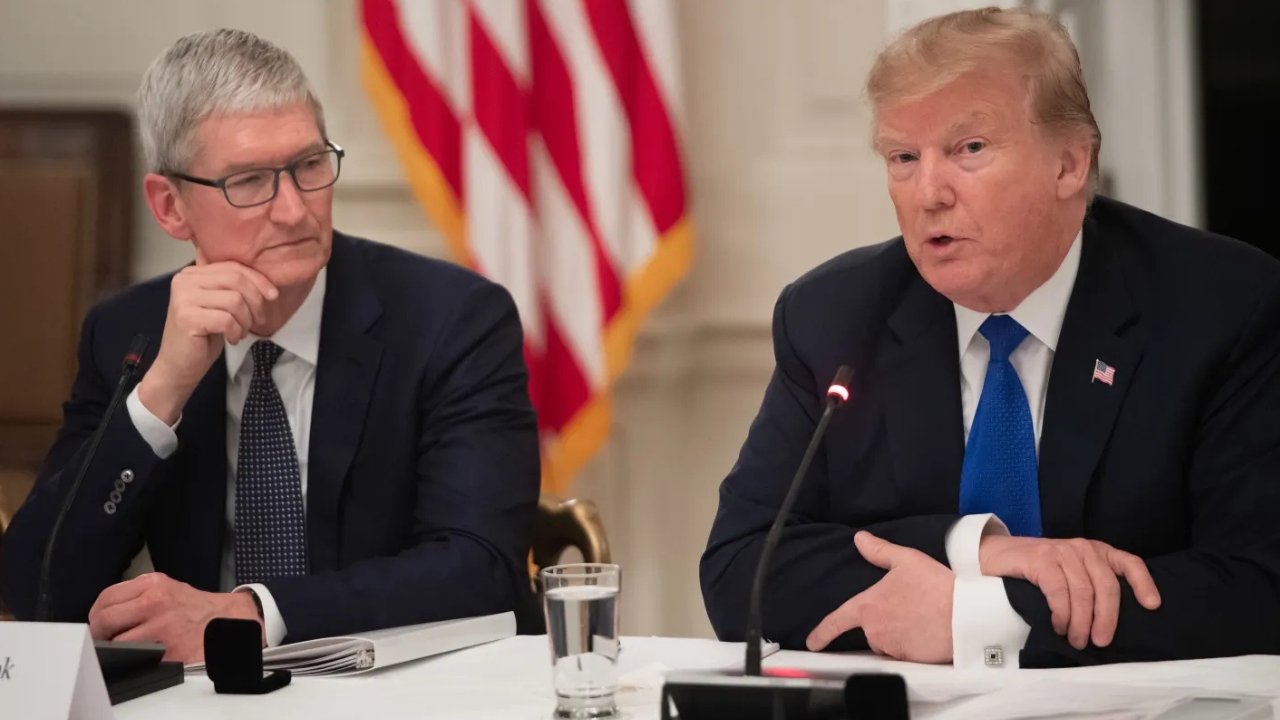
    During his visit to Qatar, US President Donald Trump stated that America is “not interested” in Apple establishing a manufacturing hub in India. According to reports, Trump made the comment while referencing a recent conversation with Apple CEO Tim Cook. Reiterating his “America First” stance, he added that India could “take care” of itself.

    His visit to Qatar is part of a broader tour of the Middle East. As per reports, Trump is pushing to re-industrialise the US by promoting local manufacturing operations instead of offshoring to countries such as India.

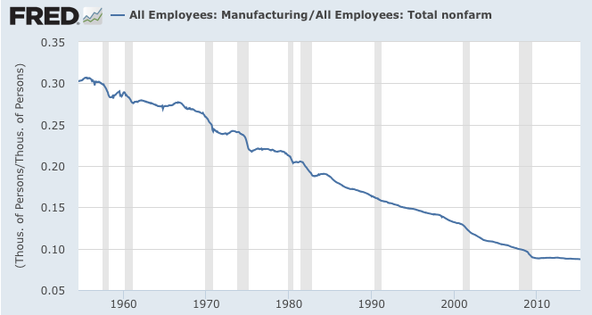
    Trump’s concerns echo a broader fear gripping the US economy as manufacturing employment in the US continues to decline steadily. According to experts, the decline in manufacturing-related employment has not given way to white collar high tech jobs as it should have, being overshadowed by rising employment in the poorly paid service sector.

    Declining employment in domestic manufacturing sector as a result of offshoring operations.

    However, Apple has already been shifting manufacturing responsibilities to India. Data from reports indicates that Apple has already produced approximately $22 billion worth of goods in India in fiscal year (FY) 2024-25. 

    Moreover, the company intends to make India the primary producer of US-bound iPhones by the start of 2027. India has been able to garner Apple’s attention as the company aims to limit the commercial risks that are associated with China. Moreover, while the tariff war has been suspended temporarily, the company is wary of similar escalations in the coming periods as China is a large manufacturer of iPhones.

    Reports have revealed that Apple is choosing to move its production base to India despite higher production costs compared to China. However, owing to the wage differentials, it is unlikely that Apple’s production processes will shift to the US, as costs are likely to balloon.

    Aside from Trump’s comments about the offshoring of manufacturing processes to other countries, he also reportedly managed to secure an economic package worth a staggering $243.5 billion. Moreover, Trump has also managed to boost bilateral ties with Qatar, ensuring greater collaboration across the technology and energy sectors.

    According to reports, Mukesh Ambani, chairman of Reliance Industries, was accompanying Emir Sheikh Tamim of Qatar at the high-profile meeting with Trump. Trump’s meeting with Ambani outlines his aims to foster greater commercial ties with Indian players while simultaneously attempting to industrialise the US to reinstate its status as the manufacturing hub of the world.