Tag: Donald Trump

  • Hindutva trolls mad at Trump for brokering peace with Pakistan

    Hindutva trolls mad at Trump for brokering peace with Pakistan

    US President Donald Trump has brokered peace between nuclear-armed warring neighbours Pakistan and India, but that has not stopped the wrath of right-wing Hindutva trolls. 

    The candid American President has once again stirred controversy — this time by suggesting that India and Pakistan should “have a nice dinner together,” a remark that has sparked strong reactions across India.

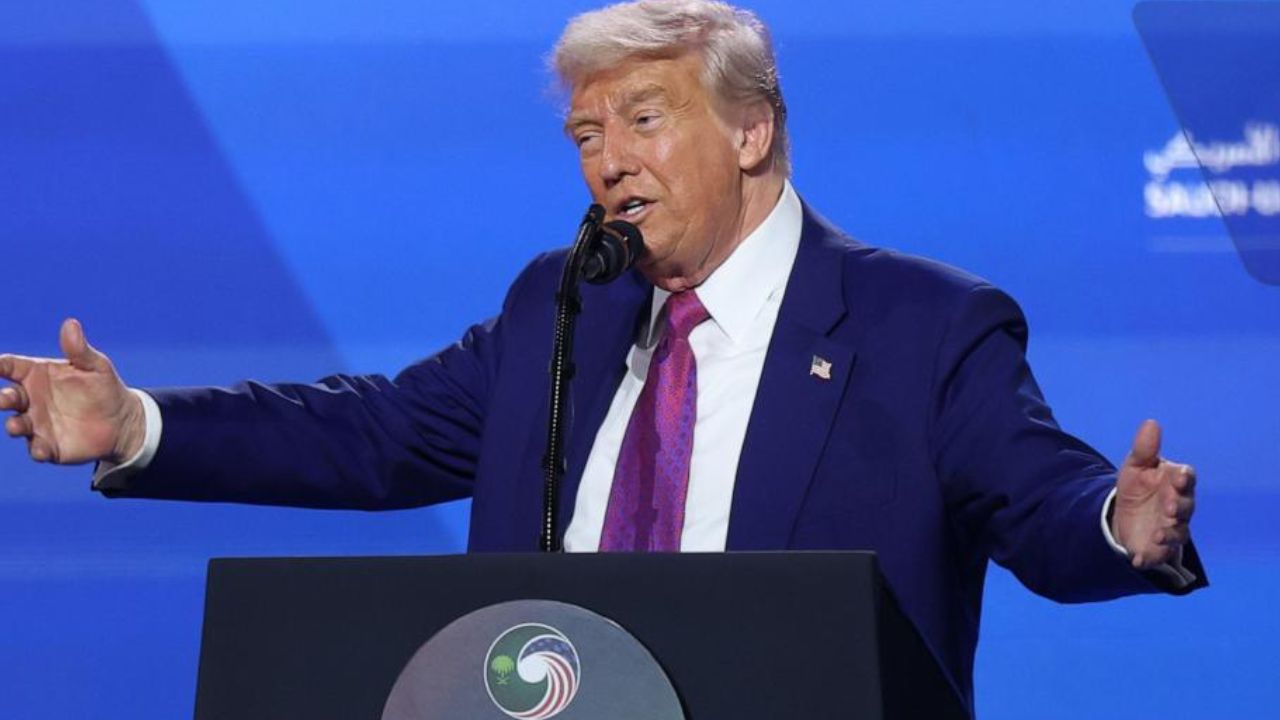
    At the US-Saudi Investment Forum held in Saudi Arabia, Trump said, “Perhaps we could even arrange a nice dinner together for them, Marco. Wouldn’t that be nice,” referring to India and Pakistan while talking to Secretary of State Marco Rubio, acknowledged by Pakistan as a key interlocutor in ending the hostilities between the two countries. 

    This isn’t the first time Trump has intervened in the matter. A few days earlier, he had posted on social media that the US had facilitated a “full and immediate ceasefire” between the two nations, which had been experiencing cross-border clashes for four days. In an additional post, he remarked: “I will collaborate with both of you to see if, after a thousand years, a resolution can be found regarding Kashmir.”

    Trump’s involvement comes at a particularly delicate moment. India conducted airstrikes on ___ on what it referred to as terrorist camps in Pakistan following a deadly incident targeting tourists in Indian Illegally occupied Jammu and Kashmir (IIOJK). Although Pakistan denied any involvement, the airstrikes led to a military confrontation involving fighter jets and drones.

    While some diplomatic circles recognize the US role in de-escalating the situation, Trump’s public assertion of credit along with his suggestion for mediation has incited backlash in India.

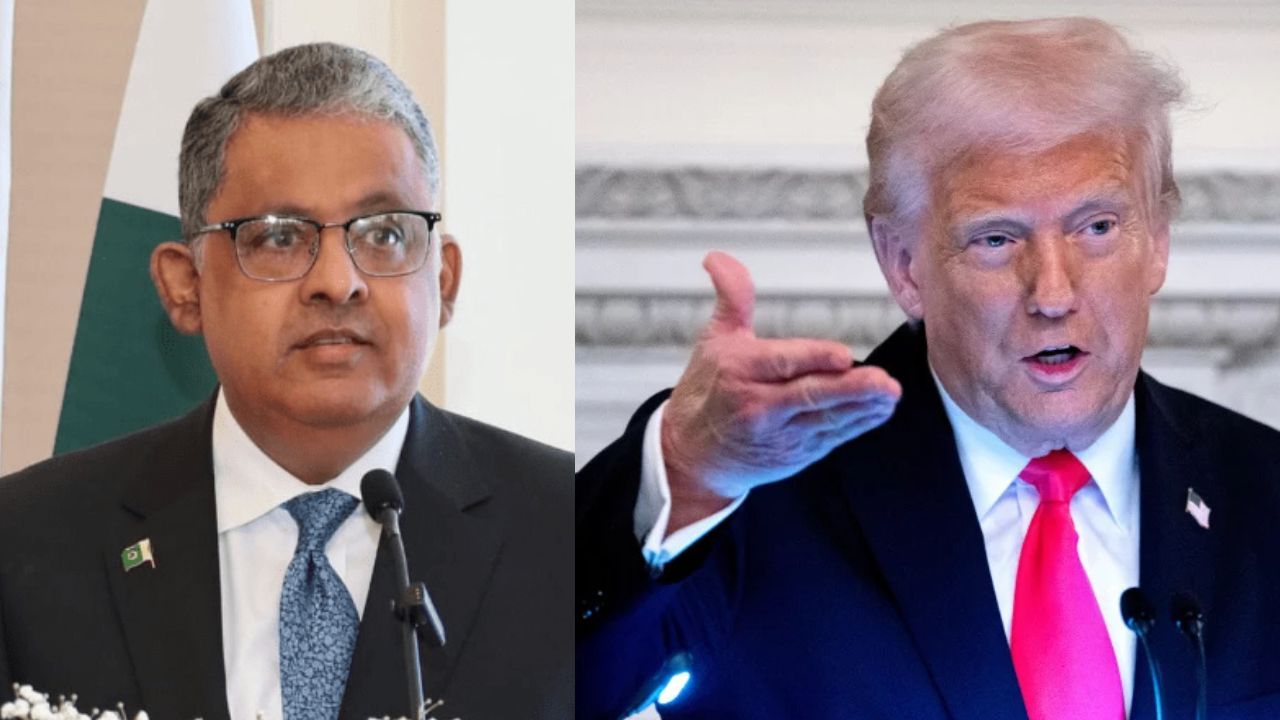
    India has consistently dismissed the idea of third-party involvement in the Kashmir conflict, viewing the issue as an internal affair. Former Indian foreign secretary Shyam Saran expressed that Trump’s remark contradicts India’s established stance for many years. Pakistan, however, has always welcomed international meditation in the matter. 

    On X, users in India voiced their anger. One user commented: “The outrage in the Indian establishment against the deceptions and falsehoods of the Trump administration is beyond imagination.” Another stated: “It’s time for India to firmly articulate its diplomatic dissatisfaction.”

    Criticism also emerged from former Trump supporters. “The Indian Right is incredibly short-sighted how could you not see that Trump is a narcissistic loudmouth,” another post read.

    Others noted Prime Minister Modi’s lack of response, highlighting that Trump’s statement conflicts with India’s account of the situation. One comment observed: “Modi can’t even say his name and call him out. Godi Media won’t show you this.”

    A viral meme summed up the mood: a photo of Trump with the caption “New PM of India + Pakistan.”
  • China, US slash sweeping tariffs in trade war climbdown

    China, US slash sweeping tariffs in trade war climbdown

    Washington and Beijing agreed to drastically lower skyhigh tariffs in a deal that emerged from pivotal talks at the weekend in Geneva.

    US President Donald Trump said Washington now had the blueprint for a “very, very strong” trade deal with China that would see Beijing’s economy “open up” to US businesses, in an interview broadcast Tuesday on Fox News.

    “We have the confines of a very, very strong deal with China. But the most exciting part of the deal…that’s the opening up of China to US business,” he told the US broadcaster while aboard Air Force One on the way to the start of his Gulf tour.

    “One of the things I think that could be most exciting for us and also for China, is that we’re trying to open up China,” he added, without elaborating on details.

    Trump had upended international commerce with his sweeping tariffs across economies, with China hit hardest.

    Unwilling to budge, Beijing had responded with retaliatory levies that brought tariffs on both sides well over 100 percent.

    After billions were wiped off equities and with businesses ailing, negotiations finally got underway at the weekend in Geneva between the world’s trade superpowers to find a way out of the impasse.

    Under the deal, the United States agreed to lower its tariffs on Chinese goods to 30 percent while China will reduce its own to 10 percent — down by over 100 percentage points.

    The reductions came into effect just after midnight Washington time (0401 GMT) on Wednesday, a major de-escalation in trade tensions that saw US tariffs on Chinese imports soar to up to 145 percent and even as high as 245 percent on some products.

    Markets have rallied in the glow of the China-US tariff suspension.

    Chinese officials have kept their cards closer to their chests, pitching themselves at a summit in Beijing with Latin American leaders this week as a stable partner and defender of globalisation.

    “There are no winners in tariff wars or trade wars,” Xi told leaders including Brazil’s Luiz Inacio Lula da Silva, while his top diplomat Wang Yi swiped at a “major power” that believed “might makes right”.

    ‘Risk of renewed escalation’

    Deep sources of tension remain, too — the US additional tariff rate remains higher than China’s because it includes a 20 percent levy over Trump’s complaints about Chinese exports of chemicals used to make fentanyl.

    Washington has long accused Beijing of turning a blind eye to the fentanyl trade, something China denies.

    And while the US said it sees room for progress on the issue, Beijing on Tuesday warned Washington to “stop smearing and shifting blame” onto it.

    Analysts also warn that the possibility of tariffs coming back into force after 90 days simply piles on more uncertainty.

    “Further tariff reductions will be difficult and the risk of renewed escalation persists,” Yue Su, Principal Economist at The Economist Intelligence Unit, told AFP.

    Trump’s rollercoaster tariff row with Beijing has wreaked havoc on US companies that rely on Chinese manufacturing, with a temporary de-escalation only expected to partially calm the storm.

    And Beijing officials have admitted that China’s economy — already ailing from a protracted property crisis and sluggish consumer spending — is likewise being affected by the trade uncertainty.

    “Both sides have endured a good deal of economic pain and they can still endure a little bit more,” Dylan Loh, an assistant professor at Singapore’s Nanyang Technological University, told AFP.

  • Donald Trump starts Gulf trip in Saudi Arabia seeking big economic deal

    Donald Trump starts Gulf trip in Saudi Arabia seeking big economic deal

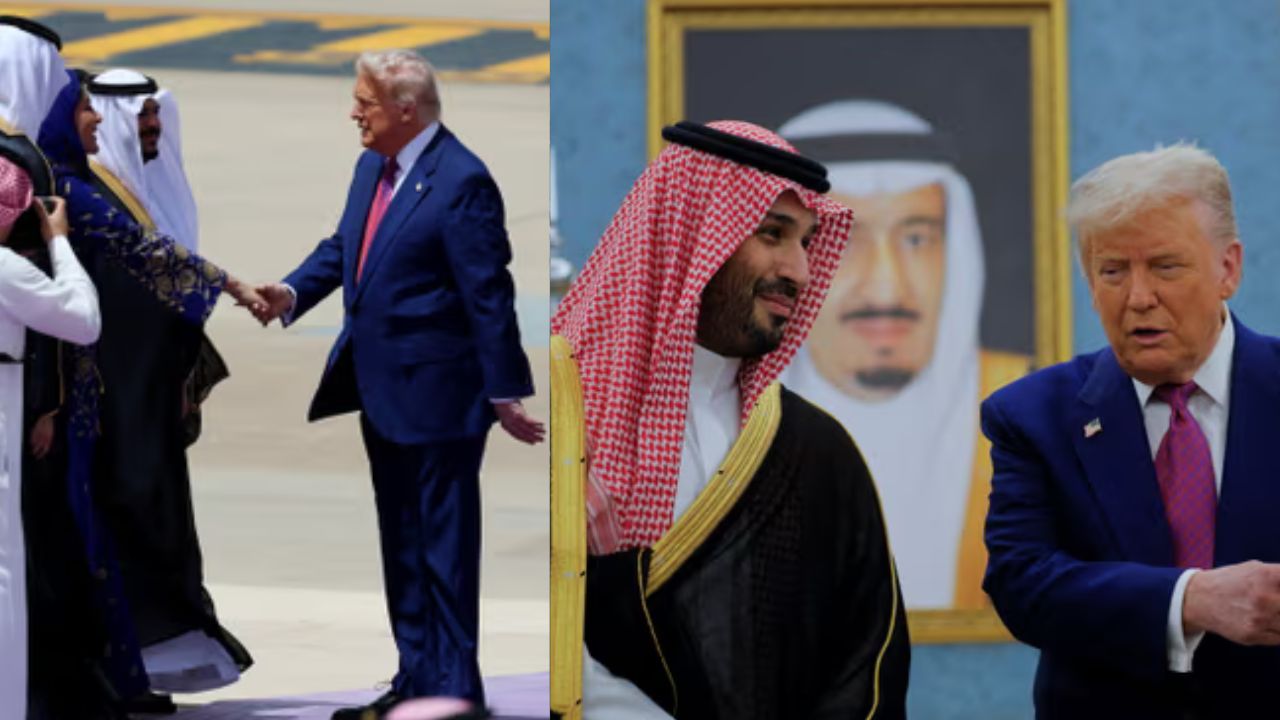
    US President Donald Trump received a cordial and royal welcome in Saudi Arabia on Tuesday on the first state visit of his second term, with the US president foremost focused on business deals at the start of a Gulf tour.

    Saudi Arabia escorted Air Force One with fighter jets before bringing out long-stretching honour guards both at the airport and a palace decked out with imposing chandeliers.

    With cameras rolling, a lengthy procession of Saudi royalty and business figures waited their turn to shake hands with Trump and Saudi Arabia’s de facto ruler, Crown Prince Mohammed bin Salman, who stood by his side.

    Trump brought along top members of his cabinet as well as US business figures including his adviser Elon Musk, the world’s richest person, who made a rare appearance in a suit as he chatted to the prince.

    Trump will address an investment forum in Riyadh and later in the week head to Qatar and the United Arab Emirates, fellow oil-rich Arab monarchies with long ties to the United States.

    In choosing the Gulf, the 78-year-old billionaire is again bypassing traditional first presidential stops in Western allies, some of which have been unnerved by his norms-shattering diplomacy.

    Eight years ago Trump also chose Saudi Arabia for his first overseas trip — when he memorably posed with a glowing orb and participated in a sword dance.

    Trump’s embrace of the Saudis contrasts with a more hesitant initial approach by former president Joe Biden, who had vowed to punish the crown prince after US intelligence found that he ordered the murder of Saudi dissident and US resident Jamal Khashoggi.

    Since Khashoggi’s gruesome 2018 killing, Saudi Arabia has worked aggressively to change its image, from easing restrictions on women to pursuing initiatives in new areas such as artificial intelligence.

    Saudi Arabia has also increasingly exercised diplomatic clout, serving as a venue for the United States to pursue talks with Ukraine and Russia.

    Qatar and the United Arab Emirates have also sought outsized international roles, with the Qataris serving as the go-between for US-brokered diplomacy between Israel and Hamas.


    Trump’s ‘happy place’ 

    But the focus during the tour of the Gulf will likely be locking down business rather than diplomatic agreements.

    Jon Alterman, senior vice president at the Center for Strategic and International Studies, said that for Trump, the Gulf “is his happy place”.

    “His hosts will be generous and hospitable. They’ll be keen to make deals. They’ll flatter him and not criticise him. And they’ll treat his family members as past and future business partners,” he said.

    Saudi Arabia has pushed hard to be first on Trump’s diplomatic schedule, with de facto ruler Prince Mohammed vowing to pour $600 billion into US trade and investments.

    “I’ll be asking the crown prince, who’s a fantastic guy, to round it out to around one trillion. I think they’ll do that because we’ve been very good to them,” Trump said in response to the offer.

    According to a Saudi official close to the defence ministry, Riyadh will push for securing the latest US F-35 fighter jets along with state-of-the-art air defence systems worth billions of dollars.

    “We will condition that the deliveries take place during Trump’s term,” the source told AFP.


    Navigating hotspots 

    Both Trump and Biden have been eager for Saudi Arabia to take the landmark step of recognising Israel.

    But Israel normalisation is not likely to feature high on the agenda on Trump’s trip, with Riyadh insisting a Palestinian state must be established before a deal can be brokered.

    Israel has cut off all food and other supplies to Gaza for more than two months as it pursues a new offensive against Hamas militants.

    The United States, which has quietly been frustrated with its ally, negotiated directly with Hamas to secure the release Monday of a hostage with US citizenship, Edan Alexander.

    Iran is also likely to feature prominently during the visit, following the Trump administration’s fourth round of talks in Oman at the weekend.

    Both sides have voiced hope but the United States on Monday imposed fresh sanctions targeting Iran’s suspect nuclear programme.

    Controversy is also swirling over Trump’s plans to accept a luxury Boeing jet from the Qatari royal family for use as Air Force One.

    Trump called the deal “a very public and transparent transaction” and said: “I would never be one to turn down that kind of an offer.”

  • Trump imposes tariffs on ‘foreign’ films, putting Hollywood into tailspin

    Trump imposes tariffs on ‘foreign’ films, putting Hollywood into tailspin

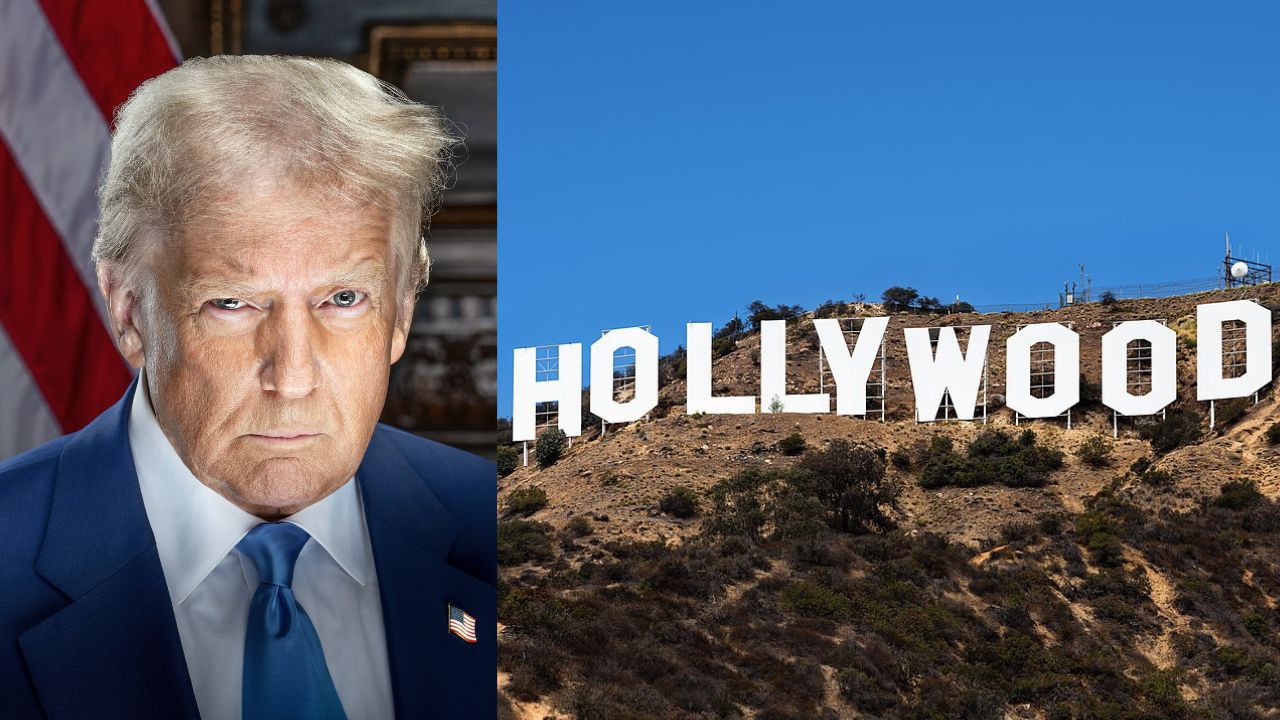
    US President Donald Trump has opened a new front in his ongoing tariff disputes — this time targeting the film industry. In a passionate statement posted on Truth Social on Sunday, the former president announced a 100 percent tariff on all movies made outside the United States, contending that foreign governments are undermining the American film sector through aggressive incentives and subsidies.

    Describing it as a “National Security threat,” Trump stated that this is “a concerted effort by other Nations” to take over U.S. productions and use storytelling as “messaging and propaganda.” He asserted that he had instructed the Commerce Department and the U.S. Trade Representative to start implementing the tariffs right away. “We want movies made in America, again!” he wrote in all caps. 

    Nevertheless, no specific details were given on how or when these tariffs would be put into action. It is also uncertain whether the tax would affect streaming content, theatrical releases, or solely films produced by non-American studios. The Motion Picture Association has not yet responded, while Hollywood executives were reportedly grappling to understand the implications. 

    The announcement arrives at a challenging moment for the U.S. film industry, which has already experienced a 40 percent decline in production in Los Angeles over the last ten years, according to FilmLA. An increasing number of Hollywood studios including Disney, Universal, and Netflix — are now shooting films in countries like Canada, the UK, Australia, and New Zealand, attracted by generous tax incentives and production advantages. 

    Research indicates that about half of all U.S. film and TV expenditures on major projects in 2023 were spent overseas. Furthermore, California has slipped to sixth among the most favored global filming locations  trailing Toronto, London, Vancouver, Central Europe, and Australia. 

    Governments in Australia and New Zealand reacted quickly to Trump’s announcement. Australia’s Home Affairs Minister Tony Burke expressed that his government would support the Australian screen industry “unequivocally.” New Zealand Prime Minister Christopher Luxon mentioned that his government was awaiting more information but stressed their continued advocacy for their domestic film sector. 

    This is not the first occasion Trump has connected culture with politics. In January, he appointed Jon Voight, Sylvester Stallone, and Mel Gibson as “special envoys” to help rejuvenate Hollywood, which he referred to as “a great but very troubled place.” Their objective? To restore Hollywood “back—bigger, better, and stronger than ever before!” 

    However, the proposed tariffs have drawn caution from trade specialists. William Reinsch, a former senior Commerce Department official, warned that retaliation from other nations could severely damage Hollywood exports. “The retaliation will kill our industry. We have a lot more to lose than to gain,” he remarked, doubting that a national security argument would be sustainable.

    The consequences may already be in motion. In April, China the world’s second-largest film market — reduced its quota for U.S. films, citing American tariff misuse. The China Film Administration cautioned that these actions would tarnish the reputation of American films among local viewers and further diminish their import rates.

    As Trump intensifies his protectionist economic strategy with certain tariffs on Chinese goods reaching as high as 245 percent, the global entertainment sector is being drawn into a tense trade conflict. Whether this policy revitalizes domestic filmmaking or further isolates Hollywood remains to be determined

  • Trump asked to prevent nuclear war between Pakistan, India: report

    Trump asked to prevent nuclear war between Pakistan, India: report

    Pakistan’ Ambassador to the United States (US) Rizwan Saeed Sheikh has revealed asking President Donald Trump to intervene and help ease escalating tensions with India.

    In an interview with Newsweek, the Pakistani envoy referred to President Trump as a man who wants to establish “a legacy as a peacemaker during his administration”.

    “I don’t think there is any higher or flashier flashpoint, particularly in nuclear terms, as Kashmir, he said, contending that the Trump administration would need to pursue a more comprehensive and sustained initiative than in past US attempts to defuse crises that have erupted between Pakistan and India.

    “So, I think with this threat that we are facing, there is a latent opportunity to address the situation not just to focus on an immediate de-escalatory measure, or a de-escalatory approach, but to try and get this out of the way in a fashion that there is something more durable and lasting in terms of a durable solution to the Kashmir dispute rather than allowing the situation to stay precarious and pop up again and again at the next drop of a hat on this side or that side.”

    During his interview, Ambassador Sheikh rejected any Pakistani involvement in the Pahalgam attack and argued that the fallout of such an operation could only serve to harm rather than benefit Pakistan’s interests.

    “Pakistan is focusing on a matter of a deliberate, considered, pronounced shift of our foreign policy… a pivot from geopolitics to geoeconomics.”

    “We are focused on the geoeconomics side of our geography and our foreign policy. We are currently economically ascendant. The only thing that we need in terms of the broader region in such a pursuit and such a setting is a peaceful neighbourhood. We need a peaceful neighbourhood.”

    He went on to say it was outlandish and far-fetched, to blame Pakistan for it.


    On the Kashmir issue, he said it would persist until a final settlement was made. “The dispute should be resolved. If it is resolved, one-fifth of humanity can live in peace. All the other issues between Pakistan and India are not major issues.”

    “We do not want to fight, particularly with a bigger country… we want peace. It suits our economic agenda… it suits our nationhood. It suits every objective that we have currently. But we want peace with dignity. We would not want to do it, but if it is imposed, then we would rather die with dignity than survive with indignity.”

    On violation of the Indus Water Treaty (IWT) by India, Sheikh cautioned that if there was even an attempt, or a semblance of an effort, to stop or hold the water back for an agrarian economy, it would be a “declaration of war. All bets, he added, would be off if it was about the food security of 250 million people.

    “If you threaten me with such a situation… which is existential… what response do you expect?”

  • ‘They’ll figure it out themselves’: Trump on ‘1,000-year-old’ Pak-India tensions over Kashmir

    ‘They’ll figure it out themselves’: Trump on ‘1,000-year-old’ Pak-India tensions over Kashmir

    United States (US) President Donald Trump has downplayed concerns over mounting tensions between Pakistan and India, saying he was close to both countries and “they’ll figure it out themselves, one way or the other”.

    During an interaction with reporters on Friday, Trump was asked aboard Air Force One about crumbling relations between India and Pakistan as the fallout deepens from a deadly attack on civilians by gunmen in Indian-administered Kashmir.

    “There have been tensions on that border for 1,500 years so, you know, it’s the same as it has been,” Trump told reporters. “But they’ll get it figured out, one way or another.”

    Kashmir has been divided between India and Pakistan since their independence in 1947, with both claiming the territory in full but governing separate portions of it.

    Rebel groups have waged an insurgency in Indian-controlled Kashmir since 1989, demanding independence or a merger with Pakistan.

    Tensions have flared since Tuesday, when 26 male tourists were killed by gunmen in the Kashmir town of Pahalgam.

    Indian police say the three gunmen are members of the Pakistan-based Lashkar-e-Taiba group, a UN-designated terrorist organisation.

    A day after the attack, New Delhi suspended a water-sharing treaty, announced the closure of the main land border crossing with Pakistan, downgraded diplomatic ties, and withdrew visas for Pakistanis.

    Denying any involvement, Islamabad called attempts to link Pakistan to the Pahalgam attack “frivolous” and vowed to respond to any Indian action

    Officials said Friday that there was an overnight exchange of fire between Indian and Pakistani forces at the Line of Control.

    “There’s great tension between Pakistan and India but there always has been,” Trump said.

  • Trump says India, Pakistan to settle dispute ‘one way or another’

    Trump says India, Pakistan to settle dispute ‘one way or another’

    US President Donald Trump on Friday downplayed concerns over mounting tensions between India and Pakistan, saying the dispute between the nuclear-armed neighbours will get “figured out, one way or another.”

    Trump was asked aboard Air Force One about crumbling relations between India and Pakistan as the fallout deepens from a deadly attack on civilians by gunmen in Indian-administered Kashmir.

    “There have been tensions on that border for 1,500 years so, you know, it’s the same as it has been,” Trump told reporters.

    “But they’ll get it figured out, one way or another.”

    Kashmir has been divided between India and Pakistan since their independence in 1947, with both claiming the territory in full but governing separate portions of it.

    Rebel groups have waged an insurgency in Indian-controlled Kashmir since 1989, demanding independence or a merger with Pakistan.

    Tensions have flared since Tuesday, when 26 male tourists were killed by gunmen in the Kashmir town of Pahalgam.

    Indian police say the three gunmen are members of the Pakistan-based Lashkar-e-Taiba group, a UN-designated terrorist organisation.

    A day after the attack, New Delhi suspended a water-sharing treaty, announced the closure of the main land border crossing with Pakistan, downgraded diplomatic ties, and withdrew visas for Pakistanis.

    Denying any involvement, Islamabad called attempts to link Pakistan to the Pahalgam attack “frivolous” and vowed to respond to any Indian action.

    Officials said Friday that there was an overnight exchange of fire between Indian and Pakistani forces at the Line of Control.

    “There’s great tension between Pakistan and India but there always has been,” Trump said.

  • ‘Trump asked to bring Shakil Afridi to US’

    ‘Trump asked to bring Shakil Afridi to US’

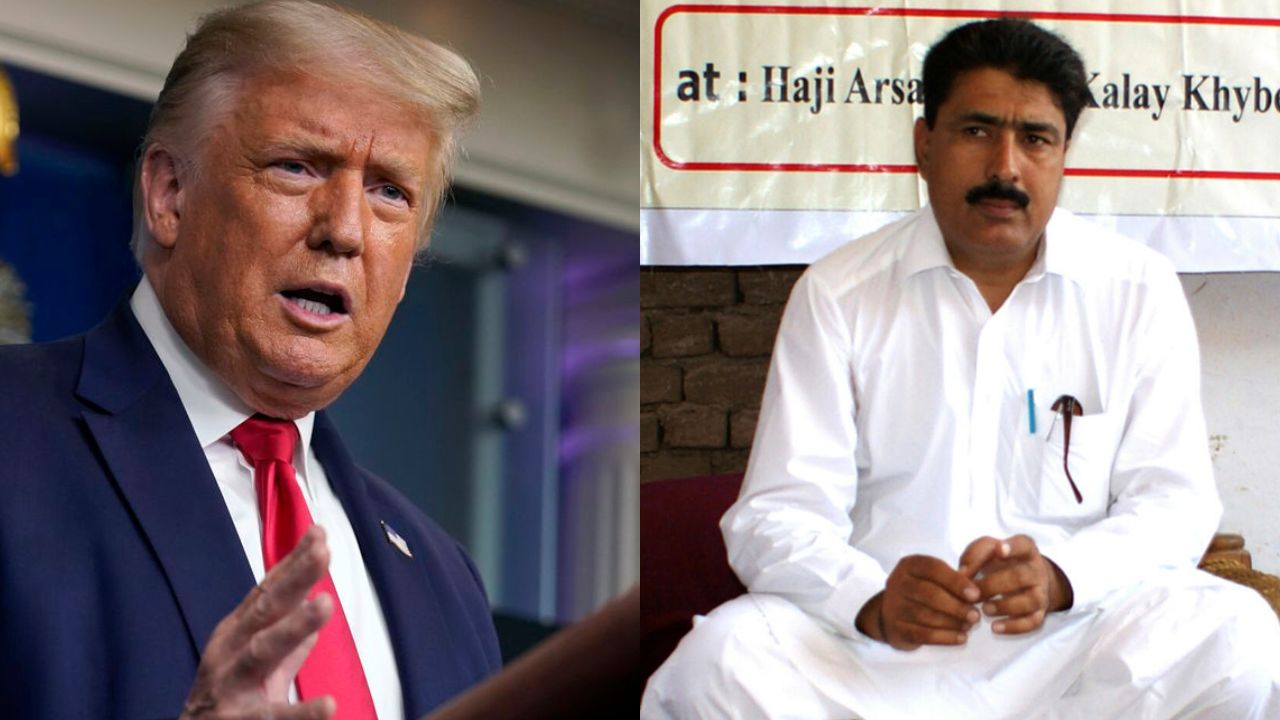
    Former Finance Minister Miftah Ismail on Tuesday claimed US President Donald Trump has been asked to bring Shakil Afridi, a Pakistani physician convicted of espionage, to America.

    Afridi was accused of assisting the Central Intelligence Agency (CIA) in obtaining DNA samples of former Al Qaeda leader Osama bin Laden through a fake vaccination campaign. Afridi was arrested near Peshawar, two weeks after Osama’s death.

    Appearing on a private media outlet, the ex-Finance Minister said that former United States (US) Vice President Mike Pence had initially demanded of then Prime Minister Shahid Khaqan Abbasi that Shakil Afridi be released. 

    Following the demand, Miftah said that the matter was discussed in the National Security Council (NSC) meeting, adding that during the meeting, the release of Pakistani neuroscientist Dr. Aafia Siddiqui was also discussed.

    Miftah said, “At one time, there was a consensus among all state institutions and political leaders that the prisoner [Shakil Afridi] should be sent to America,” adding that the release might give a psychological win to Trump, which doesn’t cost anything to Pakistan.

    “You are pointing towards Shakil Afridi, who was involved in espionage in Pakistan. If we talk about him, we would have to talk about Dr. Aafia Siddiqui too,” said the programme host. In response, Miftah agreed with the host’s suggestions, saying, “At one point, the government also had the same stance.”

    In September 2010, Siddiqui was sentenced to 86 years of imprisonment by a US federal court in Manhattan after she was convicted of firing at US troops in Afghanistan while in their custody and six other charges brought against her.

    Miftah maintained that Siddiqui could also be brought back to Pakistan on humanitarian grounds since she had been imprisoned for so long. “There is no harm in taking the first step if we have to save the country’s exports and jobs,” he opined while viewing the Trump tariff policy.

    It merits a mention that two months ago, Siddiqui’s American lawyer Clive Smith had suggested the swap of the neuroscientist with Afridi. However, the federal government informed the court that the proposal was not feasible.

    Additional Attorney General (AAG) Munawar Iqbal Duggal informed the court that there is no agreement between Pakistan and the US for the exchange of prisoners. He emphasized that both Afridi and Siddiqui were Pakistani citizens, and such an exchange would not be legally or diplomatically viable.

  • Pakistan lands on tariffs block as Trump escalates global trade war

    Pakistan lands on tariffs block as Trump escalates global trade war

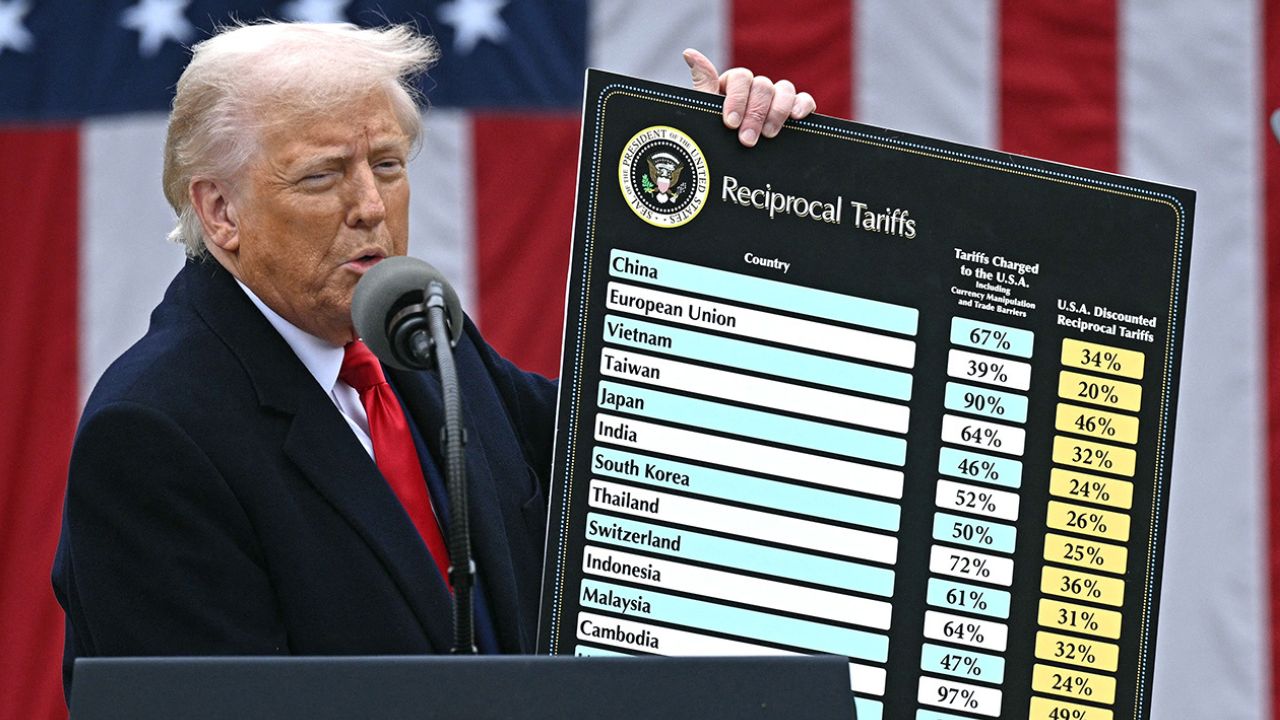
    Amid the ongoing “trade-wars”, United States (US) President Donald Trump has announced new tariffs on a number of countries, including a 29 percent tariff on Pakistani goods “in a bid to fix trade disparities” and counter what the new administration sees as “unfair treatment of American products”. 

    Reports quoted the American president as highlighting that Pakistan charged a 58 percent tariff on US goods and, therefore, the US would impose a 29 percent tariff in return.

    Trump intensifying a global trade war on Wednesday on imports from allies and foes alike has sent markets into a tailspin and upending decades-long free trade norms.

    The EU and China vowed retaliation against the levies, with Australia’s leader saying the new tariffs were “not the act of a friend” and would hurt the close allies’ relationship.

    Shortly after Trump’s proclamation, separate tariffs of 25 percent on all foreign-made cars and light trucks went into effect, with auto parts also due to be hit by May 3.


    Holding up a chart of the sweeping measures in the White House Rose Garden, Trump unveiled particularly stinging tariffs on major trade partners China and the European Union on what he called “Liberation Day.”

    “This is one of the most important days, in my opinion, in American history,” said Trump. “It’s our declaration of economic independence.”

    The tariffs announcement triggered immediate anger around the world, with rival China warning they could “endanger” global economic development.

    Stock markets looked set for major volatility Thursday, with Tokyo’s Nikkei leading an Asian selloff, collapsing more than four percent, and Hanoi shares tanked more than five percent after Vietnam was targeted with tariffs of 46 percent.


    US futures plummeted and safe haven gold hit a new record as investors took fright.

    Trump reserved some of the heaviest blows for what he called “nations that treat us badly.”

    That included an additional 34 percent on goods from China — bringing the new added tariff rate there to 54 percent.

    Beijing swiftly vowed countermeasures and called for dialogue, warning the levies would “seriously harm” those involved.

    The figure for the European Union was 20 percent, and 24 percent on Japan, whose trade minister called the tariffs “extremely regrettable.”

    For the rest, Trump said he would impose a “baseline” tariff of 10 percent, including another key ally, Britain.


    The 78-year-old Republican brushed off fears of turmoil, insisting that the tariffs would restore the US economy to a lost “Golden Age.”

    “For decades, our country has been looted, pillaged, raped and plundered by nations near and far, both friend and foe alike,” Trump said.

    ‘Make America wealthy again’

    A hand-picked audience of cabinet members, as well as workers in hard hats from industries including steel, oil and gas, whooped and cheered as Trump promised tariffs would “make America wealthy again.”

    Trump labeled Wednesday’s tariffs “reciprocal” but many experts say his administration’s estimates for levies placed on US imports by other countries are wildly exaggerated.The US president had telegraphed the move for weeks, sparking fears of a recession at home as costs are passed on to US consumers, and a damaging trade war abroad.

    US Treasury Secretary Scott Bessent warned against countermeasures, saying on Fox News: “If you retaliate, there will be escalation.”

    Some of the worst-hit trading partners were in Asia, including 49 percent for Cambodia, 46 percent for Vietnam and 44 percent for military-ruled Myanmar, recently hit by a devastating earthquake.

    Russia was not affected because it is already facing sanctions over the Ukraine war “which preclude any meaningful trade,” a White House official said.


    Certain goods like copper, pharmaceuticals, semiconductors, lumber and gold will not be subject to the tariffs, according to the White House.


    ‘Fight’

    EU chief Ursula von der Leyen vowed Europe was “prepared to respond” to the tariffs, calling them a “major blow to the world economy.”

    Italian Prime Minister Giorgia Meloni, a close Trump ally, said the levies on the EU were “wrong” but pledged to seek a deal.

    Britain escaped relatively lightly after a diplomatic offensive, but said it still wanted to “mitigate” the tariffs.

    Canada and Mexico are not affected by the new levies as Trump has already punished them for what he says is their failure to stymie drug trafficking and illegal immigration.


    Canadian Prime Minister Mark Carney vowed to “fight” the existing levies.

    Trump’s announcement is the culmination of a long love affair with tariffs, which he has seen for decades as a cure-all for America’s trade imbalances and economic ills.

    The 10 percent “baseline tariff” kicks in on Saturday, while the elevated rates for those the White House deemed “the worst offenders” will take effect on April 9.

  • US senator smashes record with 25-hour anti-Trump speech

    US senator smashes record with 25-hour anti-Trump speech

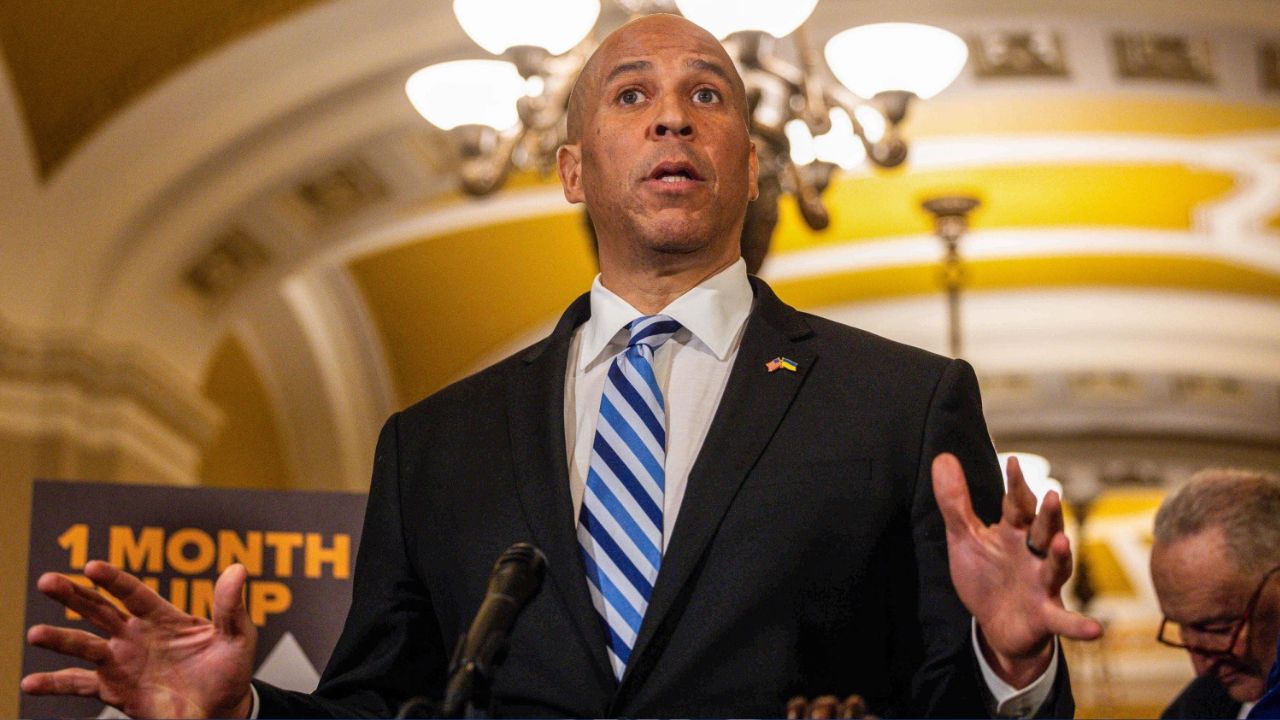
    A Democratic US lawmaker shattered a record for the longest speech in Senate history Tuesday, staying on his feet for more than 25 hours to deliver a fiery protest against President Donald Trump’s “unconstitutional” actions.

    Senator Cory Booker’s display of endurance — to hold the floor he had to remain standing and could not even go to the bathroom — recalled the famous scene in Frank Capra’s 1939 film classic “Mr. Smith Goes to Washington.”

    The longest Senate speech on record before Tuesday was delivered by South Carolina’s Strom Thurmond, who filibustered for 24 hours and 18 minutes against the Civil Rights Act of 1957.

    Booker, only the fourth Black senator to be popularly elected to the body, blew past that deadline, his voice still strong but emotional as he topped out at 25 hours and five minutes.

    “Strom Thurmond’s record always… really irked me,” he later told broadcaster MSNBC.

    “That the longest speech on our great Senate floor was someone who was trying to stop people like me from being in the Senate.”

    The public galleries of the Senate chamber gradually filled as the moment he broke the record approached, with more Democratic lawmakers joining the session — although Republicans largely stayed away.

    “This is a moral moment. It’s not left or right. It’s right or wrong,” Booker said as he wrapped up.

    He also quoted his mentor John Lewis, a 1960s civil rights movement leader, who urged campaigners to get into “good trouble,” before finally pronouncing “Madam President, I yield the floor.”

    The 55-year-old New Jersey native had found a moment for some humor as he passed the record, joking: “I want to go a little bit past this and then I’m going to deal with some of the biological urgencies I’m feeling.”

    ‘Foundations of democracy’

    Although Booker’s talk-a-thon was not actually blocking the majority Republican Party from holding votes in the Senate, as would be the case in a true filibuster, his defiance quickly became a rallying point for beleaguered Democrats.

    Booker, a former presidential candidate, seized command in the chamber at 7:00 pm (2300 GMT) Monday and finished at 8:05 pm Tuesday.

    He lashed out at Trump’s radical cost-cutting policies that have seen his top advisor Elon Musk, the world’s richest person, slash entire government programs without consent from Congress.

    The senator said Trump’s aggressive seizing of ever-more executive power had put US democracy at risk.

    “Unnecessary hardships are being borne by Americans of all backgrounds. And institutions which are special in America, which are precious and which are unique in our country, are being recklessly — and I would say even unconstitutionally — affected, attacked, even shattered,” Booker said.

    “In just 71 days the president of the United States has inflicted so much harm on Americans’ safety, financial stability, the core foundations of our democracy,” he said.

    But he had words of encouragement for Trump opponents, saying as he concluded that “the power of the people is greater than the people in power.”

    Cramps and sore throat

    Booker later went into detail about how he withstood the physical demands of the speech.

    “My strategy was to stop eating. I think I stopped eating Friday and then to stop drinking the night before I started on Monday,” he told reporters in the Capitol.

    The approach “had its benefits and had its really downsides… different muscle groups start to really cramp up” with dehydration, he added.

    In a statement sent by his office, Booker added that he was “tired and a little hoarse.”

    Democratic lawmakers, in the minority in both the Senate and House of Representatives, have struggled over how to blunt Trump’s efforts to downsize government, ramp up deportations and shred much of the country’s political norms.

    “I just want to thank you for holding vigil for this country all night,” Senator Raphael Warnock told Booker on the floor.

    Booker dedicated much of his speech to criticizing Trump’s policies, but to pass the time he also recited poetry, discussed sports and entertained questions from colleagues.

    “If you love your neighbor, if you love this country, show your love. Stop them from doing what they’re trying to (do),” he said.