Tag: education

  • Govt’s ‘Rehmatul-Lil Alameen Scholarship’ to also cover non-Muslims

    Prime Minister (PM) Imran Khan has launched the Rehmatul-Lil Alameen scholarship program for underprivileged students, Radio Pakistan has reported.

    As per details, a budget of 27.93 billion rupees has been approved for this national-level program which will be used over the next five years. The program will be implemented in 129 public sector universities across the country.

    Speaking at the inauguration ceremony in Islamabad, PM Imran said the scholarship will be available to all Pakistanis including non-Muslims, adding that the federal government will annually provide Rs 5.5 billion for 70,000 scholarships. 

    PM Khan said that under the scholarship program a total of 350,000 scholarships will be provided in five years at a cost of Rs 28 billion.

    He further said that the provincial governments of Punjab and Khyber Pakhtunkhwa will also separately provide scholarship to the students.

    Read more – Pakistanis appreciate PM Imran for ‘Koi Bhooka Nahi Soye Ga’ programme

    The premier asserted that the government is especially focusing on the education sector with the aim that “our youth learn from the Sunnah of Hazrat Muhammad Sallallaho Alaihe Wa Salam Khatim-un-Nabiyeen“.

    Meanwhile, speaking on the occasion, Minister for Education Shafqat Mahmood said the Rehmatul-Lil Alameen Scholarship is a nationwide program and will be implemented in 129 universities across the country.  He said fifty percent scholarships will be given to women whilst two percent to specially-abled persons.

    Minister for Information and Broadcasting Fawad Chaudhry and Minister for Human Rights Shireen Mazari also announced the news on social media, encouraging those eligible to apply for it.

    The provinces are also separately pursuing the Rehmatul-Lil Alameen Scholarship program. In Punjab, one billion rupees has been approved for this scholarship program annually, while Khyber Pakhtunkhwa has allocated Rs 427 million for it.

  • Malala dreams to see Pakistan and India as ‘good friends’

    Nobel laureate Malala Yousafzai has expressed her desire to see Pakistan and India as ‘good friends’.

    Read more – Ceasefire, at last

    Talking about her book I Am Malala: The Story of the Girl Who Stood Up for Education and was Shot by the Taliban on the last day of the 14th Jaipur Literature Festival, Malala said: “It is my dream to see India and Pakistan become true good friends and that we can visit each other’s countries. You can continue to watch Pakistani dramas, we can continue to watch Bollywood movies and enjoy cricket matches.”

    “You are Indian and I am Pakistani and we are completely fine, then why is this hatred created between us? This old philosophy of borders, divisions and divide and conquer… they just don’t work anymore. As humans we all want to live in peace,” said Malala.

    The young activist added that the real enemies of both countries are “poverty, discrimination and inequality”.

    She also stressed upon the importance of giving rights to minorities in both countries.

    “Minorities are at risk,” said Malala. “Minorities’ rights are not given to them. Be it Hindus and Christians in Pakistan, Muslims, Dalits and other minorities in India… Palestinians, Rohingya refugees. It is not [just] religion. It is the exploitation of power, it is just elites vs the poor and minorities.”

    Talking about her cause of girls’ education, Malala said that she also dreams of the day when every girl would get to go to school and have access to quality education.

    Malala, who was shot in the head by the Taliban as she was returning home from school in Swat Valley, was awarded the Nobel Peace Prize in recognition of her efforts for children’s rights in 2014. The young activist recently also graduated from Oxford University.

    Read more – US Congress passes ‘Malala Yousafzai Scholarship Act’ for Pakistani women

    She is now internationally known for human rights advocacy, especially the education of women and children.

  • Police bar female students from sitting in front passenger seats over harassment

    Police bar female students from sitting in front passenger seats over harassment

    After complaints of harassment, the Mansehra Traffic Police has barred female students from sitting in the front passenger seats of the public transport across the district.

    According to Express Tribune, the ban was imposed by the police in a bid to curb harassment. The women were subjected to harassment by the drivers as the front section of the Suzuki vans and pick-ups is entirely detached from the rear part of the vehicle.

    The windows in the front are also tainted and the driver could get away with harassment. The traffic police warned that cases could be registered against the public transporters if the ban was violated.

    Last month, the Khyber Pakhtunkhwa government had announced the formation of district protection committees (DPC) for swift implementation of harassment law across the province, according to APP. These committees would be headed by a woman Member Provincial Assembly (MPA) to resolve disputes related to domestic violence or harassment at workplaces.

    In January last year, the provincial assembly had passed the Khyber Pakhtunkhwa Protection against Harassment of Women at Workplace (Amendment) Bill, 2020, targeting the incidents of workplace harassment.

    In case, parties did not agree to the proposed solutions, the case would be referred to District Sessions Judge or Additional District Sessions Judge to decide it within two months. And if any party did not agree with the court’s judgment then appeals against such decisions could be filed in the Peshawar High Court (PHC).

    Under the new act, up to five years of prison time and a penalty or both could be handed. The court can also pass an interim order in such cases.  One-year imprisonment and up to Rs0.3 million fine could be handed in case of violation of the court orders.

  • ‘No jeans, tights, makeup’: Hazara University issues new dress code for students

    The Hazara University in Mansehra has issued a new dress code for students, faculty members and administrative staff.

    According to the notification issued on January 6, female students have been advised to wear abaya/scarf/dupatta in neutral colours without any decorative material. They have also been asked to wear shalwar qameez with dupatta or chaddar.

    Jeans, tights, t-shirts, shorts with jeans or tights, heavy makeup and jewellery have been banned at the university, while female students have also been advised against carrying heavy hand bags.

    Read more – New policy of Bahira University prohibits male, female students from sitting together

    The notification further recommends a dress code for male students which includes, dress pants with dress shirts, dress shoes with socks, shalwar qameez, and warm caps in the winters.

    Shorts, cut-off/toran/skin-fitted jeans, chappals/sleepers of any kind/jewellery, long hair, ponytails, and un-presentable bread have been strictly prohibited for the male students, according to the notification.

    Furthermore, staff and faculty members have been advised to wear “neat, clean and presentable dress and black gown during lectures”.

    “Cut-off/toran/skin-fitted jeans, chappals/sleepers of any kind and jewellery are strictly not recommended for faculty members and staff,” reads the notification.

    Wearing ID cards at all times has also been made compulsory for both students and faculty members.

    Though the new recommendations by Hazara University are being strongly criticised on social media, Spokesperson for the KP government and adviser to CM on Information Kamran Bangash, while talking to Gulf News, welcomed the step saying: “This will end the dress competition between the students and teachers, helping the poor students and their parents. It will also help them focus on their studies.”

  • Punjab schools to open from Jan 18, universities from Feb 1: minister

    Punjab schools to open from Jan 18, universities from Feb 1: minister

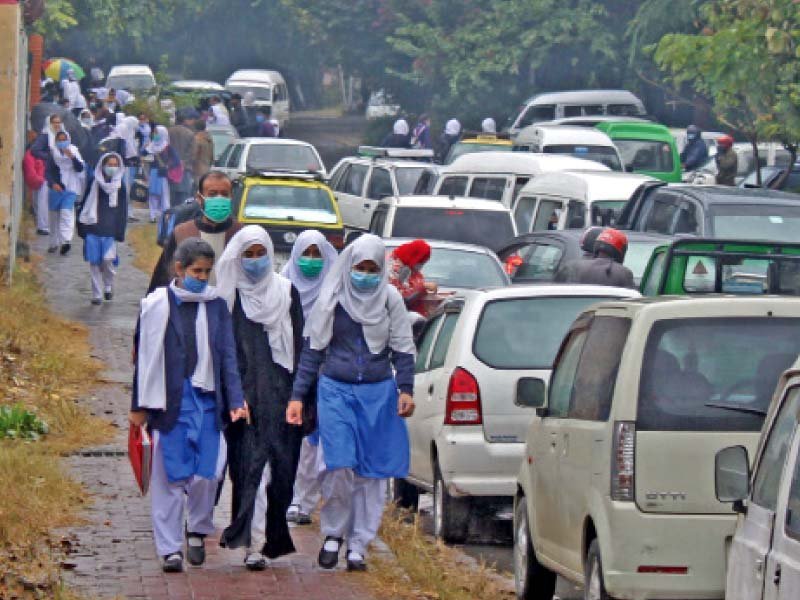
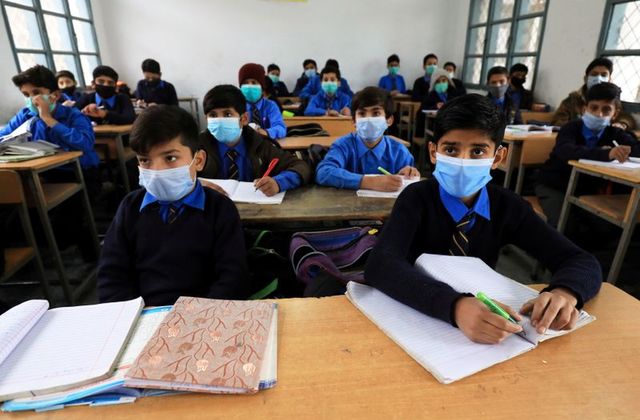
    Amid the second wave of coronavirus, the Punjab government has decided to open educational institutions in phases from Jan 18.

    According to provincial education minister Murad Raas, the government has decided to open schools and universities in three phases. In the first phase on Jan 18, schools will resume classes for students of matric and intermediate. In the second phase, the primary and middle schools will resume class on Jan 25.

    In the third phase, the government will reopen universities on Feb 1. The minister said the educational institutions “will have 50 per cent students on alternate days as before”.

    Federal Minister for Education Shafqat Mahmood had announced in November that all schools across the country will close down from 26th to January 10, 2021, to control the spread of COVID-19 in the country.

    Before this, the schools remained closed from March till September amid the first wave of coronavirus. But due to an increase in the infections in the students, the schools were shut down again.

  • Punjab House in Murree handed over to HEC

    The Punjab House in Murree has been handed over to the Higher Education Department (HEC) for the establishment of Kohsar University, as per a notification issued by Punjab Board of Revenue. The secretary of the Colonies Department has forwarded the notification to the Deputy Development Commissioner of Rawalpindi.

    As per details, the Punjab House in Murree is a mansion built over 96 kanal. It comes under the provincial government and is used for different purposes.

    Read more – Inside pictures of Murree’s Government House Murree are royal

    PTI MNA Sadaqat Ali Abbasi, in a statement, said that along with theory, students will also be given practical education in tourism at the university.

    He further added that in one block of the Punjab House, classrooms will be built and to generate extra income other blocks will be made available to tourists under the supervision of the university. The plan is likely to materialize within the next three years.

    The decision to establish Koshar University in Punjab House was taken two years ago and is in the accordance with the vision of Prime Minister Imran Khan to use government buildings for the interest of the general public.

    Earlier in 2018 and 2019 Punjab’s and Murree’s Governor’s House opened its doors for public respectively. In November 2020, Chaudhry Mohammad Sarwar inaugurated the Governor House Café that is set up in a double-decker bus inside the Governor House in Lahore for the general public.

  • ‘Revise your course, do homework, these aren’t holidays,’ Shafqat Mahmood to students

    Pakistan’s educational institutions had to be closed down because coronavirus infections were rising very fast, Federal education Minister Shafqat Mahmood tweeted Tuesday morning.

    He said it was done with a heavy heart, Geo reported.

    “I request all students to use this time not as a holiday but to revise their courses, do homework,” he said.

    The federal education minister asked students to continue with their studies “as much as possible”.

    Mahmood had made similar remarks last week while talking to Geo Pakistan. He had said the decision to close down educational institutes was taken due to non-compliance with government-issued coronavirus SOPs.

    “The SOPs were not being followed as they should have been,” he had said, adding that health department data showed rapid virus transmission in education institutes.

    Stressing that children’s health cannot be taken lightly, Mahmood said there were around 50 million students across the country i.e. one-fourth of our population. “They can become carriers. So it was necessary to shut down schools.”

  • Twitter loses it over Rs1.29 trillion budget for defence, Rs83.63 billion for education

    With the Pakistan Tehreek-e-Insaf (PTI) government unveiling its second budget in the National Assembly (NA) on Friday, Twitterati are losing it over nearly Rs1.3 trillion being allocated for defence against not even Rs84 billion for education in the Rs7.13 trillion budget for fiscal year (FY) 2020-21.

    One trillion equals 1,000 billion.

    DEFENCE BUDGET:

    According to Dawn, the government has proposed Rs1.29 trillion defence allocation for the next fiscal year, representing an 11.8 per cent increase over the original allocation for the outgoing year. Federal Minister for Industries Hammad Azhar, while presenting the budget in the National Assembly, said that defence and internal security have been given adequate attention in the budget.

    The military had last year forgone a major hike because of the economic challenges then facing the country and settled for a raise of 4.74 per cent, but by the end of the year, it had overshot the allocation by 6.33 per cent.

    The original allocation for last year was Rs1.15 trillion, but according to revised figures presented before the lower house of parliament, about Rs1.23 trillion had been spent. It has now virtually become a norm for actual defence spending incurred in a year to be higher than the original allocation.

    EDUCATION BUDGET:

    Meanwhile, the government has earmarked Rs83.363 billion for Education Affairs and Services against the revised allocation of Rs81.253 billion for the current fiscal year, showing an increase of around 2.5 per cent. The country’s public expenditure on education as a percentage to gross domestic product (GDP) is estimated at 2.3 per cent in the fiscal year 2019-20, which, according to reports, is the lowest in the region.

    An amount worth Rs70.741 billion has been allocated for Tertiary Education Affairs and Services in budget 2020-21, which is 84.9 per cent of the total allocation under this head, while Rs2.931 billion have been earmarked for pre-Primary & Primary Education Affairs, Rs7.344 billion for Secondary Education Affairs & Services and Rs1.237 billion for administration.

    Since the federal government only finances higher education after the 18th Amendment when education as a subject was devolved to provinces, the government has increased the budgetary allocation for the higher education sector from Rs59 billion in 2019-20 to Rs64 billion for the next fiscal year. According to the budget documents, Rs29.470 billion have been earmarked for the Higher Education Commission (HEC) under the Public Sector Development Programm (PSDP) for 2020-21.

    TWITTER REACTS:

    With the nearly 1447.62 per cent difference between the spending on defence and education not sitting well with many, here’s how Twitterati are reacting:

    Some also highlighted how the government had allocated only Rs70 billion for combating the coronavirus and other disasters at a time when dozens were losing their lives to the virus across the country every day.

    What do you think of Budget 2020? Let The Current know in the comments.

    You can go through the budget document here.

  • Cambridge University suspends all in-person classes until summer 2021

    Cambridge University suspends all in-person classes until summer 2021

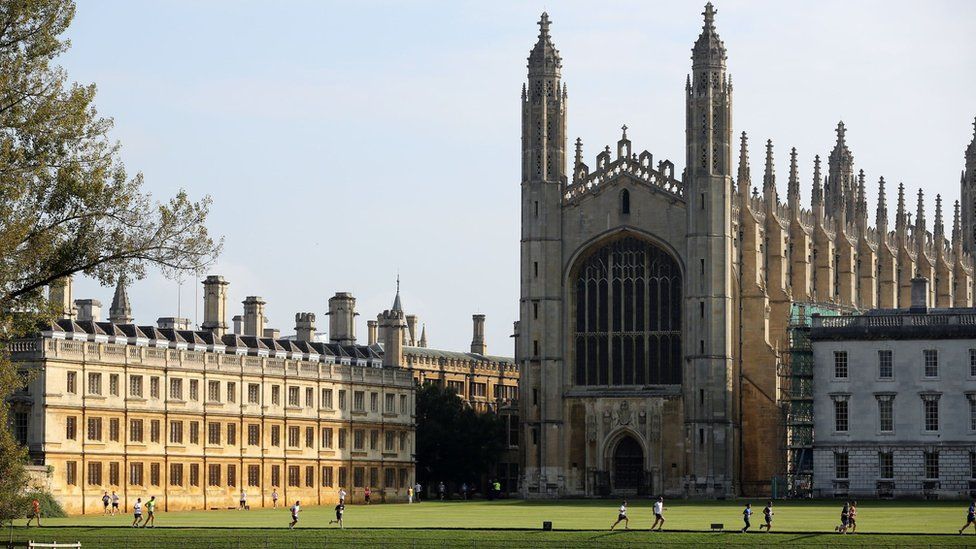
    The University of Cambridge in the United Kingdom has become the first university to announce that it will move all “face-to-face lectures” online for the upcoming 2020-21 academic year. The institution added that it was “likely” social distancing would continue to be required.

    According to a report in The Guardian, the university said that while lectures would continue virtually until summer 2021, it may be possible for smaller teaching groups to take place in person if it “conforms to social-distancing requirements”.

    A statement from the university read: “The university is constantly adapting to changing advice as it emerges during this pandemic. Given that it is likely that social distancing will continue to be required, the university has decided there will be no face-to-face lectures during the next academic year.

    “Lectures will continue to be made available online and it may be possible to host smaller teaching groups in person, as long as this conforms to social-distancing requirements. This decision has been taken now to facilitate planning, but as ever, will be reviewed should there be changes to official advice on coronavirus.”

    All teaching at the university was already moved online in March and exams were being carried out virtually.

  • Rethinking a post-COVID-19 future

    Rethinking a post-COVID-19 future

    “We should not go back to the old ways.”

    We are living through a global pandemic and life as we knew it will perhaps never be the same again, That’s the hope anyway. Because there are a lot of things about the way life was before that need rethinking — and COVID-19 has given us an opportunity to do this.

    In the 21st century, there was life before the virus, there is now lockdown and life during the virus and, at some point, there will be life after the virus — but will the latter be the same as our old way of living? There is much discussion now of ‘getting the economy going’ again, of getting things back to ‘normal’ again but is our plan just to restore the same economic model and the same old systems?

    Or is now the time to rethink the way we live?

    Several falsehoods about our lives have been exposed by the lockdown. Key among these is the myth that the old way of working and studying was the only way: fixed hours of attendance at sites you had to physically travel to. It turns out that this ‘hazri’ culture is not actually essential, and many of these ways of working were just constructs whose aim was to strengthen a type of corporate or darbari culture. Not allowing people to work from home stemmed perhaps from a reluctance to lose control of staff. The institutions that would hire expensive consultants to help them ‘save money’ and work efficiently told us that it was too expensive to have individual desks for staff and subjected them to the horrors of hotdesking. This apparently ‘saved’ some money yet these same organisations would be reluctant to allow staff to work from home routinely even though that would have saved even more money. The permission for ‘working from home’ was given not as the norm, but as some kind of great favour or concession which involved HR, applications and a degree of workplace politics.

    Well now nearly everybody’s working from home and we realise this has actually been possible for many, many years and that perhaps the workplace would have caught up with technology long ago if there weren’t so many dubious management practices and vested interests involved. Apart from the workplace, there is the question of the classroom and what it is — is it a physical reality or an intellectual one? In Britain, university education was once state-funded and all about education rather than businesses.

    “We’ll have to rethink education completely — especially university education.”

    But in the last decade universities have been turned into businesses which are less about education and more about profits. The students are called ‘clients’ and since university fees are now more than three times what they were ten years ago, they are saddled with crippling student debt (student loans are given by a private profit-seeking company). Students invest so much that they are afraid to challenge intellectual views of question anything professors say because they know that they need to get good grades because of their investment. Instead of concentrating on the wellbeing of their students, universities seem to have become more focused on marketing their brand in order to attract a maximum number of ‘customers’ or ‘clients’. But even when the riches poured in, it never seemed to be the academic staff who’d benefit but rather the ‘managers.’

    We’ll have to rethink education completely — especially university education. In Argentina, most young people get their first degree while working full time. Work by day and take evening classes. It might take longer but it definitely seems to be a more productive way to live. Oh, and state universities are free.  Of course, education can not all be virtually based but perhaps a large part of it does need to be.

    Then there’s the question of how society values work. Of how bankers are more highly paid and valued than ‘unskilled’ workers. How financial managers are much better paid than medical professionals. Now we realise who are the professionals that society really needs when in times of trouble: they are the medical professionals, the cleaners, the garbage collectors, the bus drivers, the police, the fire brigade, the people who run food shops and stack shelves. These are essential, these are the people we should value, these are the jobs we need to pay people well to do.

    We need to think of new businesses too. Instead of having an endless number of restaurants and coffee shops to ‘provide employment’ perhaps we should have more businesses whose goal is to contribute to community welfare employing people. We need more cooperative models of working and more localised businesses. Instead of manufacturing fast fashion and throwaway clothes which encourage frivolous spending and whose plastic fibres are clogging up the oceans and rivers, we perhaps should concentrate on businesses that produce food.

    “And guess who governments need to fund now? Not bigshot entrepreneurs and investment bankers, they need to support medical professionals, health workers and research scientists.”

    The virus and subsequent lockdown exposed a number of vulnerabilities in life as we were living it, and one of these was the matter of food production and supply. Perhaps now we need to have a national policy of localised production: local dairy farming, local livestock, locally grown fruit and vegetables. Apart from the fact that this will avoid the issue of complicated supply chains, many people in the health, economic and development sectors have long argued that this is a healthier and more sustainable way to live. This way food production would be organic and fresh – not shipped from the other side of the world. And in terms of food, we need to unlearn the mantra that endless choice is good. The illusion that the more choice you have in choosing, for example, a brand of chocolate shows how ‘free’ you are as people needs to be dispelled. And we need to move back to the idea of quality not quantity in the way we live.

    And new initiatives need to be set up to care for the environment. The enforced detox brought on by the lockdown has shown us bluer skies, clearer air and cleaner waters. We need to have a policy of setting up local initiatives to support this which are goal-oriented and not just motivated by a profit motive.

    And guess who governments need to fund now? Not bigshot entrepreneurs and investment bankers, they need to support medical professionals, health workers and research scientists. And they need to provide free broadband and digital access to all citizens because when push comes to shove this is something that will benefit the whole of society. We need more government spending, new frameworks and new initiatives based on a clear vision of what our priorities are now.

    People and governments need to come together and come up with a new way to live and a new model of economics, We can make a whole new sort of world; a world minus dodgy ‘outsourcing’, privatisation, unsound financial instruments, economic disparity and unbridled greed. But what’s needed is a lot of imaginative ideas and a bold new way of thinking. We need to be creative.