Tag: Iran

  • Iran confirms fresh nuclear talks with European powers

    Iran confirms fresh nuclear talks with European powers

    Iran confirmed fresh talks with European powers to be held on Friday in Istanbul, the country’s state media reported, the first since the United States attacked Iranian nuclear facilities a month ago.

    Iranian diplomats will meet counterparts from Britain, France and Germany, known as the E3, after the trio warned that sanctions could be reimposed on Tehran if it does return to the negotiating table over its nuclear programme.

    Western nations and Israel have long accused Iran of seeking to develop nuclear weapons, a charge Tehran has consistently denied.

    “In response to the request of European countries, Iran has agreed to hold a new round of talks,” said foreign ministry spokesperson Esmail Baghai, as quoted by state TV on Monday.

    The subject of the talks will be Iran’s nuclear programme, it added.

    A German diplomatic source had told AFP on Sunday the E3 were in contact with Tehran and said “Iran must never be allowed to acquire a nuclear weapon”.

    “That is why Germany, France and the United Kingdom are continuing to work intensively in the E3 format to find a sustainable and verifiable diplomatic solution to the Iranian nuclear programme,” the source said.

    Israel launched on June 13 a wave of surprise strikes on its regional nemesis, targeting key military and nuclear facilities.

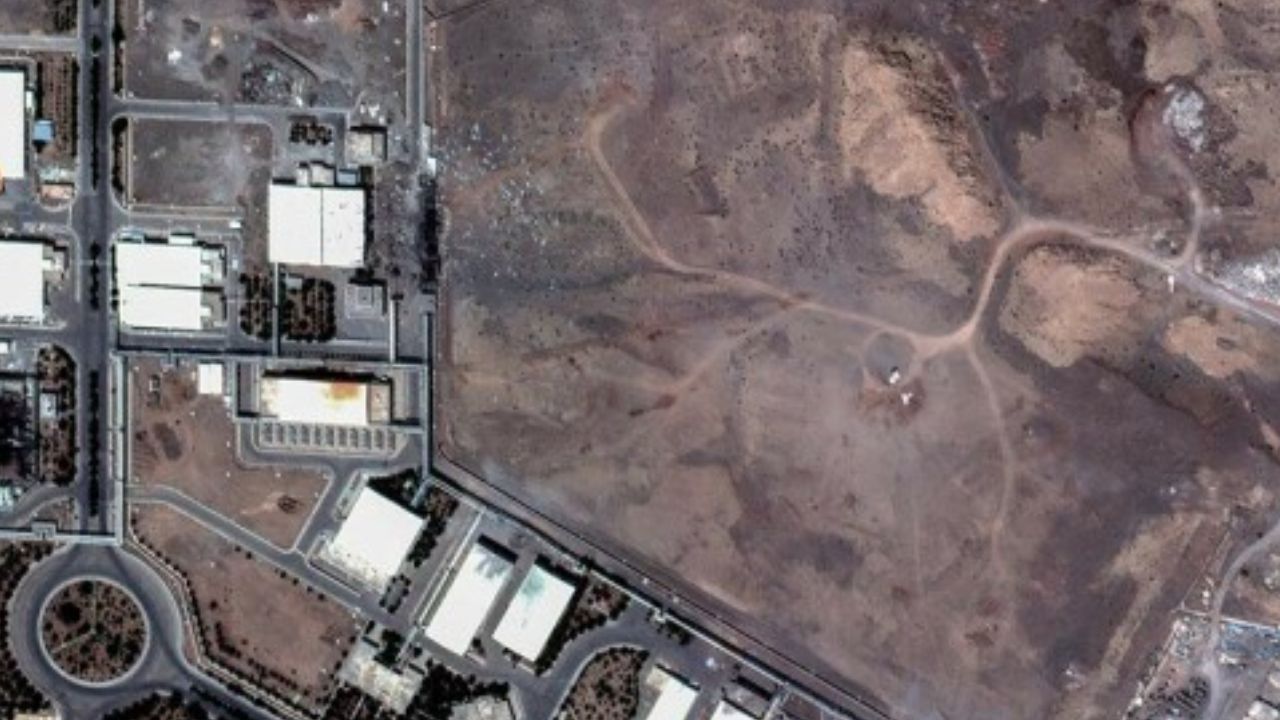
    The United States launched its own set of strikes against Iran’s nuclear programme on June 22, hitting the uranium enrichment facility at Fordo, in Qom province south of Tehran, as well as nuclear sites in Isfahan and Natanz.

    – Kremlin meeting –

    Iran and the United States had held several rounds of nuclear negotiations through Omani mediators before Israel launched its 12-day war against Iran.

    However, US President Donald Trump’s decision to join Israel in striking Iranian nuclear facilities effectively ended the talks.

    The E3 countries last met with Iranian representatives in Geneva on June 21 — just one day before the US strikes.

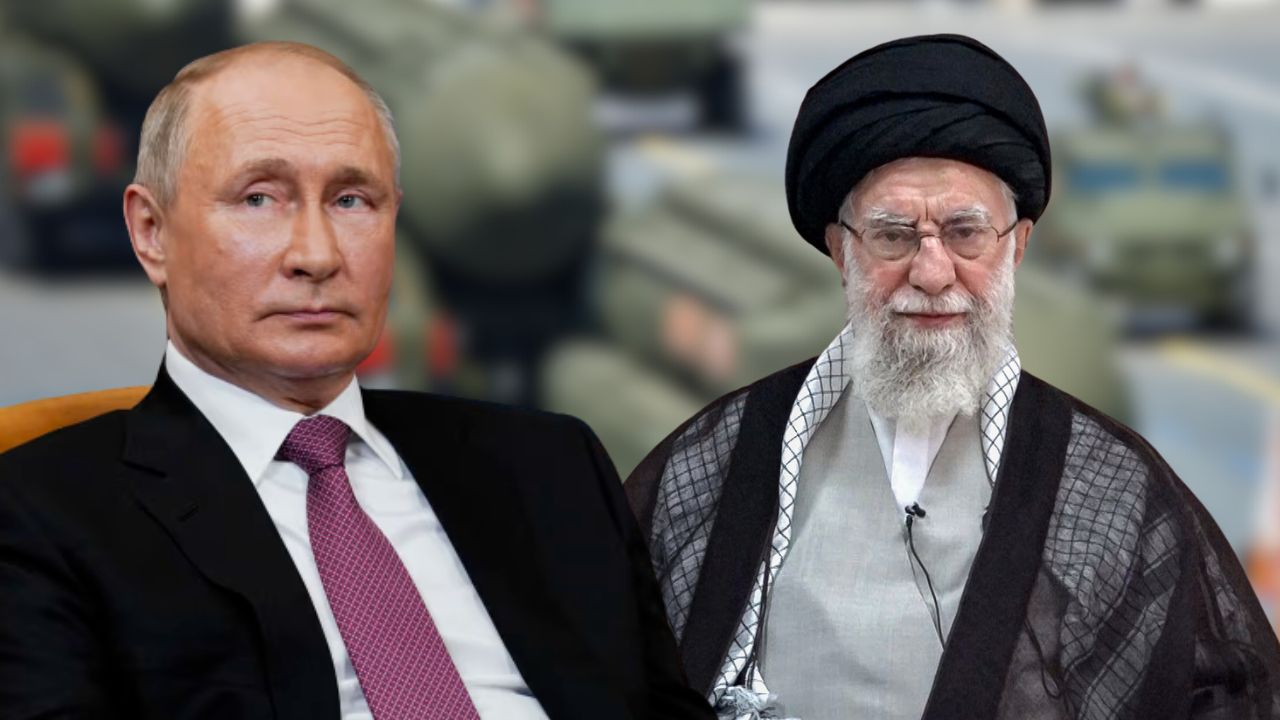
    Also Sunday, Russian President Vladimir Putin held a surprise meeting in the Kremlin with Ali Larijani, top adviser to Iran’s supreme leader on nuclear issues.

    Larijani “conveyed assessments of the escalating situation in the Middle East and around the Iranian nuclear programme”, Kremlin spokesman Dmitry Peskov said of the unannounced meeting.

    Putin had expressed Russia’s “well-known positions on how to stabilise the situation in the region and on the political settlement of the Iranian nuclear programme”, he added.

    Moscow has a cordial relationship with Iran’s clerical leadership and provides crucial backing for Tehran but did not swing forcefully behind its partner even after the United States joined Israel’s bombing campaign.

    – Snapback mechanism –

    Iran and world powers struck a deal in 2015 called the Joint Comprehensive Plan of Action (JCPOA), which placed significant restrictions on Tehran’s nuclear programme in exchange for sanctions relief.

    But the hard-won deal began to unravel in 2018, during Trump’s first presidency, when the United States walked away from it and reimposed sanctions on Iran.

    European countries have in recent days threatened to trigger the deal’s “snapback” mechanism, which allows the reimposition of sanctions in the event of non-compliance by Iran.

    After a call with his European counterparts on Friday, Iranian Foreign Minister Abbas Araghchi said the Western allies had “absolutely no moral (or) legal grounds” for reactivating the snapback sanctions.

    He elaborated in a post to social media Sunday.

    “Through their actions and statements, including providing political and material support to the recent unprovoked and illegal military aggression of the Israeli regime and the US… the E3 have relinquished their role as ‘Participants’ in the JCPOA,” said Araghchi.

    That made any attempt to reinstate the terminated UN Security Council resolutions “null and void”, he added.

    “Iran has shown that it is capable of defeating any delusional ‘dirty work’ but has always been prepared to reciprocate meaningful diplomacy in good faith,” Araghchi wrote.

    However, the German source said Sunday that “if no solution is reached over the summer, snapback remains an option for the E3”.

    Ali Velayati, an adviser to supreme leader Ayatollah Ali Khamenei, said last week there would be no new nuclear talks with the United States if they were conditioned on Tehran abandoning its uranium enrichment activities.
  • Trump declares Iran nuclear victory, Intel says otherwise

    Trump declares Iran nuclear victory, Intel says otherwise

    A preliminary U.S. intelligence assessment has concluded that recent American airstrikes on Iran’s nuclear facilities have only delayed, but not destroyed, its nuclear program despite President Donald Trump’s claims as a fragile ceasefire took hold between Iran and Israel.


    According to the Defense Intelligence Agency report, underground facilities were mostly intact although the entrances to two uranium-enrichment sites were sealed.

    Three people familiar with the findings said that Iran’s enriched uranium stockpile was not destroyed and that some centrifuges were undamaged.


    The strikes, carried out over the weekend, marked the U.S entry into the 12-day Iran-Israel conflict. A ceasefire was declared by President Donald Trump at 0500 GMT on Tuesday, after days of escalating military exchanges.


    Trump had claimed that the U.S. use of 30,000-pound bombs had “obliterated” Iran’s nuclear program. 

    He reiterated the point in a Truth Social post on Tuesday morning:

    “FAKE NEWS CNN, TOGETHER WITH THE FAILING NEW YORK TIMES, HAVE TEAMED UP IN AN ATTEMPT TO DEMEAN ONE OF THE MOST SUCCESSFUL MILITARY STRIKES IN HISTORY. THE NUCLEAR SITES IN IRAN ARE COMPLETELY DESTROYED! BOTH THE TIMES AND CNN ARE GETTING SLAMMED BY THE PUBLIC!”

    U.S. officials told the United Nations Security Council, however, that the strikes had “degraded” Iran’s nuclear infrastructure.

     According to one source, because a large portion of the program is underground, it might have only been delayed the program by one or two months. 

    Iran maintains that the goal of its nuclear research is to produce energy for civilian use.

    Despite its fragility, the ceasefire prompted Israel and Iran to lift civilian restrictions on Tuesday. Israel resumed regular operations, including at Ben Gurion Airport, while Iran reopened its airspace. 

    Markets responded with a global rally as oil prices dropped, reflecting reduced fears of disruption in the Gulf.

    Israeli Prime Minister Benjamin Netanyahu declared: 

    “We have removed two immediate existential threats to us: the threat of nuclear annihilation and the threat of annihilation by 20,000 ballistic missiles.” 


    According to Iranian media, Iranian President Masoud Pezeshkian also claimed a “great victory” and assured Saudi Crown Prince Mohammed bin Salman that Tehran was ready to resolve tensions with the United States.


    The conflict began on June 13 when Israel launched a surprise offensive targeting Iranian nuclear facilities and top military commanders.

     Iran retaliated with a barrage of missiles on Israeli cities and military bases in the largest escalation since the 1980s Iran-Iraq war.

    Iran reported 610 deaths and over 4,764 injuries from Israeli airstrikes. Iran’s missile response killed 28 Israelis, the first time its air defenses were breached on this scale.

    Tensions lingered after the ceasefire announcement, as both nations accused each other of early violations.
     

    Trump, before departing for a NATO summit, expressed frustration:

    “I’ve got to get Israel to calm down now,” he said.

    “Iran and Israel had been fighting so long and so hard that they don’t know what the f*** they’re doing.”

     Israeli officials said that in response for Iranian missiles fired after the ceasefire began, a radar facility close to Tehran was hit. 

    Iran denied firing any missiles at that time and claimed Israel continued its strikes well beyond the agreed window.


    The administration continued talks with Iranian counterparts, and Trump personally brokered the ceasefire with Israeli Prime Minister Netanyahu, according to U.S. sources.

    Both countries said they would uphold the ceasefire as long as the other did not break it.

    Iran’s military command also warned Israel and the U.S. to learn from the “crushing blows” it delivered during the conflict. Israeli military chief Eyal Zamir said the current phase of the conflict had ended but added that operations against Iran-backed militants in Gaza would resume.

  • Russia to sell nuclear weapons to Iran?

    Russia to sell nuclear weapons to Iran?

    Social media has been rife with claims that Russia is ready to sell its nuclear weapons to Iran, after the United States (US) bombing of key Iranian nuclear sites on Sunday.

    Taking to Truth Social on Sunday, US President Donald Trump wrote, “We have completed our very successful attack on the three Nuclear sites in Iran, including Fordow, Natanz, and Isfahan,” adding that the military planes were now on their way home.

    In retaliation, Tehran launched two volleys of 27 missiles, targeting Israel’s main Ben Gurion airport near Tel Aviv, research facilities in the city, and command centres, an Iranian state news agency reported on Sunday.

    After the US attack, which escalated tensions in the Middle East, claims spread on the internet that Moscow was set to sell Tehran its nuclear warheads, provided its strategic partnership with the latter.

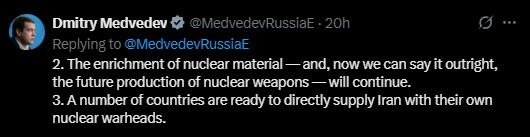
    The confusion stems from the former Russian Prime Minister (PM) and Deputy Chair of the Security Council of the Russian Federation, Dmitry Medvedev’s 10-part threads on X (formerly Twitter). In one of his tweets, Medvedev wrote, “A number of countries are ready to directly supply Iran with their own nuclear warheads.” 

    The tweet was taken out of context to assert that Russia will sell its nuclear warheads to Iran, despite Medvedev’s tweet explicitly indicating that Russia has not named any country nor mentioned its own name. 

    Hence, the claim of nukes being given to Iran is false and highly improbable.

    It should be mentioned here that Russia is a signatory to the Non-Proliferation Treaty (NPT) and one of recognized nuclear-armed states. The treaty prohibits nuclear- states from transferring nuclear weapons or other nuclear explosive devices, or control over such weapons or explosive devices, to any non-nuclear-weapon state. 

    Transferring nukes would be a catastrophic violation of international law and would have immense, immediate consequences for Russia, including severe global isolation and sanctions far beyond anything they currently face.

    While Russia is a strong critic of US foreign policy, officially, Russia maintains its commitment to the NPT.

    Russian President Vladimir Putin had repeatedly stated in the past that Iran has a right to a civilian nuclear energy program; however, he has also emphasized Russia’s opposition to the proliferation of weapons of mass destruction. 

    Transferring nuclear warheads is an incredibly complex and risky undertaking, requiring immense security, transport, and integration into a delivery system. It would be virtually impossible to keep it secret.

  • ‘Nuclear programme deterrent for Pakistan’s security,’ clarifies Dar amid Israel attack claims

    ‘Nuclear programme deterrent for Pakistan’s security,’ clarifies Dar amid Israel attack claims

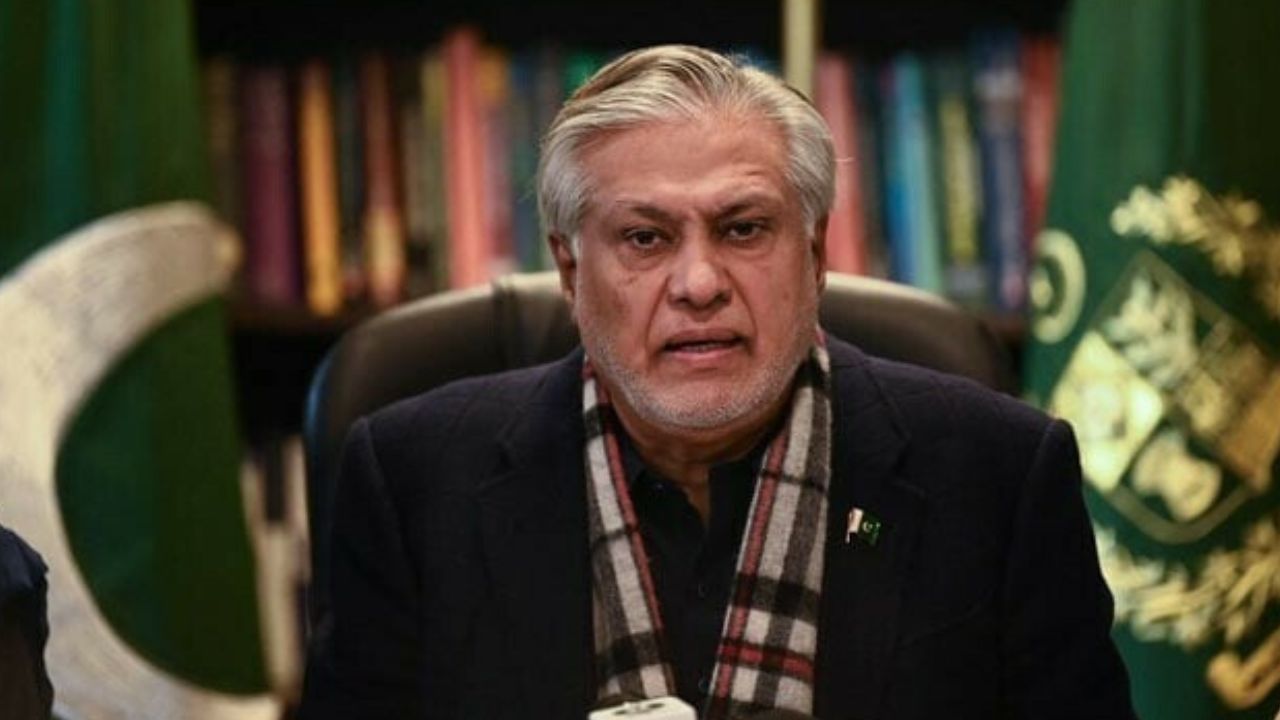
    Pakistan’s Deputy Prime Minister (PM) Ishaq Dar recently stated that “Pakistan’s nuclear programme is a deterrent for Pakistan’s security”. His statement comes in response to false claims circulating online, suggesting that Pakistan would launch a nuclear attack on Israel if further Israeli strikes were carried out on Iran.

    Appearing on a private media outlet on Monday, FM Dar categorically dismissed the claim that Pakistan would carry out a nuclear attack on Israel if Iran were attacked again.

    “It is our stated policy since May 28, 1998, that the nuclear programme is deterrent for Pakistan’s security,” he said.

    Dar stated that although Pakistan is not a signatory to the Non-Proliferation Treaty (NPT), it abides by its principles, which restrict the member countries from proliferating nuclear weapons. “We have not signed the NPT because our position has always been that we would consider doing it if India signs it,” Dar said.

    “God forbid, nuclear war happens,” the deputy PM said, adding that if war happens, then its effects will not be limited to one or two countries, but the whole world.

    On Pakistan’s diplomatic effort to ease the tension in the Middle East following the illegitimate Israeli attack in Iran, he said, “We have talked to several Muslim countries” to push for de-escalation of the conflict.

    Referring to the recently viral video of U.S. President Donald Trump, in which he allegedly claimed that “Pakistan will totally destroy Israel” if it attacks Iran again, Deputy Prime Minister Dar called it “a lie and fake.”

    In the AI-generated fake clip, the U.S. President appears to claim that Pakistan had also threatened to attack the United States, in addition to Israel.


    In the altered clip, President Trump adds: “Pakistan has also warned Israel and the US, because Israel has mistakenly said that Pakistan is number 2 after Iran [in its hit list]. Pakistan is fully alert with its air, land, and marine forces. Pakistan Defence Minister Khawaja Asif said if Israel attacks Iran again, Pakistan will totally destroy Israel. When I say Pakistan should not do that, Pakistan has no problem with us; their army is already on very high alert.

     
    In my opinion, Pakistan should not get involved. This is Israel and Iran’s war. We need peace in the region, we need to stop the fighting, not get in the middle that’s a truth that is the smart move (sic)”

    Upon close examination, using the InVID Verification Plug-in tool, The Current noticed visual distortions and noticeable lip-sync issues around Trump’s mouth, indicating possible cloning.

  • What caused tremors in Pak-Iran border area last night?

    What caused tremors in Pak-Iran border area last night?

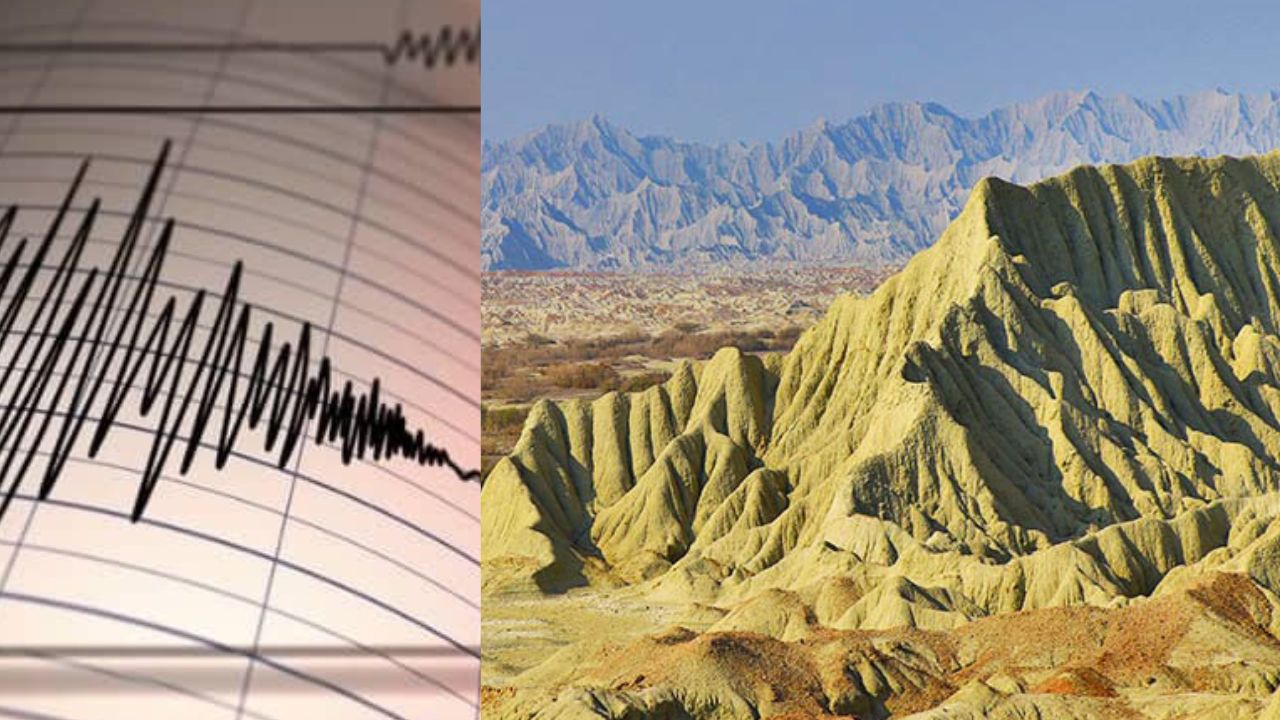
    As Iran and Israel remain locked in conflict for the fourth consecutive day, two earthquakes on Sunday night struck the Pakistan-Iran border region, leading to speculation surrounding the nature of the tremors.

    While social media argued possible nuclear activity, Met Office data said the tremors were nothing but earthquakes – a 2.5-magnitude quake in the Qom region near the Fordow Nuclear Power Plant, and a 4.3-magnitude earthquake in the southwestern Iranian province of Sistan that is contiguous with Pakistan’s Balochistan.

    No casualties were reported in the earthquakes that come hours after Israeli attacks on alleged Iranian nuclear facilities, namely Natanz, Isfahan and Fordow. While the strikes and ambiguity surrounding Iran’s nuclear status led to social media buzz, a day earlier, media reports quoted an Iranian official as confirming that the Israeli airstrikes had earlier hit the Fordow site, which is known for its deep-underground enrichment capabilities.

    The latest military exchange between the archrivals also began when Israel struck Iran’s nuclear and military sites on Friday, killing top commanders and six of its atomic scientists. Israeli strikes prompted Iran to unleash attacks with a barrage of missiles in Tel Aviv, wounding multiple.

    Tel Aviv has said it wants to stop Tehran from building an atomic weapon, which the latter has consistently denied, stating its uranium enrichment programme is for civilian purposes.

    Series of attacks have continued ever since, resulting in multiple casualties on both sides.

    Media reports claimed that as many as 220 individuals, including 70 women, children, top commanders and nuclear scientists, have been killed in Israel’s attack on Iran.

    Several casualties have been reported in Tel Aviv following a series of missile attacks launched by Iran in response to Israel’s aggression.

  • Everyone’s turn will come if Muslim world doesn’t unite: Kh Asif

    Everyone’s turn will come if Muslim world doesn’t unite: Kh Asif

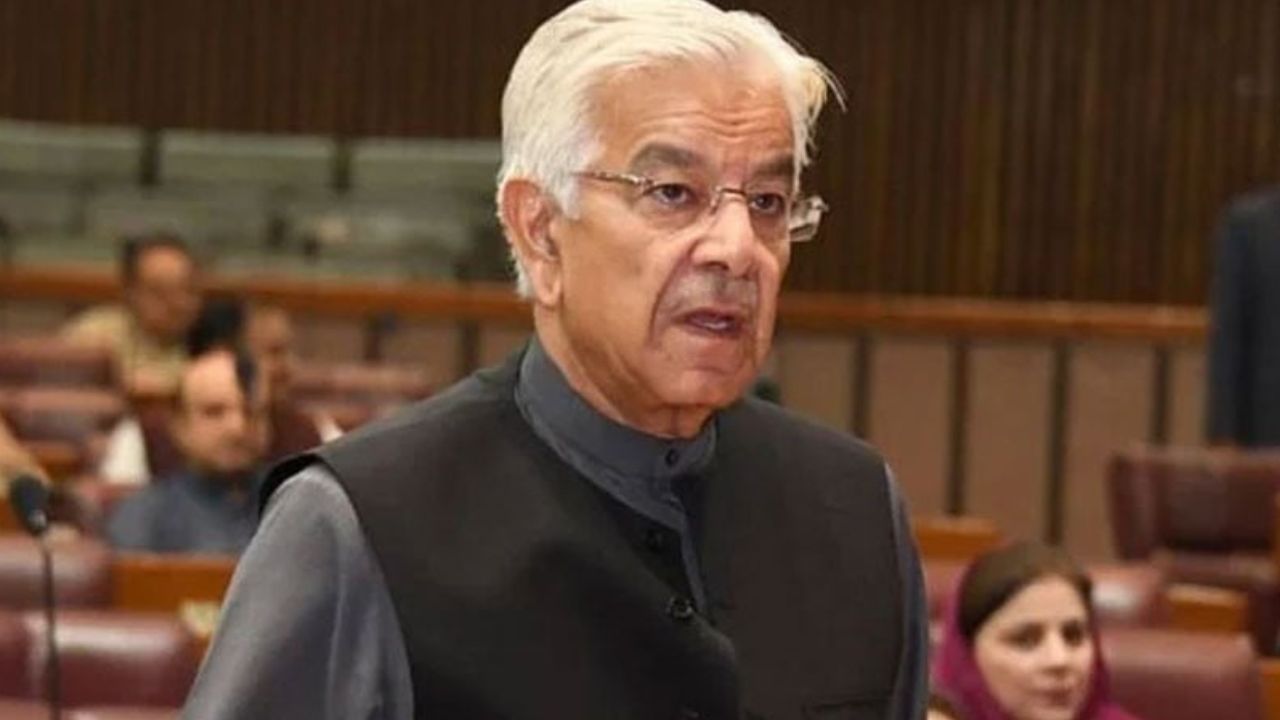
    With the Middle East crisis deepening since after Israel’s deadly strikes on Iran and Tehran’s retaliatory action, Pakistani Defence Minister Khawaja Asif has cautioned that the Muslim world could face dire consequences in absence of unity against aggressors.

    “If the Muslim world does not unite and [every country] keeps on protecting its own interests, everyone’s turn will come,” he said while speaking during a session of the National Assembly (NA) on Saturday, referring to Israel’s crimes against Palestine, Yemen and Iran.

    He said that most Muslim countries were “militarily vulnerable” and those who had sophisticated weapons and equipment “lacked the motivation to fight”.

    Underscoring Islamabad’s longstanding ties with Tehran, the defence minister went on to express solidarity with the country as the Israeli operation continues to target Iranian commanders, nuclear scientists and defence infrastructure.

    The minister also alleged that Israel was “not alone” and had been “provided all sorts of cover” to target Iran’s nuclear facilities. “But we will protect Iran’s interests at the international level in whatever way they need. Iranians are our brothers and neighbours… their sorrow and joy, their pain and happiness is ours.”

    Asif also said that Israel was committing atrocities against Palestinians and was responsible for the destruction of Palestine. “Israel’s hands are stained with the blood of Palestinians… the way children have been martyred and oppressed in Palestine has not triggered a strong enough response from the Islamic world. It is the conscience of non-Muslims that is awakening, but not that of Muslims,” he added.

    Asif also called for a meeting of the Organisation of Islamic Council (OIC) so that Muslim countries can “formulate a joint strategy to confront Israel’s illegitimate actions”. 

    Separately, he went on to criticise incarcerated former prime minister (PM) Imran Khan and ex-army chief Qamar Javed Bajwa, accusing them of “undermining national dignity” by returning captured Indian Air Force (IAF) pilot Abhinandan Varthaman to India following the 2019 stand-off.

    IAF’s Wing Commander Abhinandan was six years ago captured by Pakistan after his MiG 21 Bison aircraft was shot down by a Pakistan Air Force (PAF) jet. Then-premier Khan, after consulting with the military leadership, had decided to return him to India soon after.

  • Iran fires back at Israel after onslaught targets nuclear facilities

    Iran fires back at Israel after onslaught targets nuclear facilities

    Iran struck Israel early Saturday with barrages of missiles after a massive onslaught targeted the Islamic republic’s nuclear and military facilities, and killed several top generals.

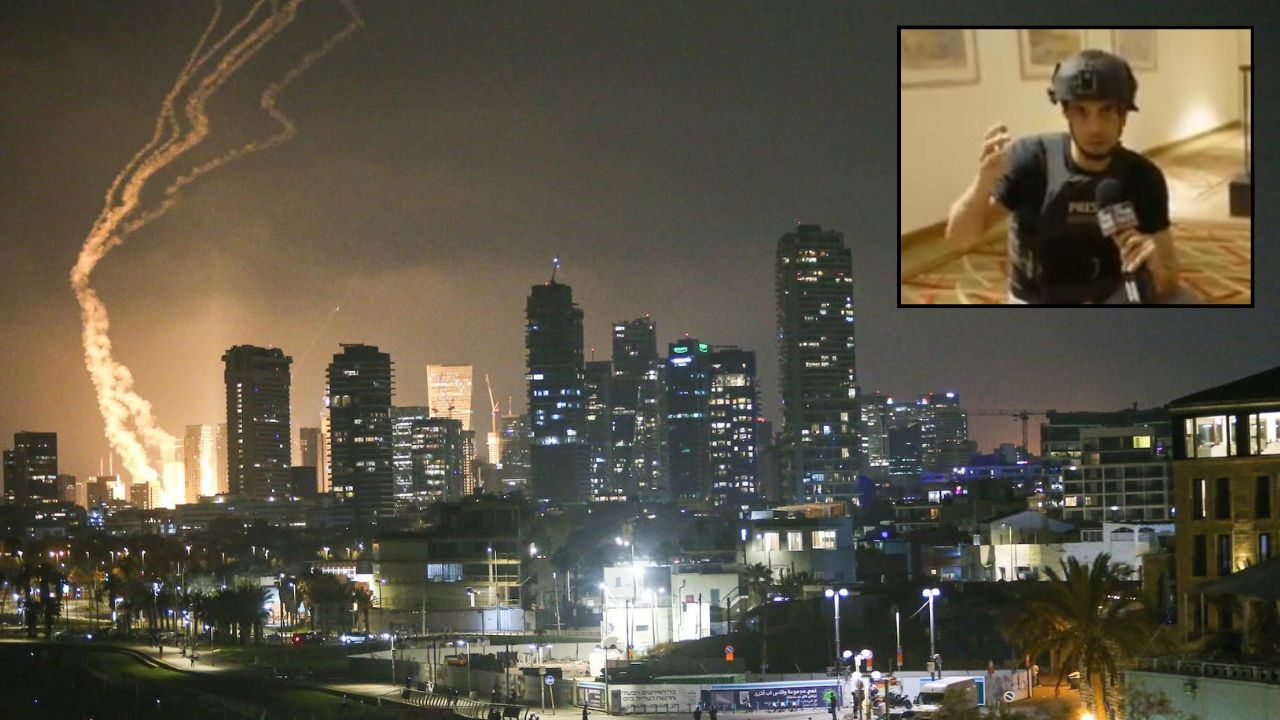
    Air raid sirens and explosions rang out across Israel overnight, with its military calling on residents to take refuge in bomb shelters Saturday morning.

    The Israeli military said dozens of missiles — some intercepted — had been fired in the latest salvos from Iran.

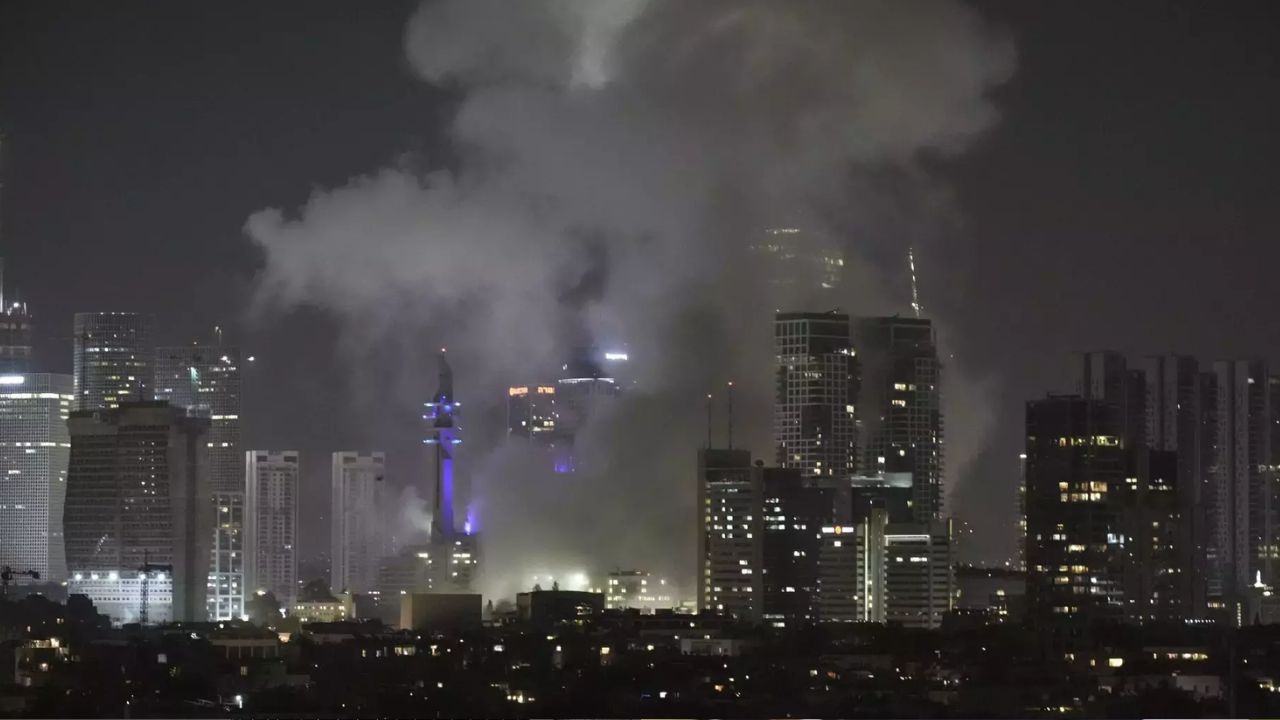
    Smoke was billowing above skyscrapers in downtown Tel Aviv, an AFP journalist reported, as Iran’s Revolutionary Guard said it had attacked dozens of targets in Israel.

    Israel’s firefighting service said its teams were responding to the aftermath of Iranian missile strikes, including working to rescue people trapped in a high-rise building.

    Rescuers said 34 people had been wounded in the Gush Dan area, including a woman who later died of her injuries, according to Israeli media reports.

    Resident Chen Gabizon told AFP he ran to an underground shelter after receiving an alert notification.

    “After a few minutes, we just heard a very big explosion, everything was shaking, smoke, dust, everything was all over the place,” he said.

    In Iran’s capital Tehran early Saturday, fire and heavy smoke billowed from Mehrabad airport, an AFP journalist said, as local media reported a blast in the area.

    Iran said earlier it had activated its air-defence system and explosions could be heard across the capital.

    Dozens of people took to the streets of Tehran overnight to cheer their country’s military response, with some waving national flags and chanting anti-Israel slogans.

    Iran’s ambassador to the UN said Friday that 78 people had been killed and 320 wounded in the first wave of strikes by Israel.

    After a day of back-and-forth bombardments, UN chief Antonio Guterres called for the two nations to cease fire.

    “Enough escalation. Time to stop. Peace and diplomacy must prevail,” he wrote on X late Friday.

    – Calls for dialogue –

    US officials said they were helping Israel defend against the missile attacks, even as Washington insisted it had nothing to do with Israel’s strikes on Iran.

    US President Donald Trump agreed on a call with UK Prime Minister Keir Starmer that “dialogue and diplomacy” were needed to calm the crisis, Starmer’s office said.

    Trump also spoke with Israel’s Prime Minister Benjamin Netanyahu Friday, US officials said, without elaborating.

    Iran’s missile salvo came hours after Israel said its widespread air raids had killed several top Iranian generals, including most of the senior leadership of the Revolutionary Guards’ air force.

    It had launched several rounds of strikes that hit about 200 targets including nuclear facilities and air bases.

    Iran’s supreme leader Ayatollah Ali Khamenei vowed to bring Israel “to ruin” during a televised address.

    In Israel, Netanyahu issued a statement calling on the Iranian public to unite against their own government. But he also warned more attacks were coming.

    “In the past 24 hours, we have taken out top military commanders, senior nuclear scientists, the Islamic regime’s most significant enrichment facility and a large portion of its ballistic missile arsenal,” Netanyahu said.

    While stressing that it was not involved in the Israeli attacks, the United States warned Iran not to attack its personnel or interests.

    Tehran nevertheless said Washington would be “responsible for consequences”.

    – Commanders killed –

    The strikes killed Iran’s highest-ranking military officer, armed forces chief of staff Mohammad Bagheri, and the head of the Revolutionary Guards, Hossein Salami, Iranian media reported.

    Khamenei swiftly appointed new commanders to replace those killed.

    “The senior chain of command of the air force of the Islamic Revolutionary Guards Corps had assembled in an underground command centre to prepare for an attack on the State of Israel,” the Israeli military said, adding that its attacks had killed most of them.

    Iran confirmed that the Guards’ aerospace commander had been killed, along with “a group of brave and dedicated fighters”.

    AFP images showed a gaping hole in the side of a Tehran residential building that appeared to have sustained a targeted strike.

    Tasnim news agency said six nuclear scientists were among the dead.

    Oil prices surged while stocks sank on the Israeli strikes.

    – Radiation ‘unchanged’ in Natanz area –

    The conflict raised questions as to whether Sunday’s sixth round of talks planned between the United States and Iran to seek a deal on Iran’s nuclear programme would go ahead in Oman.

    After the first wave of strikes on Friday, Trump urged Iran to “make a deal”, adding that Washington was “hoping to get back to the negotiating table”.

    Iran confirmed that above-ground sections of the Natanz enrichment plant had been destroyed, but the International Atomic Energy Agency (IAEA) said radiation levels outside the site “remained unchanged”.

    “Most of the damage is on the surface level,” said the Atomic Energy Organisation of Iran’s spokesman Behrouz Kamalvandi.

    Iran said there was only limited damage to the Fordo and Isfahan nuclear sites.

    The United States and other Western governments have repeatedly accused Iran of seeking a nuclear weapon, an ambition it has consistently denied.

    Netanyahu said Israeli intelligence had concluded that Iran was approaching the “point of no return” on its nuclear programme.

    Israel had called for global action after the IAEA accused Iran on Thursday of non-compliance with its obligations.

    Iran currently enriches uranium to 60 percent, far above the 3.67-percent limit set by a largely moribund 2015 agreement with major powers, but still short of the 90 percent threshold needed for a nuclear warhead.

  • Never seen such an attack against Israeli city:  Fox News correspondent

    Never seen such an attack against Israeli city: Fox News correspondent

    FOX News Chief Foreign Correspondent Trey Yingst has described the intensity of Iran’s retaliatory attack against Israel on Friday night, saying Tel Aviv was under a “massive missile barrage”.

    “I’ve reported here for nearly seven years and never seen such an attack against an Israeli city,” he said while reporting from Tel Aviv, adding, “the amount of self-defence going off there is unprecedented.”

    He said that “apparently”, some of Tel Aviv’s central positions had been targeted. “Israel’s Ministry of Defence, the HaKirya (or Kirya), their version of the Pentagon, is located just a couple of miles from here,” he added.

    In response to Israel’s illegal military offensive Rising Lion that killed several civilians, a top general and nuclear scientists, Iran unleashed a barrage of missiles in Tel Aviv last night, inflicting significant damage.

    On Saturday morning, Tehran launched a fresh wave of attacks against Israel, state media said.

    Citing a senior Iranian military official, General Ahmad Vahidi, Iranian state media IRNA reported that “Operation True Promise 3”, as the retaliatory strikes are dubbed, will continue for as long as necessary.

    The Israeli military said dozens of missiles, some of which were intercepted, had been fired in the latest salvos from Iran.

    Appearing on CNN earlier in the day, Israel’s Ambassador to the United States Yechiel Leiter said that one woman was killed and “some 40 people” were injured by the Iranian strikes.

    “We faced three salvos of ballistic missiles fired from Iran today, about 150 in total,” he said, adding, “We expect that the Iranians, who have a considerable volume of ballistic missiles, somewhere in the neighbourhood of 2,000, will continue to fire them.”

  • US withdraws staff amid fears of Israeli strike on Iran

    US withdraws staff amid fears of Israeli strike on Iran

    President Donald Trump said US personnel were being moved from the potentially “dangerous” Middle East on Wednesday as nuclear talks with Iran faltered and fears grew of a regional conflict.

    Trump also reiterated that he would not allow Iran to have a nuclear weapon, amid mounting speculation that Israel could strike Tehran’s facilities.

    Iran threatened Wednesday to target US military bases in the region if conflict breaks out.

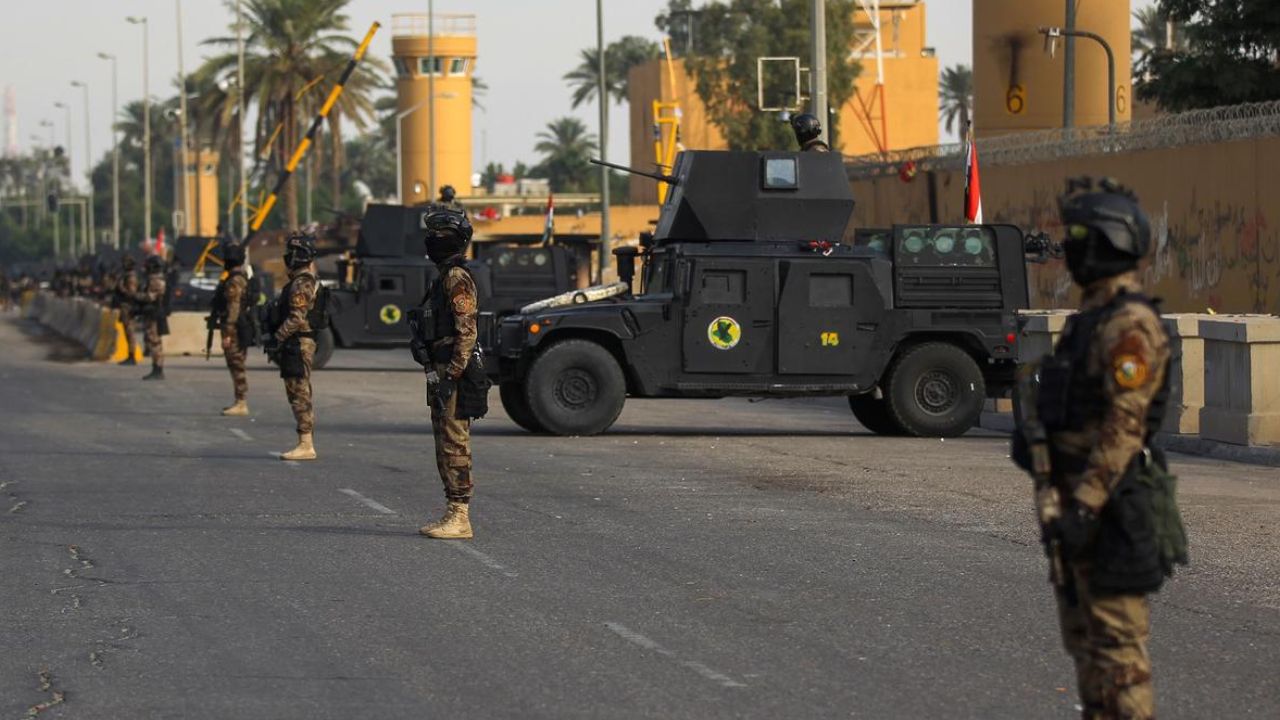
    A US official had earlier said that staff levels at the embassy in Iraq were being reduced over security concerns, while there were reports that personnel were also being moved from Kuwait and Bahrain.

    “Well they are being moved out because it could be a dangerous place,” Trump told reporters in Washington when asked about the reports of personnel being moved.

    “We’ve given notice to move out and we’ll see what happens.”

    Trump then added: “They can’t have a nuclear weapon, very simple. We’re not going to allow that.”

    Tehran and Washington have held five rounds of talks since April to thrash out a new nuclear deal to replace the 2015 accord that Trump abandoned during his first term in 2018.

    The two sides were due to meet again in coming days.

    Trump had until recently expressed optimism about the talks, but said in an interview published Wednesday that he was “less confident” about reaching a nuclear deal.

    Since returning to office in January, Trump has revived his “maximum pressure” campaign on Tehran, backing nuclear diplomacy but warning of military action if it fails.

    The US president says he has pressed Israeli Prime Minister Benjamin Netanyahu to hold off striking Iran’s nuclear facilities to give the talks a chance, but has increasingly signaled that he is losing patience.

    Iran however warned it would respond to any attack.

    “All its bases are within our reach, we have access to them, and without hesitation we will target all of them in the host countries,” Iran’s Defence Minister Aziz Nasirzadeh said in response to US threats of military action if the talks fail.

    ‘Suffer more losses’

    “God willing, things won’t reach that point, and the talks will succeed,” the minister said, adding that the US side “will suffer more losses” if it came to conflict.

    The United States has multiple bases in the Middle East, with the largest located in Qatar.

    In January 2020, Iran fired missiles at bases in Iraq housing American troops in retaliation for the US strike that killed top Iranian general Qassem Soleimani days before at the Baghdad airport.

    Dozens of US soldiers suffered traumatic brain injuries.

    Amid the escalating tensions, the UK Maritime Trade Operations, run by the British navy, also advised ships to transit the Gulf with caution.

    Iran and the United States have recently been locked in a diplomatic standoff over Iran’s uranium enrichment, with Tehran defending it as a “non-negotiable” right and Washington calling it a “red line.”

    Iran currently enriches uranium to 60 percent, far above the 3.67-percent limit set in the 2015 deal and close though still short of the 90 percent needed for a nuclear warhead.

    Western countries have long accused Iran of seeking to acquire atomic weapons, while Tehran insists its nuclear program is for peaceful purposes.

    Last week, Iran’s supreme leader Ayatollah Ali Khamenei said enrichment is “key” to Iran’s nuclear program and that Washington “cannot have a say” on the issue.

    During an interview with the New York Post’s podcast “Pod Force One,” which was recorded on Monday, Trump said he was losing hope a deal could be reached.

    “I don’t know. I did think so, and I’m getting more and more — less confident about it. They seem to be delaying and I think that’s a shame. I am less confident now than I would have been a couple of months ago,” he said.

    Iran has said it will present a counter-proposal to the latest draft from Washington, which it had criticised for failing to offer relief from sanctions — a key demand for Tehran, which has been reeling under their weight for years.

  • Khamenei wants Pak-Iran alliance for ending Israeli crimes in Gaza

    Khamenei wants Pak-Iran alliance for ending Israeli crimes in Gaza

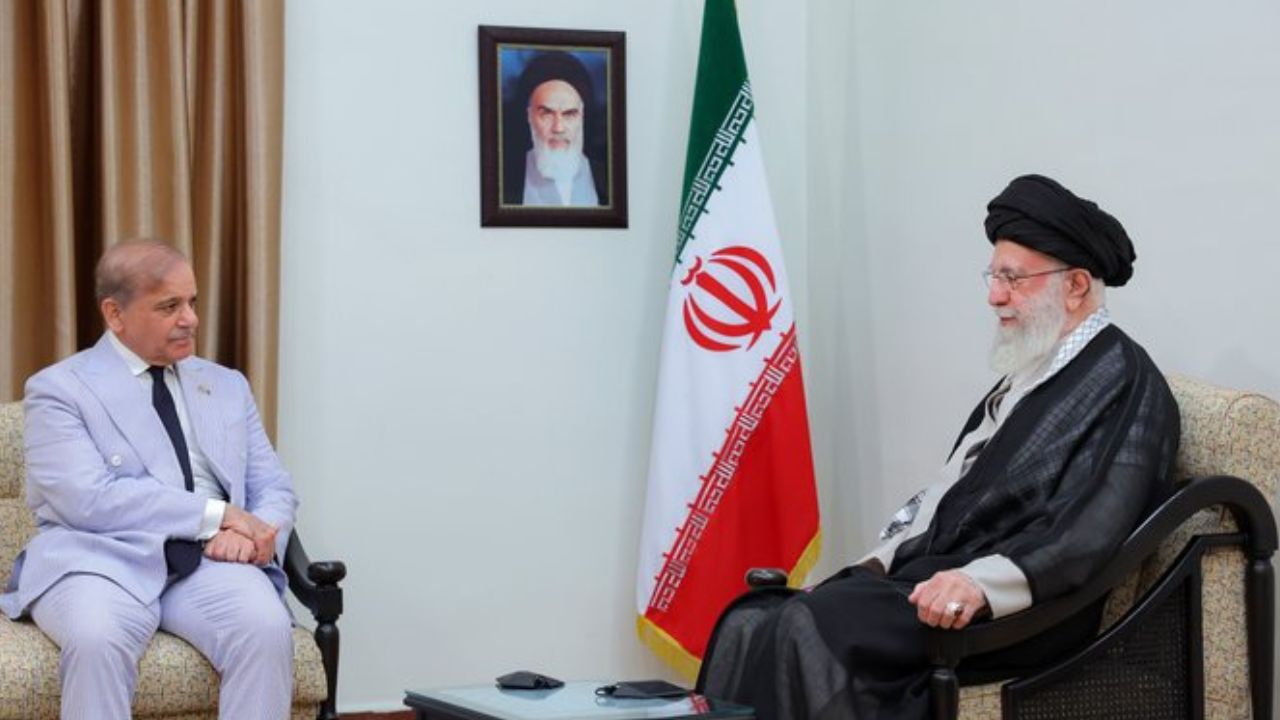
    Iran’s supreme leader Ayatollah Ali Khamenei took to X (formerly Twitter) on Monday to emphasise the Pakistan-Iran alliance for an end to Israeli crimes in Gaza.

    Following the meeting with Prime Minister (PM) Shehbaz Sharif, a series of tweets was made from Iran’s supreme leader’s official X handle. 

    In one of his tweets, he wrote, “Effective, joint efforts by Iran and Pakistan are necessary to stop the Zionist regime’s crimes in Gaza.”

    In another tweet, calling Pakistan’s stance regarding the issue of Palestine “commendable”, Khamenei wrote, “While there have always been inducements for Islamic countries to establish ties with the Zionist regime, Pakistan has never been influenced by those inducements.”

    One of his tweets reads, “At a time when the warmongers in the world have numerous motives for creating conflicts and wars, the only way to ensure the security of the Islamic Ummah is the unity of Muslim nations.”

    He underscored that the Palestinian issue is the most important issue in the “Islamic world”.

    The supreme leader further said that the conditions in Gaza “have deteriorated to such an extent that people in Europe and the US are holding protests against their governments. But in these same circumstances, some Muslim governments are standing with the Zionist regime.”

    Khamenei asserted that Tehran and Islamabad can assist one another in many fields. “We are hopeful there will be a comprehensive expansion of ties, particularly in economic, political, and cultural spheres,” he added.

    During a joint press conference in Tehran, accompanied by the Iranian President on Monday, PM Shehbaz highlighted the long-standing cultural and historical ties between Pakistan and Iran.

    On the ongoing Gaza conflict, PM Shehbaz expressed Pakistan’s solidarity with the Palestinian people, decrying the Israeli aggression that has resulted in the deaths of nearly 54,000 Palestinians.

    Shehbaz is currently on a four-nation tour to friendly countries, where he will express his gratitude for their support for Pakistan during the recent military escalation with India.

    On Monday, the Pakistani Prime Minister was received by Iranian President Masoud Pezeshkian at Saadabad Palace in the Iranian capital, where he received a guard of honour.