Tag: Japan

  • Viral baby monkey ‘Punch’ begins life with troop after months of isolation

    Viral baby monkey ‘Punch’ begins life with troop after months of isolation

    A baby monkey who drew attention online after being seen clinging to a stuffed orangutan toy has started integrating with other monkeys at a zoo in Japan.

    Punch, a young Japanese macaque at Ichikawa City Zoo, was rejected by his biological mother shortly after his birth in July last year. Zookeepers gave him a soft orangutan toy as a substitute for maternal comfort.

     The toy, later nicknamed “Ora-mama”, became a constant presence, with videos showing Punch dragging it around and holding it closely.

    Clips of the young macaque with the toy circulated widely on social media earlier this month, prompting an outpouring of support and the hashtag #KeepGoingPunch” as viewers followed his development.

    Zoo officials have since reported that Punch has begun interacting more with members of his troop. His initial attempts to approach other monkeys were described as overwhelming, but caretakers observed gradual changes in his behaviour.

    Recently, another monkey was seen grooming him, a key indicator of acceptance in primate groups. Grooming plays a central role in macaque social structures, signaling trust and group bonding. 

    Additional footage shared by the zoo showed Punch playing with younger monkeys and climbing onto their backs. In one instance, an older monkey was seen holding him, a gesture observers interpreted as a sign of social inclusion.

    Shumpei Miyakoshi, a caretaker at the zoo, said Punch has become more proactive in engaging with others. “He’s actively engaging with other monkeys, and I can feel he’s growing up,” Miyakoshi said, adding that even when scolded, the young macaque quickly regains composure and continues interacting.
  • Taliban delegation visits Japan in rare trip outside region

    Taliban delegation visits Japan in rare trip outside region

    A Taliban government delegation was visiting Japan for the first time on Monday, in a rare diplomatic visit outside of the region.

    The Afghan delegation left Kabul on Saturday, in a visit that local media said would last one week and included officials from the higher education, foreign affairs, and economy ministries.

    “We seek dignified interaction with the world for a strong, united, advanced, prosperous, developed Afghanistan and to be an active member of the international community,” Latif Nazari, a deputy minister at the ministry of economy who is part of the delegation, tweeted on Saturday.

    The Taliban government makes regular visits to neighbouring and regional countries, including in Central Asia, Russia and China.

    However, it has only officially visited Europe for diplomacy summits in Norway in 2022 and 2023.

    Japan’s embassy in Kabul temporarily relocated to Qatar after the fall of the previous foreign-backed government and the takeover by the Taliban in 2021.

    But it has since reopened and resumed diplomatic and humanitarian activities in the country.

    The Afghan delegation plans to “exchange views with Japanese government officials during their stay”, Japan’s public broadcaster NHK reported, citing unnamed Afghan diplomatic sources.

    Japan’s foreign ministry could not immediately comment on the visit when contacted by AFP.

  • Drunken Japan official loses drug dealer files

    Drunken Japan official loses drug dealer files

    A drunken night out led to a Japanese finance ministry official losing documents containing personal information about nearly 200 people suspected of illegal drug dealings, local media reported.

    The official with the ministry’s customs and tariff bureau guzzled nine glasses of beer on a five-hour bender last week before realising their bag was gone, public broadcaster NHK said Monday.

    In the missing bag were documents with details of 187 individuals, including names and addresses of suspected drug smugglers as well as recipients of cannabis seeds.

    The official reportedly started drinking with customs staff in Yokohama, near Tokyo, at around 6 pm Thursday.

    The incident “significantly undermined public trust in us, and we’re deeply sorry”, the ministry told local media, adding the official in question will be severely punished.

    The finance ministry could not be reached by AFP on Tuesday, which is a public holiday in Japan.

  • More than 95,000 Japanese aged over 100, most of them women

    More than 95,000 Japanese aged over 100, most of them women

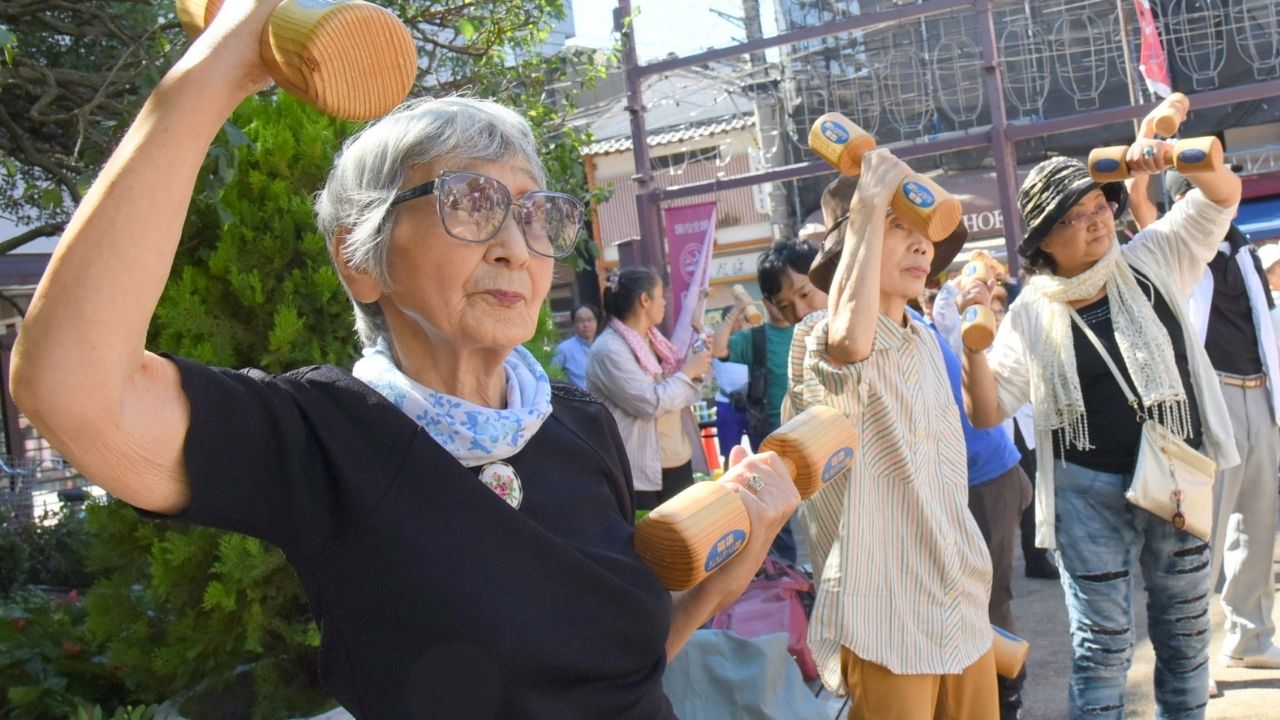
    The number of people in Japan aged 100 or older has hit a record high of more than 95,000 — almost 90 percent of them women — government data showed Tuesday.

    The figures further highlight the slow-burning demographic crisis gripping the world’s fourth-biggest economy as its population ages and shrinks.

    As of September 1, Japan had 95,119 centenarians, up 2,980 year-on-year, with 83,958 of them women and 11,161 men, the health ministry said in a statement.

    On Sunday, separate government data showed that the number of people over the age of 65 hit a record high of 36.25 million, accounting for 29.3 percent of Japan’s population.

    The proportion puts Japan at the top of a list of 200 countries and regions with a population of over 100,000 people, the Ministry of Internal Affairs and Communications said.

    Japan is currently home to the world’s oldest living person, Tomiko Itooka, who was born on May 23, 1908 and is 116 years old, according to the US-based Gerontology Research Group.

    The previous record-holder, Maria Branyas Morera, died last month in Spain at the age of 117.

    Itooka lives in a nursing home in Ashiya, Hyogo prefecture in western Japan, the ministry said.

    She often says “thank you” to the nursing home staff and expresses nostalgia about her hometown, the ministry said.

    “I have no idea at all about what’s the secret of my long life,” Japan’s oldest man, Kiyotaka Mizuno, who is 110, told local media.

    Mizuno, who lives in Iwata, Shizuoka prefecture in central Japan with his family, gets up at 6:30 am every morning and eats three meals a day — without being picky about his food.

    His hobby is listening to live sports, including sumo wrestling, the ministry said.

    Japan is facing a steadily worsening population crisis, as its expanding elderly population leads to soaring medical and welfare costs, with a shrinking labour force to pay for it.

    The country’s overall population is 124 million, after declining by 595,000 in the previous,  according to previous government data.

    The government has attempted to slow the decline and ageing of its population without meaningful success, while gradually extending the retirement age — with 65 becoming the rule for all employers from fiscal 2025.

  • The Glassworker set to premiere at Hiroshima animation festival

    The Glassworker set to premiere at Hiroshima animation festival

    Pakistan’s first Ghibli style animated film, The Glassworker, will be screened at the Hiroshima Animation Festival in Japan on  Saturday August 17, 2024. Among thousands of entries from 97 countries and regions across the world, it is going to compete in the ‘Feature Competition’ category.

    This is an achievement that showcases Pakistan’s animation talent on the global stage. The Glassworker promises a heartwarming and visually stunning experience.

    The film, directed by Usman Riaz and Mairam Riaz Paracha and produced by Geo Films, was released on July 26, 2024 in Pakistan. It has now crossed the 30 million milestone at the box office.

  • Western ambassadors to skip Nagasaki memorial after Japan exclude Israel

    Western ambassadors to skip Nagasaki memorial after Japan exclude Israel

    Ambassadors from Western countries including the United States will skip a ceremony marking the 79th anniversary of the bombing of Nagasaki after Israel was snubbed, officials said Wednesday.

    Nagasaki’s mayor last week said that Israel’s ambassador Gilad Cohen was not invited to Friday’s event in the southern Japanese city because of the risk of possible protests over the Gaza conflict.

    The US and British embassies said on Tuesday that their ambassadors would not take part as a result, and that their countries would be represented by lower-ranking diplomats.

    Media reports said that Australia, Italy, Canada and the European Union, who together with the US, Britain and Germany signed a strongly worded joint letter to Nagasaki’s mayor last month, would follow suit.

    US ambassador Rahm Emanuel will not attend “after the mayor of Nagasaki politicised the event by not inviting the Israeli ambassador”, an embassy spokesperson told AFP.

    Instead Emanuel, 64, who was ex-president Barack Obama’s chief of staff, will go to a separate event at a temple in Tokyo, the spokesperson said.

    The British embassy said that ambassador Julia Longbottom would also not be in Nagasaki, saying that not inviting Israel “creates an unfortunate and misleading equivalency with Russia and Belarus — the only other countries not invited to this year’s ceremony.”

    A spokesperson for the French embassy said that its number two would attend, telling AFP that the “decision not to invite the representative of Israel is regrettable and questionable”.

    Nagasaki mayor Shiro Suzuki had said last week that the decision not to invite Cohen was “not politically motivated” but based on a desire to “hold the ceremony in a peaceful and sombre atmosphere”.

    In June Suzuki said Nagasaki had sent a letter to the Israeli embassy calling for an “immediate ceasefire” in Gaza.

    Cohen, who was invited to and attended a memorial ceremony on Tuesday in Hiroshima, last week had said the Nagasaki decision “sends a wrong message to the world”.

    “As a close friend and like-minded nation of Japan, Israel has attended this ceremony for many years to honor the victims and their families,” he wrote on social media platform X.

    On Monday Cohen told US broadcaster CNN that the security concerns were “invented” and that he was “really surprised by (Suzuki) hijacking this ceremony for his political motivations.”

    In their letter to Suzuki seen by AFP, the six Western envoys had warned that if Israel was excluded “it would become difficult for us to have high-level participation at this event.”

    Government spokesman Yoshimasa Hayashi on Wednesday declined to comment, saying invitations were “a decision for the organiser, Nagasaki City.”

    A Nagasaki official in charge of the ceremony said it was “obviously better to have high-level individuals, like ambassadors themselves, taking part”.

    “What is important is that representatives of the countries will attend the ceremony,” he told AFP.

    hih-mac-stu/kaf/mca

    © Agence France-Presse

  • China warns US, Japan to ‘stop creating imaginary enemies’

    China warns US, Japan to ‘stop creating imaginary enemies’

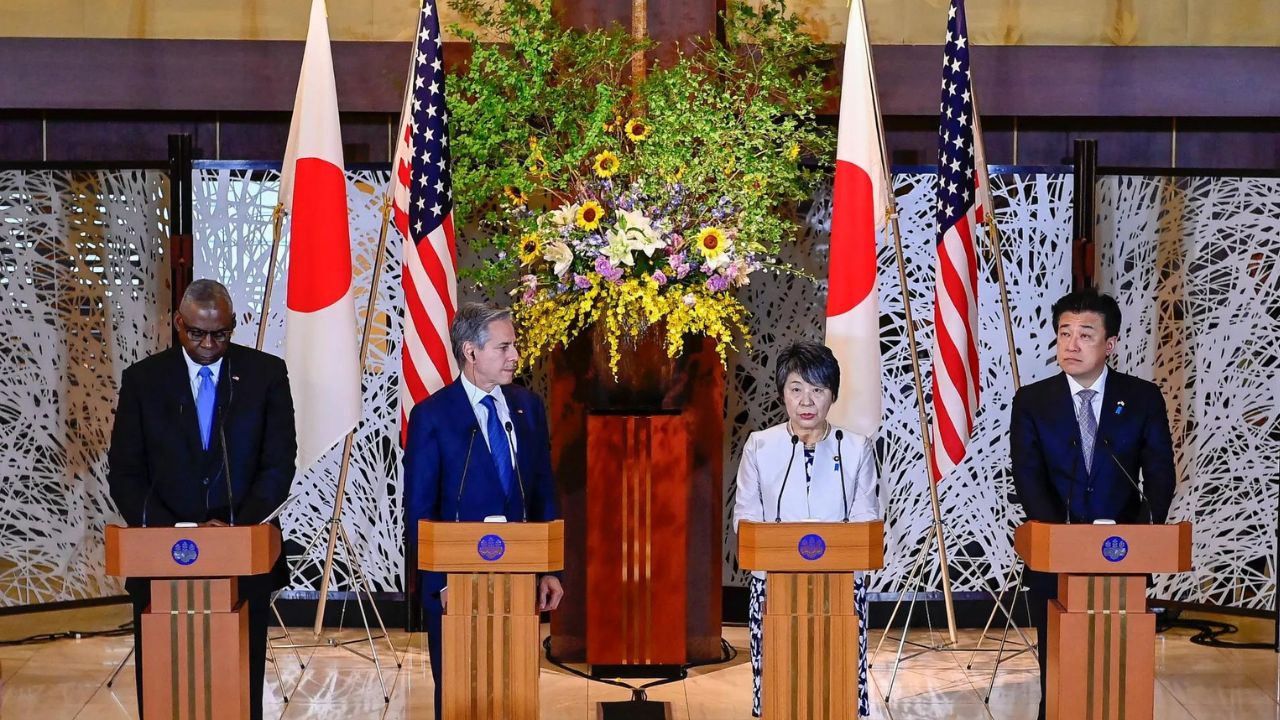
    Beijing on Monday warned the United States and Japan to “stop creating imaginary enemies” after the countries lashed out against China’s actions in the South China Sea in Tokyo talks.

    “We strongly urge the US and Japan to immediately stop interfering in China’s internal affairs and stop creating imaginary enemies,” foreign ministry spokesman Lin Jian said.

    Following talks in the Japanese capital on Sunday, the US and the hosts slammed Beijing’s “destabilizing actions” in the South China Sea while also condemning Russia’s growing military cooperation with China and North Korea.

    US Secretary of State Antony Blinken, Defense Secretary Lloyd Austin and their Japanese counterparts “reiterated their strong objections to the PRC’s unlawful maritime claims, militarization of reclaimed features, and threatening and provocative activities in the South China Sea”, a joint statement said, using an acronym for China.

    China’s “destabilizing actions in this region include unsafe encounters at sea and in the air, efforts to disrupt other countries’ offshore resources exploitation, as well as the dangerous use of Coast Guard and maritime militia vessels”, the communique added.

    They accused China of “intensifying attempts to unilaterally change the status quo by force or coercion in the East China Sea” and that Chinese “foreign policy seeks to reshape the international order for its own benefit at the expense of others”.

    China’s Lin on Monday said the joint statement “disregards facts, mixes up right and wrong maliciously attacks China’s foreign policy”.

    He added the communique “crudely meddles in China’s internal affairs, maliciously attacks and smears China on maritime issues, makes thoughtless remarks on China’s normal military development and defence policy, exaggerates and kicks up a fuss about the China threat, and maliciously hypes up regional tensions”.

    “China deplores and firmly opposes this,” Lin said.

    mjw-je/rsc

    © Agence France-Presse

  • Laughter is good for you: Japanese city makes it a must

    Laughter is good for you: Japanese city makes it a must


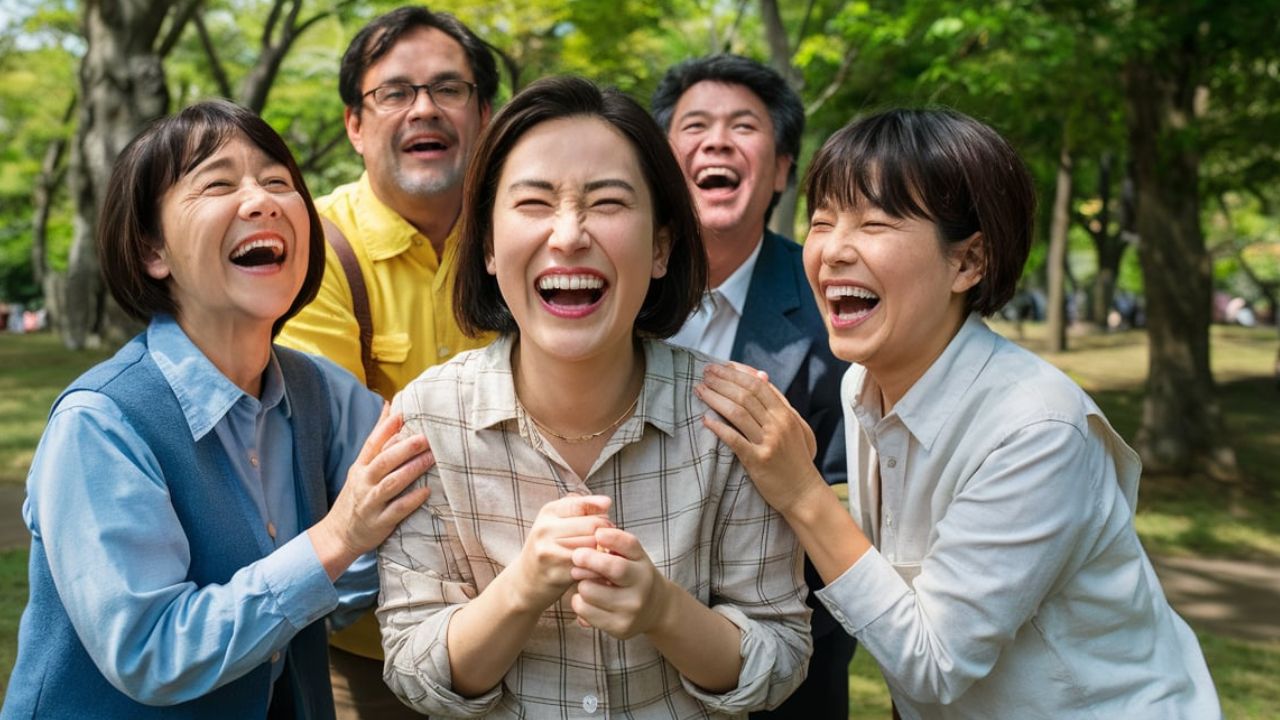
    In a strange but fun move, the city of Yamagata in Japan has made laughter a daily requirement. The government has passed a law that says people must laugh at least once a day to stay healthy, both physically and mentally.


    The law was passed after research from a local university revealed the numerous health benefits of laughter. Companies and offices are also getting in on the action, creating a laughter-friendly environment for their employees. And to top it all off, the eighth day of every month will be celebrated as ‘Laughter Day.’
     
    But not everybody finds it funny. Politicians who disagree with the law say it violates people’s constitutional rights. “Laughter is a fundamental human right, and the government can’t dictate when and how we laugh.” They argue.
     
     
    But not everyone is happy about it. Some politicians are saying the law is wrong. “Laughter is a fundamental human right, and the government can’t dictate when and how we laugh,” they argue.
    Yamagata City is firm on making laughter a priority. This unique law might just spark a global trend. Laughter truly is the best medicine, they say.

  • Japanese scientists make smiling robot with ‘living’ skin

    Japanese scientists make smiling robot with ‘living’ skin

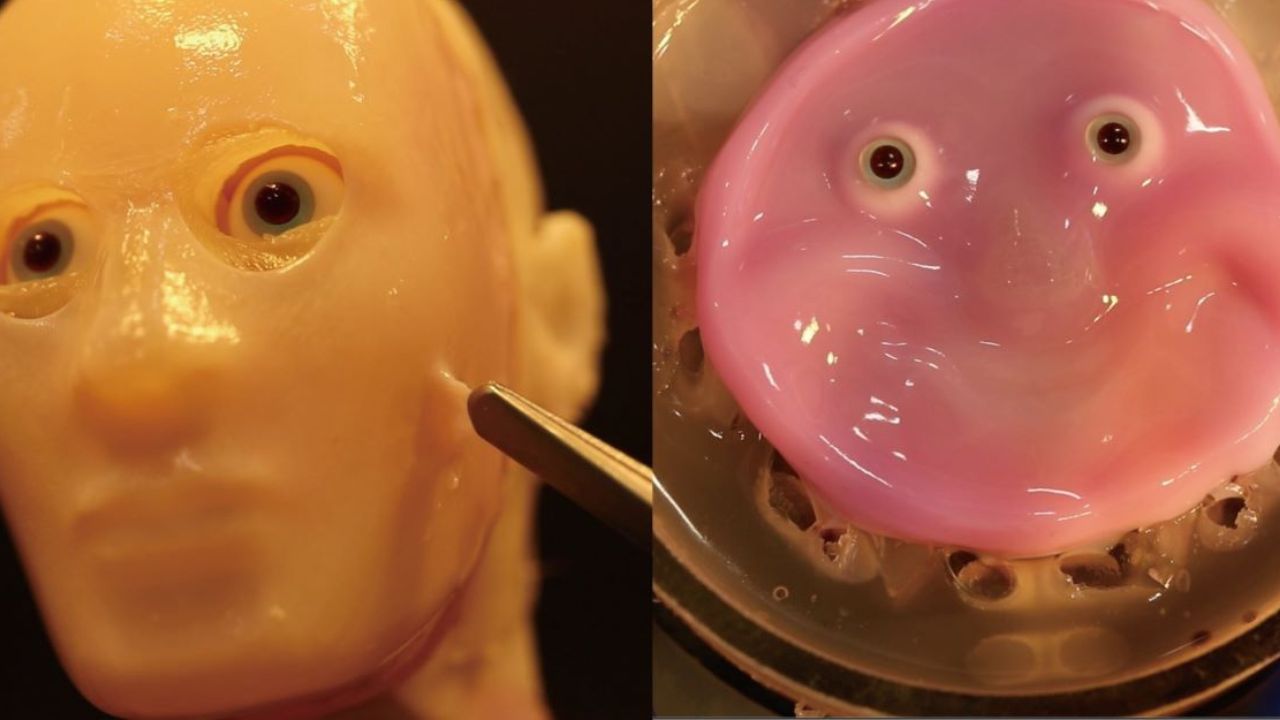
    Japanese scientists make smiling robot with ‘living’ skin have used human cells to develop an equivalent to living skin that can be attached to robotic surfaces to flash a realistic — if creepy — smile.

    The University of Tokyo researchers published their findings this week along with a video of the gooey-looking pink material being stretched into an unsettling grin.

    They used a “skin-forming cell-laden gel” to create a “robot covered with living skin”, their study in the journal Cell Reports Physical Science said.

    The biohybrid robot specialists hope the technology will one day play a role in the invention of androids with human-like appearances and abilities.

    “We also hope this will help shed better light on wrinkle formations and the physiology of facial expressions,” and help to develop transplant materials and cosmetics, the team led by Professor Shoji Takeuchi said.

    The new material could signal a departure from traditional humanoid robots covered with genuine-looking skin often made of silicone rubber, which cannot sweat or heal itself.

    The scientists’ goal is “to endow robots with the self-healing capabilities inherent in biological skin”, but they are not there yet. In previous studies, they grafted collagen onto a cut on lab-grown skin covering a robotic finger to demonstrate how it could be repaired.

    But they said conducting similar repair tests on their smiling robotic skin “is a future challenge”.

    To create what they described as a “natural smile” that moves fluidly, they gelatinised the skin-like tissue and fixed it inside the robot’s holes, a method inspired by real human skin ligaments.

  • Two missing Japanese climbers spotted in Pakistan’s north

    Two missing Japanese climbers spotted in Pakistan’s north

    Two missing Japanese climbers were spotted by helicopter on Thursday in Pakistan’s mountainous north, home to some of the world’s tallest peaks, but their condition remains unknown, a tour operator said.

    The Japanese climbers Ryuseki Hiraoka and Atsushi Taguchi were attempting to summit the 7,027-metre (23,054-foot) Spantik mountain in the Karakoram range before they went missing.

    “The rescuers saw the climbers and recognised them by their clothes, but they could not determine their condition,” Naiknam Karim, the CEO of Adventure Tours Pakistan (ATP) which organised the tour, told AFP.

    The two were spotted during a military helicopter search on Thursday that was called off due to poor weather conditions.

    “There has been no communication between the two Japanese climbers and officials at basecamp since they started their expedition,” Karim earlier said.

    “They were seen on June 10 (for the) last time at above 5,000 metres.”

    Another team of Japanese climbers raised the alarm on Tuesday after arriving at Camp 2, at around 5,650 metres, where Hiraoka and Taguchi were scheduled to be.

    The search is scheduled to resume on Friday.

    “An 8-member rescue team including five Japanese climbers will ascent on foot and search for them,” Karim Added.

    The pair had reached base camp on June 3 and were attempting the climb without the help of porters.

    Spantik, also known as the Golden Peak, is described as a “relatively accessible and straightforward peak” on the website of a separate tourist company, Adventure Tours.

    The country is home to five of the world’s 14 mountains higher than 8,000 metres — including K2, the world’s second highest.

    More than 8,900 foreigners visited the remote Gilgit-Baltistan region in 2023, according to official figures from the government, where the summer climbing season runs from early June to late August.