Tag: Japan

  • Japan Literary Laureate Unashamed About Using ChatGPT

    Japan Literary Laureate Unashamed About Using ChatGPT

    The winner of Japan’s most prestigious literary award has acknowledged that about “five percent” of her futuristic novel was penned by ChatGPT, saying generative AI had helped unlock her potential.

    Since the 2022 launch of ChatGPT, an easy-to-use AI chatbot that can deliver an essay upon request within seconds, there have been growing worries about the impact on a range of sectors – books included.

    Lauded by a judge for being “almost flawless” and “universally enjoyable”, Rie Kudan’s latest novel, “Tokyo-to Dojo-to” (“Sympathy Tower Tokyo”), bagged the biannual Akutagawa Prize on Wednesday.

    Set in a futuristic Tokyo, the book revolves around a high-rise prison tower and its architect’s intolerance of criminals, with AI a recurring theme.

    The 33-year-old author openly admitted that AI heavily influenced her writing process as well.

    “I made active use of generative AI like ChatGPT in writing this book,” she told a ceremony following the winner’s announcement.

    “I would say about five percent of the book quoted verbatim the sentences generated by AI.”

    Outside of her creative activity, Kudan said she frequently toys with AI, confiding her innermost thoughts that “I can never talk to anyone else about”.

    ChatGPT’s responses sometimes inspired dialogue in the novel, she added.

    Going forward, she said she wants to keep “good relationships” with AI and “unleash my creativity” in co-existence with it.

    When contacted by AFP, the Society for the Promotion of Japanese Literature, the Akutagawa award’s organiser, declined to comment.

    On social media, opinions were divided on Kudan’s unorthodox approach to writing, with sceptics calling it morally questionable and potentially undeserving of the prize.

    “So she wrote the book by deftly using AI … Is that talented or not? I don’t know,” one wrote on X, formerly known as Twitter.

    But others celebrated her resourcefulness and the effort she put into experimenting with various prompts.

    “So this is how the Akutagawa laureate uses ChatGPT — not to slack off but to ‘unleash creativity’”, another social media user wrote.

    Titles that list ChatGPT as a co-author have been offered for sale through Amazon’s e-book self-publishing unit, although critics say the works are of poor quality.

    British author Salman Rushdie told a press conference at the Frankfurt Book Fair in October that recently someone asked an AI writing tool to produce 300 words in his style.

    “And what came out was pure garbage,” said the “Midnight’s Children” writer, to laughter from the audience.

    The technology also throws up a host of potential legal problems.

    Last year, John Grisham, Jodi Picoult and “Game of Thrones” author George RR Martin were among several writers who filed a class-action lawsuit against ChatGPT creator OpenAI over alleged copyright violation.

    Along with the Authors Guild, they accused the California-based company of using their books “without permission” to train ChatGPT’s large language models, algorithms capable of producing human-sounding text responses based on simple queries, according to the lawsuit.
  • Death Toll From Japan Quake Rises Above 200

    Death Toll From Japan Quake Rises Above 200

    The death toll from the powerful earthquake that flattened parts of central Japan on January 1 passed 200 on Tuesday, with just over 100 still unaccounted for, authorities said.

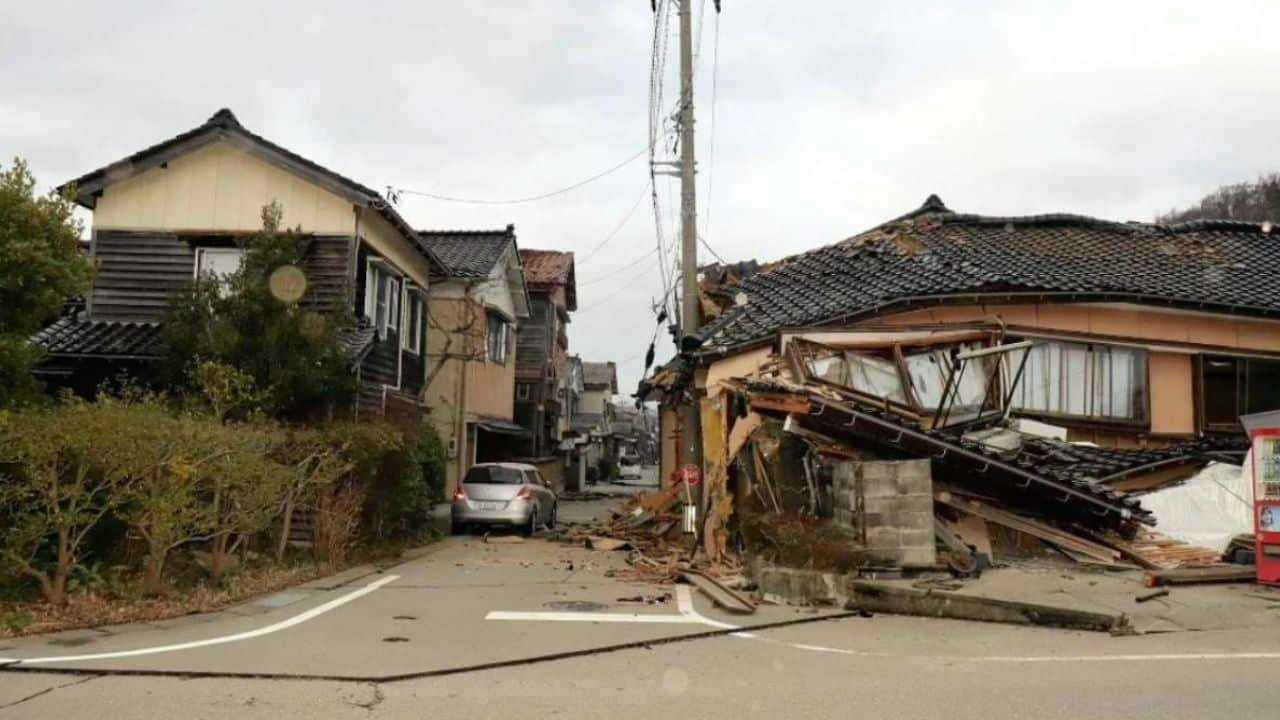
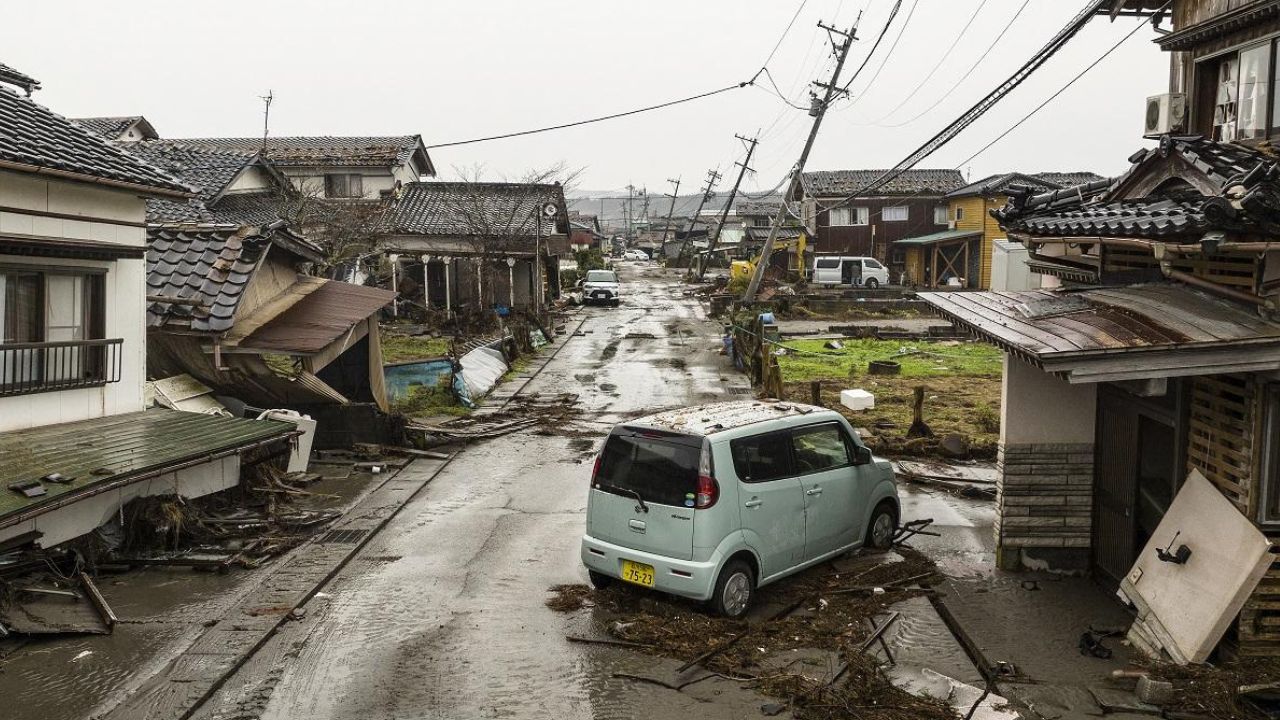
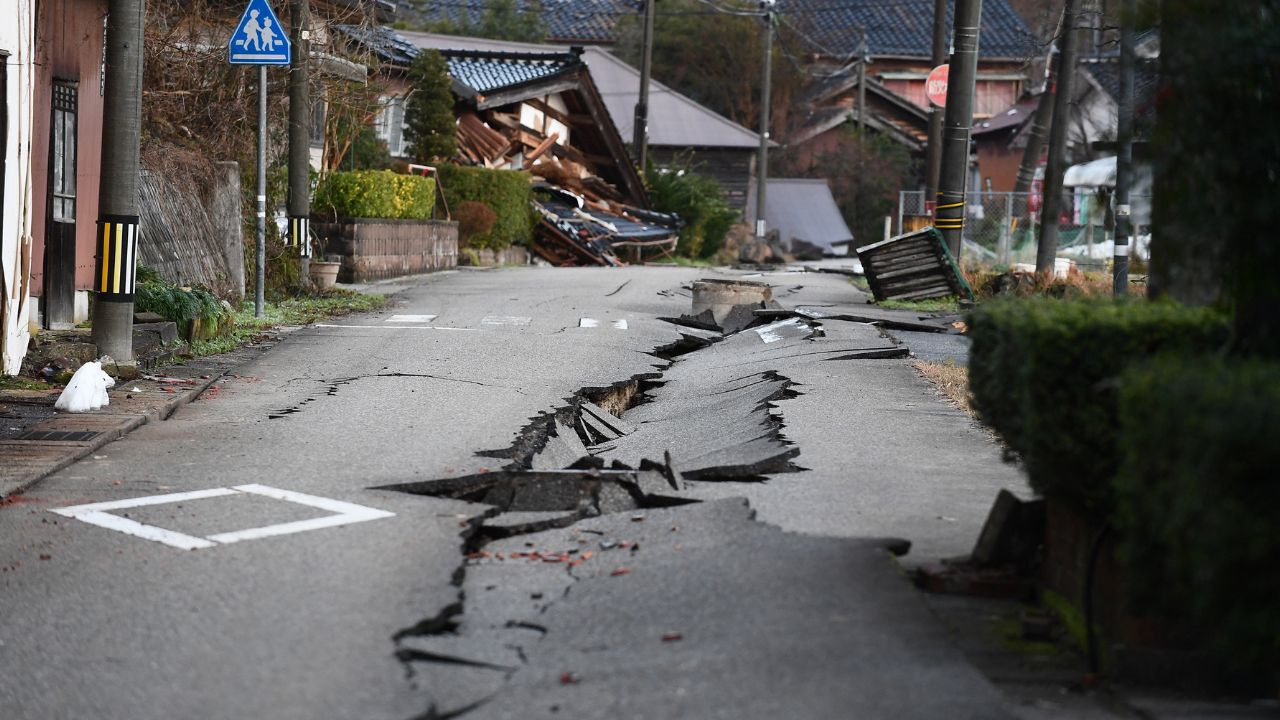
    The 7.5 magnitude quake destroyed and toppled buildings, caused fires and knocked out infrastructure on the Noto Peninsula on Japan’s main island Honshu just as families were celebrating New Year’s Day.

    Eight days later thousands of rescuers were battling blocked roads and poor weather to clear the wreckage as well as reach almost 3,500 people still stuck in isolated communities.

    Ishikawa regional authorities released figures on Tuesday showing that 202 people were confirmed dead, up from 180 earlier in the day, with 102 unaccounted for, down from 120.

    On Monday, authorities had more than tripled the number of missing to 323 after central databases were updated, with most of the rise related to badly hit Wajima.

    But since then “many families let us know that they were able to confirm safety of the persons (on the list)”, Ishikawa official Hayato Yachi told AFP.

    With heavy snow in places complicating relief efforts, as of Monday almost 30,000 people were living in around 400 government shelters, some of which were packed and struggling to provide adequate food, water and heating.

    Almost 60,000 households were without running water and 15,600 had no electricity supply.

    Road conditions have been worsened by days of rain that have contributed to an estimated 1,000 landslides.

    At a daily disaster-relief government meeting on Tuesday, Prime Minister Fumio Kishida instructed ministers to “make efforts of resolving the state of isolation (of communities) and continue tenacious rescue activities”.

    Kishida also urged secondary evacuations to other regions outside the quake-hit area, top government spokesman Yoshimasa Hayashi told reporters.

    In Ishikawa prefecture’s city of Suzu, a woman in her 90s managed to survive five days under the wreckage of a collapsed house before being saved on Saturday.

    “Hang in there!” rescuers were heard calling to the woman, in police footage from the rainy scene published by local media.

    Not all were so lucky, with Naoyuki Teramoto, 52, inconsolable on Monday after three of his four children’s bodies were discovered in the town of Anamizu.

    “We were talking of plans to go to Izu,” a famous hot spring resort, after his daughter passed her high school entrance exam, he told broadcaster NTV.

    Japan experiences hundreds of earthquakes every year, though most cause no damage because of strict building codes in place for more than four decades.

    But many structures are older, especially in rapidly ageing communities in rural areas like Noto.

    The country is haunted by the monster quake of 2011 that triggered a tsunami, left around 18,500 people dead or missing, and caused a nuclear catastrophe at the Fukushima plant.

  • Japan quake death toll rises to 92, missing 242

    Japan quake death toll rises to 92, missing 242

    Anamizu (Japan) (AFP) – The death toll from a devastating earthquake in central Japan rose to 92 on Friday, regional authorities said, with the number of missing jumping to 242.

    Two elderly women were pulled from the rubble, but hopes of finding other survivors faded as thousands of rescuers raced against the clock four days after the 7.5-magnitude quake on New Year’s Day.

    Thousands of rescuers from all over Japan have been battling aftershocks and roads littered with gaping holes and blocked by frequent landslides in the Ishikawa region to reach hundreds of people in stranded communities.

    On Thursday afternoon, 72 hours after the quake, the two older women were miraculously pulled alive from the remains of their homes in Wajima, one of them thanks to a sniffer dog called Jennifer.

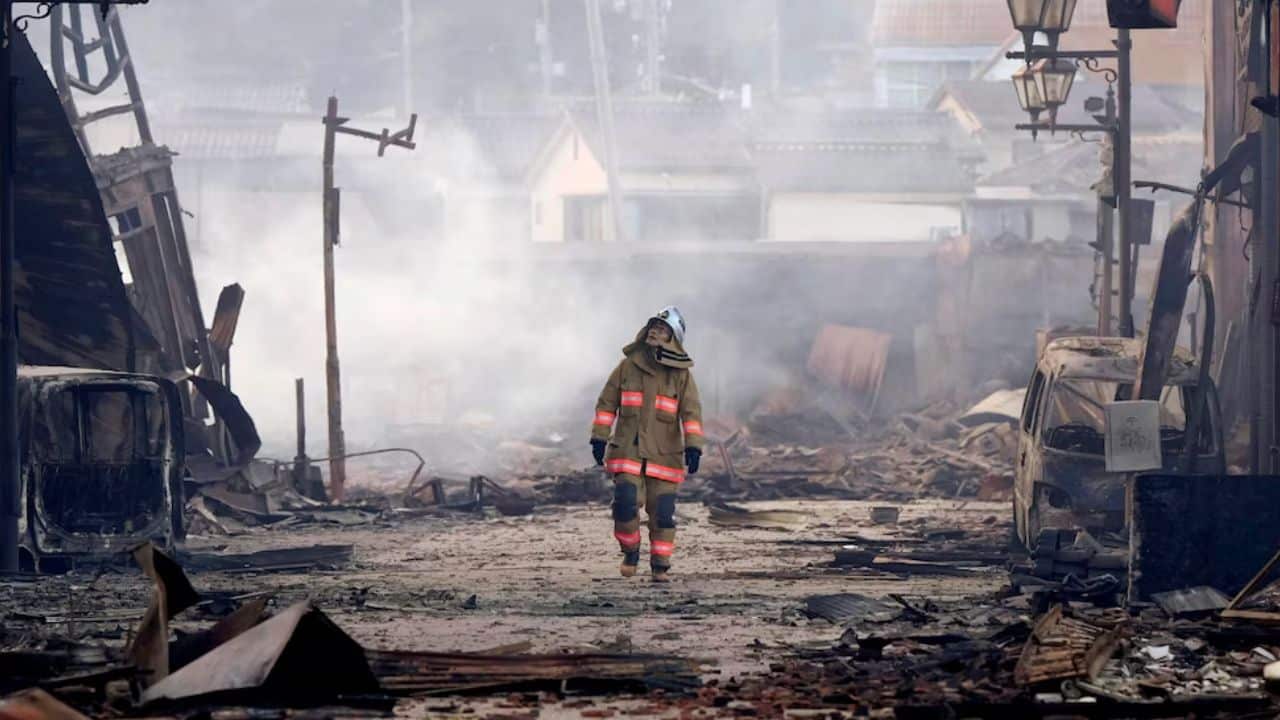
    The port city of Wajima on the Noto Peninsula was one of the worst hit, with a pungent smell of soot still in the air and faint columns of smoke visible from a huge fire that destroyed hundreds of structures on the first day.

    “I was relaxing on New Year’s Day when the quake happened. My relatives were all there and we were having fun,” Hiroyuki Hamatani, 53, told AFP amid the burnt-out cars, wrecked buildings and fallen telegraph poles.

    “The house itself is standing but it’s far from livable now… I don’t have the space in my mind to think about the future,” he told AFP.

    Grief

    The powerful main tremor, followed by hundreds of aftershocks, injured at least 330 people, local authorities said.

    Around 30,000 households were without electricity in the Ishikawa region, and 89,800 homes there and in two neighbouring regions had no water.

    Hundreds of people were in government shelters.

    The Suzu area was also devastated, with fishing boats sunk or lifted like toys onto the shore by tsunami waves that also reportedly swept one person away.

    Noriaki Yachi, 79, fought back tears after his wife was pulled from the rubble there and confirmed dead, the Asahi Shimbun daily reported.

    “My life with her was a happy one,” Yachi said.

    Earthquakes have hit the Noto region with intensifying strength and frequency over the past five years.

    The country is haunted by a massive 9.0-magnitude undersea quake in 2011, which triggered a tsunami that left around 18,500 people dead or missing.

    It also swamped the Fukushima atomic plant, causing one of the worst nuclear disasters in history

  • How 379 people escaped deadly fire in a plane in Japan?

    How 379 people escaped deadly fire in a plane in Japan?

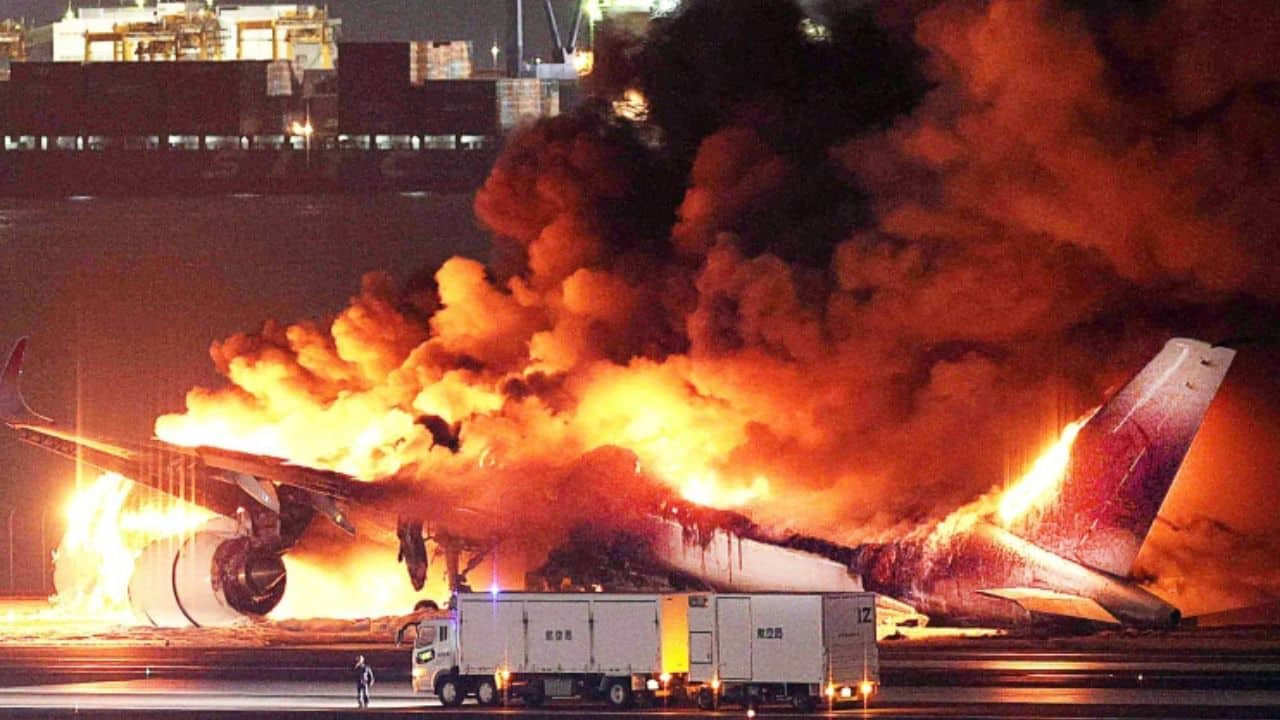
    It took firefighters more than eight hours to extinguish the fire that engulfed a Japan Airlines jet after it struck another plane on landing at Tokyo’s Haneda airport on Tuesday. It took 12 crew members just minutes to usher hundreds of people on board to safety.

    All but one of the six people on the smaller aircraft were killed, but all 379 Japan Airlines passengers and crew escaped down emergency slides minutes before the Airbus was engulfed in flames late Tuesday.

    The blackened husk of the airliner, still sitting on the tarmac Wednesday, bore witness to just how dangerous their escape had been. Several hundred metres (yards) away lay the remains of the coast guard’s DHC-8 aircraft.

    The captain of the coast guard plane — which had been bound for the New Year’s Day earthquake zone in central Japan — was its lone survivor but suffered serious injuries.

    Footage on Tuesday showed a ball of fire erupting from underneath the airliner shortly after landing and coming to a halt on its nose after its front landing gear failed.

    “It was getting hot inside the plane, and I thought, to be honest, I would not survive,” one female passenger told broadcaster NHK.

    “I thought we landed normally. But then I realised I was smelling smoke,” a woman with a small child told NHK.

    “I needed to protect my daughter. That was the only thing in my mind,” she added.

    Another passenger described surviving the crash as a “miracle”.

    “I bounced off my seat from the impact when we landed,” the 28-year-old man told Nikkei Asia.

    “We made it just in the nick of time. It’s a miracle we survived.”

    Takuya Fujiwara from the Japan Transport Safety Board told reporters that the flight recorder and the voice recorder from the coast guard plane had been found, but those of the passenger jet were still being sought.

    “We are surveying the situation. Various parts are scattered on the runway,” Fujiwara said, adding that the authority planned to interview several people involved.

    Asked at a briefing whether the Japan Airlines flight had landing permission, officials at the major carrier said: “Our understanding is that it was given.”

    Widely shared video footage shows flight attendants at the front of a darkened cabin gesturing for passengers to remain seated and thanking them for their cooperation. At one point, the camera pans across to show a window frame filled with orange light.

    “Please get me out of here,” one woman shouts in the video. A child is heard asking: “Why don’t you just open the doors?”

    The actions of crew and passengers have been credited with averting tragedy. Incredibly, none received serious injuries. 

    none appeared to have paused to retrieve hand luggage from overhead lockers, ensuring a clear route to the emergency exits. Less than two hours earlier, the passengers had watched a JAL safety video urging them to do exactly that. In the video, a flight attendant warns: “Leave your baggage when you evacuate!”, extending her open palms for emphasis. An animated sequence then shows the damage that bags and high-heeled shoes can cause to the inflatable evacuation slides.

    Aviation experts said the unshakeable composure displayed by the flight attendants combined with the high level of cooperation among passengers probably prevented a deeply unsettling experience from becoming a major disaster.

    “I can’t speculate on what happened here but human error will probably be found as a contributing cause,” Doug Drury, aviation expert at Central Queensland University, told AFP.

    “Airlines are required to be able to empty an airplane of all passengers and crew within 90 seconds. The flight crews train for events quite frequently in simulation and it is a complicated process that as we saw was completed without fail,” he said.

  • Japan quake toll rises to 62 as weather hampers rescuers

    Japan quake toll rises to 62 as weather hampers rescuers

    Japanese rescuers scrambled to search for survivors on Wednesday (January 3) as authorities warned of landslides and heavy rain after a powerful earthquake that killed at least 62 people.

    The 7.5-magnitude quake on January 1 that rattled Ishikawa prefecture on the main island of Honshu triggered tsunami waves more than a metre high, sparked a major fire and tore apart roads.

    The Noto Peninsula of the prefecture was most severely hit, with several hundred buildings ravaged by fire and houses flattened in several towns, including Wajima and Suzu, as shown by before-and-after satellite images released on Wednesday.

    The regional government announced Wednesday that 62 people had been confirmed dead and more than 300 injured, 20 of them seriously.

    The toll was expected to climb as rescuers battle aftershocks and poor weather to comb through rubble.

    More than 31,800 people were in shelters, the government said.

    “More than 40 hours have passed since the disaster. We have received a lot of information about people in need of rescue and there are people waiting for help,” Prime Minister Fumio Kishida said Wednesday after an emergency task force meeting.

    “Rescue efforts are being made by the local authorities, police, firefighters and other operational units, while the number of personnel and rescue dogs is enhanced.

    “However, we ask you to remain fully mindful that we are in a race against time and to continue to do your utmost to save lives, putting people’s lives first,” Kishida said.

    The Japan Meteorological Agency (JMA) has issued a heavy rain warning in the area.

    “Be on the lookout for landslides until the evening of Wednesday,” the agency said.

    In the coastal city of Suzu, mayor Masuhiro Izumiya said there were “almost no houses standing”.

    “About 90 per cent of the houses (in the town) are completely or almost completely destroyed… the situation is really catastrophic,” he said, according to broadcaster TBS.

    A woman at a shelter in the town of Shika told TV Asahi that she “hasn’t been able to sleep” due to aftershocks.

    “I’ve been scared because we don’t know when the next quake will hit,” she said.

    Nearly 34,000 households were still without power in Ishikawa prefecture, the local utility said.

    Many cities were without running water.

    Shinkansen bullet trains and highways have resumed operations after several thousand people were stranded, some for almost 24 hours.

    The US Geological Survey said the quake had a magnitude of 7.5, while the JMA measured it at 7.6, triggering a major tsunami warning.

    The powerful quake was one of more than 400 to shake the region through Wednesday morning, the JMA said.

    Japan lifted all tsunami warnings after waves at least 1.2m high hit the town of Wajima and a series of smaller tsunamis were reported elsewhere.

    Japan experiences hundreds of earthquakes every year and the vast majority cause no damage.

    The number of earthquakes in the Noto Peninsula region has been steadily increasing since 2018, a Japanese government report said last year.

    The country is haunted by a massive 9.0-magnitude undersea quake off northeastern Japan in 2011, which triggered a tsunami that left around 18,500 people dead or missing.

    It also swamped the Fukushima atomic plant, causing one of the world’s worst nuclear disasters.

  • Japan quake death toll rises to 48: official

    Japan quake death toll rises to 48: official

    At least 48 people are confirmed dead following a major earthquake in Japan, a local official said.

    The official in Ishikawa prefecture, who spoke on condition of anonymity, told AFP the “death toll has reached 48”.

    Japanese rescuers battled against the clock and powerful aftershocks Tuesday to find survivors of a major earthquake that struck on New Year’s Day, killing at least six people and leaving a trail of destruction.

    The 7.5-magnitude quake, which hit Ishikawa prefecture on the main island of Honshu, triggered tsunami waves over a metre high, toppled buildings, caused a major port fire and tore apart roads.

    As daylight arrived, the scale of the destruction in Ishikawa emerged with buildings still smouldering, houses flattened and fishing boats sunk or washed ashore.

    “Very extensive damage has been confirmed, including numerous casualties, building collapses and fires,” Prime Minister Fumio Kishida said after a disaster response meeting.

    “We have to race against time to search for and rescue victims of the disaster.”

    Police said six people had been killed although the toll was almost certain to climb. The Kyodo news agency reported that 13 people had died, including seven in the badly hit port of Wajima.

    Aerial news footage showed devastation from a major fire at the port, where a seven-storey building collapsed.

    Almost 45,000 households were without power in the region which saw temperatures touch freezing overnight, the local energy provider said. Many cities were without running water.

    The US Geological Survey (USGS) said the quake had a magnitude of 7.5. Japan’s meteorological agency measured it at 7.6, and said it was one of more than 150 to shake the region through Tuesday morning.

    Several strong jolts were felt early Tuesday, including one measuring 5.6 percent that prompted national broadcaster NHK to switch to a special programme.

    “Please take deep breaths,” the presenter said, reminding viewers to check for fires in their kitchens.

    Tsunami warning lifted

    On Monday waves at least 1.2 metres (four feet) high hit Wajima on Monday, and a series of smaller tsunamis were reported elsewhere.

    But warnings of much larger waves proved unfounded and on Tuesday Japan lifted all tsunami warnings.

    Images on social media showed cars and houses in Ishikawa shaking violently and terrified people cowering in shops and train stations. Houses collapsed and huge cracks appeared in roads.

    A team of firefighters crawled under a collapsed, large commercial building in Wajima, television footage showed.

    “Hang in there! Hang in there,” they shouted as they battled through piles of wooden beams with an electric saw.

    “There were shaking that I have never experienced before, a local elderly man told NHK.

    “Inside my house, it was so terrible… I am still alive. Maybe I have to  be content with that.”

    The fire in Wajima engulfed a row of houses, video footage showed, with people being evacuated in the dark, some with blankets and others carrying babies.

    A duty officer at Wajima Fire Department said they still were being overwhelmed Tuesday by rescue requests and reports of damages.

    A total of 62,000 people had been ordered to evacuate, according to the fire and disaster management agency.

    About 1,000 people were staying at a military base, the defence ministry said.

    Bullet trains suspended

    Defense Minister Minoru Kihara said 1,000 military personnel were preparing to go to the region, while 8,500 others were on standby. Around 20 military aircraft were dispatched to survey the damage.

    Monday’s quake shook apartments in the capital Tokyo some 300 kilometres away, where a public New Year greeting event that was to be attended by Emperor Naruhito and his family members was cancelled.

    Several major highways were closed around the epicentre, Japan’s road operator said, and bullet train services from Tokyo were also suspended.

    Japan experiences hundreds of earthquakes every year and the vast majority cause no damage.

    The country has strict regulations intended to ensure buildings can withstand strong quakes and routinely holds emergency drills.

    But the country is haunted by the memory of a massive 9.0-magnitude undersea quake off northeastern Japan in March 2011, which triggered a tsunami that left around 18,500 people dead or missing.

    The 2011 tsunami also sent three reactors into meltdown at the Fukushima nuclear plant, causing Japan’s worst post-war disaster and the most serious nuclear accident since Chernobyl.

    Japan’s nuclear authority said there were no abnormalities reported at the Shika atomic power plant in Ishikawa or at other plants after Monday’s quake.

    In Washington, US President Joe Biden was briefed on Monday’s quake and offered Japan “any necessary assistance” to cope with the aftermath.

    French President Emmanuel Macron expressed “solidarity” while Italian Prime Minister Giorgia Meloni offered condolences and assistance.

  • First Tsunami Waves Hit Japan After Major Quake: Weather Agency

    First Tsunami Waves Hit Japan After Major Quake: Weather Agency

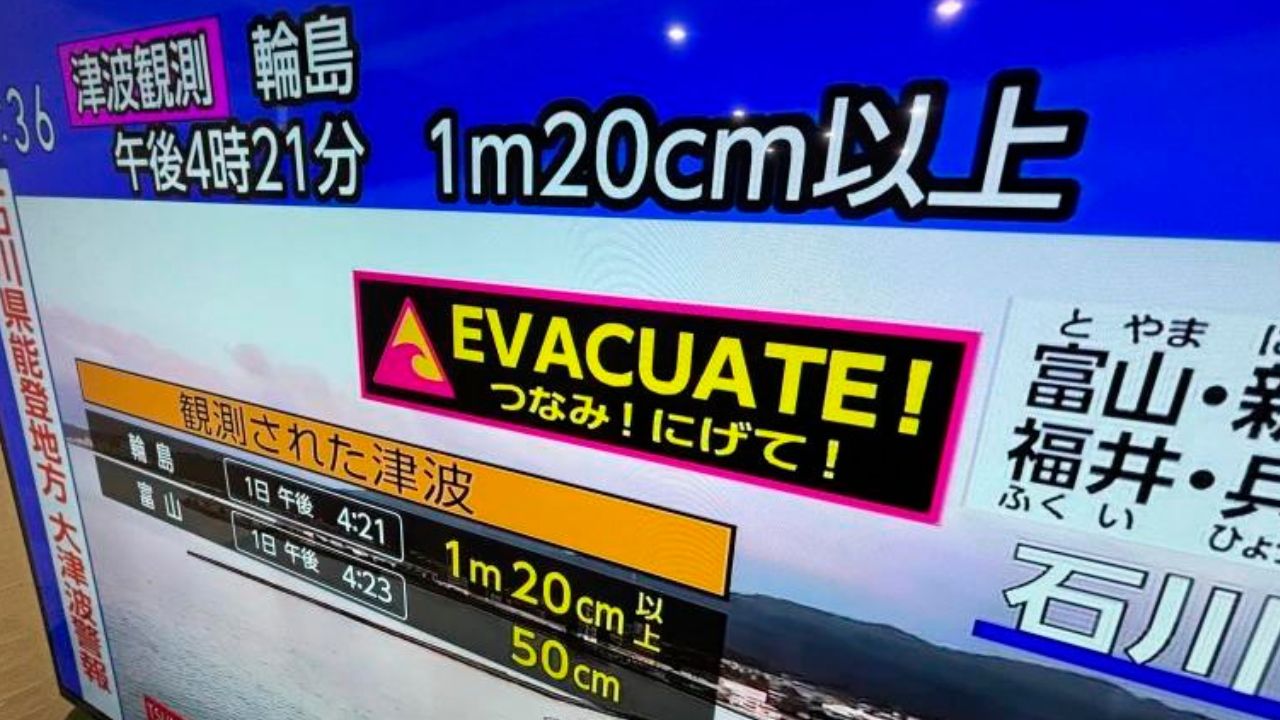
    The first tsunami waves, some more than a metre high, arrived on the north coast of central Japan on Monday after a series of powerful earthquakes rocked the region.

    Waves as high as 1.2 meters (four feet) hit Wajima port in Ishikawa prefecture at 4:21 pm (0721 GMT), the Japan Meteorological Agency said, after the US Geological Survey and other agencies registered a major 7.5 magnitude quake little more than 10 minutes earlier.

    Total of 21 earthquakes above 4.0 magnitude hit Japan.

  • Driver arrested for running over pigeon

    Driver arrested for running over pigeon

    A Tokyo taxi driver was arrested for deliberately driving into a flock of pigeons and killing one, police said Tuesday, reportedly because he was angry that the birds were on the road.

    Atsushi Ozawa, 50, “used his car to kill a common pigeon, which is not a game animal”, in the Japanese capital last month, and was arrested on Sunday for violating wildlife protection laws, a Tokyo police spokesman told AFP.

    Ozawa sped off from a traffic light when it turned green, ploughing his taxi into the bevy of birds at a speed of 60 kilometres (37 miles) per hour, local media said.

    The sound of the engine reportedly prompted a surprised passer-by to report the incident.

    Tokyo police had a veterinarian perform a post-mortem on the hapless pigeon and determined its cause of death as traumatic shock, according to local media.

    “Roads belong to humans, so pigeons should have dodged out of the way,” Ozawa was quoted by local media as telling investigators.

    Police called his behaviour “highly malicious” for a professional driver, before deciding to go ahead with the arrest, broadcaster Fuji TV said.

    “Wow, can you get arrested for running over a pigeon?”, one user wrote on X, formerly known as Twitter.

    “He could’ve just honked his car horn or something. But intentionally killing it? That’s crossing the line,” another posted.

  • Japanese researchers discover microplastics in clouds

    Japanese researchers discover microplastics in clouds

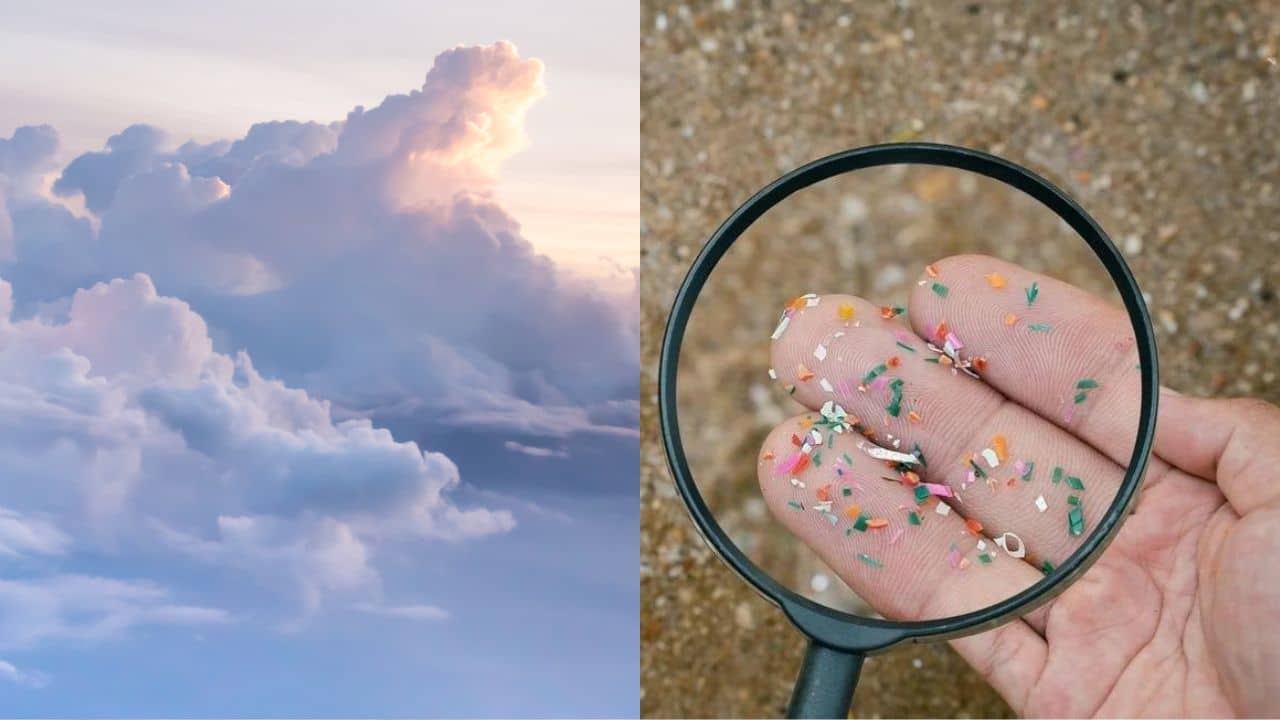
    Researchers in Japan have claimed they have discovered the presence of microplastics in clouds. These small particles of plastic are believed to be affecting the climate in ways that scientists still do not fully understand.

    According to Al Jazeera’s report, a study published in the journal ‘Environmental Chemistry Letters’ details that Japanses scientists researched the collection of water from the fog covering Mount Fuji and Mount Aoyama.

    The research team found nine different types of polymers and one type of rubber in the samples, with particles ranging in size from 7.1 to 94.6 micrometers.

    The amount of plastic particles found in each liter (0.26 gallon) of cloud water ranged from 6.7 to 13.9.

    Lead author of the study from Waseda University, Hiroshi Okuchi, has warned that if the issue is not taken into account, climate change and environmental threats could cause serious environmental damage in the future.

    What is microplastic?
    Microplastics are small plastic particles measuring less than 5 mm which come from industrial waste, textiles, synthetic car tires, and similar products.

    These microplastics have also been found inside fish in the Arctic Ocean and in frozen snow in the Pyrenees mountains between France and Spain.

    In the research report, the author said that “according to our knowledge, this is the first report of the presence of microplastics in clouds.”

    Researchers have stated that humans and animals are ingesting and/or inhaling microplastics, and these small particles of plastic have been found in various human organs, including the lungs, heart, blood and faeces.

    One million tonnes of tiny plastic particles accumulate in the ocean which are often released into the air and then into the atmosphere. Hence, microplastics have also seemingly become an integral part of clouds, potentially contaminating several things including our food and drink.

    Recent findings also show that microplastics are linked to health problems, including effects on heart and lung, as well as cancer.

  • Man buys more than £12,000 dog costume, ventures out to make friends as a dog

    Man buys more than £12,000 dog costume, ventures out to make friends as a dog

    In an unconventional bid to fulfill a lifelong dream of ‘becoming an animal’, an individual known only as Toco recently stepped out donned in an intricately designed collie costume, valued at over £12,480 ($16,500).

    The story of the dedicated dog lover was covered by Mail Online. Toco enjoys a following of almost 30,000 YouTube subscribers, becoming an internet sensation due to his peculiar pursuit.

    Hailing from Japan, Toco spent approximately two million Yen on his lifelike dog outfit. Regular updates on his YouTube channel, ‘I want to be an animal’, showcase Toco frolicking in his backyard, enthusiastically performing tricks for pretend dog food, all while maintaining a quadrupedal stance.

    Toco has now taken his unique hobby a step further by venturing out into public spaces to meet both people and other dogs. The internet personality can be seen in recent videos exploring a park, sniffing at other dogs, and rolling around on the grass, all while leashed.

    The public reaction to Toco’s antics, ranges from amused inquisitiveness to mild bewilderment. Despite his newfound fame and a burgeoning fan base, Toco prefers to keep his real identity concealed.