Tag: Japan

  • Pakistan is the next IT powerhouse, says JICA

    Pakistan is the next IT powerhouse, says JICA

    Japan International Cooperation Agency (JICA) has said that Pakistan is the “powerhouse of the Information and Communication Technology (ICT) sector” as the country tech exports climbed six times in one decade.

    In JICA’s official statement, digital Pakistan policy 2018 is the key driving factor behind the success of the IT sector in Pakistan. Besides, six-time growth is the highest growth rate in entire South Asia.

    The fundamental reason behind the IT growth is the competitiveness and the presence of a large number of freelancers that are willing to give quality services at affordable rates.

    The report published by JICA was a year-long researched based study that was conducted in collaboration with Pakistan Embassy Tokyo.

    The publication has also placed Pakistan as a new partner for Japanese IT companies. The report gives an overview of the ICT industry in Pakistan, its performance in IT exports, the support structure provided by the Pakistani government, a pool of skilled and young human resource and achievements of a growth-led ecosystem equally owned by public and private sectors.

    This study includes an “IT skills survey 2021”, which found that Pakistani ICT engineers are highly skilled in programming, software development, data processing and analysis, infrastructure architecture and cloud engineering.

    The report also includes feedback on Pakistani ICT engineers already working in Japan who consider Pakistan an untapped market for Japanese IT companies, encouraging them to know more about Pakistan and its collective potential in ICT.

    Ambassador of Pakistan to Japan Imtiaz Ahmad welcomed the project team in March 2020, offering them complete support of the Mission while thanking JICA for its continued support in export and development sectors in Pakistan.

    In the past, the same team of experts from JICA has rolled out various projects for human resource development; value addition in textiles; technical training and water and sanitation infrastructure in Pakistan.


  • Man arrested for dating 35 women at once to get multiple birthday gifts

    Man arrested for dating 35 women at once to get multiple birthday gifts

    A man in Japan was detained for fraud for dating 35 different women at the same time to receive multiple birthday presents from them.

    According to reports, Takashi Miyagawa, a 39-year-old, met the women while selling showerheads for a marketing company.

    Read more – Indian woman gets married to COVID positive man in PPE kit

    Miyagawa pretended to be in a serious relationship with all 35 women. However, none of the ladies knew of each other and the 39-year-old would receive expensive and fancy presents from them for his fake birthdays.

    The man’s real birthday is November 13. While he used different dates with many different women to get more gifts. He received $925 in gifts which included electronics and clothing.

    The ladies allegedly registered a complaint with the police. Officials believe there could be more women who Miyagawa deceived.

  • Japan ambassador visits 2,400-year-old Buddhist caves in Pakistan

    Japan ambassador visits 2,400-year-old Buddhist caves in Pakistan

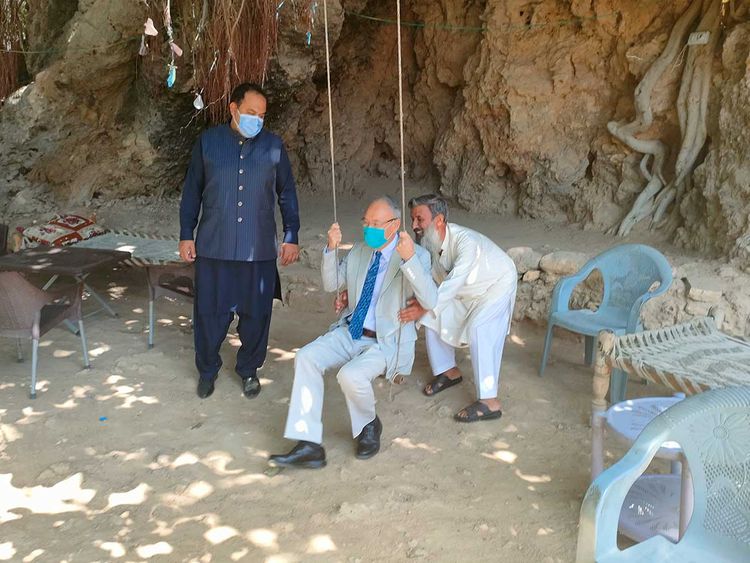
    Japanese Ambassador to Pakistan Matsuda Kuninori on Wednesday visited a Buddhist historical site, known as Shah Allah Ditta Caves, in the outskirts of Islamabad. Internationally known as Buddhist caves in the Margalla Hills, the historical site is preserving around 2,400-year-old Buddhist era murals.

    As per reports, the ambassador along with his wife and staff of the embassy praised the grandeur of the antique caves which date back to the times when young Buddhists covered long distances to reach this region that expands from the Margalla Hills to Taxila, Swat and beyond.

    The Buddhist monks spent time here in meditation and spread the message of Buddha on to the followers.

    Read more – Pakistan’s first tourism TV channel goes live

    Former Deputy Mayor of Islamabad and a representative of the Shah Allah Ditta community, Syed Zeshan Naqvi, welcomed the ambassador and told him that the caves date back to the times of Alexander the Great. He also pointed out issues faced by the local government of Islamabad (that completed its term earlier in February this year) in the preservation of the site.

    The caves had different engravings of Buddha on its walls that are of great historical importance.

    The ambassador was also of the opinion that the caves have a huge tourism potential and can be used to showcase the footprints of the Buddhist civilisation in Pakistan.

    Ambassador Kuninori also spent a few moments in meditation under the old Banyan tree at the site.

    Sharing his thoughts during the visit, Ambassador Kuninori said Pakistan was a safe country and appreciated the way the government had fought the COVID-19 pandemic by implementing a smart lockdown. Japan, he said, had already eased travel restrictions on Pakistan.

  • Ikigai: A Japanese technique helping Pakistani children ‘find true purpose in life’

    Hasan Ikhlaqi and his team at Umungi, a career centre, are training Pakistani students with a Japanese technique called Ikigai. Umungi offers training to children by conducting different activities in schools. Parents of the children are also involved in the training process.

    The Japanese technique Ikigai is used to find the purpose of life. The origin of the word ikigai goes back to the Heian period (794 to 1185). The word ikigai consists of two Japanese words: iki, meaning “life” and kai, meaning “effect/result/worth or benefit.”

    Explaining the technique to BBC Urdu, Ikhlaqi, creative coach at Umungi, said: “We use Japanese technique to find the true purpose in life, and to find the true purpose you need answers to the following questions: Profession, Passion, Mission, and Vocation.”

    The Umunji creative team has been conducting creative festivals in different schools for the past three years.

  • Masks no obstacle for Japan’s new facial recognition system

    Masks no obstacle for Japan’s new facial recognition system

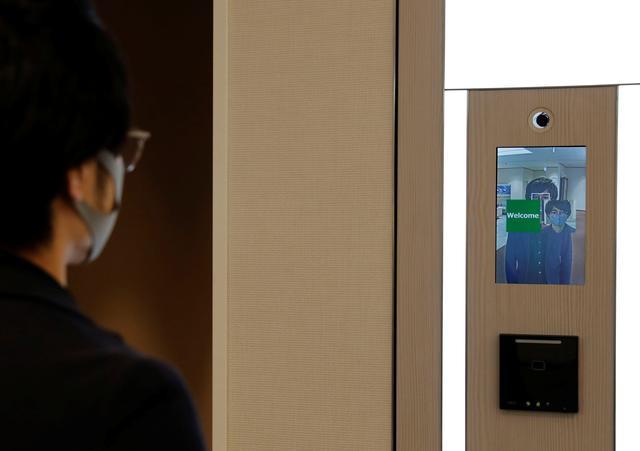
    Japan’s NEC Corporation has introduced a new facial recognition system that identifies people even when they are wearing masks.

    As per reports, the technology firm had already been working on a system to meet the needs of allergy sufferers who wear masks — a common practice in Japan — when the Covid-19 pandemic prompted it to accelerate development.

    The system determines when a person is wearing a mask and hones in on the parts that are not covered up, such as the eyes and surrounding areas, to verify the person’s identity. Users register a photo of their face in advance.

    NEC says verification takes less than one second and claims an accuracy rate of more than 99.9pc.

  • Death by suicide killed more people in October than COVID-19 in Japan

    At least 2,153 people committed suicide in Japan in the month of October while the total number of deaths from COVID-19 is 2,087, according to the latest statistics shared by the government of Japan. As per Japan’s National Police Agency data, the number of suicide cases increased to 2,153 in October from 1,805 in September.

    The data also revealed that COVID-19 has taken a disproportionately higher toll on women than men. Suicide among women increased by almost 83% last month compared to the same month the previous year. In comparison, male suicides rose by approximately 22% over the same time period.

    Layoffs, social isolation and anxiety triggered by the pandemic are said be the key causes behind the surge in suicide rate.

    Japan is one of the few developed countries that release suicide data frequently and has the world’s second-highest suicide rate after South Korea but the suicide rate in the country was declining until the pandemic.

    Unlike, most countries impact of COVID-19 has not been very severe in Japan but the country’s existing mental health crisis has been made worse because of the pandemic.

    Earlier this year, the United Nations issued a warning that the coronavirus disease 2019 (COVID-19) pandemic could create a global mental health crisis. According to a survey conducted by World Health Organisation, the demand for mental health services has increased worldwide. The survey also revealed that the COVID-19 pandemic has disrupted or halted critical mental health services in 93% countries.

    Meanwhile, WHO has also recommended all adults to do a minimum of 150 minutes of vigorous physical activity per week, even more, for well-being and mental health in the COVID-19 era. It has also recommended children and adolescents to include an average of one hour of daily physical exercise into their routines and limit time in front of electronic screens.

    People of all ages must compensate for growing sedentary behaviour with physical activity to ward off disease and add years to their lives, it added.

  • Japan opens doors for trained Pakistani labourers

    Japan opens doors for trained Pakistani labourers

    Islamabad and Tokyo have signed a memorandum of cooperation, under which trained Pakistani labourers would be provided with employment opportunities in Japan, Profit reported.

    The agreement was signed in the presence of Special Assistant to PM on Overseas Pakistanis and Human Resource Development Zulfiqar Bukhari, Japanese Ambassador to Pakistan Kuninori Matsuda, Foreign Secretary Sohail Mahmood and other high-level officials.

    “The newly signed memorandum will help the trained Pakistani labourers get employment in Japan,” said a statement issued by the ministry. “This is a major milestone that will further enhance bilateral ties between both countries.”

    Addressing the ceremony, the Japanese envoy termed the agreement a “special occasion” for both nations, saying that it would play a key role in strengthening the existing ties between Pakistan and Japan.

    “Japanese language and technical expertise are essential for employment in Japan; the country needs approximately 340,000 trained labourers,” he added.

    Speaking on the occasion, Zulfiqar Bukhari highlighted that 65 per cent of the Pakistan population was below the age of 35, adding that employment opportunities were present in 14 sectors of Japan.

    He urged the youth to especially focus on the information technology sector citing future needs.

    On December 20, the Japanese ambassador had met Zulfiqar Bukhari for a pre-discussion on the agreement which is signed on Monday (today).

    According to a statement issued by the ministry, the two sides had discussed a wide range of issues related to trade, tourism and manpower.

    The envoy had informed that Japan would build a network, in collaboration with language universities in Pakistan, and carry out 3 to 6 months language proficiency course with e-learning facilities for far-flung areas so as to accommodate the maximum number of Pakistanis to work in Japan.

    Acknowledging their diligence and social conduct, the ambassador showed his highest gratitude towards 25,000 Pakistanis residing and working in Japan.