Tag: Japan

  • Tokyo govt to launch dating app to boost birth rate

    Tokyo govt to launch dating app to boost birth rate

    Japan’s capital will launch its own dating app as early as this summer as part of government efforts to boost the plunging national birth rate, a Tokyo official said Tuesday.

    Users will be required to submit documentation proving they are legally single and sign a letter stating they are willing to get married.

    Stating one’s income is common on Japanese dating apps, but Tokyo will require a tax certificate slip to prove the annual salary.

    “We learned that 70 percent of people who want to get married aren’t actively joining events or apps to look for a partner,” a Tokyo government official in charge of the new app told AFP.

    “We want to give them a gentle push to find one,” he said.

    It’s not unusual for municipalities to organise matchmaking events in Japan, where births dropped to a new low in 2023, but it is rare for a local government to develop an app.

    An interview will be required to confirm a user’s identity as part of the registration process for the Tokyo app, which has been on a test run for free since late last year.

    Many social media users expressed scepticism over the plans, with one saying, “is this something the government should be doing with our tax?”

    Others wrote they were interested as they would feel safer.

    Last year Japan recorded more than twice as many deaths as new babies.

    Births fell for the eighth consecutive year to 758,631, a drop of 5.1 percent, preliminary government data showed. The number of deaths stood at 1,590,503.

    The nation is facing growing labour shortages, and Prime Minister Fumio Kishida has promised policies including financial aid for families, easier childcare access and more parental leave.

  • Japan’s Nagasaki holds off inviting Israel to peace ceremony

    Japan’s Nagasaki holds off inviting Israel to peace ceremony

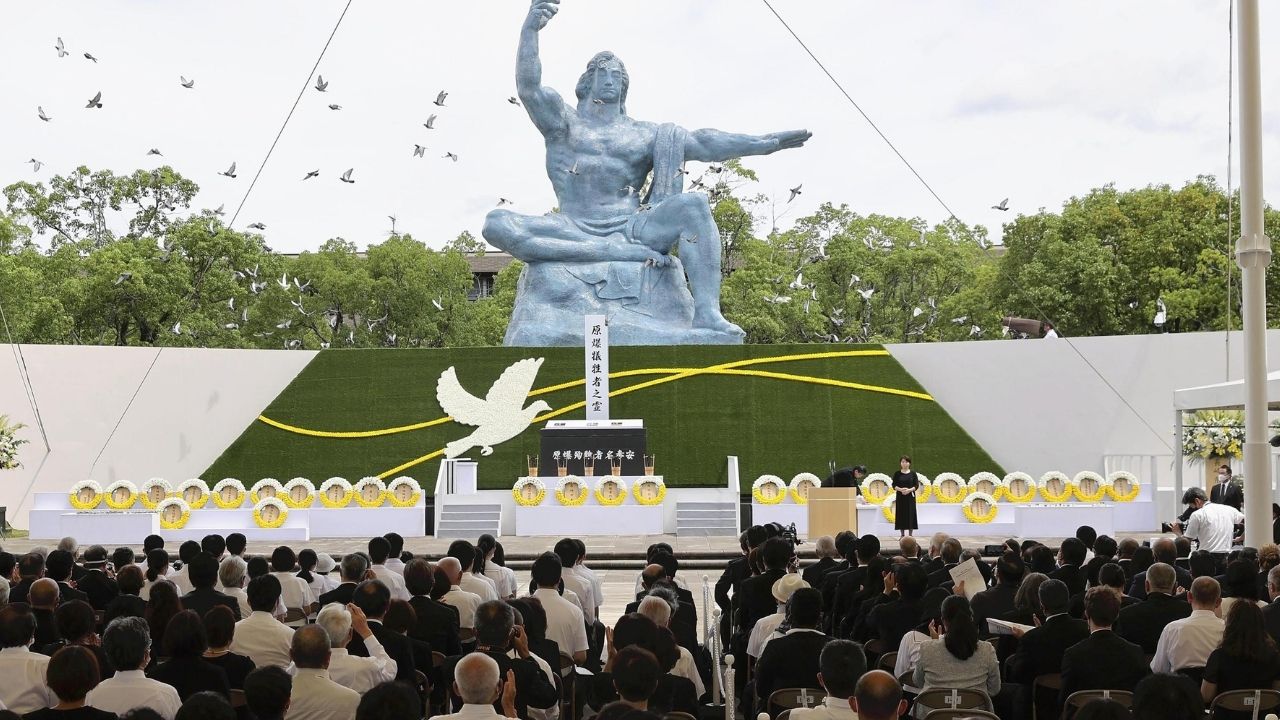
    The Israeli ambassador to Japan has not yet been invited to Nagasaki’s annual peace ceremony, said city officials who instead sent the embassy a letter calling for a Gaza ceasefire.

    The city in southern Japan this week invited dozens of countries and territories to the August 9 event on the anniversary of the US nuclear attack in 1945 that killed 74,000 people.

    But “as for Israel, the situation is changing day by day… so we have put sending an invitation letter on hold,” mayor Shiro Suzuki told reporters on Monday.

    Israel launched a blistering military offensive in Gaza nearly eight months ago, following an attack by Palestinian militant group Hamas on the country.

    Worries that protests could disrupt the memorial for atomic bomb victims are partly behind the decision, said Suzuki.

    “Given the critical humanitarian situation in Gaza, and public opinion in the international community, there are concerns about the risk of unexpected incidents during the ceremony,” which should be “safe and smooth”.

    “As the Ukraine situation has not changed, we are not inviting Russia or Belarus” either, Suzuki added.

    The Hamas attack on October 7 resulted in the death of 1,194 people in Israel, most of them civilians, according to an AFP tally based on official Israeli figures.

    More than 36,470 Palestinians, mostly civilians, have been killed in the Gaza Strip since the war broke out, according to data provided by the health ministry of Hamas-run Gaza.

    The Palestinian envoy has been invited to the ceremony in Nagasaki, local officials told AFP on Tuesday. Japanese media said that both sides are usually invited.

    Nagasaki, Hiroshima ceasefire push

    Nagasaki has instead sent a letter to the Israeli embassy in which “we call for an immediate ceasefire”, Suzuki said.

    Its letter said that if city officials decide in the coming months that there is no problem in inviting Israel, “we will issue an invitation swiftly”, according to the mayor.

    The Israeli embassy did not immediately issue a comment.

    The sombre memorial at Nagasaki’s Peace Park has in the past included ringing bells, a release of doves, and a prayer ceremony for the bombing victims.

    Hiroshima also holds a yearly ceremony in memory of the 140,000 people killed there after the United States dropped the first nuclear bomb on August 6, 1945.

    The two strikes led to the end of World War II, and to this day Japan remains the only country to be hit by atomic weapons in wartime.

    Hiroshima has invited Israel to this year’s ceremony, but in its letter called for a “ceasefire as soon as possible and resolution through dialogue”, a city official said.

    According to local media, Hiroshima has never invited a Palestinian representative to its ceremony.

  • Japan’s ‘Friendship Marriage’ is a new relationship trend without romance

    Japan’s ‘Friendship Marriage’ is a new relationship trend without romance

    ‘Friendship Marriage’ is a new relationship trend that is gaining popularity in Japan.


    Under this new type of marital relationship, people are becoming platonic partners without falling in love or having sex, as per South China Morning Post.
    A marriage agency called Colorus, which specialises in friendship marriage, shared data related to the new trend. Since March 2015, around 500 people in Japan have indulged in this type of marriage. They have formed households and some have even raised children, reports NextShark news agency.


    In friendship marriages, partners are legally spouses but without romance or sexual intimacy. They are free to live together or separately. Couples can also decide to have children through artificial insemination. In this relationship, both individuals are also free to pursue romantic relationships with other people outside the marriage, as long as there is a mutual agreement.


    Around one per cent of Japan’s population of 124 million are choosing this kind of relationship that is based on shared values and interests, the report added. They include asexual individuals, homosexuals, and heterosexuals who are disillusioned with traditional marriage.

    People interested in this type of relationship are on average 32.5 years old with incomes exceeding the national average, reveals the data by Colorus. The trend is also becoming popular among asexual individuals and homosexuals trying to avoid traditional marriages.

  • Japan introduces armpit sweat-infused rice balls

    Japan introduces armpit sweat-infused rice balls

    Sweat-infused rice balls, shaped in the armpits of young pretty girls is a surprising culinary hit in Japan.

    The rice ball snack, locally known as onigiri, is a traditional food item in Japan. The recipe has been given a culinary twist which is making waves locally and said to fetch prices as high as ten times those of regular Onigiri in certain restaurants.

    According to the South China Morning Post (SCMP), young women use their armpits to shape the balls in this new bizarre twist to the onigiri. Strict measures are taken to ensure hygiene and safety in the process. Before commencing, all ingredients and body parts that will come into contact with the food undergo thorough disinfection. The chefs then partake in physical activity to induce sweating, using their armpits instead of their hands to shape the rice balls.

    Review of the taste

    As per SCMP, a diner who tried the new version expressed that it is not different or does not have a distinctive flavour from the usual taste of rice balls.

  • Japan town begins blocking Mt Fuji view from ‘bad-mannered’ tourists

    Japan town begins blocking Mt Fuji view from ‘bad-mannered’ tourists

    Fujikawaguchiko (Japan) (AFP) – Work has begun in a small Japanese town to erect a barrier blocking views of the country’s most famous sight, Mount Fuji, after locals complained of bad behaviour by photo-hungry tourists.

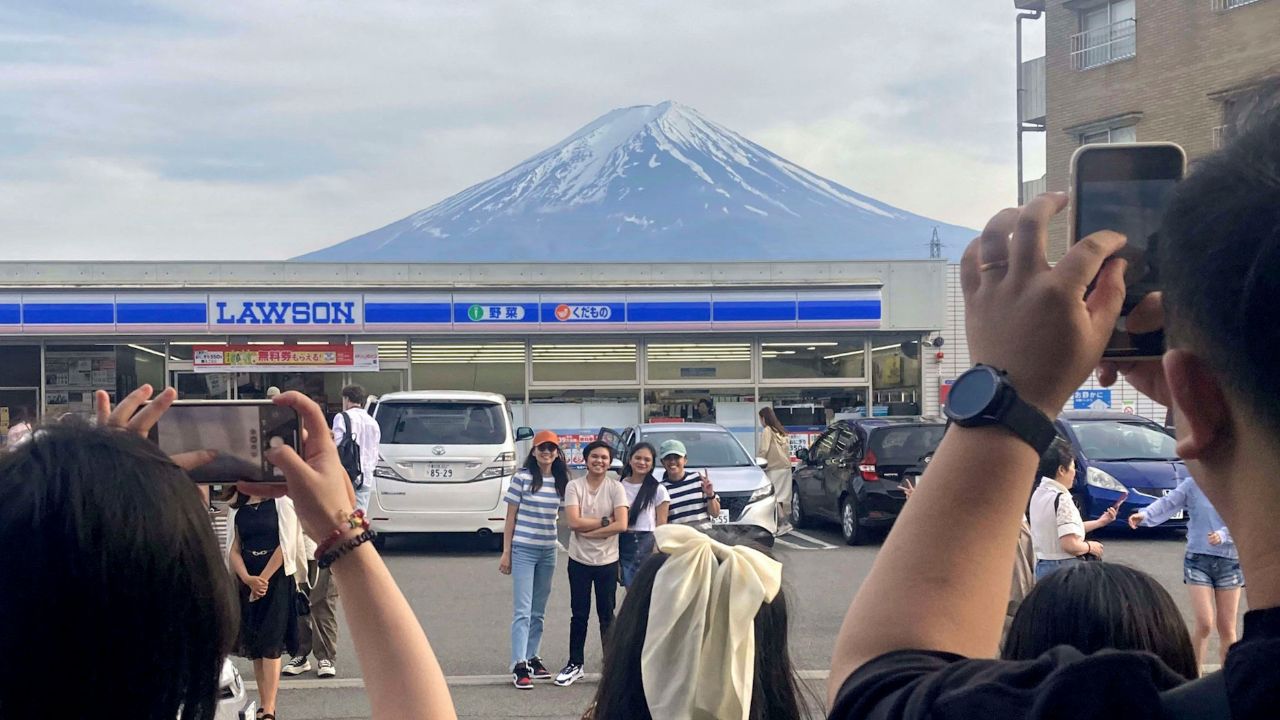
    Fujikawaguchiko town began building panels of mesh netting at a spot where unending flows of mostly foreign tourists visit daily to take photos of the majestic mountain sitting behind a Lawson convenience store.

    Photos taken from a narrow stretch of pavement across a busy road from the Lawson store — which are ubiquitous in Japan — are widely shared online.

    Local officials and residents say while the town welcomes visitors, they need to stop tourists from continuously crossing the street, ignoring red lights, littering, trespassing, illegally parking and smoking outside of designated areas.

    “It became not uncommon for people to yell at us when we asked them to move their cars, and for them to throw their lit cigarettes (on the ground),” a dentist’s office located across the street from the Lawson shop said in a statement.

    By the middle of this month, the town plans to complete the barrier, which will stand 2.5 metres (8 feet) high and stretch more than 20 metres long to block the view of the mountain, with hopes that it will discourage tourists from loitering there.

    The town’s move has prompted national and international headlines, as Japan experiences growing problems of overtourism, particularly at popular sites like the narrow private alleys of Kyoto, and even trails on Mount Fuji itself, where tourists love to photograph themselves and post on social media.

    The Fujikawaguchiko town hall has been inundated with telephone calls from Japanese people, many of them non-local residents, who have criticised the move to block the view.

    “It is not that we do not want people to see Mount Fuji. The issue is that there are so many people who are not able to observe basic rules,” a town official told AFP.

    ‘Basic manners’

    Having the net barrier is unfortunate but perhaps necessary, area residents say.

    “We welcome foreigners for the revitalisation of the community, but there are so many violations of basic manners, like crossing the road, dumping garbage and trespassing into people’s properties,” a 60-year-old resident told AFP.

    “After all, they are here for Mount Fuji, so having that barrier is very unfortunate,” said the woman, who identified herself as Watanabe.

    “There might have been other ways to deal with it, but for now I feel it cannot be helped,” she said.

    Some tourists expressed understanding and voiced hopes that the town would create a designated photo spot.

    But others speculated that the barrier may only make matters worse.

    “Stop people? I don’t think so because when there is a will there is a way. People will just be on the left side of it or right side of it,” said 29-year-old Australian tourist Trinity Robinson.

    “There definitely will be a way to still get the shot. It will just be more dangerous, really.”

    As a possible solution, a 37-year-old local man, who gave his name as Ama, called on visitors to check out other scenic locations in the area.

    “Mount Fuji from here (near the Lawson shop) is fantastic. But there are so many other places around here where you can visit and see beautiful views,” he said.

  • He hippo in Japan zoo turns out to be a she

    He hippo in Japan zoo turns out to be a she

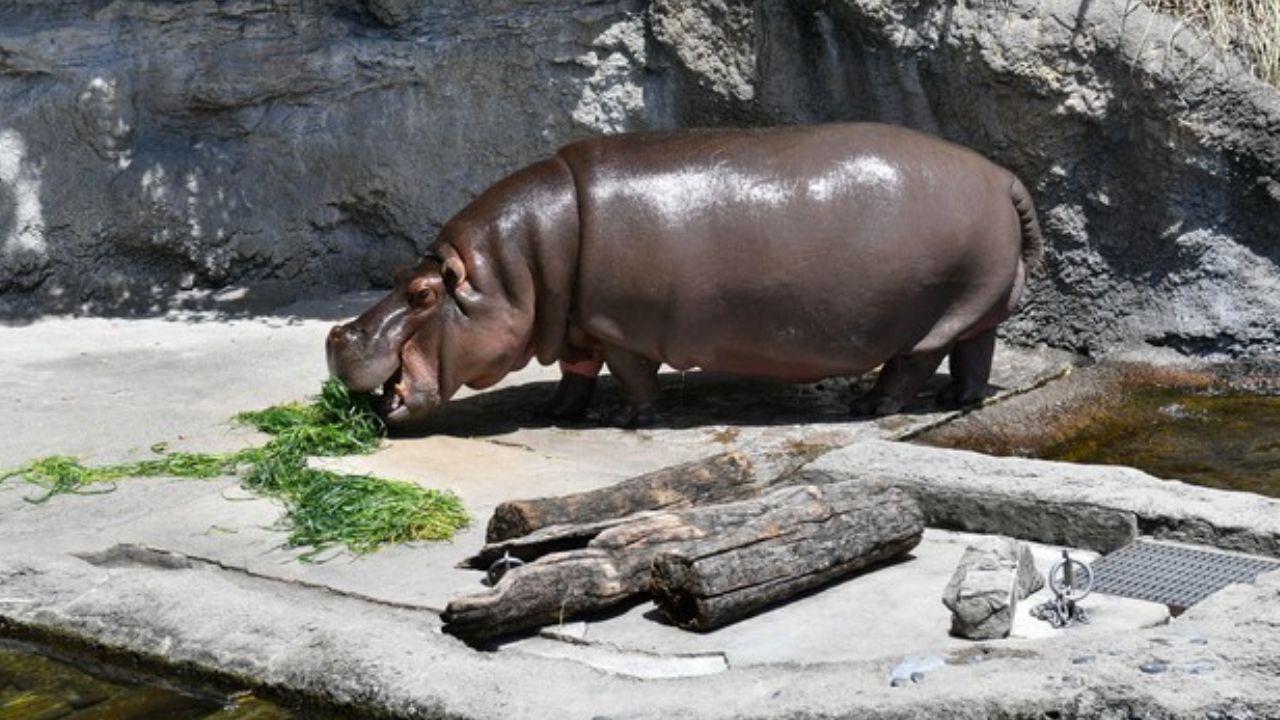
    Tokyo (AFP) – Betrayed by its DNA and unmanly toilet habits, a hippopotamus in Japan thought for seven years to be a he is in fact a she, the zoo where the wallowing giant lives said Tuesday.

    The 12-year-old came to Osaka Tennoji Zoo in 2017 from the Africam Safari animal park in Mexico, where officials attested on customs documents that the then five-year-old was male.

    But zookeepers long scratched their heads, a spokeswoman told AFP.

    In particular, Gen-chan did not display the typical male hippo behaviour of splattering faeces around while defecating — with a propeller-like tail motion — in order to mark territory.

    Nor did it make courtship calls to females and zookeepers were unable to visually identify any male genitalia, a dangerous task in such a large and potentially aggressive beast.

    “Therefore, we requested a DNA test at an external institution, and the result showed it was female,” the zoo said in a statement posted last week.

    “We will keep doing our best to provide comfortable environment to Gen-chan, so everyone, please come and see,” it said.

  • Notorious Japanese fugitive dies after 50 years on the run: media

    Notorious Japanese fugitive dies after 50 years on the run: media

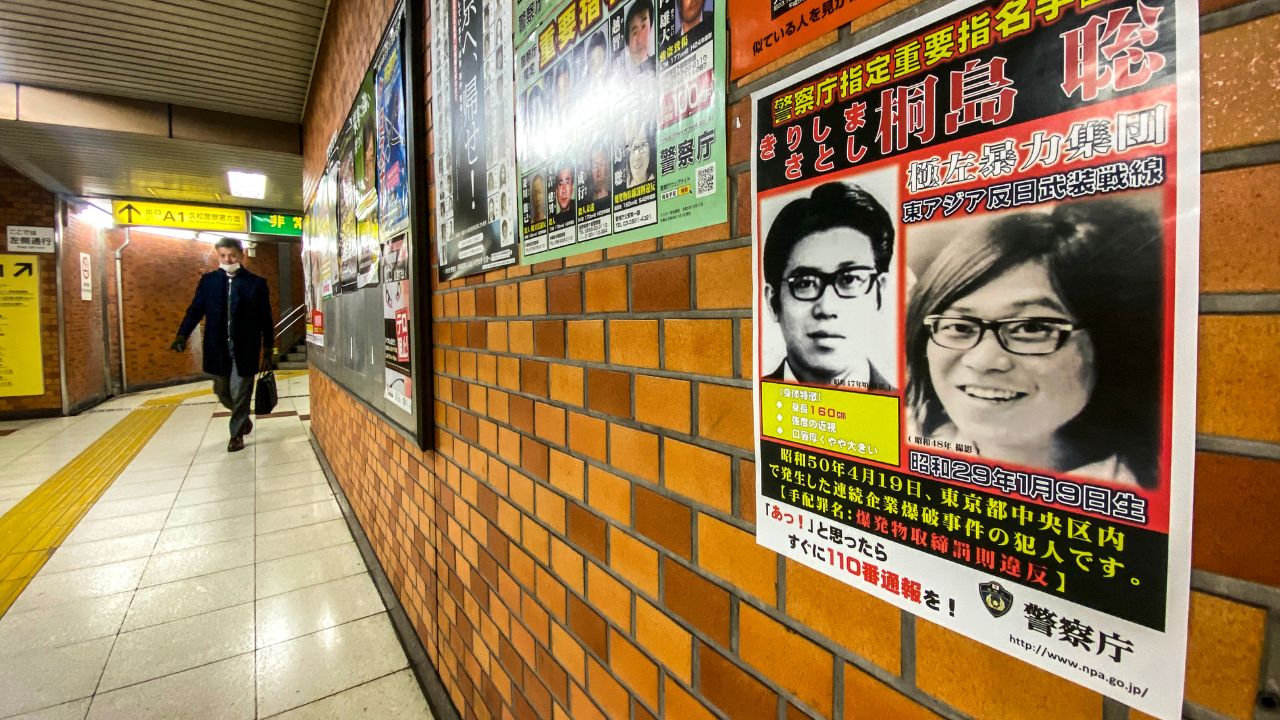
    Tokyo, Japan – Long hair, youthful smile, thick glasses slightly askew: for decades, the black-and-white photo of one of Japan’s most wanted fugitives has been a ubiquitous sight at police stations nationwide.

    But after nearly 50 years Satoshi Kirishima — wanted over deadly bombings by leftist extremists in the 1970s — reportedly died Monday, days after local media said he had finally been caught.

    Last week, the 70-year-old revealed his identity after he admitted himself to hospital under a false name for cancer treatment, according to Japanese media.

    The reports were a sensation in Japan, where his young face is so widely recognised that it has inspired viral Halloween costumes.

    But police were still scrambling to conduct DNA tests when the man believed to be Kirishima passed away on Monday morning.

    “Investigators looked into and eliminated past tips, but there is a very high possibility that this individual is actually Kirishima,” a police source told the Asahi newspaper.

    Plain sight

    Details are emerging of how Kirishima may have been hiding in plain sight for decades.

    Born in Hiroshima in January 1954, Kirishima attended university in Tokyo, where he was attracted by radical far-left politics.

    He joined the East Asia Anti-Japan Armed Front, one of several militant groups active in the era along with the once-feared Japanese Red Army or the Baader–Meinhof Group in West Germany.

    The revolutionary Armed Front carried out bombings at Japanese companies, including one at Mitsubishi Heavy Industries that killed eight people.

    It operated in three cells, with fanciful names: “Wolf”, “Fangs of the Earth” and “Scorpion” — Kirishima’s outfit.

    Under the radar

    Alongside physical descriptors on Kirishima’s wanted posters — 160 cm tall (5 ft 3), full lips, very short-sighted — is a summary of his crime.

    In April 1975, the young radical allegedly helped set up a bomb that blasted away parts of a building in Tokyo’s upscale Ginza district. No one was killed.

    He has been on the run ever since.

    TV Asahi and other outlets said he had lived a double life for years, working at a building contractor in the city of Fujisawa in Kanagawa region, under the alias Hiroshi Uchida.

    He was paid in cash and went under the radar with no health insurance or driving licence, the reports said.

    At the nondescript office where the man reportedly worked, someone who knew him told TV Asahi that the suspect had “lost a lot of weight” compared to the wanted photo.

    The man believed to be Kirishima began to receive treatment for stomach cancer under his own expense, the reports said.

    It was at a hospital in the city of Kamakura that he finally confessed that he was 70-year-old Kirishima, they added.

    Walking free

    Nine other members of the East Asia Anti-Japan Armed Front were arrested, the Asahi newspaper said.

    But two 75-year-olds are still on the run after being released in 1977 as part of a deal by the Japanese Red Army, which had hijacked a Japan Airlines plane in Bangladesh.

    Fusako Shigenobu, the female founder of the Japanese Red Army, walked free from prison in 2022 after completing a 20-year sentence for a 1974 embassy siege.

    Shigenobu’s group carried out armed attacks in support of the Palestinian cause during the 1970s and 80s, including a mass shooting at Tel Aviv airport in 1972 that killed 24 people.

    Kirishima though escaped justice, or so it seems.

    “I want to meet my death with my real name,” he told staff at the hospital, according to NHK.

    bur-kaf/stu/ser

    © Agence France-Presse
  • Japan’s moon lander back to life after ’20 minutes of terror’

    Japan’s moon lander back to life after ’20 minutes of terror’

    Japan’s Moon lander has come back to life, the space agency said Monday, enabling the craft to proceed with its mission of investigating the lunar surface despite its rocky start.

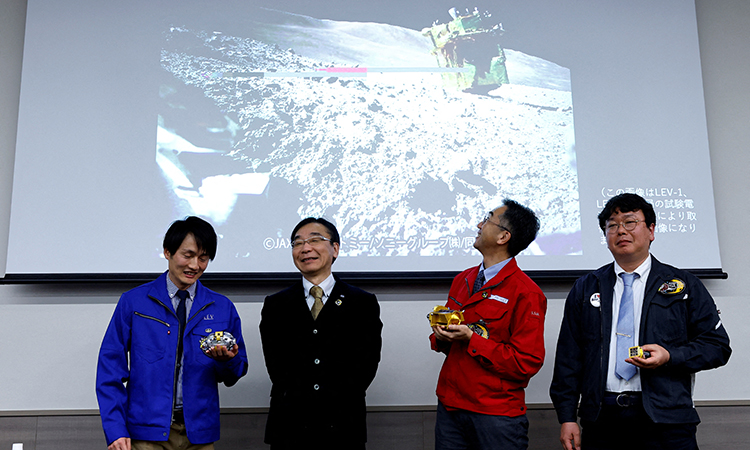
    Officials from the Japan Aerospace Exploration Agency (JAXA), smile in front of a screen showing an image taken by LEV-2 on the moon, after their press conference on SLIM’s moon landing mission, in Tokyo, Japan. Reuters

    The surprise announcement was a boost to Japan’s space programme, nine days after the Smart Lander for Investigating Moon (SLIM) touched down at a wonky angle that left its solar panels facing the wrong way.

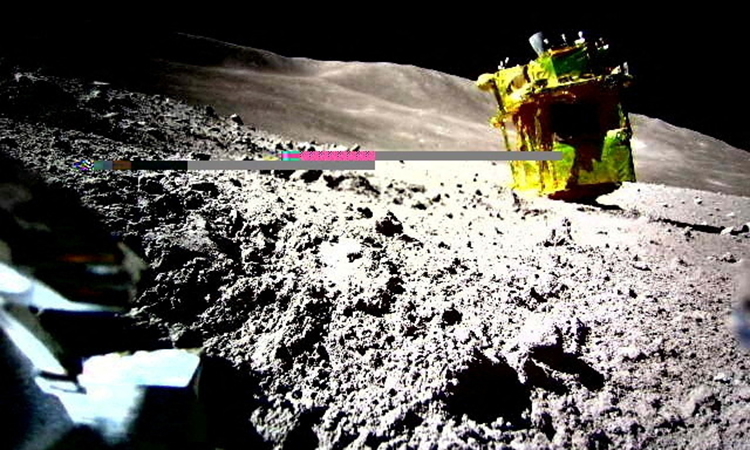
    “Last evening we succeeded in establishing communication with SLIM, and resumed operations!” JAXA said on social media platform X, posting a grainy image of a lunar rock known as a “toy poodle”.

    The Smart Lander for Investigating Moon (SLIM) is seen in this handout image. Reuters

    “We immediately started scientific observations with MBC, and have successfully obtained first light for 10-band observation,” it said, referring to the lander’s multiband spectroscopic camera.

    Terrifying minutes

    SLIM’s January 20 touchdown made Japan only the fifth nation to achieve a “soft landing” on the Moon after the United States, the Soviet Union, China and India.

    But on its descent, dubbed the “20 minutes of terror”, the craft suffered engine problems and ended up at a skewed angle, images released by JAXA showed.

    This meant the solar panels were facing west instead of up, and it was uncertain if they would still get enough sunlight to function.

    Last week JAXA said it had switched the elevator-sized SLIM off with 12 per cent power remaining, hoping that the craft would wake up this week.

    A JAXA spokesman told the media on Monday that the SLIM operation resumed “presumably because power generation resumed in its solar battery as it received sunlight”.

    “We will prioritise what we can do now — observing and collecting information — rather than adjusting SLIM’s position since adjusting the position could lead to a worse situation,” he said.

    “The daytime (where SLIM is on the Moon) will last until around the end of January and it will be at night from around February,” he said.

  • Pakistani passport once again least powerful

    Pakistani passport once again least powerful

    Henley & Partners‘ Passport Index has published a list portraying the world’s travel access hierarchy.


    Top on the list of countries that encourage travelling are France, Germany, Italy, Japan, Singapore, and Spain, whose citizens can visit an astounding 194 destinations without requiring arduous visa procedures. This group of countries offer passport-to-plane experience, setting the bar high for unmatched worldwide mobility.


    With access to 193 locations, Finland, South Korea, and Sweden share second place. Many visa-free or visa-on-arrival options are available to their well-travelled inhabitants, providing access to a variety of cultures and environments.


    Austria, Denmark, Ireland, and the Netherlands take third place with access to 192 destinations. These nations serve as entry points to a wide range of travel opportunities.


    The long list goes on, honouring countries that place a high priority on global connection. Among the notable entries are the United States, Canada, Greece, Switzerland, and New Zealand, all of which provide their inhabitants with an abundance of travel options.


    On the other hand, the Passport Index identifies states with more limited travel options. Afghanistan, Syria, Iraq, and Pakistan are among the least accessible, offering their passport holders entry to just 34 countries that require no visa or one upon arrival.


    The London-based company, which offers residency and citizenship consultancy services, teamed together with the International Air Transport Association to create a unique ranking that takes into account passport holders’ access to countries without a visa or with one upon arrival.

  • Japan To Allow Male Prisoners To Use Same Skin-care Items As Women

    Japan To Allow Male Prisoners To Use Same Skin-care Items As Women

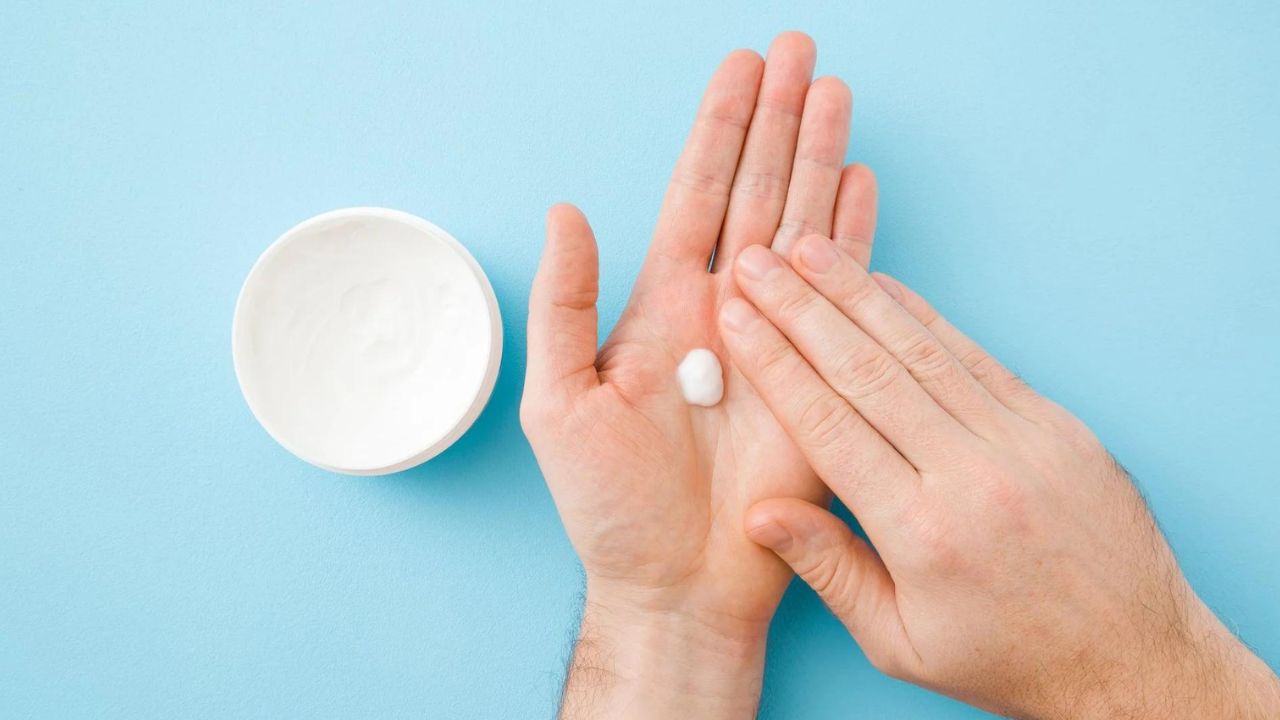
    Japan’s justice ministry next month will allow male prisoners to have face lotion and hair conditioner, which women inmates may already use, in light of changing gender norms, an official said Wednesday.

    Under previous rules, the in-prison purchase and gift acceptance of the toiletry items were allowed only for female inmates, based on the notion that those items tend to be used by women.

    But the ministry notified prisons nationwide this month that men will be able to obtain those products too under revised rules, a justice ministry official told AFP.

    “It is our view that steps are increasingly being taken in Japanese society towards eliminating unreasonable gender gaps”, the official said, speaking on condition of anonymity.

    “We felt it is necessary to treat prison inmates in a way that would better reflect the changing landscapes of outside society”, the official added.

    The new rules will take effect beginning next month, he said.

    Still, some items will remain off-limits to men, including hair bands and women’s sanitary products, the ministry said, adding shampoo and handkerchiefs have long been accessible regardless of gender.