Tag: Japan

  • Bilawal visits Tokyo, says Pakistan needs ‘trade, not aid’

    Bilawal visits Tokyo, says Pakistan needs ‘trade, not aid’

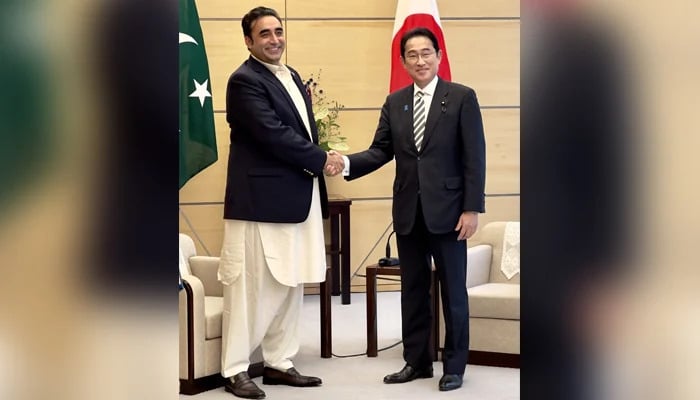
    Pakistan’s Foreign Minister Bilawal Bhutto-Zardari, on his maiden visit to Japan, has declared his intention to boost trade and promote diplomatic ties between the two countries on Sunday. He stated that Pakistan needed trade and not aid.

    Giving an address at an event organised by the Pakistani diaspora living in Tokyo, Bilawal maintained that the two countries have agreed to further deepen and enhance their mutually beneficial bilateral cooperation in multiple areas. These include trade, investment, human resource development and exchange, IT, tourism and agriculture sectors.

    “We have also jointly agreed to explore the possibility of working together on targeted programs with higher impact in the domains of solarisation, desalination, and water purification and housing and infrastructure rebuilding in the floods affected areas in Pakistan,” Bilawal said in a joint press stakeout along with his Japanese counterpart Yoshimasa Hayashi, as reported by The News.

    Empowering our workforce

    In addition, the two sides have agreed to conduct language skill assessment tests for the Japanese language in Pakistan to facilitate the movement of skilled workers. The Nation reported that Bilawal underscored the importance of Pakistanis living abroad, stating: “The overseas Paki­stanis are our assets, who are play­ing vital role to promote bilateral ties between Pakistan and Japan. Our population consists of 65 per­cent youth and we want Pakistani youth to get employment in Japan.”

    Potential for growth

    The Foreign Minister met with repre­sentatives of the Japan Interna­tional Development Agency (JICA) and the Japan External Trade Orga­nization (JETRO) to discuss poten­tial for trade and investment. He also stated that Pakistan’s incumbent government was working on economic diplomacy in order to bring prosperity to the country.

    Bilawal also went on to praise Japan’s advancement in IT and other fields, saying Pakistan could learn from them. Both sides have seen a new vigour in their relationship through continued high-level exchanges.


  • Japanese car companies consider establishing hybrid vehicle plants in Pakistan

    Japanese car companies consider establishing hybrid vehicle plants in Pakistan

    Japan has urged Pakistan to allow the import of manufacturing equipment for vehicles due to the shortage of dollars, which has affected the issuance of letters of credit to Japanese companies operating in the country.

    Japanese firms are considering the establishment of hybrid vehicle plants in Pakistan, with plans to export the vehicles from the country in the future.

    During a meeting between Ambassador Wada Mitsuhiro and Finance Minister Senator Ishaq Dar at the Finance Division, the Ministry of Finance issued an official statement. The Vice Chairman of Toyota, Shinji Yanagi, SAPM on Finance Tariq Bajwa, finance secretary, and senior officers were also in attendance.

    The finance minister briefed the envoy on the economic challenges and priorities of the government and emphasized that Japan is one of its major development partners. The cooperation between the two countries will strengthen in multiple fields for mutual benefit. The finance minister also welcomed the investment plans of Japanese companies in Pakistan.

    Ambassador Mitsuhiro praised the government’s pragmatic policies and actions and expressed confidence in the country’s economic policies. Meanwhile, a World Bank delegation led by Mamta Murthi, Vice President of the World Bank for Human Development, met with Dar at the Finance Division.

    Murthi emphasized the importance of investing in human capital, particularly in education, health and nutrition, social protection, population control, and women’s development. She also highlighted the importance of local ownership and community participation in implementing development projects.

    The finance minister briefed Murthi on the government’s policies and programs related to key areas of human development to uplift the masses and eliminate poverty in the country. He expressed the government’s commitment to work with the World Bank to achieve their shared goals of sustainable development in Pakistan.

  • Japan in shock after Prime Minister attacked in daylight

    Japan in shock after Prime Minister attacked in daylight

    Japanese Prime Minister (PM) Fumio Kishida is unharmed after being attacked by a smoke bomb on Saturday while he was campaigning for a ruling party candidate, leaving the country in shock.

    A video of the attack showing white smoke rising after a blast right before the Prime Minister was about to speak, is doing the rounds on social media.

    A witness said that he saw an object flying through the air and it gave him a “bad feeling, so he ran away unbelievably fast”.

    After the attack, the prime minister resumed campaigning.

    The incident comes just nine months after former PM Shinzo Abe was assassinated last year while campaigning for a parliamentary election.

    The latest attack also comes as Japan is set to host the 49th G7 summit from May 19-May 21 in Hiroshima.

  • Restaurant bans customers from using smartphones while dining

    A Japanese ramen restaurant has announced that it will not allow customers to use their phones while dining.

    The restaurant’s owner, Kota Kai, put the ban in place last month after observing that patrons who were using their phones to view videos took the longest to begin eating.

    He claims that the thin, millimetre-wide noodles in his restaurant can rapidly turn mushy. According to Kai, even a quick film could cause a discernible impact in the ramen’s flavour.

    “It’s painful for me to see the ramen that I put my soul into making get ruined right before my eyes,” he said.

    Kai stated that he likes to deal with the clients directly as opposed to displaying posters about the phone restriction.

    “When the seats are full and I see people stopping eating while staring at their smartphones, I tell them (to stop),” he added.

  • Donors pledge more than $10 billion for Pakistan flood recovery at Geneva conference

    Donors pledge more than $10 billion for Pakistan flood recovery at Geneva conference

    Pakistan has secured over $10.5 billion in pledges from international creditors at the one-day International Conference on Climate Resilient Pakistan in Geneva, which will help the cash-strapped country recover from last year’s devastating floods.

    By the end of the first plenary session, Pakistan had received pledges totaling $8.57 billion, and in the second session, it had secured more than $2 billion.

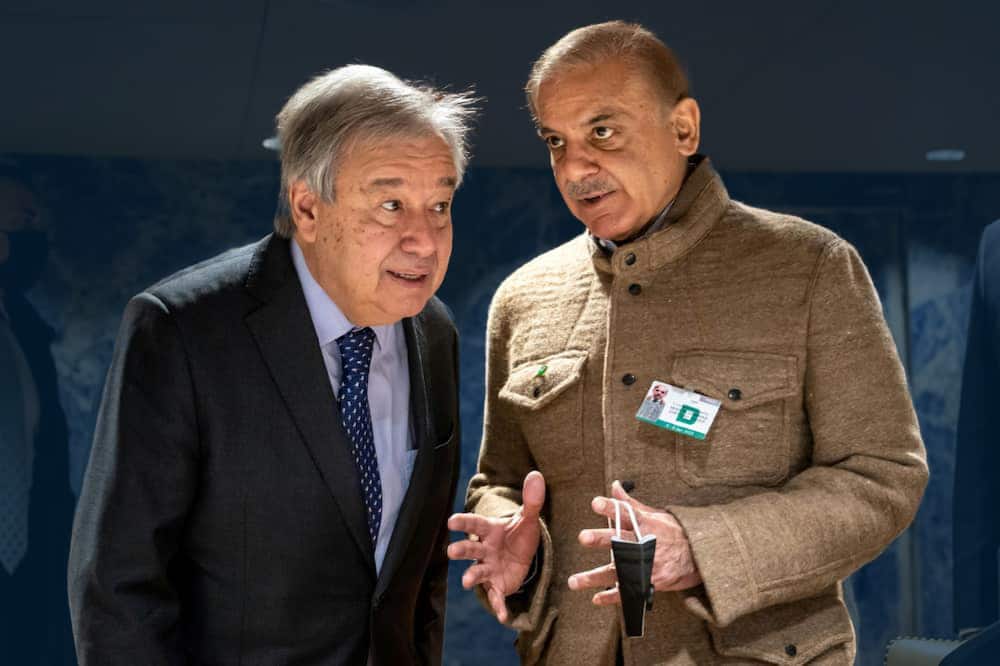
    UN Secretary-General Antonio Guterres urged the international community to help Pakistan build climate-resilient infrastructure and to grant access to the knowledge and resources needed to survive future catastrophes.

    The delegations recalled their support for the emergency relief operations during the conference and reaffirmed their commitment to Pakistan’s people in support of a strong recovery, rehabilitation, and reconstruction.

    All donations pledged at the Geneva conference

    • Islamic Development Bank: $4.2 billion
    • World Bank: $2 billion
    • Asian Development Bank: $1.5 billion
    • Asian Infrastructure Investment Bank: $1 billion
    • Saudi Arabia: $1 billion
    • France: $384 million
    • China: $100 million
    • United States: $100 million
    • EU: $93 million
    • Germany: $88 million
    • Japan: $77 million
    • United Kingdom: $10 million
    • Azerbaijan: $2 million

    The attendees voiced their solidarity and pledged financial support for the ongoing humanitarian activities as well as the achievement of the goals and key areas. The meeting was co-hosted by Pakistan and the UN.

    The World Bank has pledged $2 billion, the Asian Infrastructure Investment Bank has pledged $1 billion, and the Islamic Development Bank Group has pledged $4.2 billion over three years.

    Furthermore, Asian Development Bank has pledged $1.5 billion, while the European Union has offered $93 million, Germany has pledged $88 million, China has pledged $100 million, Japan has pledged $77 million, and so on. The French government has committed $345 million, and the United States Agency for International Development has offered $100 million.

    Saudi Arabia has also committed $1 billion to assist Pakistan in reconstruction efforts.

  • Japan’s consumer inflation hits 8-year high

    Japan’s consumer inflation hits 8-year high

    According to official data released on Friday, Japan’s core consumer prices increased 3.0 per cent year over year in September, the highest level since 2014 as households were hard-hit by the weakening yen and rising energy prices.

    According to Reuters, the statistic raises inflation considerably above the Bank of Japan’s long-term 2.0 per cent target, even when volatile fresh food prices are excluded. The central bank’s claim that the present rises do not yet fulfil its criteria for persistent price growth is supported by the fact that the figure was only 1.8 per cent when energy costs were excluded.

    The most recent data was in line with market forecasts, but when similar data was last seen, a VAT increase had artificially inflated prices. The rate of inflation in September was the highest in nearly 31 years, excluding years when tax increases had an impact on the rate.

    “The bulk of the price increases at the moment are rises in raw material prices,” while service prices associated with wages have not seen meaningful increases, Taro Saito, an economist at NLI Research Institute, said in a note released before the data.

    He projected that stabilising inflation in Japan will take longer time to achieve due to pay rises and rising service costs.

    The BoJ believes the present price hikes are related to extraordinary occurrences like the conflict in Ukraine, whereas other central banks have chosen to raise interest rates to combat skyrocketing inflation.

    It has persisted in its ultra-loose monetary policy and refrained from raising rates, claiming that the third-largest economy in the world has not yet attained the inflation target of 2.0 per cent that it believes is required to accelerate growth.

    The yen has fallen, especially against the dollar, as a result of the widening gap between the bank’s policy and other rate increases. The yen dropped to 150 versus the dollar on Thursday, the lowest level since 1990.

  • Toyota Camry after a hike of Rs2 million, priced at Rs23.3 million

    Toyota Camry after a hike of Rs2 million, priced at Rs23.3 million

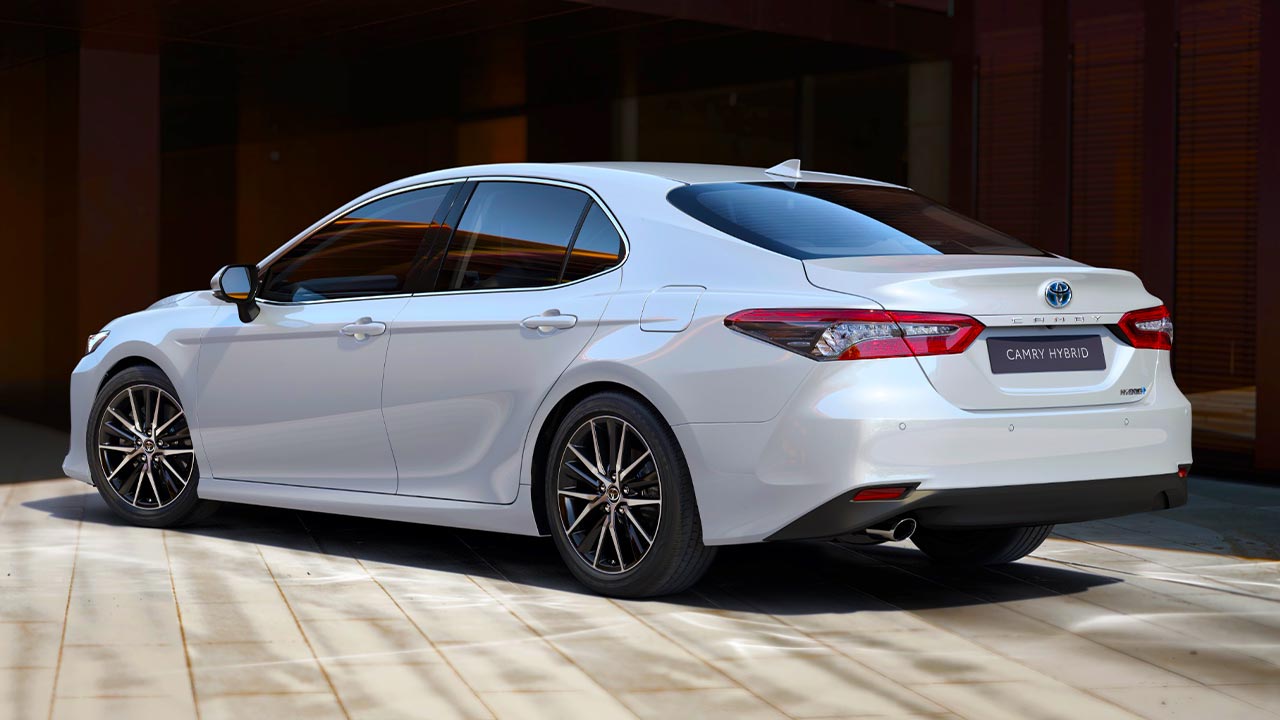
    Toyota Indus Motor Company (IMC) has announced a massive price hike for all completely built-up (CBU) units offered by the Japanese automaker in Pakistan. The price of Toyota Camry is upped by Rs2 million and will now cost Rs23.3 million

    The only variant of the popular hybrid model, Toyota Prius received a hike of Rs1.26 million and will be sold for Rs14.65 million. Toyota’s crossover SUV, Corolla Cross (top trim) is now priced at Rs13.4 million after a hefty increase of Rs1.17 million in its earlier price.

    Finally, the automatic version of Toyota Rush will now be offered at Rs8.33 million following an increase of Rs710,000.

    Read more: Hyundai Sonata 2.5 will now cost Rs7.85 million

    Toyota IMC’s CBU models, in particular, have become nearly unobtainable following the recent price jump. The government’s main purpose in the auto sector, however, is to discourage CBU imports and increase sales of locally produced vehicles. This means that all other CBUs are on the verge of suffering the same fate as Toyota.

  • Hyundai Sonata 2.5 will now cost Rs7.85 million

    Hyundai Sonata 2.5 will now cost Rs7.85 million

    Like the majority of automakers in Pakistan, Hyundai Nishat has joined the price hike bandwagon by raising the price of its sedan offerings; the Elantra GLS, Sonata 2.0, and Sonata 2.5 variants, due to increased shipping costs and continuous depreciation of the local currency.

    The premium category sedan, Hyundai Sonata 2.0 witnessed an increase of Rs140,000 in its earlier rate of Rs6,859,000. After the price hike, the car costs Rs6,999,000. Hyundai Sonata’s top trim will now be sold at Rs7,849,000 after a price increase of Rs100,000 in its previous price of Rs7,749,000.

    Hyundai Elantra GLS after getting a price of Rs150,000 will be offered at Rs4,949,000, the exact model was previously sold at Rs4,799,000.

    Read more: Pakistani rupee crashes to historic low of Rs194 against US dollar

    Almost every local or imported sedan is now out of reach of the masses as the auto industry has been massively affected by the ongoing devaluation of the Pakistani currency against the US dollar, increased freight charges along with the premium culture (own trend) in the country.

  • Toyota Land Cruiser is now priced at Rs8 crore after a hefty price hike

    Toyota Land Cruiser is now priced at Rs8 crore after a hefty price hike

    The new Land Cruiser was unveiled in Pakistan by Toyota Indus Motor Company (IMC) at a staggering price of Rs72.50 million. The SUV is a one-of-a-kind vehicle in Pakistan, with pricing comparable to some of the most expensive German SUVs.

    Due to the depreciating Pakistani rupee, overall inflation and rising transportation costs, the Land Cruiser, like other locally built vehicles in Pakistan, has undergone a price hike of Rs7.5 million. The luxury SUV from Toyota is now available for Rs79,999,000.

    The Japanese automaker offers only one version of LC300 in Pakistan. It has a 3.5-liter twin-turbocharged V6 petrol engine with 409 horsepower (hp) and 650 Newton-meters (Nm) of torque that is sent to all four wheels via a 10-speed automatic transmission.

    Read more: Pakistani rupee reaches a new all-time low of Rs190 against the US dollar

    Considering its outrageous cost, the Land Cruiser 300 is clearly out of reach for the vast majority of Pakistanis. It is, however, a wonderful addition for aristocrats who have a garage with six to ten cars.

  • Honda City Hybrid 7th gen launched, Pakistan continues with retired 6th gen

    Honda City Hybrid 7th gen launched, Pakistan continues with retired 6th gen

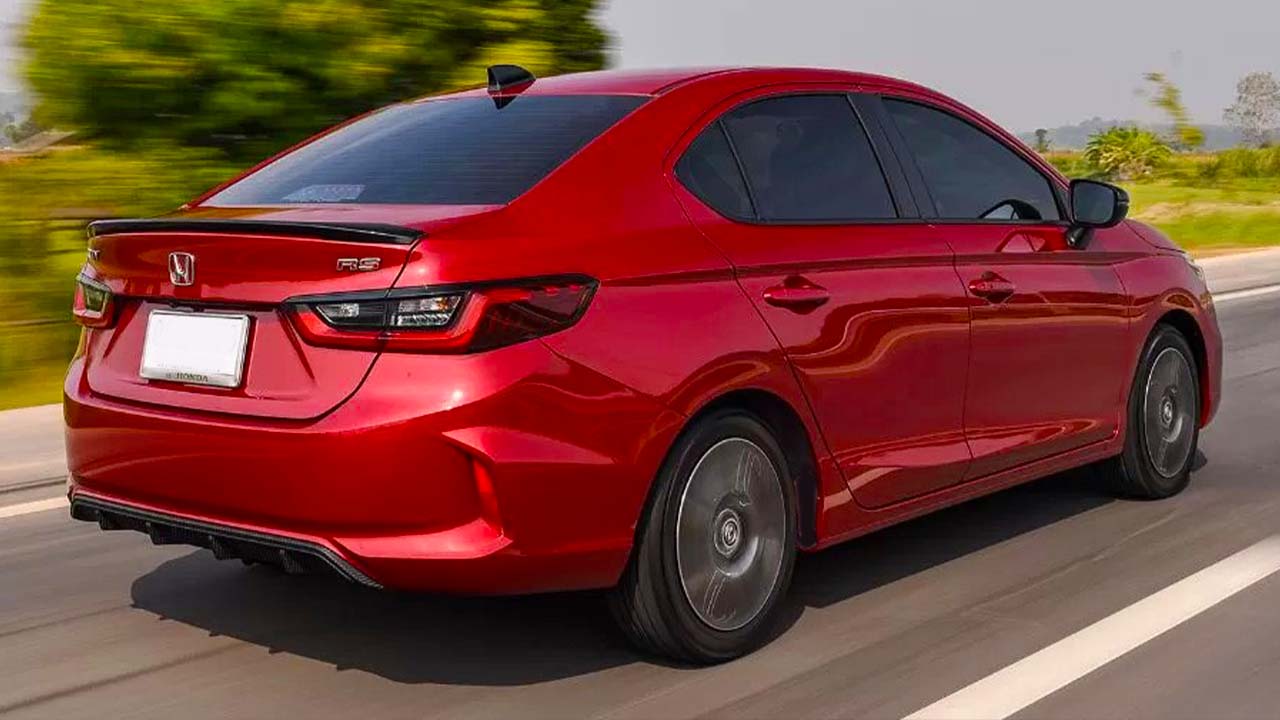
    Honda has finally debuted the long-awaited City hybrid sedan in the Indian market. The ex-showroom price of the 2022 Honda City Hybrid e:HEV is 1.9 million INR (PKR 4.7 million). It’s only available in a single ZX model with all of the bells and whistles.

    Last year, the new City Hybrid made its global premiere, and it is India’s first mainstream segment automobile to have robust hybrid technology.

    Powertrain

    The City e:powertrain HEV’s consists of a 1.5-liter Atkinson-Cycle DOHC i-VTEC petrol engine combined with two electric motors. One serves as an electric generator, while the other serves as a propeller. The combined output of this powerplant is 124 horsepower, with a peak torque of 253 Nm. It also comes with three driving modes: EV Drive, Hybrid Drive, and Engine Drive, as well as Regeneration mode for slowing.

    Fuel economy

    The new Honda City Hybrid e:HEV is India’s most fuel-efficient sedan, with a stated economy of 26.50 kmpl. Honda has also included 37 high-tech Honda Connect features in the vehicle. Honda’s Sensing Technology is also being introduced for the first time in India.

    Safety technologies such as Collision Mitigation Braking System, Adaptive Cruise Control, Lane Keeping Assist System, and more are included in the City e:HEV.

    Read more: Honda Atlas announces price hike instead of fixing delivery issues

    Arrival in Pakistan

    After the 6th generation, Honda City was retired globally, Honda Atlas Cars Pakistan Limited (HACPL) introduced the latter into the Pakistani auto market, and given the history of Pakistani manufacturers, the car may continue for years, as the 5th generation Honda City was sold by Honda Atlas for more than a decade.