Toyota announced that it will introduce its revolutionary bZ4X battery-powered SUV in its home market on May 12, as part of a larger push to minimise its carbon footprint.
The bZ4X is Toyota’s first vehicle built on a specific electric vehicle (EV) platform created in collaboration with Subaru. It’s made at the Motomachi factory, which now employs CO2-free utility power sourced from renewable sources.
It was also disclosed that the Japanese dealerships would start taking orders for the first batch of 3,000 vehicles in May 2022, with the second batch of about 2,000 vehicles anticipated early in the autumn. This year, the manufacturer plans to create and sell 5,000 units.
The Japanese manufacturer claims that its new battery electric vehicle (BEV) SUV has a power-efficiency rating of 128Wh/km and a touring range of 559 kilometers (347 miles). It is compatible with rapid DC chargers available all around the world, while its battery can be topped to 80 per cent in just 40 minutes.
All bZ4X models delivered in Japan will be leased, as per the manufacturer, to alleviate customer concerns about electric cars and allow it to apply its 3Rs (Rebuild, Reuse, Recycle) battery management system. The batteries incorporated in the SUVs will be guaranteed for ten years and 200,000 kilometers (120,000 miles) at 70 per cent capacity retention.
The Kinto service will be able to lease the bZ4X models to private clients, while the Rent-a-Lease and Toyota Mobility Services networks will be able to lease the EV to corporate customers.
Honda’s mini-SUV, the HR-V is finally approaching its second generation. The upcoming model will have some significant upgrades from styling to engine performance.
It will be bulkier, futuristic, and more powerful than the previous model, with better looks than the smaller, hybrid-only European variant introduced in 2021.
VEZEL and HR-V confusion
For those who may not know, the original name for ‘Honda Vezel’ is ‘Honda HR-V’. This hybrid vehicle has become quite famous in Pakistan for its good looks and impressive fuel consumption despite being an expensive completely built-up (CBU) unit. It is mostly witnessed with a ‘Vezel’ badging instead of ‘HR-V’ here.
The Japanese automaker said that the new subcompact SUV will be based on the same platform as the international Honda Civic variants. It has a longer wheelbase than before, and the rear suspension is now independent.
One important thing Honda revealed about the powertrain is that it will be a more responsive engine as compared to the prior one, which might be the Civic’s 180-hp turbocharged 1.5-liter inline-four, replacing the existing HR-V’s 141-horsepower 1.8-liter inline-four.
The HR-V’s engine for the base model could be the naturally aspirated 158-hp 2.0-liter inline-four from the Civic’s lower trim levels. Front-wheel drive will almost certainly be standard, with all-wheel drive as an option, and a CVT automatic transmission will almost certainly be the only transmission option. A hybrid HR-V is also expected to enter the lineup, though it may arrive later than the fuel-only model.
Honda has not officially revealed any photographs or details of the HR-V’s interior, however, it will be exciting to see how the new platform will affect its packaging. As the fuel tank was positioned behind the front seats, the previous HR-V, like the Fit, had a surprisingly low cargo floor.
The LX, Sport, EX, and EX-L variants from the current model are anticipated to continue over. Honda also published a video showcasing the new HR-V in a variety of colours, including red, silver, black, and white. Unfortunately, there is no official statement released by the company regarding its price and availability in other regions.
The number of Japanese women who committed suicide continued to rise for a second year in Japan. However, the overall suicide rate has decreased since 2021, said the Japanese police on Tuesday.
According to data from the National Police Agency, the number of women who took their own lives increased by 42 to 7,068 in the second year, 2022. While the number of men who killed themselves was decreased by 116 to 13,939.
According to some media reports, coronavirus is one of the major reasons for the cause in increasing suicide rate of women.
The pandemic has put up more distress and pressure on women after losing jobs in those sectors where Japanese women tend to work such as services and retail sectors.
According to the Japanese Health Ministry, the country has a long history of suicide culture where people died by suicide for avoiding the shame of dishonour. Japan has the highest suicide rate among the group of seven nations(G-7).
Although in 15 years, the suicide rate was dropped by 40% by national effort, the pandemic has risen suicide rate among people due to mental health problems.
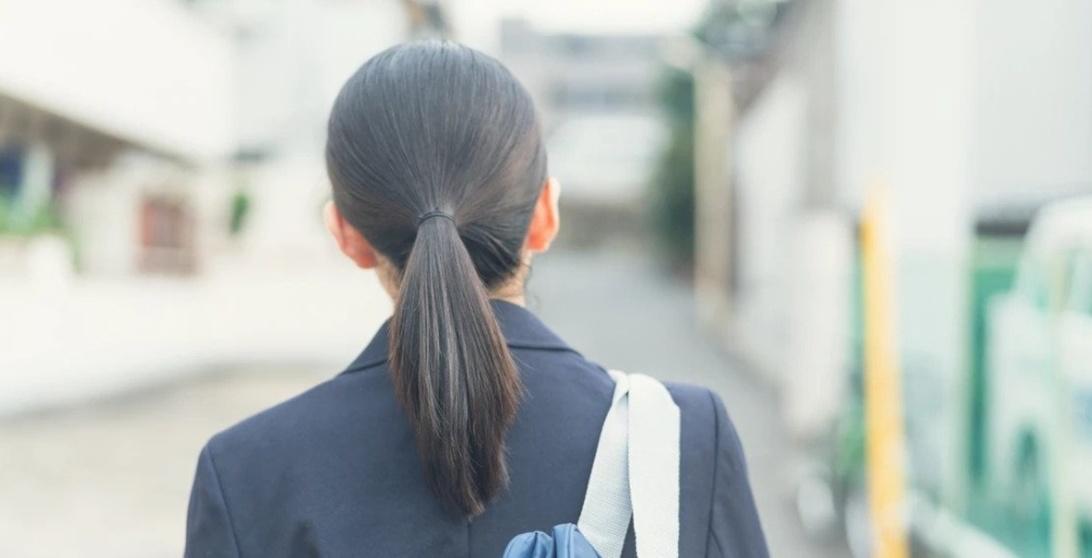
As per Motoki Sugiyama, a former middle school teacher in Japan’s school, administrators told him that girls must not wear a ponytail because exposing the nape of their necks could “sexually excite” male students.
While referring to how most schools require girls to wear white undergarments so that they won’t show through their uniforms, Sugiyama said, “They’re worried boys will look at girls, which is similar to the reasoning behind upholding a white-only underwear colour rule.”
“I’ve always criticized these rules, but because there’s such a lack of criticism and it’s become so normalized, students have no choice but to accept them,” he added.
Sugiyama has taught at five different schools in Shizuoka prefecture, some 90 miles southwest of Tokyo, over the course of 11 years, all of which prohibited ponytails.
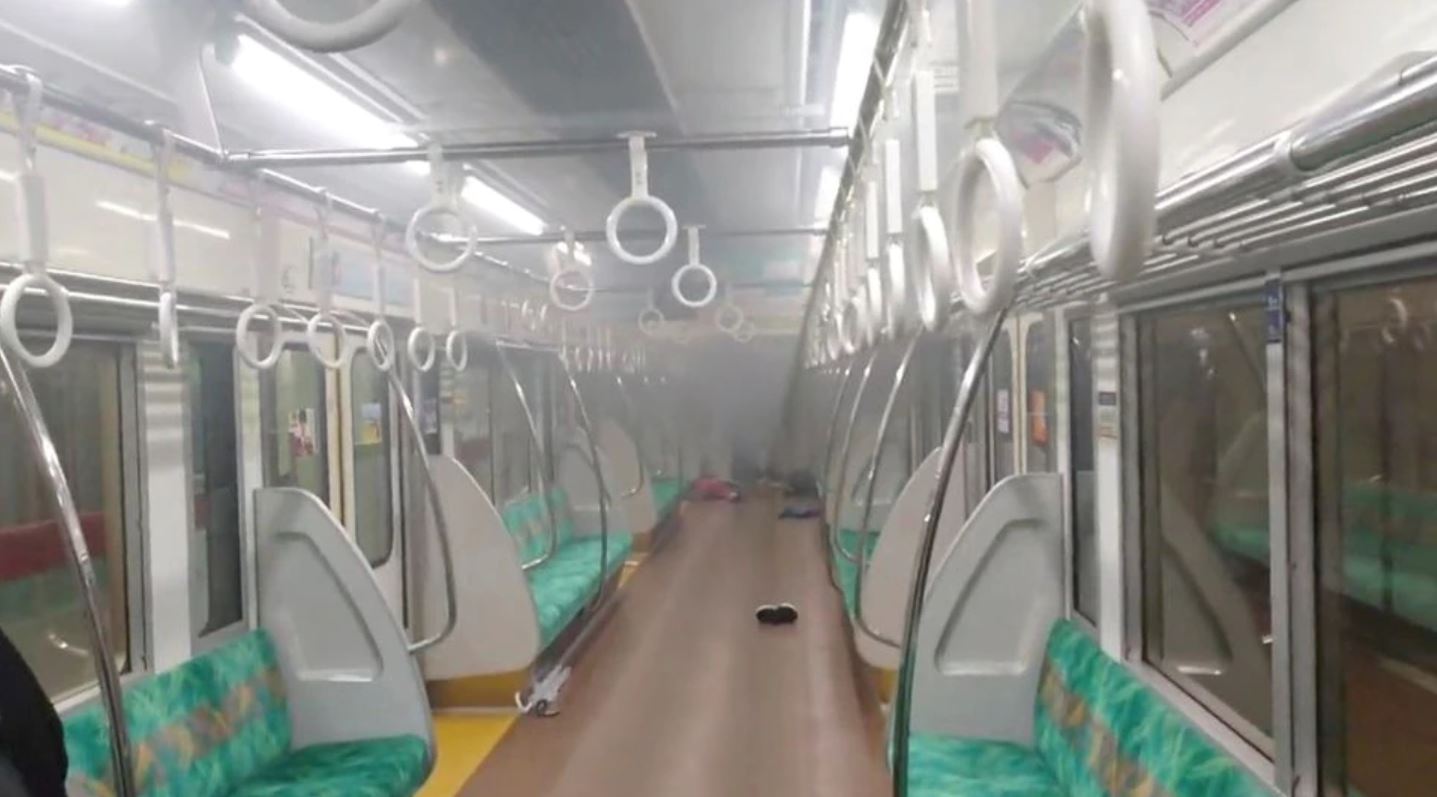
A man, dressed in a Joker costume and flaunting a knife, stabbed at least one commuter on a Tokyo passenger train before starting a fire.
As per reports, the Tokyo Fire Department said 17 passengers were wounded, including three seriously. Not all of them were stabbed and most of the other injuries were not serious, the fire department said.
The criminal identified as 24-year-old Kyota Hattori, was detained on the spot after Sunday’s attack and was being investigated on suspicion of attempted murder, the Tokyo metropolitan police department said Monday.
The attacker, riding an express train headed to Tokyo’s Shinjuku station, abruptly took out a knife and stabbed a seated passenger in his 70s.
Police said he told the authorities that he wanted to murder people and get the death penalty. Nippon Television said he also said that he used an earlier train stabbing case as an example.
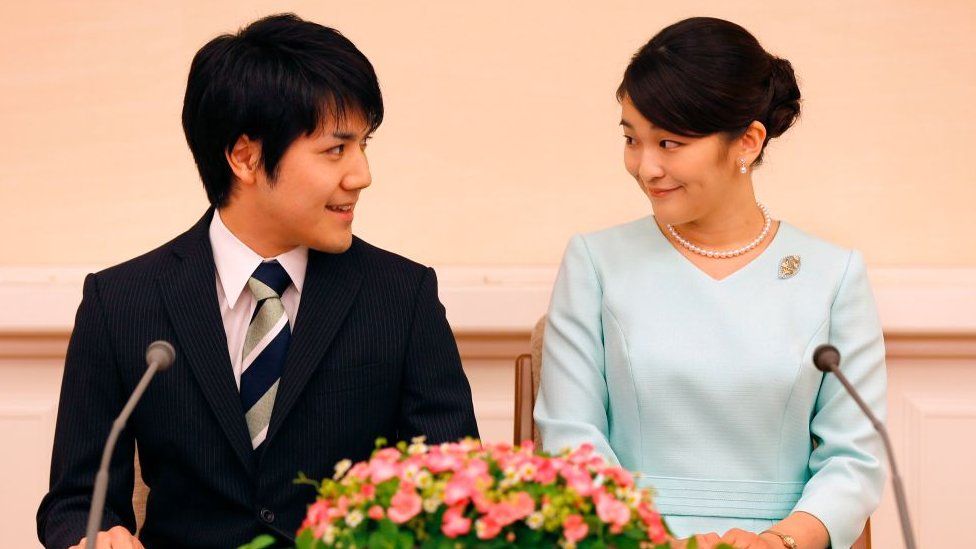
Japan’s Princess Mako will marry a commoner, her former classmate, this month after years of controversy as she will give up her royal status, BBC Newsreported.
The couple is all set to tie the know on October 26.
The couple initially planned their wedding in 2018, but this was put off, reportedly after Mako’s boyfriend, Mr Komuro’s family had run into financial difficulties.
They are expected to move to the US after marriage where Mr Komuro works as a lawyer.
This excessive media coverage around the princess — whose father is Crown Prince Fumihito — and Mr Komuro’s family over the years has caused the princess to suffer from post-traumatic stress disorder, the Imperial Household Agency said, according to news outlet Kyodo.
Her aunt, Empress Masako, also suffered from a stress-related illness, due to intense pressure to produce a male heir. There is often a stigma around mental illnesses in Japan. The couple first met in 2012 when they were students at the International Christian University in Tokyo.
They were engaged in 2017 and were set to marry the following year. But news of Mr Komuro’s mother’s financial problems started doing the rounds; she had reportedly taken a loan from her ex-fiancé and not paid him back.
The palace denied the delay was linked to this, though Crown Prince Fumihito said it was important for the money issues to be dealt with before they got together.
Princess Mako will reportedly forego a traditional lump-sum payment of up to 150 million yen ($1.3m), which is normally gifted to a member of the royal family upon their departure from the household.
She is also expected to skip the usual rites associated with a royal family wedding. If she skips both the payment and the rites, it will make her the first female member of the Japanese royal family to do so.
Under Japanese law, female imperial family members forfeit their status upon marriage to a “commoner” although male members do not.
People in Japan have been sending bags of rice that weigh the same as their newborn babies to relatives who are unable to visit them due to the coronavirus pandemic.
As per details, the phenomenon of “Dakigokochi”, which means rice-filled bags shaped like a baby covered in a blanket and printed with the newborn’s face and name, is becoming immensely popular among new Japanese parents amid restrictions due to the pandemic.
The price of the bag depends on the size of the baby. Some companies charge one yen a gram, with a 3.5kg pack is priced at 3,500 yen (Rs 5,207).
Naruo Ono, the owner of Kome no Zoto Yoshimiya rice shop says they first had the idea about 14 years ago when their own son was born. “I was thinking about what I could do for relatives who lived far away and couldn’t come and see him. So we decided to make bags of rice that were the same weight and shape as the baby, so relatives could hold them and feel the cuteness.”
Ono has since started making the bags for wedding celebrations as well. The wedding rice bags became more famous than the birth ones.
“During the pandemic, the demand for them has really increased as people haven’t been able to travel to wedding ceremonies,” added Ono.
A man who stabbed 10 female passengers on a train in Tokyo was arrested by the Japanese police, public broadcaster NHK reported.
As per reports, the 36-year-old man told the police that he wanted to kill women who appeared happy and chose his targets randomly. A woman in her 20s who was attacked is critical, according to the Japanese media.
The Tokyo Fire Department said nine of the 10 injured passengers were shifted to nearby hospitals, while the tenth was able to walk away. All of the injured were conscious according to the fire department officials.
The Japanese capital is currently hosting the Olympics, which end Sunday. The site of the stabbing spree was about 15 kilometers (9 miles) away from the main National Stadium.
The suspect left his knife behind when he ran away, and later walked into a convenience store and identified himself as the suspect on the news, and said he was tired of running away. The store manager called the police after seeing bloodstains on the man’s shirt.
Another local media outlet said he told the police he developed the intent to kill women who “looked happy” and stabbed a woman who happened to be seated near him in the train. He also told the police that he chose to stage the attack inside a train because it offered the chance to kill a large number of people.
The suspect was also carrying cooking oil and a lighter, with which he allegedly intended to set fire inside the carriage, NHK reported.
A witness at a nearby station where the train stopped said passengers were moving out of the carriages asking for help and shouting that there was a stabbing. Another witness told NHK that he saw passengers smeared with blood come out of the train, as an announcer asked for doctors and for passengers carrying towels.
Paramedics and police immediately arrived at the station, one of the witnesses said.
A Pakistani, Haroon Qureshi, who arrived in Japan as a student some 30 years ago, is reaching out to those living on the margins of society.
According to a report published in Mainichi, the national daily of Japan, Qureshi, a businessman from Pakistan, helps the homeless and those foreigners who have been detained by immigration authorities after failing to get refugee status.
He is also involved in the running of a mosque in Tokyo, Otsuka Masjid.
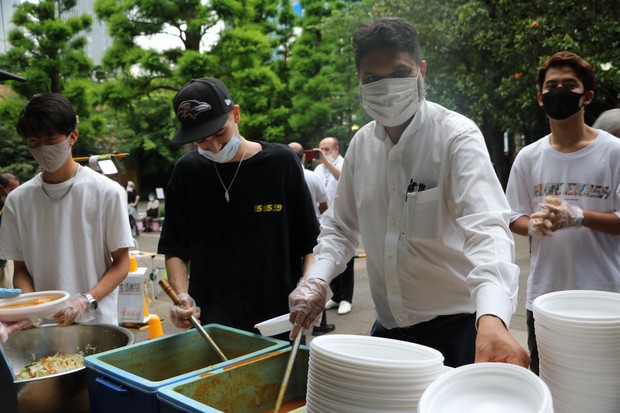
According to the Japanese daily, Qureshi’s efforts started just when he arrived in Tokyo to study computer programming in 1991. He began distributing food to the homeless in his neighbourhood in the capital’s Kita Ward.
“Now, three decades on, he has enlisted Japanese university students in his goodwill endeavours, seeing their involvement as a vital part of raising society’s awareness of the plight of the less fortunate,” it said.
The 55-year-old Qureishi said he believed there was a lack of understanding in Japan of why people ended up on the streets. He thinks the public’s attitude to the homeless is “cold.”
“The reality is that many times the homeless suffer from mental health issues and cannot fit into society,” the daily quoted him as saying.
So far, Qureshi had asked for students from Tokyo-based Keio and Tokyo universities to volunteer in his activities, which included serving meals to the needy.
In collaboration with Tenohasi in Tokyo’s Ikebukuro area, students and volunteers from the mosque recently helped in providing food to over 360 people.
“Today I witnessed a stark difference between normal people who were walking on the streets all dressed up, and those who had come to get food here,” the daily quoted Satoru Soejima, 18, who is studying Arabic at Keio University, as saying.
Qureshi, meanwhile, also leads another project called Food Bank to help the students themselves, some of whom have gone hungry after losing part-time work because of the coronavirus pandemic.
A soft-spoken man, he has also been helping those detained after their failed asylum bids since around 2000.
In one month, Qureshi received around 30 letters on average seeking help from detainees, mostly from countries in Africa or elsewhere in Asia.
“We may have different religions, colour or race. But I request everyone to try and feel the pain of other members of this huge (human) family, and do what they can,” he urged.
In recognition of his services the Pakistan Embassy in Japan awarded him with a letter of appreciation.
Ambassador Imtiaz Ahmad invited three extraordinary Pakistanis living in Japan for their social work that has also been highlighted in the Japanese media, including Qureshi.
According to the embassy, Qureshi was appreciated for his services that include providing food for the needy, financial help for the destitute and homeless, running an Islamic school and managing a graveyard for the Muslims.
The ambassador appreciated Qureshi’s work while stating that it has contributed positively to Pakistan and Pakistanis’ image living in Japan.
Qureshi thanked the Ambassador for the appreciation and vowed to continue and expand his humanitarian work, the embassy said.
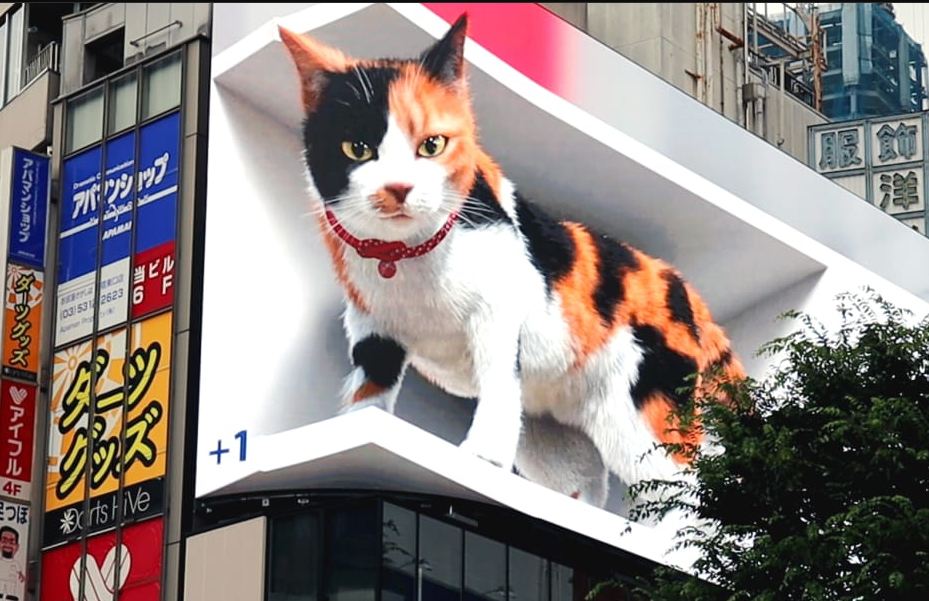
A gigantic 3D cat has been installed on a billboard at Tokyo’s busiest railway stations. The 1,664-square-foot curved LED screen shows a giant 3D calico cat in a 4K display between the hours of 7 am to 1 am. The 3D cat behaves like an actual cat.
It is first startled awake in the morning, by afternoon it stands and meows at people who pass by and then, in the evening, it lies down to fall asleep and rests its head on its paws.
It also greets pedestrians with “nyannichiwa” – a combination of “konnichiwa” for hello, and “nyan” for meow.
The display will officially launch next week. Test broadcasts have been going on since last month and many social media users have seen and shared how awestruck they are.
Japan is currently closed to tourists so the company behind the display has posted a live-streaming view of the billboard on YouTube. However, they said that specific angles can affect how the 3D effect is viewed.
https://www.youtube.com/watch?v=dQ-Cg5c0CD4
Takayuki Ohkawa is a spokesman for Unika, one of the two companies behind the feline display. He told The New York Times that the cat does not have an official name yet, although fans have been calling it “Shinjuku east exit cat”. He explained the reason behind creating the 3D cat was to help cheer people up during the current pandemic.
“There are many reasons we decided to display the cat, but one of the big reasons is that with corona, the world became very dark. Through the cat display, we wanted to revive Shinjuku and make it brighter,” said Ohkawa.