Tag: Russia

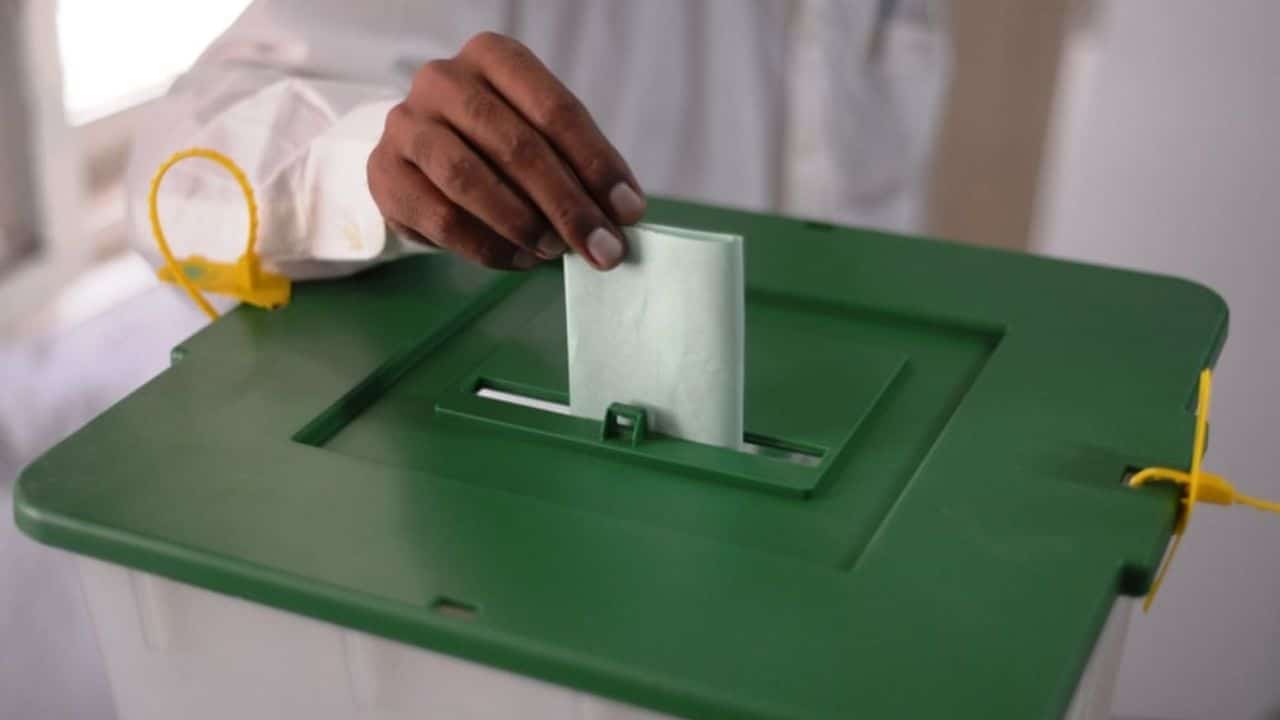
  • 40 countries to hold elections in 2024, including Pakistan

    40 countries to hold elections in 2024, including Pakistan

    The new year is just over one month away and it is going to be the biggest election year in history yet.

    40 countries are scheduled to vote in 2024 across the globe which, as calculated by Bloomberg Economics, represent 41% of the world’s population and 42% of its global GDP.

    The marathon will begin with Taiwan in January and end with the US in November.

    Here are some of the prominent countries lined up for elections: Republic of the Congo, Democratic Republic of the Congo, Egypt, Gambia, and Libya in Africa; Brazil, Colombia, Mexico, Peru, the United States, and Venezuela in the Americas; Bangladesh, India, Indonesia, South Korea, Sri Lanka, Taiwan, Australia, and Pakistan in Asia and Oceania; Austria, Belarus, Belgium, the European Union, Finland, Germany, Ireland, Portugal, Russia, Spain, Turkey, Ukraine and the United Kingdom in Europe.

    There are, however, four elections that the world has eyes on — elections that are expected to alter geopolitics in the next decade.

    Russia will elect the new president in March who will govern until 2030, putting Russia-NATO relations at the forefront.

    In April-May, India will hold elections and as per analysts, Modi’s loss can push back investors.

    The European Union will conduct bloc-wide polls in June to appoint members of the European Parliament for the 2024-2029 which will be pertinent for the increasing friction between right-wing and left-wing policymakers on issues like immigration and Ukraine.

    The United States will hold legislative and presidential elections in November for 2025-2028, while everyone curiously waits whether Republicans will return to the White House or not.

  • PM Kakar, President Putin decide to increase collaboration in various fields.

    PM Kakar, President Putin decide to increase collaboration in various fields.

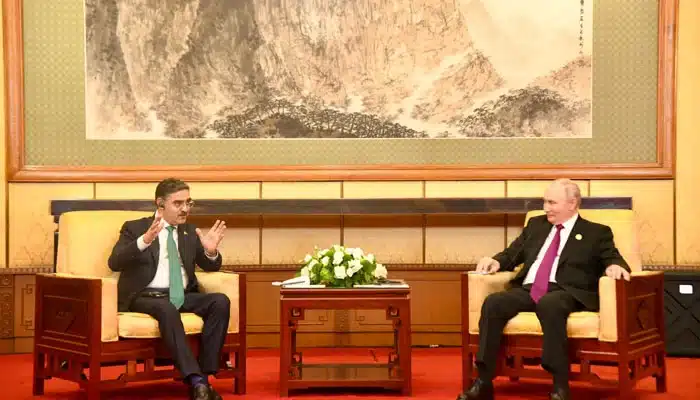
    Caretaker Prime Minister Anwaar-ul-Haq Kakar and Russian President Vladimir Putin held a meeting on the sidelines of the Third Belt and Road Forum for International Cooperation in Beijing. They talked about a variety of topics, including trade, investment, and energy cooperation.

    During their conversation on Tuesday, the two leaders conveyed their contentment with the consistent growth of relations between Pakistan and Russia while emphasising the necessity of increased collaboration in various fields.

    President Putin received PM Kakar before they held a meeting that encompassed bilateral, regional, and international affairs.

    They also talked about the potential for improving Eurasian connectivity along with Pakistan’s crucial role in regional integration through rail, road, and energy corridors.

    The prime minister highlighted the significance of increased regional cooperation to foster economic growth in the region and reaffirmed Pakistan’s commitment to strengthen and enhance its bilateral relations with Russia in areas such as energy, connectivity, trade, investment, and the fight against terrorism.

    The leaders also exchanged views on regional and global developments, including the evolving situation in the Middle East.

  • World reacts to Israel’s breach of international laws

    World reacts to Israel’s breach of international laws

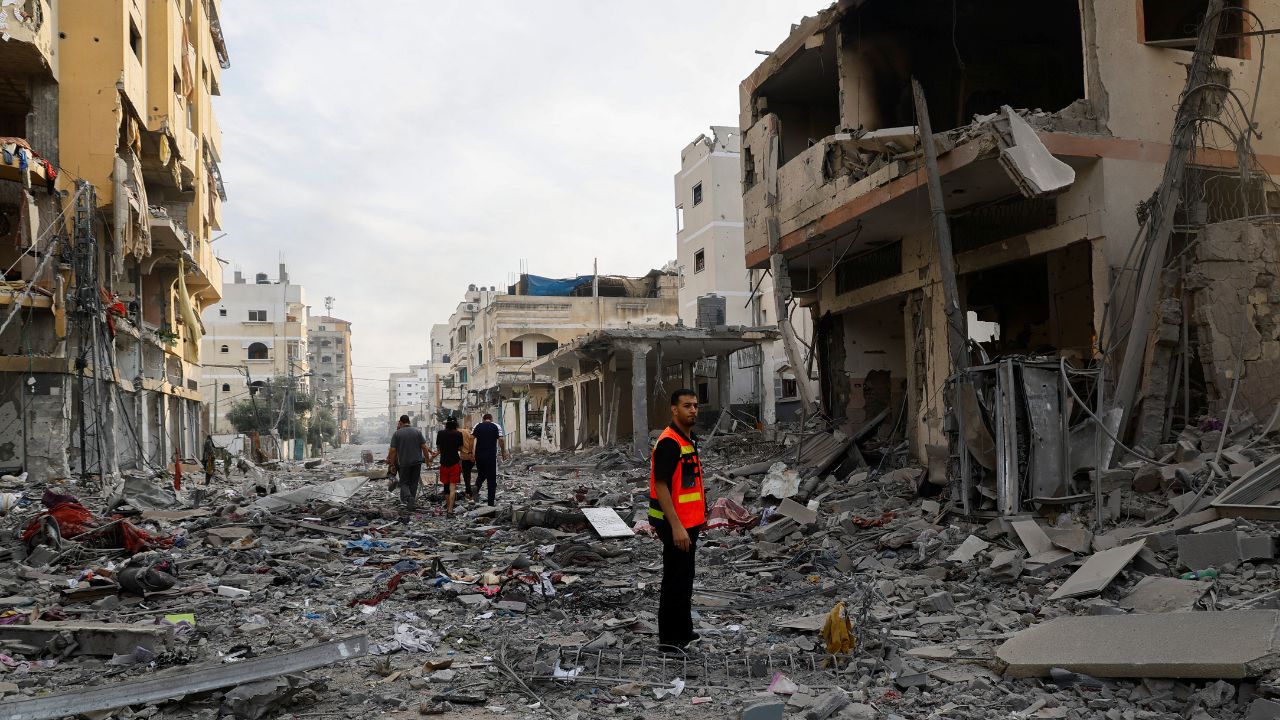
    While many of its old allies still support Israel as it continues to bomb Gaza, a number of countries are now raising concerns over Israel’s breach of international laws.

    Russia

    President Vladimir Putin responded to the Israel-Palestine escalation by condemning the “catastrophic” deaths and criticised Washington’s involvement in the Middle East peace settlement.

    During a meeting with Iraqi Prime Minister Muhammad Shia al-Sudani, he said “This is a vivid example of the failure of Middle East policies of the United States [as it] tried to monopolise the [peace] settlement”.

    “But, unfortunately, [the US] was not concerned about the search for compromises for both sides and, vice versa, promoted their own conceptions about how it should be done, [and] pressured both sides,” he added.

    Moscow has also refused to label Hamas as a terrorist organisation.

    “We maintain contact with [both] sides of the conflict,” Kremlin spokesperson Dmitry Peskov said.

    “Of course, Russia continues to analyse the situation and keeps its position as a nation that has the potential to participate in the settlement process.”

    China

    On Thursday, China’s top diplomat and foreign minister Wang Yi stated that the issue of Palestinian is central to the Middle East conflict, and that denial of “justice” to the Palestinian people was at its core.

    Turkey

    Turkish President Recep Tayyip Erdogan spoke to German Chancellor Olaf Scholz, asserting that a lasting solution to the conflict lies in the establishment of a sovereign Palestinian state with its capital in East Jerusalem within the 1967 borders .

    Ireland

    Irish Prime Minister Leo Varadkar has criticised Israel for violating international humanitarian law and halting water, food and electricity supply into the Gaza Strip.

    “Israel is under threat. They do have a right to defend themselves, but they don’t have the right to breach international humanitarian law,” he said in an interview with TVE.

    “To me, it amounts to collective punishment. Cutting off power, cutting off fuel supplies and water supplies, that’s not the way a respectable democratic state should conduct itself.”

    He has, however, also urged Hamas to release all the Israeli captives, saying that Israel is “justified in attacking Hamas in Gaza and elsewhere.”

    Former Irish President Mary Robinson has also commented on the escalation, deeming Israel’s response to Hamas attacks as collective punishment.

    Robinson asserted that Ireland has been a “very good voice in acknowledging the suffering of occupation and the continual problems of Palestinians over decades.”

    Richard Boyd Barrett, Irish MP, addressed the Dáil Éireann, the lower house of the Irish parliament, during a discussion on the Irish Government’s response to the situation in Gaza.

    “The Israeli Government has brazenly, publicly and openly declared its intention to commit a war crime, and has commenced that war crime against the people of Gaza”, he said.

    Scotland

    Hamza Yousaf, the first minister of Scotland, has also spoken up against the Israeli attacks on Gaza.

    He posted on X (formerly Twitter), quoting the latest UN statement that warns about the dire consequences of Israeli orders of evacuation of Gaza.

    “The international community must step up and demand an end to collective punishment. Enough. There can be no justification for the death of innocent men, women & children.”

    He also shared a video of his mother-in-law, Elizabeth El-Nakla, calling for help.

    She was visiting her relatives with her husband when Hamas attacked on Saturday.

    Norway

    The Norwegian foreign minister, Anniken Huitfeldt, has said on Thursday that while Israel has the right to defend itself against Hamas, a total blockade of Gaza cannot be supported.

    “The establishment of a full blockade, including on access to electricity, water, food, and other goods that are indispensable for the survival of the civilian population in Gaza, is unacceptable,” she stated.

    She further pointed out that self-defense measures must be taken within international law.

    “The scale of destruction in Gaza is enormous. A large number of civilians have been killed. Given a full blockade by Israel, closed border crossings, and continued Israeli attacks, I fear that the civilian population in Gaza will face even greater hardship in the days to come,” Huitfeldt said.

    She also warned that suspension or decrease in assistance to Gaza can worsen the matter.

    “Functioning Palestinian institutions and the delivery of basic services are crucial to avoid further destabilisation and preserve the objective of the two-state solution.”

  • Russian woman lived with needle in brain for 80 years

    Russian woman lived with needle in brain for 80 years

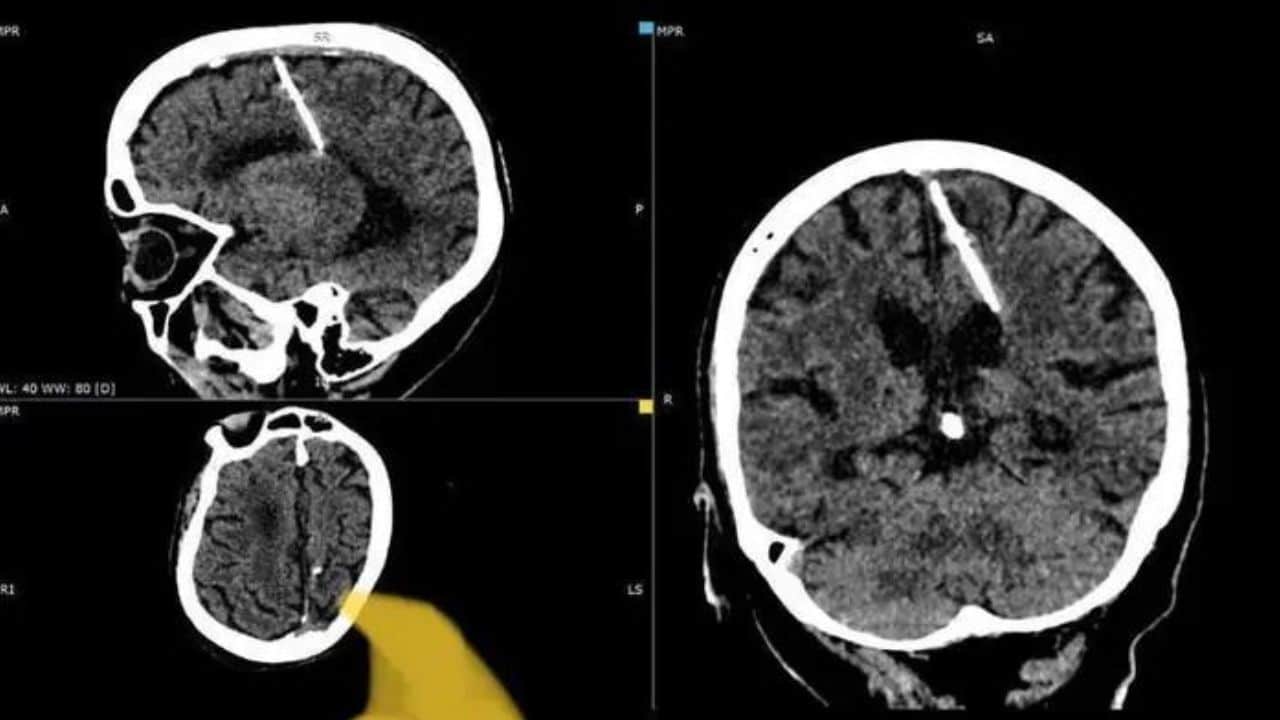
    Doctors in Russia have found an inch-long needle in the brain of an 80-year-old woman, most likely inserted when she an infant.

    According to a post on Telegram by the Ministry of Health in Sakhalin, radiologists found the three-centimeter long needle during an x-ray scan, embedded in the woman’s left parietal lobe

    The woman’s name has not been disclosed and the discovery is said to have occurred in 2023. She is said to have born around the year 1943, making her at least 80.

    Officials claim that the needle has been in her brain since infancy, and doctors believe her parents tried to kill her when she was a baby.

    The ministry explained that during wars, “some desperate parents would insert a needle into a soft spot of a newborn’s head, where bones in the skull hadn’t yet come together.

    “That spot — the fontanelle — would then close and obscure the needle, though the infant would die.”
    Such cases were not uncommon during the famine years, the ministry added.

    Even though she pulled through the attempted infanticide, she never suffered headaches because of the needle.
    Doctors have decided against the removal of the needle because a surgery can worsen her condition, the ministry highlighted.

    The woman is currently being monitored by a physician, and her health is not in danger.

    According to Insider, Sakhalin is an island with a population of around 500,000 in the Sea of Okhotsk in north of Japan’s Hokkaido.

    Sakhalin was divided amongst the Soviet Union and the Japanese Empire in the early 20th century and was later fully seized by Moscow during World War II.

  • Prigozhin plane crash: Biden believes Putin behind whatever happens in Russia

    US President Joe Biden reacted to Wagner Group’s chief Yevgeny Prigozhin’s death Wednesday by implying that Russian President Vladimir Putin is behind the killing as he is responsible for everything that happens in the country.

    Prigozhin was killed after a private plane was shot down by the Russian defence forces killing him along with other nine people on board, officials confirmed.

    A telegram channel linked with Prigozhin’s private military company said that the Embraer aircraft was shot down by air defences in the Tver region, north of Moscow — flying from Moscow to St. Petersburg.

    The plane was carrying seven passengers and three crew.

    Biden was speaking to reporters after taking an exercise class with his family near Lake Tahoe.

    While reacting to the death of the 62-year-old billionaire, the Democrat presidential candidate said: “There’s not much that happens in Russia that [President Vladimir] Putin is not behind.”

    “I don’t know for a fact what happened, but I’m not surprised,” Joe Biden said.

    “But I don’t know enough to know the answer of what may have happened to the powerful former Putin henchman,” the 80-year-old said.

    Prigozhin’s name was on the passenger list of the aircraft, which crashed northwest of Moscow, according to Russian media.
    The crash came two months after he launched Wagner on a short-lived rebellious march on Moscow, aiming to force the removal of the country’s military leadership.

    Last month in Helsinki, Biden jokingly warned that Prigozhin, whose elite Wagner force has played an important role in the war on Ukraine, should watch his step after his abortive rebellion.

    “If I were he, I’d be careful what I ate. I’d keep my eye on my menu,” Biden said.

    White House National Security Council spokeswoman Adrienne Watson also said Wednesday that no one should be surprised about Prigozhin’s sudden death if confirmed.

    She referred to the June uprising and Russia’s special military operation in Ukraine.

    “The disastrous war in Ukraine led to a private army marching on Moscow, and now — it would seem — to this,” said Watson.

    Who was Russia’s Wagner boss Yevgeny Prigozhin?

    Prigozhin, 62, soared in prominence after Russia’s February 2022 invasion of Ukraine, where his fighters — including thousands of convicts he recruited from prison — led the Russian assault on the city of Bakhmut in the longest and bloodiest battle of the war.

    Prigozhin used social media to trumpet Wagner’s successes and wage a feud with the military establishment, accusing it of incompetence and even treason.

    In June, Prigozhin led a mutiny in which Wagner fighters took control of the southern city of Rostov-on-Don and shot down a number of military helicopters, killing their pilots, as they advanced towards Moscow. President Vladimir Putin called it an act of treachery that would meet with a harsh response.

    The revolt was defused in a deal whereby the Kremlin said that in order to avert bloodshed, Prigozhin and some of his fighters would leave for Belarus and a criminal case against him for armed mutiny would be dropped, reported Reuters.

    Confusion has surrounded the implementation of the deal and the future of Prigozhin. The Kremlin said he attended a meeting with Putin five days after the mutiny. On July 5, state TV said an investigation against him was still being pursued and broadcast footage showing cash, passports, weapons and other items it said were seized on a raid on one of his properties.

    But in late July, Prigozhin was photographed in St Petersburg while a Russia-Africa summit was taking place in the city. This week he appeared in a video that he suggested was shot in Africa, where Wagner has operations in several countries.

    Born in St Petersburg on June 1, 1961, Prigozhin spent nine years in Soviet prisons for crimes including robbery and fraud. Released in 1990 amid the Soviet Union’s death throes, he launched a career as a caterer and restaurateur in his hometown.

    He is believed to have met Putin, then a top aide to St Petersburg’s mayor, at this time. – Leveraging political connections, Prigozhin was awarded major state contracts, becoming known as “Putin’s chef” after catering for Kremlin events. More recently he joked that “Putin’s butcher” would be more appropriate.

    In 2014, Prigozhin founded Wagner, a private military company whose fighters have deployed in support of Moscow’s allies in countries including Syria, Libya and the Central African Republic. The United States has sanctioned it and accused it of atrocities, which Prigozhin has denied.

    Prigozhin has acknowledged that he founded and financed the Internet Research Agency, a company Washington says is a “troll farm” that meddled in the 2016 US presidential election. In November 2022 he said he had interfered in US elections and would do so again.

    The Conspiracy

    As reported by Newsweek, the Wagner-affiliated Gray Zone Telegram channel said Prigozhin and Utkin had died “as a result of the actions of traitors to Russia,” without specifying further. The channel also claimed the plane had been shot down by air defenses during its journey from Moscow to St. Petersburg.

    Vladimir Rogov, an official with the Russian-backed authorities in Ukraine’s southern Zaporizhzhia region, said he had received confirmation that Prigozhin and Utkin were dead, calling it a “murder.”

    No evidence has been provided to support any of the claims and theories.

    Russian Telegram channel Baza, linked to Russia’s security services, said on Wednesday that “Prigozhin has already ‘died’ before,” adding the Wagner financier was thought to have died in a plane crash in the fall of 2019.

    Russian media reported in October 2019 that Prigozhin may have been killed when an An-72 military transport plane crashed in the Democratic Republic of Congo. It later emerged he was not on the aircraft.

    Reports that Prigozhin was killed are “likely false claims,” former racing driver Igor Sushko said in a post to X(formerly Twitter), “This stinks of Putin’s own plot to disappear,” he said.

    However, Sushko then said exiled Russian human rights activist, Vladimir Osechkin, was “99.999% certain that Prigozhin was indeed assassinated by Putin,” claiming to cite Russian security sources.

    “If I was Prigozhin, this is exactly how I’d plot my fake death,” another social media user wrote. “Everyone would be happy; I could retire in peace.”

    Eastern-European outlet Visegrad 24 asked in a post to X: “Is it possible that the crash is a clever ploy by Prigozhin to fake his own death and disappear?”

    Citing flight-tracking data, some speculate that a second plane owned by Prigozhin also left Moscow for St. Petersburg at around the same time, with some suggesting the Wagner chief was on this second plane.

    Christo Grozev, of investigative outlet Bellingcat, added, said “everyone is holding their breath” to see whether Prigozhin would emerge alive from the second jet.


    A Prigozhin Doppelganger?

    There has also been speculation in recent months about whether Prigozhin has been using a body double, as the Wagner leader previously lost part of a finger, yet appeared to have all of his digits intact in photographs from earlier this year.

    Following the Wagner mutiny in late June, photographs also emerged appearing to show Prigozhin donning a range of disguises, including a series of wigs.

    “He is a trickster, a troll,” one source told Russian independent news outlet Meduza. “He has informants in various structures, so we have to wait.”
  • No special treatment: Russia denies exclusive discounts on oil export deal with Pakistan

    No special treatment: Russia denies exclusive discounts on oil export deal with Pakistan

    In a recent statement, Russian Energy Minister Nikolai Shulginov clarified that his country is not providing Pakistan with oil at a special discount. The announcement came during an international economic conference in St Petersburg, where Shulginov confirmed that Russia had begun exporting oil to Pakistan.

    Contrary to earlier reports, the Russian minister emphasised that the oil deliveries to Pakistan were being conducted on standard terms without any exclusive discounts. Citing Russian state media, Voice of America (VoA) reported Shulginov’s remarks, which aimed to dispel speculations about preferential treatment in the oil deal.

    According to Geo, Shulginov further revealed that both countries had agreed to accept Chinese currency as payment, highlighting the importance of conducting transactions in the currencies of friendly nations. However, he denied claims that Pakistan had received any special advantages or discounts within the agreement.

    During the conference, the topic of barter trade between Pakistan, Afghanistan, Iran, and Russia was also addressed. Pakistan had recently passed a special order allowing barter trade for various commodities, including petroleum, liquefied natural gas (LNG), coal, minerals, metals, wheat, pulses, and other food items.

    Regarding this specific trade arrangement, Minister Shulginov clarified that discussions had taken place, but no final decisions had been reached. In particular, the two countries have yet to establish mutually agreeable prices for the export of liquefied natural gas to Pakistan. Shulginov explained that the current focus was on spot supplies, and since spot gas prices were high at the moment, the negotiations were primarily centered around long-term contracts.

    As Russia commences oil deliveries to Pakistan, both nations are working to ensure fair and transparent trade practices while exploring potential opportunities for collaboration in the energy sector. The recent developments underscore the significance of bilateral cooperation and economic ties between Russia and Pakistan.

    While the exact details of the ongoing negotiations remain undisclosed, Minister Shulginov’s statements emphasise the commitment of both countries to maintaining a level playing field in their trade relations. The international community will be closely monitoring future developments in this energy partnership, particularly as Pakistan continues to diversify its energy sources and explore avenues for economic growth.

    As the discussions progress, it is expected that Russia and Pakistan will strive to reach mutually beneficial agreements that foster stability and prosperity in their bilateral trade relations, creating opportunities for sustained cooperation in the energy sector and beyond.

  • Massive reduction in petrol price expected as Pakistan aims for one-third crude oil import from Russia

    Massive reduction in petrol price expected as Pakistan aims for one-third crude oil import from Russia

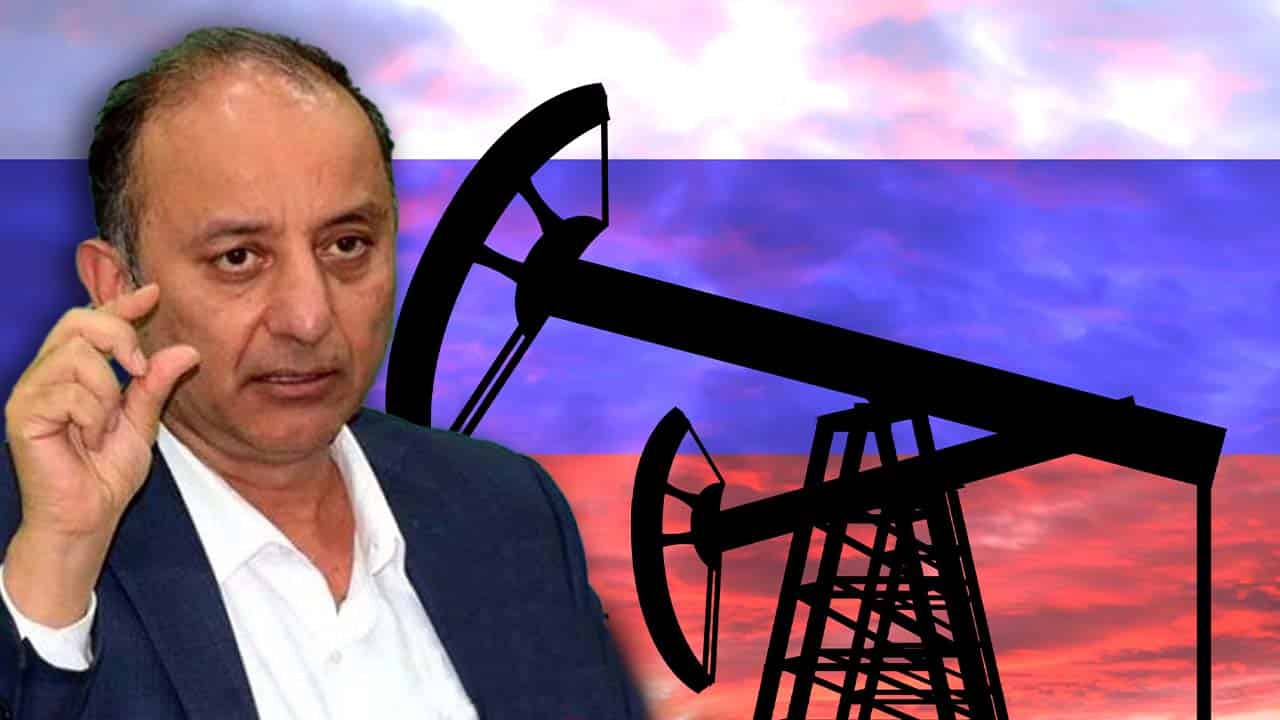
    Minister of State for Petroleum, Musadik Malik, has announced that the prices of petroleum products will witness a decrease once a continuous supply of oil from Russia is ensured.

    Speaking to a private news channel, Malik highlighted the substantial difference in prices that will benefit the masses once Pakistan starts fulfilling one-third of its domestic oil needs through imported Russian oil. He stated, “Our target is to obtain one-third of crude oil from Russia at a discounted rate. When we achieve this objective, petroleum products will be available at a cheaper price.”

    In response to a question about the expected decrease in fuel prices, Malik said, “I am unable to divulge the precise pricing details at this moment. However, it will lead to a significant difference.”

    While the state minister refrained from disclosing the current price, he emphasised that a substantial reduction in price would occur. He also mentioned that the first oil cargo has already arrived in Karachi, and the government is focused on maintaining a steady supply of Russian oil.

    The current deal involves 100,000 metric tonnes of oil, with the second consignment scheduled to arrive at the port next week.

    When asked about the possible effects of buying Russian oil and any potential issues at the global level, Malik expressed confidence that adhering to agreements and maintaining transparency would prevent any complications. He underscored the importance of responsible international engagement.

    Previously, Prime Minister Shehbaz Sharif expressed his fulfillment of another promise made to the nation, stating that the arrival of the first-ever Russian oil cargo marks the beginning of a new relationship between Pakistan and the Russian Federation. He described the day as transformative and emphasised the country’s commitment to achieving prosperity, economic growth, and energy security.

    Following its docking at the port, the authorities have commenced the process of transferring the Russian crude from the oil tanker to the Pakistan Refinery Limited for further processing and extraction of various final products. The transportation of crude oil to the facility is expected to be completed within the next 24 to 36 hours.

    It is worth noting that this is the first time Russian crude oil is being treated in Pakistan. The determination of the actual price of petroleum products in Pakistan will be possible only after the completion of the processing of this imported oil.

  • Pakistan and Russia aim to strengthen bilateral relations in trade, investment, and energy sectors

    Pakistan and Russia aim to strengthen bilateral relations in trade, investment, and energy sectors

    In an effort to strengthen bilateral relations between Pakistan and Russia, Chairman Senate Muhammad Sadiq Sanjrani engaged in productive talks with Chairman of the Russian Duma, Mr Volodin, during a delegation-level meeting held in Moscow on Wednesday.

    The discussion encompassed various areas of mutual interest and emphasised the significance of parliamentary exchanges in fostering effective diplomacy.

    A press release issued by the Pakistan embassy in Moscow highlighted the consensus reached during the meeting. Both sides expressed their commitment to enhancing parliamentary interaction between the two nations. This step is expected to bolster bilateral ties and pave the way for increased cooperation in trade, investment, and energy sectors.

    Chairman Sanjrani reiterated Pakistan’s dedication to strengthening relations with Russia across all domains of mutually beneficial cooperation. Trade, investment, and energy were particularly emphasised as key areas for future collaboration.

    The significance of continued cooperation in international forums, such as the United Nations and the Shanghai Cooperation Organisation (SCO), was also acknowledged and agreed upon by both parties.

    During the talks, Chairman Sanjrani extended an invitation from the Speaker of the National Assembly of Pakistan to Chairman Volodin, inviting him to visit Pakistan. In a positive response, Chairman Volodin accepted the invitation, reflecting the willingness of both countries to further solidify their ties.

    The meeting between Chairman Senate Sanjrani and Chairman Volodin serves as a significant milestone in the diplomatic efforts between Pakistan and Russia. It highlights the mutual desire to strengthen bilateral relations and lays the groundwork for increased cooperation in various fields, including trade, investment, and energy.

    The forthcoming visit of Chairman Volodin to Pakistan is expected to further enhance the ties between the two nations and open new avenues for collaboration.

  • Pakistan to receive $10 billion investment in refinery sector soon

    Pakistan to receive $10 billion investment in refinery sector soon

    Minister of State for Petroleum, Musadik Malik, announced that Pakistan will soon receive a $10 billion investment in its refinery sector. The investment, to be inaugurated by Prime Minister Shehbaz Sharif, holds significant details that cannot be disclosed at this time, according to Malik’s statement at a ceremony.

    This development follows the approval of a new refinery policy by the current government, which aims to incentivise greenfield investment.

    Malik emphasised the need for sustained GDP growth of 5 per cent in Pakistan’s growing population. To achieve this, he stated that an annual energy sector growth rate of 7.5-10 per cent is necessary. As part of this plan, the government aims to establish a comprehensive energy agreement with Central Asian countries and Russia, which will be made public by the end of the year.

    Additionally, Pakistan intends to leverage its historical ties with the Gulf Cooperation Council (GCC) countries for trade and commerce, including meeting energy needs such as LNG and petroleum products.

    The government also plans to open energy corridors with Central Asia and the GCC countries. Malik highlighted the significance of purchasing crude oil from Russia, stating that it will have a transformative impact on Pakistan, leading to industrial proliferation. The goal is to establish small industrial areas in rural regions to promote value addition.

    Malik underscored that Pakistan possesses the necessary infrastructure, labour force, and technology to present itself as an attractive investment destination. He emphasised the government’s efforts to enhance border enforcement to curb oil smuggling from Iran, expressing confidence that the flow of smuggled oil will reduce in the coming days.

    In an off-camera meeting with media persons, the minister revealed that vessels carrying 100,000 tonnes of discounted Russian oil will arrive at Pakistan’s ports in the first week of June as part of the government’s energy security plan. The oil will be transported from Oman port to Pakistan in smaller vessels within seven to ten days. Malik assured that although transportation costs may increase slightly, the impact will be minimal.

  • Strengthening economic ties: Pakistan expects substantial benefits from trade agreement with Russia

    Strengthening economic ties: Pakistan expects substantial benefits from trade agreement with Russia

    Pakistan and Russia have successfully concluded a bilateral trade agreement during a three-day economic conference in Kazan, Russia. The deal aims to streamline trade operations and reduce costs between the two nations, strengthening economic ties.

    The agreement includes provisions that benefit Pakistan’s economy. It facilitates the smooth movement of goods and offers Pakistani products a customs duty discount upon entering the Russian market. This tariff reduction presents an opportunity for Pakistani exporters to enhance their competitiveness and expand their presence in Russia.

    The protocol also establishes administrative cooperation and information exchange within the framework of the unified Tariff Preferences of the Eurasian Economic Union. This approach will promote efficient customs procedures and create a conducive business environment, bolstering trade relations between Pakistan and Russia.

    Pakistan’s Commerce Minister, Naveed Qamar, represented the country at the conference and engaged in discussions and negotiations. He met with Rustam Minnikhanov, the leader of Tatarstan, Russia, to strategize measures for enhancing trade and economic relations. The minister also networked with influential business figures, strengthening Pakistan’s outreach in the global business community.

    According to Dawn, the signing of this landmark protocol signifies a vital step forward in establishing the necessary legal framework for commercial relations between Pakistan and Russia. Minister Qamar expressed satisfaction with the improvement in trade and political relations between the two nations. Both countries have made substantial strides in enhancing their trade and political ties, particularly in the oil and gas trade sector.

    With the bilateral trade agreement in place, Pakistan stands to reap substantial economic benefits. The provisions, including customs duty discounts and streamlined procedures, offer new opportunities for Pakistani businesses to expand their market presence and capitalize on the growing demand in Russia. This agreement also paves the way for stronger political and diplomatic ties between Pakistan and Russia, fostering long-term economic growth and cooperation.