Tag: Russia

  • Pakistan to pay for Russian oil in Chinese yuan, shipping expected in June

    Pakistan to pay for Russian oil in Chinese yuan, shipping expected in June

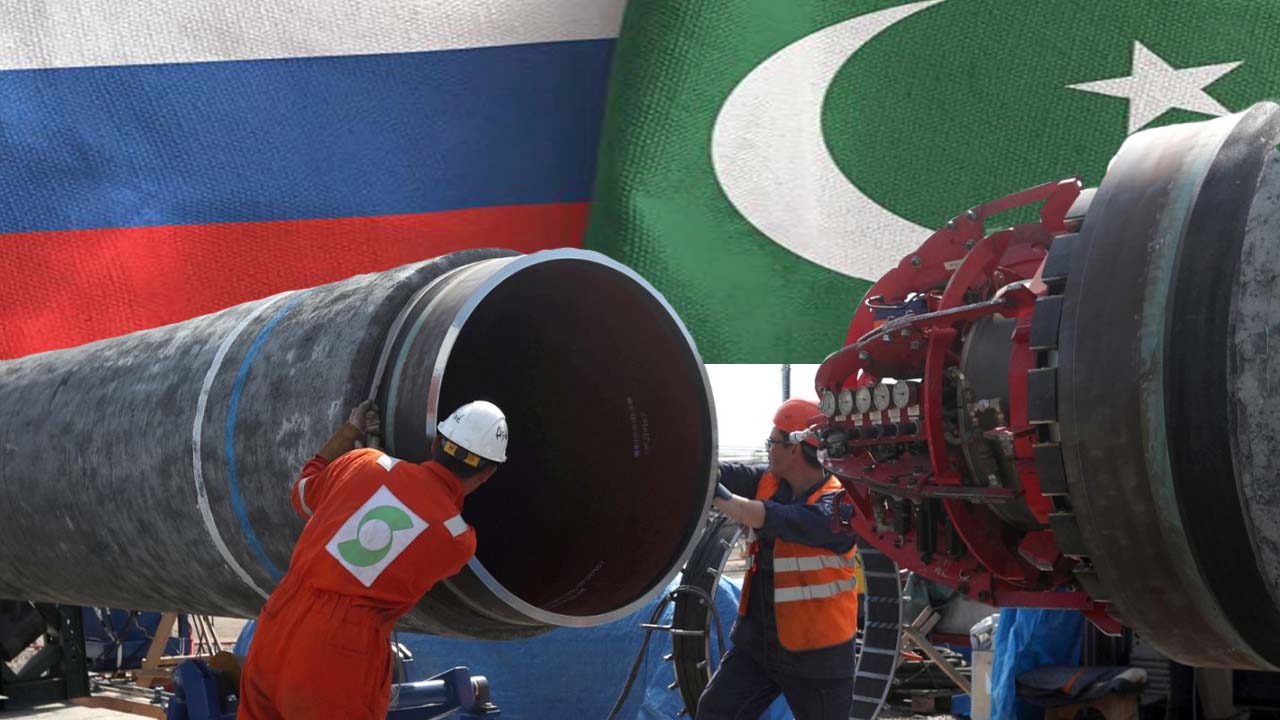
    According to a senior official from Pakistan’s Ministry of Energy, the country is expected to pay for a test cargo of 750,000 barrels of Russian oil in Chinese Yuan. The cargo is set to dock in Pakistan in June, with a possibility of arrival by the end of May.

    It has been suggested that the Bank of China will play a role in the transactions. However, the exact mode of payment and discount offered have not been made public to avoid backlash from other countries purchasing Russian oil directly from Moscow.

    The test cargo will likely contain URAL crude, which will be refined by Pakistan Refinery Limited. Commercial analysis of Russian crude has been conducted in favour of Pakistan’s economy, but will be further assessed after refining. The estimated shipping cost of the Russian oil is around $15 per barrel, which will be confirmed upon arrival at the Pakistani port.

    Pakistan has reportedly settled on a per barrel price of $50-52, lower than the cap price of G7 countries at $60 per barrel. Pakistani refineries currently import 80 per cent of crude under long-term agreements with ADNOC and Saudi Aramco. However, the remaining 20 per cent provides a cushion to purchase Russian oil under GtG on a long-term agreement to some extent. The government plans to keep some cushion for purchasing crude from the international market, as crude prices can fluctuate.

    Pakistan had initially hoped to obtain Russian crude at a discount close to $50 per barrel, $10 per barrel below the cap price imposed by G7 countries in response to the Ukraine conflict. However, a top official from the coalition government has expressed concern that importing Russian crude at a 30 per cent discount under the GtG agreement may not provide sufficient relief.

  • World War 3? Russia says Ukraine tried to kill Putin with drone attack

    World War 3? Russia says Ukraine tried to kill Putin with drone attack

    Russia has accused Ukraine of trying to assassinate President Vladimir Putin by attacking Kremlin with drones.

    The two countries are at war since February 2022.

    In a statement, Russia said that Ukraine attempted to carry out a strike on the Kremlin residence of the President. Kremlin is a large government complex in central Moscow.

    It said it regarded this “as a planned terrorist act and an assassination attempt on the president”.

    Putin himself was not present at the location at the time.

    Ukraine’s President Volodymyr Zelensky denied his country was behind it.

    “We don’t attack Putin or Moscow. We fight on our territory. We are defending our villages and cities,” he said, speaking on a visit to Finland.

    Meanwhile, senior Ukrainian Presidential official Mykhailo Podolyak said the reported incident indicates that “Russia is clearly preparing a large-scale terrorist attack”.

    Last year, despite immense backlash, Russia invaded Ukraine, leading to a bloody war that shows no signs of abating.

  • Pakistan set to receive cheap Russian oil, says PM Shehbaz

    During a National Assembly session on Thursday, Pakistan’s Prime Minister, Shehbaz Sharif, announced that the country is set to receive cheap oil from Russia.

    Minister of State for Petroleum, Musadik Malik, had previously confirmed that the government had made its first purchase of Russian crude oil, and a shipment is expected to arrive at Karachi port in May.

    Malik also revealed that the country aims to import 100,000 barrels of Russian crude oil per day, subject to the success of the first transaction.

    In the initial stages, Pakistan Refinery Limited will conduct a trial run to refine the crude oil, with other refineries, including Pak-Arab Refinery Limited, set to follow suit.

    This move marks a significant step forward for Pakistan’s oil industry, which has traditionally relied on imports from the Middle East.

  • Pakistan places first order for discounted Russian crude oil

    Pakistan places first order for discounted Russian crude oil

    Pakistan has placed its first order for discounted Russian crude oil under a new deal negotiated between Pakistan and Russia, following months of discussions.

    State Minister for Petroleum, Musadik Malik, confirmed that one cargo will dock at Karachi port in May.

    Pakistan will only purchase crude oil, not refined oil, and imports are expected to reach 100,000 barrels per day if the initial transaction goes smoothly. Pakistan’s Refinery Limited (PRL) will initially refine the Russian crude, with other refineries to be included after a trial run.

    A delegation from Russia arrived in Pakistan earlier this month to discuss the payment mode. During these talks, the Russian side requested that the deal with Moscow be kept secret as they do not want the disclosure to other Russian crude buyer countries.

    Consequently, Pakistan’s top officials decided not to disclose the mode of payment and the exact discount. Russian Energy Minister Nikolay Shulginov led a delegation to Islamabad in January to hold talks on the deal, after which he said oil exports to Pakistan could begin after March.

  • Pakistan moves closer to finalising oil deal with Russia as team arrives in Karachi

    Pakistan has taken a step forward in its efforts to secure a loan deal with Russia, as a delegation has arrived in Karachi to finalise a crude oil deal with Pakistan State Oil (PSO). However, the Energy Ministry has not yet revealed the payment method or the discount rate for the crude oil prices, keeping it confidential for now.

    Technical teams from the Operational Services Centre held talks with the PSO team last month, but progress was not made on the constitution of a Special Purpose Vehicle responsible for importing crude and making payments. The Russian delegation is now in Pakistan to finalise the government-to-government agreement, including the mode of payment. Pakistan wants to pay in rupee, while Russia is asking for payment in China’s Yuan or Ruble. Once the deal is done, Pakistan will place an order with Russia for crude oil purchase.

    According to sources, the Russian ship will arrive in mid-May, and the current Brent price in the international market is $85.16 per barrel, while Russian oil is available at $47-48 per barrel. The State Bank of Pakistan (SBP) is asking local banks to open letters of credit for importing Russian oil, but they are hesitant to do so mainly because of the G7 countries’ regulations of following the price cap of $60 per barrel or below it and making payments under Society for Worldwide Interbank Financial Telecommunications (SWIFT) arrangement.

    PSO has never imported crude oil before, and refineries have been importing crude under long-term agreements from ADNOC and Saudi Aramco. However, in the case of Russian crude, refineries will not be involved in the import, but it will be an SPV with representatives from PSO and PSC. Pakistan may get Russian crude price with a discount close to $50 per barrel, $10 per barrel below the cap price imposed by G7 countries on Russian oil in the wake of the war on Ukraine.

    One of the top officials in the coalition government suggests that the decision to import Russian crude under the government-to-government agreement at a 30 per cent discount may not provide the required relief as shipping and refining costs will erode the maximum discount. Additionally, Pakistan refineries will only be able to extract 10 per cent MS out of Ural crude and 50 per cent furnace oil.

    The government needs to conduct a commercial analysis to determine if importing Russian oil will benefit Pakistan’s economy and to what extent. Industrial sources suggest that the government should evaluate the economic benefits of importing Russian oil carefully.

  • Pakistan to receive first-ever shipment of low-cost oil from Russia in May

    Pakistan to receive first-ever shipment of low-cost oil from Russia in May

    Minister of State for Petroleum, Musadik Malik, announced on Sunday that Pakistan will receive its first-ever shipment of low-cost oil from Russia next month, which is expected to benefit the general public.

    In an interview with a private news channel, the minister confirmed that the government had finalised a deal with Russian authorities following successful dialogues. The shipment is expected to arrive in May via cargo. The minister also ensured that the government will pass on the cost savings to consumers.

    Regarding power and gas tariffs, Malik stated that the government is planning to introduce different tariffs for the poor and elite classes. He stated that the government has already made progress in this regard and hopes to issue separate billing for the underprivileged and elite class. The new tariff structure is expected to provide relief to the poor segment of society.

    Last month, officials from the Petroleum Division had disclosed that Pakistan was in talks with Russia to procure crude oil at around $50 per barrel, which is $10 per barrel lower than the price cap imposed by the G7 countries on oil imports from Russia due to its conflict with Ukraine.

    The officials had shared that Moscow was keen on completing all the prerequisites, such as the mode of payment, shipping cost with premium, and insurance cost, before signing the agreement with Pakistan.

  • Russia detains Wall Street Journal reporter on suspicion of spying for Washington

    Russia detains Wall Street Journal reporter on suspicion of spying for Washington

    On Thursday, the Federal Security Service (FSB) of Russia announced that it had detained Evan Gershkovich, a US national who works as a reporter for The Wall Street Journal, on suspicion of espionage on behalf of the United States.

    The FSB has initiated a criminal investigation against Gershkovich, alleging that he gathered information classified as state secrets about a military factory. The FSB did not disclose the name or location of the factory but stated that Gershkovich was apprehended in Yekaterinburg, a city in the Urals, while attempting to obtain secret information. No evidence was provided to support the charges.

    The FSB asserted in a statement that Gershkovich was acting on behalf of the American side and had been collecting sensitive information on one of Russia’s military-industrial complexes. The detention of Gershkovich marks the most serious public move against a foreign journalist since Russia’s military intervention in Ukraine.

    Russia has implemented tighter censorship laws since its military operation in Ukraine began in February 2022. The Wall Street Journal and the US Embassy in Moscow did not respond immediately to requests for comment from Reuters. A US diplomatic source stated that the embassy had not been notified of the incident and was seeking information from Russian authorities about the case.

    Foreign journalists covering Russia expressed their support for Gershkovich online, contending that he was a professional journalist and not a spy. Andrei Soldatov, an author and an expert in Russia’s security agencies, who is currently outside the country, stated on social media that Gershkovich was an excellent and courageous journalist and not a spy. He further noted that the detention of Gershkovich represented a frontal attack on all foreign correspondents still working in Russia and that the FSB was off the leash.

    According to Russia’s Kommersant newspaper, Gershkovich will be transported to Moscow and detained in the Lefortovo prison, an FSB pre-trial detention facility. Gershkovich, who has covered Russia since 2017, previously worked at The Moscow Times and France’s Agence-France Presse news agency.

    In recent months, he had primarily reported on Russian politics and the Ukraine conflict. On Thursday, his mobile phone was unreachable, and according to the Telegram messenger service, he was last online on Wednesday at 1:28 pm Moscow time.

  • Pakistan’s Petroleum Division eyes discounted Russian crude oil amid high global prices

    Pakistan’s Petroleum Division eyes discounted Russian crude oil amid high global prices

    Petroleum Division is attempting to purchase Russian crude oil for approximately $50/barrel, which is at least $10/barrel below the price ceiling imposed by G7 countries on this valuable commodity originating from Russia because of its conflict with Ukraine. Presently, crude oil is being sold internationally for $82.78/barrel.

    Officials participating in the virtual negotiations with Russia have disclosed that Moscow is primarily focused on fulfilling all prerequisites, such as deciding on the method of payment, shipping costs with premium, and insurance expenses, before entering into an agreement with Pakistan. These officials, who requested anonymity, revealed that Russia will respond regarding the discount on the base price after the prerequisites are finalized. They also stated that shipping the crude oil from Russian ports will take 30 days, resulting in a $10-15/barrel increase due to transportation costs.

    The talks between Moscow and Islamabad are progressing positively, with the expectation that a government-to-government deal on Russian crude oil imports will be finalized by the end of March. When asked, officials stated that the government has decided not to disclose the payment method to Russia for crude oil imports, but authorities are considering using Pakistan National Shipping Corporation (PNSC) ships or Russian tankers for transportation.

    An official cautioned that the landed cost of Russian crude must be considered because the crude vessel will arrive in 30 days, leading to a per barrel shipping cost of $10-15. They added that Moscow has not agreed on the discount yet, and the maximum discount may be offset by the crude oil’s shipping costs.

    State Minister Musadik Malik had previously claimed that Pakistan would receive a 30% discount on Russian crude oil during a press conference. The government plans to import one Russian crude oil ship to test the landed cost compared to the existing cost of crude being imported from Abu Dhabi National Oil Company (ADNOC) of the United Arab Emirates and Saudi Aramco.

    According to Geo, the Petroleum Division secretary is currently in Karachi to further discuss the import of Russian crude oil to process it for finished products with the top management of Pak-Arab Refinery Company Limited (PARCO), Pakistan State Oil (PSO), Pakistan Refinery Limited (PRL), and other refineries. If the test ship’s cost is low enough to bring down the prices of petroleum, oil, and lubricants, Pakistan will approve Russian oil cargos within a month.

    Due to a US dollar liquidity crunch, Pakistan will pay Russia in the currencies of friendly countries such as China, Saudi Arabia, and the UAE. The officials revealed that the ship carrying Russian crude will be insured by the National Insurance Company Limited (NICL) and Pakistan Reinsurance Company Limited (PakRE). The State Bank of Pakistan (SBP), which was previously hesitant about transactions with Russian banks due to G7 restrictions, has now expressed a willingness to communicate with the Russian counterpart bank regarding a payment mechanism for oil imports in three currencies other than dollars.

  • India invites Pakistani FM Bilawal Bhutto-Zardari to SCO

    India invites Pakistani FM Bilawal Bhutto-Zardari to SCO

    In a surprise move, India has invited Pakistan’s Foreign Minister (FM) Bilawal Bhutto-Zardari to attend an upcoming meeting of the Shanghai Cooperation Organisation (SCO) scheduled to be held in Goa in May, The Indian Express has reported.

    The invitation to the meeting of SCO ministers has been sent by the office of S Jaishankar, the Minister for External Affairs and has been forwarded by the Indian High Commission in Islamabad.

    Were Bilawal Bhutto-Zardari to accept the invitation, the visit would mark the first visit of a Foreign Minister to India in 12 years. The last minister to visit the neighbouring country was Hina Rabbani Khar who travelled to India in July 2011.

    The unexpected development comes a few weeks after Prime Minister (PM) Shehbaz Sharif expressed hope that relations between the two arch rivals will improve. In an interview with a UAE-based media outlet, the Pakistani Premier asked for “sincere and serious” talks with India.

    The SCO moot in Goa will also be attended by China, Russia, Kazakhstan, Kyrgyzstan, Tajikistan and Uzbekistan.

  • Pakistan will start importing crude oil from Russia in March

    Pakistan will start importing crude oil from Russia in March

    Pakistan and Russia have decided on the deadline for crude oil exports in late March after the conclusion of the annual inter-governmental commission between the two countries concluded.

    The Minister of State for Petroleum, Musadik Malik, said that Pakistan intends to import 35 per cent of its entire crude oil needs from Russia. He added that Russia does not have liquefied natural gas (LNG) for Pakistan currently.

    Russian Energy Minister Nikolay Shulginov also stated that Pakistan will pay for its energy purchases from Russia in the currencies of friendly nations when they begin in late March.

    Last year, the government of Pakistan sent representatives to Russia, and as a result, the state minister for petroleum of Pakistan announced that Russia would supply crude oil at a reduced price.

    Russian oil and gas have not historically been widely imported by Pakistan.

    Islamabad and Moscow agreed during the negotiations that the oil and gas trading transaction will be set up such that both nations can profit economically after reaching an agreement on the technical details.

    The leaders also decided to expand energy infrastructure investment, improve energy trade, and strengthen energy cooperation under advantageous strategic and commercial circumstances.

    A “Comprehensive Plan for Energy Cooperation” that will serve as the framework for future work and be completed in 2023 has been agreed to by both parties.

    The federal and provincial governments of Pakistan welcomed the Russian side to consider prospective initiatives, including those involving public-private partnerships and asked the Russian businesses to investigate these options.

    “Both sides have resolved the pending issues related to the exchange of information on certificates of origin of goods with the use of an electronic verification system and shall endeavour to finalise the above-mentioned protocols by the end of May 2023,” the joint statement issued in this regard read.

    In order to improve their mutual collaboration and talk about issues pertaining to connectivity and logistics in Central and South Asia, the authorities decided to designate focus points for each side.

    It was also resolved at the talks held over the last three days that creative business practises, such as bartering, would be used. They also agreed to further investigate the possibility.

    “In the context of the desire of both parties to promote regional integration and Eurasian connectivity, the two sides agreed to share information towards developing and improving rail and road infrastructure,” the statement read.

    The documents signed during the session included an “Agreement regarding cooperation and mutual assistance in customs matters,” a “Protocol on the Exchange of Documents and Data on the Customs Value of Goods Transported,”  and a “Working Agreement on the Airworthiness of Aeronautical Products.”

    The seventh IGC’s debates and choices served as the foundation for the eighth session, which moved the process ahead and looked at new possibilities for collaboration.

    Additionally, Pakistan and Russia decided to extend their cooperation in the areas of commerce and investment, energy, communication, transportation, higher education, industry, railroads, banking, finance, customs, agriculture, science, and technology.