Tag: SBP

  • State Bank of Pakistan’s foreign exchange reserves surge to $4.46 billion with $393 million increase

    State Bank of Pakistan’s foreign exchange reserves surge to $4.46 billion with $393 million increase

    The State Bank of Pakistan (SBP) has announced an increase of $393 million in its foreign exchange reserves, bringing the total to $4.46 billion. In an official statement, the central bank stated that this rise occurred on June 30, 2023. The boost in reserves is seen as a positive development for the country’s economy.

    At the same time, the overall liquid foreign reserves held by Pakistan now stand at $9.74 billion, with commercial banks accounting for $5.28 billion of that amount. These figures reflect the country’s efforts to stabilise its foreign reserves and strengthen its financial position.

    This increase in foreign exchange reserves is largely attributed to Pakistan’s recent agreement with the International Monetary Fund (IMF). The country signed a staff-level agreement with the IMF, amounting to $3 billion, for a duration of 9 months. The IMF’s “Stand-By Arrangement” with Pakistan has been successfully concluded, signaling a positive outlook for the nation’s economic stability.

    Nathan Porter, the IMF Mission Chief, commended Pakistan for its commitment to achieving its economic goals and acknowledged the parliament’s crucial role in this accomplishment. He emphasised that the staff-level agreement under the Stand-By Arrangement is a significant milestone.

    The agreement is now awaiting final approval from the IMF’s executive board, which is anticipated to occur in mid-July. Once approved, Pakistan will be eligible to receive the $3 billion loan from the IMF.

    In his remarks, Porter highlighted the parliament’s efforts to enhance tax revenues, an essential component of Pakistan’s economic growth. The parliament has taken noteworthy steps to increase funds allocated to the Benazir Income Support Programme and has also limited tax exemptions.

    These measures are expected to lead to an increase in tax revenues, which, in turn, could result in a primary surplus of 0.4 per cent for Pakistan’s economy. The additional funds generated through these increased tax revenues can then be directed towards crucial social sectors.

    Overall, the increase in foreign exchange reserves for the State Bank of Pakistan is an encouraging sign for the country’s economic stability. With the IMF agreement on the horizon and the parliament’s dedication to boosting tax revenues, Pakistan is poised to make significant strides in its economic development.

    The final approval of the agreement by the IMF’s executive board will mark a crucial milestone in Pakistan’s journey towards a more prosperous future.
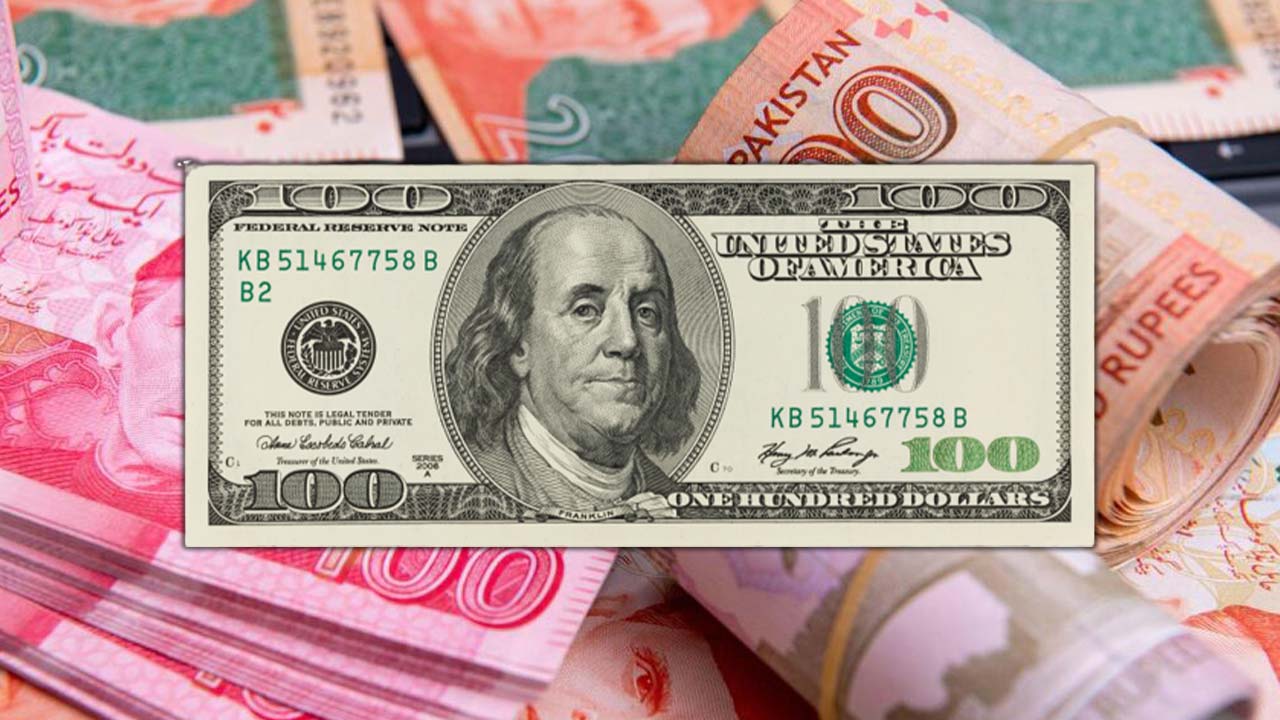

  • Pakistani rupee closes at Rs277.41 as US dollar recovers by nearly Rs2 in interbank trade

    Pakistani rupee closes at Rs277.41 as US dollar recovers by nearly Rs2 in interbank trade

    The US dollar appears to have bounced back on Wednesday at the opening of interbank trade, as it gained 31 paisas. The American currency closed at Rs277.41 after gaining Rs1.97 against the local unit. The dollar was exchanged for Rs275.75 at the start of the trading session on Wednesday.

    However, later the greenback gained even more value with Rs1.31 in interbank trade and was being traded at Rs276.75. In just a short while, the currency gained even more strength with Rs1.56 and was traded at Rs277.

    Owing to the strengthening of the dollar in the interbank trade, the currency’s value stopped falling in the open market also. Its value remained stable at Rs280 in the open market. On Tuesday, the greenback had lost a massive Rs10 in the interbank market.

    On the other hand, the Pakistan Stock Exchange continued its bullish trend. The shares of energy, oil and gas, and refinery companies were shared in the market.

    The stock exchange retained its limit of 44,000 points on Wednesday morning. The KSE-100 index rose with 472 points to 44,030 points. At the start of the trading session, the index gained 200 points to reach 43,770 points.

  • SBP calls for action against unauthorised mobile apps providing online banking services

    SBP calls for action against unauthorised mobile apps providing online banking services

    The State Bank of Pakistan (SBP) has raised concerns about commercial banks jeopardising depositors’ funds by allowing unauthorised mobile phone applications to offer online banking services to clients.

    The central bank issued a notification to regulated entities (REs) that provide digital banking services, warning about the use of unlicensed digital lending mobile applications and platforms.

    These applications integrate with customers’ bank accounts for loan disbursement, creditworthiness checks, and collections, posing consumer protection risks and potential harm to banks’ reputation.

    Regulated entities encompass commercial banks, microfinance banks (MFBs), payment system operators, payment service providers, and electronic money institutions (EMIs).

    The central bank explicitly stated that REs should not provide services such as deposits, lending products, mobile application integration with third parties, payment gateway services, credit scoring and creditworthiness checks, wallet services, and/or API integration services to unlicensed digital lending platforms, whether directly or indirectly.

    IT expert Noman Ahmad, speaking to The Express Tribune, emphasised the need for the central bank to disclose the names of financial institutions offering services through unlicensed applications. By doing so, depositors would have the opportunity to withdraw and safeguard their deposits before any unexpected events occur. He expressed surprise that unauthorised mobile platforms were offering banking services despite the SBP’s status as a responsible regulator.

    Banks in Pakistan manage deposits totaling approximately Rs23 trillion and serve 67.52 million depositors in a population of 227 million. The country has 103 million branchless banking accounts, while EMIs oversee 1.60 million accounts (e-wallets).

    The SBP’s notification advises REs to verify the licensing status and authorisation of digital lending platforms and mobile applications from relevant regulatory bodies, including the Securities and Exchange Commission of Pakistan and the central bank itself. This verification should be conducted as part of the know-your-client and customer due diligence processes.

    Furthermore, REs are urged to implement reasonable measures during customer onboarding and transaction monitoring to prevent unauthorised financial service providers from utilising their banking channels and platforms, either directly or indirectly.

  • Pakistan’s foreign exchange reserves get a boost as China rolls over $1 billion loan

    Pakistan’s foreign exchange reserves get a boost as China rolls over $1 billion loan

    In a significant development, China has rolled over a $1 billion loan to Pakistan, bolstering the country’s foreign exchange reserves held by the State Bank of Pakistan (SBP). This move comes as a much-needed relief for cash-strapped Pakistan, which has been grappling with a severe liquidity crunch and the looming expiration of its International Monetary Fund (IMF) programme.

    Pakistan’s Finance Minister Ishaq Dar said that the $1 billion loan from China would be received on Monday. Additionally, negotiations are underway with the Bank of China for a loan amounting to $300 million. Pakistan is also set to benefit from the dollars obtained through its swap agreement with China.

    Prior to this infusion of funds, the SBP and commercial banks jointly held foreign exchange reserves amounting to $9.4 billion as of June 9. With the $1 billion loan, the reserves will rise to $10.4 billion, providing some stability to Pakistan’s economic situation.

    The IMF has made external financing a prerequisite for Pakistan, emphasising the importance of securing additional funds. In an effort to address its financial challenges, Pakistan had approached China to refinance commercial loans worth $1.3 billion. However, without the revival of the IMF programme, the SBP’s foreign exchange reserves were at risk of plummeting to less than $3 billion.

    Despite these positive developments with China, Pakistan is still struggling to secure external financing in a timely manner, primarily due to ongoing political instability. The country’s fragile economy, valued at $350 billion, continues to be in turmoil, with financial woes exacerbating the situation. The delayed agreement with the IMF has further compounded the need for crucial funding to avoid the risk of default.

    Negotiations between the Pakistani government and the IMF have been ongoing since the end of January to resume the $1.1 billion loan tranche that has been on hold since November. This loan is part of a larger $6.5 billion Extended Fund Facility agreed upon in 2019. The impending challenge lies in repaying $900 million to multilateral creditors, which includes both principal and mark-up repayments, by the end of June 2023.

    Pakistan remains hopeful that these recent developments with China will provide some respite in the face of its economic challenges. However, the government must continue its efforts to secure external financing and navigate through the political instability to ensure long-term stability and growth for the country’s economy.

  • State Bank keeps policy rate unchanged at 21%, eyes decline in inflation

    State Bank keeps policy rate unchanged at 21%, eyes decline in inflation

    The State Bank of Pakistan’s (SBP) Monetary Policy Committee (MPC) has made the decision to maintain the policy rate at 21 per cent for the next two months. This move is based on the committee’s anticipation that inflation will begin to decrease starting this month.

    During its previous meeting in April, the MPC had raised the key policy rate by 100 basis points to a record high of 21 per cent in order to control inflation. Since January 2022, the SBP has increased rates by a total of 1,150 basis points.

    In a press release issued today, the central bank highlighted that the higher inflation figures for April and May were in line with expectations. The committee also observed a sequential decrease in inflation expectations among consumers and businesses, following recent peaks.

    Furthermore, the MPC predicts that domestic demand will remain subdued due to tight monetary policy, domestic uncertainties, and ongoing pressure on the external account. Given this context and the declining month-on-month trend, the committee expects inflation to have reached its peak at 38 per cent in May 2023, with a subsequent decline anticipated from June onwards, barring any unforeseen developments.

    The committee acknowledged several significant developments that have occurred since its previous meeting. Firstly, provisional national accounts estimates indicate a considerable deceleration in real GDP growth during FY23. Secondly, the current account balance registered consecutive surpluses in March and April 2023, alleviating some pressure on foreign exchange reserves.

    Thirdly, the government unveiled the budget for Fiscal Year 2023-24 on June 9, which outlines a slightly contractionary fiscal stance compared to the revised estimates for FY23. Lastly, global commodity prices and financial conditions have recently eased and are expected to persist in the near term.

    The Monetary Policy Committee also evaluated the cumulative impact of the substantial monetary tightening implemented thus far, which is still unfolding. Overall, the committee believes that the current monetary policy stance, characterised by positive real interest rates on a forward-looking basis, is appropriate for anchoring inflation expectations and bringing down inflation towards the medium-term target, barring any unexpected domestic or external shocks.

    However, the committee emphasised that this outlook is contingent upon effectively addressing prevailing domestic uncertainties and external vulnerabilities.

    The committee noted that the major drag on real GDP growth, which increased by 0.3 per cent in FY23 compared to the revised growth of 6.1 per cent in FY22, stemmed from a significant contraction in the value addition of the industry due to various adverse domestic and external factors.

    The services sector also experienced its slowest growth pace since the COVID-impacted FY20. However, the agriculture sector demonstrated growth lower than the previous year but better than post-flood expectations, driven by bumper sugarcane and wheat crops and robust growth in the livestock sector, which compensated for flood-related damages to cotton and rice crops.

    The MPC further highlighted that the slowdown in economic activity aligns with trends observed in high-frequency indicators, particularly double-digit declines in auto, petroleum, and domestic cement sales volumes, as well as contraction in large-scale manufacturing throughout this fiscal year.

    These trends are expected to persist in the near term due to the accumulated impact of tight policies. Conversely, barring any unfavorable weather conditions, the agriculture sector is expected to exhibit improved performance compared to the outgoing fiscal year, according to the committee.

  • Pakistan’s foreign exchange reserves dip to $3.91 billion amid IMF agreement delay

    Pakistan’s foreign exchange reserves dip to $3.91 billion amid IMF agreement delay

    In a challenging turn of events for Pakistan’s economy, the foreign exchange reserves held by the State Bank of Pakistan (SBP) have plummeted to $3.91 billion.

    The decline in reserves is primarily attributed to external debt payments, coinciding with the expiration of the country’s International Monetary Fund (IMF) program, which has been stalled for several months.

    The SBP announced on Thursday that the reserves decreased by $179 million during the week ending on June 2, leaving the country with barely enough coverage for controlled imports for just one month.

    Commercial banks, on the other hand, are holding net foreign reserves worth $5.42 billion, $1.51 billion more than the central bank. Consequently, Pakistan’s total foreign reserves stand at $9.3 billion as of June 2.

    This marks the sixth consecutive weekly drop in foreign exchange reserves for Pakistan, signaling a lack of progress in securing external financing. Political instability has played a significant role in the deteriorating economy, and the country has yet to secure much-needed funding to avert the risk of default.

    Pakistan’s $350 billion economy is currently in turmoil due to financial woes and the delay in reaching an agreement with the IMF. The pending agreement would release crucial funds that are essential for stabilizing the economy.

    The government has been engaged in discussions with the IMF since the end of January to resume a $1.1 billion loan tranche, which has been on hold since November 2022. This loan is part of a larger $6.5 billion Extended Fund Facility (EFF) agreed upon in 2019.

    Earlier today, Finance Minister Ishaq Dar revealed that the coalition government has shared its budget numbers with the IMF, aiming to unlock the ninth review.

    He expressed confidence that there are “no issues in the numbers.” Pakistan’s government faces significant pressure from the IMF to implement stringent fiscal measures and unlock the final tranche of a vital bailout package.

    To meet the IMF’s requirements, Pakistan must eliminate subsidies in sectors such as energy, allow the rupee to float against the US dollar, increase taxes and duties, and impose import restrictions. These measures are seen as crucial steps toward stabilising the economy and securing external funding.

    The future of Pakistan’s economy hinges on successful negotiations with the IMF and the implementation of effective economic reforms.

    The government must address political instability and work towards regaining the confidence of international lenders to alleviate the financial strains on the country.

  • Pakistan’s forex reserves decline to $4.31 billion, covering less than a month’s worth of imports

    Pakistan’s forex reserves decline to $4.31 billion, covering less than a month’s worth of imports

    The State Bank of Pakistan (SBP) has experienced a continuous decline in foreign exchange reserves for the third consecutive week. This decline is attributed to the country’s ongoing struggle to secure a deal with the International Monetary Fund (IMF).

    The central bank’s statement indicates that the reserves decreased by $72 million to reach $4.31 billion as of May 12, primarily due to external debt payments. This amount is sufficient for less than a month’s worth of imports.

    In contrast, commercial banks in Pakistan hold net foreign reserves amounting to $5.62 billion, which is $1.01 billion higher than the central bank’s reserves. Therefore, the country’s total liquid foreign reserves amount to $9.93 billion.

    Pakistan’s economy is currently facing significant challenges, exacerbated by financial difficulties and the delay in reaching an agreement with the IMF. Such an agreement is crucial as it would provide much-needed funding to mitigate the risk of default.

    Earlier, on May 11, the State Bank of Pakistan (SBP) witnessed a decline of $74 million in foreign exchange reserves within a week, resulting in reserves amounting to $4.38 billion. Additionally, commercial banks held net foreign reserves of $5.6 billion.

    Reports indicate that the IMF remains skeptical and is urging Islamabad to take further actions to unlock the loan program, despite assurances from friendly countries regarding external funds for Pakistan.

    Pakistan has been asked to present a repayment plan for a $3.7 billion loan to the IMF in June and demonstrate stronger support from friendly nations to fulfill its commitments.

  • Pakistan’s current account records $18 million surplus in April due to import reductions

    Pakistan’s current account records $18 million surplus in April due to import reductions

    Pakistan’s current account recorded a surplus for the second consecutive month in April, with analysts attributing this development to a reduction in imports resulting from administrative measures.

    Data released by the State Bank of Pakistan (SBP) on Tuesday revealed that the country achieved a surplus of $18 million this month, compared to a current account deficit of $640 million last year. The current account had previously attained a surplus in March for the first time since November 2020, reaching $654 million, the highest since February 2015.

    According to experts, April’s current account surplus was lower than expected due to the SBP’s clearance of an import backlog.

    Overall, during the ten months of the current fiscal year, the current account deficit amounted to $3.25 billion, marking a 76 per cent decline compared to $13.65 billion for the same period last year.

    According to the SBP data, the import of goods experienced a 38 per cent year-on-year decrease, amounting to $3.7 billion in April. In contrast, exports also fell by 33 per cent to $2.11 billion.

    Furthermore, remittances declined by 29 per cent to $2.2 billion.

    The current account has achieved a surplus for two months, primarily due to the containment of imports through administrative measures.

    According to Geo, the decrease in imports has led to a slowdown in large-scale manufacturing in the country, impacting overall activity levels in sectors like services and trade.

  • Inflation worsens in Pakistan, affecting purchasing power of millions

    Inflation worsens in Pakistan, affecting purchasing power of millions

    The citizens of Pakistan, a poor country with a population of 220 million, have been struggling with record-high inflation due to the government’s inability to control prices. According to the weekly bulletin released by the Pakistan Bureau of Statistics (PBS), the weekly inflation increased by 46.82 per cent year-on-year and 0.15 per cent week-on-week, ending on April 27.

    The rise in the sensitive price indicator (SPI) was attributed to the increase in the prices of potatoes, chicken, wheat flour, gur, bread, and rice irri-6/9. On the other hand, there was a decrease in the prices of tomatoes, bananas, onions, sugar, LPG, pulse masoor, and mustard oil during the same period. The SPI for the week under review was recorded at 252.20 points, up from 251.83 points the previous week and 171.78 points recorded during the week ended on April 28, 2022.

    Fahad Rauf, head of research at Ismail Iqbal Securities, attributed the moderate increase in SPI mainly to the rise in the prices of potatoes and mutton. The price trend of perishable food items during the Eid week has been mixed, with the prices of some items going up and some going down. Ismail Iqbal Securities predicted that the CPI for April 2023 would come around 38 per cent, up from 35.4 per cent in March 2023, due to house rent revisions and higher wheat prices.

    The absence of the International Monetary Fund (IMF) programme and persistent inflationary pressures may result in another rate hike, as per Ismail Iqbal Securities. An interest rate hike could further discourage businesses, which have already postponed their expansion plans and hiring. Import restrictions have also added to the woes of industries and businesses that have faced frequent shutdowns, resulting in uncertain or no wages for millions of workers.

    The SPI is compiled by PBS by collecting prices of 51 essential items from 50 markets in 17 cities of the country. During the week, prices of 21 items increased by 41 per cent, while prices of seven items decreased by 13.73 per cent, and prices of 23 items remained unchanged, accounting for 45.10 per cent of the total. Various weightages are assigned to different commodities in the SPI basket, with milk, electricity, wheat flour, sugar, firewood, long cloth, and vegetable ghee having the highest weights for the lowest quintile. The price of milk and wheat flour increased, while the price of sugar decreased. The prices of electricity, firewood, long cloth, and vegetable ghee remained unchanged. However, the prices of all these commodities increased on a yearly basis.

  • Pakistan’s economic stability remains fragile despite increase in forex reserves

    Pakistan’s economic stability remains fragile despite increase in forex reserves

    As the country tries to find ways to secure external financing and keep itself afloat, the State Bank of Pakistan (SBP)-held foreign exchange reserves recorded a meagre rise. The SBP, in its weekly bulletin, mentioned its reserves have jumped by $30 million to $4.46 billion as of April 20, which will provide an import cover of less than a month — a position that has been the same for several months now.


    The net foreign reserves held by commercial banks stand at $5.56 billion, $1.1 billion more than the SBP, taking the total liquid foreign reserves to $10.02 billion. Although the central bank did not specify the reason behind the increase, there was a $300 million rise in the reserves last week — which was due to the loan provided by the Industrial and Commercial Bank of China.


    The $350 billion economy is in turmoil amid financial woes and the delay in an agreement with the International Monetary Fund (IMF) that would release much-needed funding crucial to avoid the risk of default.


    The government has been in talks with the Washington-based lender since end-January to resume the $1.1 billion loan tranche that has been on hold since November, part of a $6.5 billion Extended Fund Facility (EFF) agreed upon in 2019. A deal with the IMF will also unlock other bilateral and multilateral financing avenues for Pakistan to shore up its foreign exchange reserves.


    Finance Minister Ishaq Dar said earlier this week that Pakistan has “fulfilled all the conditions” of the IMF and hoped that the Fund would soon sign the staff-level agreement. Speaking to Geo News, Dar said both Saudi Arabia and the United Arab Emirates (UAE) have informed the IMF about their commitments to provide $3 billion to Pakistan.


    Riyadh will provide $2 billion while Abu Dhabi has promised $1 billion to Pakistan, Dar said, adding that the Washington-based lender has also been informed in this regard.


    The finance minister said all the conditions for the staff-level agreement between Pakistan and IMF have been fulfilled. “Pakistan is hopeful that IMF will soon sign the SLA and get it approved by its Executive Board,” Ishaq Dar added.