Tag: SBP

  • Pakistan records 17% increase in exports to Afghanistan, SBP data shows

    Pakistan records 17% increase in exports to Afghanistan, SBP data shows

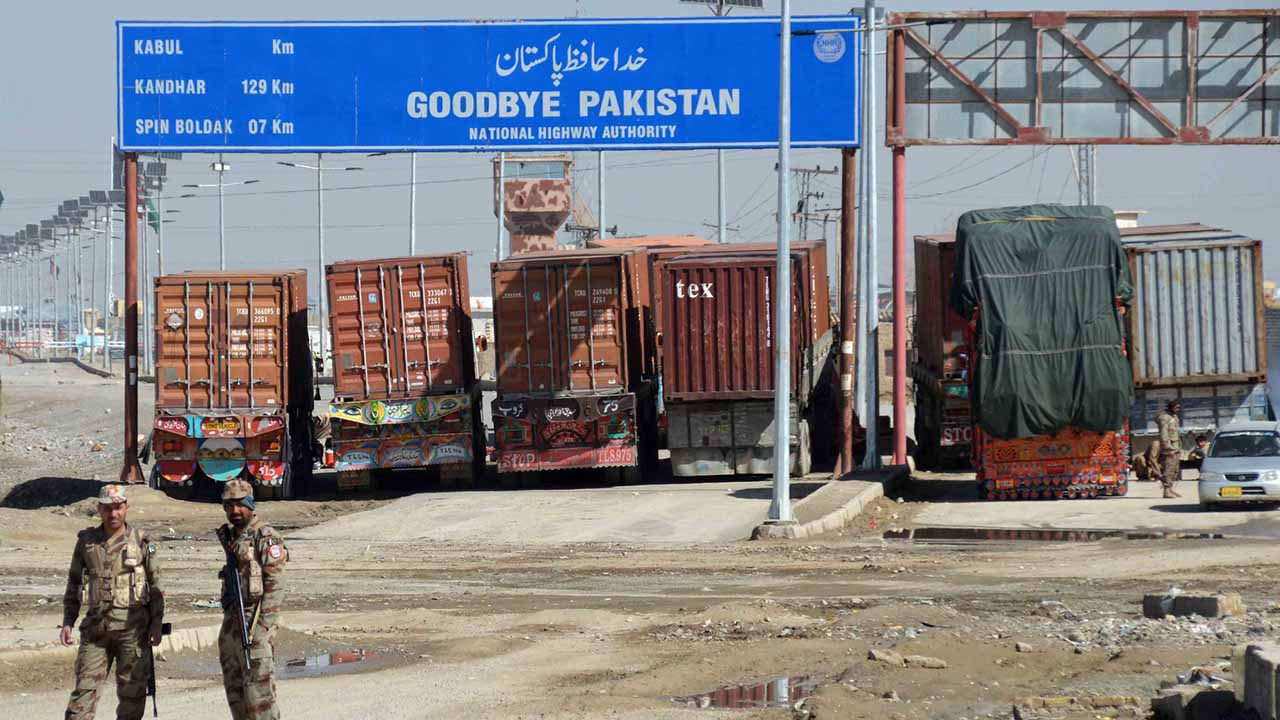
    According to a report by the State Bank of Pakistan (SBP), Pakistan’s export of goods and services to Afghanistan has increased by 17.02 per cent during the first eight months of the current fiscal year (2022-23) compared to the corresponding period of the previous year.

    From July-February (2022-23), overall exports to Afghanistan reached US $346.522 million, while during the same period last year, exports were recorded at US $296.109 million, showing a growth of 17.02 per cent.

    Furthermore, the year-to-year basis also showed an increase of 60.49 per cent in exports to Afghanistan, rising from US $38.222 million in February 2022 to US $61.345 million in February 2023. Meanwhile, on a month-on-month basis, exports to Afghanistan also rose by 82.58 per cent during February 2023, reaching US $61.345 million, compared to US $33.598 million in January 2022.

    In contrast, Pakistan’s exports to other countries decreased by 9.65 per cent during the eight months, dropping from US $20.632 billion to US $18.639 billion, according to SBP data.

    The imports from Afghanistan into Pakistan during the period under review were recorded at US $13.540 million, which was a significant decrease of 88.65 per cent compared to last year’s US $119.328 million in July-February (2021-22).

    Year-on-year, imports from Afghanistan also dropped by 98.89 per cent, from US $13.723 million in February 2022 to US $0.151 million in February 2023. However, on a month-on-month basis, imports from Afghanistan increased by 11.02 per cent during February 2023, reaching US $0.136 million, compared to US $0.122 million in January 2022.

    Overall, the imports into Pakistan also witnessed a decrease of 21.02 per cent, from US $47.336 billion to US $37.388 billion, according to SBP data. Based on the trade figures, the trade of goods and services with Afghanistan witnessed an 88.35 per cent increase in surplus during the period under review compared to the previous year, with a recorded surplus of US $332.982 million against US $176.781 million during the last year.

  • SBP expected to increase interest rates again on IMF insistence

    SBP expected to increase interest rates again on IMF insistence

    The State Bank of Pakistan (SBP) is reportedly considering increasing the interest rate by 2 per cent during the upcoming Monetary Policy Committee (MPC) meeting in a bid to unlock the International Monetary Fund (IMF) programme.

    This follows failed negotiations between the Shehbaz Sharif-led government and the IMF, with the latter demanding that Pakistan raise the interest rate by 4 per cent due to its belief that inflation is lower in Pakistan as per the interest rate.

    The SBP had already increased the interest rate by 2 per cent, but now the IMF is reportedly pressuring Islamabad to raise it again by 2 per cent. The MPC is scheduled to meet on April 4 to review the interest rate as per the IMF’s demand.

    According to The News, the SBP has reportedly agreed to raise the interest rate by 2 per cent in accordance with the Fund’s demands. On March 2, the SBP raised the monetary policy rate by 300 basis points to 20 per cent due to a deterioration in inflation outlook and expectations amid recent external and fiscal adjustments.

  • SBP governor says import restrictions will be eased after completion of IMF review

    SBP governor says import restrictions will be eased after completion of IMF review

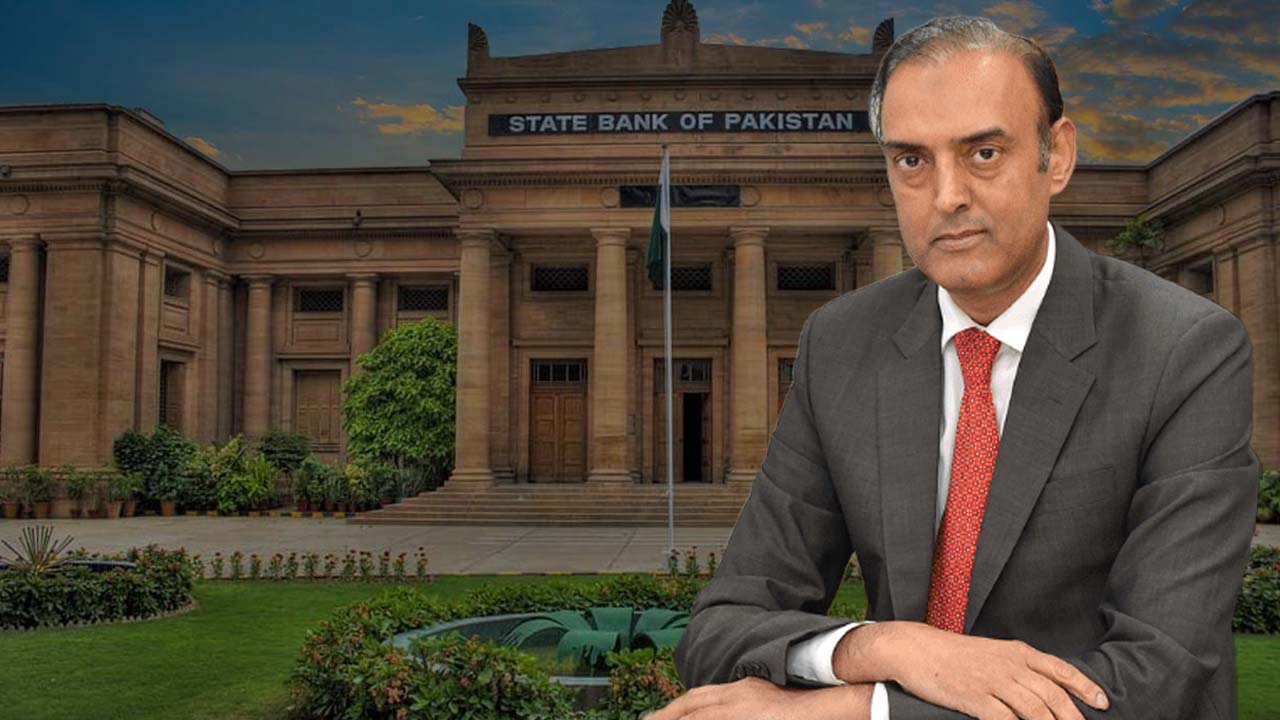
    During a briefing to the Senate Standing Committee on Finance, State Bank of Pakistan (SBP) Governor Jameel Ahmed projected that the current account deficit for the ongoing fiscal year would be $7 billion, which is lower than the budgetary target of $10 billion. He attributed the lower deficit to measures taken to control imports, which he said could not continue for a longer period of time. Ahmed stated that import compression would ease after the completion of the International Monetary Fund (IMF) review.

    Ahmed also mentioned that the low inflows due to the delay in the IMF review, higher commodity prices in the international market, and the Ukraine-Russia war are major reasons behind pressure on the external account and an increase in inflation. However, he clarified that an increase of 300 per cent basis points in the policy rate was not made on the demand of the International Monetary Fund (IMF), and that the Staff Level Agreement (SLA) is close to being finalized with the Fund.

    Regarding the outflow of $2.4 billion on account of debt repayment in the first half of the current fiscal year compared to $6.3 billion inflow for the same period a year ago, Ahmed said that the decline in inflows was due to the pending review of the IMF program. He hoped that budgeted inflow would materialize after the completion of the review in the second half, thereby increasing foreign exchange reserves.

    Ahmed also mentioned that the pressure of inflation will remain for two to three months and the average inflation this year will be 26.5 per cent. He added that remittances have decreased by $2 billion and are projected at $29 billion for the ongoing fiscal year against over $31 billion for the last fiscal year. There was also a decline of 7.4 per cent in exports as the country did not have exportable goods due to flood and a decrease in the export of rice. Vegetables and fruit exports have also declined by 48 and 37 per cent respectively.

    According to The News, the committee expressed concern over the fluctuation of the dollar and said that it was the responsibility of the regulator to maintain the actual price of the dollar and take measures against black marketing and smuggling. The committee sought details of the amount of dollars smuggled to Afghanistan in the recent period. The committee members recommended seriously addressing the issue of the difference between the dollar rate in the open market and the inter-bank. The chairman of the committee recommended that instead of rupee trade with Afghanistan, either be replaced with the dollar or barter trade because trade with Afghanistan in rupee is also contributing to the external account pressure.

    Senator Mohsin Aziz highlighted that the remittances, the FDI, and the exports have been on a decline, whereas the country’s debt was increasing. He also said that imports compression and policy rate were hurting the industry and exports, and exporters are unable to compete in the global market with regional players due to government policies.

    In response to the issue of refusal of LCs to importers of pharmaceutical ingredients, the SBP said it was fully supporting the import of above articles and imports of pharma industry have considerably increased in the month of February and the first seven days of March 2023.

  • SBP jacks up policy rate by 300 bps to 20%

    SBP jacks up policy rate by 300 bps to 20%

    In a meeting held today, the State Bank of Pakistan’s (SBP) Monetary Policy Committee (MPC) increased the policy rate by 300 basis points (bps) to 20 per cent as a measure to curb inflationary pressure.

    The meeting’s result matched the market’s predictions, with analysts expecting the State Bank of Pakistan’s Monetary Policy Committee to implement a significant hike of 200-300 basis points.

    During today’s meeting, the MPC acknowledged that recent fiscal adjustments and depreciation of the exchange rate have resulted in a significant deterioration of the near-term inflation outlook. This has also led to an increase in inflation expectations, as indicated by the latest survey results.

    The committee anticipates that inflation will continue to rise in the coming months due to the impact of these adjustments, before gradually decreasing. The projected average inflation rate for this year is now estimated to be between 27 per cent to 29 per cent, compared to the November 2022 projection of 21 per cent to 23 per cent. Given this context, the MPC stressed the importance of stabilizing inflation expectations and implementing strong policy measures.

    On the external front, the MPC acknowledged that while there has been a substantial reduction in the current account deficit (CAD), there are still some vulnerabilities present. In January 2023, the CAD decreased to $242 million, the lowest level since March 2021.

  • SBP-held foreign exchange reserves drop to a highly critical level of $2.92 billion

    SBP-held foreign exchange reserves drop to a highly critical level of $2.92 billion

    The State Bank of Pakistan (SBP) has reported a decrease in its foreign exchange reserves, as reflected in data released on Thursday. The reserves fell to a total of $2.92 billion, marking a reduction of $170 million.

    According to the recent data, the current level of reserves held by the bank has reached its lowest point since February 2014.

    The country’s total liquid foreign reserves were reported to be at $8.54 billion, according to the latest data. Meanwhile, commercial banks in the country held net foreign reserves of $5.62 billion.

    “During the week ended on February 3, 2023, SBP’s reserves decreased by $170 million to $2,916.7 million due to external debt repayments,” the SBP said in a statement.

    The State Bank of Pakistan (SBP) experienced a substantial decrease in its foreign exchange reserves last week, declining to $3.09 billion, a drop of $592 million. This represents the lowest level of reserves for the central bank since February 2014. The current level of reserves falls below one month’s worth of import coverage.

    The depletion of the central bank’s reserves, which stood at nearly $18 billion at the beginning of 2022, highlights the pressing need for Pakistan to move forward with the next review of its International Monetary Fund (IMF) program.

    These declining reserves serve as a reminder of the economic challenges facing the country and the importance of addressing them in a timely and effective manner.

  • Rs170 billion in taxes to be imposed through mini-budget for revival of IMF loan program

    The Minister of Finance, Ishaq Dar, has announced that the talks between Pakistan and the International Monetary Fund (IMF) have concluded positively. In order to revive the loan program, the government will be required to implement a mini-budget, which includes collecting approximately Rs170 billion in taxes.

    During a media briefing, the finance minister confirmed receipt of the draft of the Memorandum of Economic and Financial Policies (MEFP) from the IMF based in Washington. At the outset of his media address, the minister emphasized that the current government is continuing to implement the program signed by former Prime Minister Imran Khan with the IMF in 2019-2020, and that the talks are being held as a “sovereign commitment” under the leadership of Shehbaz Sharif.

    “This is an old agreement which had been suspended and delayed previously,” he noted. 

    Regarding the discussions between Pakistan and the IMF mission, the finance minister stated that the talks, which lasted for ten days, were comprehensive and covered a range of topics including the power and gas sectors, as well as the fiscal and monetary aspects.

    “The SBP governor and officials from different departments and ministries participated in the talks,” said Dar.

    Finance Minister Ishaq Dar has shared details of the agreement reached with the IMF regarding the country’s financial situation. The finance minister confirmed that taxation measures of Rs170 billion will be taken, dispelling rumors of a larger figure of Rs700-800 billion.

    Dar highlighted that reforms in the energy sector will be a key focus, aimed at curbing the flow of circular debt, particularly in the gas sector where efforts will be made to bring the circular debt to zero and minimize untargeted subsidies.

    The minister acknowledged that some of the reforms suggested by the IMF are beneficial for Pakistan and emphasized the need for reforms in the country. He added that Prime Minister Shehbaz Sharif has assured the IMF of the government’s commitment to implement the necessary reforms.

    As per the standard procedure, a MEFP and a letter of intent are given. “The government has received the MEFP draft this morning and we will go through it on the weekend. A virtual meeting with the IMF will be held after that on Monday,” he added.

    “We believe that there are some sectors that need to be reformed in Pakistan’s interest,” he said.

    The Minister of Finance, in a statement, indicated that the country’s economy is facing significant challenges, with its current ranking standing at 47. The minister attributed the economic struggles to poor governance and mismanagement, and emphasized the need to address and rectify the situation.

    In reference to the power sector, the finance minister noted that a large portion of the national budget, approximately Rs3,000 billion, is spent on electricity generation, however, the recovery rate for these expenditures is only Rs1,800 billion. This highlights the pressing need for reforms and improvements in the sector to enhance efficiency and ensure sustained economic growth.

    “Even though these reforms are painful but we will have to implement them,” he maintained.

    He said that the government had decided that Pakistan will complete the IMF’s programme for the second time.

    “Pakistan will get $1.2 billion after the approval of IMF’s Executive Board.”

    The Minister of Finance announced that it has been determined to increase the budget of the Benazir Income Support Program (BISP), bringing it to a total of Rs400 billion. This increase is aimed at mitigating the impact of inflation on the most vulnerable segments of society.

    Regarding the declining foreign currency reserves, the minister provided reassurance that efforts are underway to boost them. The minister credited the State Bank of Pakistan (SBP) with managing the situation and noted that support from friendly countries has also been secured through commitments.

    “Pakistan had made big payments to countries during this time, and once the programme is finalised, we will get the amount back,” said Dar.

    The Minister of Finance criticized the previous administration for the credibility gap in the country’s reputation, stating that the lack of trust from the IMF is a result of the previous government’s failure to implement reforms, and even reversing them during a period of political instability.

    “This has negatively portrayed Pakistan’s image and this has affected the recent talks as [the IMF] is not sure if we would agree to it,” he added.

    He added that the government refused to impose sales tax on petrol and the IMF conceded it. “It was mutually agreed that there will be no sales tax on petroleum products,” he said. He added that the general sales taxes will be added to the Rs170 billion.

    Dar said that it is necessary to recover Rs170 billion in taxes within the current fiscal year, within a period of four months.
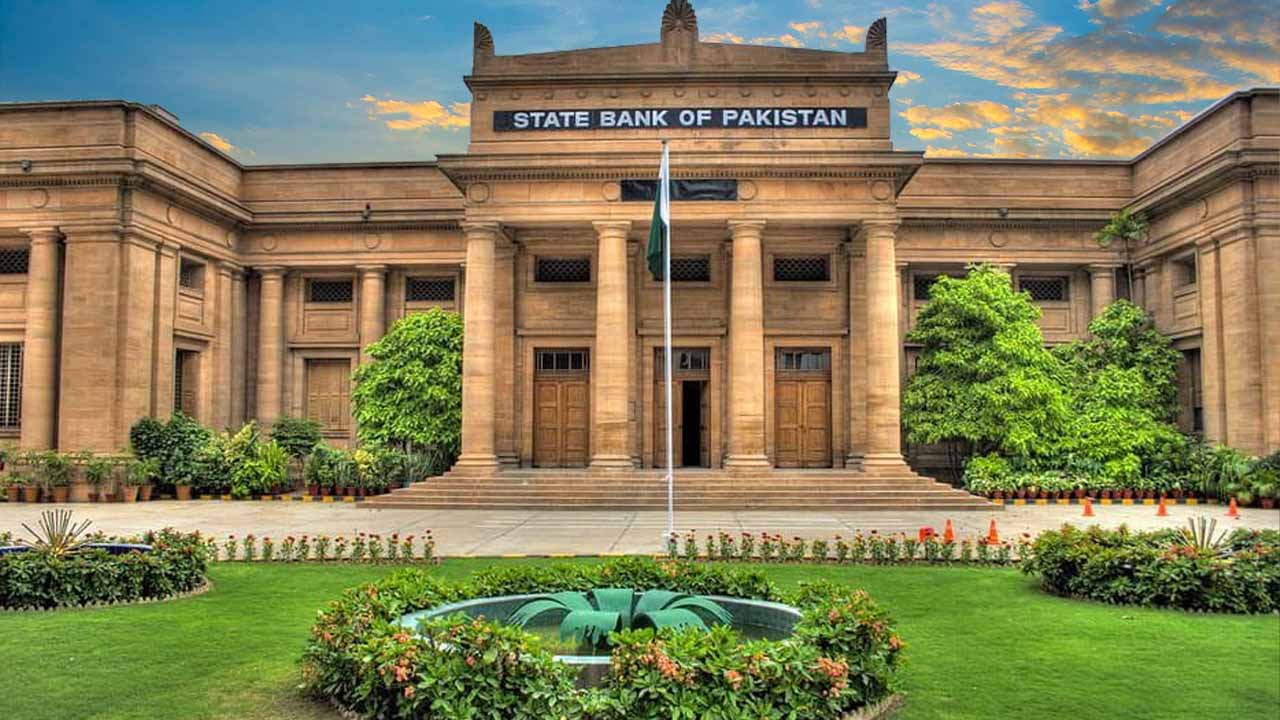
  • SBP-held foreign exchange reserves now stand at only $3.09 billion

    SBP-held foreign exchange reserves now stand at only $3.09 billion

    According to figures issued on Thursday, the State Bank of Pakistan’s (SBP) foreign reserves fell precipitously by $592 million to just $3.09 billion. This is the lowest level of central bank reserves since February 2014.

    The nation’s total holdings of liquid foreign exchange were $8.74 billion. There were $5.65 billion in net foreign reserves held by commercial banks.

    “During the week ended January 27, 2023, SBP’s reserves decreased by $592 million to $3,086.2 million due to external debt repayments,” the SBP said in a statement.

    The SBP’s foreign exchange reserves decreased sharply last week, falling by a whopping $923 million to only $3.7 billion.

    The central bank reserves, which were around $18 billion at the beginning of 2022 but have significantly decreased, highlight the pressing need for Pakistan to finish the next assessment of the International Monetary Fund (IMF) programme.

  • Gold price hits all-time high of Rs195,500 per tola after removal of an unofficial dollar cap

    Gold price hits all-time high of Rs195,500 per tola after removal of an unofficial dollar cap

    Gold prices in Pakistan continued their record-breaking spree as the price of 24-carat gold reached an all-time high of Rs195,500 after gaining Rs4,900.

    In addition, the price of 10 grammes also witnessed an increase of Rs4,201 to settle at Rs167,610, according to the All-Pakistan Sarafa Gems and Jewellers Association (APSGJA).

    Moreover, the bullion rate in the international market reached $1,936 after a surge of $11.

    The Pakistani rupee (PKR) on Thursday dropped drastically to approach an all-time low, days after exchange companies abolished the cap on the rupee-dollar exchange rate.

    The sudden hike in yellow metal prices comes as the weakening rupee pushed investors to the safety of bullion to hedge against intensifying economic turmoil in the country.

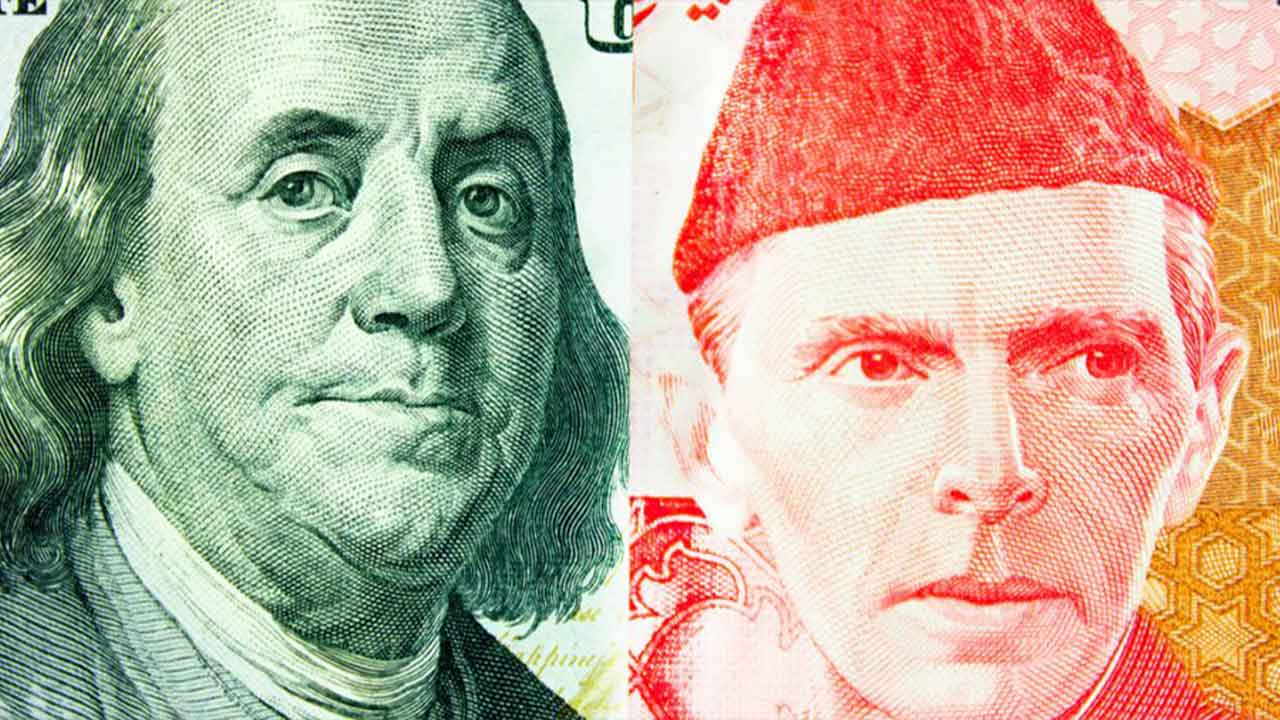
    On Thursday, the local currency crashed to approach another historic low, as it dropped to Rs255.43 versus the US dollar in the interbank market, sliding Rs24.54 or 9.61 per cent from Wednesday’s close, according to the State Bank of Pakistan.

  • Exchange companies remove cap on dollar-rupee exchange rate to abolish grey market

    Exchange companies remove cap on dollar-rupee exchange rate to abolish grey market

    The exchange companies have decided to stop artificially keeping Pakistani rupee (PKR) overvalued against US dollar in the open market and let the rupee-dollar exchange rate depreciate to its actual value.

    Pakistani rupee may steadily lose value until it reaches the level of the grey market in a few days, according to reports.

    The black market price of local currency is currently between Rs250 and Rs260 per US dollar, although traders had artificially kept the rate at Rs238 till Tuesday.

    “The association has decided to remove cap on rupee-dollar exchange rate,” Exchange Companies Association of Pakistan (ECAP) President Malik Bostan said in audio and video messages after chairing a zoom meeting on Tuesday.

    “The move would help eliminate black currency markets, increase flow of foreign currencies to the dealers and available to public (for international travelling, education and hospital fees and etc.”

    He said that in the interest of the country, traders voluntarily opted to restrict the exchange rate. But the choice led to an underground market for cash that seemed to be more detrimental to the country.

    “People were buying dollars from open market (at Rs238) and selling in black market (at Rs250-260), making it a business to mint profit,” he said, adding no one was coming to the dealers’ counters to sell foreign currency which resulted into drying up supplies on the other hand.

    According to ECAP General Secretary Zafar Paracha, the decision to abolish the exchange rate ceiling will aid in the eradication of the black market and restore the inflow of foreign money from the illicit system into the legitimate one.

    Additionally, the government has been urged by the International Monetary Fund (IMF) to relinquish control over the rupee-dollar exchange rate in the interbank market and allow market forces to decide the rate while taking the demand and supply of US dollars into account.

    Accordingly, it is anticipated that the local currency would also reach Rs250-260 in the interbank market as compared to the US dollar.

    Pakistan technically has three currency markets, including the interbank, open, and black markets. As a result, each of the three markets is providing a different rate.

    The black currency market was formed after Finance Minister Ishaq Dar tried to keep the currency artificially overvalued at Rs180–200 to the US dollar after returning to the ministry in late September 2022.

    The currency, therefore, appreciated to Rs218 in the early days of October from its all-time low of Rs240 the first time in late July 2022 and the last time in September 2022.

    Dar opened an investigation against the commercial banks, blaming them for market forces that had artificially devalued the currency to Rs240 per dollar.

    Governor State Bank of Pakistan (SBP) Jameel Ahmed said that the central bank has completed the investigation against 13 commercial banks allegedly involved in rupee-dollar parity manipulation.

    “The central bank is all set to take action against them in days (instead weeks and months). The action could be fiscal or regulatory one,” he added.

  • SBP asks banks to prioritise import of certain essential items to help businesses

    SBP asks banks to prioritise import of certain essential items to help businesses

    In order to help businesses, the State Bank of Pakistan (SBP) on Monday removed the necessity for prior import approval and asked banks to give priority to the importation of certain necessities, including food, medicine, and energy.

    The business community, including various trade bodies and chambers of commerce, has drawn attention to the fact that many shipping containers carrying imported goods are stuck at the ports as a result of delays in the release of shipping documents by banks, according to a statement issued by the SBP on Monday.

    “SBP has advised banks to provide one-time facilitation to all those importers who could either extend their payment terms to 180 days (or beyond) or arrange funds from abroad to settle their pending import payments.”

     “Accordingly, till March 31, 2023, banks have been advised to process and release documents of shipments/ goods that have already arrived at a port in Pakistan or have been shipped on or before January 18, 2023,” said the central bank.

    To avoid any future issues, SBP also suggests that clients notify their banks before beginning any import transaction.

    To the dismay of many importers and firms in Pakistan, who cited these constraints as the reason for closing down or curtailing operations, the SBP restricted imports early this year due to low levels of foreign exchange reserves.

    Last week, the business community of the country harshly criticised the SBP’s role in the issue in light of the difficulty in issuing letters of credit.