Author: Ibraheem Sohail

  • Trump’s tariff war: iPhone price in Pakistan could surge past Rs1 million

    Trump’s tariff war: iPhone price in Pakistan could surge past Rs1 million

    As the tariff war between the United States and China escalates, global markets have tumbled. A growing concern among individuals, both abroad and in Pakistan, is whether they can continue to afford their annual subscription fees for the ultimate status symbol: the iPhone upgrade.


    The line, “Designed by Apple in California, Assembled in China”, once a symbol of class, is now being read as ‘$$$’ by consumers as both countries continue to tack tariffs onto each other. A certified financial planner has predicted that the price of Apple products could surge by 20 to 40 percent – causing many existing users to rush to upgrade their phones before prices are revised upwards.

    Fears of Apple product prices rising arose when US President Donald Trump levied unilateral tariffs with reports suggesting that the tariff rate on Chinese goods entering the US was 54 percent. These fears intensified when China retaliated against the US by slapping a 34 percent retaliatory tariff on the US.

    Reports claim that Trump took to social media and responded to Beijing by threatening an additional 50 percent in tariff rates, which could bring the total tariffs on China to a staggering 104 percent. There are no undone concerns regarding possible spikes in the prices of Apple products. 


    Currently, the price of the iPhone 16 rests at $799 in the US, which, for reference, translates to about 224,000 Pakistani rupees (PKR). With input costs rising for Apple, the company has to decide between protecting profit margins by raising prices or maintaining the current sales volume by keeping prices unchanged.

    If Apple decides to raise prices and pass on the financial burden to consumers, the iPhone 16 could retail for approximately $1,142 in the US, which is about PKR 320,000. 

    The iPhone 16 Pro Max’s price could reportedly surge by 43 percent from $1,599 to $2,300. In rupees, the US retail price of the iPhone 16 Pro Max has increased by PKR 200,000.

    However, the figures above are retail prices that US consumers would face and are expected to be much higher for Pakistan – in the case of a price hike by Apple. As per reports, some iPhone models could potentially surge past Rs.1 million, largely because of the slew of duties and taxes that Pakistan imposes on its own trading partners.


    An official confirmation of price hikes has not been reported yet, and the decision rests with the company’s executives back in Apple’s headquarters in California.

  • Binance founder joins Pakistan Crypto Council as advisor

    Binance founder joins Pakistan Crypto Council as advisor

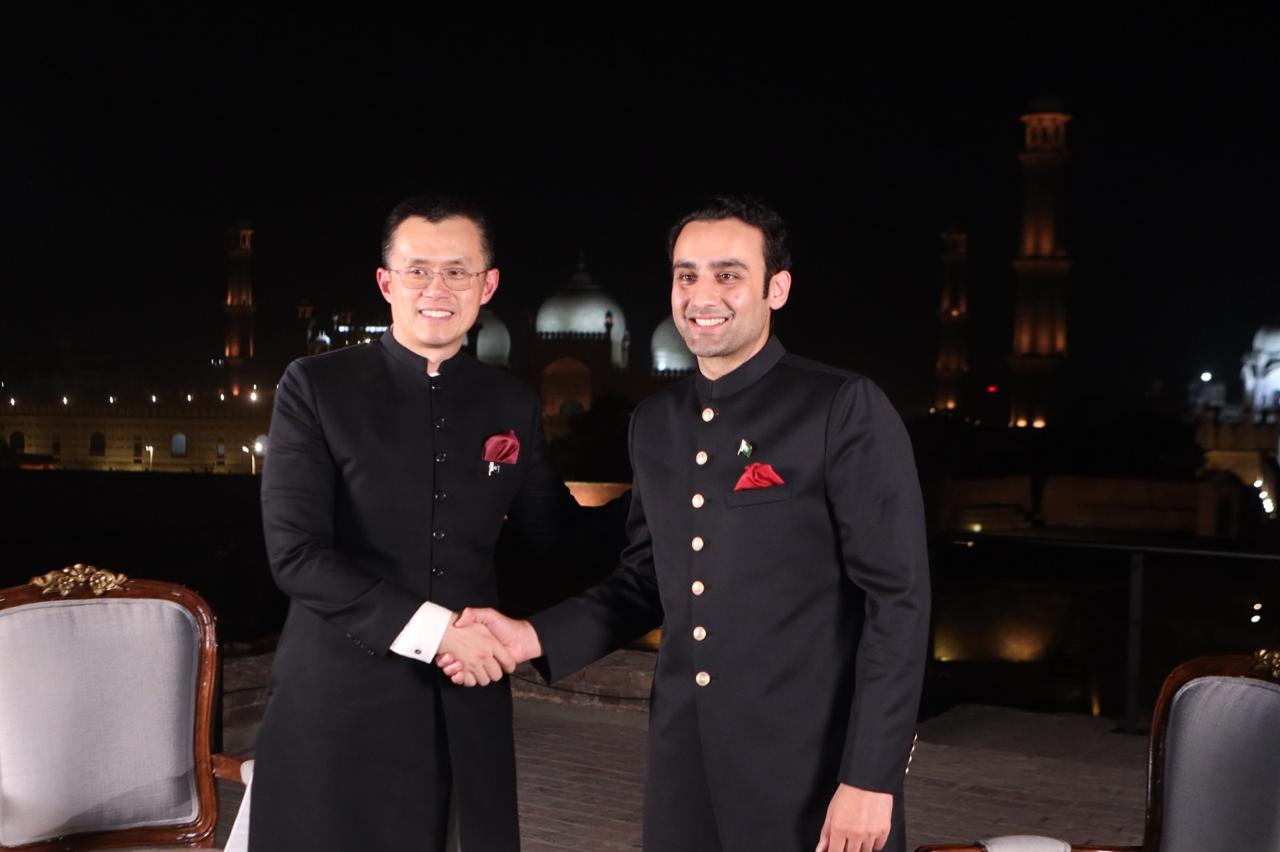
    In an effort to embed blockchain technology and digital assets into the economy’s financial system, Binance’s founder Changpeng Zhao has officially been selected to serve as a key advisor to the country’s recently formed Pakistan Crypto Council (PCC).

    For reference, Binance is a world-renowned cryptocurrency exchange which offers trading services for digital assets.  

    An update on Changpeng Zhao’s appointment came from a press release issued by the Finance Division.  However, the initial announcement was made during Changpeng’s meeting with the PCC.

    As per credible reports, several key government officials attended the aforementioned meeting, which Finance Minister Muhammad Aurangzeb chaired.  The exchange’s founder was also involved in high-profile meetings with both Prime Minister Shehbaz Sharif and Deputy Prime Minister Ishaq Dar.

    Information from a press release suggested that this step could effectively transform the “global cryptocurrency landscape”. Reports indicate that Changpeng’s role has already been defined and that he will help the PCC with matters pertaining to the adoption, education, infrastructure and regulation of digital assets.

    Chengpeng has highlighted how the potential in Pakistan is “limitless” given how 60 percent of Pakistan’s 240 million people happen to be below the age of 30. This factor could significantly assist with the adoption of digital assets on a wide scale as some believe that younger individuals are more likely to park their funds into them.

    He aims to collaborate with public and private sectors to foster inclusivity and competition in the domestic crypto landscape. These developments have allowed Pakistan to become a Web3-ready country, joining the likes of Dubai and Singapore. However, many are uncertain if being part of a decentralised digital future is the best move for Pakistan.

    Cryptocurrencies are highly volatile in nature and are subject to massive fluctuations in price. For instance, data from crypto exchanges on Monday indicated that approximately $230 billion had been wiped out from digital asset markets in just 24 hours.

    Moreover, according to a mainstream crypto exchange, an 8.82 percent decline was recorded in the total crypto market capitalisation from Sunday to Monday, causing it to fall to $2.42 trillion. While Singapore and Dubai might be able to absorb such fluctuations and downturns in the price of digital assets, cash-strapped Pakistan might not fare too well.

  • Crypto tumbles amid tariff war

    Crypto tumbles amid tariff war

    Following a bloodbath in global capital markets, the cryptocurrency space has witnessed the shockwaves from the US-China tariff war. Data from crypto exchanges indicates that approximately $230 billion has been wiped out from digital asset markets in the past 24 hours.

    The possibility of a financial downturn looms as both the US and China remain locked in their tariff war. As per credible reports, China has retorted to the extortionately high tariffs that the US levied.

    Reports indicate that China has levied ‘retaliatory levies’ of 34 percent on all goods imported from the US. Moreover, China has restricted the export of seven rare elements, further escalating the trade war.

    According to a mainstream crypto exchange, an 8.82 percent decline has been recorded in the total crypto market cap over 24 hours, causing it to fall to $2.42 trillion.

    As of publishing, Bitcoin was in the red as it fell by approximately 7.46 percent in 24 hours – with its price plummeting to $76,687.34. Ethereum (priced at $1484.14), the second largest cryptocurrency by market cap, registered an even sharper fall,  with its value shrinking by 17.07 percent.

    Solana (SOL), Doge coin (DOGE) and Ripple (XRP) remained locked in a free fall, too. According to data from exchanges, DOGE fell by 16.12 per cent, while both SOL and XRP fell by approximately 15.5 percent.

    In mere hours, the Fear and Greed Index value plummeted from a conservative 27 to an even lower value of 17. With fear gripping investors and the subsequent fall in market cap, it could signal the start of a bear run.

    The CoinMarketCap 100 (CMC100) index measures the performance of the most important digital assets based on market cap. As per data from coinmarketcap.com, the CMC100 has fallen by a staggering 8.02 percent in the past 24 hours and has come to settle at $147.42.

    While most digital assets remained in the red, capital markets fared even worse. The New York Stock Exchange (NYSE) composite has recorded a sharp decline of 6.12 percent after falling by an alarming 1,148.58 points in 24 hours and currently sits at 17,618.61 points.

    The National Association of Securities Dealers Automated Quotations (NASDAQ) has plummeted by a whopping 5.82 percent as it fell by 962.82 points during trading hours to settle at 15,587.79. For reference, the NASDAQ is the second largest US-based stock exchange by market capitalization – second only to the NYSE.

  • PSX records partial recovery after largest single-day drop

    PSX records partial recovery after largest single-day drop

    The Pakistan Stock Exchange witnessed a historic downturn as the benchmark index of the exchange, the KSE-100, recorded its single largest fall in intraday trading history after falling by a staggering 8,400 points during trading hours.

    The KSE-100 index plummeted to an intraday low of 110,103.97 points at approximately 1:15 PM, triggering widespread concern across trading floors. The steep drop was driven by aggressive sell-offs largely because of China’s response to the tariffs that the US levied on it by slapping substantial tariffs of its own through “retaliatory levies” on all goods imported from the US.

    This move resulted in the KSE-100 index closing at a much lower level of 114,909.48 points. For context, the index had closed at 118,791.66 points the day before. As today’s trading session came to a close, the index had suffered a staggering decline of 3,882.18 points, marking a sharp 3.27 percent drop in a single day.

    The market continued its downward trajectory till around 1:30 PM, after which it attempted a major rally but failed to make a comeback that could allow it to claw out of the red.

    All major indices on the PSX closed in the red, with the broader All-share index (ALLSHR) also facing a significant contraction. Unlike the KSE-100, which tracks the top 100 performing companies, the ALLSHR index reflects the overall performance of all publicly listed companies and also showed a 3.31 percent decline.

    Despite previous signs of recovery in the PSX, the current fall has wiped out significant gains made over the past year. Trading data revealed a marked increase in panic selling in all sectors as the selloff indiscriminately ravaged all areas of the economy listed on the PSX.

    Multiple companies saw their share prices plunge sharply, with First IBL Modaraba (FIBLM) experiencing the largest drop of the day – falling by 15.67 percent during intraday trading.

    Overall, the volume of regular stock trading stood at 710,788,421 shares, translating into a total value of approximately 43 billion rupees – a reflection of the heightened activity driven by uncertainty and sell-offs.

  • Global bloodbath: PSX suffers historic decline as markets crash amid US-China tariff war

    Global bloodbath: PSX suffers historic decline as markets crash amid US-China tariff war

    The Pakistan Stock Exchange (PSX) Monday experienced a meltdown as the benchmark KSE-100 Index fell by a staggering 6,287.22 points, representing a decline of 5.29 percent; whereas the ALLSHR index lost 3700.05 points to now sit at 70,171.43.

    The carnage was followed by trading activities being suspended for 30 minutes, giving time to both regulators and investors to assess the situation.

    While Pakistan’s KSE-100 tracks the performance of the 100 largest and most liquid companies, the ALLSHR index records the performance of all publicly listed companies on the PSX. However, the bloodbath was not limited to the PSX as capital markets across the globe reel from the effects of the trade war between the United States (US) and China.

    According to reports, China has retorted to the US by slapping substantial tariffs of its own through “retaliatory levies” on all goods imported from the US. This levy has been accompanied with China restricting its exports on seven rare elements.

    The trade war has left many investors to believe that a recession is on the horizon, prompting massive sell-offs in international capital markets. Despite being the one to issue the retaliatory tariffs, China’s own capital markets have witnessed large selloffs, causing the Shanghai Stock Exchange Composite Index to fall by 7.34 percent. 

    The effects have reached US shores too as the New York Stock Exchange (NYSE) composite has recorded a sharp decline of 6.12 percent after falling by an alarming 1,148.58 points in 24 hours and currently sits at 17,618.61 points.

    The National Association of Securities Dealers Automated Quotations (NASDAQ) has plummeted by a whopping 5.82 percent as it fell by 962.82 points during trading hours to settle at 15,587.79. For reference, the NASDAQ is the second largest US based stock exchange by market capitalisation — second only to NYSE.

    The Saudi stock market hasn’t fared well either, as the imposition of tariffs coupled with falling oil prices have wiped out large sums of investments causing a loss of 500 billion riyals. As of publishing, the Saudi benchmark index, Tadawul All-Share Index (TASI) has declined by 3.05 percent after falling by 337.72 percent. As per reports, this has caused a loss of $90.5 billion to Saudi Aramco alone. Notable companies such as the Saudi National Bank have also recorded substantial losses.

  • IMF launches second diagnostic mission to address corruption in Pakistan

    IMF launches second diagnostic mission to address corruption in Pakistan

    The International Monetary Fund (IMF) has initiated proceedings to conduct its second ‘Corruption and Diagnostic Mission’ in the country.

    According to reports, the international lender intends to address issues that have plagued the country since its inception, over which, an IMF delegation will remain in discussions with domestic authorities till April 14.

    These meetings will go over multiple state departments and entities, reportedly including the Supreme Court’s accountability and registrar court.

    The IMF delegation is slated to engage with approximately 30 departments to improve governance, launch a crackdown against money laundering and to tackle Pakistan’s chronic corruption problem.

    The fight against the aforementioned issues can be conducted by focusing on improving financial oversight, analysts say, outlining the IMF’s keen interest in Pakistan’s corruption and governance problems.

    Reports reveal that the international lender is on a routine follow up visit to ensure that everything is running smoothly and in line with the objectives discussed in February as well.

    The delegation aims to write a report along with policy recommendations that could allow for Pakistan to reshape its governance mechanisms. Given Pakistan’s longstanding issues with money laundering and rampant corruption, many believe that the IMF’s advice would be for the country to tackle these problems.

    In 2024, Pakistan scored an abysmal 27 points on the corruption perceptions index. For reference, the index ranges from 0 to 100 with a score of 0 indicating rampant corruption and 100 reflecting the complete absence of corruption from institutions.

    According to data, Pakistan ranks as the 135th most corrupt country in the world. This helps explain the IMF’s interest in reforming the country’s systems to pave way for a fairer and more transparent system. Earlier, the IMF also intended on exploring the possible economic effects of these vulnerabilities in their assessment, which could be included in the final report.

    Moreover, the IMF’s persistent focus on money laundering is warranted as well. This is because as per the Basel Anti-Money Laundering Index (AML) index, that aims to assess the risk of money laundering and related financial crimes on a country-by-country basis, Pakistan has a fairly high risk score of 5.56 points.  

    For reference, a score of 10 indicates extreme vulnerability to such practices. With Pakistan’s score being less than envious, the IMF intends to ensure that the incidence of such financial crimes is reduced.

  • Govt moves to cut circular debt amid power tariff relief

    Govt moves to cut circular debt amid power tariff relief

    The federal government remains locked in negotiations with commercial banks in a bid to reduce the power sector’s Rs2.4 trillion power circular debt, it has emerged.

    In discussions with the press, Minister for Power Sardar Awais Legahri announced that these discussions could unlock loans worth Rs1.34 trillion rupees, which would create some fiscal breathing room. He further said that agreements would only be finalised after commercial banks submit their term sheets.

    According to credible reports, this could allow for a staggering Rs300-335 billion reduction in the power sector’s circular debt.

    Authorities have revealed that the aforementioned loans will be financed via the debt servicing surcharge of Rs3.23 per unit. While the agreement stands under the current administration, reports have highlighted how repayments towards these loans will continue even if political power changes hands in the future.

    While the new loans will result in the aforementioned payments, lawmakers in Islamabad intend to reduce the financial strain on users of the national grid.

    Recently, Prime Minister (PM) Shehbaz Sharif slashed the power rate for residential and industrial zones by 12 percent and 13 percent, respectively, and Leghari has hinted at further cuts in electricity tariffs.

    As per reports, the fall in tariffs could be revised downward in June 2025, when tariffs are rebased. However, the minister has outlined how changes in fuel prices will have to be borne by consumers via fuel cost adjustment (FCA) charges.

    According to Leghari, a rise in interest rates or a fall in the value of the rupee could cause the quarterly tariff adjustment (QTA) to change. Moreover, if the procurement of fuel becomes expensive or if global energy prices rise, the FCA charges are likely to change.

    Aside from the aforementioned factors, reports suggest that a fall in hydropower generation could also be reflected within the FCA. Given how this news could have rattled users of the national grid, as many could believe that the recent reduction in electricity prices might be revoked in the future, he proclaimed that the recent slash in power rates was based on “solid and sustainable” factors.

    There is merit to his claim as the federal government has made great efforts in the recent past to end unfavorable contracts with independent power producers (IPPs). Moreover, Islamabad has also tacked on an additional Rs10 per liter petroleum development levy that, coupled with termination of contracts with IPPs, has allowed for a Rs4 per unit price reduction.

  • Record-breaking high at PSX as govt slashes power rates

    Record-breaking high at PSX as govt slashes power rates

    The Pakistan Stock Exchange (PSX) Friday achieved an all-time high as a bull run allowed the KSE-100, the benchmark index of the PSX, to reach an intraday high of 120,796.67 points. The PSX managed to record this historic high despite the country being slapped with a 29 percent tariff by United States (US) President Donald Trump.


    Reports have attributed the hike in the PSX to Prime Minister (PM) Shehbaz Sharif’s 12 percent cut in residential power rates — which unlocked a Rs7.41 per unit relief for the general public. Power rates for industrialists have also been slashed by a liberal 13 percent, reviving business and investor confidence in domestic industries. 


    News of the power cut caused the KSE-100 index to peak at 10:01 AM after which profit taking took hold of the market for exactly one hour, causing it to hit a low of 119,417.12 points at 11:01 AM.


    The index slightly recovered later, climbing to 119,705.68 points before trading activities were suspended from 12 PM to 2:30 PM. A large selloff was recorded post Friday prayers when trading activities resumed, causing the index to drop to an intraday low of  118,718.26 points at 4:06 PM, eventually closing the trading day in the red at 118,791.66 points.


    For reference, the KSE-100 closed at 118,938.11 points on Thursday after which the index shrank by 0.12 percent during trading hours on Friday with a 146.45 point drop.


    Of the 17 indexes on the PSX, 11 remained in the red with the All-share index (ALLSHR) tumbling by 77.61 points – 0.1 percent decline. Unlike the KSE-100, which tracks the performance of the 100 largest and most liquid companies, the ALLSHR index records the performance of all publicly listed companies on the PSX.


    While the PSX closed in the red today, historical data from the PSX reveals that ALLSHR index has shot up by a staggering 64.03 percent over just one year with the KSE-100 recording an even greater rise of 73.61 percent over a one-year period – a growth rate which many would categorise as nothing short of meteoric. Moreover, the Year-to-Date (YTD) change for ALLSHR and KSE-100 index recorded improvements, sitting at 2.36 percent and 3.18 percent, respectively.


    A vast array of companies witnessed a rise in share prices with Oilboy Energy Limited (OBOYR2) and Mughal Iron Steel Industries Limited (MUGHALR2) winning big – to the tune of growth rates that sat at 33.33 percent (OBOYR2) and 19.96 percent (MUGHALR2). 


    However, not every publicly listed stock witnessed an improvement as many companies witnessed sharp declines. Of these declining companies, the one that fared the worst during intra-day trading was United Distributors Pakistan Limited (UDPL) which posted a 9.5 percent decline in its position.


    Trading volume of regular stocks stood at 553,250,208 shares, translating into a total value of over Rs35.4 billion.

  • PM credits govt policies as inflation hits record low

    PM credits govt policies as inflation hits record low

    Inflation continues to plummet in Pakistan, dropping to just 0.7 percent on a year-on-year (YoY) basis in March 2025. Data from the Pakistan Bureau of Statistics (PBS) suggests that inflation sits at its lowest level since 1965.

    The Ministry of Finance (MoF) had not anticipated inflation to drop so liberally, as their projections pegged inflation to float between 1 to 1.5 percent during March. A reputable research organization has confirmed the PBS’ claim of inflation dropping to its lowest level in nearly six decades by utilizing data obtained from the State Bank of Pakistan (SBP).

    According to Prime Minister Shehbaz Sharif, the drop in inflation highlights the government’s hard work to increase public welfare. He outlined how combating inflation was a key part of the manifesto and that controlling the sky-high inflation rates would positively impact the lives of citizens.

    Reports contrast the current prices with those of the past, where prices declined by 0.8 percent in February and increased by 1.7 percent in March 2024. Analysts claim that the drop in inflation can be attributed to falling foodstuff prices.

    Pakistan’s consumer price index (CPI) -based inflation rate has been witnessing diminishing growth because of a fall in the prices of goods like pulses, potatoes, wheat and onions. Prime Minister Shehbaz Sharif’s recent cut in power rates could allow for inflation rates to record an even steeper fall – but this change is likely to be witnessed towards the end of April 2025.

    Experts have outlined that a large drop in CPI inflation figures can be noted when the prices of the aforementioned goods decline even marginally. This is because these goods hold great weight in inflation calculations as they make up a large chunk of the basket of goods that are consumed.

    However, prices for some goods recorded increases owing to their high demand. For instance, the price of edible oil and sugar has been soaring locally even though their prices have fallen in the international market. 

    Some claim that the government is responsible for the rise in sugar prices as Islamabad allowed the export of sugar. Although sugar was available in surplus at the time, the government eventually had to place an import order for the commodity given the increased level of demand because of Ramzan.

    As per data from reports, inflation has largely been contained after it surged to 38 percent in May 2023. The SBP led the charge against soaring prices by raising interest rates to limit consumption and investment spending in the economy.  

    The SBP has cut policy rates by 1,000 basis points over the past few months. However, inflation remains locked in its freefall. Many believe that inflation has not hit bottom yet and could record further drops in the coming months.

  • PM announces massive Rs7.41 per unit drop in power rates

    PM announces massive Rs7.41 per unit drop in power rates

    In a bid to provide financial relief to the masses, Prime Minister Shehbaz Sharif has announced a massive 7.41 rupee cut in power rates across Pakistan. As per credible reports, the slash in rates is expected to alleviate pressures on household finances, as electricity bills will become more manageable now.

    The announcement came at an event in Islamabad where Shehbaz Sharif extended his congratulations to Pakistanis. Reports claim that the premier and his core team have worked hard to achieve the rate cut.

    The rate cut is not uniform, however, as electricity prices for industries have noticed a larger fall of 7.59 rupees. A recent report outlined the extortionate power prices that Pakistani industrialists have to face – which often exceed electricity prices of neighboring India and even the European Union.

    With electricity prices recording a substantial fall, industrialists and exporters might be on track to regain a competitive edge in the international market. With United States President Donald Trump’s 29 percent tariff on imports from Pakistan dampening export competitiveness, domestic manufacturers needed this rate cut to maintain their level of competitiveness. 

    Prior to the announcement, the federal government’s official X (formerly Twitter) account outlined how good news would be given to Pakistan today. To the amusement of netizens, the post contained the hashtag ‘Small Eid, Big Gift’.

    While the post did not allude to any slashes in power rates, independent analysts were speculating that an 8 rupee cut in electricity rates would be announced on March 23 (Pakistan Day). However, no such announcement was made at that point in time given the ongoing nature of the government’s negotiations with the International Monetary Fund’s (IMF) team.

    Instead of announcing a drop in prices, Shehbaz Sharif chaired a meeting pertaining to the power sector as tariff reductions were not approved by the IMF. However, he reassured all relevant stakeholders that a drop in power rates would be announced despite the hiccup with the IMF.

    Some believe that the drop in power rates has come at the expense of the transport sector as petroleum prices remain unchanged despite a potential 13 rupee per liter cut expected by the oil and gas regulatory authority (OGRA).

    Fuel prices have not been revised downwards in an attempt to pass the benefit to electricity consumers. Federal ministers have taken to social media to praise the relief package, labelling it as a plan that could ‘thwart Pakistan’s default plot’