Author: Ibraheem Sohail

  • Govt to revise net metering rates; limits validity of contract for net meter owners

    Govt to revise net metering rates; limits validity of contract for net meter owners

    Amid rising concerns regarding buyback rates, authorities have decided to take action to address criticism from net metering consumers. According to credible reports, the National Electric Power Regulatory Authority (Nepra) will now revise the buyback rate at scheduled intervals.

    Additional changes include limiting the validity of the contract for net meter owners to five years and mandatory updates to inverter standards. However, many agree that the most significant change is the federal government’s shift in stance regarding the buyback rate.

    Previously, the government had slashed the buyback rate from a respectable 27 rupees per unit to a measly 10 rupees per unit. This decision was received with significant criticism by net meter owners, leading lawmakers and authorities alike to reconsider the magnitude of the cut in the rate.

    The criticism came as net meter owners with solar installations would not be able to recoup their investment in a timely manner given the new buyback rates. Under the old system and rates, it would take approximately two to three years for an investment into solar panels to break even.

    As per reports, the power division has already sent ‘policy guidelines’ to Nepra. Officials from Nepra are now supposed to revise the buyback rate, which is expected to be linked to the National Average Power Purchase Price (NAPPP).

    Reports claim that the NAPPP faces periodic revisions, which means that buyback rates will now fluctuate as per movements in the NAPPP. These developments emerged after Prime Minister Shehbaz Sharif recently chaired a meeting to address the general public’s concerns regarding net metering.

    During the meeting, Shehbaz Sharif issued directives to the power division to make changes to satisfy the public. Some believe, however, that the initial cut in buyback rates was to serve public interest. 

    This is because while net meter owners are often met with zero or very low electricity bills, the national grid and its users have to collectively bear an annual cost of 101 billion rupees. 

    If left unchecked, this financial burden could balloon to a staggering 545 billion rupees by 2034. A financial burden of such a magnitude would have resulted in non-net meter users bearing an additional cost of 3.6 rupees per unit – which is why authorities initially slashed rates to dampen the rate of solar adoption before the situation deteriorated any further.
  • Pakistan Railways to acquire 12 high-speed passenger coaches

    Pakistan Railways to acquire 12 high-speed passenger coaches

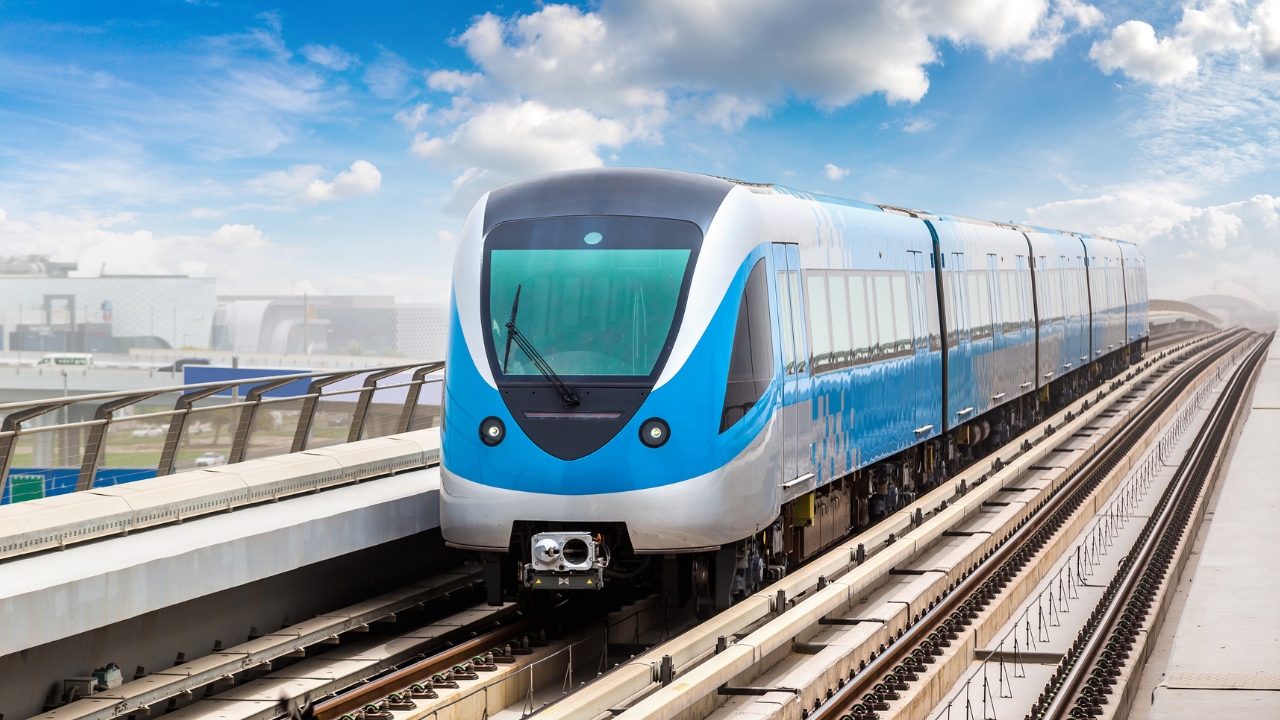
    Pakistan Railways is set to undergo major upgrades to its existing fleet, as the organisation plans to acquire 12 high-speed passenger coaches by June 2025. As per credible reports, the Islamabad Carriage Factory produces these coaches, which can travel at speeds up to 200 km/h.

    The production of such sophisticated technology in Pakistan is being lauded by many, and authorities are attempting to ensure that production efforts continue to be undisturbed. Reports claim that the Minister for Railways, Hanif Abbasi, recently visited the carriage factory to oversee the progress that had been made.

    Hanif Abbasi met with Muhammad Yousuf Leghari, a high-ranking official at the carriage factory, who provided him with a progress report. According to reports, this is the first time high-speed coaches are being manufactured domestically.

    While this spells great news for the manufacturing sector, as Pakistan is moving towards self-reliance, many have pointed out the lack of high-speed trains in the country to which these coaches can be attached.

    In fact, reports suggest that Pakistan’s rail network does not even have high-speed lines and tracks for the most part. As such, some have questioned where these coaches will be deployed by Pakistan Railways.

    The manufacturing process falls under the umbrella of an agreement between Pakistan Railways and CRRC Tangshan of China. Details from the agreement, which was inked in 2021, suggest that both parties were supposed to manufacture 230 passenger coaches for Pakistan.

    Many believe that the most important clause in the agreement was related to a shift in the production process of coaches from China to Pakistan. This $148 million project is reportedly being carried out under the supervision of a team of Chinese service engineers and is slated to pump out another 184 high-speed coaches by 2027.

    The strengthening of domestic manufacturing could allow for Pakistan’s trade gap to narrow significantly. This is because Pakistan will not have to rely on costly imported coaches to enhance its railway network.

    Moreover, domestically produced trains could soon find themselves on the trading block with international bidders as output grows past local coach demand. As per reports, the Islamabad carriage factory alone can produce up to 120 passenger coaches per year.

    This move comes as Pakistan Railways managed to pull in a record 88 billion rupees in revenue in 2024. As per reports, the implementation of widespread upgrades allowed the entity’s revenues to post a 40 percent year-on-year (YoY) growth rate.

  • Power tariff records slight drop as govt revisits IPP agreements

    Power tariff records slight drop as govt revisits IPP agreements

    In an effort to reduce the financial burden faced by the power sector, the federal government has inked several deals with Independent Power Producers (IPPs). According to credible reports, Islamabad has been able to reach agreements with seven IPPs and has attained a tariff reduction of 0.5 rupees per unit.

    While the tariff cut seems measly at first glance, key officials from the power division have estimated that the tariff revisions could result in 920 billion rupees in savings over the life of the IPP agreements. Details from reports suggest that the savings are linked to capacity payments that have to be made to the IPPs.

    However, analysts have outlined how the lifetime savings resulting from the new tariffs pale in comparison to the annual capacity charges that have to be paid to IPPs. Data from reports suggests that the aforementioned capacity charges can run as high as 2.8 trillion rupees in a single year.

    Authorities informed the National Electric Power Regulatory Authority (Nepra) regarding the tariff revision in a public hearing that was set on Monday. This development came about as Islamabad inked agreements with Nishat Power, Nishat Chunian Power, Engro Power, Liberty Power Tech, Narowal Energy and Sapphire Electric.

    Power Division officials were initially questioned regarding the motivations behind IPPs agreeing to reduce tariffs. Reports reveal that some believed that the IPPs were coerced into giving Islamabad to attain lower tariffs.

    However, these allegations were swiftly dismissed by authorities from the power division, who clarified that the IPPs had not signed the agreement under duress. There is merit to this claim, as various IPPs have refused to revise agreements that would favour the general public.

    As per reports, Orient Power refused to lower tariffs and, as such, were not included in the list of IPPs with revised agreements. Nevertheless, Islamabad continues to seek better terms with IPPs that refuse to revise the current agreements.

    Key officials have explained that the tariff cut is directly linked to the sale volume of electricity. If sales rise, grid users may witness a higher cut. The converse is nonetheless true if sales volume drops as the ‘impact’ may be reportedly wiped out.

    However, users of the national grid should not celebrate as the government does not intend to pass on the savings to the general public. As per reports, this is because the International Monetary Fund (IMF) has not allowed Islamabad to pass on the ‘relief’ to users.

  • IMF rejects Pakistan’s request to reduce taxes

    IMF rejects Pakistan’s request to reduce taxes

    The International Monetary Fund (IMF) has decided to reject the Federal Board of Revenue’s (FBR) proposal to slash a plethora of taxes. As per credible reports, authorities from Pakistan had requested for a reduction in taxes pertaining to the sale of tobacco and beverages.

    Moreover, the Pakistani side had also asked the international lender for permission to cut property transaction taxes. However, the IMF has officially rejected this request, given the current state of the economy.

    Previously, authorities had suggested that the international creditor would not oppose the suggested two percent reduction in withholding tax on property buyers. Had this been the case, the volume of property-related transactions could have increased sharply from April 1, 2025 – as formal approval would have been received by this date.

    However, the IMF has ensured that no such approval will be extended to Pakistan. Mahir Binci, The IMF’s Resident Cheif (Pakistan), dispelled rumours surrounding reductions in taxes and assured that the tax collection target will not be subject to any downward revisions.

    Some believe that cash-strapped Pakistan is losing the right to freely exercise its own fiscal policy. While analysts may assert this to be true, Pakistan’s suboptimal macroeconomic situation leaves little room for disagreement with the IMF.

    According to reports, a Staff Level Agreement (SLA) may be reached soon at the conclusion of Pakistan-IMF negotiations. However, the federal government and local authorities will have to guarantee that the country follows the economic roadmap laid out by the IMF.

    Of the aforementioned guarantees, the federal government will have to ensure that provincial governments cease their minimum support price (MSP) purchasing of wheat. Recent reports revealed the IMF’s distaste for such policies given their tendency to strain fiscal budgets – a phenomenon which a country following austerity measures cannot afford.

    While the international lender is imposing stringent restrictions on Islamabad’s use of fiscal policy, reports indicate that the IMF wants to inject even more funds into the economy. The IMF wishes to expand the scope of the existing $7 billion Extended Fund Facility (EFF) program by signing Pakistan onto the Resilience and Sustainability Facility (RSF) program.

    Reports indicate that the RSF program could unlock a whopping $1 billion for Pakistan. Islamabad can mobilise these funds in its fight against climate change by authorising and funding initiatives that boost the country’s resilience to disasters.

  • Hundreds of importers, officials involved in tax evasion scandal: whistleblower

    Hundreds of importers, officials involved in tax evasion scandal: whistleblower

    In its latest crackdown against tax evasion, the Federal Board of Revenue (FBR) has decided to pursue legal action against individuals and entities for tampering with customs declarations. Reports reveal that 463 importers collaborated with officials from both Pakistan Revenue Automation Limited (PRAL) Pakistan Single Window (PSW) to carry out the tax evasion scheme.

    Moreover, 106 clearing agents aided the tampering process which affected more than 2300 customs declarations. According to reports, the operation caused the national exchequer to remain unable to realize approximately 14 billion rupees in revenues.

    Details regarding the case surfaced after a whistleblower documented the manipulation of customs declarations by importers to avoid tax payments. Reports claim that the whistleblower is a former PRAL employee and that his confession helped uncover the fraud that had been going on for close to five years.

    The whistleblower is in hot waters with the law themselves as they face multiple corruption charges. However, some believe that their testimony was crucial to reveal the crime.

    The FBR recently posted a colossal revenue shortfall of 386 billion in the first half of fiscal year 2024-25. Had these importers been filing their taxes lawfully, this shortfall could have been approximately 3.63 percent narrower.

    As per reports, the tax evasion scheme initially began in January 2020 and quickly enveloped a vast array of officials given the amount of money that could be made by defrauding the FBR. Officials helped importers evade taxes by preying on weaknesses that they had identified in the Web-Based One Customs (WeBOC) and PSW systems.

    Under Pakistan’s legal framework, transshipment goods declarations (TGDs) are to be converted to ‘Home Consumption’ GDs at dry ports. However, officials abused the system by altering TGDs by changing the values, quantities and even product classification codes of imported goods to avoid duties on customs.

    Reports claim that the fraud was mainly perpetrated at dry ports with tampered TGDs being a pressing issue in Peshawar (1,671 tampering instances) and Lahore (522 tampering instances). However, the fraud is not limited to the aforementioned cities as the tax evasion scheme enveloped operations in Islamabad, Multan, Sialkot and Quetta.

    While tampering with GDs is a publishable offense under Pakistan’s law, the gains from assisting tax evasion schemes are particularly alluring for public officials – which cause the FBR to face revenue losses. The FBR has directed the Directorate General of Post Clearance to audit declarations and calculate the monetary value of the damage the scheme had on the entity’s revenue stream.

  • Pakistan Railways pulls in record revenue by improving customer service

    Pakistan Railways pulls in record revenue by improving customer service

    Pakistan Railways has managed to pull in a record 88 billion rupees in revenue in 2024. As per reports, the implementation of widespread upgrades allowed the entity’s revenues to post a 40 percent year-on-year (YoY) growth rate.

    Upgrades include the addition of 10 new trains, service upgrades such as dining lounges and premium bathrooms, along with an increase in coach capacity. Moreover, the railway administration has increased daily operations to 100 while simultaneously boosting capacity to 19 coaches per train.

    Railway authorities are focusing on providing improved customer service to boost revenues. Following the new customer-centric approach, the entity has improved its menu, and after introducing new meals, the menu now includes north of 40 food items.

    According to credible reports, changes to the menu have so far been limited to major train lines such as Khyber Mail and Tezgam Express. Many believe that an improvement in food items offered on less popular train lines could boost the demand for those routes, allowing Pakistan railways to realize higher revenues.

    The introduction to state-of-the-art airconditioned bathrooms at Lahore’s railway station is the first of many bathroom upgrades. Reports indicate that the entity plans to incorporate these ‘executive’ washrooms across 13 major stations. The provision of and the commitment to provide these services have generated a positive customer response.

    A recent government performance review revealed that the entity generated a respectable 33 billion rupees in just the first five months of fiscal year (FY) 2024-25. Compared to the corresponding period last year, revenues have grown by an impressive 14 percent.

    The figures for the period from February to December 2024 reveal that Pakistan Railways was able to rake in over 80.5 billion rupees. Reports indicate that a whopping 42.65 billion rupees were made from offering fares and other services to passengers, while freight services were responsible for 27.85 billion rupees in inflows. Data from the review suggests that the entity was able to make an additional 10.04 billion rupees from miscellaneous sources.

    Revenues over the same period in 2023 were low, sitting under 68.5 billion rupees. Operational efficiency has witnessed drastic improvements, too. This is because punctuality rates have reportedly gone from a measly 63 percent in 2019 to a respectable 82 percent.

    Some believe that the digitalisation of certain processes, such as fuel management, has proved to be beneficial for the entity. Data from reports suggests that the digitalisation process, coupled with the transfer of electricity meters to power distribution companies, has resulted in the entity saving a staggering 2.5 billion rupees.

  • Surplus electricity to be used for crypto mining

    Surplus electricity to be used for crypto mining

    The wave of crypto has taken Islamabad by storm as authorities have begun working on initiatives to boost blockchain-based data centres and crypto mining. According to credible reports, Pakistan is gearing up to direct surplus power in the national grid towards crypto mining to develop its infant crypto industry.

    This electricity will be provided to entities running crypto operations at economical prices, allowing for the sector to witness growth. As per reports, the Power Division has discussed the revision of electricity tariffs for the country’s infant industries.

    Relevant stakeholders have been approached to discuss these revisions, as the power division does not intend to offer subsidies to utilise the surplus power in the system. Moreover, authorities want to revise tariffs in such a manner that capacity payments fall considerably.

    Crypto mining operations could significantly reduce the issues Pakistan’s power sector is facing – especially those pertaining to excess power. Data from verified reports reveals that Bitcoin miners dedicate a staggering 60-70 percent of total revenues to pay for the electricity bills that the operation incurs.

    Given Pakistan’s power surplus, both crypto miners and the power sector could benefit from successful collaboration. However, the national grid may not be suitable for miners, given how such operations require a steady supply of power over extended periods.

    Moreover, bitcoin mining at large is an extremely electricity-intensive operation. Reports place the annual electricity consumption of global mining operations at a staggering 130 terawatt-hours (TWH).

    For perspective, the electricity consumption for overall mining operations is so large that it dwarfs even the power consumption of advanced economies – such as the Netherlands. Owing to its electricity-intensive nature, many countries have instated bans on Bitcoin mining to combat local power deficits and rising environmental issues.

    In 2021, China officially cracked down on their domestic bitcoin mining industry by banning the activity altogether. However, with Pakistan embracing the crypto wave and the crackdown other countries have imposed on their cryptosystems, investments could pour in.

    Chinese entities interested in mining could set up in Pakistan, bringing foreign direct investment (FDI) inflows into the country. This spells great news for cash-strapped Pakistan as FDI levels plummeted by 45 percent in February 2025.

    As per reports, the power division remains committed to offering tariffs to ‘emerging’ sectors. However, many believe that crypto operations could fuel capital flight and boost corruption in the country. This is because it is not easy to monitor international money transfers – as the crypto space is highly decentralised and has few regulatory checks in place.

  • Private sector lending records sharp fall

    Private sector lending records sharp fall

    The volume of credit being issued to the primate sector has witnessed a sharp fall as neither banks nor borrowers seem interested in relying on loans to fuel business growth. As per credible reports, this lack of interest persists despite the State Bank of Pakistan’s (SBP) massive 1,000 basis point cut in interest rates, which occurred gradually over seven months.

    Independent analysts have voiced concerns regarding revenue generation and economic growth, as low lending could cause the domestic economy to stagnate. According to reports, both economic growth and revenue have displayed signs of underperformance.

    Data released by the SBP has revealed that private-sector lending dropped to an abysmal 563 billion rupees by March 2025. Comparing these figures to December 2024, this figure stood at a respectable 1.98 trillion rupees.

    A suboptimal level of credit has been issued to the private sector over the past three years. Reports from credible sources have labelled credit growth as ‘extremely poor’ – a fact which is evident upon consideration of the negative impact on growth, which stands at a low 1.7 percent.

    Analysts have compared the abysmally low growth rates to the annual population growth, which dwarfs the economy’s growth rate by 2.4 percent.  An uptick in private sector borrowing levels often results in the expansion of business operations, creating many employment opportunities.

    However, reports claim that the converse is true in Pakistan, and a rise in unemployment levels could soon be witnessed. For Islamabad, this matter is especially alarming as the national average unemployment rate already sits at an uneasy 7.5 percent.

    A further increase in unemployment rates because of low growth rates could exacerbate the persisting economic issues that plague Pakistan. As per a recent report from the United Nations Development Program (UNDP), a staggering 47 percent of Pakistani’s live below the poverty line.

    The federal government intended to target a growth rate of 2.5 to 3 percent for FY 2024-25; however, suboptimal borrowing levels have not allowed the economy to grow per the expectations of economic analysts. 

    Some believe that a further reduction in interest rates by the SBP could allow the economy to rebound; however, the SBP may refrain from further cuts as it has to ensure that inflation does not run rampant as it did in 2023.

  • Petroleum exports almost double after witnessing astronomical rise

    Petroleum exports almost double after witnessing astronomical rise

    Pakistan’s oil import bill has witnessed meagre growth over the first eight months of Fiscal Year (FY) 2024-25. Data from the Pakistan Bureau of Statistics reveals that over the aforementioned period, a 1.2 percent growth was posted by the oil import bill.

    As per credible reports, the oil import bill for the first eight months of FY 2024-25 now rests at $10.71 billion – Up from the previous value of $10.58 billion over the same period last year.

    Historically, Pakistan has been a net importer of petroleum products, with few exports recorded in the commodity. However, Pakistan has exported a vast array of petroleum products during the current FY because of higher crude oil imports into the country.

    Higher imports of the commodity have allowed domestic refineries to scale up and manufacture a higher volume of petroleum-based products. Exports of petroleum products have surged by a staggering 96 percent during the first eight months of the current fiscal year from a conservative $183.33 million to $358.15 million.

    Analysts believe that this surge in exports could assist the economy’s growth as an improvement could be witnessed in Pakistan’s trade balance. For Pakistan, which has historically run large trade deficits, especially with its oil-rich trading partners, this export growth could imply a potential narrowing of the trade deficit in the coming years.

    Compared to the first eight months of the last fiscal year, during which Pakistan recorded no exports of crude petroleum, exports of the commodity have reportedly spiked to a whopping 40,552 tons. Exports of petroleum top naphtha have surged by an astronomical 113.77 percent on a year-on-year basis to settle at their current volume of 44,571 tons.

    Some believe that rising export levels of petroleum products imply that the domestic demand for such products has not kept up with production. According to data from PBS, the output for all 11 petroleum products grew by 2.47 percent compared to last year’s production levels.

    Data shows that domestic production of high-speed diesel (HSD) grew by 6.21 percent. HSD is a major input in Pakistan’s agricultural and transport sectors, and given the agrarian nature of the economy, increasing HSD production implies that the country could move towards self-reliance.

    Furnace oil production posted a growth of 19.74 percent at the start of the second half of FY 2024-25. If domestic refineries continue to operate as they currently are, exports of petroleum products could continue to witness the steady growth they have enjoyed over the past few months.

  • PSX reaches record high as bull run helps benchmark index cross 119,000 points

    PSX reaches record high as bull run helps benchmark index cross 119,000 points

    The Pakistan Stock Exchange (PSX) achieved an all-time high as a bull run allowed the KSE-100, the benchmark index of the PSX, to reach an intraday high of 119,421.81 points. The index peaked at 9:48 AM after which profit taking took hold of the market causing the market to close at a respectable 118,769.77 points.

    For reference, the KSE-100 closed at 117,974 points on Wednesday after which the index recorded a growth of 0.67 percent during trading hours on Thursday allowing for a 795.75 point rise. The market displayed a slowdown around 12:30 PM as the KSE-100 hit its intraday trading low of 118,444.03 points before recording a swift recovery to its current position.

    Most indexes remained in the green with the All-share index (ALLSHR) experiencing a 0.82 percent growth rate which translates into a 600.67 point gain for the index. Unlike the KSE-100, which tracks the performance of the 100 largest and most liquid companies, the ALLSHR index records the performance of all publicly listed companies on the PSX.

    Data from the PSX reveals that ALLSHR index has shot up by a staggering 68.5 percent over just one year with the KSE-100 recording an even greater rise of 80.69 percent over a one year period – a growth rate which many would categorize as nothing short of meteoric. Moreover, the Year-to-Date (YTD) change for ALLSHR and KSE-100 index were recorded improvements, sitting at 2.02 percent and 3.16 percent respectively.

    A vast array of companies witnessed a rise in share prices with Sally Textile Mills Limited (STML) and Jubillee Spinning & Weaving Mills Ltd (JUBS) winning big – to the tune of growth rates that sat at 11.11 percent (STML) and 10.87 percent (JUBS).

    However, not every publicly listed stock witnessed an improvement as many companies witnessed sharp declines. Of these declining companies, the one that fared the worst during intra-day trading was First Capital Securities Corporation (FCSC) which posted a 16.85 percent decline in its position.

    Trading volume of regular stocks stood at an impressive 667,875,803 shares translating into a total value of over 38.5 billion rupees. As per credible reports, the bull run was fueled by strong domestic ‘institutional buying’ along with a possible solution of Pakistan’s power sector’s circular debt in the works.

    Moreover, independent investors also believe that the disbursement of over $1 billion from the International Monetary Fund (IMF) under the Extended Fund Facility (EFF) is on the horizon. Given the aforementioned reasons, investors have parked their funds into stocks as they foresee great returns in the near future.