Author: Ibraheem Sohail

  • Remittances projected to surge by $3.5 billion in March

    Remittances projected to surge by $3.5 billion in March

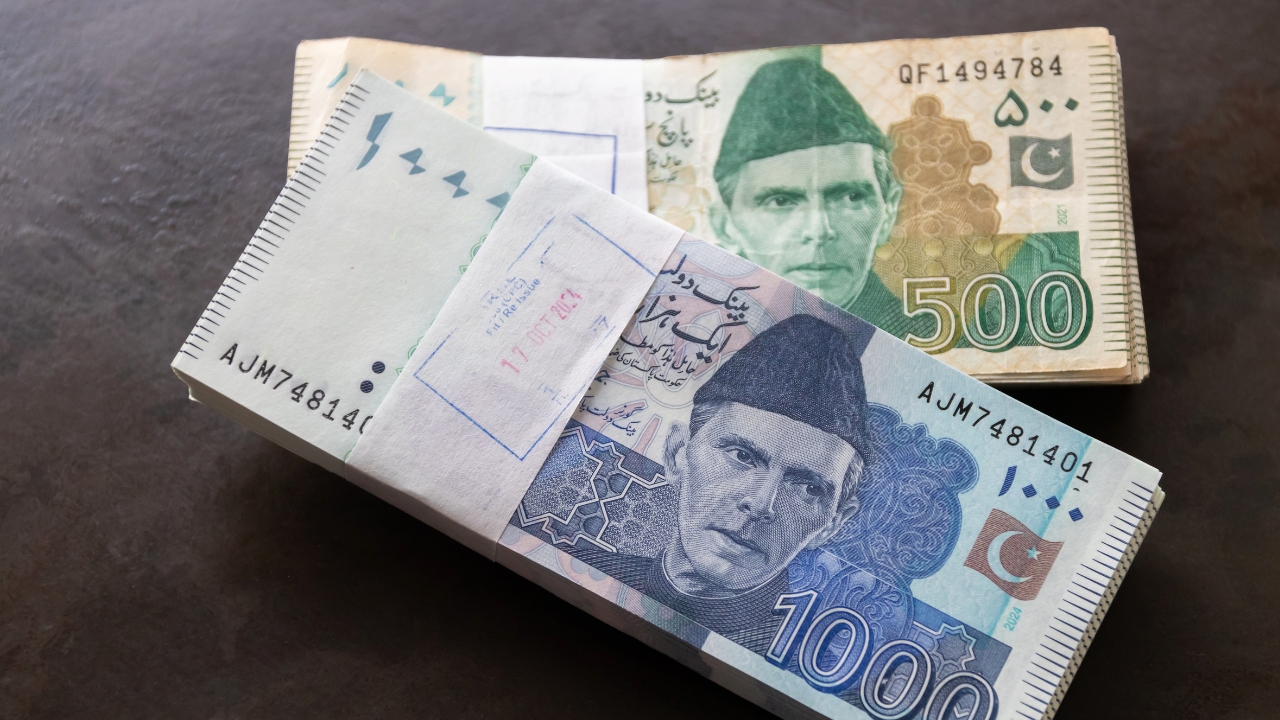
    Pakistan is on track to receive a record high $3.5 billion in remittances in March 2025. According to credible reports, the surge in exports translates into a month-on-month remittance growth of 15 percent, spelling great news for the domestic economy.


    The sudden spike in remittance inflows can be attributed to Ramzan as per currency exchanges and financial analysts. While remittances help augment the disposal income of households and increase their purchasing power, the government stands to benefit too.


    Reports reveal that the federal government has obtained breathing space as the burden of debt obligations denominated in foreign currencies has decreased slightly. This is because the unusually large remittance inflows have lent incredible support to the rupee, allowing for the exchange rate to remain stable.


    In a statement, general secretary of the Exchange Companies Association of Pakistan (ECAP) Zafar Paracha disclosed that ECAP sold a staggering $450 million to banks in March. Contrasting this figure to the corresponding time period last year, Zafar Paracha commented on the improvement in inflows and chalked them up to Ramzan.


    For reference, remittances stood at just $2.95 billion and $2.5 billion in March 2024 and 2023 respectively. On a year-on-year basis, the improvement seems truly meteoric however, comparing March 2025’s remittance projection of $3.5 billion to $3.11 billion in February, reveals that the month-on-month growth rate is more conservative.


    Previously, the federal government was targeting $35 billion in remittances for fiscal year (FY) 2024-25. However, experts claim that actual inflows during the current fiscal year may very well outstrip the initial target.


    Independent analysts and currency dealers believe that remittance inflows during FY 2024-25 could exceed $36 billion. According to reports, inflows have been witnessing robust growth ‘every month’ and have grown by 32.5 percent during the first eight months of FY 2024-25.


    This marks a new record for inflows and this trend could continue into the future. This is because Pakistanis have migrated out of the country in throngs given the country’s poor economic condition.


    Data from reports suggests that Pakistan raked in almost $24 billion from July 2024 to February 2025 marking an increase of approximately $6 billion dollars compared to the same time period from the last fiscal year.


    According to Zafar Paracha, the target has “already been achieved” and that remittance inflows are bound to break records. As usual, the countries responsible for the largest remittance flows during the first eight months of FY 2024-25 were reportedly Saudi Arabia ($5.89 billion) and UAE ($4.85 billion).


  • Pakistan, Bangladesh and Sri Lanka ink tripartite agreement to strengthen capital markets

    Pakistan, Bangladesh and Sri Lanka ink tripartite agreement to strengthen capital markets

    In a bid to enhance regional capital market integration, the national stock exchanges from Pakistan, Bangladesh and Sri Lanka have decided to collectively sign a memorandum of understanding (MoU). 


    The Pakistan Stock Exchange (PSX), Dhaka Stock Exchange (DSE) and Colombo Stock Exchange (CSE) inked this agreement on Thursday in Sri Lanka’s capital city Colombo. As per a press release by the DSE, if concerned parties follow the agreement correctly, it could greatly boost human resource collaboration, investor protection, human resource collaboration, and the development of technology and new products.


    Chairman Akif Saeed of the Securities and Exchange Commission of Pakistan (SECP) attended the signing ceremony along with DSE Chairman Mominul Islam and CSE Chairman Dilshan Wirasekara. Key officials and directors from concerned institutions were reportedly also present at the high profile event to facilitate the process. 


    Reports suggest that knowledge sharing across capital markets will be another byproduct of the agreement. This could result in a vast movement of investment funds between the three nations, allowing for investors to purchase stocks of the publicly listed companies they believe will rise — regardless of which of the three countries the firm calls home. 


    A key official present at the meeting commented on the developments, claiming that the tripartite agreement could allow for the development of ‘strong and efficient capital markets’. This can be achieved via combined investments in technology and experience-sharing. 


    According to reports, Chairman Akif Saeed, accompanied by senior executives from the PSX, held meetings with officials from the DSE and CSE. Aside from official meetings, executives also found other avenues of collaboration. For instance, DSE’s chairman joined a panel discussion regarding the effect of market regulation on the development of capital markets. 


    In an official statement, DSE’s Chairman expressed concerns regarding the small size of the stock exchanges in South Asia which causes them to face serious operational and technological constraints. Barring India’s stock exchange, these challenges that exchanges must face in South Asia hinder markets, holding them back from reaching their ‘full capacity’.


    However, the PSX has been on a tear over the past year. Data from late March 2025 reveals that the ALLSHR (All shares) index has shot up by a staggering 67.77 percent over just one year, with the KSE-100 index recording an even greater annual growth of 78.70 percent – a growth rate that many would categorize as nothing short of meteoric.

  • Pakistan, Malaysia eye stronger economic ties through investments

    Pakistan, Malaysia eye stronger economic ties through investments

    Bilateral Pakistan-Malaysia ties may witness an improvement in the coming months as both parties gear up to explore avenues of collaboration. In a recent Facebook post, Malaysian Prime Minister Datuk Seri Anwar Ibrahim encouraged the inflow of investments from Pakistan into the Southeast Asian country.

    Reports suggest that Anwar Ibrahim engaged in discussions with Prime Minister Shehbaz Sharif. The Malaysian premier believes that Pakistani investors could pour their funds into the agriculture, biomass and petrochemical sectors of the Malaysian economy.

    This might be an attractive prospect for Pakistani businesspersons and investors given how the State Bank of Pakistan has slashed policy rates by a staggering 1,000 basis points over the past few months. Furthermore, political instability, coupled with the rise in terrorist violence, could push domestic investors to pursue ventures in Malaysia.

    As per credible reports, Pakistan’s investments in Malaysia have already surged to approximately $397 million. Anwar Ibrahim’s call for deepening bilateral economic ties could allow for this number to witness a rise.

    Shehbaz Sharif has reassured that Pakistan remains committed to strengthening ties between the two nations. While foreign investments yield great returns for investors, the outflow of funds required for these investments may serve to the detriment of cash-strapped Pakistan.

    Given Pakistan’s low foreign exchange reserves of $10.61 billion, large foreign direct investment (FDI) outflows could exert depreciationary pressures on the rupee by increasing the demand for foreign currencies. Moreover, such outflows may trigger a loss of investor confidence in the wider economy, as the outflows could be seen as a sign of economic weakness.

    This could prompt further capital flight and financial instability in the economy. To clarify, capital flight in this context would refer to the accelerated movement of financial assets from Pakistan to Malaysia.

    Alternatively, if Shehbaz Sharif can navigate further discussions by successfully attracting Malaysian investors to park their funds in Pakistan, the bilateral investment imbalance could shrink. As per reports, Shehbaz Sharif is expected to visit Malaysia in May 2025 and could secure these investments for Pakistan.

    Reports indicate that the Malaysian side has already begun preparations to welcome Shehbaz Sharif’s visit to Kuala Lumpur. Both leaders expect Pakistan-Malaysia economic ties to deepen during Shehbaz Sharif’s visit to the Southeast Asian nation.

    According to reports, Shehbaz Sharif eagerly awaits his trip to Malaysia as his visit could yield beneficial outcomes for Pakistan.

  • Pakistan’s short-term foreign debt climbs to whopping $30.6bn

    Pakistan’s short-term foreign debt climbs to whopping $30.6bn

    Pakistan struggles with its financial woes as obligations on its debt cause fiscal pressures. As per credible reports, short-term debt has climbed to a staggering $30.6 billion in foreign repayments.

    On the other hand, domestic debt has reached a colossal 51 trillion rupees, causing a significant strain on the cash-strapped country’s already strained foreign reserves.

    Data from the State Bank of Pakistan (SBP) has revealed that Pakistan’s total debt continues its upward trend as both domestic and foreign debt show no signs of slowing down. As per reports, Pakistan is set to face repayment obligations which would result in a net outflow of $30.6 billion.

    Concerningly, these obligations are not scheduled over a longer period and, instead, are to be met in the coming months. Given how the SBP holds a meagre $10.6 billion in official foreign reserves, many wonder how Pakistan will avert the looming repayment crisis.

    Pakistan might have to restructure its debt holdings and request for rollovers and better repayment conditions. If lawmakers and authorities can successfully negotiate more favorable conditions, the economy might get some breathing room.

    The federal government has recently been working with commercial banks to restructure its liabilities to tackle the growing circular debt issue. However, the existing debt may be too large to tackle with micro-level restructuring arrangements. 

    According to reports, Islamabad’s domestic debt holdings have surged by a whopping 18.81 percent on a year-on-year (YoY) basis. This caused the government’s debt stock to sit at an uneasy 51.28 trillion rupees by February 2025.

    This marks a stark increase in debt from the same month last year, February 2024, as the government’s debt holdings stood at just 43.17 trillion rupees. This meteoric rise in debt is causing independent analysts to worry about the sustainability of Pakistan’s ever-rising credit demand. 

    On a month-on-month basis, however, the domestic debt value posted a marginal growth rate of 1.49 percent. This indicates a slowdown in borrowing in the short run after the government accumulated a large debt stock over the months leading up to February 2025. 

    While some consider the domestic debt growth to be concerning, the increase in permanent debt is arguably more alarming. Reports suggest that permanent debt has grown by a whopping 25.42 percent on a YoY basis to settle at 39.43 trillion rupees.

    For reference, permanent debt includes prize and federal government bonds. Moreover, floating debt, mainly made up of treasury bills, has also increased to 8.23 trillion.

  • Petrol price slashed by Re1

    Petrol price slashed by Re1

    Islamabad has decided to slash the price of petrol by one rupee per liter for the upcoming fortnight. As per reports, the price of petrol now rests at 254.63 rupees per liter after the cut.

    However, the price of high-speed diesel (HSD) will not change and remains anchored at 258.64 rupees per liter. A notification from the finance division has revealed that the Oil and Gas Regulatory Authority (OGRA) calculated the new consumer prices based on price fluctuations in the international market.

    At the previous price revision consideration on March 15, the federal government decided to not decrease the prices of petroleum products. Instead of passing on relief to the domestic consumers, the government decided to levy an additional 10 rupees per liter petroleum tax.

    This marks the second consecutive period during which the price of HSD has remained unchanged. During Ogra’s price revaluations during the previous fortnight, the price of kerosene oil stood at 168.12 rupees per liter, while the price of light diesel oil sat at a more conservative 153.34 rupees per liter.

    According to credible reports, this price notification was released after the Prime Minister’s (PM) office revealed that Shehbaz Sharif intended not to slash petroleum prices despite a drop in the price of commodities in the international market. Brent crude oil futures prices dropped by 0.22 percent over the past month. However, Brent prices have started a rally over the past three weeks – reportedly because of the USA’s sanctions on Venezuela and Iran.

    Given the change in international prices, Ogra and the petroleum division had estimated that a cut of 13 rupees per liter was possible to provide relief to petroleum consumers. However, lawmakers and key government officials decided to transfer this relief to electricity users instead.

    Previously, Islamabad would charge a tax of approximately 76 rupees per litre on both HSD and petrol. The bulk of this tax is comprised of the petroleum development levy (PDL), which used to sit at 60 rupees per litre, whereas the other charge of 16 rupees goes towards customs duty.

    As per the petroleum division, the PDL on High octane blending component has been increased by 20 rupees per liter, causing it to rest at a staggering 70 rupees per liter.

    The government has also hiked the PDL on petrol and HSD by 10 rupees for retail sales, after which the levy rests at 70 rupees per litre for both commodities. However, reports suggest that direct sales are incurring a larger PDL of 78.64 rupees per liter.

    Pakistan does not charge consumers any general sales tax (GST) on petroleum products. However, fuel suppliers and distributors tack on an additional Rs17 per litre as markup.

  • Gold soars to record high of Rs321,000 per tola

    Gold soars to record high of Rs321,000 per tola

    Owing to international factors, domestic gold rates have reached an all-time high, trading at Rs275,205 per 10 grams and Rs321,000 per tola.

    According to data, the current rate of one tola of gold indicates a Rs3,200 rise from its previous value in a single day. Reports suggest that the sudden uptick in prices is linked to the imposition of additional tariffs by United States (US) President Donald Trump on imported goods.

    Aside from Trump’s 25 percent tariff on imported vehicles, geo-political tensions have also been creeping up, causing the price of the commodity to surge by $31 in the international market with prices now resting close to $3,052 per ounce.

    While rising gold prices spell great news for those with large quantities of the commodity, the same cannot be said for domestic gold traders. This is because local traders have witnessed a substantial fall in sales volume as the price of gold has surged beyond the general public’s reach.

    The drop in affordability has caused local traders to worry as they believe a sizable volume of the commodity is still being exchanged but only because of independent speculators and investors. However, independent analysts believe that this might not be the case as there are significant issues that come with owning gold.

    According to a senior official from a reputable investment company, investing in gold comes with problems linked to the verification, transfer and physical custody of the commodity. As such, analysts believe that a majority of Pakistanis have not fully embraced the gold wave and prefer to park their funds elsewhere – in more conventional areas such as real estate, mutual funds, banks and national savings schemes.

    Moreover, the general public also has a tendency to lean towards purchasing foreign currency instead of gold to protect their savings as foreign currencies are a safe hedge against inflation and other uncertainties that arise because of macroeconomic instability.

    Domestic prices are set by the All Pakistan Sarafa Gems and Jewellers Association (APSGJA), which also considers interbank rates. However, these rates have reportedly not changed much over the past year, implying that the brunt of the price change is mostly because of international factors.

    As per the chairman of APSGJA, gold sales surge before Eidul Fitr; however, in the days leading up to Eid, sales have plummeted to a historic low.

  • Authorities uncover multi-million rupee tax evasion scheme by ‘fake company’

    Authorities uncover multi-million rupee tax evasion scheme by ‘fake company’

    The Directorate of Customs Post-Clearance Audit (PCA) South has discovered tax evasion amounting to millions of rupees through a fraudulent company, leading to the registration of legal proceedings against Suleman Industries.

    The investigation of business operations at the company (Suleman Industries) led Director of Customs PCA South Shiraz Ahmed to detect unusual activities.

    According to reports, PCA DG Dr Zulfiqar Ali Chaudhry ordered the investigation of the company’s manufacturing status – which some suspected the company was misusing. The audit team discovered multiple inconsistencies when examining the available records from Income, sales and customs tax departments.

    Authorities launched a ground inspection which showed that the company’s address contained no manufacturing equipment as it did not possess the necessary facilities for production. Reports claim that Suleman industries exploited its manufacturing status to obtain tax exemptions and concessional tax rates even though it did not meet the requirements for these benefits.

    The onsite investigation team showed that the company was providing imported embroidery machines to the domestic market, among other items, at lower tax rates. Reports say that officials first suspected foul play when they realised that the volume of imports did not match the financial capacity of the company. Authorities believed that the firm was possibly involved in money laundering given the suspicious nature of the transactions.

    Reports reveal that the company was found to be illegally funding imports and evading taxes through the import of embroidery machinery. The firm under investigation was able to successfully procure 2.4 billion rupees worth of goods and its tax evasion tactics resulted in the national exchequer failing to realise over 217 million rupees in revenue.

    According to the firm’s own records, manufacturing operations were not being conducted at the address listed in their documents. Investigations revealed that the company rented units to make it seem as if manufacturing was taking place.

    However, site locations were not equipped with embroidery equipment and electricity records from the recent past confirmed that no manufacturing operations took place there.

    The PCA South filed a Customs Act, 1969 case against the bogus entity which may also face the Anti-Money Laundering Act, 2010 – which concerns trade-related financial crime.

    Special teams at PCA continue their active investigation of the matter according to Shiraz Ahmed while striving to prosecute every offender. Authorities are actively on the lookout for Syed Suleman Jafri and his business associates who own PCA.

  • Govt obtains Rs1.67 trillion through treasury bill auctions

    Govt obtains Rs1.67 trillion through treasury bill auctions

    The most recent treasury bill auctions have allowed the government to obtain 1.67 trillion rupees from private banks and other institutions. As per reports, a staggering Rs1.67 trillion was secured from Pakistan Investment Bonds (PIBs) and Market Treasury Bills (MTBs) auctions that the State Bank of Pakistan (SBP) conducted on Wednesday.

    For reference, treasury Bills are issued by the SBP on behalf of the government to raise funds. They are sold at a discounted price and generate a return when the government repays the full face value at maturity to the investor. For instance, if an investor buys a bill for 95 rupees, they receive 100 rupees at maturity, with the five-rupee difference being their profit.

    The total submitted bids for the PIB auction reached a respectable 1,132.5 billion rupees, leading to an accepted bid value of Rs980.505 billion – which comprised competitive bids of Rs972 billion and non-competitive bids valued at Rs8.505 billion.

    However, the two-year PIBs received no accepted bids in this round, while the five-year investment tenor managed to rake in Rs 16.903 billion at a cut-off rate of 96.8291. The auction leader was the 10-year PIB, which pulled in Rs 963.602 billion at the cut-off price of 92.6071.

    Some believe that the reason behind investors choosing longer investment periods is the belief that interest rates will plummet even further, causing investors to prefer locking their funds in at current rates. Alternatively, a rise in investor confidence and the belief that the economy is stabilizing could have caused 10-year PIBs to attract such large investment amounts.

    Conversely, concerns regarding the drop in interest rates seem to result in investors favouring short-run investments over locking funds over the medium run. Expectations of further interest rate cuts could be the reason behind this phenomenon as investors believe that interest rates will drop even lower in the coming months.

    The State Bank of Pakistan received 1,084.95 billion rupees in MTB bids but chose to accept 689.768 billion rupees, which included 609.95 billion rupees from competitive processes and 29.818 billion rupees from non-competitive processes. The highest cut-off yield of 12.3898 percent appeared in the one-month MTBs, with 12-month MTBs receiving 12.01 percent and three-month MTBs finishing at 11.9999 percent.

    Reports substantiate the aforementioned hypothesis as short-to medium-term tenors received stable investor sentiment, according to the measured weighted average yields that spanned between 11.8256 percent and 12.2483 percent.

    As per reports, the banking sector demonstrates its dependency on government borrowing through its high demand for longer-dated PIBs, according to the recent results. This is not a new phenomenon as advance deposit ratios (ADR) have remained suboptimal in recent years – as banks remain hesitant to extend credit to the private sector.

  • Govt to provide power relief to consumers

    Govt to provide power relief to consumers

    The federal government has decided to partially alleviate financial strains on households that high power bills were causing. Despite initial hesitations to revise tariffs, the IMF allowed lawmakers to cut tariffs by 1 rupee per kilowatt-hour (kwh) for consumers. Reports claim that the slash in tariffs will be sustained by diverting revenues generated from levies on captive power plants.

    The international lender’s greenlight to pass relief to the general public could allow for households to collectively witness savings of PKR100 billion. While the government collects sizable revenue inflows from taxes on CPPs, authorities still intend to find other avenues to boost both fiscal budget and household savings.

    As per credible reports, Islamabad has recently renegotiated the terms of its agreements with several Independent Power Producers (IPPs) allowing for a great deal of savings.

    The federal government was able to secure better deals with IPPs largely because of the change in global oil prices. Islamabad managed to reach agreements with seven IPPs earlier this week and attained a tariff reduction of 0.5 rupees per unit.

    While the tariff cut seems measly at first glance, key officials from the power division have estimated that the tariff revisions could result in 920 billion rupees in savings over the life of the IPP agreements. Details from reports suggest that the savings are linked to capacity payments that have to be made to the IPPs.

    Moreover, reports have revealed that a PM Office announcement earlier this month declared that petroleum prices would remain unchanged despite the existence of an opportunity to slash prices of the commodity by 13 rupees per liter.

    Previously, the IMF had instructed the government to not pass on power relief to the general public and instead, was tasked with collecting this amount to consolidate Pakistan’s fiscal position. Moreover, after reaching a staff-level agreement with the international lender, Islamabad had decided to effectively disregard the IMF’s cautionary advice and slashed tariffs.

    However, the IMF has approved revisions to the tariff and the government can enact the cut without backlash from the international lender.

    While the magnitude of the tariff cut remains unknown, initial estimates quoted in reports suggest that the general public could soon receive good news. This is because the tariff cut that has been approved by the cabinet is expected to be substantial and will be announced by Prime Minister Shehbaz Sharif in the coming days.

    Reports claim that Shehbaz Sharif deliberately delayed the announcement of tariff cuts to not get in hot water with the visiting IMF delegation. This is because if the international creditor believed that Pakistani authorities were not committed to following austerity measures, an agreement may not have been reached during Islamabad-IMF discussions.

    Initially, Shehbaz Sharif was supposed to announce the reduction in tariffs in a speech on March 23 but, he was unable to do so given the ongoing negotiations with the IMF.

    Many believe that the tariff cuts will free up purchasing power of households which they can allocate towards other expenditures. This could allow businesses to experience a surge in sales volume and boost profit margins.

  • Bull run at PSX as IMF nod adds to investor confidence

    Bull run at PSX as IMF nod adds to investor confidence

    The Pakistan Stock Exchange has recorded a respectable bull run as the benchmark index of the exchange, the KSE-100, posted a 1300-point improvement at its intraday trading peak. As per credible reports, the International Monetary Fund’s (IMF) staff-level agreement, set to disburse $2.3 billion to Pakistan, has been the reason for the surge in market optimism.

    The KSE-100 index hit an intraday high of 118,220.88 points at approximately 9:20 AM, after which profit-taking took hold of the market, causing the market to decline slightly but still close out at a respectable 117,772.31 points.

    For reference, the KSE-100 closed at 116,633.16 points on Tuesday, after which the index recorded a growth of 0.98 percent during trading hours on Wednesday, allowing for a 1,139.15-point rise. The market displayed a significant slowdown around 10:51 AM as the KSE-100 hit its intraday trading low of 117,178.23 points before recording a swift recovery to its current position.

    Every single index remained in the green, with the All-share index (ALLSHR) experiencing a 1.05 percent growth rate, which translates into a 761.71 point gain for the index. Unlike the KSE-100, which tracks the performance of the 100 largest and most liquid companies, the ALLSHR index records the performance of all publicly listed companies on the PSX.

    The PSX has displayed great average returns for its investors over the past year and with the staff-level agreement reaching its conclusion, regarding the second disbursement of the Extended Fund Facility (EFF) program, indexes on the exchange continue to climb.

    Data from the PSX reveals that the ALLSHR index has shot up by a staggering 67.77 percent over just one year, with the KSE-100 recording an even greater rise of 78.70 percent over one year – a growth rate that many would categorize as nothing short of meteoric. Moreover, the Year-to-Date (YTD) change for the ALLSHR and KSE-100 index recorded improvements, sitting at 1.55 percent and 2.30 percent, respectively.

    A vast array of companies witnessed a rise in share prices. However, reports suggest that a large volume of buying was seen in the automobile, banking, cement, chemicals, oil and gas exploration and power generation sectors. Mughal Iron Steel Industries Limited (MUGHALR2) and Security Investment Bank Limited (SIBL) won big during trading hours – to the tune of growth rates that sat at 49.75 percent (MUGHALR2) and 11.12 percent (SIBL). 


    However, not every publicly listed stock witnessed an improvement, as many companies have seen sharp declines. Of these declining companies, the one that fared the worst during intraday trading was Paramount Spinning Mills Limited (PASM), which posted a 12.03 percent decline in its position.

    The trading volume of regular stocks stood at an impressive 356,729,109 shares, translating into a total value of approximately 37.5 billion rupees. According to reports, the government has approval for the first review of the EFF program and requires only the IMF’s executive board’s approval. Some believe that the PSX will notice further improvements upon final approval by the IMF, which will unlock $2 billion for cash-strapped Pakistan.