Author: Ibraheem Sohail

  • Bilateral ties to witness boost after Pak-Saudi talks

    Bilateral ties to witness boost after Pak-Saudi talks

    In a bid to strengthen bilateral ties, a high-level delegation from Pakistan met with key officials from the Kingdom of Saudi Arabia (KSA). As per credible reports, both sides have agreed to stay committed to improving joint efforts to address regional challenges.

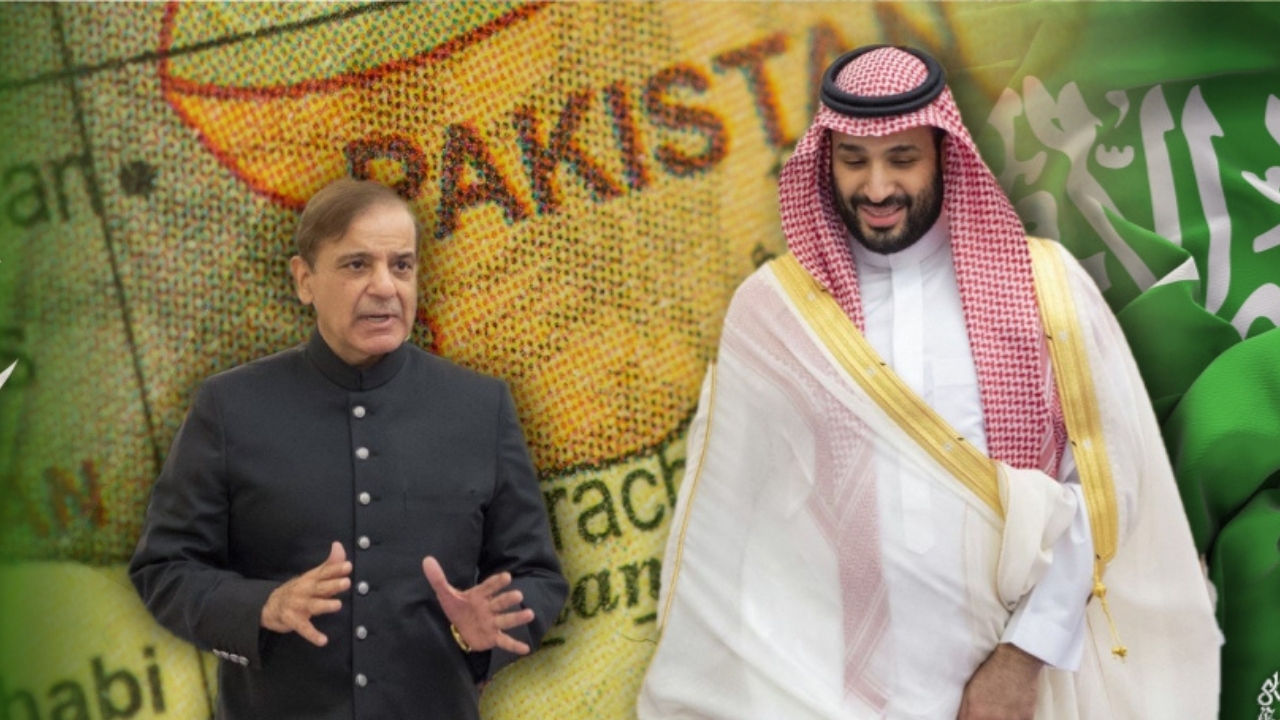
    Leading the Pakistani delegation, Prime Minister (PM) Shehbaz Sharif landed in Jeddah for a four-day visit to KSA. According to reports, he intends to discuss further avenues of collaboration with his Saudi counterparts across a vast range of sectors.

    As per reports, the Pakistani delegation comprises various high-profile members including Chief of Army Staff General Asim Munir, Deputy Prime Minister and Foreign Minister Ishaq Dar, Chief Minister of Punjab Maryam Nawaz, along with a slew of federal ministers and notable high-ranking state officials.

    In a meeting with KSA’s Crown Prince Mohammed bin Salman (MBS), Shehbaz Sharif outlined the cooperation between both countries while highlighting the importance of economic ties. The Pakistani premier, in a post on X (formerly Twitter), discussed the successful nature of his meeting with MBS and revealed that both leaders had gone over ways to improve security collaboration and boost trade and investment levels.

    Shehbaz Sharif’s statements regarding boosting ties with the Middle Eastern kingdom represent the gravitational pull KSA has on Pakistan’s economy. According to reports, PM Sharif aims to take Pakistan-KSA “relations to new heights and transform them into a mutually beneficial economic partnership.”

    Aside from sharing a common religion, both countries are largely on the same page when it comes to matters pertaining to geopolitics and military coordination. However, this codependence isn’t just limited to economic cooperation, as both sides have interests vested in the other’s economy.

    Analysts believe that Pakistan-KSA ties have disproportionately benefitted cash-strapped Pakistan – which frequently finds itself on the receiving end of Saudi aid. Moreover, Pakistan has historically sourced a great deal of petroleum from the Middle Eastern country, allowing for a steady supply of fuel in the country.

    In exchange, Pakistan has worked with KSA on joint military ventures. Both leaders have outlined the need to concentrate on enhancing bilateral trade and investment. This spells great news for Pakistan, which witnessed its foreign direct investment (FDI) levels plummet by a staggering 45 percent in February 2025.

    In an effort to boost inflows of FDI into Pakistan, Shehbaz Sharif outlined Pakistan’s investment-friendly climate and policies, which would facilitate investors from the KSA. Reports reveal that Pakistan’s delegation invited Saudi businesspersons to consider investing in Pakistani initiatives under the Special Investment Facilitation Council (SIFC).

  • PIA’s second privatization attempt underway as govt moves to offload shares

    PIA’s second privatization attempt underway as govt moves to offload shares

    In an attempt to sell off loss-making State Owned Enterprises (SOEs), the board of the Privatisation Commission has advocated for authorities to pursue selling off most of the government’s shares in Pakistan International Airlines (PIA). As per credible reports officials are also exploring a partial sale of the SOE as opposed to privatising it entirely.

    As per a press statement, Muhammad Ali, the advisor to the Prime Minister on matters pertaining to privatisation, has reportedly suggested the Cabinet Committe on Privatisation, to sell off 51 to 100 percent of PIA’s equity that is currently held by the federal government. If the committee acts on Muhammad Ali’s advice, Islamabad will lose managerial control over the company.

    However, the decision on the amount of equity the government is willing to give up will be decided after key officials and authorities engage with potential investors. The government recently attempted to privatise the national carrier which remained unsuccessful as many of the six chosen parties were hesitant to partner with the government due to its excessive control over decisions. 

    If the government can successfully negotiate the sale of over 50 percent of the company, reservations regarding the government making decisions will dissipate – as private entities will gain decision making power. These reservations hold merit as officials running the national carrier, arguably, have a bad track record when decision making is concerned. The bloated workforce is one of the many administrative inefficiencies PIA faces. 

    However, privatising PIA has become a matter of great urgency in the past few weeks. As per credible reports, Islamabad has to privatise PIA to appease the International Monetary Fund (IMF) as the government has made assurances to the international creditor that it will sell off the airline by July 2025. 

    While the general public has historically been against privatisation of PIA, it could relieve significant pressures on the national exchequer. Since PIA is owned by the government, any losses that the company incurs has to be borne by the government. These costs are ultimately borne by taxpayers who have to finance PIA’s losses to keep it operational.

    However, many believe that the government may have to sell the company without the liabilities that the company has accrued over time. While this may attract more buyers, it could result in tax payers being stuck with a 45 billion rupee charge – an amount that could take years to pay off.

  • World Bank approves $102 million for microfinance project

    World Bank approves $102 million for microfinance project

    In a bid to improve and foster resilience in Pakistan’s microcredit schemes, the World Bank (WB) has authorised Islamabad to receive $102 million in financing. As per credible reports, the international lender has approved the loan to insulate the microfinance sector from climate shocks.

    The WB’s delegation to Islamabad revealed in a news release that the aforementioned financing would fall under the umbrella of the Resilient and Accessible Microfinance (RAM) project. This spells great news for cash-strapped Pakistan as these funds may allow the country to equip itself to face its chronic climate issues.

    A team from the WB recently went over possible reforms that could help revitalise Pakistan’s economy. According to reports, the WB team outlined possible venues for privatisation along with the willingness to extend financial assistance to approximately $20 billion.

    The WB’s country director for Pakistan, Najy Benhassine, claimed that microfinance was a key financial instrument that could help economically vulnerable households in the country. As per reports, he outlined the need for microfinance in Pakistan’s rural areas, highlighting how the provision of such services could boost the sector’s resilience.

    There is merit to this claim as expanding the user base would allow for more individuals to rely on the microfinance sector – effectively entrenching itself in the economy as a vital service. Najy announced how the RAM project was just part of the wider 10-year Country Partnership Framework (CPF).

    If the project is implemented as per the roadmap laid out by the WB, approximately 1.89 million Pakistanis will benefit from improved microfinance coverage. As per reports, 1 million of the 1.89 million Pakistanis will be women – particularly those residing in rural areas with low income.

    Moreover, the WB’s project could also benefit approximately 350,000 young people who are in financially vulnerable positions. Reports claim that coverage will improve as, under the project, microfinance entities are subject to receive financial assistance along with aid to guarantee that these entities do not fail when severe climate emergencies result in financial issues.

    The project could significantly assist small businesses in areas struck by calamities, and ‘recovery loans’ are to be issued to stabilise businesses struck by a disaster. Moreover, small farmers may also be eligible to receive financial assistance under the program.

    According to reports, the framework was developed in light of the widespread destruction of the floods that caught the country off-guard in 2022.

  • Govt discusses $20 billion partnership framework with World Bank

    Govt discusses $20 billion partnership framework with World Bank

    Executives from the World Bank (WB) met with Finance Minister Muhammad Aurangzeb to go over the cash-strapped economy’s growth targets. As per credible reports, the international lender also discussed the $20 billion fiscal program under the Country Partnership Framework (CPF).

    The Ministry of Finance (MoF) issued a press release which outlined how the CPF will attempt to eradicate issues in Pakistan’s health and education sectors. Moreover, the framework will also consider other key development factors, namely climate resilience and long-term sustainable growth.

    According to reports, high-ranking officials from the MoF and the Federal Board of Revenue were also present in the meeting. The meeting was called to go over the WB’s upcoming investments in the country’s economic reforms.

    The WB’s team reportedly shared their progress regarding the National Growth and Fiscal Program (NGFP), which outlined multiple strategies Islamabad can take. These strategies could help Pakistan mobilise revenue, improve the efficiency of services and promote both sustainable and inclusive growth in the economy.

    Reports reveal the WB intends to foster an environment that is conducive to business growth, and to create such an environment by assisting Pakistan in implementing progressive reforms.

    Moreover, analysts have outlined that the WB aims to guarantee that state resources are utilized effectively to promote ‘inclusive development’. During the meeting, the WB’s team informed Muhammad Aurangzeb of various policy proposals that they had analysed.

    He highlighted how the federal government was committed to following an ‘integrated approach’ to trade, fiscal and private sector reforms. Moreover, he stressed how both provincial and federal bodies must collaborate to ensure that the economy moves in the right direction.

    Muhammad Aurangzeb reportedly announced that the country needed performance and outcome-based reforms – to account for issues pertaining to human development and the economy.

    He cited the National Fiscal Pact, going over the need to follow a country-wide approach to ensure macroeconomic stability in the coming periods. According to Aurangzeb, a unified strategy under which federal, provincial and municipal governments work collaboratively would allow Pakistan to enjoy sustained macroeconomic growth.

    Reports reveal that the meeting ended with a shared understanding of the roadmap Pakistan needs to follow to improve the economy. Both Islamabad and the WB remain committed to collaborating to pass progressive economic reforms in the country.

  • Foreign direct investment plummets by 45 percent in Feb

    Foreign direct investment plummets by 45 percent in Feb

    The State Bank of Pakistan (SBP) has revealed that year-on-year (YoY) foreign direct investment (FDI) fell by a staggering 45 percent in February 2025. As per reports, this led to Pakistan attracting just $95 million in FDI.

    Independent analysts suggest that Pakistan’s inability to attract FDI is linked to the rising levels of terrorism and political instability. However, while FDI might have fallen in February 2025, a longer snapshot of the situation portrays a more optimistic picture for Pakistan.

    This is because, over the first eight months of the fiscal year (FY) 2024-25, FDI has grown by 41 percent to rest comfortably at $1.618 billion. Compared to the corresponding period last year, Pakistan was only able to attract investments that amounted to $1.147 billion.

    However, with incidents of terrorist attacks ballooning across the country, many believe that foreign investors may reconsider parking their funds in Pakistani businesses. Data from the South Asian Terrorism Portal (SATP) reveals that in 2024, a staggering 790 incidents of killing were recorded – a level of violence not seen in the country for approximately a decade.

    In the first two and a half months of 2025, these incidents jumped to 191, which means that if terrorist operatives continue uninterrupted, Pakistan is on track to see more violence than it has since 2014. This fact does not sit well with potential stakeholders in the economy, causing them to seek out safer destinations for their investments.

    According to credible reports, financial experts have outlined how Pakistan’s FDI inflows lag far behind those of neighbouring countries in South Asia. This is primarily linked to the aforementioned issues the government is grappling with: Terrorism and political instability.

    These issues have also resulted in Pakistan remaining unable to sell off its loss-making publicly owned enterprises as foreign investors fear they will not be able to recoup their initial investments, let alone generate profits. As such, state-owned enterprises (SOEs), for example, Pakistan International Airlines (PIA), have not been able to find any potential buyers.

    However, the federal government is attempting to increase foreign investment levels by taking a hard stance against terrorist operatives that are hurting the country’s international outlook. Islamabad intends to show potential investors that Pakistan is a safe place to invest, with a plethora of lucrative investment opportunities available.

    Despite the challenges, China has remained by Pakistan’s side, pouring approximately $662 million of the $1.6 billion that cash-strapped Pakistan has been able to attract in FDIs during the first eight months of FY 2024-25.

    The United Kingdom’s contribution for the aforementioned period stands at $167 million, followed closely by Hong Kong and the United States’ contributions at $160 million and $68 million, respectively.

  • National Highway Authority incurs shocking losses

    National Highway Authority incurs shocking losses

    The National Highway Authority (NHA) has incurred a loss of 318 billion rupees for fiscal year (FY) 2024-25, causing the entity’s net deficit to grow. Data from credible reports reveals that NHA’s aggregate losses have surged past 1.82 trillion rupees.

    The authority’s annual revenues in comparison sit at a measly 54.15 billion rupees. The magnitude of the deficit is such that the entity would need to redirect the entirety of its revenue stream, for approximately 34 years, towards the deficit for it to neutralize.

    According to reports, the NHA has racked up loans amounting to 3.1 trillion rupees causing financial strain. However, the NHA authority possess assets valued at a whopping 5.8 trillion rupees – indicating that total assets stand higher than total liabilities.

    Analysts have outlined that the NHA’s total asset position has been deteriorating over the last two years however as the entity held assets worth 5.9 trillion rupees and 5.84 rupees in 2022 and 2023 respectively.


    According to a statement from Communications Minister Abdul Aleem Khan to the National Assembly, NHA’s budget deficit has fallen to 318 billion rupees from its previous high of 413 billion rupees. This translates into a drop of 23 percent indicating an improvement in the entity’s deficit.

    However, the deficit value is twice that of the one recorded in 2022 causing many to highlight how this drop can be attributed to the ‘base effect’. The base effect refers to the phenomena of a drop being reported because the initial value was extremely low.

    In the written statement, Abdul Aleem Khan outlined Islamabad’s provision of annual ‘development funds’ under the Public Sector Development Program (PSDP) at a ‘markup rate’. If the NHA can utilize these funds to establish projects that can boost revenues, the deficit might get narrower over time.


    However, the aforementioned funds are one of the reasons for the large deficit that the NHA faces. According to reports, finance costs on PSDP loans are responsible for the deficit among the slew of other factors.

    These factors include asset depreciation, interest payments and exchange losses on foreign loans. Moreover, Abdul Aleem Khan pointed out how the net deficit ‘reflects the impact of non-cash expenditures’ suggesting that the entity is not facing these outflows in real terms – instead, the outflows can be considered to be ‘accounting adjustments’.

    A unit from the Ministry of Finance (MoF) has taken note of the NHA’s rising debt burden and is going over issues pertaining to the entity’s documentation of finances. If left unchecked, the NHA could continue to run massive deficits, leaving the national exchequer to bear the burden.

  • Suzuki decides to discontinue WagonR

    Suzuki decides to discontinue WagonR

    Pak Suzuki Motor Company (PSMC) has decided to discontinue WagonR and Ravi – two of its most popular car variants. As per credible reports, the company intends to halt the production of the aforementioned cars by June 2025. 

    Prior to the current suspension order, the company discontinued Bolan and Mehran in 2024 and 2019, respectively, to modernise their fleet. Vendors have revealed the official schedule for WagonR and Ravi, indicating that the production for both cars is slated to drop to zero by the start of the fiscal year (FY) 2025-26.

    However, analysts claim that the company has made this move despite the strong consumer demand for Ravi. According to reports, the demand for Bolan was high too at the time of its discontinuation – indicating Suzuki’s commitment to modernisation as opposed to pure profit maximization.

    While Ravi has its substitute in the form of the ‘Every’ pick-up, vendors have outlined how no alternative has been offered to WagonR by the company. In October 2024, Suzuki started producing Every, which was the same month Bolan was discontinued. This provided consumers the opportunity to switch seamlessly to their other product line.

    Until Pak Suzuki offers a substitute, some believe that domestic consumers may gravitate towards purchasing imported WagonRs. Boasting greater fuel economies and features, imported vehicles have been offering greater competition to local automotive manufacturers and assemblers alike.

    Pak Suzuki’s motivation behind the shelving of older variants of their vehicles could signal their intention to introduce a newer model of the variant. Reports indicate, however, that this move may spell bad news for several small to medium-sized dealers.

    This is because converting potential consumers to customers may prove to be a tough task with new vehicles, especially while the market is facing rising competition.

    However, the company’s ‘monopoly’ in the market is unlikely to disappear as the Suzuki models have the largest number of domestic spare parts manufacturers. The availability and price of spare parts in the market are key factors which potential buyers of automobiles consider before inking purchase agreements.

    As per reports, the company has sold a sizable number of both variants over the years, with WagonR’s peak production recorded in 2019 at 33,173 units. Ravi’s production peaked in 2016 when the company reportedly assembled 29,825 units of the vehicle.

    Many believe that the company should launch an alternative to WagonR before competitors, both domestic and foreign, attempt to capture Suzuki’s market share in the hatchback space.

  • Haleon Pakistan ships off first batch of Centrum to Kenya

    Haleon Pakistan ships off first batch of Centrum to Kenya

    Pakistan’s pharmaceutical sector has expanded into the international market as a pharmaceutical company has exported Centrum to Kenya. As per reports, Haleon Pakistan (formerly GlaxoSmithKline Consumer Healthcare Pakistan Limited) manufactured the renowned multivitamin product Centrum at its Jamshoro facility before shipping off their product to the African Nation.

    Haleon Pakistan informed the market about the development by sharing the news of the export order via a notice to the Pakistan Stock Exchange (PSX). As per the notice, the company expressed great pleasure in its first ever export of the multivitamin.

    This spells great news for cash-strapped Pakistan as rising export revenues could help bridge the gap in the trade deficit. For Pakistan, which has historically ran large deficits with its trading partners, a boost in pharmaceutical dispatches could help the economy.

    Moreover, the export order could open up new revenue streams for Pakistan if additional countries start purchasing domestically manufactured pharmaceutical products. Kenya’s import order embodies the faith that the international market has in locally produced pharmaceutical goods.

    The company’s notice to the PSX discussed the prospect of expansion of export operations in 2025. Displaying patriotic sentiments, the notice outlined the company’s willingness to operate and to “support the economy of Pakistan”.

    Recently, exporters have been engaging in tax evasion which has resulted in large amounts of income remaining unrealized for the national exchequer. Many export based companies frequently misrepresent data surrounding their transactions in an attempt to avoid paying taxes.

    However, some commend Haleon’s commitment to operating within the country despite the tough business environment. The company appreciated the role that officials from the Special Investment Facilitation Council (SIFC) played to secure the achievement.

    Haleon Pakistan, a subsidiary of Haleon Netherlands B.V, was initially listed on the PSX in late March 2015. The company specializes in the commercial provision of pharmaceutical goods that cater to over-the-counter consumer healthcare.

    Aside from manufacturing operations, the company also invests heavily into its marketing initiatives to boost sales and increase shareholder value. With the company securing lucrative export contracts, some believe that private investors may begin to pour funds into the company.

    While Pakistan’s pharmaceutical industry remains underdeveloped, recent developments suggest that the sector may be on the right track. As per credible reports, Citi Pharma Limited (CPHL) fulfilled its first export order to the Middle East and North Africa (MENA) region – which brought in over half a million Euros into Pakistan.

  • Govt launches Pakistan Crypto Council to foster crypto-based innovations

    Govt launches Pakistan Crypto Council to foster crypto-based innovations

    In an attempt to jump on the global trend of crypto adoption by major powers, Islamabad has launched the Pakistan Crypto Council (PCC). According to credible reports, the government intends to integrate blockchain technology into Pakistan’s financial landscape to regulate digital asset holdings.

    A press release from the Finance division revealed that the PCC has full support from the federal government. Moreover, the newly formed council intends to foster crypto-based innovations in Pakistan.

    Islamabad had not been actively planning to create a federal entity to regulate cryptocurrency. However, a visit from a delegation from the United States fast-tracked efforts to form a regulatory body.

    As per reports, a meeting between Finance Minister Muhammad Aurangzeb and Trump’s advisors for ‘digital assets’ took place in February. After this meeting, the finance ministry started work on the establishment of the PCC.

    Many believe that Pakistan would never have jumped on the ‘crypto trend’ had it not been for the US. This is because up until last year, Islamabad and the State Bank of Pakistan (SBP) were staunch opponents of crypto.

    The SBP issued warnings against engaging in transactions surrounding crypto with a previous finance minister, even declaring that digital assets such as crypto would remain illegal forever.

    However, the government’s stance against crypto has softened considerably in the past few months. Islamabad recently appointed Bilal Bin Saqib, an entrepreneur, to the post of chief advisor to the finance minister.

    The finance division’s press release outlined how the formation of the PCC could bring about innovation in the ‘financial landscape’ of the country. However, some fear the possibility of capital flight via crypto channels.

    This fear is warranted as the legalisation of crypto could witness the anonymous transfer of funds to offshore destinations, effectively bypassing the capital controls that are currently in place. Moreover, since Pakistani rupees will be used to purchase digital assets, the value of the national currency could depreciate as individuals attempt to move their funds out of Pakistan.

    However, the federal government remains confident in its ability to monitor transactions effectively. Reports reveal that a multitude of government bodies and officials will be responsible for regulatory oversight – which could help curb instances of capital flight.

    As per the finance division’s statement, the PCC’s board members will include the chairman of the Securities and Exchange Commission, the governor of the SBP and the IT and law secretaries.

  • Mini-budget unnecessary as IMF remains satisfied with Pakistan’s economic outlook

    Mini-budget unnecessary as IMF remains satisfied with Pakistan’s economic outlook

    The federal government will not be bringing forth a new mini-budget before the end of June 2025. Initially, amid fears of talks breaking down with the International Monetary Fund (IMF), reports had claimed that the global lender may not extend credit to cash-strapped Pakistan.

    However, the IMF appears to be satisfied with the government’s attempt to ensure that the country stays on the roadmap laid out by the international creditor. This ‘roadmap’ included a slew of targets which Pakistan had to meet to secure the disbursement of the next $1 billion tranche of the Extended Fund Facility (EFF) program.

    Pakistan-IMF talks are expected to conclude today and upon finalization, the IMF’s visiting delegation will draft an assessment report. This document will then be sent to the IMF’s executive board after which a decision on providing additional financial assistance to Pakistan will be reached.

    According to credible reports, today’s agenda revolves around reviewing budget targets which had been set by the IMF at the last EFF program meeting. Officials are slated to evaluate the performance of the economy for the current fiscal year (FY) – FY 2024-25.

    Many believe that the international creditor will also go over the tax shortfall which Pakistan has experienced. A possible remedy that the IMF could suggest would be the introduction of new tax goals to offset FY 2024-25’s shortfall.

    Before discussions started, the IMF believed that the federal government would fail to reach its tax target of Rs12.9 trillion. This is because their calculations suggested that Islamabad would miss its annual tax collection target by a staggering Rs490 billion.

    Today’s meeting is set to conclude with both Islamabad and the IMF submitted finalized proposals regarding the trajectory the economy should follow. While Pakistan has met most targets laid out by the creditor, the IMF wants to witness greater changes to ensure that the economy is on the right track.

    The aforementioned changes concern the abolishment of tax exemptions on electric vehicles and solar panels. The sky-high price of electric vehicles, guarantees that only a specific stratum of the population can afford them – the ‘super wealthy’.

    Removing tax exemptions on such luxury products, such as electric cars, could alleviate pressures on the national exchequer as the federal government will be able to realize more revenues from their sales.

    If hearing about Pakistan succeeding in IMF negotiations made you feel good, you need to also hear about ISL. It’s a Pakistani company helping build Saudi Arabia’s future by facilitating major projects. It’s a proud moment for Pakistan! Want to know more about ISL’s impact? Click here.