Category: Business

  • Gold price drops by Rs1,100 to Rs214,800 per tola

    Gold price drops by Rs1,100 to Rs214,800 per tola

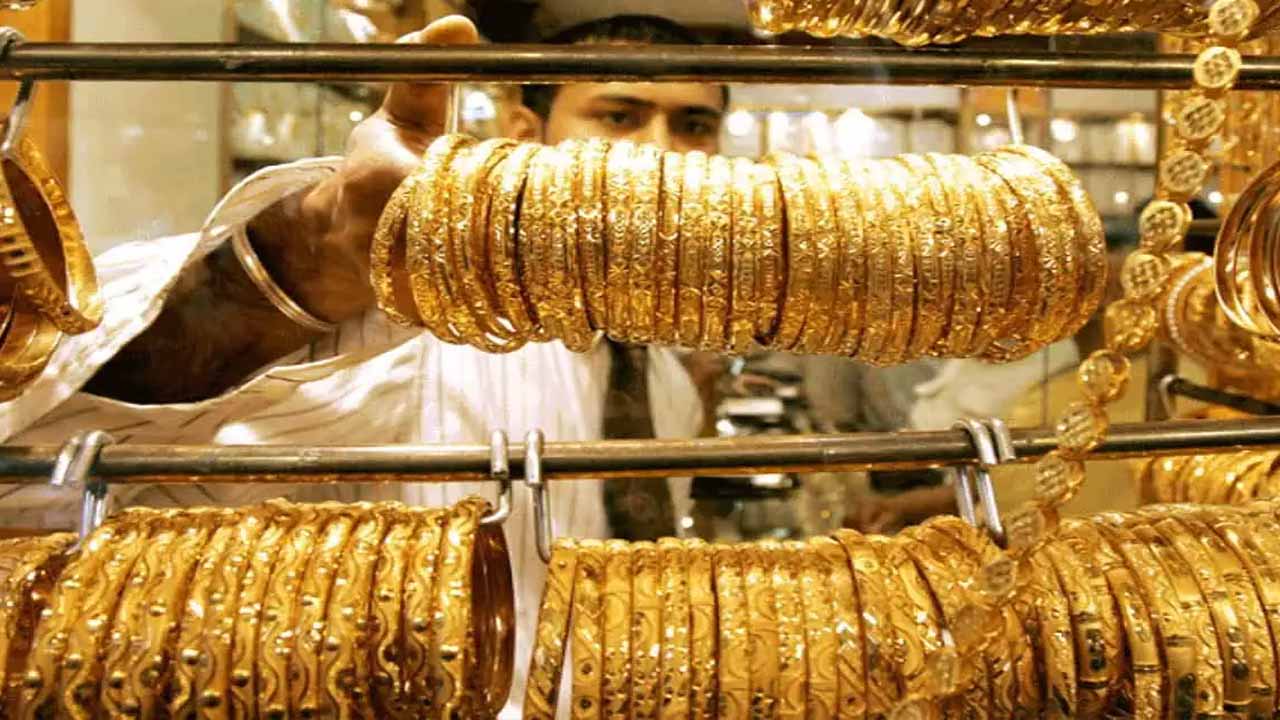
    In a shift from its recent upward trend, gold prices in Pakistan experienced a decline on Wednesday, with the price of 24-karat gold dropping by Rs1,100 per tola to reach Rs214,800.

    The Karachi Sarafa Association reported that the cost of 10 grammes of 24-karat gold also saw a decrease, settling at Rs184,156, reflecting a decline of Rs944.

    Additionally, 10-gramme 22-karat gold was valued at Rs168,810.

    In contrast, silver prices remained steady on the day, with 24-karat silver maintaining its position at Rs2,570 per tola and Rs2,203.36 per 10 grammes.

    On the global stage, international spot gold demonstrated resilience, trading at $2,026.92, marking a 0.17% increase for the day.

    However, international spot silver experienced a slight dip, standing at $22.33, reflecting a 0.55% decrease.

    Market observers are closely watching key inflation data and anticipating remarks from Federal Reserve officials this week to gain insights into the central bank’s potential decision regarding interest rates.

    It is noteworthy that the latest Federal Reserve minutes have indicated that most US officials are not in a hurry to implement rate cuts.

  • Nepra approves Rs7.056 per unit hike for power consumers

    Nepra approves Rs7.056 per unit hike for power consumers

    In a setback for the already burdened public grappling with inflation, the National Electric Power Regulatory Authority (Nepra) has greenlit a fuel cost adjustment, paving the way for a Rs7.0562 per unit increase in tariffs for March 2024.

    This decision grants state-run power distribution companies the authority to impose additional charges, projecting a staggering financial burden of around Rs56 billion on consumers.

    This figure could potentially soar to nearly Rs66 billion, taking into account the 18 per cent general sales tax (GST).

    It’s important to note that this tariff adjustment is applicable across all consumer categories, except for electric vehicle charging stations (EVCS) and lifeline consumers.

    The Central Power Purchasing Agency (CPPA), representing the distribution companies, had initially sought Rs7.13 per unit in its petition.

    Earlier this month, The News highlighted the plea from ex-Wapda distribution companies (XWDiscos) seeking Nepra’s approval for the Rs7.13 per unit increase.

    This was attributed to a significant drop in hydropower production and systemic constraints, such as the incapacity of the high-voltage direct current (HVDC) transmission line to efficiently transport economically viable power from southern producers to the north.

    Amidst these developments, commentators express concern over the substantial surge in fuel costs, reaching Rs14.6206/kWh for January 2024.

    In response, Nepra has taken decisive action, initiating an investigation under Section 27-A of the NEPRA Act to uncover the reasons behind this significant fuel cost, as claimed by CPPA-G for January 2024.

  • Daraz Group plans layoffs amid market challenges

    Daraz Group plans layoffs amid market challenges

    In an internal communication obtained by Reuters on Tuesday, Alibaba-owned e-commerce platform Daraz Group revealed its decision to implement layoffs across the company.

    Acting CEO James Dong stated that the move aims to “adopt a more streamlined and agile structure” to address challenges faced by the company in the market.

    While the memo did not specify the exact number of individuals affected by the layoffs, it acknowledged the necessity of saying farewell to numerous valued members of the Daraz family.

    The company, operating in Pakistan, Bangladesh, Nepal, Sri Lanka, and Myanmar, declined to provide details on the percentage or absolute number of employees impacted.

    Last year, Daraz employed 3,000 individuals globally. However, the company had to reduce its workforce by 11% due to various challenges, including difficult market conditions, the Ukraine crisis, supply chain disruptions, inflation, higher taxes, and reduced government subsidies.

    James Dong emphasised the group’s commitment to addressing the market’s unprecedented challenges and stated, “Despite our efforts to explore different solutions, our cost structure continues to fall short of our financial targets. Facing unprecedented challenges in the market, we must take swift action to ensure our company’s long-term sustainability and continued growth.”

    Dong outlined the group’s strategy moving forward, highlighting a focus on improving the consumer experience.

    This involves diversifying the offerings of value-for-money products, expanding product categories, and enhancing the operational efficiency of sellers on the Daraz platform.

    The company, founded in Pakistan in 2012 as an online fashion retailer, was acquired by Chinese internet giant Alibaba in 2018. James Dong assumed the role of acting CEO in January, succeeding outgoing CEO Bjarke Mikkelsen.

    Mikkelsen had previously noted that Pakistan and Bangladesh are the group’s largest markets.

    Daraz Group, encompassing e-commerce, logistics, payment infrastructure, and financial services, serves more than 30 million shoppers, boasts 200,000 active sellers, and collaborates with over 100,000 brands, according to company statements provided to Reuters.

  • Moody’s cautions on Pakistan’s fiscal challenges despite recent stability

    Moody’s cautions on Pakistan’s fiscal challenges despite recent stability

    Moody’s Investors Service, a global credit rating agency, stated on Tuesday that Pakistan’s credit rating could see an upgrade if the government successfully reduces liquidity and external vulnerability risks.

    Despite this potential, Moody’s maintained Pakistan’s credit rating at ‘Caa3’ for long-term issuer rating with a stable outlook in its periodic review.

    The credit profile of Pakistan reflects significant liquidity and external vulnerability risks, attributed to low foreign exchange reserves insufficient to meet high external financing needs in the near to medium term, according to Moody’s.

    The agency also highlighted the country’s very weak fiscal strength and elevated political risks as constraints on its credit profile.

    Moody’s expressed uncertainty regarding the new government’s ability to swiftly negotiate a new International Monetary Fund (IMF) programme after the ongoing programme concludes in April.

    While acknowledging Pakistan’s large economy and moderate growth potential, the agency emphasized the nation’s high liquidity and external vulnerability risks, despite economic stability maintained by the caretaker government and recent reforms.

    The agency recognised the government’s efforts to unlock financing from the IMF and other partners, resulting in a modest accumulation of foreign exchange reserves.

    However, it cautioned that, despite meeting external debt obligations for the fiscal year ending June 2024, there is limited visibility on sources of financing to address high external financing needs post-the current IMF stand-by arrangement.

    Moody’s rationale for the stable outlook at the Caa3 rating level is based on the assessment that pressures on Pakistan align with this rating, with broadly balanced risks.

    The agency suggested that continued IMF engagement beyond the current programme could attract additional financing from other partners, reducing default risk.

    Nonetheless, it emphasised the substantial external financing required and low reserve position, indicating potential default risks with funding delays.

    Moody’s indicated that an upgrade in Pakistan’s rating could occur with a substantial and sustained reduction in liquidity and external vulnerability risks, coupled with increased foreign exchange reserves and fiscal consolidation.

    Conversely, a downgrade might be likely if Pakistan defaults on debt obligations with significant losses to creditors.

    The agency expressed uncertainty regarding the new government’s ability to negotiate a new IMF programme swiftly after the ongoing one expires in April, citing high political risks following the controversial general elections held on February 8, 2024.

    Moody’s warned that without a new programme, Pakistan’s ability to secure loans from other partners would be severely constrained.

  • Gold rate inches up to Rs215,900 per tola with marginal gain

    Gold rate inches up to Rs215,900 per tola with marginal gain

    In a sustained upward trajectory, domestic bullion recorded gains on Tuesday, driven by a surge in 24-karat gold. The precious metal reached Rs215,900 per tola, reflecting an increase of Rs100.

    The latest data from the Karachi Sarafa Association reveals that the cost of 10 grammes of 24-karat gold saw a slight rise, reaching Rs185,100 with an uptick of Rs86. Additionally, 10-gramme 22-karat gold was quoted at Rs169,674.

    Contrastingly, silver prices remained stable, maintaining their previous rates. The 24-karat silver was traded at Rs2,570 per tola, while the cost per 10-gramme stood at Rs2,203.36.

    On the global front, the international spot gold market witnessed a positive trend, with prices hovering near $2,036.26, indicating a 0.26% increase for the day. In parallel, international spot silver held strong around $22.63, marking a 0.58% uptick.

    The financial landscape also saw influence from the latest Federal Reserve minutes, which indicated a collective sentiment among most US officials against rushing into rate cuts.

    This news brings additional insights into the dynamics shaping the global precious metals market.

  • SBP reports marginal dip in bank deposits

    SBP reports marginal dip in bank deposits

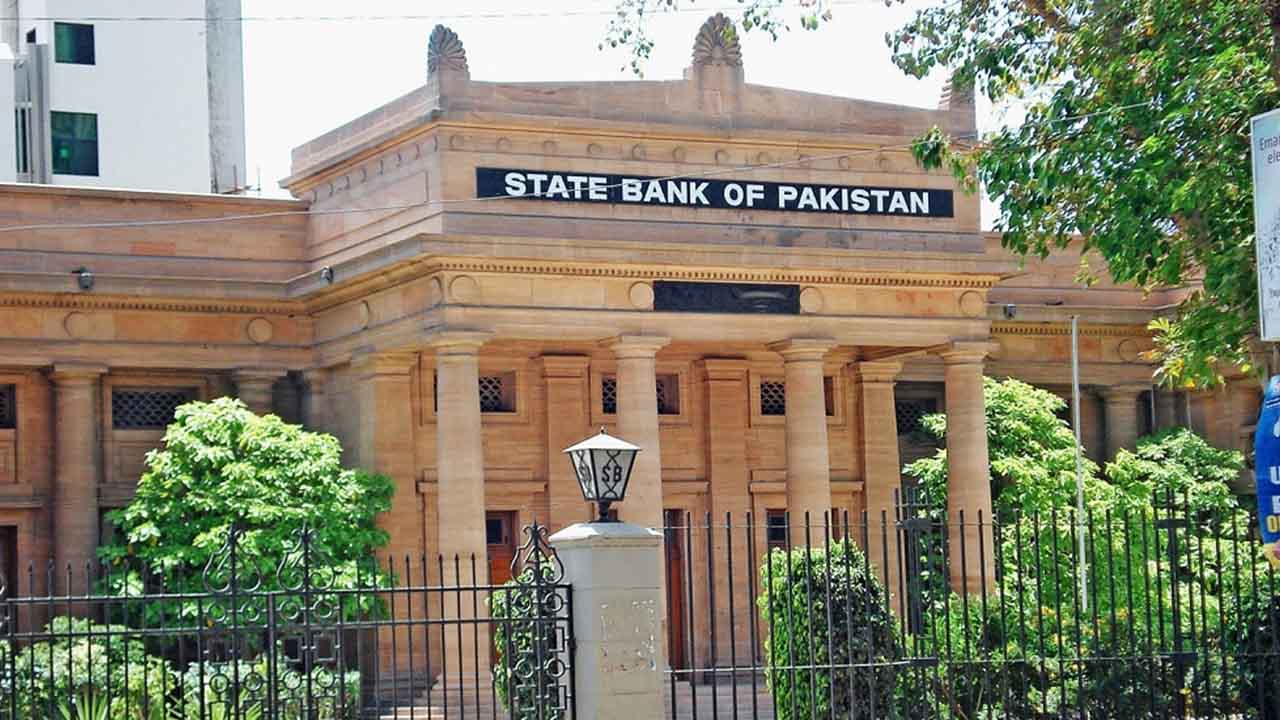
    In January 2024, the total deposits held by scheduled banks in Pakistan experienced a robust year-on-year growth of 21.03 per cent, reaching Rs27.54 trillion.

    This marks a substantial increase from Rs22.75 trillion recorded in January 2023, as revealed by data released by the State Bank of Pakistan (SBP).

    However, on a month-on-month basis, there was a slight dip of 1.08 per cent in bank deposits compared to December 2024, where the total stood at Rs27.84 trillion.

    The data further highlights a positive trend in total advances, which saw a year-on-year increase of 3.74 per cent, reaching Rs12.09 trillion compared to Rs11.66 trillion in the same period last year.

     Conversely, on a monthly basis, advances experienced a marginal decline of 2.08 per cent from their December 2024 value of Rs12.35 trillion.

    The Advances to Deposit Ratio (ADR) exhibited a decrease, standing at 43.92 per cent, indicating a 732 basis points decline on a yearly basis and a 45 basis points decrease on a monthly basis.

    In terms of investments, scheduled banks in Pakistan reported total investments of Rs25.6 trillion in January 2024, reflecting a substantial year-on-year increase of 32.71 per cent from Rs19.29 trillion in January 2023.

    Additionally, there was a month-on-month increase of 1.28 per cent from the Rs25.28 trillion recorded in December 2024.

    The Investment to Deposit Ratio (IDR) witnessed a notable rise of 818 basis points, reaching 92.97 per cent, compared to the figures from January 2023. On a monthly basis, IDR increased by 216 basis points.

    These statistics indicate a significant positive shift in the financial landscape of Pakistan’s banking sector, with notable expansions in both deposits and investments.

  • Gold price increases by Rs700 to Rs215,800 per tola

    Gold price increases by Rs700 to Rs215,800 per tola

    In a notable shift in the precious metals market, the price of 24-karat gold in Pakistan exhibited an increase of Rs700 per tola, reaching Rs215,800 on Monday.

    This surge follows the closing price of Rs215,100 on the last trading day, Saturday.

    The price adjustment was not exclusive to tola measurements; the cost of 10 grammes of 24-karat gold also experienced an uptick, rising by Rs600 to Rs185,014 from its previous value of Rs184,414.

    Similarly, 22-karat gold saw an increase in its 10-gramme price, climbing to Rs169,596 from Rs169,046, as reported by the All Sindh Sarafa Jewellers Association.

    Contrary to the movement in gold prices, the rates for silver remained consistent. The cost of one tola and ten grammes of silver held steady at Rs2,570 and Rs2,203.36, respectively.

    Internationally, the gold market displayed a contrasting trend, witnessing a decrease of $02, with the new rate standing at $2,054, down from $2,056, according to the association’s findings.

    Meanwhile, the Pakistan Stock Exchange (PSX) recorded a week of positive trends and increased business activities. Investors demonstrated optimism regarding political stability following the general elections on February 8.

    As the business week concluded, the KSE-100 index closed at an impressive 62,815 points, reflecting a gain of 2,943 points, or 4.92 per cent.

    The index had reached its peak during the week, showcasing investor confidence in the anticipated political stability post-elections.

  • Utility Stores to implement Rs7.492 billion relief package ahead of Ramzan

    Utility Stores to implement Rs7.492 billion relief package ahead of Ramzan

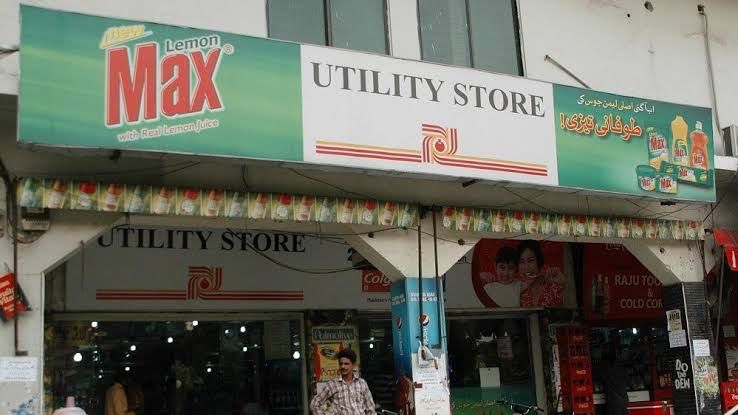
    The federal government is set to implement the Ramzan Relief Package, totaling Rs7.492 billion, through the Utility Stores Corporation (USC) starting March 4, 2024. This initiative aims to provide relief to targeted beneficiaries by offering subsidies on 19 essential items.

    The Economic Coordination Committee (ECC) of the Cabinet approved this decision based on a proposal from the Ministry of Industries and Production. The proposal sought approval for providing subsidies to targeted beneficiaries registered under the Benazir Income Support Programme (BISP) with a net amount of Rs7.492 billion.

    Of this, Rs 5 billion was allocated in the current fiscal year 2023–24 for the Ramzan Relief Package 2024, with the remaining Rs 2.492 billion to be re-appropriated from the current fiscal year budget allocations for the Prime Minister Relief Package (PMRP).

    The ECC directed the Finance Division to release the full subsidy amount of Rs7.492 billion to ensure timely purchases and necessary arrangements for the availability of these items at USC outlets.

    With Ramzan expected to commence on March 11, 2024, the implementation date for the Ramzan Relief Package-2024 was proposed from March 4, 2024, until the last day of Ramzan.

    Since 1991, the government has been providing relief during Ramzan by selling 19 items at subsidised rates through USC outlets. For the fiscal year 2023–24, the federal government allocated Rs35 billion for subsidies on essential items, including Rs30 billion for PMRP and Rs5 billion for the Ramzan Relief Package 2024.

    The Ramzan Relief Package aims to provide maximum relief to the masses. Due to restrictions imposed by the International Monetary Fund (IMF) on untargeted subsidies, subsidies are provided to targeted beneficiaries registered under PMT-40 of BISP for the fiscal year 2023–24.

    The USC is currently serving 26.92 million households registered under PMT-40. To extend assistance to more beneficiaries during Ramzan-2024, it is proposed to provide subsidies on 19 items to targeted beneficiaries registered under PMT-60, reaching an additional 12.73 million households.

  • Quality concerns prompt Toyota’s production line suspension

    Quality concerns prompt Toyota’s production line suspension

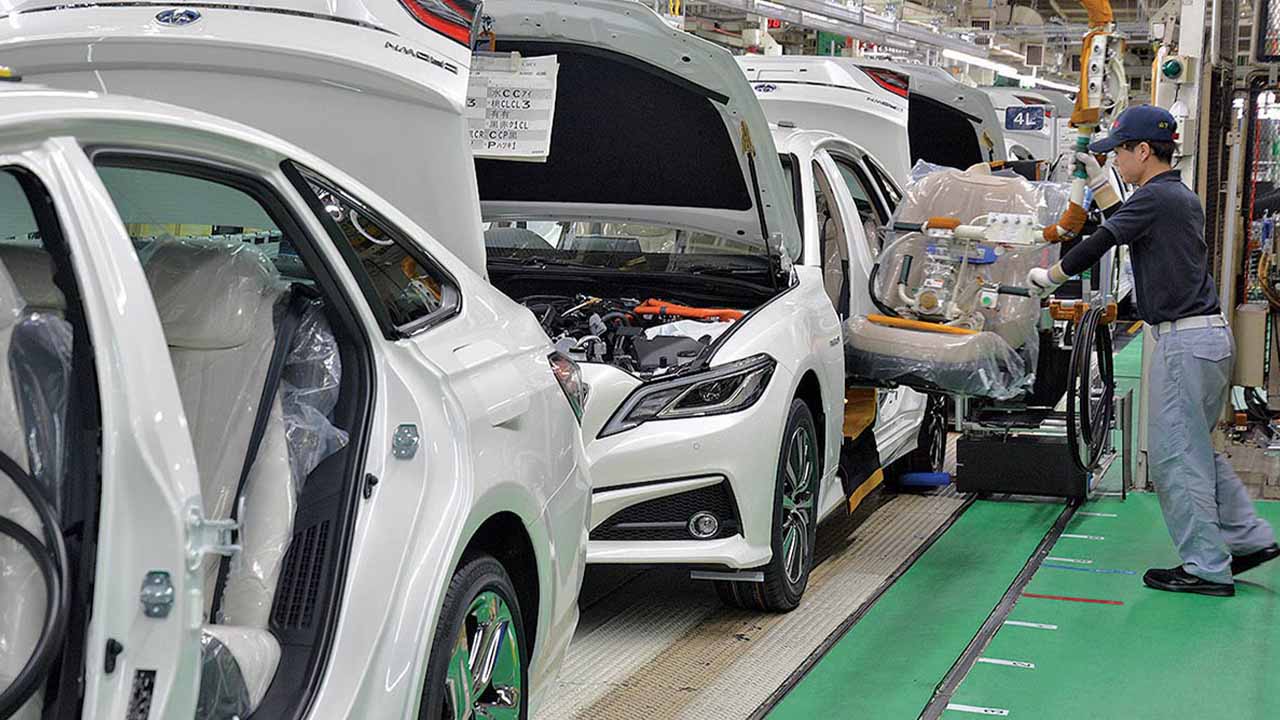
    In response to the discovery of irregularities in certification tests for diesel engines developed by affiliate Toyota Industries, Toyota Motors has announced the extension of the shutdown of two prominent production lines at manufacturing plants operated by Toyota group companies in Japan.

    The production lines, which were initially suspended on January 29, will now remain halted until March 1. Toyota Motors is set to make a crucial decision on March 1 regarding whether to reopen the production lines from Monday, March 4.

    The affected lines include one at Toyota Auto Body’s Inabe plant in Mie prefecture, known for producing the Alphard and Vellfire minivans.

    Additionally, one line at Gifu Auto Body’s main plant in Gifu prefecture, responsible for manufacturing the HiAce van, will also continue to be suspended.

    The decision to extend the shutdown comes as Toyota Motors is addressing the irregularities in certification tests, underlining its commitment to maintaining the highest standards of quality and compliance.

    The company aims to thoroughly investigate and rectify the issues before considering the resumption of production.

    This development has significant implications for the automotive industry, as Toyota Motors is a major player in the global market.

    Stakeholders and industry observers await the decision on March 1, as it will shed light on the company’s strategy to address the challenges posed by the certification test irregularities.

  • Inflation edges higher as weekly SPI indicates increase in prices

    Inflation edges higher as weekly SPI indicates increase in prices

    According to the Weekly Sensitive Price Indicator (SPI) released by the Pakistan Bureau of Statistics (PBS), the Combined Group’s SPI increased by 0.04 per cent during the week ending February 22, 2024.

    Additionally, the SPI surged by 30.68 per cent YoY compared to the same period last year.

    As of February 22, 2024, the Combined Index stood at 315.31, a slight uptick from 315.18 on February 15, 2024. A year ago, on February 23, 2023, the index was significantly lower at 241.29.

    Analysing the data for 51 items, it was found that the average prices of 23 items increased, 8 items decreased, and 20 items remained stable.

    Notable increases during the week were observed in the prices of tomatoes (22.71 per cent), bananas (7.40 per cent), diesel (3.02 per cent), chicken (1.22 per cent), and petrol (1.00 per cent).

    Conversely, onions (14.42 per cent), eggs (11.19 per cent), LPG (1.82 per cent), cooking oil (5 litres) (0.75 per cent), and wheat flour (0.36 per cent) experienced significant decreases.

    Breaking down the SPI percentage change by income groups, it was noted that SPI decreased across all 3 quantiles while increasing across 2 quantiles. The lowest-income group saw a weekly decline of -0.08 per cent, while the highest-income group recorded a rise of 0.09 per cent.

    On a yearly basis, the SPI change across different income segments revealed an increase ranging between 25.53 per cent and 35.39 per cent. The lowest-income group witnessed a 25.53 per cent increase, while the highest-income group recorded a 28.22 per cent rise.

    Specifically, the average price of Sona urea reached Rs4,928 per 50 kg bag, reflecting a 9.19 per cent increase from the previous week and a substantial 69.14 per cent surge compared to the same period last year.

    The surge in prices, especially for essential items, poses a challenge for the general populace, particularly those in lower-income groups.

    Authorities and policymakers are likely to face increasing pressure to address and mitigate the impact of inflation on the economy and the daily lives of people.