Category: Business

  • Gold price surges by Rs700 per tola, reaching Rs216,100 in domestic market

    Gold price surges by Rs700 per tola, reaching Rs216,100 in domestic market

    The domestic bullion market experienced an upswing on Tuesday as the price of 24-karat gold surged by Rs700 per tola, reaching Rs216,100.

    This price hike was reported by the Karachi Sarafa Association, which also noted a Rs600 increase in the 10-gramme 24-karat gold, now standing at Rs185,271. The 10-gramme 22-karat gold was priced at Rs169,832.

    In contrast, silver prices remained stable in the domestic market, with 24-karat silver being sold at Rs2,600 per tola and Rs2,229.08 per 10-gramme.

    The sudden spike in domestic gold prices can be attributed to the rise in international prices. Currently, international spot gold is trading at $2,039.598, marking a 0.24 per cent increase compared to the previous session’s closing.

    Last week, we witnessed the second consecutive weekly loss in the international gold market due to diminishing expectations of a rate cut. However, the recent escalation of tensions in the Middle East has triggered a surge in the demand for safe-haven assets, particularly gold, signalling a bullish trend.

    Despite the persistent pressure on domestic gold caused by the continuous strengthening of the Pakistani Rupee (PKR), the market dynamics shifted due to the sudden upturn in international prices.

    The impact of the PKR’s strength was outweighed by the growing appeal of gold in the wake of geopolitical uncertainties.

    Investors and analysts are closely monitoring the evolving situation both domestically and internationally as they assess the potential impacts on precious metal markets.

    The fluctuating trends in gold prices highlight the intricate relationship between global events and their influence on the financial landscape.
  • Pakistani rupee appreciates by 9.32 paisa against US dollar

    Pakistani rupee appreciates by 9.32 paisa against US dollar

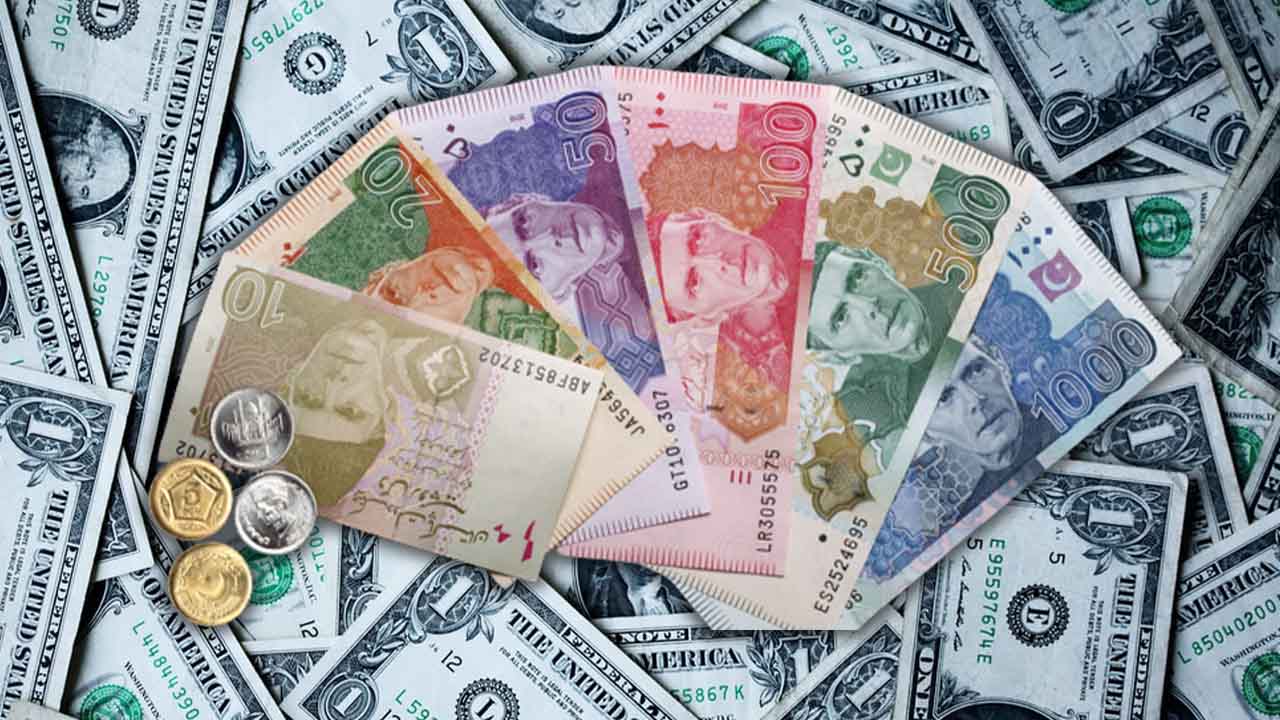
    In the latest interbank session on Tuesday, the Pakistani rupee (PKR) displayed resilience, appreciating by 9.32 paisa against the US dollar. The closing rate settled at PKR 279.55, marking a positive shift from the previous day’s closing at PKR 279.64 per USD.

    During the trading day, the local currency experienced an intraday high (bid) of Rs279.66 and a low (ask) of Rs279.6. In the open market, exchange companies quoted the dollar at Rs278.71 for buying and Rs280.86 for selling.

    In a significant development, the central bank opted to maintain the policy rate at 22 per cent, a decision unchanged for the fifth consecutive meeting. This decision is amidst the Pakistani rupee’s consistent upward momentum, celebrating its eleventh consecutive weekly victory against the US dollar.

    Against other major currencies, the PKR demonstrated strength. It gained 29.66 paisa against the euro, closing at 302.68 compared to the previous value of 302.98. The British Pound became more affordable by 53.78 paisa, closing at 354.86 compared to 355.4 from the previous day.

    The Swiss Franc witnessed gains of 45.64 paisa, closing at 324.6 compared to 324.15 from the previous session.

    However, against the Japanese yen, the PKR experienced a marginal loss of 0.6 paisa, closing at 1.898 versus 1.892 a day ago. The Chinese Yuan, on the other hand, gained 0.5 paisa, closing at 38.9514 against 38.9464 from the previous session.

    The Saudi Riyal closed at 74.54 with a loss of 2.58 paisa from its value of 74.57 a day ago, while the U.A.E. Dirham decreased in value by 2.54 paisa from 76.136 a day ago to 76.111.

    Reflecting on the broader financial landscape, during the current financial year, the PKR has appreciated against the dollar by 6.44 rupees, or 2.3 per cent. Meanwhile, the current calendar year has witnessed the PKR appreciate by 2.31 rupees, or 0.83 per cent.

    In the money market, the benchmark 6-month Karachi Interbank bid and offer rates experienced a modest increase of 13 basis points, reaching 20.58 per cent and 20.83 per cent, respectively.

  • State Bank of Pakistan unveils plans for new currency notes with international security features

    State Bank of Pakistan unveils plans for new currency notes with international security features

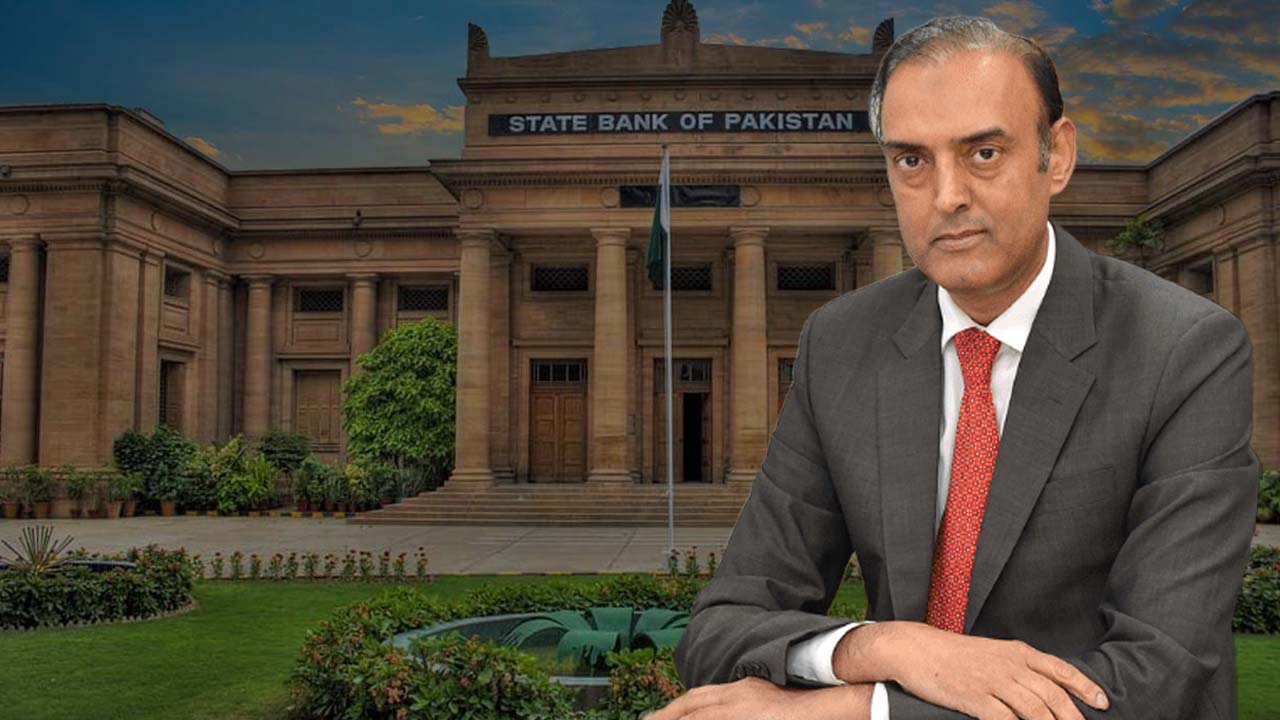
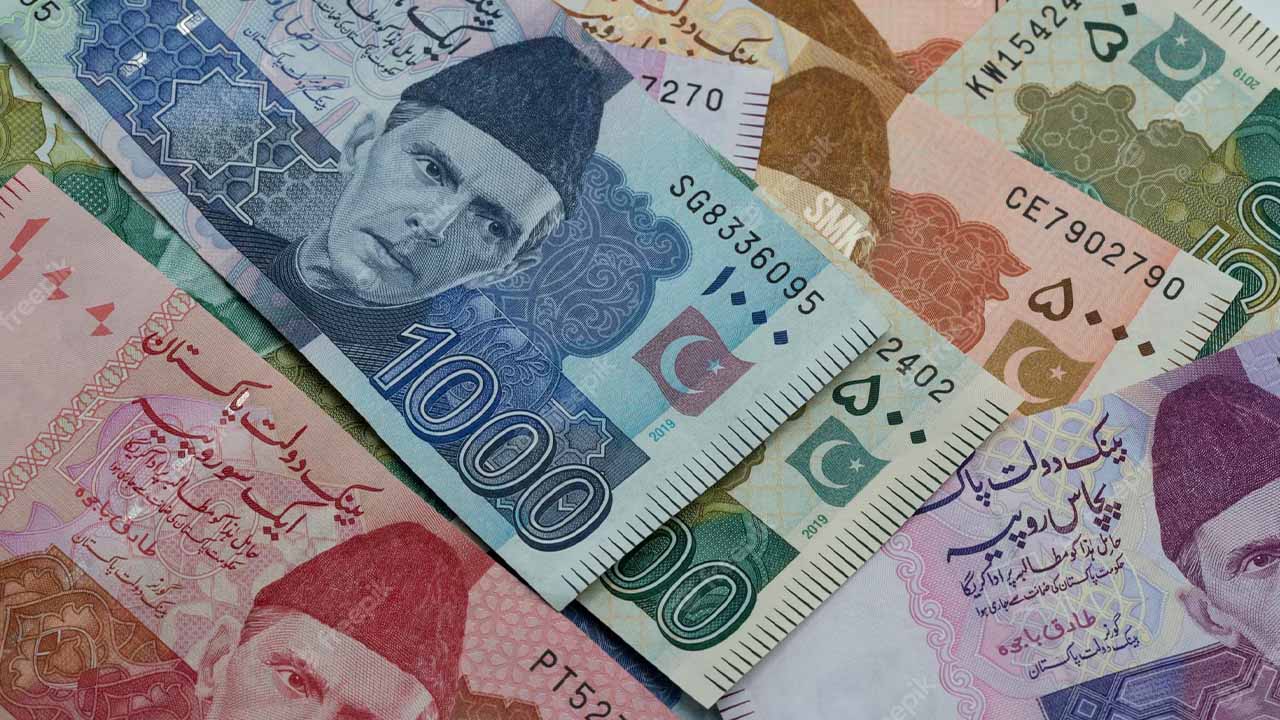
    The State Bank of Pakistan (SBP) on Monday announced plans to issue new currency notes featuring international security features. 

    The central bank assured a seamless transition, avoiding disruptions akin to India’s 2016 demonetisation. 

    Governor Jameel Ahmad stated that the new notes would have updated serial numbers, designs, and heightened security features. The design framework is expected to be finalised by March.

    The decision, prompted by concerns over counterfeit currency, was cautiously welcomed by financial experts. 

    CEO Khurram Schehzad acknowledged the move as a “positive development” but cautioned against premature assessment. 

    He emphasised the need to address higher-denomination notes and questioned their effectiveness, citing challenges faced by countries like India after demonetisation.

    Schehzad underscored the importance of evaluating the impact on black money, highlighting the public’s inclination to convert cash into alternative assets amidst inflation. 

    He urged the SBP to consider reducing the number of higher-denomination notes in circulation to address economic concerns, emphasising the role of controlled currency printing in curbing inflation.

  • Pakistani rupee sees marginal dip against US dollar 

    Pakistani rupee sees marginal dip against US dollar 

    In Monday’s trading session, the Pakistani rupee experienced a slight decline of 0.02 per cent against the US dollar in the inter-bank market, closing at Ra279.64, reflecting a decrease of Re0.05, according to the State Bank of Pakistan (SBP).

    The previous week saw the rupee’s 11th consecutive week of appreciation, gaining Re0.31, or 0.11 per cent, to settle at Rs279.59 against the US dollar. 

    This consistent uptrend was attributed to the approval of the second tranche of $705.6 million in the $3 billion Stand-by Arrangement (SBA) from the International Monetary Fund (IMF).

    The positive impact of the IMF inflow was evident in the foreign exchange reserves held by the SBP. 

    Meanwhile, Caretaker Prime Minister Anwaar-ul-Haq Kakar instructed the Ministry of Energy to develop a comprehensive plan, in consultation with the Finance Ministry, to address and reduce the circular debt in the power and gas sectors.

    In a significant move, the SBP announced plans to revamp the foreign exchange trading system by introducing a centralised foreign exchange (FX) trading platform named “FX Matching” for the interbank FX market.

    On the global front, the US dollar maintained a stable position as investors assessed US economic data ahead of the Federal Reserve policy meeting scheduled for the week. 

    Geopolitical tensions in the Middle East contributed to a cautious risk sentiment among investors.

  • Monetary policy committee maintains status quo: SBP keeps policy rate at 22% to tackle elevated inflation

    Monetary policy committee maintains status quo: SBP keeps policy rate at 22% to tackle elevated inflation

    In a decision announced on Monday, the Monetary Policy Committee (MPC) of the State Bank of Pakistan (SBP) has opted to maintain the status quo, retaining the key policy rate of 22 per cent. 

    SBP Governor Jameel Ahmad highlighted the persistent elevation of inflation, disclosing a revised forecast for the fiscal year 2023–24 ranging from 23 per cent to 25 per cent.

    Market analysts, anticipating the decision, noted that the sustained high inflation rate was a contributing factor to the MPC’s decision to keep the key policy rate unchanged.

  • Pakistan sets sights on $5 billion smartphone exports by 2029

    Pakistan sets sights on $5 billion smartphone exports by 2029

    Pakistan’s mobile phone industry is experiencing a significant boom, with plans to export smartphones worth $500 million in the next two years and an ambitious target of $5 billion in the next five years, according to the Federal Minister of IT and Telecom, Dr Umar Saif.

    The announcement was made during the Pakistan Mobile Summit 2024, a collaborative effort between the Ministry of IT and Telecom and mobile phone manufacturers.

    Dr Umar Saif, speaking at the summit, drew parallels with neighbouring India, which currently exports mobile phones worth $10 billion annually.

    He expressed confidence in enhancing Pakistan’s presence in the global mobile phone market and outlined steps being taken to boost smartphone exports manufactured within the country.

    During the summit, the minister disclosed that 35 companies have been licenced to assemble smartphones of different brands.

    Furthermore, a comprehensive policy is in the works to facilitate the local production of complete phones and some of their components.

    This initiative is expected to not only strengthen the local industry but also contribute significantly to Pakistan’s standing in the international mobile phone market.

    Dr Saif highlighted the progress made so far, indicating that approximately 90 million mobile phones have been assembled in Pakistan over the past two years.

    Additionally, the country has successfully exported around 250,000 mobile phones, amounting to a value of $15 million. These figures showcase the growing capabilities of Pakistan’s mobile phone manufacturing sector.

    The minister emphasised the need for sustained efforts to capitalise on the industry’s potential and underscored the importance of innovation and competitiveness to further enhance Pakistan’s share in the global market.

    As the country moves forward, there is a concerted push to not only meet but surpass the set export targets, contributing significantly to the national economy and establishing Pakistan as a key player in the international mobile phone industry.

    The success and growth of the mobile phone industry align with the government’s broader vision for economic development and technological advancement, showcasing Pakistan as a competitive player in the global digital landscape.

  • Gold glitters again: Domestic bullion rebounds with Rs1,500 per tola increase

    Gold glitters again: Domestic bullion rebounds with Rs1,500 per tola increase

    In a notable reversal, domestic bullion has rebounded from a four-week decline, initiating the current week with a positive trajectory. The price of 24-karat gold has seen a robust surge, ascending by Rs1,500 per tola and reaching Rs215,400. 

    The Karachi Sarafa Association reported a noteworthy uptick in the 10-gramme 24-karat gold, now standing at Rs184,671, reflecting a gain of Rs1,286 from the preceding day. Meanwhile, the 10-gramme 22-karat gold is reported at Rs169,282.

    Contrary to the gold market’s dynamic, silver prices have maintained stability domestically. The 24-karat silver is being traded at Rs2,600 per tola and Rs2,229.08 per 10-gramme.

    This positive shift in the domestic gold market is attributed to the rise in international prices. At present, the international spot gold is trading at $2,032.5 [12:42 p.m. PST], exhibiting a 0.7 per cent increase from the closing of the previous session. 

    Notably, the global market witnessed a second consecutive weekly loss last week, driven by diminishing expectations of a rate cut.

    However, the current surge in gold prices is fueled by escalating tensions in the Middle East, prompting an increased demand for safe-haven assets. 

    This geopolitical development signals a bullish trend for gold, counteracting the pressure on domestic gold caused by the continuous strengthening of the Pakistani Rupee (PKR). 

    The sudden upturn in international prices has effectively outweighed the market impact of the PKR’s persistent strength.

  • PSX declines by nearly 1% amid investor focus on Monetary Policy meeting

    PSX declines by nearly 1% amid investor focus on Monetary Policy meeting

    In today’s financial update, the Pakistan Stock Exchange (PSX) opened the week on a downbeat note, as the benchmark KSE-100 index experienced a decline of 628.33 points, or 0.98 per cent, settling at 63,184.74 by 10:20 am PST.

    Investor focus is keenly directed towards the impending Monetary Policy Committee meeting later today. 

    Expectations loom large that the central bank will maintain the policy rate unchanged, although some are optimistic about the possibility of a marginal rate cut.

    The KSE-100 index witnessed a trading volume of 19.534 million shares. Notably, the underperformance is attributed to key sectors, with fertiliser, commercial banks, oil and gas exploration companies, oil and gas marketing companies, and cement collectively contributing to the index’s dip by 138.49, 135.75, 111.02, 40.79, and 39.84 points, respectively.

    Specific companies weighing down the index include EFERT with 81.35 points, PPL with 56.52 points, OGDC with 45.06 points, MEBL with 39.27 points, and MCB with 30.37 points.

    In the broader market scenario, the All-Share index is trading at 42,871.61, witnessing a net loss of 341.49 points.

    It is noteworthy that during the fiscal year, the KSE-100 displayed substantial growth, gaining 21,732 points, or 52.43 per cent. In the ongoing calendar year, there has been a cumulative increase of 734 points, equivalent to 1.17 per cent. 

    Investors are navigating a dynamic landscape, closely monitoring the evolving economic indicators and anticipating the outcomes of the central bank’s policy decisions.

  • Monthly inflation expected to ease in the coming months

    Monthly inflation expected to ease in the coming months

    In January, a discerning shift towards disinflation is anticipated, as headline inflation is poised to soften to 27.2 per cent year-over-year (YoY), attributed to a favourable base effect.

    This decline from the previous month’s 29.7 per cent is primarily influenced by a higher base in the preceding year, while monthly pressures on consumer prices are expected to persist.

    Despite the overall yearly decrease, monthly inflation is projected to rise by 0.93 per cent month-over-month (MoM), contrasting with the 12-month average of 2.2 per cent MoM. 

    Consequently, the average yearly inflation for the first seven months of fiscal year 2024 is estimated at 28.57 per cent YoY, up from 25.40 per cent YoY in the same period last fiscal year.

    The surge in monthly inflation is predominantly fueled by a rise in the food and housing index. Food inflation is expected to increase by 1.76 per cent MoM, driven by inflated prices of essential commodities such as onions, chicken, tomatoes, eggs, and pulses. 

    Meanwhile, the housing index is projected to experience a 1.54 per cent MoM increase, primarily due to quarterly rent adjustments. In contrast, the transport index is anticipated to decrease by 2.69 per cent MoM, attributed to relief in fuel prices.

    Looking ahead, a 0.5 per cent MoM inflation rate in February could result in an annual headline inflation of around 22 per cent, with a gradual decline below 16 per cent by June 2024.

    Even a 1 per cent MoM inflation rate, significantly lower than the 12-month average, is expected to maintain real interest rates from turning positive until March 2024, as illustrated in the accompanying chart depicting various monthly inflation scenarios.

    Starting in January, the disinflationary trend is expected to accelerate due to the favourable base effect, the lagged impact of monetary tightening, and other administrative measures.

    However, potential risks include unforeseen climate events, volatility in global commodity prices—especially oil—and external account pressures.

    Rising global oil prices amid geopolitical tensions pose a threat to the inflation outlook, and an additional gas price adjustment, as suggested by the International Monetary Fund (IMF), may further intensify pressure on consumer prices.

  • Petrol and diesel prices predicted to rise in February

    Petrol and diesel prices predicted to rise in February

    In response to the recent surge in global oil prices, the government is anticipated to raise petrol and diesel prices by Rs11 and Rs6 per litre, respectively, for the first half of February. 

    The significant 11 per cent and 25 per cent increases in the premium on petrol and diesel contribute to the upward adjustment. 

    Recent pricing estimates until January 26 reveal a 5 per cent rise in finished petroleum prices to $87.7 per barrel and a 1 per cent gain in finished diesel prices to $97.4 per barrel.

    Despite a slight appreciation of the local currency, which stands at a weighted average rate of around PKR 279.87 per USD since the last pricing decision, it remains insufficient to counterbalance the substantial international price hikes. 

    It’s crucial to note that there are three more sessions before the next pricing update, and final prices will be contingent on global market movements and exchange rate fluctuations.

    The government is set to unveil the revised prices at midnight on January 31, 2024, and these adjustments will be effective for the first half of February. 

    Notably, in the previous fortnight, the government reduced petrol prices by Rs8 per litre to Rs259.34 while keeping diesel prices steady at Rs276.21 per litre.