Category: Business

  • Pakistan’s exports surpass Rs4,300 billion, up by 35.33% in six months

    Pakistan’s exports surpass Rs4,300 billion, up by 35.33% in six months

    The Pakistan Bureau of Statistics (PBS) has reported a substantial increase of 35.33 per cent in the country’s exports in rupee terms during the first half of the current fiscal year, as compared to the corresponding period of the previous year.

    According to provisional data released by PBS, exports from July to December 2023 amounted to Rs4,300,752 million, a significant rise from Rs3,177,893 million recorded during the same period last year.

    On a year-on-year basis, exports for December 2023 witnessed a remarkable surge of 54.59 per cent, reaching Rs799,588 million, compared to Rs517,240 million in October 2022.

    Additionally, on a month-on-month basis, exports increased by 8.86 per cent when compared to the figure of Rs734,541 million reported in November 2023.

    The key commodities contributing to this growth in December 2023 were rice other than basmati (Rs124,040 million), knitwear (Rs103,898 million), readymade garments (Rs84,569 million), bedwear (Rs64,119 million), cotton cloth (Rs40,678 million), cotton yarn (Rs26,984 million), towels (Rs24,814 million), rice basmati (Rs22,888 million), articles excluding towels and bedwear (Rs16,991 million), and meat and meat preparations (Rs12,472 million).

    In contrast, imports during July–December 2023–24 amounted to Rs7,533,700 million, showing an increase of 8.20 per cent compared to Rs6,962,865 million during the corresponding period last year.

    On a year-on-year basis, December 2023 imports totaled Rs1,317,463 million, reflecting a 13.94 per cent increase from December 2022. Moreover, on a month-on-month basis, imports increased by 1.66 per cent in December 2023 compared to Rs1,295,968 million in November 2023.

    The main commodities of imports during December 2023 were petroleum crude (Rs158,260 million), petroleum products (Rs150,888 million), natural gas, liquified (Rs109,516 million), electric machinery & apparatus (Rs63,667 million), palm oil (Rs60,316 million), plastic materials (Rs52,218 million), mobile phones (Rs49,887 million), iron & steel (Rs41,654 million), iron and steel scrap (Rs30,426 million), and motor cars (Rs29,543 million).

    This surge in exports, coupled with a measured rise in imports, signifies a positive trend in Pakistan’s trade balance, reflecting the resilience and competitiveness of the country’s export sector.

  • Track and trace system failure threatens Pakistan’s tobacco industry

    Track and trace system failure threatens Pakistan’s tobacco industry

    Amid the increase in trade of non-duty-paid cigarettes, representatives from the Pakistan Tobacco Company (PTC) on Monday expressed profound apprehensions regarding the sustainability of their business.

    They attributed their concerns to ‘inappropriate’ policy measures.

    The recently released data from the Pakistan Bureau of Statistics (PBS) Large Scale Manufacturing (LSM) Index unveiled a significant and alarming trend within the legitimate tobacco sector.

    According to the report, the production of the legitimate tobacco sector experienced a forty-fold decline compared to the overall LSM output between July 2023 and November 2023.

    Interestingly, despite this decline, the consumption of cigarettes has remained stagnant.

    This troubling trend highlights the adverse impact of policy decisions that disproportionately affect the legitimate tobacco industry.

    The representatives emphasised the necessity for a comprehensive and balanced approach to ensure a level playing field for the sector, ultimately securing its long-term sustainability.

    Despite the implementation of a Track and Trace System (TTS), the representatives pointed out the rising incidence of fake stamps being affixed to counterfeit packs of leading cigarette brands.

    According to APP, Qasim Tariq, Senior Business Development Manager, revealed that approximately 850 million counterfeit cigarette sticks are currently being sold across Pakistan, resulting in a substantial loss of around Rs5.7 billion.

    This rise in counterfeiting raises serious questions about the efficacy of the much-lauded track and trace system, which is yet to be implemented across local cigarette manufacturers in Pakistan and Azad Jammu and Kashmir (AJK).

    The representatives urged law enforcement agencies (LEAs) to conduct extensive enforcement at the retail level to tackle this growing menace.

    Additionally, the representatives expressed concerns about a recent misleading report circulating in the media regarding missed revenue collection by the Federal Board of Revenue (FBR).

    They refuted the claims in the report, stating that they are not only false but also raise questions about the intentions behind publishing such information.

    The report suggested that the illicit sector is less than 10 per cent across Pakistan, contradicting the FBR’s claim of illicit trade being over 36.5 per cent for the period in question.

    Furthermore, the report alleged that government revenue declined due to fiscal changes in the excise structure but failed to present the complete picture.

    The representatives clarified that from 2012–16, the government switched to a 2-tier structure from a 3-tier structure, causing revenues to fall by more than 25 per cent.

    The subsequent increase in excise in 2015-16 led to illicit trade hovering close to 50 per cent of the market. To combat this, the government reintroduced a 3-tier system, increasing revenues by more than 40 per cent and discouraging the illicit cigarette trade.

    The representatives emphasised the need for an extensive government-led national anti-illicit trade strategy, effective fiscal measures, and strict enforcement against illicit trade across the value chain, with a key focus on the retail level.

  • Gold price drops by Rs600 to Rs215,700 per tola in Pakistan

    Gold price drops by Rs600 to Rs215,700 per tola in Pakistan

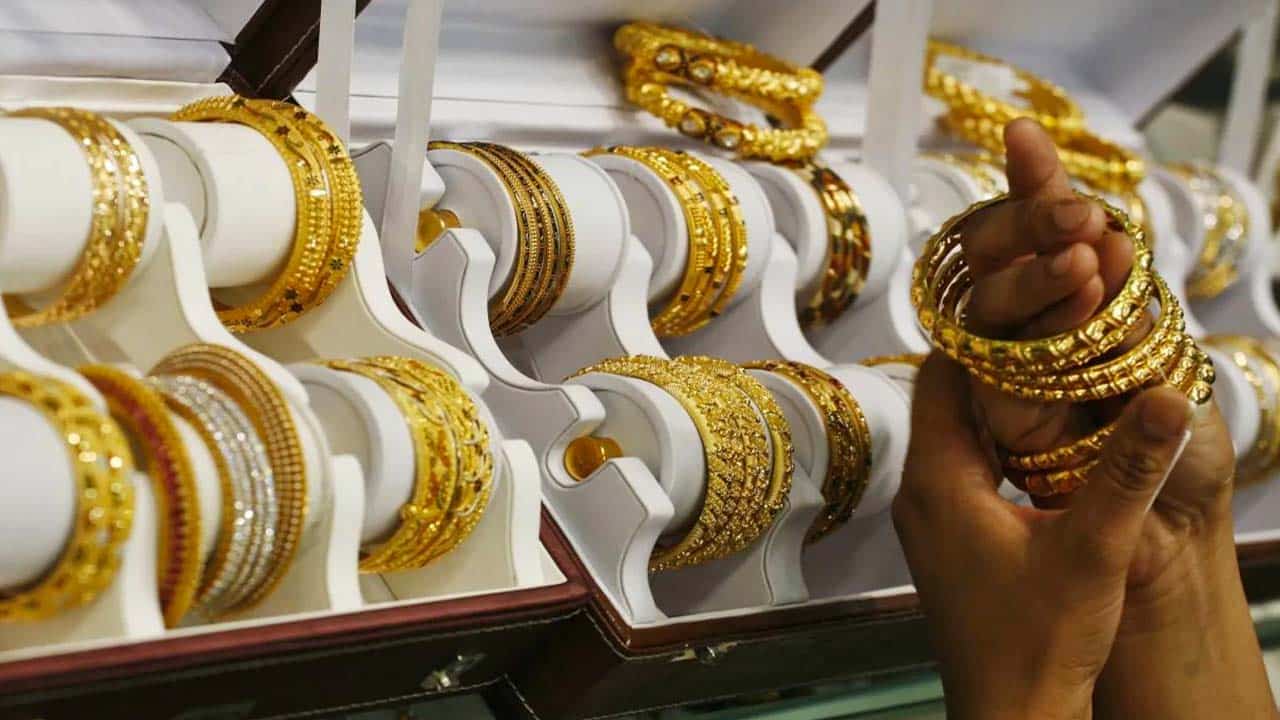
    In Monday’s trading, the per-tola price of 24 karat gold in Pakistan witnessed a decrease, dropping by Rs600 to Rs215,700, as reported by the All Sindh Sarafa Jewellers Association. 

    This marks a slight dip compared to its previous sale at Rs215,300.

    Similarly, the cost of 10 grammes of 24 karat gold experienced a decline of Rs514, settling at Rs184,071, down from Rs184,585. The price of 10 grammes of 22 karat gold also saw a reduction to Rs168,731 from Rs169,203.

    Meanwhile, the silver market remained stable, with the per tola and ten-gramme prices maintaining their positions at Rs2,600 and Rs22,229.08, respectively.

    On the international front, the price of gold took a downward turn, decreasing by $8 to $2,042 from $2,050, according to the association’s report.

  • Pakistani rupee shows marginal strength, gains 4.51 paisa against US dollar

    Pakistani rupee shows marginal strength, gains 4.51 paisa against US dollar

    In Monday’s interbank session, the Pakistani rupee (PKR) exhibited a slight appreciation of 4.51 paisa against the US dollar (USD), settling at PKR 279.85 per USD, compared to the previous closing of PKR 279.9 per USD. The intraday fluctuations showed a bid high of Rs280.1 and an ask low of Rs279.8.

    In the open market, exchange companies quoted the dollar at 279 for buying and 281 for selling. Notably, Pakistan received the second installment of SDR 528 million, equivalent to $705.6 million, from the International Monetary Fund (IMF) last week. 

    The first review report under the standby arrangement emphasised the importance of market-determined exchange rates and the gradual development of the foreign exchange (FX) market.

    Against major currencies, the PKR experienced fluctuations:

    Euro: lost 37.07 paisa, closing at 304.84 compared to the previous value of 304.47.

    British Pound: increased by 39.06 paisa, closing at 355.33 compared to 354.94 from a day ago.

    Swiss Franc: Saw losses of 20.03 paisa, closing at 322.08 compared to 322.28 in the previous session.

    Japanese yen: lost 0.19 paisa, closing at 1.8895 versus 1.8876 a day ago.

    Chinese Yuan: Lost 2.38 paisa, closing at 38.89 against 38.91 from the previous session.

    Saudi Riyal: Closed at 74.62 with a loss of 1.2 paisa from its value of 74.63 a day ago.

  • Pakistan informs IMF of preparedness to address near-term challenges

    Pakistan informs IMF of preparedness to address near-term challenges

    In a recent communication to the International Monetary Fund (IMF), the government has underscored its preparedness to address potential near-term challenges, signalling a commitment to maintaining economic stability.

    The disclosure comes as part of the IMF’s first review under the stand-by arrangement.

    The government, as revealed in the report, stands ready to respond decisively should near-term price pressures reemerge. This includes addressing stronger-than-expected second-round effects on core inflation and potential pressures on the exchange rate amid the normalisation of the current account.

    Amid signs of weaker demand, positive supply developments, and decreasing pressures on the exchange rate, the government anticipates a notable decline in inflation in the coming months.

    As a result, the policy rate was maintained at 22 per cent during the latest Monetary Policy Committee (MPC) meeting held on October 30. However, the government reiterated its readiness to respond promptly if there is a resurgence of near-term price pressures.

    The primary objective is to ensure a clear downward trajectory for inflation and inflation expectations. The pace of future adjustments will be contingent on various factors, including inflation data, exchange rate developments, external position strength, and the fiscal-monetary policy mix.

    The government aims to keep the real policy rate in positive territory on a forward-looking basis, signalling a commitment to bringing inflation within the target band by fiscal year 2026.

    To enhance monetary policy transmission, the interest rate on major refinancing schemes, specifically the EFS and LTFF, will continue to be linked to the policy rate, with a spread of no more than 3 per centage points, as per the announcement by Pakistani authorities.

    The report emphasised the importance of vigilance, highlighting that despite the return of the forward-looking real policy rate to positive territory, caution is necessary due to near-term risks.

    With inflation expectations not yet firmly anchored, the Monetary Policy Committee is urged to respond robustly and promptly should inflationary pressures resurface.

    Maintaining a positive real policy rate during a period of easing inflation and promptly addressing signs of new demand pressures or rising inflation expectations is seen as crucial.

    This strategy aims to re-anchor inflation expectations and guide down core inflation from the second half of fiscal year 2024 onwards, contingent on the absence of a resumption in administrative import compression.

    The report projects a significant decline in headline inflation through fiscal years 2025–26, aligning within the targeted 5–7 per cent range by fiscal year 2026. This outlook is supported by fiscal consolidation efforts and the normalization of global commodity prices.

    While the IMF staff views the current stance as broadly appropriate given weak domestic demand, the report suggests that the MPC should remain prepared to respond resolutely if near-term price pressures reemerge, including second-round effects.

  • IMF forecasts improved inflation, slower economic growth for Pakistan in FY24

    IMF forecasts improved inflation, slower economic growth for Pakistan in FY24

    The International Monetary Fund (IMF) has adjusted its economic projections for Pakistan, providing a comprehensive review in its latest report. The key highlights include a downward revision of inflation forecasts and a moderated economic growth projection for the fiscal year 2024 (FY24).

    According to the IMF’s first review report, the inflation forecast for Pakistan has been revised down to an average of 24 per cent in FY24, showing a decline from the earlier projection of 25.9 per cent.

    This adjustment is attributed to the easing of food and energy prices, although the November gas tariff increase is expected to contribute to headline inflation in the coming months. Despite this, gradual declines are anticipated due to lower core inflation and recent movements in commodity prices.

    The year-end inflation is projected to be 18.5 per cent in FY24 and further decrease to 9 per cent in FY25, as outlined in the report.

    Conversely, the IMF has lowered its economic growth projection for Pakistan to 2 per cent in FY24, down from the initial estimate of 2.5 per cent. The revision reflects weaker domestic demand despite positive base effects from flood recovery, particularly in agriculture and the textile sector.

    The report emphasised that continued external challenges, along with tight fiscal and monetary policies, are expected to dampen consumption and private investment.

    The current account deficit (CAD) for FY24 is forecasted at $5.6 billion (1.6 per cent of GDP), below the previously projected $6.5 billion in the SBA Request. The import rebound is expected to be more restrained due to weakened domestic demand, while exports and remittances are also anticipated to be subdued.

    IMF staff anticipates the CAD to remain around 1.5 per cent of GDP over the medium term, reflecting efforts to rebuild reserves and a market-determined exchange rate consistent with sustainability.

    Despite a notable improvement in market sentiment since June, the IMF pointed out that risks to debt sustainability remain acute. Large gross financing needs and limited external financing pose challenges, and the global lender stressed that any policy slippages or insufficient financing could jeopardise the path to debt sustainability.

    Furthermore, the IMF highlighted that external financing risks are exceptionally high, and delays in the disbursement of planned financing from international financial institutions or bilateral partners could pose significant threats to the government’s programme, given limited buffers. This could lead to an increased reliance on expensive domestic financing, potentially crowding out private credit.

    In addition to economic concerns, the IMF warned that political tensions ahead of the upcoming elections may impact policy decisions and reform implementation, adding another layer of uncertainty to Pakistan’s economic outlook.

    The IMF concluded that while public debt could remain sustainable with decisive programme implementation and adequate financing, downside risks remain exceptionally high for the country, necessitating careful attention to policy measures and external support.

  • Pakistan sees 18th straight month of decline in auto financing

    Pakistan sees 18th straight month of decline in auto financing

    In December 2023, automobile financing in Pakistan recorded a significant decline, reaching Rs251.25 billion, marking a 25.55 per cent year-on-year drop and a 2.26 per cent month-on-month decrease. 

    This contrasts with Rs333.747 billion in December 2022 and Rs257.06 billion in November 2023, as revealed by the latest central bank data.

    Notably, this marks the eighteenth consecutive monthly decrease in automobile financing, attributed to factors such as elevated interest rates, a surge in car prices, regulatory constraints on loan acquisition, and increased taxes on automobile imports and components.

    According to data from the State Bank of Pakistan (SBP), consumer financing for house building reached Rs208.15 billion by the end of December 2023, reflecting a 3.17 per cent year-on-year decrease. 

    On a monthly basis, house building financing showed a marginal increase compared to the previous month’s Rs206.92 billion.

    Simultaneously, financing for personal use amounted to Rs244.41 billion, experiencing a 3.84 per cent year-on-year decline and a 0.64 per cent month-on-month decrease, indicating a challenging trend in the lending landscape for various purposes.

  • Interbank closing: PKR gains 8 paisa to close at Rs279.9 versus USD

    Interbank closing: PKR gains 8 paisa to close at Rs279.9 versus USD

    The Pakistani rupee (PKR) strengthened by 8.24 paisa against the US dollar (USD) in Friday’s interbank session, concluding the trade at PKR 279.9 per USD, surpassing the previous session’s closing rate.

    The local currency experienced an intraday high (bid) of Rs280.4 and a low (ask) of Rs279.9.

    In the open market, Exchange Companies quoted the dollar at Rs279.5 for buying and Rs281 for selling.

    Comparatively, against major currencies, the PKR gained 20.17 paisa against the Euro, closing at Rs304.47 in contrast to the previous value of Rs304.67. 

    The British Pound became more affordable by 30.06 paisa, concluding at Rs354.94 compared to Rs355.24 a day earlier. 

    The Swiss franc incurred losses of 1.38 rupees, settling at Rs322.28 compared to Rs323.66 from the previous session.

  • Gold prices in Pakistan rebound, surging Rs1,300 per tola

    Gold prices in Pakistan rebound, surging Rs1,300 per tola

    Gold prices in Pakistan rebounded significantly on Friday, overcoming a challenging trend in the preceding three sessions. 

    The value of 24-karat gold surged by Rs1,300 per tola, reaching Rs215,000, according to the Karachi Sarafa Association. 

    The price for 10-gramme 24-karat gold witnessed an increase of Rs1,115, standing at Rs184,328. Additionally, the rate for 10-gramme 22-karat gold was Rs168,976, compared to yesterday’s Rs167,945.

    In contrast, silver maintained stability in the domestic market, with 24-karat silver selling at Rs2,600 per tola and Rs2,229.08 per 10-gramme. 

    On the global front, international spot gold continued its positive momentum, currently trading at $2,027.32. 

    Despite today’s uptick, global gold is poised for its weakest weekly performance in the past six weeks, driven by diminishing expectations for interest rate cuts. 

    This decline in commodity prices is attributed to central bankers pushing back against market bets for rate cuts, contributing to a widespread selloff across stocks and bonds.

  • Pakistan’s forex reserves witness a dip of $127 million

    Pakistan’s forex reserves witness a dip of $127 million

    In a recent report, it was revealed that the foreign exchange reserves held by the State Bank of Pakistan (SBP) experienced a decline of $127 million during the week ending January 12, settling at $8.03 billion.

    The country’s total liquid foreign reserves, including those held by commercial banks, amounted to $13.15 billion. Specifically, commercial banks held net foreign reserves of $5.12 billion.

    The SBP attributed the reduction in reserves to debt repayments, stating, “During the week ending on January 12, 2024, the SBP’s reserves decreased by US$ 127 million to US$ 8,027.4 million due to debt repayments.”

    Notably, the previous week had also seen a decrease in Pakistan’s central bank reserves, amounting to $66 million.

    In a significant development, Pakistan received a tranche of $705.6 million from the International Monetary Fund (IMF), as confirmed in a statement by the SBP on Wednesday.

    The central bank stated, “The SBP has received SDR 528 million (equivalent to $705.6 million) on January 16, 2024, from the IMF following the successful completion of the first review by the Executive Board of the IMF under Standby Arrangement (SBA).”

    The impact of this disbursement will be reflected in the central bank reserves for the week ending January 19.