Category: Business

  • Sindh industries to face two-day gas supply suspension due to shortage

    Sindh industries to face two-day gas supply suspension due to shortage

    Gas supply to industries and power plants in Sindh will be stopped for 48 hours starting Saturday, as informed by the Sui Southern Gas Company (SSGC).

    The reason for this interruption is the low gas pressure in the system. There’s been a drop in pressure in the gas lines, leading to reduced supply.

    According to The News, the SSGC stated that due to insufficient gas supply, the available gas has decreased, causing low pressure in the system.

    As per the Gas Supply Agreement (GSA) guidelines for industrial customers approved by the Oil and Gas Regulatory Authority (OGRA) and authorised by the Economic Coordination Committee (ECC) of the cabinet, all industries, including power generation units, will remain closed during this time:

    Starting from 8 AM on Saturday, August 26, 2023, to 8 AM on Monday, August 28, 2023.

    The gas will be supplied according to the established priority order. The company issued a stern warning that strict action would be taken if anyone was found violating these rules during the gas supply suspension.

    The statement also mentioned that if any violations are noted during this gas holiday period, the company will take significant measures, which might even involve the suspension of gas supplies for a minimum of 7 days.

    The company’s strict stance against any breaches during this gas supply suspension underscores the importance of adherence to these measures, with the possibility of severe consequences, including a minimum seven-day disconnection of gas supplies.

  • Economists predict ‘Barbenheimer,’ Taylor Swift, and Beyoncé will inject billions into US economy

    Economists predict ‘Barbenheimer,’ Taylor Swift, and Beyoncé will inject billions into US economy

    Taylor Swift, Beyoncé, and the “Barbenheimer” fever are making a substantial positive impact on the United States economy. According to Bloomberg Economics, the tours of these mega stars and the success of their blockbuster films are projected to contribute a significant sum of $8.5 billion (S$11.5 billion) to the US economy in the third quarter.

    The concerts alone, with nearly 50 shows scheduled, could boost the US gross domestic product (GDP) by $5.4 billion. Additionally, the films “Barbie” and “Oppenheimer” are anticipated to result in approximately $3.1 billion in consumer spending and export revenue from international ticket sales.

    This combined effect is expected to lead to a 0.7 per cent increase in annualized real personal consumption expenditures and a 0.5 per cent rise in GDP during the July-through-September period. Economists Anna Wong and Eliza Winger have revised their growth forecasts for this period, attributing the adjustment in part to these notable gains. This economic outlook further reinforces the ongoing strengthening of the American economy, which has been evident in recent months.

    The current economic landscape shows signs of easing inflation and a stable labor market, which are propelling consumer spending. This positive scenario is causing some economists to postpone their predictions of an impending recession, while others are reconsidering their projections altogether.

    Nonetheless, the analysts at Bloomberg argue that the benefits generated by the movies and tours are temporary in nature. They highlight the absence of Beyoncé and Swift performances in the US during the last quarter of the year and describe the Barbenheimer event as a rare occurrence. Moreover, the US economy remains vulnerable to a drop in demand, and challenges persist in the housing market due to low supply and rising mortgage rates.

    The Bloomberg economists emphasise that a significant portion of the current economic vigor is linked to short-term factors. In their assessment, These factors create a facade of robust consumption, when in reality, it is losing momentum. Importantly, their evaluation only accounts for ticket sales for “Barbie” and “Oppenheimer” up until Wednesday, and they do not include the net-export effects of the four concerts Swift is performing in Mexico City this week.

  • IMF and Pakistan discuss circular debt and energy sector losses in virtual meeting

    IMF and Pakistan discuss circular debt and energy sector losses in virtual meeting

    Pakistan and the International Monetary Fund (IMF) recently discussed the country’s energy sector losses and efforts to reduce circular debt during a virtual meeting. The government is committed to adjusting fuel prices and quarterly tariffs to eliminate circular debt accumulation.

    According to The News, a new plan called the Circular Debt Management Plan (CDMP) was shared with the IMF. This plan involves revising fuel price adjustments and quarterly tariffs upward to counter circular debt growth. The IMF expressed concerns about the plan’s sustainability due to slower recoveries.

    The government was advised to create an effective strategy to tackle this issue. The meeting took place virtually on a technical level. The newly appointed Finance Minister, Dr Shamshad Akhtar, is expected to hold a virtual meeting with the IMF team soon.

    The IMF’s first review is scheduled for October or November and will be based on economic data from the initial quarter (July–September) of the current fiscal year.

    Pakistan and the IMF signed a $3 billion bailout package under the Standby Arrangement in July 2023. Pakistan has already received $1.2 billion, with two more reviews planned to release the remaining $1.8 billion by March or April 2024.

  • Interbank market: US dollar reaches all-time high against Pakistani rupee, surpassing Rs300 mark

    Interbank market: US dollar reaches all-time high against Pakistani rupee, surpassing Rs300 mark

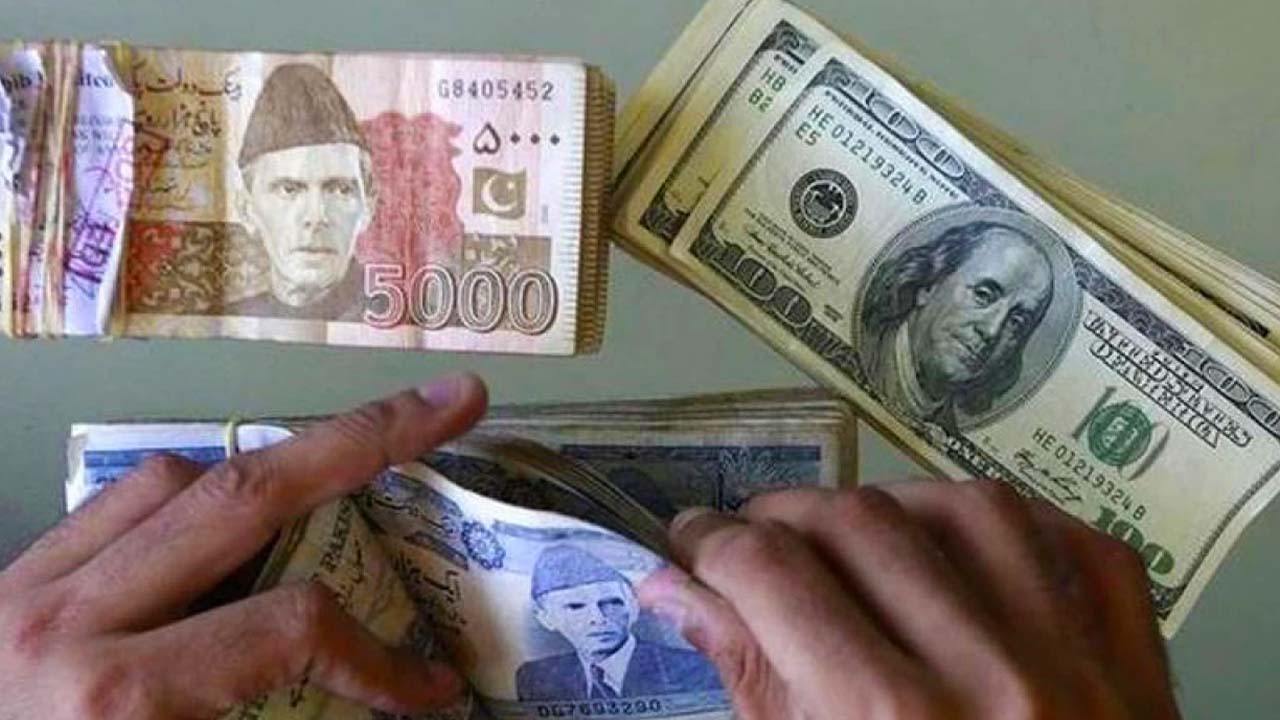
    The US dollar reached a new high against the Pakistani rupee, going past Rs300 in the interbank market on Thursday. At 11:15 am, it was at Rs300.4 as per the Forex Association of Pakistan. In the open market, it was valued at Rs314.

    The day before, the dollar ended at Rs299.64 and went up to Rs315 in the open market. The Exchange Companies Association of Pakistan (ECAP) reported buying and selling prices at Rs309 and Rs312.

    As the dollar keeps going up, experts are asking the government to do something about the black market. Saad bin Naseer from Mettis Global said that even though it’s hard to find dollars in the interbank market, they’re easily available in the open market at higher prices.

    Naseer didn’t like that the central bank kept the interest rate at 23 per cent because people prefer investing in foreign currencies over the local economy. Malik Bostan, who leads the Forex Association of Pakistan, warned against hoarding dollars, thinking their price will keep rising.

    Bostan noticed regular people buying dollars thinking they’ll become more valuable due to the increase in the interbank market. He also mentioned that removing import restrictions from the IMF made the rupee weaker.

    Zafar Paracha, from the Exchange Companies Association of Pakistan, blamed the rupee’s decline on more unnecessary imports. He agreed with Bostan and urged people not to buy more dollars during this uncertain time for the rupee.

  • SBP’s forex reserves drop by $125 million to $7.93 billion after debt repayments

    The State Bank of Pakistan (SBP) revealed that its foreign exchange reserves decreased by $125 million within a week, now totalling $7.93 billion as of August 18. This is part of the country’s overall liquid foreign reserves of $13.25 billion. Commercial banks in Pakistan also hold $5.32 billion in net foreign reserves.

    This drop in reserves is due to debt repayments. Specifically, during the week ending August 18, 2023, the SBP’s reserves went down by $125 million, reaching $7,930.3 million due to these debt payments.

    Previously, the SBP’s foreign exchange reserves had increased by $12 million the week before. However, this increase was followed by a decline in the central bank’s reserves, which had previously decreased for three weeks in a row, primarily due to debt repayments.

    While the SBP’s reserves received a boost in July from the first installment of about $1.2 billion from the International Monetary Fund (IMF) as part of a new $3 billion stand-by arrangement, they are now under pressure due to debt repayments, increased import payments after eased restrictions, and a lack of new inflows.

    Regarding Pakistan’s financial situation, the current account, which had been in surplus for four straight months, posted a deficit of $809 million in July, the highest since October 2022.

    At the same time, the Pakistani rupee hit a new record low, falling below Rs300 against the US dollar in the inter-bank market on Thursday. The rupee settled at Rs300.22 against the US dollar, showing a decrease of Re0.58 or 0.19 per cent, as reported by the State Bank of Pakistan.

  • NEPRA approves Rs5.40 per unit power tariff increase for quarterly adjustment

    NEPRA approves Rs5.40 per unit power tariff increase for quarterly adjustment

    The National Electric Power Regulatory Authority (NEPRA) has given its approval for a quarterly adjustment, resulting in an increase of Rs5.40 per unit in the power tariff.

    This adjustment comes as NEPRA recognises the limitations of the current structure of electricity distribution companies in providing relief to consumers. However, it’s important to note that this revised tariff won’t apply to Lifeline and K-Electric consumers.

    According to Samaa, NEPRA’s decision to revise the tariff comes after a thorough review of requests from distribution companies to raise the tariff by Rs5 per unit for the fourth quarter of the fiscal year 2022–23. Among these requests, FESCO, GEPCO, HESCO, and IESCO sought increases of Rs23.49 billion, Rs16.13 billion, Rs9 billion, and Rs9 billion, respectively.

    Additionally, LESCO requested a substantial increment exceeding Rs31 billion, while MEPCO, PESCO, QESCO, SEPCO, and TESCO collectively proposed tariff hikes totaling Rs27 billion, Rs9 billion, Rs7 billion, Rs5 billion, and Rs4 billion.

    Consumers should be aware that this tariff adjustment will be gradually recovered during September, October, and November, resulting in an added financial burden of Rs5.40 per unit.

    Distribution companies, in their submissions, highlighted revenue challenges stemming from decreased industrial demand. Particularly, LESCO faced a deficit of three billion units of electricity due to climate-related issues and industrial shutdowns. Both LESCO and HESCO faced higher capacity charges due to industry closures and reduced demand.

    Presently, there’s a backlog of approximately 350,000 pending connections with distribution companies. To recover revenue and address declining demand, the Central Power Purchasing Agency imposed surcharges amounting to Rs7.91.

  • Gold price reaches Rs234,000 per tola, nearing new record high

    Gold price reaches Rs234,000 per tola, nearing new record high

    Gold prices in Pakistan continued to rise on Tuesday, influenced by the Pakistani rupee’s decline against the US dollar and an uptick in global prices. 

    According to the All Pakistan Gems and Jewellers Sarafa Association, the cost of 24-carat gold settled at Rs234,500 per tola, marking a substantial increase of Rs4,600. Similarly, the price of 10 grammes of gold rose by Rs3,944 to reach Rs201,046.

    It is expected that the price of gold might reach unprecedented levels due to the relentless and rapid decline of local currency against the greenback.

    The movement of gold prices in Pakistan closely follows the path of the US dollar due to the country’s reliance on gold imports. 

    The Pakistani rupee saw a notable decrease, falling to a new all-time low against the US dollar. It ended at Rs299.01 rupees per dollar, reflecting a decline of Rs1.88, as reported by the State Bank of Pakistan.

    Currency experts attribute the surge in gold prices to the recent depreciation of the rupee. 

    With growing concerns about the country’s economic situation, investors are turning to gold as a safe-haven asset. This shift has resulted in a significant increase of Rs12,700 per tola in just one week.

    Read more: PKR to USD rate

    Notably, the hike in gold prices coincided with political turmoil and a decrease in the local currency’s value, leading to an all-time high valuation of Rs240,000 per tola on May 10, 2023. On the international front, the price of gold saw a $10 increase, reaching $1,901 per ounce on Tuesday.

  • Pakistani rupee declines to new historic low of Rs299 per US dollar

    Pakistani rupee declines to new historic low of Rs299 per US dollar

    The Pakistani rupee continued its downward trend on Tuesday, closing at an all-time low of Rs299.0070 against the US dollar. This represents a decline of 0.63 per cent or Rs1.873.

    On Monday, the rupee continued to struggle against the US dollar, closing at Rs297.13. This drop in value is due to several reasons. One is the country’s current account deficit, which has widened because it’s now easier to open letters of credit. This change has affected the availability of foreign exchange, putting pressure on the rupee’s value in the local market.

    Another factor is the lack of foreign exchange coming into the country. This shortage has also contributed to the rupee’s decline.

    Experts say that the increase in import payments is tied to the International Monetary Fund’s (IMF) demand to remove import restrictions. This has led to a higher demand for the US dollar.

    Political uncertainty is also playing a role in the rupee’s decline. There are concerns that the general elections might be delayed. This delay could also mean a hold-up in fulfilling promises made to the IMF and other international lenders. With a caretaker government in place, questions arise about who will invest in and lend money to the country.

    To add to these challenges, there’s a need to bridge the gap between the rates in the inter-bank and open markets, which has been getting wider lately.

  • Govt collects Rs75 billion from consumers in one month through petroleum levy

    The Pakistani government collected a significant sum of Rs75 billion in revenue from the petroleum levy (PL) in July 2023. This levy is a crucial income source because it’s not part of the divisible pool. The increase in the petrol levy to Rs55 per litre has driven this boost in revenue.

    If this pattern continues for the remaining 11 months of the fiscal year, the government could surpass its ambitious budget target for the petroleum levy. The target of Rs869 billion might be exceeded by a notable Rs31 billion.

    In July, the first month of the fiscal year, petroleum consumption decreased by 6 per cent compared to the same month in the previous fiscal year. However, when we look at the month-to-month basis, petroleum product consumption remained constant in July 2023 compared to the previous month.

    An anonymous source from the Petroleum Division, speaking to Brecorder, expressed the government’s concern about the potential decline in consumption. Such a decline could jeopardise meeting the budget goals. However, the government has a plan in place. If needed, the petroleum levy could be increased to Rs60 per litre, which is the maximum limit according to an agreement with the IMF under the Stand-By Arrangement (SBA) and the Finance Act 2023–24.

    Predictions for the current month point to a collection of Rs70 billion from the petroleum levy due to recent price increases of Rs17.50 per litre for petrol and Rs20 per litre for high-speed diesel (HSD).

    The government has committed, under the ongoing IMF SBA, to gradually raising the levy rate to an average of Rs55 per litre over the fiscal year. This strategic move is estimated to bring in an additional Rs79 billion. Currently, the government enforces a petroleum levy of Rs55 per litre on petrol and Rs50 per litre on HSD.

    Keep in mind that any rise in the petroleum levy on fuel products could lead to inflation, increasing transportation costs for goods and people as well as input expenses for various sectors.

    Oil industry experts speculate that gasoline prices might increase further by the end of the month. This projected increase is mainly due to the ongoing depreciation of the Pakistani rupee against the US dollar, which is likely to reduce gasoline consumption.

    In the last fiscal year, the government collected Rs580 billion from the petroleum levy, falling short of the Rs855 billion target by Rs275 billion.

    During the first quarter of the fiscal year 2022–23 (July–September 2022), the collection of the petroleum levy was Rs47.476 billion. This lower amount was due to the lower levy rates of Rs10 on petrol and Rs5 on HSD. Subsequently, collections increased significantly to Rs177.805 billion in the first two quarters (July–December) and further to Rs362.480 billion in the first three quarters (July–March 2023) of the previous fiscal year.

    It’s noteworthy that total consumption of petroleum products dropped by 27 per cent year-on-year in the fiscal year ending on June 30, 2023. Consumption decreased from 22.6 million metric tonnes in the fiscal year 2021–22 to 16.61 million metric tonnes in 2022–23 (July–June).

  • Caretaker govt decides to transfer ownership of electricity distribution companies to provinces

    Caretaker govt decides to transfer ownership of electricity distribution companies to provinces

    The caretaker government has issued an order for the transfer of ownership of electricity distribution companies to the provinces.

    To accomplish this, the caretaker prime minister has granted approval to submit the summary to the federal cabinet. A decision has been reached to overhaul the existing system concerning the sale, distribution, and pricing of electricity under the caretaker federal government’s jurisdiction.

    As a result of this federal government directive, the practise of implementing a uniform electricity tariff across the nation will be discontinued. Instead, the responsibility for determining electricity rates and providing subsidies will be entrusted to the respective provinces.

    In line with these developments, the Hyderabad and Sukkur Electric Supply Company will come under the ownership of Sindh, while the ownership of the Quetta Electric Company will be transferred to Balochistan, according to HUM News.

    Likewise, the Lahore Gujranwala, Faisalabad, and Multan Electric Supply companies will be transferred to the ownership of Punjab. The Islamabad Electric Supply Company will be jointly owned by Punjab and the Federation, while the Peshawar and Tribal Area Electric Supply Company will be under the ownership of KP.

    As per official documents, a comprehensive policy framework has been formulated for the transfer of distribution company ownership to the provinces. This move is motivated by challenges such as electricity theft and revenue losses, which have placed a strain on the national treasury.