Category: Business

  • Pakistani rupee drops to Rs295 against US dollar

    Pakistani rupee drops to Rs295 against US dollar

    It appears that the Pakistani rupee is poised to shatter previous records and reach an new all-time low, as the local currency continued its decline against the US dollar on Wednesday, decreasing by 1.16 per cent in the inter-bank market.

    By the end of the day, the rupee settled at Rs294.93 against the US dollar, marking a decline of Rs3.42, as reported by the State Bank of Pakistan (SBP).

    This represents its lowest point since May 11 of this year, when it hovered near Rs299.

    Just one day prior, on Tuesday, the rupee also experienced a setback against the US dollar, concluding at Rs291.51.

  • Output of Pakistan’s main industries declines by over 10%

    Output of Pakistan’s main industries declines by over 10%

    The economic landscape of Pakistan has faced a notable setback, with the Large Scale Manufacturing Industries (LSMI) output experiencing a decline of 10.26 per cent during the fiscal year 2022–23 when compared to the same period in 2021–22. This concerning information has been revealed by the Pakistan Bureau of Statistics (PBS), shedding light on the current state of the country’s industrial sector.

    The provisional Quantum Index numbers of the large-scale manufacturing industries (QIM) further underscore this decline. Specifically, the LSMI output took a significant hit in June 2023, plummeting by 14.96 per cent compared to June 2022. However, there is a glimmer of hope, as the output experienced a slight uptick of 0.98 per cent in comparison to May 2023.

    Diving into the specifics, the LSMI Quantum Index Number (QIM) for June 2023 has been estimated at 112.21, while the QIM for the period of July–June 2022–23 stands at 114.83. These numbers provide a quantitative overview of the challenges faced by the manufacturing sector during this time frame.

    The foundation for these indices lies in data provided by several key agencies, including the OCAC, Ministry of Industries and Production, Ministry of Commerce, and Provincial Bureau of Statistics (BoS). Their collaboration has enabled the creation of the provisional quantum indices of LSMI for June 2023, based on the 2015–16 base year.

    Various industries have played a role in shaping this decline, with notable contributors including food (-1.14 per cent), tobacco (-0.65 per cent), textiles (-3.65 per cent), garments (2.79 per cent), petroleum products (-0.89 per cent), chemicals (-0.52 per cent), pharmaceuticals (-1.85 per cent), cement (-0.86 per cent), iron and steel products (-0.24 per cent), electrical equipment (-0.54 per cent), and automobiles (-2.21 per cent).

    Analysing the production trends over a larger period, July–June 2022–23, as compared to July–June 2021–22, reveals a mixed picture. While there have been increases in production for wearing apparel, furniture, and other manufacturing (football), there have also been notable decreases in food, tobacco, textile, coke, and petroleum products, pharmaceuticals, chemicals, non-metallic mineral products, machinery and equipment, automobiles, and other transport equipment.

    Industries that demonstrated growth during the July-June period include wearing apparel (27.16 per cent), leather products (1.29 per cent), furniture (35.51 per cent), and other manufacturing (football) (28.99 per cent). However, sectors such as food (6.90 per cent), beverages (6.43 per cent), tobacco (28.36 per cent), textiles (18.68 per cent), and many others have faced declines, indicating a complex and multifaceted economic situation.

    In particular, the petroleum products industry has witnessed a substantial decline of 13.39 per cent during July–June 2022–23. High-speed diesel and furnace oil also experienced negative growth, with decreases of 17.09 per cent and 14.65 per cent, respectively. On the other hand, jet fuel oil managed to buck the trend with a growth rate of 6.63 per cent, suggesting a nuanced narrative within the energy sector.

    Cement production, a crucial indicator of construction and infrastructure activity, also faced a decline of 13.67 per cent during July–June 2022–23, highlighting potential challenges in these sectors.

    As Pakistan navigates through these economic fluctuations, stakeholders and policymakers will need to closely analyse the contributing factors to these declines and strategize effectively to bolster the country’s manufacturing sector, ensuring sustainable growth and resilience in the face of challenges.


  • Air Link partners with Xiaomi for assembling TVs in Pakistan

    Air Link partners with Xiaomi for assembling TVs in Pakistan

    Air Link Communication Ltd. will start assembling Xiaomi televisions in Pakistan in January 2024. This noteworthy development, reported by Bloomberg, marks a strategic move forward for the company.

    Muzzaffar Hayat Piracha, the Chief Executive Officer (CEO) of Air Link, shared insightful details with the publication. He highlighted the collaborative partnership formed two years ago between Air Link and Xiaomi, focused on distributing mobile phones across Pakistan.

    Importantly, both companies foresee a streamlined investment process, as the assembly lines for the two product lines exhibit notable similarities.

    Bloomberg’s analysis sheds light on Pakistan’s positive economic transformation following a pivotal deal with the International Monetary Fund. This consequential agreement effectively doubled the nation’s foreign exchange reserves, elevating them to an impressive $8 billion. A key requirement of this agreement was the removal of all restrictions on imports, a significant move that has provided relief and opportunities for companies, including Air Link.

    Notably, Air Link’s journey has been one of progress, transitioning from breaking even to achieving profitability over the past six months. This serves as a testament to their resilience and strategic acumen, according to Air Link’s CEO.

    Air Link, which commenced operations as a mobile phone distributor a little over a decade ago, etched its name in history by spearheading Pakistan’s largest private sector initial public offering in 2021.

    Piracha highlighted this milestone while also outlining the company’s ambitious goal to ramp up monthly mobile phone production to an impressive 500,000 units by the end of the year, surpassing the current rate of 300,000 units.

  • Petrol price increased by Rs17.50 to Rs290.45 per litre

    Petrol price increased by Rs17.50 to Rs290.45 per litre

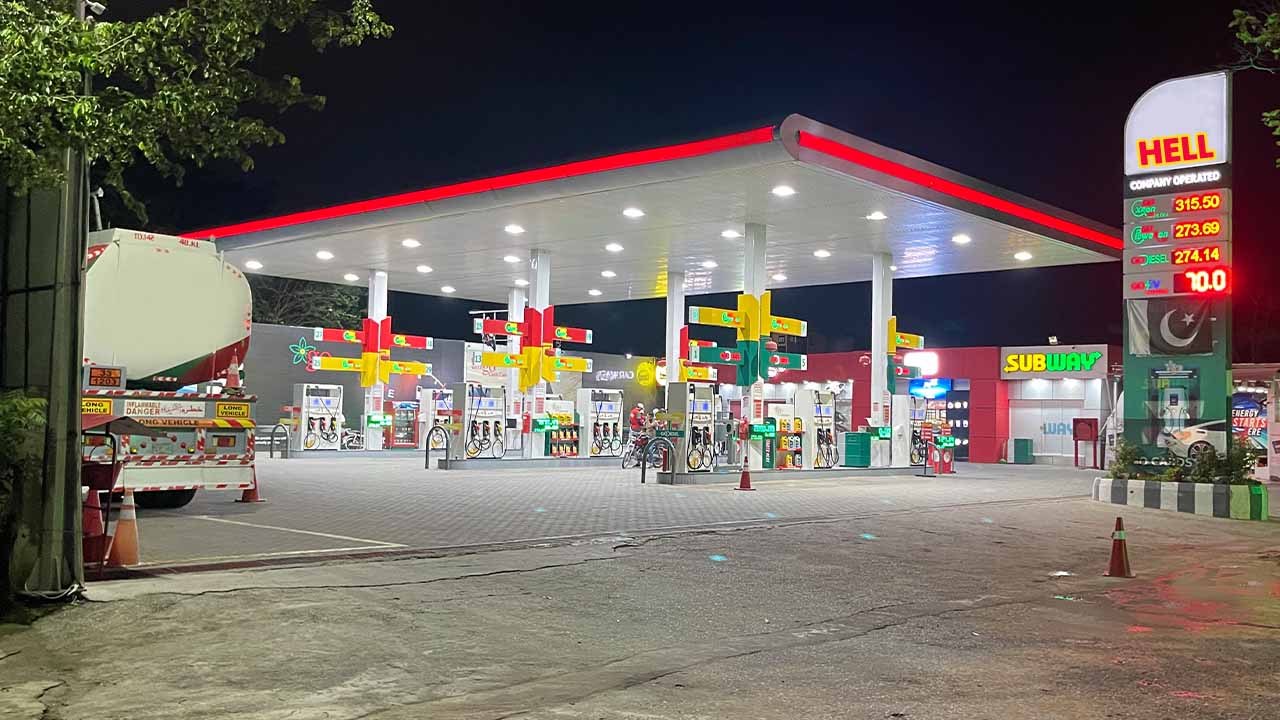
    The caretaker government has increased the petrol price by Rs17.50 to Rs290.45 per litre while diesel price has been increased by Rs20 to Rs293.40 per litre.

    The situation appears to be worsening for the already burdened population, who were already facing challenges in affording expensive petrol. Now, an additional financial strain is looming as they will be obligated to pay even higher prices.

    The Finance Division, addressing the recent developments, explained that the escalation of petroleum prices in the international market over the past two weeks has necessitated a revision in consumer prices within Pakistan. This decision has been made in response to the global market dynamics impacting local prices.

    This announcement follows a substantial price hike in fuel that was announced by the former Pakistan Democratic Movement (PDM)-led government on August 1.

    At that time, a significant increase of Rs19 per litre in the prices of both petrol and diesel was introduced. This move was attributed to the mounting global oil prices.

  • Islamabad International Airport outsourcing plan finalised: 15-year agreement for third-party management

    Islamabad International Airport outsourcing plan finalised: 15-year agreement for third-party management

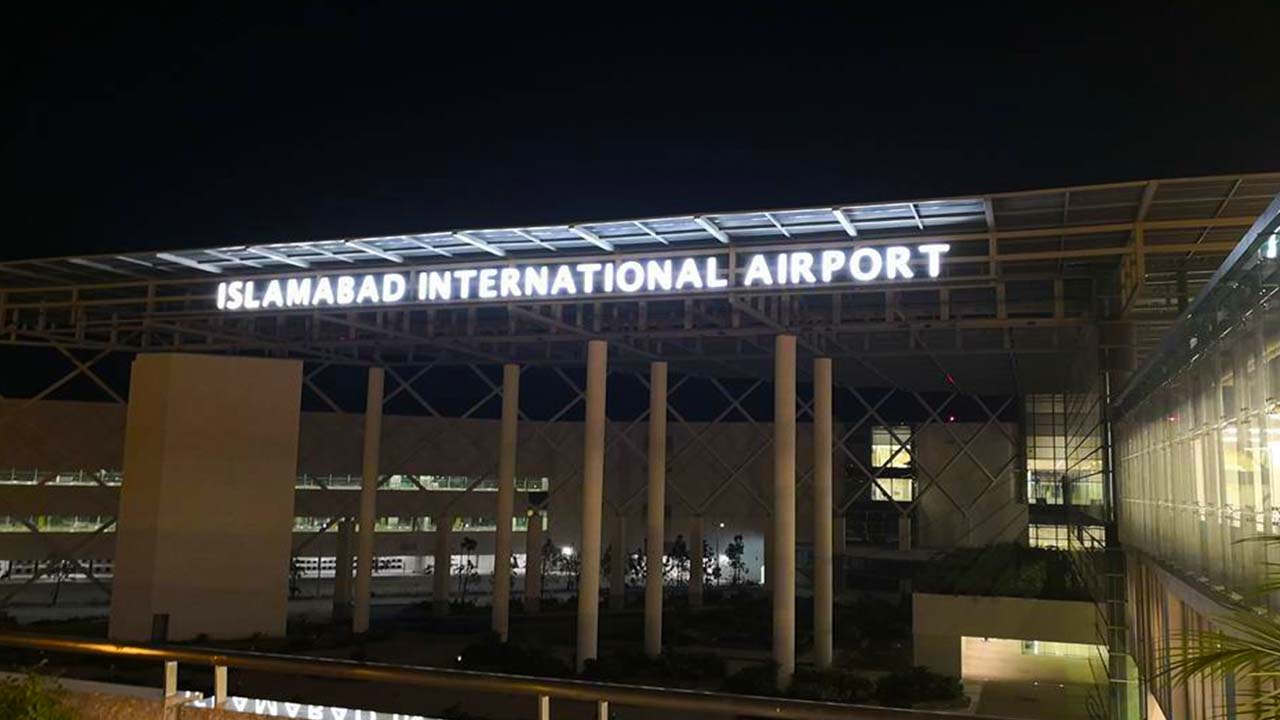
    The decision to outsource Islamabad International Airport was finalised on Tuesday. According to the details, the airport will be under third-party management for 15 years, with a non-refundable advance payment of $100 million in case of any third-party violations.

    Administrative, financial, design, and construction responsibilities will be handled by the third party. They will also have the authorisation to construct shopping malls and brand shops within the airport. The third party will retain control over service charges, exchange rates, and shop rents as per the agreement.

    According to ARY News, Customs, site security, and immigration services, on the other hand, will continue to be managed by the Civil Aviation Authority (CAA), according to sources.

    Previously, the Aircraft Owners and Operators Association of Pakistan (PAOOA) expressed opposition to the government’s unilateral decision to outsource the country’s major airports without adhering to PPRA rules.

    The association criticised the government for awarding contracts to IFC and the World Bank (WB) for the outsourcing of three airports. The association’s statement questioned the secrecy surrounding the outsourcing process, raising doubts about its transparency.

  • Tesla introduces cheaper Model S, Model X variants with reduced ranges

    Tesla has unveiled more affordable versions of its Model S sedan and Model X SUV in the United States. These new “standard range” models are priced at $78,490 (PKR 22.4 million) and $88,490 (PKR 25.3 million), respectively, marking a roughly 10 per cent reduction from the previous lowest-priced options. The company aims to boost sales by focusing on cost reduction.

    The new models will be available for delivery between September and October 2023. They come with a standard “pearly white” exterior and an all-black interior, while other colour choices will come at an additional cost.

    The updated Model S offers a driving range of up to 320 miles (515 km), which is lower than the existing basic and performance versions, which provide up to 405 miles and 396 miles of range, respectively. Similarly, the new Model X SUV boasts a range of up to 269 miles, falling short of the basic and performance versions that offer up to 348 miles and 333 miles of range, respectively.

    Tesla’s focus on price cuts and cost efficiency is evident in its consistent efforts to reduce prices in various markets. By doing so, the company aims to remain competitive and navigate economic uncertainties. In China, the company has recently lowered prices for its Model Y long-range and performance variants.

    This strategic move coincides with Tesla’s upcoming releases, including the long-anticipated Cybertruck and the completion of a manufacturing plant in Mexico. The latter is dedicated to producing a mass-market electric vehicle, which will serve as the foundation for a robotaxi.

    Although the Model S and Model X are some of Tesla’s earliest offerings, introduced in 2012, they have maintained premium pricing compared to the more budget-friendly Model 3 sedan and Model Y crossover. In the second quarter of this year, Tesla delivered 19,225 Model X and S vehicles, an increase from 16,162 vehicles delivered during the same period last year.

  • Petrol price likely to increase by Rs15 per litre after August 16

    Petrol price likely to increase by Rs15 per litre after August 16

    Starting August 16, petroleum products are expected to undergo a notable price hike. In particular, the price of petrol is projected to rise by Rs15 per litre, while diesel will likely see a steeper increase of Rs20 per litre.

    This surge in prices is attributed to a rise in global commodity rates. Recent reports indicate that the cost of crude oil has climbed by $5 per barrel, going from $86 to $91 per barrel. This increase is largely due to the elevated prices of petroleum products on the global market. Additionally, a separate premium charge of $2 per barrel has been applied to crude oil.

    Simultaneously, the international prices for both diesel and gasoline have also experienced a $5 surge, climbing from $97 per barrel to $102 per barrel.

    Should these prices remain unchanged, the anticipated effect on Pakistan’s fuel market would translate to a Rs15 per litre hike for petrol and a more substantial Rs20 per litre increase for diesel.

    In the context of the previous fortnightly review conducted by the outgoing government, a significant Rs19 per litre escalation in petrol and diesel prices had been announced. This decision was justified as being in alignment with the demands of the International Monetary Fund.

  • IMF delegation to evaluate Pakistan’s economic performance during November visit

    IMF delegation to evaluate Pakistan’s economic performance during November visit

    The International Monetary Fund (IMF) is gearing up for a vital visit to Pakistan, scheduled for November. The purpose of this visit is to assess Pakistan’s economic performance, particularly focusing on the period from July to September.

    Reliable sources in financial circles have shared that this visit is part of an ongoing review following the extension of the loan programme. Representatives from the IMF and the caretaker administration will engage in important discussions to gauge Pakistan’s progress and its adherence to the outlined economic targets.

    Reports from ARY News indicate that Pakistan is on track to receive the next portion of financial assistance, which amounts to $700 million from the $3 billion loan programme. This development underscores Pakistan’s dedication to meeting the IMF’s conditions aimed at boosting economic stability and growth.

    Forecasts suggest that the IMF is set to disburse around $1.8 billion in funds to Pakistan by March 2024. This positive outlook reflects the gradual restoration of investor confidence and the promising trajectory of Pakistan’s economy.

    However, the release of these funds hinges on Pakistan’s successful completion of two critical economic reviews. This underscores Pakistan’s commitment to implementing structural reforms and achieving sustainable economic development.

  • Car sales in Pakistan witness 57% decline in July 2023 compared to last year

    Car sales in Pakistan witness 57% decline in July 2023 compared to last year

    In the midst of ongoing economic uncertainty, the automobile sector has encountered a substantial decline in car sales, marking another significant setback.

    The most recent data released by the Pakistan Automotive Manufacturers Association (PAMA) unveils a noteworthy trend, with exclusive member carmakers collectively retailing a mere 5,092 vehicles during July 2023. This figure represents a notable downturn both in comparison to the previous month, with a 16 per cent decrease in sales, and to the same period last year, with a staggering 57 per cent reduction.

    Among the industry leaders, the Toyota Indus Motor Company (IMC) experienced a sales figure of 1,368 cars, indicating a 26 per cent reduction in sales on a month-on-month basis. On the other hand, the Honda Atlas Cars Limited (HACL) reported a sale of 494 cars, reflecting an unexpected 61 per cent surge in monthly sales. Meanwhile, the Pak Suzuki Motor Company (PSMC) encountered a decline of 19 per cent in its monthly sales, with a total of 2,444 cars sold.

    Hyundai Nishat Motors Private Limited (HNMPL) also made its mark by selling 569 cars in the past month, showcasing a modest 2 per cent increase in sales compared to the previous month. The resounding success of the Tucson model has been a driving force behind the company’s performance.

    While a slight uptick in sales has been witnessed, the overarching trajectory of the local car industry remains somber. Production disruptions persist as car companies grapple with inventory shortages, further exacerbated by the escalating prices and taxes that have curbed consumer demand.

    Experts caution that the challenges facing the industry are far from over, with more potential production obstacles and price escalations looming on the horizon. The road ahead continues to be a demanding one, requiring the industry to navigate through these formidable headwinds.

  • Major maintenance work to cause severe gas supply disruption in Karachi from tomorrow

    Major maintenance work to cause severe gas supply disruption in Karachi from tomorrow

    In a concerning development, the residents of Karachi are set to endure an extensive period of gas load shedding from August 12 to 27, as a critical gas supply of 107 million cubic feet per day (mmcfd) faces disruption due to essential annual maintenance work at the Kunnar-Pasakhi Deep (KPD) gas field.

    The Sui Southern Gas Company Limited (SSGC) has released a notification detailing the maintenance schedule for the KPD gas field, which is slated to be carried out in three phases over the course of 16 days. This maintenance work will necessitate a complete shutdown for eight days, coupled with a partial shutdown lasting four days.

    According to ARY News, the upcoming complete shutdown of gas operations is expected to result in a significant reduction of 107 mmcfd, while the partial shutdown will further trim the gas supply by 50 mmcfd. This unfortunate reduction in gas availability will inevitably impact various sectors, including domestic households, commercial establishments, industrial operations, and even the crucial Kapco power plants that rely on natural gas to generate electricity.

    This unfortunate situation follows closely on the heels of a recent setback faced by the Sui Southern Gas Company (SSGC) when a supply line was damaged during excavation work for the Bus Rapid Transport (BRT) project within Karachi. The 8-inch-diameter gas supply line suffered damage in the vicinity of Safoora Chowrangi, leading to an abrupt suspension of gas supply to neighbouring areas.

    The affected localities encompass a wide range, including vital institutions like the Memon Foundation Hospital and the sprawling Karachi University, as well as residential communities such as Sadi Town, Rimjhim, Rizvia Society, and Down University. Moreover, industrial sites and research facilities like Suparco, Sachal Goth, and surrounding villages have also been grappling with the repercussions of this supply disruption.

    While the inconvenience caused by this unexpected gas supply interruption is deeply felt, the SSGC remains committed to ensuring the completion of essential maintenance work at the KPD gas field. Despite the challenges posed by these circumstances, the SSGC aims to minimise the impact on citizens’ lives and livelihoods to the greatest extent possible.

    As Karachi prepares itself for this period of gas load shedding, residents are urged to exercise prudence in their gas consumption, explore energy-efficient alternatives where feasible, and cooperate with the SSGC’s efforts to manage the situation effectively.