Category: Business

  • Finance Minister Dar assures no global sanctions for Russian oil purchase

    Finance Minister Dar assures no global sanctions for Russian oil purchase

    Pakistan’s Finance Minister, Senator Ishaq Dar, has provided reassurances that Pakistan will not be subjected to global sanctions for its purchase of Russian oil. Dar made these remarks during a briefing to the Senate’s Standing Committee on Finance, highlighting that both India and China continue to purchase crude oil from Russia despite existing global sanctions.

    Dar emphasised that significant progress had been made in November of the previous year regarding the procurement of Russian oil, and the government had diligently completed all necessary preparations before proceeding with the purchase. He further explained that Pakistan adhered to an approved procedure established by a committee comprising G7 countries for oil production from Russia.

    Dar acknowledged the instrumental role played by Foreign Minister Bilawal Bhutto Zardari in consulting and obtaining approval from the G7 countries prior to the procurement of Russian oil.

    In terms of payment, the finance minister disclosed that the Chinese currency Yuan would be used for settling the payment for the Russian crude oil. He expressed Russia’s satisfaction with this arrangement, noting that it would not only reduce shipping costs but also lead to a decline in crude oil prices.

    When questioned about border trade with Iran, Dar confirmed that the government intended to enhance such trade but clarified that petroleum products were not included in these border trade activities.

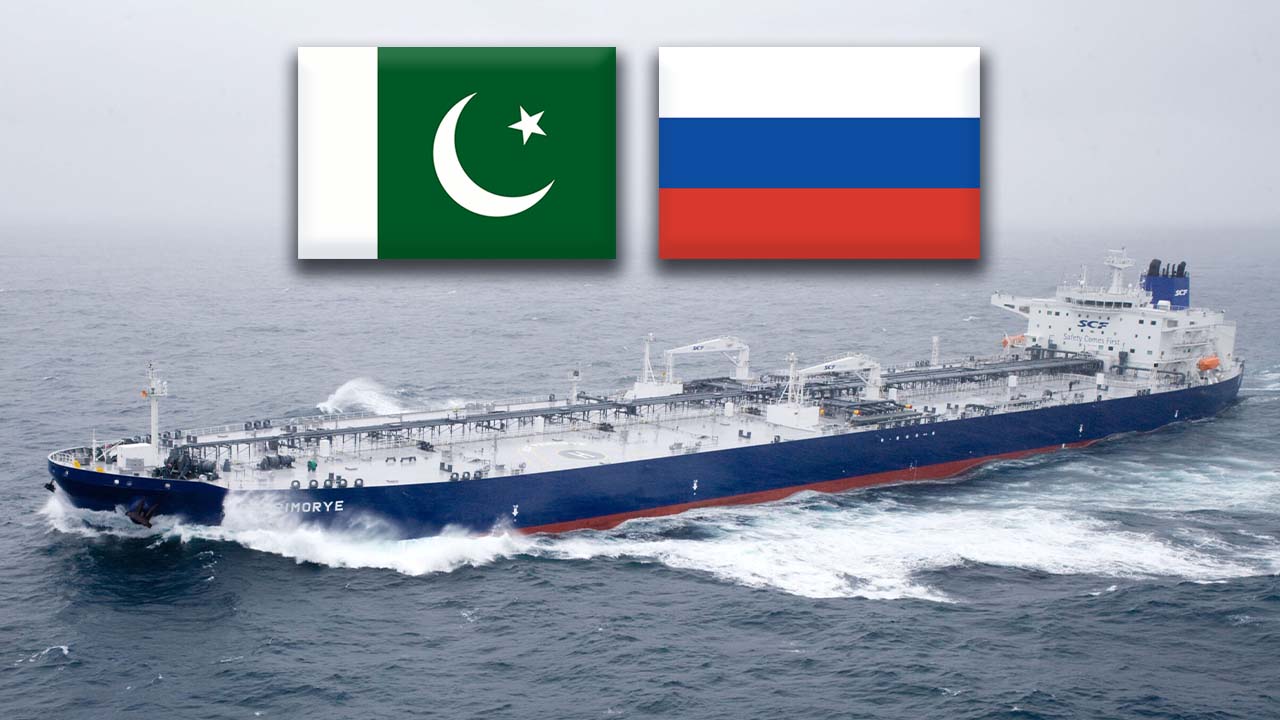
    On Sunday, Pakistan successfully unloaded over 45,000 metric tons of oil from a Russian vessel that arrived at the Karachi port. Another Russian oil carrier is expected to reach the port of Karachi in the coming week.

    It is worth mentioning that earlier this week, the first ship carrying Russian oil had already docked at the Karachi port.

    During a press briefing on June 15, US State Department spokesperson Matthew Miller highlighted that every country has the right to make decisions based on its energy requirements. He further acknowledged that Russian oil was being sold at significantly lower prices compared to global market rates.

    Miller attributed this decrease in price to the limitations imposed by the US and its allies, resulting in Russia losing an estimated $100 billion in revenue that could have been used in the Ukraine conflict. Miller clarified that the US had not imposed any restrictions on Russian oil exports.

  • Moody’s warns of limited loan options for Pakistan without new IMF programme

    Moody’s warns of limited loan options for Pakistan without new IMF programme

    According to a report by Moody’s Investors Service, Pakistan’s ability to secure loans from bilateral and multilateral partners will be severely limited until a new programme is negotiated with the International Monetary Fund (IMF). The report suggests that it may only become clear whether Pakistan will join another IMF programme after the elections, which are scheduled to take place by October 2023. Furthermore, even if negotiations for a new IMF programme are successful, they are expected to take some time.

    Moody’s warns that Pakistan is unlikely to access affordable market financing from sources such as Eurobonds or commercial banks in the foreseeable future. In fiscal year 2023, the government did not issue any Eurobonds and fell significantly short of its target by raising only Rs521 billion ($2.8 billion) from commercial banks, compared to the target of Rs1.4 trillion set in the fiscal year 2022-23 budget.

    The report also highlights the high external debt repayment burden for Pakistan in the coming years, with approximately $25 billion of repayments (principal and interest) due in fiscal year 2024. Additionally, Pakistan’s foreign exchange reserves are very low at $3.9 billion as of June 2.

    Moody’s further expresses uncertainty about Pakistan’s external funding prospects for fiscal year 2024 and beyond, noting that it is not guaranteed that Pakistan will secure the $2.4 billion from the IMF as budgeted. The IMF has been in talks with Pakistan regarding the ninth tranche of a $6.5 billion bailout package, with the current programme set to expire at the end of June.

    Regarding debt rescheduling, the report mentions that the government is considering rescheduling bilateral debts but has no plans to approach the Paris Club or multilateral partners for debt rescheduling. Moody’s states that a suspension of debt service obligations only to official creditors is unlikely to have direct rating implications, as it would provide the government with additional fiscal resources for essential expenditures in health, social, and infrastructure sectors.

    Moody’s criticises Pakistan’s newly announced budget for the fiscal year 2023-24, noting that it lacks significant revenue-raising or spending-containment measures to alleviate intense government liquidity pressures. The report suggests that the deficit estimates and growth projections in the budget may be overly optimistic, given the economic stresses faced by the country, including government liquidity and external vulnerability pressures, which have been exacerbated by severe floods in August 2022, expected to impact economic activity throughout fiscal year 2024.

    The budget does provide relief measures for households and businesses, including a reduction in fuel and electricity prices, an increase in the minimum wage, and a one-time cash transfer to low-income households. However, a substantial portion of the increased expenditure is allocated to salaries and pensions for government employees, with total employee-related expenses budgeted at Rs1.2 trillion, compared to an estimated spending of Rs960 billion in fiscal year 2023. The government has also earmarked Rs2.8 trillion for grants and subsidies in fiscal year 2024, compared to an estimated Rs2 trillion in fiscal year 2023.

    Pakistan’s low revenue-to-GDP ratio is identified as a major constraint on the government’s debt affordability and debt burden. The budget aims to achieve tax revenue of Rs9.2 trillion in fiscal year 2024, representing a 28 per cent increase from the estimated Rs7.2 trillion in fiscal year 2023. However, Moody’s sees significant downside risks to this revenue projection, given the lack of significant revenue-raising measures and the current economic context.

  • Honda hasn’t sold a single Civic in three months

    Honda hasn’t sold a single Civic in three months

    Honda Atlas Cars Limited (HACL) has not sold a single Civic in the last three months, Autojournal.pk has reported.

    It is proving to be a difficult year for HACL in production and sales. Due to supply network issues, the company’s productivity had wanted, with increased prices making the car untenable for consumers.

    Honda, one of the biggest car companies of Pakistan, sold just 87 cars last month.

    According to a recent notification, Honda will restart production very soon despite the fact that there are no dates mentioned related to production resumption.

  • Govt to increase the travel allowance so most Parliamentarians are able to get free petrol

    Govt to increase the travel allowance so most Parliamentarians are able to get free petrol

    The government has drafted a bill to increase the travel allowance of parliamentarians from Rs10 per kilometer to Rs30 per kilometer.

    The bill has been drafted on the request of parliamentarians who requested to increase travel allowance which has not been increased since 1980. Based on their request, if the parliamentarian owns a civic or corolla or a smaller car, their petrol will be free.

    Here is how:

    Lets see how much it would cost if a Parliamentarian is traveling from Lahore to Islamabad.

    How much is the distance between Lahore to Islamabad?

    The distance from Lahore to Islamabad is approximately 380 kilometers.

    If we go by previous allowance the parliamentarians would get Rs. 3,800 to travel between Lahore and Islamabad.

    If the allowance is increased to Rs30 per kilometer they will get Rs. 11,400 for the same route.

    If a person is using a civic, corolla or a smaller car to travel from Lahore to Islamabad they will consume around 47 liters of petrol which will cost around Rs. 12,000.

  • IMF criticises Pakistan’s budget for FY24, urges govt to enhance revenue generation

    IMF criticises Pakistan’s budget for FY24, urges govt to enhance revenue generation

    The Ministry of Finance high-ups informed the Senate Standing Committee on Finance and Revenues that the International Monetary Fund (IMF) has expressed serious objections regarding the budgetary framework for 2023-24. 

    The IMF has urged the government to increase both tax and non-tax revenues. 

    A senior Ministry of Finance official acknowledged the IMF’s dissatisfaction with the budgetary framework and stated that they would need to defend the proposal to raise the petroleum development levy to Rs869 billion for the next fiscal year, compared to the revised estimate of Rs542 billion for the current financial year.

    However, the senators strongly opposed the Ministry of Finance’s intention to bypass parliamentary approval and empower the government to amend the Petroleum Levy Ordinance 1961 in order to raise the petroleum levy beyond Rs50 per litre. The government plans to increase the levy to Rs60 per litre in accordance with the consumption pattern in the country, as outlined in the Finance Bill 2023-24.

    Additionally, the Senate panel rejected the proposed imposition of a 0.6 per cent advance tax on cash withdrawals exceeding the limit of Rs50,000 and suggested raising the tax rate to 1% while reducing the limit to Rs25,000 for non-filers. The panel also recommended changes to the tax rates for Super Tax, proposing a reduction in the maximum rate from 10 per cent to 8 per cent for the highest income bracket.

    The Securities and Exchange Commission of Pakistan (SECP) expressed severe concerns about the increased risk of money laundering resulting from the raised monetary limit of foreign remittances from five million rupees to $100,000. SECP Commissioner Abdul Rehman Warraich informed the Senate committee that the Federal Board of Revenue (FBR) is unable to inquire about the source of investment or income under Section 111 of the Income Tax Ordinance 2001. 

    Similarly, the FBR cannot investigate tax evasion based on the source of remittance under the same section. It is worth noting that Section 111 taxes unexplained income except foreign remittances entering Pakistan.

  • Shell Pakistan’s parent company to exit ownership, announces sale of stake

    Shell Pakistan’s parent company to exit ownership, announces sale of stake

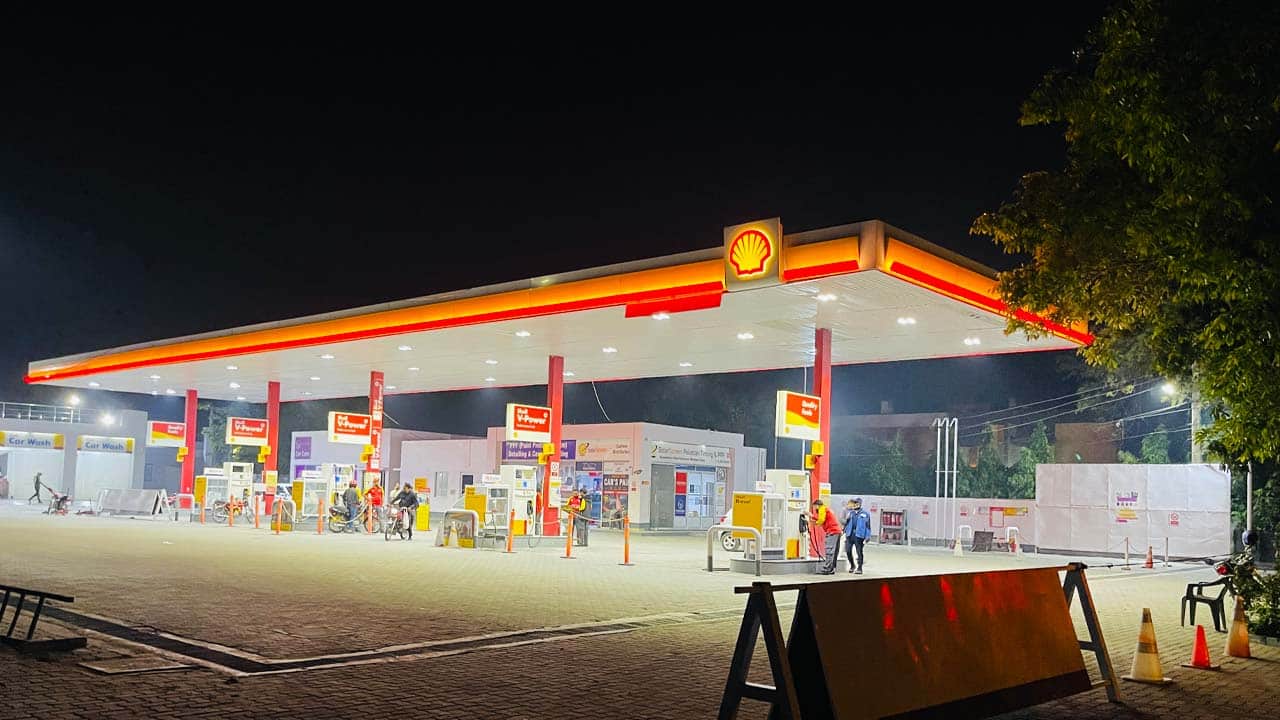
    Shell Pakistan Limited (SPL) announced on Wednesday that its parent company, Shell Petroleum Company Limited (SPCo), has communicated its intention to divest its ownership stake in SPL. The notification was conveyed by SPCo to the Board of Directors of Shell Pakistan Limited during a meeting held on June 14, 2023. The announcement was promptly disseminated to the Pakistan Stock Exchange (PSX) by Shell Pakistan.

    The potential sale of shares is contingent upon a targeted sales process, the completion of binding documentation, and obtaining the requisite regulatory approvals. It should be noted that SPL operates as a subsidiary of Shell Petroleum Company Limited, United Kingdom, which is itself a subsidiary of Royal Dutch Shell Plc—a globally renowned energy and petrochemical conglomerate.

    Shell Pakistan Limited engages in the marketing of petroleum products, compressed natural gas, and a diverse range of lubricating oils. While this development signifies a change in ownership, Shell Pakistan has emphasised that its ongoing business operations will remain unaffected and continue as usual. The company remains fully committed to ensuring the provision of safe and reliable services to its valued customers and partners.

    In the previous month, Shell Pakistan Limited released its financial results for the first quarter of 2023, which were significantly impacted by the prevailing economic crisis in the country. The company reported a substantial loss of Rs4.6 billion, in contrast to a profit after tax of Rs2 billion in the corresponding period last year. This downturn can be attributed to the unprecedented devaluation of the Rupee, escalating inflation, and broader macroeconomic uncertainties.

  • Gold price in Pakistan drops by more than Rs5,700 per tola in two days

    Gold price in Pakistan drops by more than Rs5,700 per tola in two days

    On Tuesday, the price of gold in Pakistan continued its downward trend, influenced by post-budget concerns and the impending cyclone Biparjoy, resulting in a deserted market. The All Pakistan Sarafa Gems and Jewellers Association (APSGJA) provided data indicating a decrease in the price of gold (24 carats) by Rs4,000 per tola and Rs3,430 per 10 grams, reaching Rs221,500 and Rs189,900, respectively.

    Internationally, the price of gold experienced a $2 decline, settling at $1,961 per ounce. Over the past two sessions, the cumulative decline in the prices of this precious commodity amounted to Rs5,750. Moreover, it is worth noting that gold is priced Rs4,000 per tola lower in Pakistan compared to the Dubai market.

    The fluctuating gold rates in Pakistan can be attributed to ongoing political and economic uncertainty, high inflation, and currency depreciation. During such times, individuals tend to consider gold as a safe investment and a hedge. Tuesday’s market witnessed a significant decline due to various factors, including international rates, dollar depreciation, cyclone Biparjoy, and unfavorable weather conditions that deterred buyers from venturing out.

    Data from the association indicated that the price of silver remained unchanged at Rs2,650 per tola and Rs2,271.94 per 10 grams. Furthermore, the local currency experienced a decrease of Rs0.34 or 0.12 per cent against the US dollar, concluding the day at Rs287.97 in the interbank market.

  • Inventory shortage forces Pak Suzuki to extend motorcycle plant shutdown

    Pak Suzuki Motor Company (PSMC) has officially announced the extension of the shutdown of its motorcycle plant until June 16, 2023. The decision was conveyed to the Pakistan Stock Exchange (PSX) through a notice on Tuesday. The company attributed this action to ongoing government restrictions on imports, which have negatively impacted the automotive industry and resulted in a shortage of inventory.

    The notice stated, “Due to shortage of inventory level, the management of the company has decided to shut down motorcycle plant from June 12, 2023 to June 16, 2023.” However, the automobile plant will continue its operations as usual.

    Previously, PSMC had temporarily closed its motorcycle plant until June 10, 2023, due to a shortage of raw materials. Furthermore, both the automobile and motorcycle plants had experienced a shutdown from May 2 to May 9. Similarly, the automobile plant underwent closure from April 7 to April 28.

    As an assembler, manufacturer, and marketer of Suzuki cars, pickups, vans, 4x4s, motorcycles, and related spare parts, PSMC plays a crucial role in the automotive sector. The Suzuki brand, originating from Japan, holds prominence in the company’s product lineup.

    Earlier in April, PSMC reported its highest-ever quarterly loss of Rs12.9 billion for the first quarter of 2023. The decline in sales and substantial finance costs were cited as contributing factors. In comparison, the company had incurred a loss of Rs460.227 million during the same period last year.

    The auto industry in Pakistan is currently grappling with numerous challenges. Indus Motor Company Limited and Honda Atlas Cars, two other prominent listed companies, have also halted production in recent months due to economic hardships.

    The country’s auto sector heavily relies on imports, making it particularly vulnerable to the government’s import restrictions and the tightening of Letters of Credit iissuance. Furthermore, soaring finance costs and significant increases in car prices have dampened consumer demand.

  • State Bank keeps policy rate unchanged at 21%, eyes decline in inflation

    State Bank keeps policy rate unchanged at 21%, eyes decline in inflation

    The State Bank of Pakistan’s (SBP) Monetary Policy Committee (MPC) has made the decision to maintain the policy rate at 21 per cent for the next two months. This move is based on the committee’s anticipation that inflation will begin to decrease starting this month.

    During its previous meeting in April, the MPC had raised the key policy rate by 100 basis points to a record high of 21 per cent in order to control inflation. Since January 2022, the SBP has increased rates by a total of 1,150 basis points.

    In a press release issued today, the central bank highlighted that the higher inflation figures for April and May were in line with expectations. The committee also observed a sequential decrease in inflation expectations among consumers and businesses, following recent peaks.

    Furthermore, the MPC predicts that domestic demand will remain subdued due to tight monetary policy, domestic uncertainties, and ongoing pressure on the external account. Given this context and the declining month-on-month trend, the committee expects inflation to have reached its peak at 38 per cent in May 2023, with a subsequent decline anticipated from June onwards, barring any unforeseen developments.

    The committee acknowledged several significant developments that have occurred since its previous meeting. Firstly, provisional national accounts estimates indicate a considerable deceleration in real GDP growth during FY23. Secondly, the current account balance registered consecutive surpluses in March and April 2023, alleviating some pressure on foreign exchange reserves.

    Thirdly, the government unveiled the budget for Fiscal Year 2023-24 on June 9, which outlines a slightly contractionary fiscal stance compared to the revised estimates for FY23. Lastly, global commodity prices and financial conditions have recently eased and are expected to persist in the near term.

    The Monetary Policy Committee also evaluated the cumulative impact of the substantial monetary tightening implemented thus far, which is still unfolding. Overall, the committee believes that the current monetary policy stance, characterised by positive real interest rates on a forward-looking basis, is appropriate for anchoring inflation expectations and bringing down inflation towards the medium-term target, barring any unexpected domestic or external shocks.

    However, the committee emphasised that this outlook is contingent upon effectively addressing prevailing domestic uncertainties and external vulnerabilities.

    The committee noted that the major drag on real GDP growth, which increased by 0.3 per cent in FY23 compared to the revised growth of 6.1 per cent in FY22, stemmed from a significant contraction in the value addition of the industry due to various adverse domestic and external factors.

    The services sector also experienced its slowest growth pace since the COVID-impacted FY20. However, the agriculture sector demonstrated growth lower than the previous year but better than post-flood expectations, driven by bumper sugarcane and wheat crops and robust growth in the livestock sector, which compensated for flood-related damages to cotton and rice crops.

    The MPC further highlighted that the slowdown in economic activity aligns with trends observed in high-frequency indicators, particularly double-digit declines in auto, petroleum, and domestic cement sales volumes, as well as contraction in large-scale manufacturing throughout this fiscal year.

    These trends are expected to persist in the near term due to the accumulated impact of tight policies. Conversely, barring any unfavorable weather conditions, the agriculture sector is expected to exhibit improved performance compared to the outgoing fiscal year, according to the committee.

  • Massive reduction in petrol price expected as Pakistan aims for one-third crude oil import from Russia

    Massive reduction in petrol price expected as Pakistan aims for one-third crude oil import from Russia

    Minister of State for Petroleum, Musadik Malik, has announced that the prices of petroleum products will witness a decrease once a continuous supply of oil from Russia is ensured.

    Speaking to a private news channel, Malik highlighted the substantial difference in prices that will benefit the masses once Pakistan starts fulfilling one-third of its domestic oil needs through imported Russian oil. He stated, “Our target is to obtain one-third of crude oil from Russia at a discounted rate. When we achieve this objective, petroleum products will be available at a cheaper price.”

    In response to a question about the expected decrease in fuel prices, Malik said, “I am unable to divulge the precise pricing details at this moment. However, it will lead to a significant difference.”

    While the state minister refrained from disclosing the current price, he emphasised that a substantial reduction in price would occur. He also mentioned that the first oil cargo has already arrived in Karachi, and the government is focused on maintaining a steady supply of Russian oil.

    The current deal involves 100,000 metric tonnes of oil, with the second consignment scheduled to arrive at the port next week.

    When asked about the possible effects of buying Russian oil and any potential issues at the global level, Malik expressed confidence that adhering to agreements and maintaining transparency would prevent any complications. He underscored the importance of responsible international engagement.

    Previously, Prime Minister Shehbaz Sharif expressed his fulfillment of another promise made to the nation, stating that the arrival of the first-ever Russian oil cargo marks the beginning of a new relationship between Pakistan and the Russian Federation. He described the day as transformative and emphasised the country’s commitment to achieving prosperity, economic growth, and energy security.

    Following its docking at the port, the authorities have commenced the process of transferring the Russian crude from the oil tanker to the Pakistan Refinery Limited for further processing and extraction of various final products. The transportation of crude oil to the facility is expected to be completed within the next 24 to 36 hours.

    It is worth noting that this is the first time Russian crude oil is being treated in Pakistan. The determination of the actual price of petroleum products in Pakistan will be possible only after the completion of the processing of this imported oil.