Category: Business

  • Cash deposits in sellers accounts to be considered as valid payments: FBR

    Cash deposits in sellers accounts to be considered as valid payments: FBR

    To the great relief of the business community, the Federal Board of Revenue (FBR) has clarified that cash deposits made by buyers into a seller’s bank account will now be treated as valid payments under the Income Tax Ordinance, 2001. According to reports, the clarification pertains to a newly added clause in Section 21 of the Ordinance.

    The clause in question stated that 50 percent of business expenditures on the sale of goods exceeding Rs200,000 on a single invoice would be disallowed for tax purposes. Reports revealed that this disallowance was to be enforced if the buyer failed to make the payment through a formal banking channel.

    Initially, reports hinted that transactions would be subject to the tax disallowance unless the buyer directly transferred the funds to the seller’s account from their own bank account. This implied that cash sales and depositing cash into a seller’s account for goods worth over Rs200,000 would result in the 50 percent disallowance rule.

    However, the FBR has confirmed that deposits into the seller’s bank account will be considered as a valid payment. As such, the disallowance will not be applied to such transactions.

    As per the FBR, this would allow more businesses to transition and integrate into the formal economy, shifting away from cash transactions. The revenue watchdog reportedly acknowledged that cash deposits into the seller’s accounts will continue to remain a legitimate transaction method. 

    The clarification by the FBR came after mounting pressure from business communities as businesses logged their frustrations against this law via protests in July 2025, as it resulted in an increase in their taxable income. As per recent reports, some members of the business community believed that the FBR was able to meet its revenue target for the first month of fiscal year (FY) 2025-26 at their expense.

    The FRB reportedly surpassed its collection target for July 2025, by collecting Rs755 billion in revenues against the monthly target of Rs748 billion. Reports suggest that this was made possible by an improvement in indirect tax collection.

    Data from reports indicates that the collection figure for the first month of FY 2025-26 was Rs96 billion higher compared to the corresponding period last year. This marks almost a 15 percent improvement in YoY revenue collections. If the FBR continues to generate revenues as it did in July 2025, it would help rubbish claims that the FBR met its revenue target because of the tax disallowance clause in the income tax ordinance.
  • Jazz, Ufone emerge as top performers in PTA’s survey

    Jazz, Ufone emerge as top performers in PTA’s survey

    The Pakistan Telecommunication Authority (PTA) has released its findings from the Q2 2025 Quality of Service (QoS) Survey, ranking the country’s major cellular networks based on performance. The ranking is reportedly based on mobile coverage in 19 cities across Punjab, Khyber Pakhtunkhwa and Sindh.

    The survey covered cities from across Pakistan. In Punjab, these included Bahawalpur, Chiniot, Multan, Sheikhupura, Mandi Bahauddin, Pindi Bhattian, Hasanabdal, Fateh Jang, Shakargarh, and Jatoi. In Sindh, the surveyed cities were Karachi, Jacobabad, Larkana, Matiari, and Umerkot. Cities from Khyber Pakhtunkhwa included Buner, Mansehra, Mardan, and Risalpur.

    The survey was conducted between April and June 2025. Results show that Jazz and Ufone performed exceptionally well during this period.

    As per the details, PTA tested more than 340,000 broadband performance samples, along with an estimated 43,000 SMS and voice calls. Reports suggest that the PTA also compared the performance of four Cellular Mobile Operators (CMOs) based on their signal strength standards for 4G and 3G networks.

    The aforementioned test was reportedly carried out by calibrating testing devices to “technology auto-detect mode”. For reference, auto-detect mode refers to mobile devices automatically switching between available network technologies such as 2G,3G, and 4G during the survey.

    The results of the tests indicate that Telenor ranked last in the signal reliability test, as it was reported to have the most non-compliant cities. Zong performed better than Telenor, with Jazz and Ufone leading PTA’s rankings for signal reliability.  

    While the PTA survey establishes Jazz and Ufone to be the most reliable cellular networks, these rankings are subject to change and may not remain in the same order as cellular companies may work to maintain or improve their rank in the upcoming surveys.

    Reports reveal that it took over 70 days for the PTA to collect the data, as they travelled a distance of over 2,500 kilometres to collect data on signal strength from high population regions in each of the cities under the survey. The collection of this data was done via uniform drive-testing procedures.

    While Jazz and Ufone have emerged as top performers in the sphere of mobile coverage, reports have suggested that rankings on metrics such as voice quality and mobile broadband performance are yet to be released. For users looking to subscribe to a network carrier, it would be worthwhile to wait for the publication of these results as well, allowing them to make an informed decision to discern which carrier will be best suited to their needs.

  • Iranian president lands in Pakistan, looks to boost bilateral trade volume to $10 billion

    Iranian president lands in Pakistan, looks to boost bilateral trade volume to $10 billion

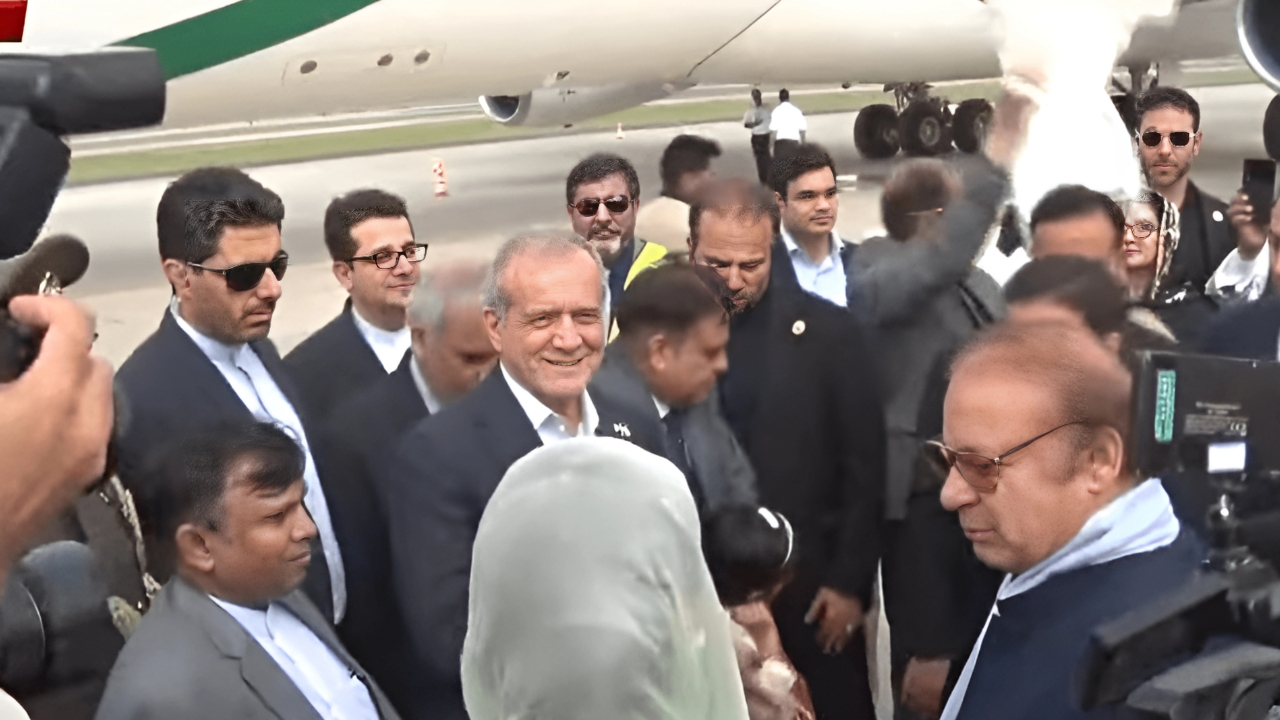
    In an effort to reiterate his commitment to enhance bilateral trade with Pakistan, Iranian President Masoud Pezeshkian landed in Pakistan on Saturday.

    According to reports, his delegation consists of key ministers and senior officials such as Iran’s Foreign Minister Abbas Araghchi, all of whom are in the country to execute outlined plans of raising the bilateral volume of trade between the two neighbours up to a staggering $10 billion.

    For reference, the official volume of trade between both countries sat at just $2.8 billion in fiscal year (FY) 2024-25 Earlier this year, Pakistan and Iran reportedly agreed to boost bilateral volume of trade over a period of five years.

    The Iranian president’s intent to boost the volume of trade between both countries comes amid reports suggesting that Iran aims to improve its access to East Asian economies such as China, via Pakistan.

    This claim holds merit as Iran’s president suggested that Iran could connect itself “to the Silk Road linking Pakistan and China, and the route can then extend through Iran to Europe”. If Tehran remains successful in this initiative, it would prove to be greatly beneficial for Iran as it would become the centre of trade between Europe and China.

    A “Silk Road” passing through Iran would also give the country significant strategic leverage over major global economies. By becoming a vital trade corridor between Europe and China, Iran could increase the cost of sanctions imposed against it, as these economies would find themselves more economically intertwined with Tehran.

    Reports indicate that the Iranian president has also outlined the great economic relations both countries have maintained with each other as both “countries cooperate in economic, scientific, cultural and border areas”. Pakistan and Iran have been improving economic relations considerably after tensions between both sides peaked in January 2024, when both countries exchanged airstrikes.

    In February 2025, Iran revealed that it would take initiatives to boost economic cooperation, such as reducing the costs associated with business visas for Pakistani individuals looking to invest into Iran.

  • Pakistan’s ‘bipolomacy’ yields agreement with Kyrgyzstan to boost cooperation in crypto

    Pakistan’s ‘bipolomacy’ yields agreement with Kyrgyzstan to boost cooperation in crypto

    Do you have any idea as to what is happening in the world of ‘biplomacy’? You know, the kind of diplomacy that’s used to advance crypto goals. Well, Pakistan is leading the charge and in its latest efforts to establish itself as the crypto capital of the world, Pakistan has joined hands with Kyrgyzstan to promote bilateral cooperation along the lines of digital finance, blockchain technology and cryptocurrency. 


    The federal government has been looking to accelerate the adoption and integration of cryptocurrencies into the national economy. Reports have revealed that stakeholders present at a high-profile meeting in Islamabad earlier this week were briefed about Virtual Assets Act,2025. The meeting was attended by representatives from exchange companies, banks, and the jewellery sector.


    As per reports, Minister of State and Chief Executive Officer (CEO) of the Pakistan Crypto Council (PCC) Bilal bin Saqib held an online video conference with Director of the National Investment Agency of Kyrgyzstan Farukht Aminov. During the meeting, both sides discussed matters pertaining to technology exchange, development of virtual assets and also went over collaboration in regulatory frameworks. 


    According to reports, Kyrgyzstan’s Director of the National Investment Agency outlined the importance of knowledge and experience sharing. The PCC’s CEO indicated that Kyrgyzstan could become an important partner for Pakistan with respect to the development and regulation of digital assets.


    Moreover, reports reveal that the PCC’s CEO also shared his views regarding relations between the two countries, suggesting that relations between the two would be a strong  foundation in the digital economy of the future.


    The online conference regarding virtual asset cooperation between the two countries pointed towards physical, tangible results in the coming periods. This is because both sides discussed the signing of  a memorandum of understanding (MoU) to boost cooperation in the cryptocurrency space. 


    Reports reveal that both the PCC’s CEO and his Kyrgyzstani counterpart voiced their commitment to cooperating with the other to establish a modern, secure, and transparent digital economy. Moreover, both sides reportedly outlined the need for additional partnerships in Central and South Asia to promote blockchain and digital finance. 


    This is not Pakistan’s first attempt to secure partnerships in the digital asset space as in June, the PCC’s CEO met with El Salvador’s President Nayib Bukele, and discussed forming a partnership to exchange knowledge on digital assets.


    Aside from collaborating with Kyrgyzstan, entering into knowledge sharing agreements with El Salvador could yield positive results for Pakistan, as the South American country adopted Bitcoin as legal tender in September 2021. While it rolled back Bitcoin’s status as legal tender in January 2025, Pakistan could benefit from the knowledge El Salvador gained during its three-year “experiment”, regarding the integration of digital assets into the national economy.

  • FBR posts Rs755 billion revenue for July, exceeding target by Rs7 billion

    FBR posts Rs755 billion revenue for July, exceeding target by Rs7 billion

    The Federal Board of Revenue (FBR) has surpassed its collection target for the first month of fiscal year (FY) 2025-26, by collecting Rs755 billion in revenues against the monthly target of Rs748 billion. This was reportedly made possible by an improvement in indirect tax collection.

    Data from reports suggests that the collection figure for the first month of FY 2025-26 was Rs96 billion higher compared to the corresponding period last year. This marks almost a 15 percent improvement in YoY revenue collections.

    The federal government has set a staggering Rs14.13 trillion revenue target for FY 2025-26, a colossal task for the FBR as the target is 20 percent higher than that set in the previous fiscal year. Reports suggest that the revenue watchdog is utilising enhanced tax enforcement measures along with recouping taxes that have been “tied up in litigation”.

    While the FBR has surpassed its overall collection target by Rs7 billion, only two sub-targets were met – customs duties and sales tax – while failing to meet the rest, including targets for federal excise duty and income tax.

    Authorities were able to collect a staggering Rs106 billion in customs duties, a figure Rs14 billion higher than the targeted collection level. Reports indicate that this surge in customs duty collection came about as importers refrained from bringing goods into the country as they expected lower duties in FY 2025-26.

    Sales tax collections were Rs12 billion higher than the target in place for the first month of FY 2025-26, with total collections reaching Rs302 billion. This marks a YoY increase in sales tax collections of Rs46 billion. 

    However, reports claim that high duty rates affected company sales for certain products. This strengthens the claim of some members of the business community who believe that the revenue target has been met at their expense.

    This is because the federal government imposed a tax disallowance, resulting in business owners remaining unable to disallow 50 percent of claimed expenditures on the sales of goods valued over Rs200,000. 

    Businesses have logged their frustrations against this law via protests in July 2025, as it results in an increase in the taxable income of businesses. Recent reports suggested that this would allow the FBR to witness a boost in revenues, which is exactly what has occurred. 

    The FBR’s uptick in collection levels, however, has reportedly decreased profit margins for businesses, whose prices and sales volumes have remained unchanged, and who are compliant with taxation laws. The business community has also raised concerns about the presence of FBR’s tax inspectors at business sites, as the federal government claimed it would track production and sales values digitally.

  • Diesel prices up by Rs31 per litre since June 1

    Diesel prices up by Rs31 per litre since June 1

    After two consecutive hikes in petrol and high-speed diesel (HSD) prices, the federal government has announced new petroleum rates for the upcoming fortnight. The price of petrol has been reduced by Rs7.54 per litre, falling from Rs272.15 to Rs265.61 per litre.

    However, it merits a mention that the price of HSD has continued to rise, with the government increasing it by Rs1.48 per litre. As a result, HSD now stands at Rs285.83 per litre and will remain in effect until August 15, 2025.

    Previously, analysts had indicated a possible fall in the prices of both petrol and HSD by Rs6.82 per litre and Rs1.68 per litre, respectively. Similarly, Arif Habib Limited (AHL) believed that persistent increases in fuel prices had created room for the government to reduce the prices of both HSD and petrol.

    Data from reports suggests that the price of diesel has increased sharply since June 1, rising from a conservative Rs254.64 per litre to a staggering Rs285.83 per litre. This Rs31.19 hike in HSD prices since June 1 translates to a 12.24 percent increase in the rate of the commodity.

    The hike in HSD prices is likely to raise operating costs for both the transport and agriculture sectors. This increase could have detrimental effects on the economy, as it directly increases food prices. HSD is widely used in agriculture to power tractors and other mechanised farming equipment.

    An increase in HSD rates could also negatively impact the transport sector, given its reliance on fuel. For instance, the transportation sector has diesel as a primary input and thus requires vast quantities of the commodity. Higher HSD prices imply higher operational costs for businesses in the transportation sector.

    Moreover, the projected increase in HSD prices is likely to stifle economic activity for businesses that transport goods from factories to stores, as transportation costs will increase, resulting in a drop in profit margins.

    People relying on private buses and wagons for daily commuting are also likely to be affected, as transport fares are expected to rise to protect vehicle owners’ profit margins. Commuters may face higher fares for an extended period, since analysts point out that fares tend to remain high even after HSD prices decrease following an increase.

  • Trump administration announces Pakistan tariffs; lowest for any South Asian country

    Trump administration announces Pakistan tariffs; lowest for any South Asian country

    The United States administration led by President Donald Trump has imposed a 19 percent tariff on Pakistani goods, revised from the previous 29 per cent, making this the lowest tariff rate of any South Asian country.

    According to an executive order detailing the tariffs issued on Thursday, it was announced that Pakistan is set to face a 19 percent tariff rate as the US president’s tariff deadline comes to an end on August 1.

    Islamabad’s trade surplus with the US was approximately $3 billion in 2024, primarily driven by textile exports. The US is Pakistan’s largest market for textiles, according to reports.

    The order listed higher import duty rates of 10 to 41 percent starting in seven days for 69 trading partners as the 12:01 am EDT (9:01 am PKT) deadline approached. Some of them had reached tariff-reducing deals, and some had no opportunity to negotiate with his administration.

    According to the order, goods from all other countries not listed would be subject to a 10 percent US import tax.

    Goods from India appeared to be headed for a 25 percent tariff after talks bogged down over access to India’s agriculture sector, drawing a higher-rate threat from Trump that also included an unspecified penalty for New Delhi’s purchase of Russian oil.

    Trump’s order stated that some trading partners, “despite having engaged in negotiations, have offered terms that, in my judgement, do not sufficiently address imbalances in our trading relationship or have failed to align sufficiently with the United States on economic and national-security matters.”

    Trump set rates, including a 35 percent duty on many goods from Canada, up from 25 per cent previously, and a steep 50 percent for Brazil, 20 percent for Taiwan, 39 percent for Switzerland, 15 percent for South Korea, and 20 percent for Bangladesh, according to a presidential executive order.

    Regarding the higher import tax on Canada, the second largest US trading partner after Mexico, media reports quoted an official as saying that Canadian officials “haven’t shown the same level of constructiveness that we’ve seen from the Mexican side.”

    Meanwhile, China faces an August 12 deadline to finalize a lasting tariff deal with the Trump administration, following preliminary agreements made in May and June this year aimed at halting the escalating tariff war and preventing a disruption in rare earth mineral supplies.

  • Trump flays India as US finalises trade deal with Pakistan

    Trump flays India as US finalises trade deal with Pakistan

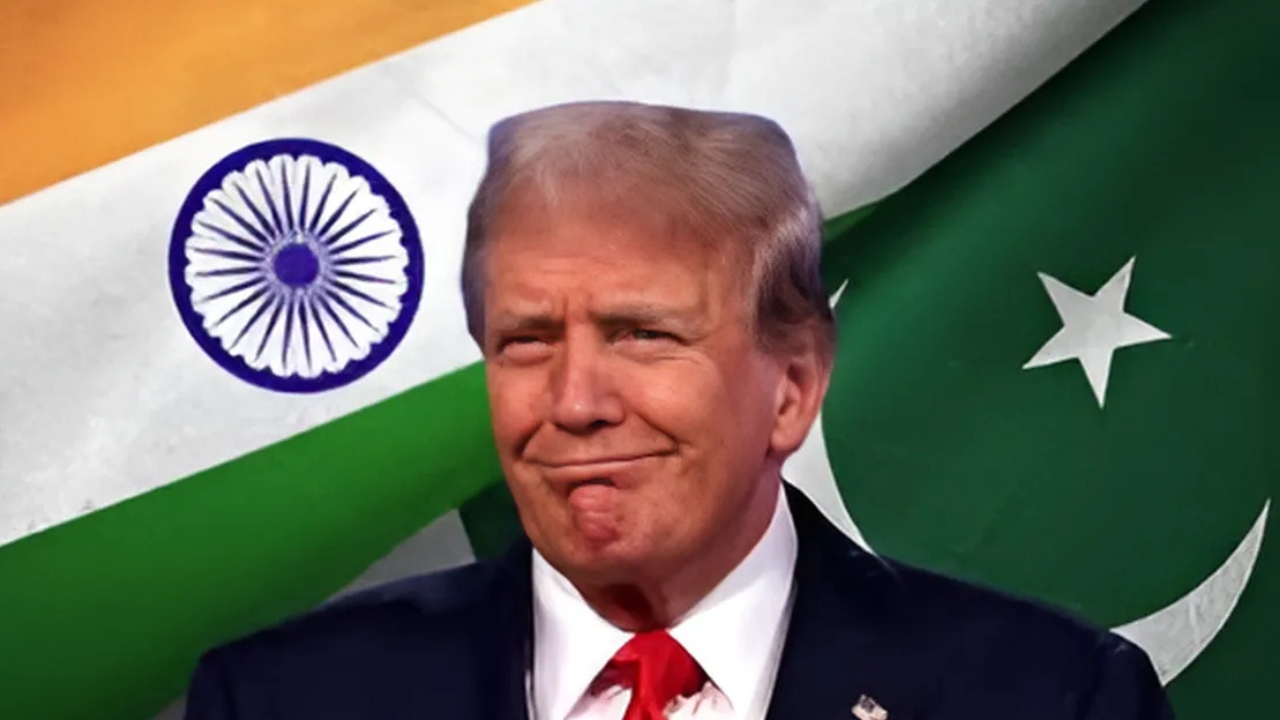
    In a major blow to India, US President Donald Trump has imposed a 25 percent tariff on the South Asian country, along with other unspecified penalties for purchasing oil from Russia. Taking a jab at New Delhi, he quipped that India might soon be buying oil from Pakistan. Meanwhile, Pakistan has managed to secure a trade deal with the US.

    According to reports, the trade deal is expected to result in a substantial drop in tariffs on Pakistani imports entering the US. However, neither Pakistan nor the US has released any figures regarding the final tariff value levied on Pakistani imports.

    Pakistan’s embassy in the US has outlined that the agreement will allow a fall in reciprocal tariffs levied on US imports of Pakistani goods. The trade deal was finalised during a meeting of Pakistan’s Finance Minister Muhammad Aurangzeb and US Secretary of Commerce Howard Lutnick. 

    Commerce Secretary Jawad Paul, Pakistan’s Ambassador to the US Rizwan Saeed Sheikh and US Trade Representative Ambassador Jamieson Greer also attended the key meeting on the finalisation of the trade deal. According to details, the deal will lead to increased bilateral cooperation in cryptocurrency, energy, IT, and mining sectors.

    According to the Pakistan embassy, the deal is expected to spur increased US investment in Pakistan’s infrastructure and development projects.

    Taking to social media, Pakistan’s embassy in the US shared a post on X (formerly Twitter) about the finalisation of a trade deal aimed at “boosting bilateral trade, expanding market access, attracting investment, and fostering cooperation in areas of mutual interest”. It further highlighted the potential uptick in foreign direct investment (FDI) inflows that will likely be directed towards development and infrastructure projects. 

    The US President also confirmed the finalisation of the trade deal via Truth Social. Apart from confirming the trade deal, he also outlined how “Pakistan and the United States will work together on developing their massive oil reserves,”.

    While it is unclear which oil reserves Donald Trump was referring to, reports from September 2024 reveal the discovery of sizable petroleum and natural gas reserves in Pakistan’s territorial waters. 

    Moreover, the US President noted that the process to select the oil company leading the Pak-US partnership is still underway. Taking a jab at India, the post suggested that Pakistan’s massive oil reserves and their development could result in Pakistan “selling oil to India some day!”.

  • Govt scraps additional taxes on Temu, Ali Express, others

    Govt scraps additional taxes on Temu, Ali Express, others

    The Federal Board of Revenue (FBR) has announced the removal of the five percent tax previously imposed by the federal government on foreign goods purchased through online shopping platforms. According to reports, the tax repeal took effect on July 31, 2025, with experts predicting a drop in prices.

    The FBR issued an official notification highlighting the removal of the additional tax on digital goods and services. As per reports, purchase from top online retail services such as SHEIN, AliExpress and Temu will no longer be subject to higher taxes, allowing more affordable goods to enter Pakistan.

    However, the prices on these platforms are unlikely to return to pre-budget levels. According to the FBR, the 18 percent general sales tax (GST) levied on all imports of digital goods and services in the budget for fiscal year (FY) 2025-26 has not been repealed.

    The removal of the five percent additional tax on digital imports is expected to be good news for online shoppers. The imposition of GST and this extra tax had previously frustrated customers, as it caused the prices of goods previously affordable to increase sharply.

    As a country with a low average national income, the trend of shopping for goods online has reportedly been increasing in Pakistan, especially among younger buyers. Platforms like SHEIN, AliExpress, and Temu have each gained a large share of the Pakistani market as their products are often priced lower than their counterparts available in the domestic market.

    Moreover, details from reports suggest that these platforms often provide more variety to consumers in comparison to local markets. For example, SHEIN has a vast array of clothing choices, which many Pakistani consumers consider to be unparalleled when compared to the variety available at local clothing outlets. Similarly, AliExpress and Temu provide online buyers with everything from gadgets to home decor.

  • PM Shehbaz Sharif applauds power minister Awais Leghari for landmark reforms in the energy sector

    PM Shehbaz Sharif applauds power minister Awais Leghari for landmark reforms in the energy sector

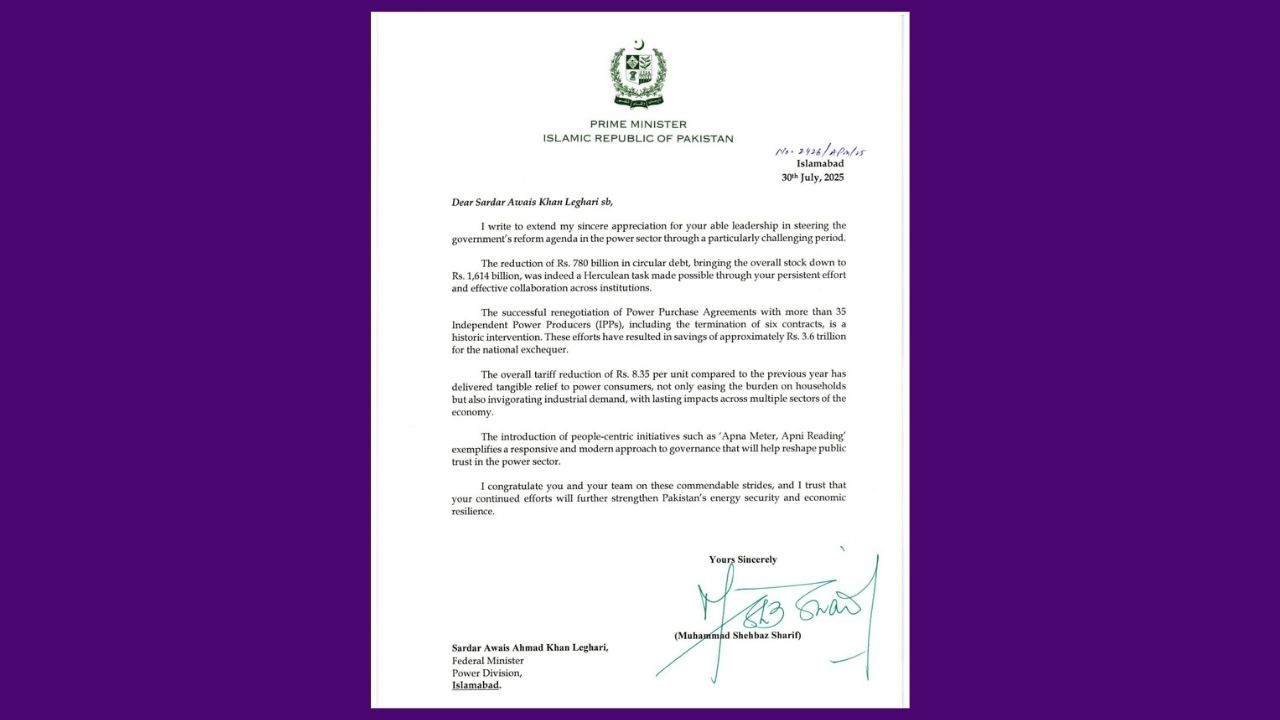
    In a rare and high-impact gesture of appreciation, Prime Minister Shehbaz Sharif has officially lauded Federal Minister for Power, Sardar Awais Ahmad Khan Leghari, for his leadership in driving critical reforms in Pakistan’s power sector.

    The Prime Minister’s letter of recognition praises the Power Division’s performance, highlighting a combination of fiscal discipline, structural reforms, and people-centric governance under Leghari’s stewardship.

    At the heart of the Prime Minister’s appreciation is the unprecedented reduction of Rs. 780 billion in circular debt, a longstanding burden on Pakistan’s economy. The Prime Minister commended this achievement as a testament to strong financial management and inter-ministerial coordination, calling it a “historic breakthrough.”

    The letter also references a Rs. 3.6 trillion national savings secured through the renegotiation of agreements with Independent Power Producers (IPPs) — a bold and difficult move that helped stabilize energy payments and restructured liabilities for long-term relief.

    In a tangible move toward public relief, the government also introduced a Rs. 8.35/unit reduction in electricity tariffs, benefiting millions of consumers across Pakistan. The Prime Minister acknowledged this as a rare and impactful step, especially in a global economic climate where energy prices continue to rise.

    Further, the launch of the ‘Apna Meter Apni Reading’ initiative was hailed as a transformative step toward transparency and consumer empowerment. The initiative allows citizens to directly participate in meter reading, reducing billing disputes and increasing public trust in the power distribution process.

    The Prime Minister noted that these reforms were achieved within a short span of time and with institutional collaboration, crediting Minister Awais Leghari’s “commitment, leadership, and reform-focused approach.”

    This letter of appreciation marks not only a personal milestone for the Minister but also a national moment of progress, signaling renewed public confidence in the governance of the power sector — one that has long been plagued by inefficiencies and mistrust.