Category: Business

  • PANAH suggests tobacco taxes be raised even higher

    PANAH suggests tobacco taxes be raised even higher

    Pakistan National Heart Association (PANAH) has proposed that the government increase tariffs on unnecessary and harmful tobacco products. Increased tobacco-related levies will lessen diseases and healthcare expenses while also helping to generate tax revenue.

    Sanaullah Ghumman, PANAH’s General Secretary, announced this at a news conference held by the Pakistan National Heart Association on Wednesday at a local hotel.

    Smoking, according to Sanaullah Ghumman, is not healthy for human health in any aspect, and it is the first step toward addiction. Health experts and civil society groups have also urged the Prime Minister to increase tobacco goods taxes.

    A significant number of health experts and civil society representatives attended the event. Tobacco kills 8 million people worldwide each year, according to a global study, and more than 1.5 million individuals in Pakistan lose their lives each year owing to smoking.

    On World Food Safety Day, PANAH proposed that tariffs on sugary drinks be increased as well, as these beverages are harmful to children and cause a variety of health problems.

    Sanaullah Ghumman spoke at the event, urging a 30 per cent rise in tobacco product taxes to protect minors from tobacco usage.

    “This will be a win-win situation for us,” he continued, “since it will lower the health burden while also dramatically increasing revenue”. PANAH, he claimed, had been educating the public about a variety of dangerous diseases, including heart disease and its causes, for 39 years.

  • Direct taxes target predicted at Rs2,560 billion for FY 22-23

    In an attempt to meet the Federal Board of Revenue’s (FBR) revenue collection target of Rs7,255 billion for the upcoming fiscal year, the direct taxes target has been predicted at Rs2,560 billion, up from Rs2,182 billion in 2021-22.

    According to Brecorder, the indirect taxes (net) estimates were predicted at Rs4,695 billion in the macroeconomic framework for 2022-23. Direct taxes forecasts included income tax and withholding taxes, whereas indirect taxes projections included sales tax, customs duty, and Federal Excise Duty (FED).

    The indirect tax goal for 2022-23 has been set at Rs4,695 billion, up from Rs3,647 billion in 2021-22, representing a Rs1,048 billion rise. The indirect tax revenue for the fiscal year 2021-22 was Rs3,440 billion.

    The entire collection of indirect taxes in 2020-21 was Rs3,008.2 billion. Direct taxes are expected to reach Rs2,560 billion in the next fiscal year, up from Rs2,182 billion in 2021-22, a Rs378 billion increase.

    Read more: PM Shehbaz directs to eliminate taxes on raw materials used by export industries

    During the first 11 months of the current fiscal, the FBR collected roughly Rs1.9 trillion in direct taxes. In the fiscal year 2020-21, direct tax collections totalled Rs1,726.0 billion. Withholding taxes account for 72 per cent of the total direct tax collection.

  • Coming budget 22-23 will improve Pakistan’s IT sector

    Coming budget 22-23 will improve Pakistan’s IT sector

    Prime Minister (PM) Shehbaz Sharif emphasised the importance of drafting an economic strategy during the day-long Pre-Budget Business Conference on Tuesday, stating that all stakeholders should work together to develop a framework for attaining economic growth.

    During his speech, the PM stressed the importance of financial management in order to boost exports and agricultural yields. The meeting was attended by senior economists, industrialists and was organised by the government to explore avenues of consensus-based economic initiatives, according to APP.

    “All of us will have to move collectively. The government will need guidance from stakeholders and experts. The government will form a taskforce on agriculture and exports for formulating comprehensive plans,” he said.

    PM Shehbaz stated that his government had about 15 months to implement short and medium-term economic initiatives.

    He was disappointed that Pakistan was lagging behind other countries, despite the fact that the rest of the world had excelled by following their development plans. He claimed that Pakistan was endowed with talented individuals capable of replicating India’s success in the IT sector.

    PM Shehbaz announced that he had assigned Minister of Information Technology Aminul Haque the objective of increasing IT exports to $15 billion in the next two years. “We cannot progress until we set ambitious targets,” he stressed.

    Syed Amin Ul Haque pledged on Tuesday to increase information technology exports to $5 billion by the end of 2023.

    For the coming fiscal year, several IT and telecommunications programmes have been proposed in this regard.

    According to sources, these projects include 31 existing and two new ones, for which the Pakistani government would give Rs4,438.696 million and foreign aid will provide Rs1,042 million.

    Budget allocation for IT sector

    Reportedly, an amount of Rs100 million is proposed for IT professional certification through the Pakistan Software Export Board, while Rs80 million is planned for Crime Analytics and Smart Policing. In Azad Jammu and Kashmir and Gilgit-Baltistan, Rs50 million has been suggested for demand-driven industry, while Rs179 million has been earmarked for the building of a data centre to provide cloud-based services.

    PM Shehbaz warned that development plans could not be implemented unless political stability was achieved. The premier also stressed the importance of concentrating on exports and developing the agricultural sector.

    He went on to claim that he was aiming to ‘fix’ friendly country relations that had deteriorated during the previous administration’s tenure. “I have invited China, Japan, Turkey, and other countries to invest in Pakistan,” he said. He invited the corporate community to join him in this endeavour.

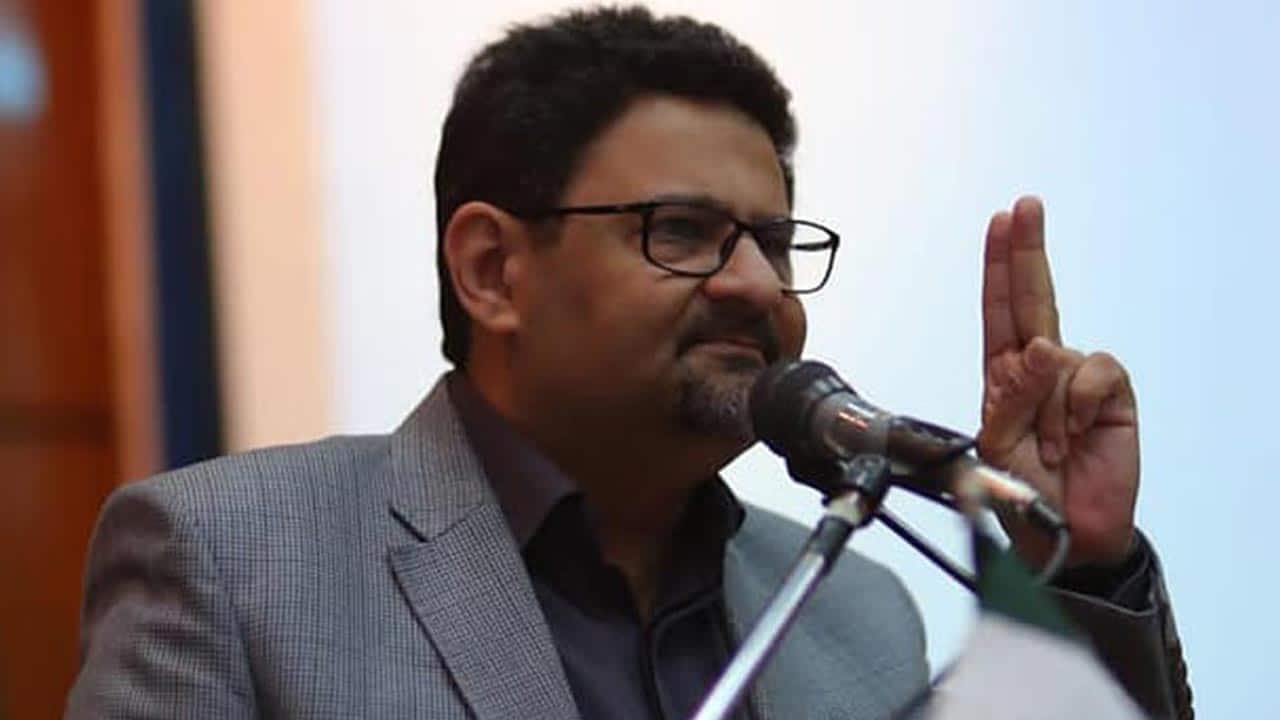
    Meanwhile, Finance Minister Miftah Ismail stated that the government will require $41 billion in the next 12 months and that he is ‘confident’ that this can be achieved.

    The Shehbaz Sharif government, he added, has re-engaged with the International Monetary Fund (IMF). “We spoke with them and are extremely optimistic that we will reach an agreement with the IMF soon. That is something we are extremely certain about”.

    Moreover, he explained that the present coalition administration had made difficult measures to help the economy stabilise. “It is difficult for any prime minister to authorise a fuel price hike of twice the amount we have, but we were losing Rs84 per litre on diesel and Rs69 per litre on petrol”.

  • PM Shehbaz directs to eliminate taxes on raw materials used by export industries

    PM Shehbaz directs to eliminate taxes on raw materials used by export industries

    Prime Minister (PM) Shehbaz Sharif, urged authorities to abolish all taxes on raw materials used in the export industry and to set up task teams to attract investment in a variety of local industries.

    The new government has been attempting to put in place a long-term plan to resuscitate Pakistan’s struggling economy, with the premier reaffirming his plea for increased exports to alleviate the country’s growing cash constraint yesterday.

    The premier met with a team from the American Business Council, which included officials from the pharmaceuticals, food processing, IT, e-commerce, retail, textile, sports, and logistics sectors, according to APP.

    Federal ministers Syed Naveed Qamar, Makhdoom Murtaza Mahmood, and Marriyum Aurangzeb were also present at the meeting.

    Task groups were constituted by the prime minister to solicit investments in a variety of areas. Tourism, pharmaceuticals, information technology, e-commerce, large-scale manufacturing, and agriculture will all have task teams constituted.

    He reminded the team that the government was working hard to guarantee that high-quality agricultural products were produced for export. The government was pushing for policy consistency for the first time, he said, because “subjects of the national economy and public welfare are above politics”.

    Shehbaz Sharif also asked the secretary of trade and the secretary of the Board of Investment to guarantee that the investors’ concerns were addressed immediately, and he requested a compliance report within a week.

    Business representatives, on the other hand, told state media that government initiatives had helped them regain investor confidence, and that the pre-budget dialogue with stakeholders was a “positive step”.

    PM Shehbaz has called all stakeholders to get together on Tuesday, ahead of the budget declaration on June 10, to finalise a long-term plan to rebuild the ailing economy. Top businessmen, agriculturists, and economists attended the day-long pre-budget meeting, where they offered advice on how to lift the country out of its unparalleled economic crisis.

    During the meeting, the premier pledged that their suggestions would be taken into consideration and that separate plans for agricultural, industrial, and financial expansion would be developed.

    PM Shehbaz also stated that political stability cannot be attained without economic stability and that it was past time for the elite class to make sacrifices and for non-productive assets such as real estate to be taxed. He advised businesses to invest in renewable power rather than relying on the country’s vast coal reserves for power generation.

    The prime minister also emphasised the importance of reducing imports while increasing exports, assuring attendees of the government’s full support in expanding local business and eradicating any barriers.

  • Pakistan’s GDP projected to climb by 5-6 per cent in FY 22-23

    Pakistan’s GDP projected to climb by 5-6 per cent in FY 22-23

    Finance Minister Miftah Ismail forecasted that Pakistan’s GDP would expand by 5 per cent to 6 per cent, and that the government would keep inflation under control, while speaking at the pre-budget conference on Tuesday, June 7.

    The Finance minister expressed his ‘high confidence’ in the agreement with the International Monetary Fund (IMF) and revealed that the government had developed a progressive fiscal budget with a deficit of less than 5 per cent, according to Express News.

    “We had to make difficult decisions; it’s difficult for any prime minister to authorise such a hike in petrol costs, but we were losing money.” “Every month, we lost more than 120 billion rupees,” the minister said.

    According to him, the PTI administration signed an IMF agreement that mandated the reduction of fuel subsidies.

    Miftah claimed the administration has re-engaged with China, Saudi Arabia, and the United Arab Emirates (UAE), among other countries, as part of the present government’s successful negotiations.

    “Following a meeting between Foreign Minister Bilawal Bhutto and Chinese Prime Minister [Li Keqiang], China decided to re-roll their $2.4 billion programme. China has lowered its borrowing rate from 2.5 per cent to 1.5 per cent, saving the country money “Miftah said, “Roughly $23 million”.

    He went on to say that the Saudis had agreed to increase Pakistan’s “oil line” and offer the country with a $100 million revolving credit.

    According to Miftah, the current government inherited a country with the world’s third highest inflation rate, 20 million people living in poverty, and widespread unemployment.

    He went on to say that the country’s debt payments had increased tremendously as a result of the amount of loans taken on by the PTI government.

    Pakistan’s economic paradigm, according to the minister, is inherently faulty. “We enrich the wealthy,” he remarked.

    The finance minister also spoke about one-time Rs2,000 assistance for 14 million families. The amount will be distributed in June at a cost of Rs28 billion to the government.

    Aside from the 7.3 million BISP recipients, the package also covers 6.7 million households with poverty levels of less than 37.

    According to Miftah, the country’s industry and consumers are heavily reliant on imports, causing the current account to be in deficit. He went on to say that Pakistan’s economy focuses on import substitution rather than export development, a paradigm that has been replicated in a number of developing countries.

    Aside from textiles, Pakistan has no big exports because the agriculture sector is failing to remain productive.

  • No plan proposed to raise petrol prices at pre-budget seminar, clarifies Miftah

    No plan proposed to raise petrol prices at pre-budget seminar, clarifies Miftah

    After a tremendous increase of Rs60 in less than a month, Finance Minister Miftah Ismail announced Tuesday that the price of petroleum goods in the country would rise even more.

    Ismail mentioned in his statement at the one-day pre-budget business conference that if the government had followed ex-prime minister Imran Khan and former finance minister Shaukat Tarin’s contract with the International Monetary Fund (IMF), petrol would have cost Rs300 per liter.

    “The previous government had agreed with the IMF that they would not give subsidies,” the finance minister said, lashing out at the Khan-led government for messing up the economic policies of the country.

    Furthermore, The News reports that the government cannot simply withdraw subsidies without also imposing taxes on petroleum items.

    “The IMF has asked for 100 per cent withdrawal of subsidy on POL products. Once the subsidy is over, then the government will have to impose taxes and petroleum levy,” the publication reported, adding that there is still a subsidy of Rs9.32 per liter on petrol and Rs23.05 per liter on diesel.

    The finance minister had ruled out the potential of a financial emergency in the country the day before, as the government took efforts to address the country’s continued economic upheaval.

    No petrol hike discussed at the pre-budget meeting

    UPDATE: Miftah Ismail, on the other hand, has clarified that he never mentioned a hike in petroleum prices during the pre-budget meeting, despite the fact that social media and known channels have been swamped with headlines of yet another hike, with several netizens sharing images of folks rushing to petrol pumps yet again. “Channels running these tickers are doing a disservice to their viewers,” said the Finance Minister.

    “In the pre-budget seminar I never even spoke about petroleum prices. Channels running these tickers are doing a disservice to their viewers. There will be no increase in prices today and there is no summary or plan to raise prices,” he tweeted.

  • Elon Musk threatens to terminate Twitter deal once again

    Elon Musk threatens to terminate Twitter deal once again

    Tesla’s CEO Elon Musk warned Twitter in a statement on Monday that if it fails to give him with data on spam and bogus accounts, he may back out of his $44 billion offer to buy the social media company.

    This isn’t the first time Musk has hinted that his takeover of Twitter might not go through. However, the warning, which came in the form of a letter from Musk’s lawyers to Twitter’s chief legal officer, Vijaya Gadde, signified a significant step forward. It accused Twitter of “materially breaching” its contract commitments.

    Musk’s warnings to rip up the contract have coincided with a drop in many technology equities, including Tesla Inc, the electric vehicle company he runs, as investors worry about an economic downturn and higher interest rates in the face of soaring inflation.

    On Monday, Twitter shares fell 1.5 per cent to $39.57, a significant discount to the planned $52.20 purchase price, as investors wagered Musk will either persuade Twitter to accept a lower deal price or walk away from the deal.

    Musk’s attorneys reaffirmed their request for facts on bot accounts in a letter to Twitter, saying he reserved all rights to cancel the transaction because the business had failed to meet its duties in a “clear material violation”.

    Twitter responded by stating that it intended to enforce the deal’s completion on the agreed-upon conditions. “In order to complete the acquisition in accordance with the terms of the merger agreement, Twitter has and will continue to cooperatively exchange information with Musk,” the firm stated in a statement.

    Musk, a self-proclaimed free-speech absolutist, has stated that removing “spam bots” from the platform will be one of his top goals.

    In mid-May, he announced that the Twitter transaction was “temporarily on hold,” stating that he will not forward with the offer unless the firm can prove that spam bots make up less than 5 per cent of its overall users. He has stated that spam bots account for at least 20 per cent of the user base.

    According to independent analysts, 9 per cent to 15 per cent of the millions of Twitter profiles could be bots.

    Musk wrote in his letter that he needs the information to perform his own analysis of Twitter users because he doesn’t trust the company’s “loose testing techniques.” Twitter has stated that it stands by its forecasts and that it is unable to reveal private information on how they are generated.

    “He’s trying to back out of the Twitter transaction, and this is the first shot across the bow,” according to Wedbush analyst Dan Ives.

    The caveats Twitter employed in its forecasts on spam accounts, according to legal experts, give it some protection against prospective lawsuits, whether from Musk over the transaction or shareholders over the integrity of the company’s regulatory representations.

    Even if Twitter’s estimate is incorrect, Musk would have to establish that the San Francisco-based business was attempting to deceive with the intent to deceive – a high legal bar.

    “It’s quite evident that Musk has buyer’s remorse, and he’s doing all he can to get a price reduction, and I believe he’ll succeed,” Dennis Dick, a proprietary trader at Bright Trading LLC, said.

    To be sure, Musk may be able to walk away or renegotiate the deal even if the law is on Twitter’s side.

    This is because any litigation is likely to be protracted, and Twitter may decide it makes more sense to agree to a lower price or receive compensation from Musk rather than try to force him to complete the transaction in court.

    Several companies renegotiated or walked away from agreed acquisitions when the COVID-19 pandemic broke out in 2020 and delivered a global economic shock.

    In one instance, French retailer LVMH threatened to walk away from a deal with Tiffany & Co. The U.S. jewelry retailer agreed to lower the acquisition price by $425 million to $15.8 billion.

    Musk is contractually forced to pay a $1 billion breakup fee if he cannot complete the sale because the loan financing falls apart or authorities stop it, according to Forbes, a sliver of his $219 billion fortune.

    Last Monday, antitrust officials in the United States opted not to investigate Musk’s acquisition of Twitter any further, indicating that it is unlikely to face regulatory challenges. The deal is still being reviewed by the European Union.

    Attorney General Ken Paxton of Texas stated on Monday that he has launched an investigation against Twitter for “possibly fraudulent reporting regarding its bogus bot accounts,” which he described as a possible violation of state law.

    As part of the investigation, Paxton requested that Twitter provide over documents. “I have a responsibility to safeguard Texans if Twitter is misrepresenting how many accounts are fraudulent to increase their revenue,” Paxton said in a statement.

    Twitter’s filings with the Securities and Exchange Commission, according to a spokeswoman, are accurate.


  • Gold gains Rs2,800, reaching Rs142,000 per tola

    Gold gains Rs2,800, reaching Rs142,000 per tola

    Keeping in view the rates maintained by the All Sindh Sarafa Jewelers Association, the price of gold per tola jumped Rs2,800 in the local market on Monday, bringing it to Rs142,000.

    Today, at 4 pm, the precious yellow metal was trading at $1,854 per ounce on the international market.

    Pakistan, as a price-taker, follows the trend in the world market for gold and other precious metals. Gold and other precious metals, such as silver, are priced in ounces around the world.

    Chairman of the Pakistan Gems Jewelry Traders and Exporters Association (PGJTEA), Akhtar Tesori, said the gold jewellery market has suffered as gold prices have risen in the country.

    According to him, the country’s commodities prices have reached new highs in recent years due to devaluation of the local currency against the green back and increases in the price of international gold.

  • What to expect from the upcoming budget 2022-23

    What to expect from the upcoming budget 2022-23

    Pakistan is escalating efforts in order to revive the stalled loan from International Monetary Fund (IMF) programme, as the prerequisites are steadily being completed.

    The revival of the bailout will provide much-needed relief in order to keep Pakistan’s economy afloat and avoid default as Pakistani currency has plummeted 9 per cent in the last month, recording the poorest performance among Asian currencies.

    According to Geo, the key policy rate was recently raised by 150 basis points to 13.75 per cent, while the price of fuel has now risen by Rs60 a litre in less than a month and is being sold at from Rs209 to Rs212 (depending on the area).

    In an interview with a private channel, the finance minister discussed the government’s decision to raise petroleum product pricing, saying that despite the difficult decision, the government is still losing money on gasoline and diesel.

    These moves are highly affecting the masses, but they are essential as the IMF programme is crucial to fix the country’s economy. Also, petroleum prices are projected to continue to rise along with power tariff.

    Increase in income tax

    An increase in income tax is a major policy recommendation from the international lender in the approaching budget for the fiscal year 2022-23.

    All suggestions are expected to enhance Pakistan’s tax income.

    The IMF issued the following rules for Personal Income Tax (PIT) in its February conditions:

    1. Lower the number of tax bands.
    2. Cut tax credits and allowances (excluding disabled and old persons, as well as Zakat receipts).
    3. Implement special tax processes for very small taxpayers.
    4. Increase the number of people who pay taxes. As the change maintains the present PIT threshold, low-income households will be safeguarded (almost three times income per capita).

    If these policy recommendations for the forthcoming budget are enacted, the tax system will be simplified and the income tax regime will be more progressive.

    These recommendations are anticipated to increase the country’s tax revenue. It will also make the system more progressive, as people with higher incomes will be required to pay more.

    Salaried class

    The burden on the salaried class, which is already heavily under pressure, may be increased. It will make working less appealing because a large portion of the wage will be devoted to direct personal income tax.

    The IMF proposed taxing the upper-middle class and wealthy individuals with monthly incomes ranging from Rs104,000 to Rs1 million at a uniform rate of 30 per cent.

    The idea demonstrates inequality in taxation, and if approved, it might leave the majority of salaried workers worse off in the face of double-digit inflation.

    On the other hand, Federal Minister for Finance and Revenues Miftah Ismail categorically stated last month that the government would not add to the burden on the salaried class and pensioners in the coming budget. 

    According to sources, the maximum rate of 30 to 35 per cent for salaried and business class individuals earning Rs20 million per year could be increased.

    Special tax proposal for small taxpayers

    Imposing a tax on small taxpayers can overcome the long-term structural problems and correct internal and external imbalances. Our tax-to-GDP ratio has remained below 11 per cent, which is lower than regional standards.

    Two-thirds of our overall taxation is made up of indirect taxation. This level of indirect taxation is not only excessive, but it also makes the system less progressive.

    Currently, a labourer pays the same amount of GST as the country’s richest man.

    Agriculturalists and real estate barons are the most important import consumers. As a result, the lack of taxation in agricultural and real estate contributes to the underlying imbalances in the external sector.

    Low-income households

    Low-income households are expected to be protected from policy interventions after the government publishes the upcoming budget, as the Personal Income Tax (PIT) threshold of three times per capita income would stay in place.

    Genuine taxpayers can also decrease their tax payments by clever investments under the Income Tax Ordinance 2001, taking into account all of the foregoing.

    In the fiscal year 2022-23, policymakers must aim to increase the tax net and the tax-to-GDP ratio as there is no chance for the country to progress without it.

    Pakistan must pay $21 billion in foreign debt payments by next year, according to the Finance Minister, while the current account deficit is $10-12 billion.

    He said, “We will also try to tilt away from the wealthy elite towards to low incoming masses, I will impose more taxes on the wealthy, but no taxes will be levied on the salaried class”.

    The wealthy and capable must prepare to pay their fair share of taxes, or the country will soon be back on the IMF’s doorstep.

  • Plan under consideration to increase govt officials’ salaries by 5 to 15 per cent

    Plan under consideration to increase govt officials’ salaries by 5 to 15 per cent

    In an attempt to lessen the impact of inflation, the government is considering raising salaries by 5 to 15 per cent in the upcoming fiscal year’s budget, according to The News, following the Pay and Pension Commission’s inability to submit a report ahead of the next budget, which led to the prime minister’s decision to grant another extension.

    The deadline for submitting the Commission’s recommendation is being extended to June 30, 2022, as per a statement released by the Finance Division.

    According to top official sources, the former PTI-led government gave a 15 per cent allowance to officials in grades 1 to 19, effective March 1, 2022.

    The new Shehbaz Sharif-led administration, on the other hand, pledged a 10 per cent rise in the pension and a 25,000-per-month minimum wage.

    A Finance Ministry official stated that in the future budget, pay for grades 1 to 19 may be boosted by another 5-10 per cent as an adhoc allowance. Employees in grades 20 to 22 could see a pay raise of 10 per cent to 15 per cent.

    In addition, due to increased inflationary pressures, the government may boost pensions by 5-10 per cent. The Regulation Wing of the Ministry of Finance has completed its internal work in this regard. It was also resolved to form a Pay and Pension Commission, which would make recommendations.

    The commission was established by the PTI-led government in April 2020, and its chairman was former Secretary of Finance Abdul Wajid Rana. He resigned, however, and former bureaucrat Nargis Sethi was named Chairperson of the Pay and Pension Commission. She later quit as well.

    The Pay and Pension Commission was then chaired by Zafar Ahmed Khan, who was chosen by the government. So far, the commission has requested two extensions but has yet to present its recommendations.

    The text box was included in the Pay and Pension Commission’s terms of reference, which included studying the adequacy of the existing basic pay scale system and evaluating the current salaries of government employees.

    Read more: Petrol quota for ministers, govt officials in Sindh lowered by 40 per cent

    It also includes making recommendations for streamlining existing classification from BPS 1-22, studying the separation of existing basic pay scales for dedicated departments, occupations/cadres, reviewing special scales such as management grades, management position scales (MP Scales), special professional pay scales (SPPS); project pay scales, and proposing measures for uniformity and improvement, reviewing admissible regular allowances, special incentives, and all other supplementary pay scales.

    The panel was tasked with identifying current shortcomings in the Pension Scheme and making recommendations for a corrective revision along with ensuring the current model’s long-term viability and recommending a system with clear timelines that is more efficient and sustainable given the available resources.