Category: Business

  • Here’s where you can get petrol in Lahore

    Here’s where you can get petrol in Lahore

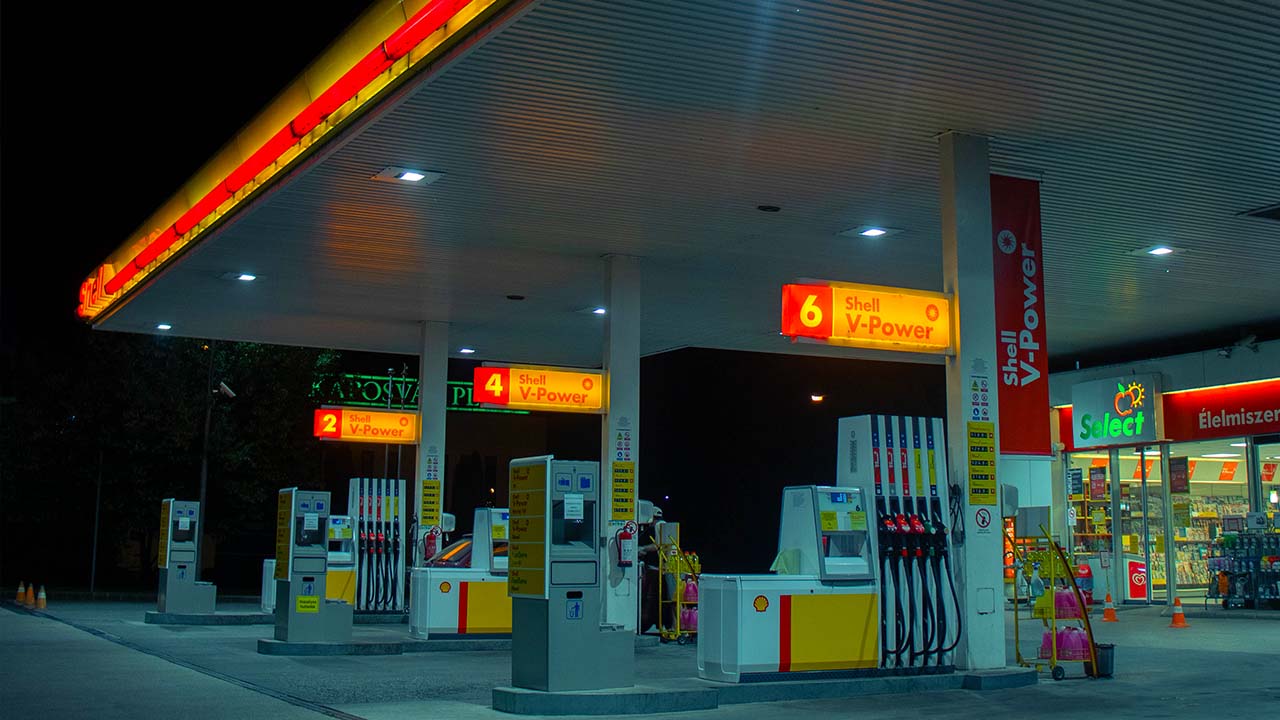
    Following oil industry’s warning of possible petroleum product shortages in Punjab and neighbouring areas due to road and highway blockades, a number of petrol pumps in the city have been closed.

    Majority of petrol pumps in Lahore have been shut, particularly in the Cantt, DHA, Gulberg, and Johar Town area. When asked, the majority of retailers refused to comment on when petroleum sales would resume.

    We have, however, contacted multiple managers of prominent petrol pumps in Lahore and asked if they are currently selling fuel.

    Here are a few filling stations in different parts of the city that are still selling fuel:

    1. Euro Oil petrol pump opposite Shahnawaz Mercedes-Benz Showroom Gulberg
    2. Total parco Mazang road, Mazang Chungi
    3. Hascol DHA phase 2 U Block, opposite DHA cinema
    4. PSO Chowk Thokar Niaz Baig , Multan Road

    Earlier, Oil Companies Advisory Council (OCAC) said that oil marketing companies are supplying fuel to retailers but the deliveries could be slowed owing to road blockages in Punjab’s major cities.

  • Pakistan Customs intensifies inspection at all international airports

    Pakistan Customs intensifies inspection at all international airports

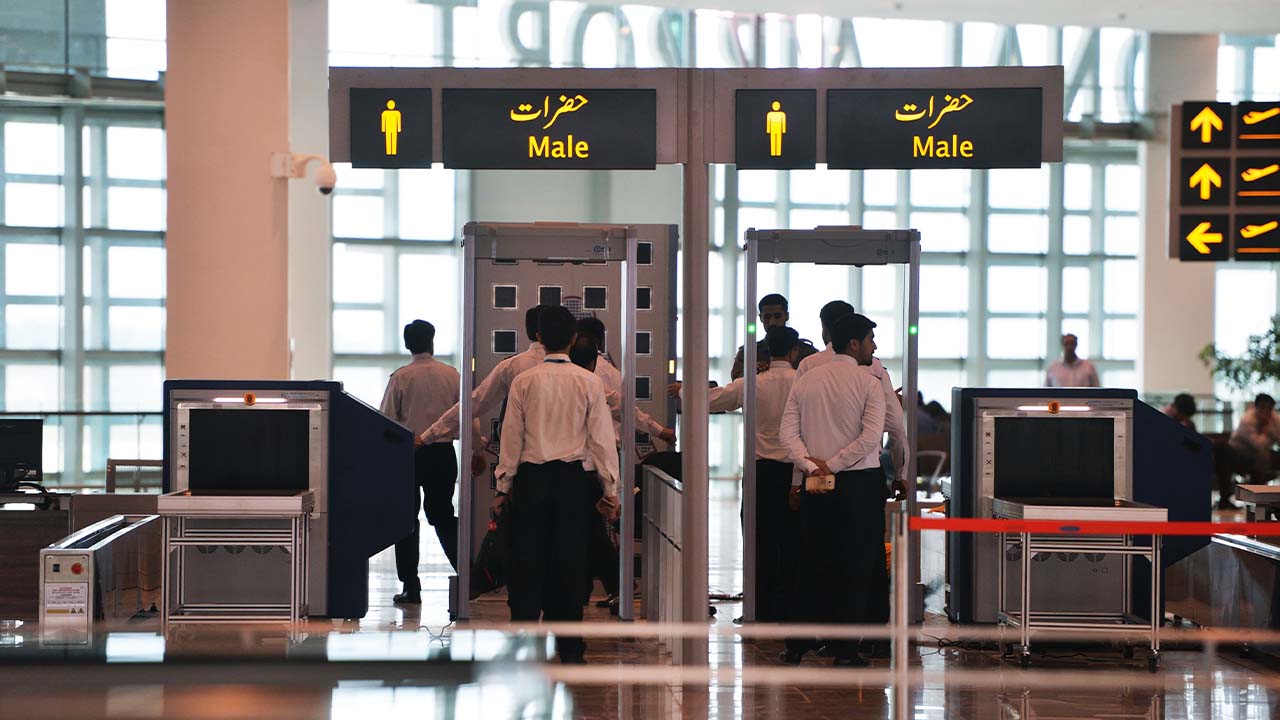
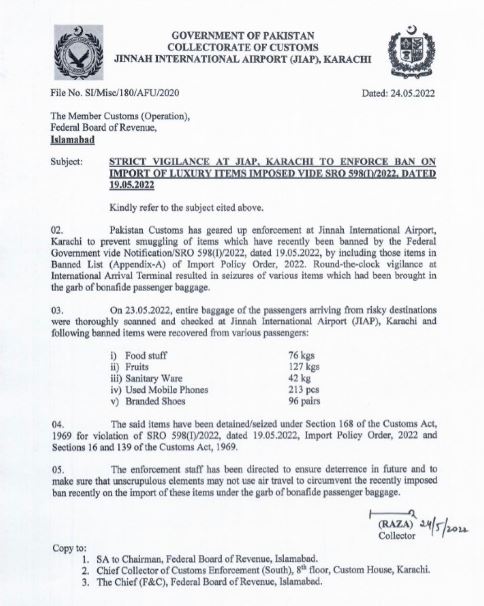
    Pakistan Customs has intensified goods inspection at all international airports to prohibit the smuggling of recently banned commodities. The federal government prohibited the items in SRO No. 598(I)/2022, issued May 19, 2022, by revising the Import Policy Order, 2022.

    This 24-hour monitoring at international terminals to prevent smuggling has already resulted in multiple confiscation of these items disguised as legitimate passenger baggage.

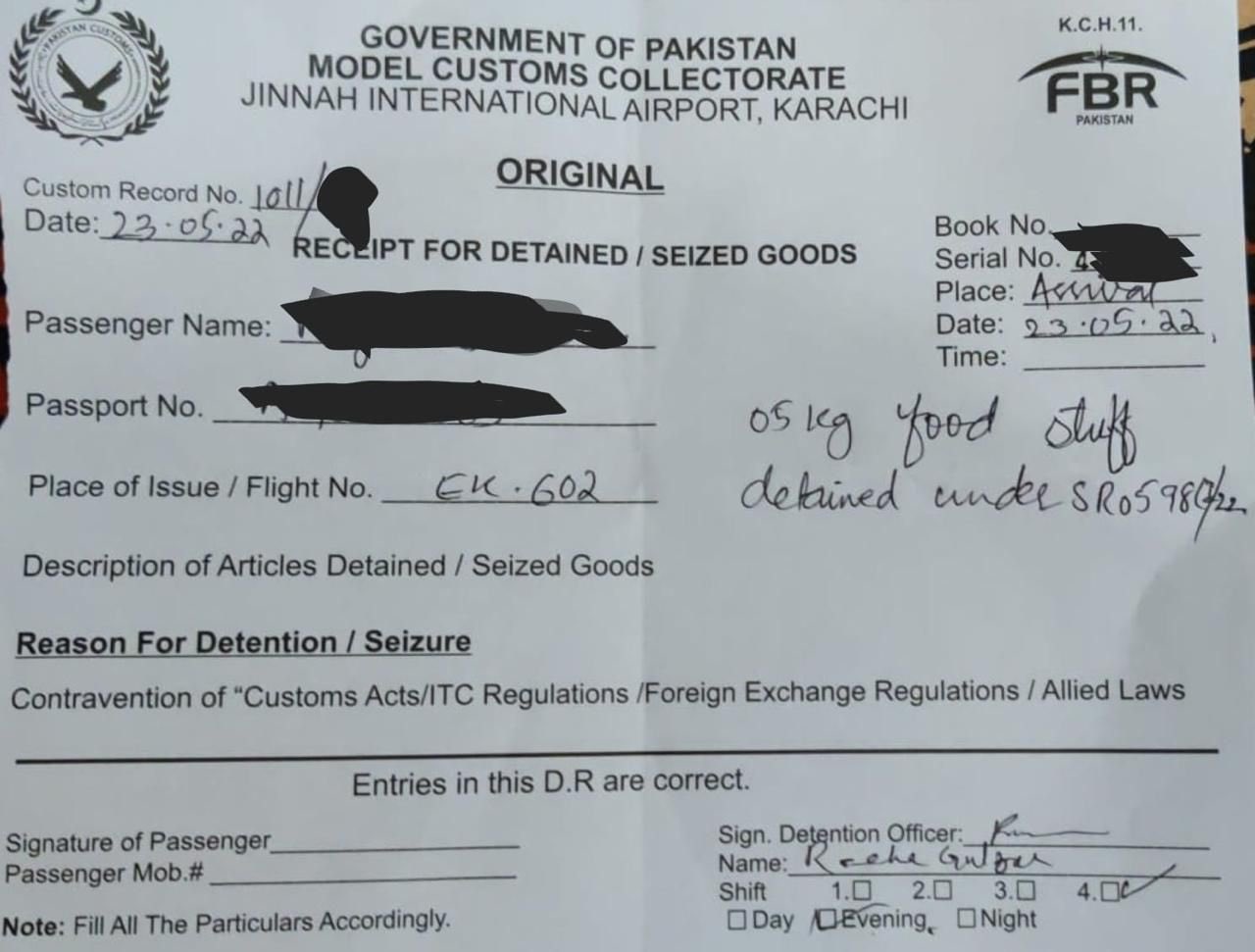
    Banned commodities like foodstuff, fruits, sanitary wares, used mobile phones, and branded shoes were found in commercial quantities during scanning and inspection at Jinnah International Airport in Karachi on May 23, 2022.

    The aforementioned items were detained/seized in accordance with Sector 168 of the Customs Act of 1969 for violating SRO No. 598(I)/2022 (Import Policy Order, 2022) and Sections 16 and 139 of the Customs Act of 1969.

    While applauding Pakistan Customs’ efforts, the Chairman of the Federal Board of Revenue (FBR) reaffirmed the FBR’s unwavering determination to strengthen policing strategies at all airports, seaports, and land border stations to ensure the avoidance of trafficking of goods, including newly banned items.

    Finance Minister Miftah Ismail and FBR Chairman, on the other hand, have issued instructions not to bother genuine passengers bringing in goods in non-commercial/small quantities for personal use, and to assist such passengers at airports to the greatest extent permitted by law.

    People in Pakistan were outraged by the Customs move, particularly those who had been thoroughly scanned and shared their side of the story on social media.

  • OCAC warns of petrol supply shortages due to roadblocks

    OCAC warns of petrol supply shortages due to roadblocks

    Oil Companies Advisory Council (OCAC) said that oil marketing companies are supplying fuel to retailers but the deliveries are being slowed owing to road blockages in Punjab’s major cities, which could affect deliveries to filling stations.

    It warned provincial authorities in Punjab that the road blockades have severed connectivity between major cities and neighboring areas, affecting fuel supplies inside the province.

    The Oil Companies Advisory Council affirmed that there are sufficient stockpiles of gasoline products throughout the country, including depots in Punjab.

    It also highlighted fears about the current scenario of roadblocks and the rumoured assumption of minimal stocks spreading on numerous platforms and asked the public to refrain from panic buying. Despite the roadblocks, there are enough stockpiles of petrol and high-speed diesel (HSD) in Punjab, and OMCs are constantly working to restock retail outlets on time.

    OCAC expressed its concerns to the Chief Secretary of Punjab, requesting the local administration’s assistance in ensuring the safe and secure transit of tankers from different depots to different petrol outlets across the province till the scenario stabilizes.

  • Gold prices in Pakistan hit historic high of Rs143,600 per tola

    Gold prices in Pakistan hit historic high of Rs143,600 per tola

    Gold prices in Pakistan continued to rise as the Pakistani currency fell deeper versus the US dollar, pushing the precious metal to a high of Rs143,600 per tola.

    The price of gold per tola increased by Rs1,950 per tola, as per the All Sindh Sarafa Jewellers Association (ASSJA). Moreover, the price per 10 gramme jumped by Rs1,672 to Rs123,114.

    Following yesterday’s gain of Rs1,950 per tola, the gold price has risen by Rs5,250 in the last four days (Friday-Tuesday).

    During the current economic crisis, gold has resurfaced as a secure investment, and consumers have been eagerly buying gold to preserve their savings against inflation.

    The rupee’s collapse, which reached an all-time low of Rs201.41 versus the US dollar in the interbank market, compelled the gold trading body to drastically raise the bullion price.

    The price of yellow metal fell by $4 per ounce on the international market to settle at $1,858. When compared to the Dubai market, gold prices in Pakistan are roughly Rs1,500 lower.

  • Petroleum Division refutes Imran Khan’s assertion about Russia’s low-cost fuel offer

    Petroleum Division refutes Imran Khan’s assertion about Russia’s low-cost fuel offer

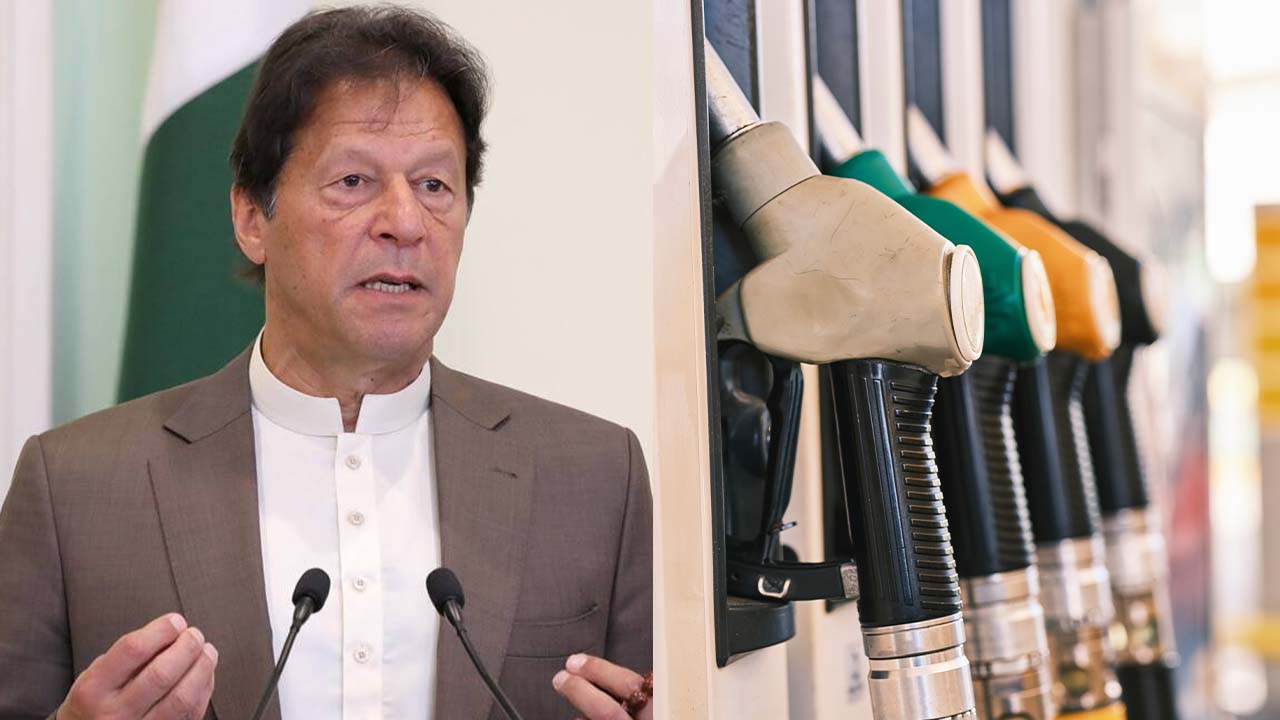
    There is no formal evidence in the petroleum division of Russia’s offer of inexpensive LNG, crude oil, and POL products, as former Prime Minister Imran Khan has often claimed.

    Syed Zakria Ali Shah, Joint Secretary of Development and a spokesman for the Petroleum Division, stated this to a reporter.

    According to sources in the petroleum sector, trading of crude oil, POL products, and LNG was not even on the table when Khan discussed the purchase of LNG. There was no mention in the meeting minutes of any Russian offer of providing LNG and gasoline at a 30 per cent lower rate.

    According to the spokesman, the government wrote letters to Russia on March 30 through the Ministry of Foreign Affairs in reference to the February 2022 visit of a Pakistan delegation, expressing Pakistan’s desire to enter long-term agreements on the import of crude, POL products, and LNG at discounted rates.

    The Petroleum Division also wrote to the Foreign Ministry, asking if Russia had provided any lower tariffs on LNG and fuel items. He also stated that it had given two reminders to this effect in the first week of April 2022, but the ministry stated that it had not received any letter from Russia for conversation in this respect.

    The Former energy minister, Hammad Azhar attracted the attention of his Russian peer, in a letter dated March 30, 2022, to an Inter-Governmental Agreement (IGA) on LNG cooperation that had been in force between the two friendly nations since 2017. The Russian minister was informed that Pakistan was willing to strengthen its partnership by expediting negotiations between the two selected nominees so that a long-term agreement for LNG delivery on a G2G basis could be reached as soon as possible.

    Then-energy-minister recommended two to three Russian LNG cargoes each month, each holding 140,000 cubic metres of LNG.

    There was no mention of any Russian offer in that letter, only a request for negotiation on a long-term contract for the import of gasoline and LNG at a reduced rate.

    According to officials at the energy ministry, India has been purchasing crude oil from Russia for decades and has continued to do so despite EU and US sanctions imposed as a result of its conflict with Ukraine. They claimed that India’s foreign policy was largely independent due to its strong economic power and enticing market for large economies.

    They further claimed that India had obtained a special dispensation from the US from its sanctions against Iran and had been buying crude oil and POL products from Iran despite US and UN sanctions for a long time. They claimed that India was the US’s strategic partner in the area against China.

    “India always pitches its argument before the US saying if it does not import fuel from Iran, its economy will hurt and it will never be on a par with China. As far as Pakistan is concerned, it is not possible to import crude oil, POL products, and LNG at discounted rates even in the wake of EU and US sanctions on Russia, as the country’s economic muscle is very weak and the country is always dependent on the IMF programme”. The officials said that Pakistan had also failed to complete the IP gas line project just because of US and UN sanctions on Iran.

    Via: The News
  • Are passengers’ personal imported items being confiscated when they come back to Pakistan?

    Are passengers’ personal imported items being confiscated when they come back to Pakistan?

    Instagram blogger @karachista1, on Tuesday, uploaded a story sharing several screenshots of conversations and images showing passengers’ items being confiscated at the Karachi and Lahore airport. Several social media users including lawyer Abdul Moiz Jaffery and actor and comedian Shafaat Ali, complained on Twitter about this being a ‘draconian step’.

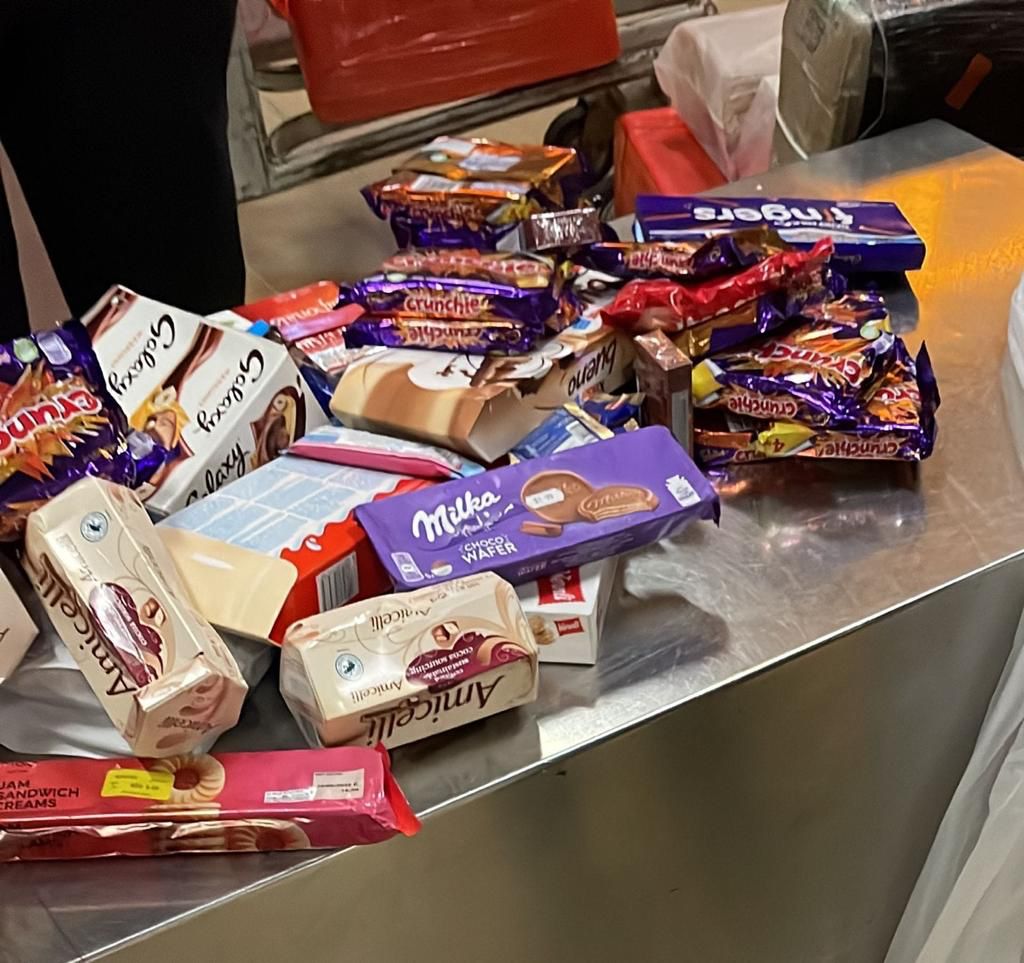
    The complaints ranged from AC Customs confiscating their private goods and others complaining that their bags were opened and imported items removed before they even landed in Karachi. Conflicting reports came forward with others reporting that they went through nothing like this. For some, only expensive makeup was confiscated and for others even biscuits and chocolates were not spared. Some customers were given receipts and some were not even informed.

    Image
    The slip provided by the Airport Customs officers for future recovery of the items

    So does this mean that if you plan on going abroad for a vacation this summer and want to bring back some goods for your family, you will not be allowed to take them from the airport? Pretty much.

    We spoke to Irshad Gul, a Karachi businessman who regularly imports and exports items for his businesses. According to him, using passengers to bring back imported goods is usually considered an easy method of bringing imported items inside the country without paying any duty. He confirms that at the Karachi airport, Customs officers have become extremely vigilant, looking into all luggage bags and hand carries to scavenge for imported items. Large quantities of a single item like chocolates might be confiscated and you have to pay customs on them, but if you have a personal, small amount of chocolates, those should be allowed to go through. If you are planning to bring back some gifts from your vacation abroad, consider carrying only a few items which you can explain very well.

    The irregularity in people’s online reported experiences only shows the usual inconsistency in Pakistani bureaucracy. A short while ago, Finance Minister Miftah Ismail tweeted an explanation for the airport and Customs staff’s behavior, clarifying that these steps are being taken to counter the smuggling of the banned items by professional packers. Although Ismail claims that ordinary citizens with a few items will not be harassed but citizens are reporting that even a few personal makeup items are being confiscated. Others say they were allowed to leave the airport unscathed.

    Finance Minister Miftah Ismail attached this official notice with his tweet, clarifying that all steps being taken by the airport staff are in accordance with government directive and compliance is necessary. Confiscated items include ‘food stuff, fruits, sanitary ware, used mobile phones and branded shoes’.

    Several Twitter users including Shafaat Ali requested Miftah Ismail to take action as they believe personal products should be allowed and only commercial consignments should be subjected to these limitations.

  • SBP shortens car loan tenure to deflate import bill

    SBP shortens car loan tenure to deflate import bill

    The State Bank of Pakistan (SBP) decreased the consumer lending duration for vehicles on May 24, bringing it to a maximum of three years for cars with engine displacements greater than 1,000cc and five years for those with engine displacements less than 1,000cc.

    “The maximum tenure of auto finance facility is reduced from five (5) years to three (3) years for vehicles above 1,000 cc engine displacement and from seven (7) years to five (5) years for vehicles up to 1,000 cc engine displacement,” read the circular.

    The SBP decided to change the Prudential Regulations for Consumer Financing (PRCF) in its circular Letter No. 19 of 2022:

    Other amendments issued previously, via BPRD Circular Letter No. 29 dated September 23, 2021, will now be applicable on financing for all locally assembled/manufactured vehicles, including financing for vehicles with up to 1,000 cc engine capacity and locally assembled/manufactured electric vehicles, according to the central bank.

    “However, the regulatory treatment of Roshan Apni Car product communicated earlier to RDA participant banks will continue to remain effective,” read the circular.

    “The maximum tenure of auto finance facility is reduced from five (5) years to three (3) years for vehicles above 1,000 cc engine displacement and from seven (7) years to five (5) years for vehicles up to 1,000 cc engine displacement,” read the letter.

    Other amendments issued previously, via BPRD Circular Letter No. 29 dated September 23, 2021, will now be applicable on financing for all locally assembled/manufactured vehicles, including financing for vehicles with up to 1,000 cc engine capacity and locally assembled/manufactured electric vehicles, according to the central bank.

    “However, the regulatory treatment of Roshan Apni Car product communicated earlier to RDA participant banks will continue to remain effective,” read the circular.

  • A Chinese company will invest $50 million to enhance Pakistan’s agricultural sector

    A Chinese company will invest $50 million to enhance Pakistan’s agricultural sector

    Optima Integration Group of China and Asia Pak Investments of Pakistan agreed on May 23 to invest $50 million in the first stage to enhance agriculture, power, and logistics sector in Gwadar and Karachi.

    The Board of Investment (BoI) facilitated the signing of a memorandum of understanding (MoU) in this respect between the two businesses, which may result in the creation of more than 100 job vacancies in Gwadar and Karachi, as well as the establishment of a high-tech processing facility and technology transition.

    The event was attended by Federal Minister Board of Investment Chaudhry Salik Hussain, who signed the MoU with Optima Integration Group Chairman Sam Siu and Chief Executive Officer of Sino Pak Optima Technologies (SPOT) in the spirit of strengthening business-to-business (B2B) agricultural collaboration among the two nations. Ms Fareena Mazhar, Secretary of the BoI, was also present at the occasion.

    Under the terms of the agreement, the two parties would establish an end-to-end supplier base for seafood [79 breeds of fish have been certified for exporting from Pakistan to China by the General Administration of Customs of the People’s Republic of China (GACC)].

    In the long term, the initiative would grow from fish to beef and goat, beginning with cold chain transporting beef and then expanding with Chinese standard breeding, feedlot operations, immunizations, track and trace technologies, and slaughter and pack facilities in Karachi.

    Read more: SBP hikes interest rate by 150 basis points to control inflation

    Addressing the gathering, Minister Chaudhry Salik Hussain praised the Chinese government’s involvement in Pakistan’s agriculture and livestock sectors, notably the fish and seafood business.

    He briefed the attendees regarding the formation of the Pakistan-China Business and Investment Forum (PCBIF), which was the outcome of a collaboration between the BoI, the Chinese Embassy, and the All-Pakistan Chinese Enterprises’ Association (APCEA). He informed Chinese investors that the BoI would take deliberate steps to assist interested investors.

  • SBP hikes interest rate by 150 basis points to control inflation

    SBP hikes interest rate by 150 basis points to control inflation

    The State Bank of Pakistan’s (SBP) Monetary Policy Committee (MPC) approved a 150 basis point increase in the benchmark interest rate, pushing it to 13.75 per cent to control inflation.

    It is worth noting that this is the maximum level of interest rate since 2011 when it was 14 per cent.

    The central bank mentioned in a statement that after the last MPC meeting, preliminary estimates indicate that growth in FY22 has been considerably higher than predicted.

    On May 23, the MPC agreed to hike the policy rate by 150 basis points to 13.75 per cent. “This action, together with much needed fiscal consolidation, should help moderate demand to a more sustainable pace while keeping inflation expectations anchored and containing risks to external stability.

    “External pressures remain elevated and the inflation outlook has deteriorated due to both home-grown and international factors. Domestically, an expansionary fiscal stance this year, exacerbated by the recent energy subsidy package, has fueled demand and lingering policy uncertainty has compounded pressures on the exchange rate”.

    “Globally, inflation has intensified due to the Russia-Ukraine conflict and renewed supply disruptions caused by the new Covid wave in China. As a result, almost all central banks across the world are suddenly confronting multi-year high inflation and a challenging outlook.”

    The MPC stated that raising interest rates will help to protect external and economic stability.

    “Since the last MPC meeting, secondary market yields, benchmark rates and cut-off rates in the government’s auctions have risen, particularly at the short end. The MPC noted that the market rates should be aligned with the policy rate and in case of any misalignment after today’s policy decision, the SBP would take appropriate action”.

    According to the report, overall inflation climbed from 12.7 per cent (year on year) in March to 13.4 per cent in April, led by consumable food products and core inflation. “The rise in core inflation reflects strong domestic demand and second-round effects of supply shocks,” it noted.

    The MPC believes that when power and fuel subsidies are phased out, inflation will spike momentarily and remain strong through FY23 before falling steeply in FY24. “This baseline outlook is subject to risks from the path of global commodity prices and the domestic fiscal policy stance,” it said.

  • The recent ban on imports might barely make a dent

    The recent ban on imports might barely make a dent

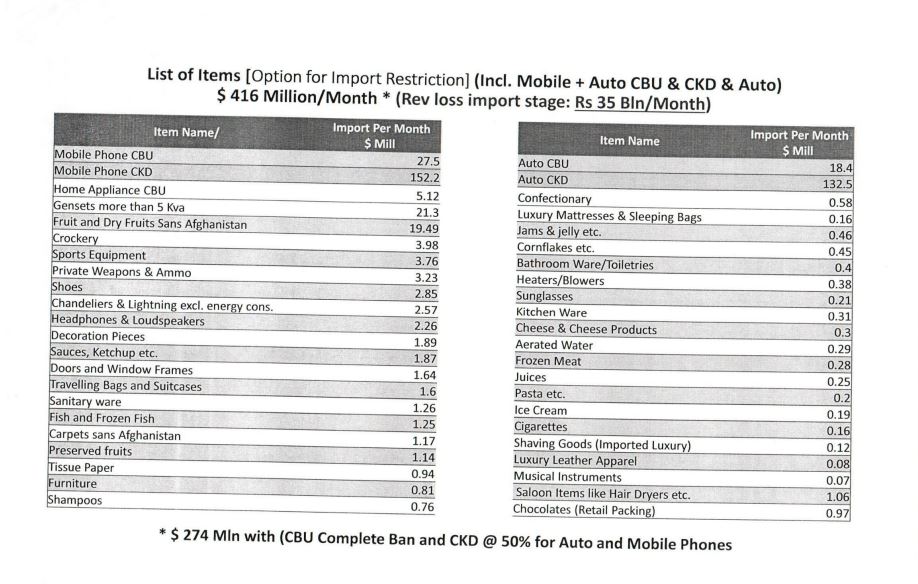
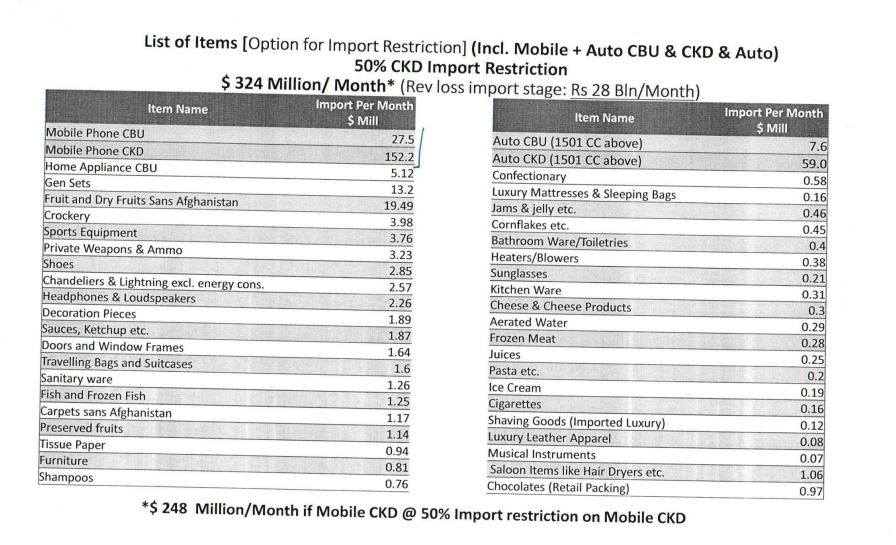
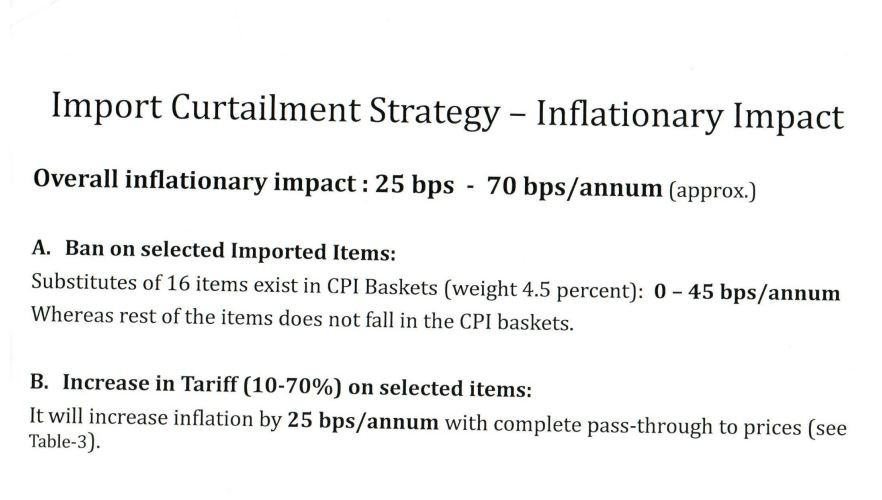
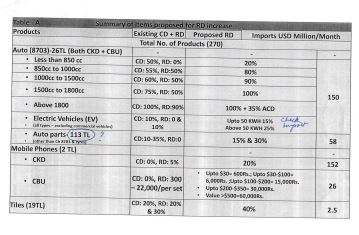
    On Thursday, May 19th, 2022, the federal cabinet issued a list of 41 items which will be banned from being imported for two months. This is in an attempt to address the current account deficit. The list of products is banned from being imported into the country, which means that essentially any shops or restaurants which rely on using these products will be forced to find local alternatives.

    These products will be banned regardless of what branding or packaging they use and only on the basis of whether the specific product is imported or not. Even products which are imported from abroad but packaged locally, will now be banned.

    Economists, university professors and business journalists took to Twitter to analyze and assess the merits and demerits of this decision. The discussion around luxury products and the fact that a lot of products which are labelled as “luxury items” are actually essential. Sanitary imports, valued at $16.4m are wrongly categorized as non-essential and although local alternatives also exist but it is definitions like these which disallow such decisions to be founded in research and expertise.

    The valuation of these imports which was published by the Pakistan Bureau of Statistics, was being quoted to ridicule the decision by many. What’s interesting to note is that most brands which appear to be entirely local, import a major chunk of their supply and will now be forced to smuggle goods instead.

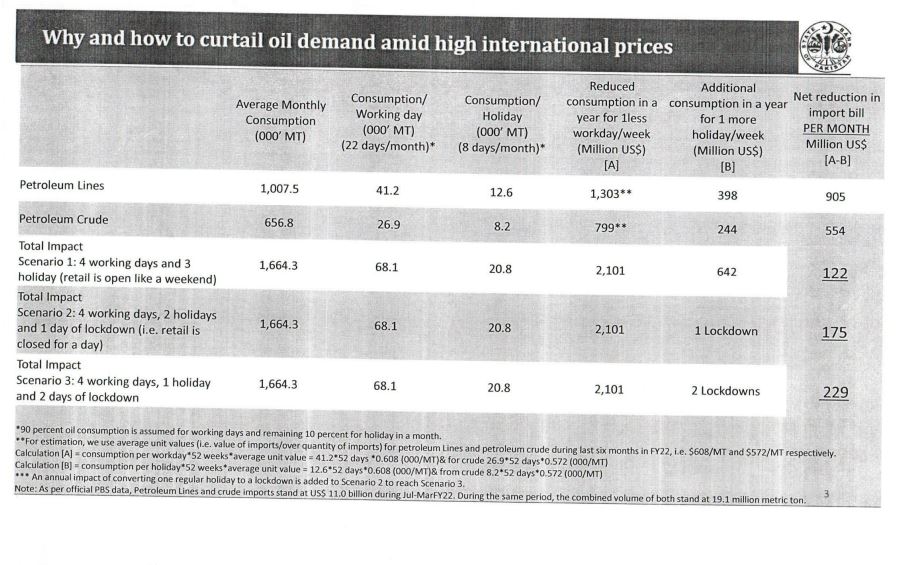
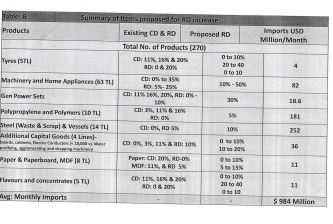
    Only from the data shared by PBS it becomes clear that for the fiscal year 2022, June to March, the total value of petroleum imports was $11 billion, while the total value of banning all these non-essential “luxury” items is a total $984 million, which forms only about 8.9% of the total value of petroleum imports.

    In conversation with Profit Magazine’s Ariba Shahid, she clarified that this would still prove to be a largely fruitless move since the most significant chunk of the import bill is still being used up to run the energy sector without any thought being given to the humongous fuel subsidies . “For a very long time the State Bank of Pakistan has been talking about how if we remove the oil component from it, the current account deficit is improving, which is true and basically means that people are not spending money to buy other items and most of the import bill is petrol and soy bean oil.”

    Economists Ammar Khan and Atif R Mian also took to Twitter to analyze this decision of “patchwork economics”. Commenting on this unsustainable gap in Pakistan’s balance of payment, on April 15th, 2022 during a discussion on Pakistan’s economy at Princeton University, he explains that for Pakistan to grow it is a necessary condition for Pakistan to deal with this problem and digs deeper into the structure of the economy. He particularly takes apart urban land reforms, the necessity to levy a capital gains tax on speculative real estate transactions and analyzes how Pakistan is not even economically stable enough to grow at the rate of India and Bangladesh and it is primarily due to the elite capture of the economy that disallows the economy to attempt to fix its loopholes.

    Echoing similar sentiments, Ariba Shahid explained that due to a weaker economy, the import bill is not as significantly high due to a reduced demand pull because of a lowered purchasign power and hence banning these products will be insignificant and might barely make a dent in the current account deficit. “The need of the hour is to reverse the fuel subsidy,” says Shahid, “This decision will swell up the grey market economy and smuggling will increase.”