Category: Business

  • Imports from India hit three year high despite tensions

    Imports from India hit three year high despite tensions

    Pakistan’s imports from India have reportedly surged to a three-year high during the first eleven months of fiscal year (FY) 2024-25 amid heightened tensions following India’s unwarranted aggression in May 2025 and the continued suspension of formal trade relations since 2019.

    Figures released by the State Bank of Pakistan indicate that imports from India totalled $211.5 million during the first 11 months of FY 2024-25. This marks an increase from the $207 million import figure during the corresponding period of the previous fiscal year and $190 million the fiscal year before. 

    According to reports, imports from India were valued at $15 million, just slightly below the $17 million recorded in May last year. It merits mention that imports in May 2025 remained high despite the significant escalation in tensions between Pakistan and India. 

    In contrast, Pakistan’s exports to India remained abysmally low, as domestic exporters managed to export only $1,000 worth of goods in May 2025 to India. This figure grows if the first 11 months of FY 2024-25 are considered as total exports reached just $0.5 million. In the previous two fiscal years, the figures stood low as well, at $3.44 million and $0.33 million.

    Reports indicate that traders have remained hesitant to speak openly about the flow of goods during the conflict. A trader suggested the goods may have been ordered before the hostilities began and possibly arrived via the involvement of other countries.

    While official trade remains limited, Indian analysts claim the actual volume is far higher. The Global Trade Research Initiative, a New Delhi-based research group, estimated last month that informal exports from India to Pakistan total around $10 billion each year. Much of that trade reportedly moves through intermediaries in Colombo, Dubai and Singapore.

    Reports suggest that Pakistan’s reliance on imported raw materials, along with high production costs, makes unofficial imports difficult to control. An exporter has reportedly highlighted how local manufacturing is too expensive in Pakistan, which could pave the way for countries like India, Bangladesh and China to flood the domestic market with smuggled goods.

    Since the aforementioned countries have a lower average cost of production, smuggled goods from these destinations seem attractive to local customers given the lower tags that come with the smuggled goods.
  • Why have prices of goods on Temu skyrocketed?

    Why have prices of goods on Temu skyrocketed?

    Prices of goods listed on Temu, a popular online marketplace platform, have witnessed a stark increase. Netizens from Paksitan have outlined how prices have skyrocketed, with some goods reportedly being priced three to four times their previous price.


    The timing of the price hike coincides with the start of fiscal year (FY) 2025-26. This has caused many analysts to believe that new taxes listed in the  budget for FY 2025-26 are responsible for the rise in price.


    Users on social media platform Reddit expressed great displeasure over rising prices. One user said:  “This is so insane. I checked Ali Express and they have done that too.” Other users tried to rationalise the increase in prices, speculating that Temu’s servers were likely infected by a bug and that prices would soon be revised downwards.


    Some netizens proposed the theory that the implementation of the general sales tax (GST) on the purchase of goods from online stores was causing the abnormal hike in prices. However, it is unlikely that the levying of the 18 percent GST on online goods could cause prices to “quadruple”, which netizens claim is the case.


    Reports from June 2025 suggest that Islamabad imposed a broad range of taxes on e-commerce platforms, digital service providers, and courier companies in an effort to generate Rs64 billion during FY 2025-26. The new policy applied to both domestic and foreign enterprises operating in Pakistan’s digital economy.


    However, according to one unverified report, the rise in prices might have been caused by Pakistani customs authorities leading a crackdown against “heavily discounted shipping services”.  These services include Cainiao and AliExpress Standard Shipping.


    The report suggests that China based online marketplaces heavily rely on the aforementioned shipping services to ship their goods to Pakistani customers. However, with a crackdown reportedly being carried out against the shipping services, these goods are likely to witness a surge in prices as sellers will have to pass on the higher transportation costs onto customers to protect their profit margins.


    The rise in prices spells bad news for Pakistan, as Temu provided goods to consumers at unbeatable prices with minimal or no shipping fees. The price hike has largely eroded the competitive edge Temu had on domestic manufacturers which may cause many Pakistanis to revert back to purhcasing local goods.


    It merits a mention that lawmakers and relevant authorities have not yet provided a clarification for the sudden spike in the prices of goods on e-commerce platforms.

  • Have taxes on bank transactions really been increased?

    Have taxes on bank transactions really been increased?

    In a bid to raise the federal government’s revenues, Islamabad has reportedly begun taxing all bank transactions. According to reports, the taxes were levied at the start of fiscal year (FY) 2025-26 and apply to transactions for both filers and non-filers.

    As per reports, the federal government has raised the tax rate on tax withdrawals made by non-filers. Moreover, filers have also been reportedly slapped with a withholding tax on cash withdrawals if they exceed Rs50,000 in 24 hours. 

    Data from reports indicates that filers will now face a 0.3 percent tax on all cash withdrawals exceeding Rs50,000. Non-filers will face a higher rate of 0.6 percent on similar cash withdrawal transactions.

    Reports claim that non-filers withdrawing Rs20,000 or more via a cheque will face a flat charge of Rs522. As per the details, commercial banks have also set withdrawal limits for ATM users allowing debit card holders to withdraw only Rs50,000 per day, with premium cardholders able to withdraw Rs500,000 per day.

    However, it merits a mention that news reports with conflicting information have been published, suggesting that filers will be exempt from the aforementioned 0.3 percent tax rate on cash withdrawals exceeding Rs50,000. 

    Moreover, some reports claim that not all bank transactions will be taxed, suggesting that only cash withdrawals by non-filers will be subject to taxation. However, the government has not yet issued a formal statement on the matter, resulting in the spread of both confusion and misinformation. 

    Commercial banks have reportedly hiked their fees, including charges for using other banks’ ATM’s, getting SMS alerts, and the issuance of ATM cards. According to reports, the higher fees have resulted in escalating tensions between customers and bank staff.


    This is because the ATM card fee has been raised by Rs700, along with the SMS alert service charges being increased by Rs800, jumping from a reasonable Rs1,200 to Rs2,000. Moreover, customers are now facing a charge of Rs34 on cash withdrawals made from ATMs of banks for which they do not have an account.


    The hike in fees is likely to deter new customers from being part of the formal financial space in Pakistan. Currently, only 64 percent of adult Pakistanis have a bank account, and this figure is projected to rise in the near future, but with rising charges, this figure is likely to witness stunted growth.

  • Chairman of Engro, Hussain Dawood, Appreciates Enduring China-Pakistan Partnership at WEF summit with Chinese Premier, Li Qiang

    Chairman of Engro, Hussain Dawood, Appreciates Enduring China-Pakistan Partnership at WEF summit with Chinese Premier, Li Qiang

    Chairman of Engro, Mr. Hussain Dawood, was invited to speak at a Special Dialogue with Li Qiang, Premier of the People’s Republic of China, during the World Economic Forum’s 16th Annual Meeting of the New Champions.

    During the session on 24th June 2025, Mr. Dawood reaffirmed the enduring all-weather friendship between China and Pakistan. He shared that, in 2013, he was privileged to be part of the delegation to China led by the Honourable Prime Minister of Pakistan, which laid the foundation for the China-Pakistan Economic Corridor (CPEC). This landmark initiative has delivered sustained prosperity to both countries, with $62 billion invested in energy and infrastructure projects connecting Kashgar in western China to the deep-sea port of Gwadar in Pakistan.

    In his remarks, Mr. Dawood reiterated Engro’s contributions to CPEC projects with key Chinese partners, including China Machinery Engineering Corporation. He further underscored that the cornerstone of these partnerships is mutual trust and openness to long-term planning.

    Engro’s active participation in transformational projects with Chinese partners reflects its commitment to inclusive progress that unlocks a brighter future for all.

    More: Chinese premier exchanges ideas with entrepreneurs at Summer Davos

  • Pakistan Railways eyes fare hike amid rising fuel costs, mounting losses

    Pakistan Railways eyes fare hike amid rising fuel costs, mounting losses

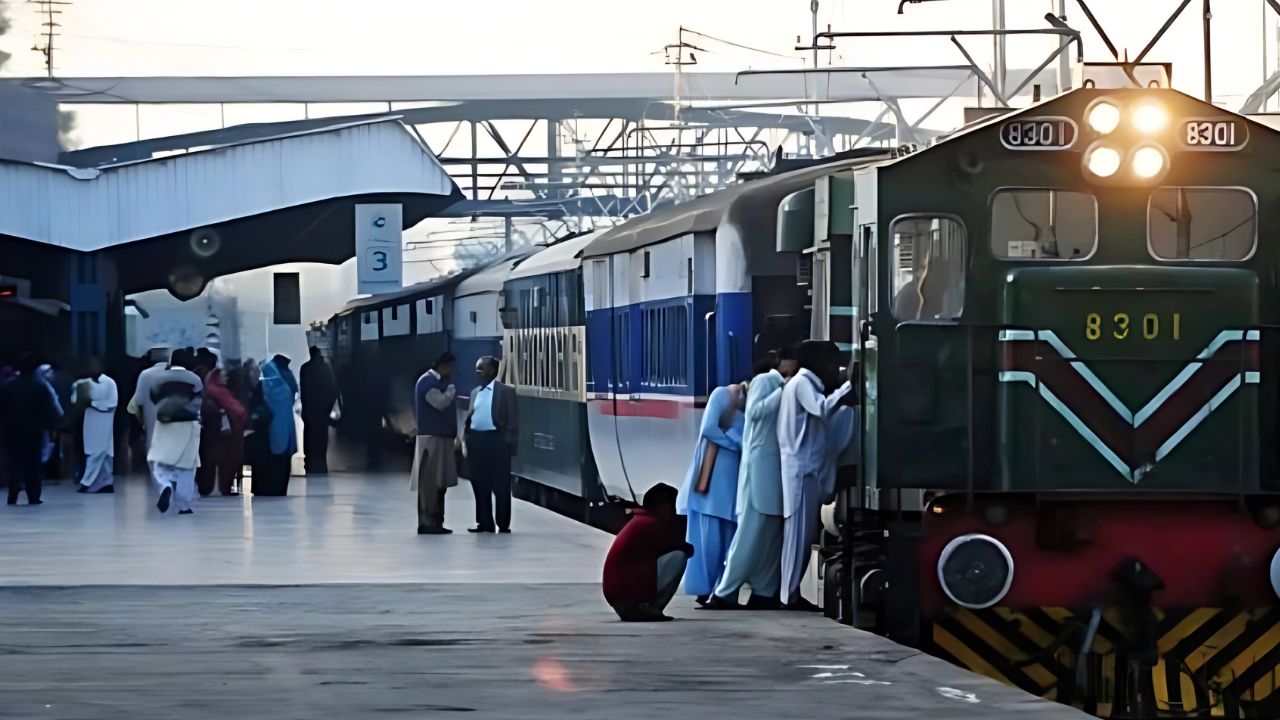
    Pakistan Railways (PR) is considering increasing customer fares amid large operational losses. According to reports, the losses resulted from an uptick in diesel prices, a primary fuel used to transport customers and cargo.

    Data from reports indicates that PR has to cover an average financial burden of Rs3.6 million per day as the railway network consumes approximately 350,000 litres of diesel every day. 

    Reports reveal that PR now faces a staggering monthly deficit of Rs109 million. To reduce operational losses, a committee is reportedly considering the extent of the upcoming hike in train ticket prices.

    It merits a mention that PR increased fares as recently as June 18 2025. The aforementioned hike in fares resulted in passengers facing a three percent increase in ticket prices. Rates for freight increased by four percent in the previous price revisions as well.

    However, reports suggest that the incoming increase in fares may result in a disproportionate increase in freight rates. According to PR officials, the new hike will serve to protect passengers from a large increase in ticket prices.

    Reports indicate that passing the majority of the financial burden onto freight operations is unlikely to cause public resentment. As such, officials have outlined that passengers will face only a minor increase in prices.

    As per the details, officials have not yet decided on the exact increase in fares. However, it will have to increase revenues to break even as fuel costs continue to balloon. 

    Data from the New York Mercantile Exchange reveals that Brent crude oil futures have shot up by 2.43 percent and 7.2 percent in the past five days and the past month, respectively. With the overall trend indicating that fuel prices will continue to climb, PR may continue to suffer staggering losses.

    According to reports, Iran’s refusal to cooperate with the International Atomic Energy Agency (IAEA) caused Brent crude oil futures to rise. Iran is the Organization of the Petroleum Exporting Countries’ (OPEC) third-largest crude oil producer, and any developments suggesting a possible drop in oil supply, such as a tightening of sanctions on Iran for not cooperating with the IAEA, cause fuel prices and ultimately train ticket prices to rise.

  • Govt slashes rate of return on national savings schemes

    Govt slashes rate of return on national savings schemes

    The federal government has slashed the rate of return on most national savings schemes, including profit rates from Sharia-compliant financial instruments. According to reports, however, regular savings accounts are excluded from the rate cut, with the profit rate sitting at 9.5 percent.

    Details from reports suggest that Islamabad’s decision to cut profit rates on other instruments is in line with a general reduction in the rate of interest in the recent past. Previously, the State Bank of Pakistan (SBP) had hiked up interest rates to combat rampant inflation. This caused interest rates to surge to a staggering 22 percent, attracting many to park their funds in banks. 

    However, interest rates have remained locked in a freefall since June 2024, when interest rates sat at 22 percent, dropping by 1,100 basis points (bps). This caused Islamabad to revise rates on national savings schemes.

    It merits a mention that details of the new rates were passed out via agents and internal channels instead of an official notification. Reports suggest that the Central Directorate of National Savings is the entity responsible for publishing and announcing new rates.

    The rate of return on Regular Income Certificates has fallen to just 11.16 percent after falling by 36bps. Previously, the return on these certificates stood at a respectable 11.52 percent.

    Shuhada Family Welfare and Pensioners Benefit Accounts each witnessed a 24bps cut, with the rate of return declining to 13.2 percent. Behbood Savings Certificates also underwent the same cut in their yield rate.

    Data from reports suggests that the rate of return on Defence Savings Certifi­cates also recorded a decline, falling from 11.91 percent to 11.76 percent. Special Savings Certificates and accounts will now yield the holder a return of only 10.6 percent after logging a decline of 30bps in their rate of return.

    Individuals holding Sharia-compliant instruments will witness the largest drop in their income inflows as the rate of return on Sarwa Islamic Saving Account (SISA) and Sarwa Islamic Term Account (SITA) fell from 10.34 percent to just 9.75 percent.

    The revised rates of return took effect on June 27 2025, before fiscal year (FY) 2025-26 started. Analysts believe that with a decline in returns from national savings schemes, investors might seek other opportunities with a higher rate of return. This could result in a large inflow of funds into the domestic capital market, the Pakistan Stock Exchange (PSX).

  • FBR slashes import duties on cars, other goods

    FBR slashes import duties on cars, other goods

    The Federal Board of Revenue (FBR) has issued two notifications, SRO.1151(I)/2025 and SRO.1152(I)/2025, announcing a major reduction in Additional Customs Duties (ACDs) and Regulatory Duties (RDs) on a long list of imported goods. According to reports, the move falls under the tariff rationalisation plan and went into effect at the start of fiscal year (FY) 2025-26.

    Reports reveal that ACDs will now be charged at a reduced rate of two percent on items falling under the 15 percent customs duty slab. The same rate applies to goods imported under SRO.655(I)/2006 and SRO.656(I)/2006.

    The two percent ACD will also apply to cars, jeeps, and light commercial vehicles in Completely Knocked Down (CKD) condition above 1,000 cc. Meanwhile, a six percent ACD will apply to the import of goods under the 30 percent slab and other high or specific rate slabs.

    Reports reveal that a number of ACD exemptions have been introduced under SRO.1151. These exemptions include the import of plant and machinery falling under Chapters 84 and 85, and goods that fall under Chapter 99 of the first Schedule of the Customs Act. 

    Items brought in under baggage rules or the ‘Temporary Importation Scheme’ are reportedly exempt, along with various imported goods covered by older SROs like 577(I)/2005, 565(I)/2006, and 693(I)/2006. It merits a mention that the FBR has removed all ACDs on the import of CKD automobiles up to 1,000cc and completely built-up (CBU) vehicles.

    The FBR intends to reduce the RD rate from 90 percent to 50 percent. However, reports indicate that the drop in RD will be carried out in phases over a period of five years. 

    Moreover, reports suggest that duties have been completely removed on 554 raw materials and intermediate goods, while another 602 items will see reduced rates. However, a five percent RD will remain on CKD/SKD kits of home appliances, unless otherwise specified.

    Islamabad intends to slash the overall average tariff from a whopping 20.19 percent to just 9.7 percent over five years. Reports reveal that all ACDs are expected to be phased out in four years, and that RDs will be eliminated completely within five years.

  • Ferry service, more shipping lines; Gwadar Port to expand operations

    Ferry service, more shipping lines; Gwadar Port to expand operations

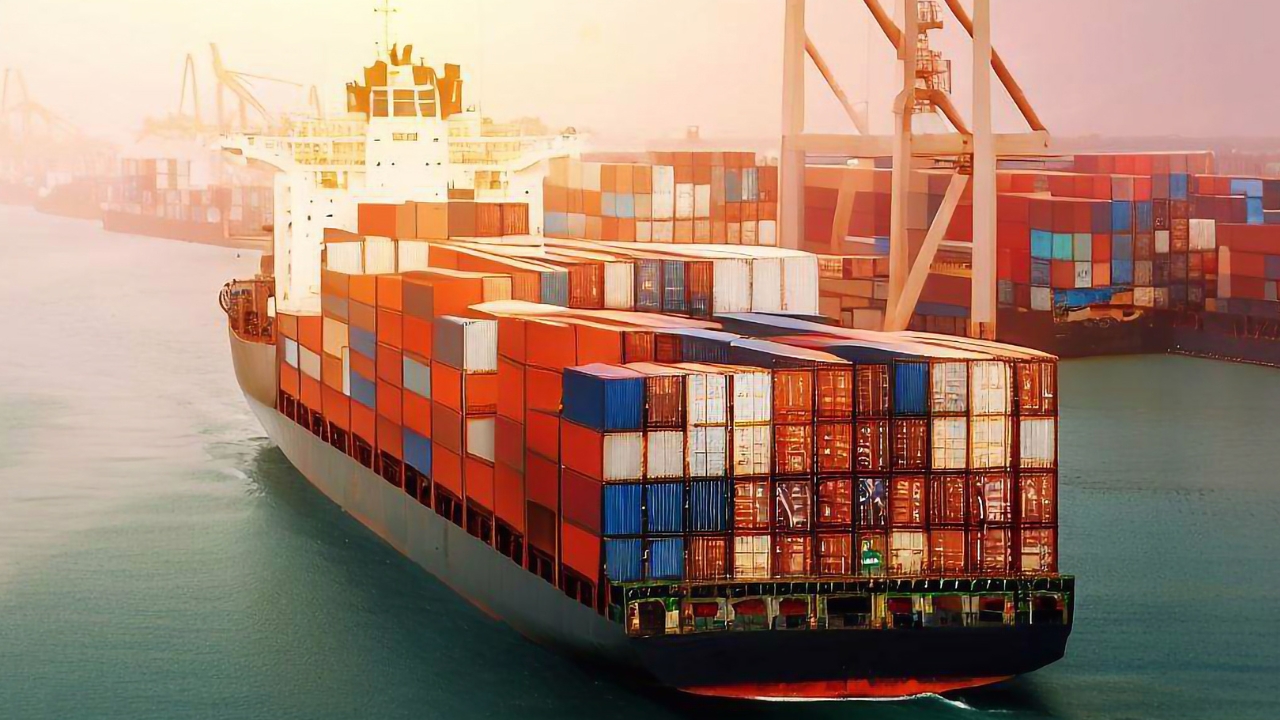
    In a bid to boost Gwadar Port’s operational capacity, the Ministry of Maritime Affairs has outlined plans to increase the number of shipping lines operating to and from the port, and has also announced the launch of a ferry service.

    Federal Minister for Maritime Af­­fairs Muhammad Junaid Anwar chaired a meeting at the high-profile Ministry of Maritime Affairs attended by key officials from the ministry.

    According to the federal minister, the ferry service is expected to connect Pakistan with countries from the Gulf Cooperation Council (GCC). The initiative is part of the federal government’s plan to elevate Gwadar Port’s position as a “major hub in the Arabian Sea”.

    The government is aiming “to transform Gwadar into a strategic transhipment and logistics centre,” the federal minister revealed.

    If accomplished, the increase in the flow of maritime trade through Gwadar Port could greatly benefit Pakistan’s economy. Reports suggest that the time is optimal to route a larger number of naval vessels via the port as well, as the Port is now “fully operational”.

    In an attempt to integrate Gwadar Port into larger maritime networks, the federal minister reportedly issued directives to all relevant stakeholders to boost commercial activity at Gwadar Port.

    According to the federal minister, an increase in shipping lines would improve trade relations with the Middle East and landlocked countries in Central Asia. Moreover, Pakistan could witness a large inflow of foreign reserves if Central Asian countries decide to rely on Gwadar Port as their primary trading hub.

    An increase in the flow of traffic through Gwadar Port is also likely to alleviate pressure on other Pakistani ports, namely Karachi and Qasim ports. This spells great news for Pakistani importers and exporters alike as various ports in Karachi have been witnessing backlogs in recent times. 

    Apart from adding more shipping lines, the federal government has recently been ramping up efforts to increase the flow of shipping vessels passing through Gwadar Port. In January 2025, Islamabad decided to “revive” the port, which was seemingly processing subpar levels of cargo. 

    Federal authorities attempted to tackle the issue of low freight traffic through the port by deciding to route 60 percent of all public sector cargoes through Gwadar. However, the port is likely to witness a complete “revival” with the possible increase in shipping lines announced by the Ministry of Maritime Affairs.

  • Here’s what ATM withdrawal from other banks will cost you now…

    Here’s what ATM withdrawal from other banks will cost you now…

    Commercial banks have reportedly started to raise the transaction fee for cash withdrawals from ATMs of other banks, which has been noticed in transactions made at commercial bank ATMs that are not of the account’s host bank.

    According to reports, the per-transaction fee for withdrawals has skyrocketed from Rs23.44 to a hefty Rs35, resulting in customers facing a staggering 49.3 percent hike in transaction fees if they choose to withdraw their cash from ATMs of other banks.

    As per reports, this change has been made across all banking institutions and is not limited to any particular commercial bank. Analysts have cautioned users from withdrawing cash from ATMs not provided by their banks as these charges are applicable on each withdrawal transaction.

    Commercial banks reportedly end up retaining only a minor fraction of the fees when customers use ATMs of banks that they are not customers of. The majority of the revenue generated from the fees go to 1-Link – the service that connects ATMs of all member banks and financial institutions across Pakistan.

    In other commercial banking related developments, the Senate Standing Committee on Finance recently approved a proposal to increase withholding tax on cash withdrawals to one percent for fiscal year (FY) 2025–26. According to reports, the hike, effective from July 1, will apply only to non-filers.

    The move was recommended by Federal Board of Revenue (FBR) Chairman Rashid Mahmood Langrial, who suggested that the withholding tax should be revised upward from its previous rate of 0.6 percent.

    In FY 2024-25, cash withdrawals made by non-filers, via debit and credit cards, exceeding Rs50,000 were also subject to a 0.6 percent withholding tax. The increase in the tax rate is now intended to boost the federal government’s revenues for FY 2025-26.

    Reports indicate that withdrawals larger than Rs50,000 will result in tax deduction from the entire amount. Under a one percent withdrawal rate, withdrawals amounting to Rs75,000 in a single day will result in non-filers paying Rs750 to the federal government. Similarly, non-filers withdrawing Rs100,000 in a single day will have to face a tax of Rs1,000.

  • Trade agreement draws closer as Pakistani delegation arrives in US

    Trade agreement draws closer as Pakistani delegation arrives in US

    In a bid to improve bilateral economic ties with the US, a Pakistani delegation has made it to America to finalise the terms of a potential trade agreement, more than two months after the imposition of import tariffs by US President Donald Trump.


    Reports reveal that Federal Commerce Secretary Jawad Paul Khawaja is leading the delegation and is set to engage with top officials, including US Trade Representative Jamieson Greer, in Washington DC. Following Finance Minister Muhammad Aurangzeb’s meeting with US Commerce Secretary Howard Lutnick, the Finance Ministry stated talks between both sides were likely to conclude this week.


    It merits a mention that discussions surrounding Pak-US trade have been taking place for over a month. These discussions have revolved around the 29 percent reciprocal tariff which the US levied on Pakistani imports.


    As per reports, the trade discussions are an effort to reset bilateral economic ties “at a time of shifting geopolitical alignments”. Currently, Pakistan is in discussion with the US to collaborate over the long term to foster a “strategic and investment partnership”.


    Reports suggest that the federal government has offered to ramp up the import of US goods such as crude oil. Moreover, Pakistan is expected to facilitate US companies in tapping into Pakistan’s vast mineral reserves.


    Historically, Pakistan has imported crude oil from Middle Eastern countries such as the Kingdom of Saudi Arabia (KSA) and the United Arab Emirates (UAE). The reason behind importing petroleum products from the Middle East lies in Pakistan’s close proximity to the region, allowing for lower transportation costs.


    As for the facilitation of US firms in the mining sector, Federal Minister for Energy Ali Pervaiz Malik called upon US companies and firms last week to tap into Pakistan’s mineral deposits. Key officials from the Ministry of Energy, SIFC representatives and US diplomats attended a webinar, which was reportedly broadcast from the head office of Oil and Gas Development Company Ltd (OGDCL). 


    The event was held jointly by the US Embassy in Pakistan and the Ministry of Energy. Both parties organised the webinar to boost bilateral economic ties and investment opportunities in the mining sector.


    Following Pakistan’s concessions, the Finance Ministry, while commenting on the ongoing negotiations, highlighted how “both sides showed satisfaction”. While ramping up imports from the US may serve to worsen foreign exchange outflows, analysts have also outlined how leveraging Pakistan’s mineral deposits could bring in much-needed foreign exchange for cash-strapped Pakistan.