Category: Business

  • China likely to roll over $1.8 billion in loans

    China likely to roll over $1.8 billion in loans

    China has signalled a possible rollover of $1.8 billion in Pakistani debt for two years, which is about half the amount Islamabad initially requested. However, reports reveal that securing the rollovers could help the cash-strapped country stay on track with the International Monetary Fund (IMF) program.

    According to reports, Pakistani officials had asked for an extension on multiple loans from the Export-Import (Exim) Bank of China. These loans include buyer credit, preferential buyer credit and concessional loans. However, Chinese authorities declined to include the buyer’s credit in the deal.

    Reports now suggest that the concessional and preferential loans, amounting to a staggering $1.8 billion, could be officially rescheduled by the first month of fiscal year (FY) 2025-26. 

    The aforementioned loans were reportedly taken for development projects and are separate from Pakistan’s commercial borrowing from Chinese lending institutions.

    According to details, Islamabad aimed to delay repayments on Exim Bank loans due between October 2024 and September 2027. However, Beijing refused to include loans from the COVID period in rollover discussions.

    China reportedly suggested that Pakistan focus on loans maturing between September 2025 and September 2027, a proposal the Finance Ministry declined. Additionally, China wants the rescheduled loans to be denominated in Chinese yuan instead of the dollar.

    According to reports, Exim Bank also asked Pakistan to exclude buyer’s credit loans from the request to move the process forward. This condition resulted in the reduced amount now under consideration.

    Pakistan initially wanted relief on a whopping $3.4 billion in debt from China to help fill the funding gap identified by the IMF. Reports reveal that the IMF had identified a $5 billion external financing shortfall over the $7 billion extended fund facility program’s three-year span.

    If China agrees to roll over the debt, it would be the second time the country has agreed to defer Pakistani debt within two years. Back in July 2023, former Finance Minister Ishaq Dar had announced the rescheduling of $2.43 billion worth of loans from the Exim Bank for another two-year term.

    Pakistan’s foreign reserves recently dropped below $10 billion after paying off a $2.1 billion commercial loan to China last week. However, with China expected to refinance three loan packages totalling $3.7 billion, reserves are likely to bounce back to nearly $14 billion.

    According to reports, Finance Minister Muhammad Aurangzeb has said reserves will cross $14 billion by the close of FY 2024-25. The IMF has assured that Pakistan’s reserves will stand at $13.9 billion by then.

  • World Bank, ADB pledge $544m for Balochistan

    World Bank, ADB pledge $544m for Balochistan

    The World Bank (WB) and Asian Development Bank (ADB) have committed a combined $544 million to support development initiatives in Balochistan. According to reports, the funds aim to focus on initiatives surrounding education, water access, and women’s financial inclusion.

    The ADB has granted a $350 million loan for a major initiative aimed at helping women in Pakistan access financial services. Moreover, reports reveal that the WB has approved $194 million in funding for two separate projects in Balochistan.

    Of the aforementioned WB projects, a $100 million education program, titled “GRADES”, is being designed to improve learning outcomes and enrolment, especially at the childhood and primary levels. Reports indicate that this program could reach a staggering 250,000 children across Balochistan.

    This project reportedly includes steps like starting early childhood education in more areas, adding double shifts to accommodate more students, building climate-resilient study spaces, and offering safer transport options. 

    According to reports, the project aims to focus on teacher training, with 5,000 teachers set to receive professional development. Moreover, 400 scholarships will go to female students training to become teachers, which could encourage more women to enter the education sector.

    Najy Benhassine, the World Bank’s Country Director for Pakistan, outlined how the bank remained “committed to supporting Balochistan through strategic investments in infrastructure and human development.”

    Reports reveal that WB Project Team Lead Inga Afanasieva also highlighted how the initiative goes beyond classrooms as the program intends to build resilience against disasters and ensure early education systems are more sustainable and accessible.

    The World Bank’s second project in the province, namely the Balochistan Water Security and Productivity Improvement Project (BWSPIP), is getting $94 million in financial support. It’s centred on improving access to water in the Talli, Nari, and Lehri river basins of the Kachi Plain, as well as Quetta. 

    Data from reports suggests that about half a million people are expected to benefit from basic water supply improvements, with an additional 80,000 gaining access to infrastructure that is climate resilient.

    As per reports, this initiative will work on flood protection, water availability for farming and daily use, and making water delivery systems more reliable. The broader goal is to improve agricultural productivity and provide more economic stability for smallholder and tenant farmers.

    Task Team Lead Carolina Dominguez Torres reportedly outlined how the BWSPIP is “in line with Pakistan’s Resilient Recovery Framework” and that the program could improve the lives of many in Quetta, especially farmers and women.

  • Stock market witnesses rally after Iran-Israel ceasefire

    Stock market witnesses rally after Iran-Israel ceasefire

    The Pakistan Stock Exchange (PSX) witnessed a massive 6550-point rally, pushing the benchmark KSE-100 index past the 122,500-point mark. According to reports, shares climbed rapidly on Tuesday as investor confidence soared after US President Donald Trump announced a ceasefire between Iran and Israel.

    Prior to the ceasefire, investor confidence remained subdued amid rising tensions in the Middle East. The KSE-100 retreated by over 10,000 points, from its record high of 126,718.28 points on June 12 to just 116,167 points on Monday.

    News of the ceasefire caused the index to open in the green in the early hours, with the momentum continuing into the day. As of publishing, the KSE-100 index reached an intraday high of 122,725.21 points. The index peaked at 12:34 PM, after which profit-taking took hold of the market. 

    For reference, the KSE-100 closed at 116,167.47 points on Monday, after which the index recorded a growth of 5.64 percent on Tuesday, leading to a 6556.33 point rise when the index hit its intraday high. The market witnessed a massive bull run after the KSE-100 hit its intraday low of 120,369.53 points at 9:32 AM.

    All 17 indexes listed on the exchange remained in the green with the All-share index (ALLSHR) having grown by 4.54 percent, by 1:25 PM, translating into a 3,291.22 point rise. Unlike the KSE-100, which tracks the performance of the 100 largest and most liquid companies, the ALLSHR index records the performance of all publicly listed companies on the PSX.

    According to data from the PSX, many companies witnessed a rise in share prices, with First Treet Manufacturing Modaraba (FTMM) and First Prudential Modaraba (PMI) winning big, to the tune of growth rates that sat at 20.20 percent (FTMM) and 16.05 percent (PMI).

    However, not every publicly listed stock saw gains, as many witnessed sharp declines. Of these declining companies, the one that fared the worst during intraday trading was Crescent Cotton Mills Limited (CCM), with a 10.00 percent decline in its position.

    Recent reports have suggested that the KSE-100 index could cross 165,000 points by December 2025, owing to a drop in interest rates and an improved state of the wider economy. These factors have created a business-friendly environment, lending weight to analysts’ claims.

  • Oil prices plunge as Iran-Israel ceasefire eases supply concerns

    Oil prices plunge as Iran-Israel ceasefire eases supply concerns

    Oil prices recorded a major decline in the global market on Tuesday after Israel agreed to US President Donald Trump’s proposal to a ceasefire with Iran. According to reports, this has eased concerns about disruptions in oil supply to the international market.

    Data from the New York Mercantile Exchange reveals that Brent crude futures fell below the $70 support level, recorded a sharp 9.99% decline between June 23 at 12:30 PM (UTC-4) and June 24 at 3:00 AM (UTC-4). This caused prices to fall to $65.68 per barrel. 

    A statement released by the Israeli Prime Minister Benjamin Netanyahu’s office confirmed that Israel agreed to a ceasefire with Iran as it had accomplished its objectives for destroying the country’s ballistic missile and nuclear threat. The US President made an announcement on Monday, outlining that if both Iran and Israel cease hostilities, the conflict would end after 24 hours.

    The 12-day Iran-Israel conflict drove oil prices to a five-month high. The hike in global oil prices detrimentally impacted the global economy, causing capital markets across the region to take a hit, including the Pakistan Stock Exchange (PSX).

    Analysts believe that the ceasefire could result in oil prices declining to previous levels. However, analysts also outline that oil prices will only become less volatile if both sides adhere to the ceasefire.

    Currently, Iran is the Organization of the Petroleum Exporting Countries’ (OPEC) third-largest crude oil producer, and many feared further hikes in the price of oil as large-scale attacks on the country’s oil installations could have resulted in a major drop in supply.

    Moreover, the war could have spread to the Strait of Hormuz, which witnesses the transport of 20 percent of the world’s oil supply, including exports from non-belligerent countries such as Kuwait, Iraq, and the United Arab Emirates (UAE).

    Reports suggest that disruptions faced by naval cargo vessels in the region could have slingshot prices past the $100 per barrel resistance level. It merits a mention that Brent crude futures have remained under $100 per barrel since August 2022, highlighting the severity of the situation.

    However, analysts predict that the risk premium built into oil prices because of Iran-Israel tensions is likely to diminish significantly, resulting in a drop in prices.

  • PM orders replacing meter readers with mobile app for electric bills

    PM orders replacing meter readers with mobile app for electric bills

    Prime Minister (PM) Shehbaz Sharif has reportedly approved proposals to phase out the use of meter readers in power distribution companies in a bid to reduce issues of overbilling. According to reports, a mobile application, Apna Meter Apni Reading, will be launched to fully replace manual meter reading.

    This facility, however, will not be available in Karachi as the city is not served by a state-owned power distribution company. If K-Electric intends to offer its customers the same service, it will have to develop its own infrastructure.

    Reports reveal that the current meter reading system has several issues. Customers have logged numerous complaints, claiming that their bills are much higher compared to the number of units they have consumed.

    Currently, meter readers go from one utility pole to the next, taking pictures of every electricity meter. As per reports, these pictures are then forwarded to the Power Information Technology Company (PITC), which utilises information from the pictures to issue bills to customers.

    The PM Shehbaz reportedly issued directives to the Power Division this month to resolve the complaints of overbilling via an electronic system. Reports suggest that the creation of a smart power mobile application was approved, which will be available to consumers in Urdu, Punjabi, Sindhi, Pashto, and Balochi.

    PM Shehbaz has given a deadline of one month to Power Division officials to plan a strategy to start phasing out the use of meter readers in the power sector. This could greatly improve the efficiency of the power sector as a large number of meter readers can be put to use towards other operations. Alternatively, the federal government can also enact right-sizing initiatives, as some meter readers may not be required even after being reassigned to other designations.

    Moreover, reports have outlined how this will result in a fall in administration costs. PM Shehbaz has reportedly agreed to pass savings from lower costs to customers, thereby reducing the financial strain on the general public.

    PITC has asked power distributors to work on media campaigns to educate the general public about the benefits of self-reading, as meter readers are often a cause of overbilling. According to reports, the federal government has earmarked Rs316 for the aforementioned media campaign.

  • Pakistan Stock Exchange plummets following US strikes on Iran

    Pakistan Stock Exchange plummets following US strikes on Iran

    The Pakistan Stock Exchange (PSX) witnessed a massive 1,600-point slide on Monday, a day after the US launched strikes on Iran’s nuclear sites. The benchmark KSE-100 index fell below the 119,000-point support level.

    As per the details, the decline in the KSE-100 index has been exacerbated by the US’ involvement after already being locked in a freefall last week because of escalating tensions between Iran and Israel.

    It merits mention that the PSX’s losing streak comes two weeks after the release of the latest federal budget that caused the index to reach an all-time high. However, the budget-related spike in the exchange was short-lived as reports indicate that Iran-Israel tensions have resulted in oil prices climbing to a five-month high. The hike in global oil prices has caused capital markets across the region to take a hit, including the PSX.

    These developments caused the KSE-100 index to open in the red in the early hours of the day. As of 12 PM, the KSE-100 index has shed 1,656.07 points because of a rise in market-wide selling pressure. According to reports, companies in key sectors such as commercial banking, automobile assembling and oil and gas exploration witnessed larger sell-offs.

    Data from the PSX reveals that the KSE-100 index reached an intraday low of 117,977.81 points at 9:37 AM. A minor recovery was recorded after the index hit its intraday low, allowing the index to reach an intraday high of 118,798.51 points at approximately 9:58 AM.

    However, the rally was short-lived, and the index witnessed a decline again, with 118,000 points resulting as a key support level. For reference, the KSE-100 closed at 120,023.23 points on Friday, after which the index shrank by 1.38 percent during trading hours on Monday, leading to a 1,656.07 point drop.

    Of the 17 indexes listed on the exchange, 16 remained in the red with the All-Share Index (ALLSHR) shrinking by 1.40 percent, which translates into a 1,047.13 point drop in the index. Unlike the KSE-100, which tracks the performance of the 100 largest and most liquid companies, the ALLSHR index records the performance of all publicly listed companies on the PSX.

    The aforementioned figures are not final and are likely to fluctuate as stocks continue to be traded on the floor of the PSX.

  • Pakistan secures $20 billion in external assistance

    Pakistan secures $20 billion in external assistance

    Pakistan has managed to secure approximately $20 billion in external financial assistance during the first 11 months of fiscal year (FY) 2024-25, exceeding its annual target of $19.2 billion. According to reports, this figure includes approximately $6.89 billion in fresh loans and grants, while the majority of the assistance was in the form of legacy rollovers.

    China and Saudi Arabia granted rollovers of $3 billion each, while the United Arab Emirates granted Pakistan a rollover of $2 billion.

    Despite Pakistan exceeding the annual target, the Economic Affairs Division’s (EAD) latest report outlined that inflows of foreign economic assistance dropped by 8.7 percent during the first 11 months of FY 2024-25 compared to the same period last year, when inflows stood at a respectable $7.55 billion.

    It merits a mention that the $6.89 billion figure does not count the $2 billion received from the International Monetary Fund (IMF) under the ongoing $7 billion Extended Fund Facility program. The reason behind this is that these IMF disbursements are recorded separately by the State Bank of Pakistan (SBP). 

    Reports have highlighted how including IMF disbursements and the rollovers results in total foreign assistance reaching $20 billion in the 11-month period. As per the data, Pakistan’s overall rollover portfolio from Saudi Arabia, China, and the UAE is estimated to sit at $12.7 billion, comprising loans and safe deposits.

    Reports suggest that delays in the IMF program deterred many commercial lenders, contributing to the 8.7 percent drop in foreign economic assistance. Last year, inflows were higher due to timely IMF tranches.

    Commercial financing from UAE-based lenders showed some recovery, reportedly reaching $903 million, but it remained far below the $3.8 billion annual target. Aside from delays from the IMF’s side, credit rating concerns and tough economic conditions have played their role in the fall in foreign economic assistance. 

    As per reports, multilateral creditors disbursed $3.37 billion during the first 11 months of FY 2024-25, recording an uptick from $3.14 billion the previous year. Reports suggest that bilateral disbursements witnessed a significant drop on a year-on-year (YoY) basis as well, falling by 45 percent, causing aid to fall to a measly $487 million from its previous value of $889 million.

    Islamabad also intended to generate $1 billion through international bonds and expected $9 billion in inflows from China and Saudi Arabia. Reports reveal that the breakdown would be $5 billion in time deposits, while the $4 billion would be SAFE deposits.

    Meanwhile, inflows through the Naya Pakistan Certificates rose to $1.77 billion from $1.05 billion last year. The ADB and World Bank contributed $1.39 billion and $1.23 billion, respectively, showing YoY growth.

  • Govt allows import of five-year old cars

    Govt allows import of five-year old cars

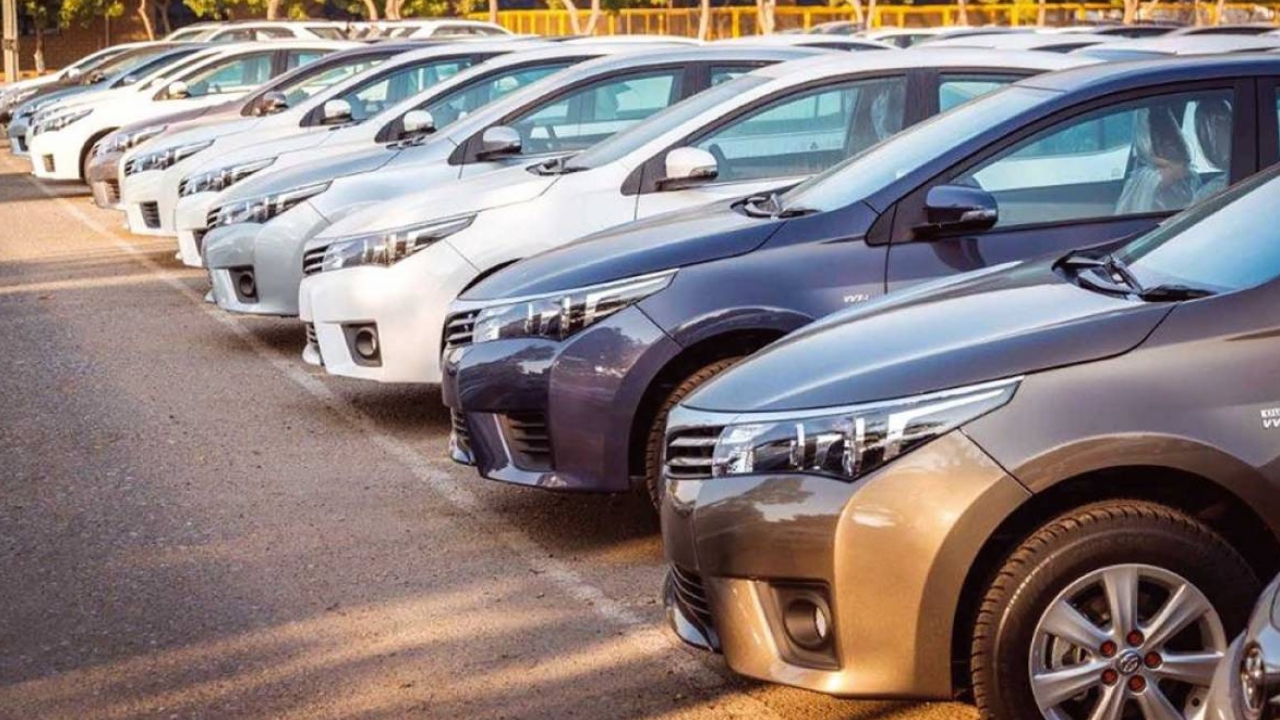
    The federal government has revised the import policy to permit the commercial import of old and used vehicles up to five years of age from September 2025. According to reports, importers are currently not allowed to bring in cars older than three years.

    Commerce Secretary Jawad Paul reportedly clarified during a meeting of the Senate Standing Committee on Finance, chaired by Senator Saleem Mandviwalla, that the revised policy does not apply to vehicles brought in under the Baggage Scheme, which will continue to permit the import of vehicles only up to three years old.

    For reference, the Baggage Scheme allows Pakistanis living abroad to import vehicles into Pakistan under specific conditions. These conditions include a limit on how many cars a person can import each year, and require them to have lived abroad for at least 180 days within the past seven months.

    Reports indicate that in order to protect the local automobile industry, Islamabad intends to impose an additional 40 percent tariff on these older vehicles during the fiscal year (FY) 2025-26. However, over the next four years, this extra duty is expected to be reduced for old and new cars alike.

    Reports suggest that the import of cars up to seven years old could be allowed in the coming years.  However, the authorities will likely ensure that strict quantity and environmental standards are maintained to avoid environmental harm.

    Senator Mandviwalla stressed that overseas Pakistanis should be given the same five-year import window under the Baggage Scheme as commercial importers. 

    Reports reveal that the commerce secretary outlined the strategic abuse of the existing gift scheme as an argument against the import of used vehicles.

    In other automobile-related developments, the Senate Standing Committee on Finance was also informed of a planned three-tier levy on new vehicle purchases, though reports suggest that members were caught off guard when they realised these charges had not been officially included in the Finance Bill for FY 2025-26. 

    The proposed levy structure includes a 1 percent charge for vehicles up to 1300cc, 2 percent for vehicles between 1301cc and 1800cc, and 3 percent for automobiles above 1800cc.

    As per reports, Pakistan aims to boost electric vehicle production to 2.2 million units, mainly electric bikes, over the next five years.

  • Govt to tax online academies, educational institutes, private tutors

    Govt to tax online academies, educational institutes, private tutors

    In a bid to boost revenues, Islamabad has greenlighted a proposal to levy a tax on private academies and educational establishments operating online.

    According to the Federal Board of Revenue’s (FBR) Chairman Rashid Mehmood Langrial, online educational institutions are brining in upwards of Rs30 million per annum. Bringing these institutions into the tax net could boost revenue levels which is the primary motivation behind the move.

    Reports indicate that aside from online academies, authorities will also pursue teachers offering their services to online teaching platforms to extract taxes from their revenues.

    However, it is unclear how the government will levy taxes on teachers providing online educational services to students one-on-one as that is tough to track. Moreover, the move may push teachers working for educational platforms towards more traditional channels of providing their services such as one-on-one at-home teaching services. Critics have outlined how this could detrimentally impact educational outcomes in the country.

    The federal government has also drawn much criticism from teachers because of concerns over the outlay for the Higher Education Commission (HEC) in the recently announced federal budget for fiscal year (FY) 2025-26. According to reports, teachers have outlined how Rs66.4 billion is not enough to cover the monetary requirements of institutions in the higher education space.

    The HEC had requested a budget of Rs84.6 billion, however, the government was unable to meet this demand. This has resulted in a gap of approximately 21.5 percent between the initially requested amount and the actual allocation. It merits a mention that the allocated amount for the HEC is to cover all “non-development” expenses, including the salaries and pensions for staff. 

    Reports reveal that the government has actually slashed development budgets, causing the outlay for development initiatives in the educational sector to fall to just Rs39.4 billion for FY 2025-26. This is a sharp drop in comparison to the development outlay for FY 2024-25, which stood at a respectable Rs65 billion. 

    Reports indicate that the low amount earmarked for the HEC comes at a time when top-tier higher educational institutes such as Quaid-i-Azam University (QAU) are facing difficulties in covering financial liabilities. These liabilities include salaries and pensions.

    According to reports, the financial situation of universities is especially grave in Balochistan and Khyber Pakhtunkhwa. The Information Secretary of the Federation of Pakistan Universities Academic Staff Association (FAPUASA) has reportedly highlighted that universities could face immense difficulties if budgets are not increased.

  • Senate body approves significant hike in cash withdrawal tax for non-filers

    Senate body approves significant hike in cash withdrawal tax for non-filers

    The Senate Standing Committee on Finance has approved a proposal to increase the withholding tax on cash withdrawals to one percent for the fiscal year 2025–26. According to reports, the hike will apply only to non-filers.

    The move was reportedly recommended by Chairman Federal Board of Revenue (FBR) Rashid Mahmood Langrial, who suggested that the withholding tax should be raised from its current rate of 0.6 percent. Reports have outlined how the one percent tax on cash withdrawals by non-filers is higher than the 0.8 percent rate that was initially proposed.

    In the outgoing fiscal year, cash withdrawals made by non-filers via credit cards exceeding Rs50,000 were also subject to a 0.6 percent withholding tax. The increase in the tax rate is now intended to boost the federal government’s revenues for FY 2025-26.

    In the weeks leading up to this development, it emerged that the FBR aimed to use the tax hike to “penalise” non-filers. The government also appears to target non-filers on other fronts, with reports suggesting that Islamabad may scrap the non-filer category altogether, curtailing their financial freedoms.

    Reports suggested that non-filers may not be allowed to make financial transactions of any kind. While the government expects its move to broaden the tax net by penalising non-filers, analysts have outlined how this could lead to the rise of unrecorded transactions.

    This may cause a significant setback to the federal government, which is implementing reforms to transition the economy towards a cashless system. According to reports, in meetings held prior to the release of the budget, the finance minister pushed for stronger digitisation efforts and a move to limit cash transactions.

    Reports indicate that withdrawals larger than Rs50,000 will result in tax deduction from the entire amount. Under a one percent withdrawal rate, withdrawals amounting to Rs75,000 in a single day will result in non-filers paying Rs750 to the federal government. Similarly, non-filers withdrawing Rs100,000 in a single day will have to face a tax of Rs1000.

    While the tax seems nominal at first glance, it could prove to be a respectable source of revenue for the government if non-filers continue to use the formal banking system. However, the government will have to ensure that non-filers do not resort to informal channels for transferring cash.