Category: Business

  • Govt to issue first green Sukuk to raise Rs52 billion for hydropower projects

    Govt to issue first green Sukuk to raise Rs52 billion for hydropower projects

    Islamabad has decided to issue sustainable asset-backed Sukuk bonds to develop the infrastructure for three clean energy projects. According to reports, the federal government needs to generate Rs 52 billion to complete all three projects.

    These bonds are the first of their kind, as previous securities were not linked to projects solely focused on sustainable development. Moreover, the introduction of the Islamic Sukuk scheme may encourage higher levels of savings in the economy. This is because many people refuse to save funds by parking them in conventional banks or purchasing interest-yielding bonds.

    For reference, Sukuk are Islamic financial certificates that allow Sukuk holders to receive a portion of the profit generated from a project. According to reports, these sukuk bonds are to be issued as per the recently approved Sustainable Investment Sukuk Framework.

    The federal cabinet approved the framework earlier in April to attract greater sums of funds for domestic projects. This demand for loans comes despite Pakistan receiving $12.5 billion in foreign loans during the first nine months of fiscal year (FY) 2024-25.

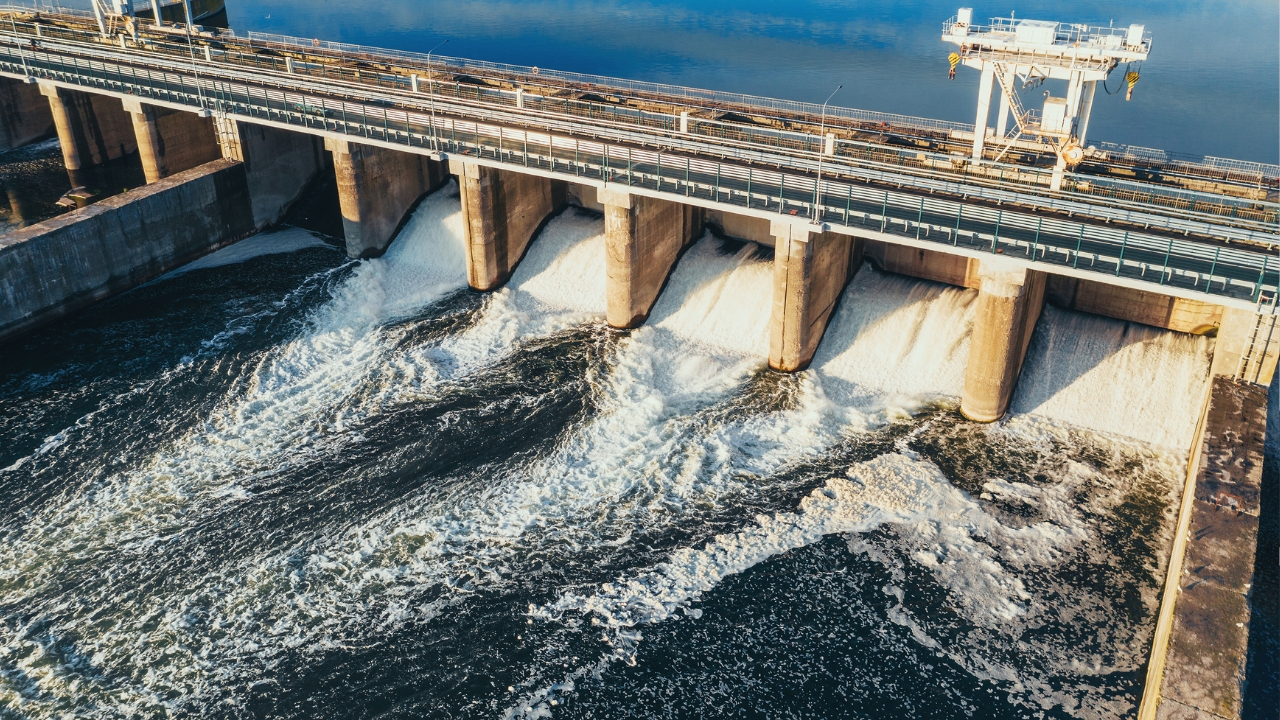
    Key officials from the Ministry of Finance (MoF) claim that the initial Sukuk issuance may be in the ballpark of Rs30 billion. The MoF intended to finance the construction of three hydropower projects, namely the Shagarthang hydropower project and Nai Gaj and Garuk Dams.

    Construction efforts on the aforementioned hydropower projects are underway. However, reports reveal that the federal government has fallen short of funds, leaving lawmakers with the task of gathering over Rs50 billion for the projects to become operational.

    The reason behind the shortfall of funds lies in cost overruns linked to the three hydropower projects. Data from reports indicates that the cost of completing the Garuk Dam ballooned to Rs28 billion, leaving the government Rs5 billion short to finalise the project.


    Similarly, the Nai Gaj Dam and Shagarthang hydropower projects remain incomplete, as Islamabad requires Rs 22 billion and Rs 25 billion, respectively, to make both projects operational.  These issues arose largely as a result of cost overruns and an increase in the scope of the initially approved project.

    While the Water and Power Development Authority (WAPDA) issued Sukuk bonds in 2021 to raise funds for an extension to Tarbela Dam, these bonds are reportedly the first ‘green Sukuk’ bonds Islamabad has issued.
  • Finance minister’s IMF meetings could help unlock second $1bn tranche

    Finance minister’s IMF meetings could help unlock second $1bn tranche

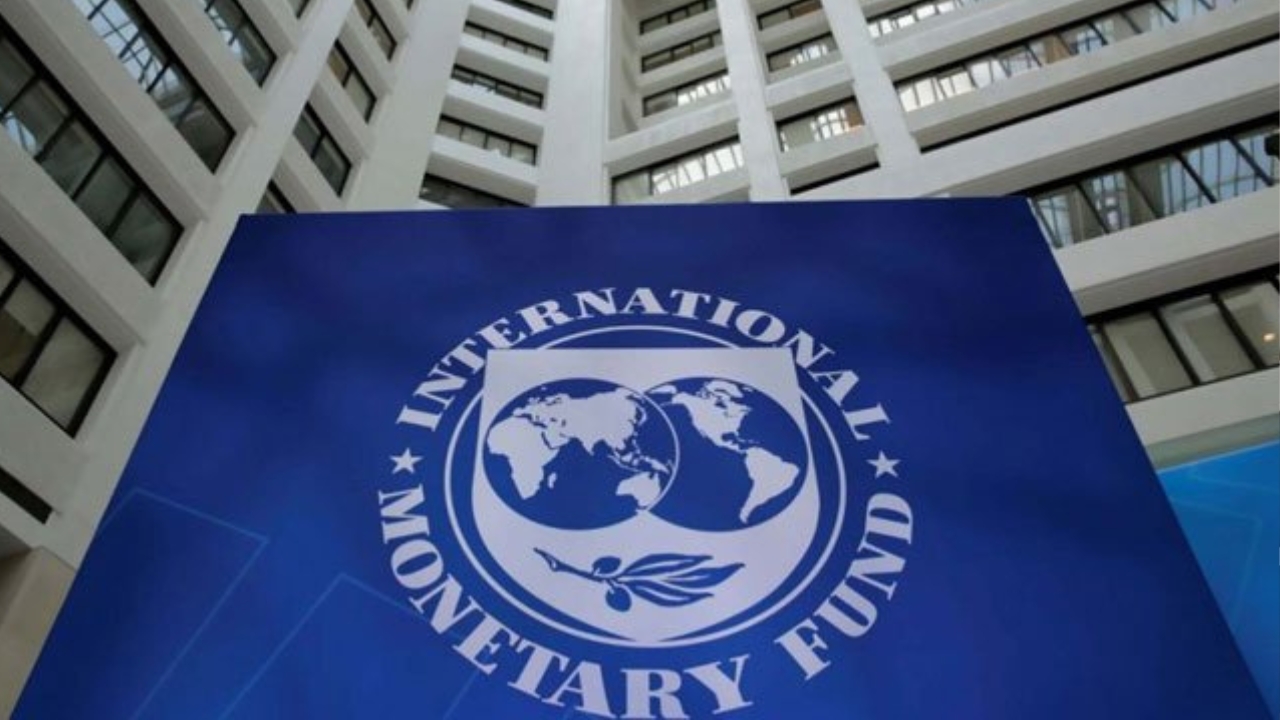
    Pakistan’s Finance Minister Muhammad Aurangzeb has met with the chiefs of the International Monetary Fund (IMF) and the World Bank (WB) during the 2025 Spring Meetings of international creditors. According to reports, the high-profile meetings will continue until 26 April.

    Aside from his meetings with global lenders, the finance minister will hold discussions with his counterparts, central bankers, international credit rating agencies, as well as investment and commercial banks. The aim of the meetings will be to tackle issues plaguing most countries, such as sovereign liabilities and climate finance.

    Reports have revealed that the WB and IMF executives dialled in on Pakistan’s economic recovery plan. Moreover, the international lenders focused on how the government can implement reforms and stay on track to follow existing loan programs.

    As per reports, discussions with international creditors have been positive, with key figures reportedly describing the conversations as ‘constructive’.  This could spell great news for the economy, as Pakistan currently awaits an influx of funds from international sources, which can be unlocked once the IMF gives its approval. 

    The finance minister held a meeting with the Managing Director of the IMF. Analysts believe that this could help swing the IMF’s $7 billion Extended Fund Facility (EFF) review in favor of Pakistan. 

    Reports suggest that Pakistan is currently awaiting the disbursement of a second $1 billion tranche. While the finance minister’s visit could paint a positive picture, the IMF’s review team is still set to visit Pakistan on May 14. 

    Finance Minister Aurangzeb also met Ajay Banga, The World Bank’s President, to discuss medium-run reform policies. According to reports, these policies cover economic issues such as fiscal consolidation and energy sector reforms.

    Discussions with the WB’s president also led to the topic of development financing. Many believe that if the World Bank decides to grant funds to Pakistan, its macroeconomic indicators may improve.

    According to reports, the finance minister has already had six meetings since arriving in Washington, DC. However, several important meetings remain, such as those with dignitaries from the United States (US), China, the Kingdom of Saudi Arabia  (KSA) and the United Arab Emirates (UAE).

    The finance minister’s meeting with his Chinese counterpart is vital as both sides will visit Islamabad’s request to reschedule debt liabilities to alleviate pressure on Pakistan’s financing requirements. Reports have revealed that if successful, Pakistan could see $3.4 billion of debt rescheduled, providing the economy with some breathing room.

  • Shariah-compliant digital assets on cards as Pakistan Crypto Council CEO meets Malaysian FM

    Shariah-compliant digital assets on cards as Pakistan Crypto Council CEO meets Malaysian FM

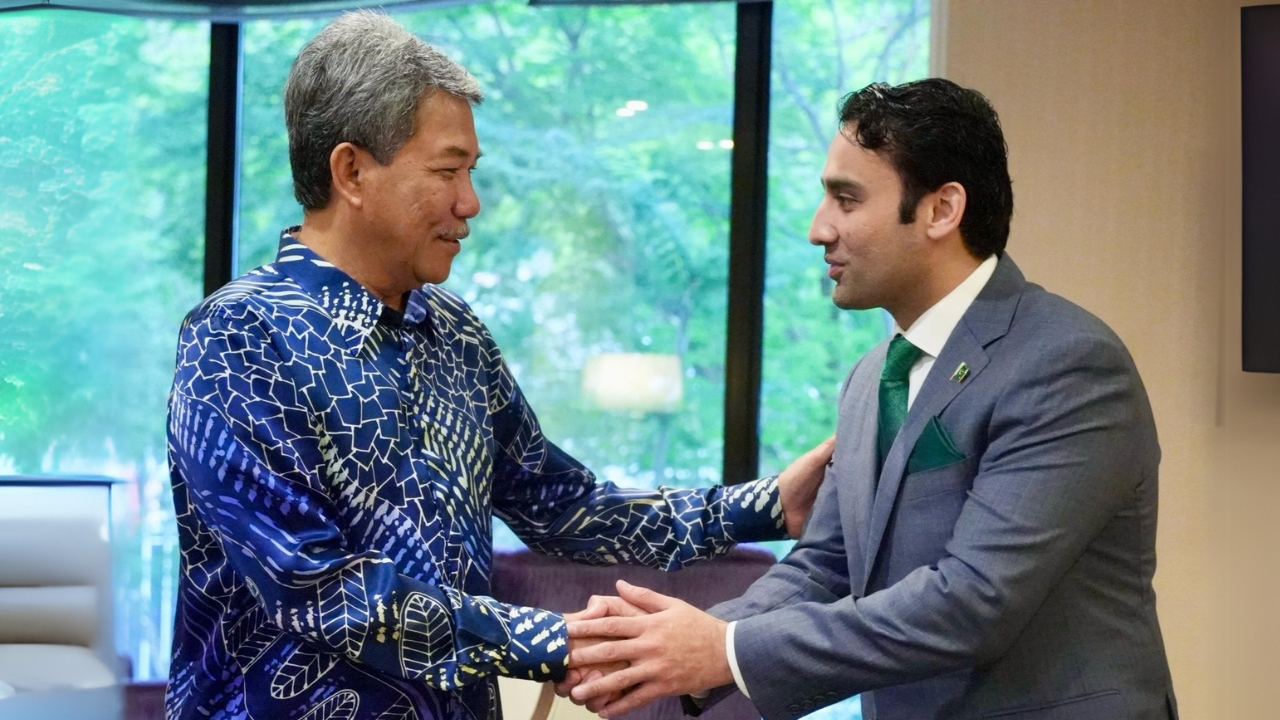
    In a pivotal step toward strengthening regional cooperation in the digital economy, the Foreign Minister of Malaysia Mohamad Bin Haji Hasan met today with Bilal Bin Saqib, CEO of the Pakistan Crypto Council (PCC), to explore collaborative opportunities in blockchain technology, digital assets, and Shariah-compliant finance.

    The meeting focused on laying the groundwork for a Pakistan-Malaysia Digital Finance Partnership — a forward-looking initiative aimed at co-developing FATF-compliant, Shariah-aligned digital asset frameworks that can serve as a model for the broader Organisation of Islamic Cooperation (OIC).

    “Malaysia’s leadership in Islamic finance and Pakistan’s momentum in crypto regulation form a natural alliance,” said Bilal Bin Saqib. “Together, we have a historic opportunity to set global standards for ethical innovation in digital finance — from halal stablecoins and tokenized sukuks to compliant regulatory sandboxes and youth empowerment.”

    The Pakistan Crypto Council is leading efforts to design a passportable crypto regulatory framework tailored to emerging markets — one that fosters innovation while ensuring full compliance with international standards.

    During the meeting, both parties expressed strong alignment on key areas of cooperation, including regulatory coordination between financial authorities and cross-border talent development and Web3 education initiatives.

    This milestone engagement signals the beginning of a deeper economic and technological partnership between Pakistan and Malaysia — driven by a shared vision to build the future of finance through values-based innovation and strategic collaboration.

    Notably, this meeting follows the recent announcement that Binance Founder Changpeng Zhao (“CZ”) has joined the Pakistan Crypto Council as a Strategic Advisor, reinforcing global confidence in Pakistan’s emerging leadership role in the digital asset space.

  • Multiple MOUs signed between Pakistan, UAE

    Multiple MOUs signed between Pakistan, UAE

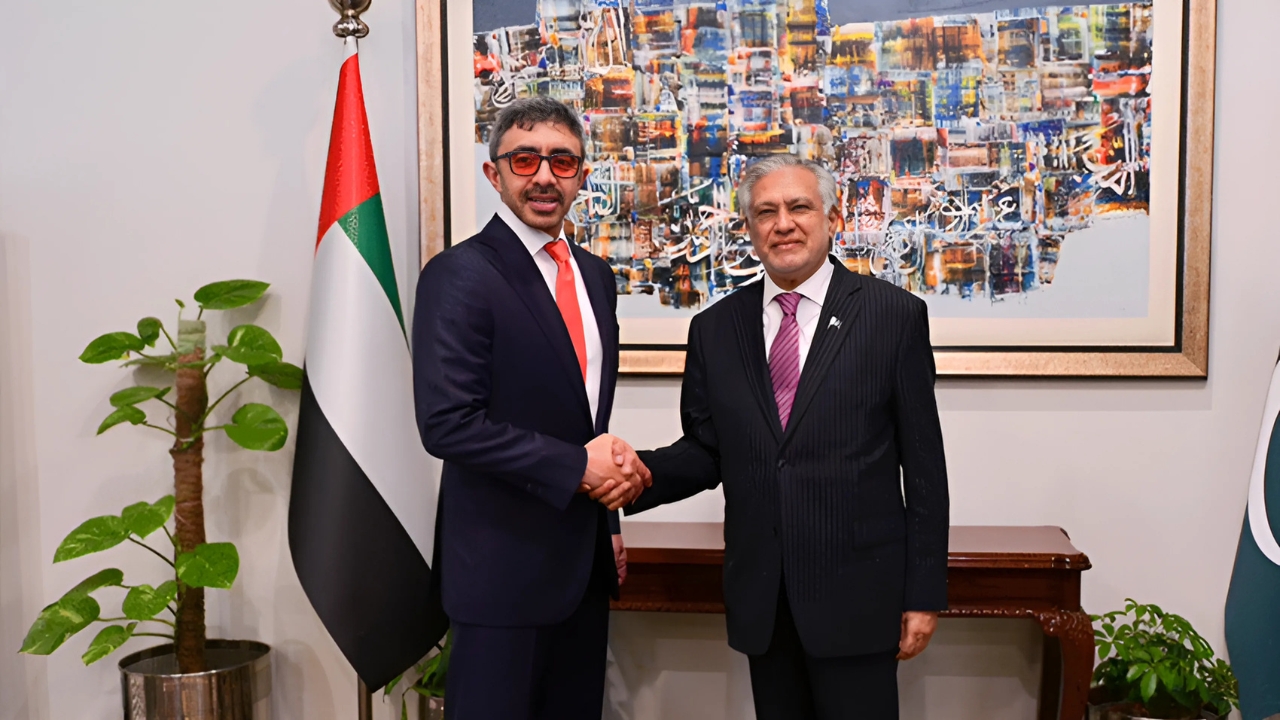
    United Arab Emirates’ Deputy Prime Minister Sheikh Abdullah bin Zayed Al Nahyan has expressed satisfaction over the upward trajectory of Pakistan-UAE relations during his visit to Islamabad, where he reportedly met with Deputy Prime Minister Ishaq Dar.

    The UAE and Pakistan share a long-standing relationship rooted in strong diplomatic, cultural, and economic ties. The Gulf state hosts a large Pakistani expatriate community and is among Pakistan’s top trading partners and sources of remittances in the Middle East. With cooperation spanning various sectors, the visit marked another step in the ongoing efforts to deepen bilateral engagement.

    At a joint press conference, Sheikh Abdullah noted the positive direction in which the relationship was heading, stating that both countries were eager to take their cooperation to new heights. He remarked that recent developments had accelerated faster than in previous years, and expressed hope that this renewed momentum would lead to greater collaboration in areas such as aviation, trade, and investment.

    Dar welcomed his counterpart warmly, describing the bond between Pakistan and the UAE as built on shared history, mutual affection, and a spirit of fraternity. While expressing regret that the visit was brief, he acknowledged Sheikh Abdullah’s global commitments and emphasised the significance of the visit for strengthening bilateral ties.

    As part of the visit, the two countries signed three memorandums of understanding (MoUs). As per reports, two of the agreements cover cooperation in cultural fields and the formation of a joint committee to address consular matters. The third MoU, signed between the Federation of UAE Chambers of Commerce and Industry and the Federation of Pakistan Chambers of Commerce and Industry, establishes the UAE-Pakistan Joint Business Council.

    The formation of this council could lead to more structured and consistent engagement between the private sectors of both countries. It opens doors for joint ventures, knowledge exchange, and easier navigation of regulatory frameworks. For Pakistan, increased Emirati investment and trade collaboration could support economic recovery, boost exports, and create employment opportunities. In turn, the UAE could benefit from access to a large market and a skilled workforce.

    Sheikh Abdullah’s two-day official visit, which began Sunday, was described by Pakistan’s Foreign Office as a move that would help cement the already close relationship between the two nations and foster greater cooperation across diverse sectors for the benefit of their peoples.

  • GT Road set to witness major upgrades

    GT Road set to witness major upgrades

    In a bid to improve intra-national connectivity, authorities have decided to rehabilitate and expand the GT Road (N-5). According to reports, Minister of Communications Abdul Aleem Khan chaired a meeting where relevant authorities decided to complete the upgrade in two phases.

    Analysts have outlined how GT Road will become a three-lane roadway, similar to the layout of motorways. Information from a press statement reveals that the project aims to standardise road quality across the GT Road.

    Reports suggest that key officials passed suggestions regarding the GT Road’s rehabilitation process. These officials were primarily from the Economic Affairs Division, Planning Department and the Ministry of Communications. 

    According to a press statement, the Chairman of the National Highway Authority presented recommendations during the meeting as well. Abdul Aleem highlighted the importance of a prompt response to the worsening condition on GT Road.

    Moreover, he outlined the need to combat financial mismanagement by prudently employing the available project funds to prevent cost overruns. Historically, infrastructure projects have faced significant cost overruns and been plagued by transparency issues.

    Abdul Aleem has issued directives to relevant authorities to get officials to begin work on upgrade proposals. Reports reveal that he conceded how previous projects resulted in massive losses to the national exchequer. 

    However, he also revealed that he would be inspecting the process closely, visiting project locations on the GT Road. Furthermore, he ordered key officials, including the NHA’s chairman, to carry out visits throughout the development stages. 

    If authorities carry out field visits diligently, it could ensure that progress continues smoothly. Upgrades to the GT Road could also cut travel times, allowing a greater volume of goods to pass across the country. Lower travel times could significantly facilitate production processes and boost exports. 

    According to reports, authorities have already shared restoration plans based on the project’s current budget. Officials intend to reduce travel-related difficulties by upgrading the GT Road on a district-to-district basis. 

    Relevant stakeholders have claimed that the first phase restoration works and necessary upgrades will be completed before FY 2025-26 starts. With approximately two months remaining till the end of the current fiscal year, many remain sceptical regarding the speed of the progress, given how upgrades will have to be completed along the full length of the 2,400 kilometre road.

  • Gold prices dip slightly after touching record high of Rs350,000 per tola

    Gold prices dip slightly after touching record high of Rs350,000 per tola

    After scaling to an all-time high of Rs 350,000 per tola, gold prices have recorded a minimal fall of Rs300, and will not significantly change the affordability of the yellow metal.

    While market rates differ significantly from the official rates provided by the All-Pakistan Gems and Jewellers Sarafa Association (APGJSA), reports said that gold was currently trading as high as Rs360,300 per tola and Rs 308,900 per 10 grams.

    As of publishing, international gold rates for one troy ounce sit at a respectable $3,328.30 across multiple digital exchanges. International bullion gold rates are priced significantly closer to the rate APGJSA has posted.

    The difference in price could stem from traders charging a high premium to augment incomes. Some believe this to be plausible as gold traders and jewelers have witnessed a fall in the volume of sales in the past few months.

    Over the last six months, gold prices have witnessed a meteoric rise, jumping from approximately $2,700 per troy ounce to $3,328 per troy ounce — a 22.3 percent spike. With many unable to purchase gold, independent analysts believe a fall in domestic sales volume might be a contributing factor behind the high premiums.

    Gold traders often charge “packing fees” among others, which causes the price of the commodity to rise in the domestic market. While the price of gold fluctuates rapidly, silver prices have remained largely undisturbed.

    Silver rates sit at Rs3,414 for one-tola of 24k purity and have largely remained stable as the commodity remains insulated from bulk buying and selling by large investors in the global bullion market. The 10-gram rate for pure silver is Rs2,927.

    Many believe that the reason behind the large swings in the price of gold could stem from gold’s status as the ultimate “safe haven asset”. Historically, in times of economic downturns, investors have preferred to park their funds in gold as it is a good store of value.

    With economic uncertainty on the rise and analysts predicting a global recession, many believe that the price of gold has not hit its ceiling yet. Citing a number of factors, Goldman Sachs has revised its year-end 2025 gold price projection to $3,700 per troy ounce.

    Prior to the revision, experts at Goldman Sachs had predicted that the price of gold would only reach $3,300 per troy ounce.

  • Muhammad Aurangzeb sets out for IMF, World Bank meetings

    Muhammad Aurangzeb sets out for IMF, World Bank meetings

    Finance Minister Muhammad Aurangzeb is set to participate in the 2025 Spring Meetings of the World Bank (WB) and the International Monetary Fund (IMF). The high-profile meetings will feature a number of high-ranking state officials and are scheduled to take place in Washington, United States.

    According to credible reports, the meetings will last six days (April 21-26) and Muhammad Aurangzeb will meet with international creditors and foreign dignitaries. Aside from officials from the IMF and the World Bank, notable attendees will include central bankers and finance ministers from most countries.

    Muhammad Aurangzeb has meetings scheduled with the World Bank, the IMF, several international credit rating agencies, and even investment and commercial banks. Recently, Pakistan’s credit rating has improved on the global scale, as both Fitch and Moody’s upgraded Pakistan’s rating.

    If Muhammad Aurangzeb can give rating agencies a positive outlook, it could help Pakistan unlock a plethora of economic benefits. Generally, a higher rating translates into lower borrowing costs, greater foreign direct investment inflows and improved access to international capital markets.

    With Pakistan being deemed as creditworthy by credit agencies, investors are more likely to park their funds in the domestic economy. More importantly, it could make it easier for Pakistan to issue bonds in international markets if other credit rating agencies follow suit after meeting with Muhammad Aurangzeb. 

    Aside from meetings with institutions, reports indicate that he is expected to meet with key officials from the US State and Treasury Departments, as well as China, Saudi Arabia, and the United Kingdom. According to reports, Muhammad Aurangzeb will also participate in the 13th Ministerial Meeting of the Coalition of Finance Ministers for Climate Action.

    Analysts believe that he will likely attempt to negotiate a better commercial arrangement with the Trump administration. While temporarily suspended, Pakistan faces a 29 percent tariff from the US, which could detrimentally affect the domestic economy. 

    A recent report by the Pakistan Institute of Development Economics (PIDE) revealed that US tariffs could result in a reduction of approximately $1.4 billion in Pakistan’s foreign exchange inflow.  Moreover, a spike in the domestic unemployment rate is possible as PIDE projects that half a million workers could be fired.

    Many believe that if Muhammad Aurangzeb or subsequent delegations from Pakistan are unable to secure better terms for Pakistan, the macroeconomic losses may prove to be devastating. Reports suggest that a team from Pakistan might depart for the US in the coming weeks to meet with state officials to discuss trade agreements and outstanding tariffs.

  • Pakistan, Afghanistan resume trade talks after year-long pause

    Pakistan, Afghanistan resume trade talks after year-long pause

    Officials have resumed trade talks in an attempt to boost bilateral trade volume between Pakistan and Afghanistan. According to credible reports, this development has come to light after trade talks were put on hold over a year ago.

    If trade relations improve, cross-border cargo movement could surge. Reports indicate that high-profile discussions regarding international trade were held in early 2024 when senior Pakistani officials met with Afghanistan’s Minister for Industry and Commerce, Nooruddin Azizi, in Kabul.

    Facing a slew of international sanctions, Afghanistan remains largely cut off from the rest of the world. However, lawmakers and officials in Kabul want to access global markets.

    Afghanistan’s Commerce Ministry has released a statement outlining calls to renew the Afghanistan-Pakistan Transit Trade Agreement (APTTA). Moreover, the statement highlighted the demand for exporting Afghan goods, such as coal, to Pakistan.

    According to the Observatory of Economic Complexity, Pakistan imported a staggering $647 million worth of coal briquettes in 2023. While part of this import demand was satisfied by Afghan coal, South Africa and Indonesia were also major suppliers.

    However, many believe that importing from Afghanistan would be a good economic decision, as it could reduce transportation costs. Afghanistan seems poised to seize this opportunity, as the commerce ministry’s statement reportedly mentions the need for counter-smuggling commodities.

    Afghan officials have talked about operationalising Torkham port while utilising Ghulam Khan port to facilitate commercial activities. Moreover, they have expressed interest in the crossing of heavy vehicles for cargo transit and the possibility of banks providing guarantees. 

    Afghanistan’s financial system remains handicapped as $9.4 billion of the war-torn country’s reserves remain frozen by the United States (US). Gaining access to Pakistan’s banking network for commercial reasons could significantly benefit Afghanistan’s economy.

    Afghanistan’s Minister for Industry and Commerce is leading a delegation to Pakistan to boost bilateral trade relations. He met his counterpart, Commerce Minister Jam Kamal Khan, to discuss potential avenues of collaboration.

    According to reports, Pakistani officials have suggested creating a joint committee to address concerns related to trade. Pakistan stands to benefit from boosting ties with Afghanistan.

    In the first eight months of FY 2024-25, year-on-year exports to Afghanistan grew by a respectable 84.25 percent. Import volumes have logged a sharp increase as well, as imports jumped from $5.47 million in the first eight months of FY 2023-24 to $18.21 million during the current fiscal year.

  • Pakistan, Malaysia eye stronger Islamic finance ties as PSX hosts Shariah experts

    Pakistan, Malaysia eye stronger Islamic finance ties as PSX hosts Shariah experts

    In a bid to enhance collaboration across Shariah-compliant capital markets, a team from Malaysia visited the Pakistan Stock Exchange (PSX). According to credible reports, the team comprises a number of Shariah scholars and industry professionals. 

    Dr Shamshad Akhtar, Chairman of the PSX, outlined the importance of joint efforts in Islamic Finance between Pakistan and Malaysia. Reports suggest that the general public is calling for a transition to ‘Islamic’/Shariah-compliant investment opportunities, which can provide investors with Shariah-compliant income streams.    

    Currently, approximately half of all publicly listed companies in Pakistan are Shariah-compliant. For clarification, a company is Shariah-compliant if its debt ratio is below a certain threshold, it avoids excessive uncertainty, and its core business activities are not haram, such as the sale of firearms and pork.

    The PSX caters to the needs of its faith-based investors by providing Islamic mutual funds and sukuk (Islamic financial certificates). According to data from reports, well over Rs6.5 trillion worth of Ijarah Sukuk have been issued to date.

    Shariah compliance in the capital market is on the rise in Pakistan as a result of regulatory frameworks that favour faith-based investments. However, the same cannot be said for international capital markets. 

    During discussions, both parties outlined the possibility of joining hands to promote Islamic finance on an international level. If done correctly, a vast influx of funds could be recorded into both the PSX and domestic Islamic mutual funds, as faith-based investors from around the world may be attracted to invest in Pakistan. 

    Reports reveal that the Head of Islamic Finance at the Securities and Exchange Commission of Pakistan (SECP) has engaged in high-level discussions with the Malaysian team, highlighting Pakistan’s achievements in the realm of Islamic finance. 

    However, the hosts remained eager to learn from the Malaysian delegation as PSX’s CEO and managing director outlined how the meeting was an opportunity to gain insights from their counterparts. Information sharing could lead to improvements within the PSX structure, especially for services that cater to shariah-compliant stocks. 

    The meeting also brushed over shortcomings of the domestic capital market, as reports claim that only 0.14 percent of Pakistanis have capital market investment holdings. Industry experts and regulators could help expand the domestic investor base by removing barriers to entry.

    Many believe that officials from the PSX could gain insights from the visiting team and implement changes, which could potentially boost investment figures.

  • Suzuki Alto’s smartest upgrade yet: Safety and comfort for every journey

    Suzuki Alto’s smartest upgrade yet: Safety and comfort for every journey

    They start before dawn. Teachers reviewing lesson plans over chai. Delivery riders syncing routes. Nurses buttoning up uniforms. Mechanics wiping grease off their hands before the day begins.


    They’re the heartbeat of a city that never really rests — the ordinary people doing extraordinary things, not with fanfare, but with consistency.

    And right there with them, often unnoticed, often underappreciated, is a machine that works just as quietly, just as reliably: the Suzuki Alto.

    In a world full of noise, the new Alto isn’t louder. It’s more purposeful. Designed not for runways or red carpets, but for real roads and real routines.

    With ABS standard on all variants, Suzuki isn’t offering safety as a privilege — they’re giving it as a right. For the electrician weaving through chaotic traffic. For the working mom navigating school runs and late meetings. For the student who saved for months to afford something dependable.

    Then there’s the seatbelt pretensioners and reminders, the ISOFIX child seat anchors, and that small but mighty pinch guard on the driver’s side window — details that show Suzuki understands: life is unpredictable. Your car shouldn’t be.

    Even the addition of rear power windows is more than cosmetic. It’s Suzuki saying, “We see the passengers too.” The grandmother who sits in the back seat. The colleague hitching a ride. The child drifting to sleep during a late-night drive home.

    Comfort, too, gets a notable upgrade. It might seem like a small thing, but the addition of power windows in both the front and rear across all variants feels like a much-needed nod to convenience. No more manual cranks in the backseat — it’s the kind of detail that shows Suzuki understands how their customers use their cars in real life.

    Then there’s the design refresh. The VXL-AGS variant, in particular, now features turn indicators on the side mirrors and a back door garnish — subtle, yes, but effective. It brings a touch of modern styling to the Alto without trying to be something it’s not. It’s still practical, still efficient — just a bit more polished.

    And for those clocking long hours in traffic, the AGS variants bring peace of mind. No more gear-clutch battles. No more exhausted ankles. Just one less thing to fight with on days already full of struggle.

    Because here’s the truth: progress doesn’t always wear a suit.


    Sometimes, it wears scrubs. Or an apron. Or a school uniform.

    And the new Alto is built for them — the real drivers of this city’s economy, its education, its culture.


    It’s a car that doesn’t just move people.


    It supports them. Elevates them. Protects them.

    And maybe that’s why it endures — not because it’s flashy or fast, but because it fits the rhythm of the people who move the world forward.
    No applause necessary. No spotlight required.


    Just a car that knows its role — and plays it to perfection.

    Disclaimer: The details and opinions expressed in this article are solely those of the author.