Category: Business

  • Pakistan-Turkiye trade agreement faces review post delegation’s visit

    Pakistan-Turkiye trade agreement faces review post delegation’s visit

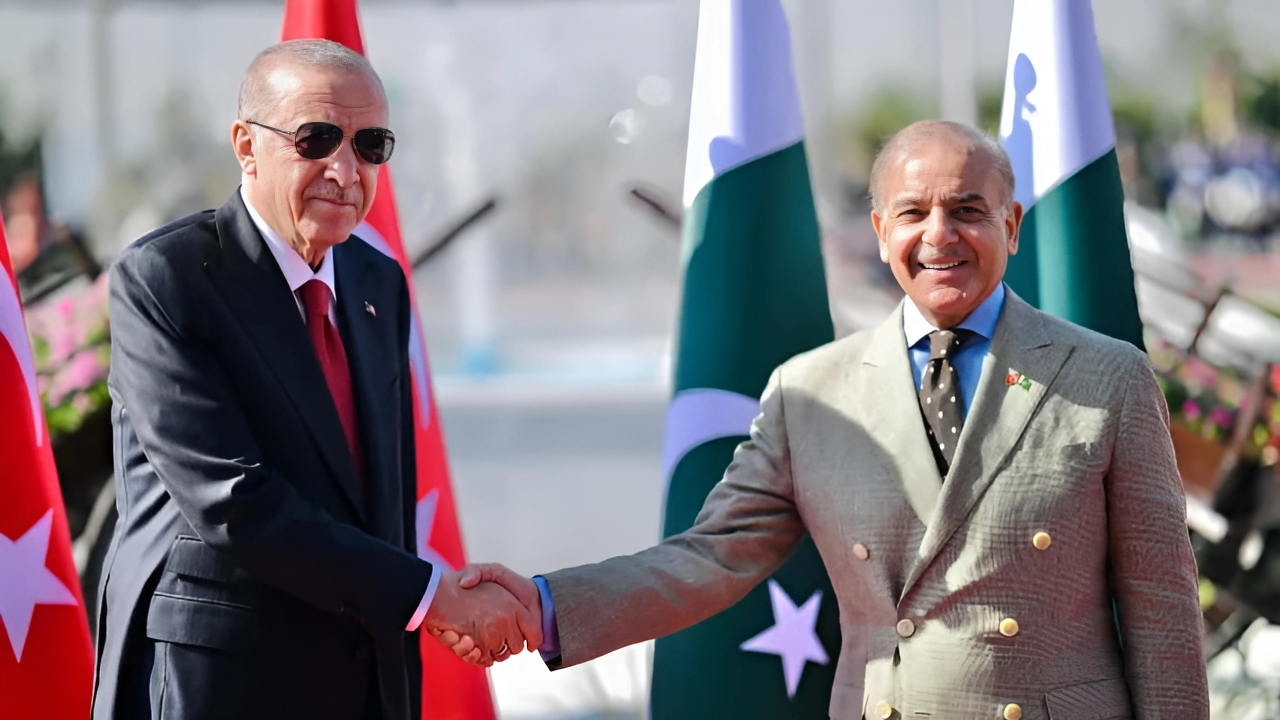
    Business communities in Pakistan and Turkiye might witness a surge in bilateral commercial activities following Turkish President Erdogan’s visit to Pakistan with his delegation. According to an official announcement, Commerce Minister Jam Kamal Khan met with Turkish Trade Minister Professor Dr Omer Bolat at the Turkiye-Pakistan business forum held in Islamabad.

    Reports reveal that officials from both countries outlined the importance of working on the current preferential trade agreement. Revisions to this agreement could remove commercial hurdles and red tape between the two countries, allowing business communities from both countries to reach their true potential.

    Jam Kamal and Omer Bolat considered improving the D8 Preferential Agreement. If the agreement undergoes positive changes, trade among its signatory countries could experience a significant boost.

    Pakistan’s economy could see large inflows in the form of foreign direct investment (FDI) from Turkiye if the agreement is improved. This is because Omer Bolat highlighted the eagerness of Turkish investors to park their funds in Pakistani ventures and businesses.

    However, FDI levels from Turkiye are not as high as they could be, as investors have reportedly faced significant issues when investing their money in Pakistan. This is likely to change as the Turkish delegation is attempting to boost economic ties between both nations.

    According to reports, the delegation’s trip to cash-strapped Pakistan will include the signing of 21 agreements. These agreements can significantly support domestic projects in important sectors such as infrastructure, defence, education, tourism, services, and IT.

    Turkiye’s investments in local businesses could allow Prime Minister Shehbaz Sharif’s Uraan Pakistan project to reach its targets. Uraan Pakistan aims to achieve $60 billion in annual exports from the IT, manufacturing, agriculture, mineral, manpower and blue economy sectors.

    Reports reveal that Islamabad outlined its unwavering commitment to support the opening of additional avenues of FDI into the country. Moreover, the federal capital reaffirmed its commitment to further ease doing business by ‘streamlining’ business activities.

    Jam Kamal mentioned the importance of the Special Investment Facilitation Council (SIFC) in the creation of a streamlined investment process for foreign countries. However, it might be beneficial for the commerce minister to look into Omer Bolat’s claims that Turkish investors are facing difficulties in investing their money in Pakistan.

    Reports claim that Turkiye is planning trade fairs that could boost Pakistan’s exports. The beneficiaries of these fairs are likely to be rice farmers that export Basmati rice, as rice of the aforementioned variety is not traded to the extent they could be under current trade agreements.

  • ‘Even Albaik isn’t coming to Pakistan’; Miftah’s humorous response to KP advisor

    ‘Even Albaik isn’t coming to Pakistan’; Miftah’s humorous response to KP advisor

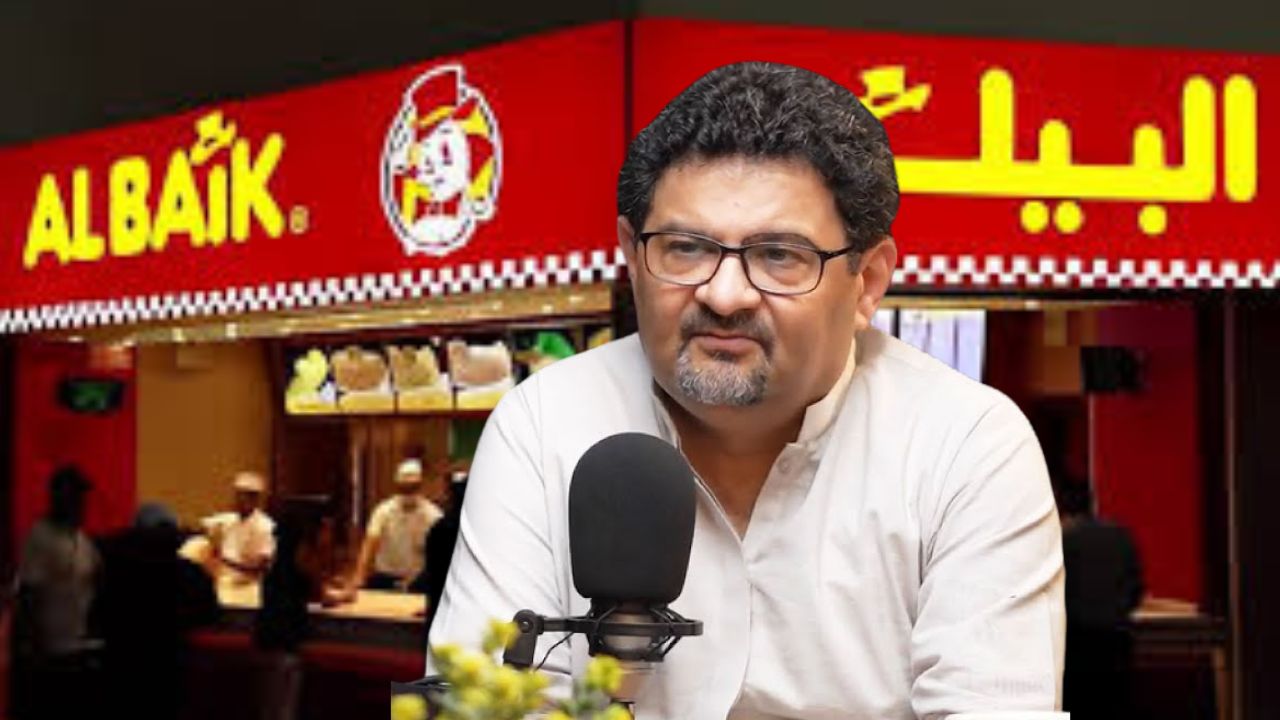
    Awaam Pakistan Party leader Miftah Ismail took an unveiled jab at the incumbent government when an adviser to the Khyber Pakhtunkhwa (KP) Chief Minister (CM) on Finance, Muzammil Aslam, said on Thursday that despite signing several Memorandums of Understanding (MOUs) with multiple countries, only Saudi Arabia’s popular fast food chain Albaik agreement was finalised.

    During a show on a private media outlet, Aslam, while calling out the incumbent government, asked, “Just tell me, if Pakistan progressed so much, then how much Foreign Direct Investment actually came into Pakistan?”

    Ismail chimed in, saying that Aslam was mistaken about Saudi’s popular food chain coming to Pakistan, “Albaik is not coming to Pakistan. If they were, they would have at least mentioned the city where they are opening the branch.”

    “So, I’m expecting that even Albaik is not coming to Pakistan,” he said, and the whole panel, including Pakistan Muslim League Nawaz (PML-N) leader Rana Ahsan Afzal, Muzammil Aslam, and the programme host Mohammad Malick, burst into laughter.

    Commerce Minister Jam Kamal Khan had earlier said in Jeddah that Albaik will open outlets in the country’s major cities. He had also met with the Albaik owner, Rami Abu Ghazala.

    As per media reports, during Kamal’s visit to Albaik’s plants, the Saudi food giant had confirmed that its plan to launch operations in Pakistan was in its final stages following the signing of an MOU.

    The commerce minister appreciated the contributions of Pakistani workers within Saudi businesses like Albaik and welcomed the brand’s entry into Pakistan, highlighting its potential to enhance the country’s fast-food industry and consumer market.

    In another significant meeting, he met with Pakistani investors and business leaders in Jeddah, recognising their contributions to Saudi Arabia’s economy. He acknowledged that 1.7 million Pakistanis travelled to Saudi Arabia in the past five years, making it the top destination for Pakistani emigrants.

    In November 2024, the Federal Minister for Information and Broadcasting Attaullah Tarar, while speaking to the media in Lahore, had also indicated that Albaik was gearing up to come to Pakistan.

    Tarar said, “Saudi investments are growing. Agreements [between both nations] have now exceeded $6 billion. Al Baik is on its way to Pakistan, and Aramco has opened its first fuel station here.”

    Underscoring Pakistan’s improving global economic standing, the information minister pointed out that multiple allied countries are now looking to expand their investments in the country. He further said that Qatar intends to invest $3 billion, while Azerbaijan has plans to contribute $2 billion.

  • Pakistan’s textile sector faces challenges amid high costs, policy concerns

    Pakistan’s textile sector faces challenges amid high costs, policy concerns

    Pakistan’s largest export revenue generators are under threat as approximately 187 textile mills have shut down in Punjab. According to reports, a lack of sensible economic planning and flawed policies have trapped the textile sector in a quagmire.

    Economic analysts suggest that Pakistan’s textile industries, especially those in Karachi and Faisalabad, have the potential to grow rapidly. If policymakers focus on forming prudent policies for the sector, business owners in the industry could experience a revival.

    Many believe this to be imperative, as leaving textile mills to fail might result in serious drawbacks for Pakistan’s wider economy. There is merit to this claim as the textile sector brings in approximately 60 percent of export revenue and contributes about 8.5 percent to the Gross Domestic Product (GDP). The sector helps the cash-strapped economy to narrow the trade deficit.

    According to reports, many initiatives can be implemented to support textile millers in their hour of need. For instance, the state can assist the sector by introducing textile tax courts, funding research and development projects, and setting up development banks that specifically cater to the needs of the textile sector.

    Admittedly, the aforementioned initiatives require some level of monetary investment by governmental bodies. However, lawmakers in Islamabad could utilise their powers to assist the sector in a manner that will support it without deviating from their contractionary fiscal policy.

    Lawmakers could consider revising the energy costs that textile millers have to face. As per a Zone chairman of the All Pakistan Textile Mills Association (APTMA), high power costs are detrimentally impacting Pakistani textile millers’ ability to compete in the international market.

    According to reports, the zone chairman outlined how industries are being supplied electricity at approximately 39 rupees per unit. However, industries can actually be supplied electricity at a manageable 26 rupees per unit.

    The reason behind industrialists purchasing power at extortionate rates is the concept of adjusting capacity charges and line losses into the electricity bills of said industries. Analysts have commented on how it makes little intuitive sense for industrialists to cover line loss charges when power theft in industrial areas remains minimal.

    More concerningly, reports have revealed how commercial setups are facing power charges as high as 60 rupees per unit. Aside from industrial and commercial units bearing the brunt of high electricity costs, cotton farmers have started going out of business because of the textile sector’s increasing reliance on imported cotton.

    The reason why millers and ginners prefer to buy imported cotton is that it arrives duty-free in the country, while local cotton farmers are subjected to an 18 percent General Sales Tax (GST). If the economy is to be protected, Islamabad will have to mobilize resources to protect the textile sector and other ancillary industries attached to it.

  • Private sector repays Rs440bn to banks

    Private sector repays Rs440bn to banks

    The private sector has returned a colossal 440 billion rupees to banks in just two weeks. This has reversed the liquidity inflows seen earlier in the fiscal year (FY) when commercial bank lending surged beyond one trillion rupees in late 2024 – to avoid paying additional taxes to the government for their low levels of lending to the private sector. 

    As per data released by the State Bank of Pakistan (SBP) on Wednesday, funds borrowed at the tail end of 2024 began flowing back to banks after bankers realised that the 15 percent incremental tax on the advance-to-deposit ratio (ADR) had been averted because of higher lending levels.

    Between January 17 and 31, private sector credit plummeted from a liberal 1.398 trillion rupees to just 958 billion rupees, which translates into a staggering decline of 440 billion rupees over the period.

    According to reports, banks extended large sums of money to private businesses to close out the first half of FY 2024-25. Banks did this to meet Islamabad’s requirement of maintaining an ADR of over 50 percent before January 2025 – A feat they were able to achieve.

    Despite banks successfully meeting this threshold, authorities have raised the ADR to 55 percent to ensure the flow of additional funds to businesses. Businesses could use these funds to expand the scope of their operations and scale up to boost profit margins.

    Banking experts had initially expected that the sharp drop in interest rates would encourage more borrowing, which is in line with the inverse relationship between interest rates and borrowing levels. However, instead of lower interest rates boosting credit demand, borrowing from banks dwindled instead. According to business owners, more factors boost business growth than low interest rates, as high taxes and elevated borrowing costs hinder industrial expansion and commercial activity.

    Economic analysts have outlined how agriculture and large-scale manufacturing are witnessing negative growth – which, according to reports, is reducing demand for bank financing.

    Data from the SBP shows a steep decline in credit extended by the conventional, which dropped from a respectable 722.6 billion rupees on January 17 to a measly 325 billion rupees by the end of the month. Islamic banks also witnessed a sharp fall, with their loan disbursements shrinking by a whopping 66 billion rupees to 559.5 billion rupees over the same period.

    Reports suggest that the surge in lending last year was a strategic attempt by commercial banks to avoid additional taxes. Many feel that the creation of new loans by banks was more of a ploy to meet ADR requirements rather than an attempt to fuel business expansion. Analysts remain sceptical regarding the economy’s recovery because of the aforementioned circumstances.

  • Islamabad’s dual approach: Relaxing purchases for non-filers, tightening financial scrutiny

    Islamabad’s dual approach: Relaxing purchases for non-filers, tightening financial scrutiny

    Islamabad’s crusade against non-filers continues, as additional restrictions have been placed on them. According to reports, commercial banks have been instructed to disclose data regarding transactions that exceed an individual’s stated income on their tax return documents.

    However, The National Assembly Standing Committee on Finance and Revenue has simultaneously relaxed purchase restrictions on non-filers. Non-filers will now be allowed to purchase cars under 800cc, motorcycles, rickshaws and, most importantly, tractors.

    This spells great news for businesses as a greater assortment of their products will now be safe from the drop in demand that government restrictions on non-filers will bring. The protection of unrealised profits could boost business confidence in government policies.

    Initially, the Pakistan Stock Exchange (PSX) witnessed a significant slump after the barring of non-filers from trading activities. Islamabad has lifted some of the restrictions on the sale of goods and services to non-filers, which could be an attempt to safeguard businesses from falling sale volumes.

    MNA Naveed Qamar chaired a meeting of the committee to review parts of the tax amendment bill. According to reports, the remaining arrangements regarding the review will be complete once the next committee session ends.

    The committee expanded the purchase eligibility of non-filers by removing tractors from the list of goods non-filers could not purchase. However, banks will now be required by law to report unusual transactions made by non-filers.

    Furthermore, members of the committee requested an explanation of the phrase ‘cash and equivalent assets’ in Clause (5)(a) of the bill. Reports have revealed that the Federal Board of Revenue (FBR) has created a new online system and mobile application. The integration of technology could significantly assist FBR officials in their duties.

    In January, the FBR fell short of its revenue target by a colossal 386 billion rupees. According to reports, the shortfall could be attributed to a fall in tax receipts. The use of technology could significantly streamline FBR processes, allowing officials to possibly achieve the revenue target for fiscal year (FY) 2024-25, which currently sits at an ambitious 12.9 trillion rupees.

    MNA Bilal Azhar claimed that the developments could improve tax frameworks across Pakistan, allowing for increased collection levels. This spells great news for lawmakers in Islamabad as higher revenue levels could allow the federal government to deviate from the prolonged contractionary fiscal policy measures in the next federal budget.

    Reports reveal that a subcommittee on finance and revenue suggested that Islamabad set price thresholds for transactions instead of the FBR. This would ensure that normal citizens do not face financially discriminatory treatment from authorities reserved for non-filers.

  • Karachi’s real estate corruption exposed: NAB uncovers trillions in illegal land deals

    Karachi’s real estate corruption exposed: NAB uncovers trillions in illegal land deals

    The Chairman of the National Accountability Bureau (NAB), retired Lieutenant General Nazir Ahmed Butt, has shed light on the extent of corruption in the real estate market. Association of Builders and Developers (ABAD) press release revealed that land documents for 7,500 acres in Karachi alone have been falsified over the years.

    The value of the land suggests that approximately three trillion rupees worth of land has been encroached upon using unlawful means. According to Nazir Ahmad, going over these cases will cause a “great upheaval”.

    Reports suggest that the chief of Pakistan’s top accountability watchdog expressed resentment toward the development authorities of Lyari, Malir, and Karachi for failing to relinquish possession of land to the legal allottees. The aforementioned development authorities have failed to hand over possession to the allottees, in some cases dating back 40 years.

    If ABAD presents evidence against those with falsified land deeds, authorities could take legal action against the perpetrators. ABAD’s collaboration with the NAB could significantly fast-track the process of victims getting justice.

    In the last five years alone, about 85,000 structures have been illegally erected in Karachi. Reports claim that officials in the Sindh Government have historically been accused of skipping auctions and other legal procedures to sell land, often opting to sell land privately to people they know for benefits.

    The ADAB chief, Muhammad Hassan Bakshi, spoke about how this issue could be remedied by implementing a land grant policy. However, if transparency is to be ensured, the beneficiaries of possible land grant schemes in the future should be studied thoroughly so that land gets passed on to those who truly deserve it.

    According to reports, the NAB’s chairman implored officials from the ADAB to share data regarding the illegal construction of buildings in Karachi. Once NAB receives this data, illegal buildings are likely to be either regularised or demolished.

    Over the last eight months, relevant authorities have reclaimed four trillion rupees worth of agricultural land in Sindh. Data from NAB has revealed the land size of reclaimed land to stand close to a whopping 1.8 million acres. This land, which was previously illegally occupied, has now been passed over to the revenue department for processing.

    Currently, Sindh is not equipped with an efficient record-keeping system. Various government departments responsible for overseeing matters pertaining to land had reportedly been running without communicating with each other.

    If land records get digitised, analysts claim that a significant reduction in corruption could be noted. Officials have outlined how digitising land records is imperative falsifying land records has become commonplace.

  • Remittances grow 31.7 percent in just seven months

    Remittances grow 31.7 percent in just seven months

    Pakistan saw a large influx of remittances during the first seven months of fiscal year (FY) 2024-25. Owing to the strong inflows, Islamabad has managed to meet the five-billion-dollar foreign reserve inflow growth target.

    Data from the State Bank of Pakistan (SBP) reveals that a staggering $20.8 billion was received in remittances from July 2024 to January 2025. This represents a growth rate of 31.7 percent when contrasted with the corresponding period from last year, as remittances during that time frame stood at a measly $15.8 billion.

    Previously, SBP Governor Jameel Ahmed and Finance Minister Mohammad Aurangzeb informed the media that Pakistan would meet its $35 billion remittance target by the end of the current fiscal year. However, liberal remittance inflows have allowed Pakistan to meet this growth target five months in advance.

    While this spells great news for the cash-strapped nation, it sets an unrealistic pressure on relevant authorities to boost remittance inflows even higher. The most probable scenario for the upcoming fiscal year will be strong remittance inflows, but lower than the abnormally high inflows Pakistan enjoyed in the current fiscal year.

    This would be a classic case of regression to the mean, which refers to the concept of extraordinary inflows of the first year setting an unrealistic baseline, making a return to normal levels look like a major decline even if remittances remain strong based on historical trends.

    For lawmakers and relevant authorities, this improvement could allow future inflow statistics to paint their policies in a bad light in the coming periods despite actually benefitting the economy instead.

    As per a press release from the SBP, worker remittances in January 2025 alone brought in over three billion dollars into the economy, which translates into an astronomical rise of 25.2 percent compared to the corresponding period last year as remittances were reportedly $2.4 billion in January 2024.

    According to data, the Kingdom of Saudi Arabia (KSA) was responsible for bringing in over $700 million into Pakistan alone. The United Arab Emirates and United Kingdom were a distant second and third, with $621.7 million and $443.6 million, respectively. Of January’s three-billion-dollar remittance inflow, the United States of America’s share stood at a little under $300 million.

    As per reports, inflows in all relevant countries surged during the first seven months of FY 2024-25. This shows Islamabad’s dependence on remittances to meet foreign exchange demands.

    Pakistan’s industrial base does not bring in significant amounts of foreign reserves vis-a-vis exports, making remittance inflows essential to keep Pakistan’s cash-strapped economy afloat practically. Islamabad recognises this fact and has even launched a loan scheme to assist individuals in moving abroad, as this might bring in a steady stream of remittances in future periods.

  • Why is everyone talking about EcoStar’s one-touch washing machine?

    Why is everyone talking about EcoStar’s one-touch washing machine?

    Doing laundry is no one’s favorite chore, but with EcoStar’s revolutionary One Touch Washing Machines with Real Capacity, it’s becoming a task that’s easier, faster, and smarter. Customers and influencers alike are raving about this state-of-the-art appliance that’s quickly transforming the laundry game. As more households discover this game-changing appliance, the buzz around its performance and reliability continues to grow. Designed to deliver on its promises, EcoStar’s latest innovation offers exceptional reliability, performance, and ease of use, making it a must- have for modern households.


    Let’s take a closer look at what makes EcoStar’s One Touch Washing Machines the buzz of the town and why they’re being hailed as the ultimate solution for laundry woes.


    The Real Capacity That Delivers What It Promises


    One of the standout features of EcoStar’s washing machines is their Real Capacity. EcoStar’s machines offer precisely what they advertise. This means you can trust that the drum can handle large loads without compromising on cleaning performance or efficiency. This machine is built to take on weeks’ worth of laundry challenges effortlessly.


    Packed with Features for Modern Living


    Ecostar’s One Touch Washing Machines aren’t just about capacity; they come loaded with smart, innovative features designed to make your life easier:


    • A Powerful Motor for Maximum Performance

    The machine’s high-powered motor ensures consistent and reliable performance. It’s built to handle heavy-duty loads while maintaining optimal energy efficiency, making it both powerful and economical.


    • 12 Wash Programs for Every Need

    No matter the type of fabric or level of dirt, EcoStar has you covered. With 12 different wash programs, you can choose the perfect setting for anything from delicate fabrics to heavily soiled clothes. Whether it’s a quick wash for a last-minute outfit or a deep clean for kids’ muddy uniforms, this machine does it all.

    • Smart Fuzzy Logic for Smarter Washing

    Gone are the days of guessing how much water or detergent to use. The built-in Smart Fuzzy Logic technology automatically calculates the ideal settings for every load, saving you time, water, and detergent while ensuring your clothes get the care they need.


    • Power Failure Memory for Uninterrupted Performance

    Power outages are a common problem, but EcoStar has thought ahead. With its Power Failure Memory feature, the washing machine picks up right where it left off once power is restored. No need to restart cycles or worry about half-cleaned laundry.

    • Digital Touch Panel for Effortless Control

    The sleek, intuitive digital touch panel puts all the machine’s features at your fingertips. From selecting wash programs to customizing settings, controlling your washing machine has never been this easy-or stylish.


    A Viral Sensation: What Customers and Influencers Are Saying


    The buzz around EcoStar isn’t just marketing hype-it’s backed by real-life testimonials from satisfied customers and renowned influencers. Social media is brimming with videos and reviews showing how this appliance has transformed the laundry experience.


    Iqra Kanwal recently shared on her Instagram, “EcoStar’s Real Capacity has completely changed how I manage laundry. It’s reliable, efficient, and perfect for my household’s needs!” Her endorsement has inspired many of her followers to give EcoStar a try. She added, “The 12 wash programs are a game-changer for me. Whether I’m washing workout clothes or delicate fabrics, I know EcoStar will deliver the best results.”


    Aroob Jatoi, another popular influencer, praised the washing machine’s efficiency, saying, “With EcoStar’s One Touch Washing Machine, I can wash more in less time, and it’s incredibly efficient. It has completely revolutionized my laundry routine!” Her review has resonated with many of her followers who are also seeking smarter home solutions.


    Abbass Bukhari, a popular content creator, praised these features in his review, stating, “EcoStar’s One Touch Washing Machine is a lifesaver! The Power Failure Memory and Smart Fuzzy Logic make it incredibly easy to use, even during busy days.


    Zainab Ahmed, a mother of three, commented, “Laundry used to take up my entire weekend, but EcoStar has changed that. The Real Capacity handles everything in one go, leaving me with more time for my kids!”


    Nida Ahmed, a working professional, shared, “The Smart Fuzzy Logic feature is my favorite-it takes all the guesswork out of laundry, saving me time and energy after a long day at work.”


    Fatima Zafar, a college student, remarked, “I love how easy it is to use the digital touch panel. It’s perfect for someone like me who’s new to doing laundry on my own!”


    Why Ecostar Stands out


    What sets Ecostar’s One Touch series apart is its commitment to delivering a complete package. From the robust build quality to the user-friendly interface, every aspect has been designed with the user in mind. The power failure memory feature, particularly relevant in areas with unstable electricity, ensures your laundry continues from where it left off when power returns. As word spreads about EcoStar’s reliability and performance, more customers are making the switch. The combination of real capacity, advanced features, and thoughtful design makes it a compelling choice for anyone in the market for a new washing machine. With rising energy costs and busy lifestyles, EcoStar’s One Touch Washing Machines offer a timely solution that delivers on its promises.


    EcoStar’s One Touch Washing Machines are available at leading appliance stores nationwide. Join the growing community of satisfied users who have discovered that real capacity means real results.


    Experience the difference yourself-make EcoStar’s One Touch Washing Machine your next household upgrade and enjoy laundry like never before!
  • KSE-100 rises by over 1,000 points, displaying bullish market sentiments

    KSE-100 rises by over 1,000 points, displaying bullish market sentiments

    The Pakistan Stock Exchange (PSX) performed well on Monday, with all index indicators remaining in the green. The PSX’s benchmark index, the KSE-100, increased 1,055 points by the end of intraday trading, closing at 111,377 points.

    KSE-100 hit an intraday low of 109,948 points. However, the market witnessed a significant shift as bullish sentiments took charge. According to data from the PSX, KSE-100 experienced a noticeable amount of variation, with the intraday high sitting at a respectable 111,622 points.

    The PSX peaked in early January when the KSE-100 crossed 117,000 points. Analysts have argued that Islamabad’s crusade against non-filers and tax evaders resulted in a recent slump in the PSX. Their grounds for making these claims are that Islamabad’s policy measures restricted those not complying with tax laws from partaking in trading activities.

    However, with the market seemingly recovering, investors are less likely to complain about Islamabad’s crackdown on non-compliers.

    The JS Momentum Factor Index (JSMFI) outperformed every other index as it closed the day 3.22 percent higher than it had been listed for. This increase translates to a 1018-point rise in the index. As per the PSX, the JSMFI tracks the performance of listed stocks with the best momentum. This could help explain the index’s strong performance during trading hours.

    Conversely, the JS Global Banking Sector Tradable Index (JSGBKTI) displayed the lowest growth rate among indexes as it grew by a measly 0.06 percent. The JSGBKTI aims to measure the total returns on the Banking Sector Tradable Index. The index closed a little under 17 points higher than the start of intraday trading.

    Following the positive trend, the All Share Index posted a healthy 620-point rise, which translates to approximately a one percent increase in its value.

    The company that benefitted the most during trading hours was Attock Refinery Limited. Data reveals that the share value of the company surged by 10 percent. Bank of Punjab was a distant second as its shares rose 6.97 percent in value. The only other company to record a six-plus percent increase in share value was Honda Atlas Cars Limited, as its share value rose by 6.41 percent.

    Honda’s strong performance on the exchange comes despite being the centre of negative attention in a recent ‘scandalous’ case. Allegedly, corrupt practices were used to grant the auto manufacturer the contract to produce over 1000 cars for the nation’s tax watchdog, the Federal Board of Revenue (FBR).

    However, trading comes with significant financial risks. This was demonstrated by Pak-Gulf Leasing Company Limited’s 9.38 percent nosedive during intraday trading. Furthermore, Punjab Oil Mills Limited declined significantly as it lost approximately five percent of its share value during trading hours.

  • IMF’s governance review could strengthen Pakistan’s anti-corruption efforts

    IMF’s governance review could strengthen Pakistan’s anti-corruption efforts

    The International Monetary Fund (IMF) is conducting thorough checks on Pakistan’s judicial and regulatory systems under the current $7 billion Extended Fund Facility (EFF) program. As per reports, an IMF technical team recently began its seven-day assessment period of governance-related institutions to help Islamabad grapple with the longstanding issue of corruption.

    In October 2024, Islamabad agreed with the IMF to strengthen its anti-corruption institutions and enhance growth inclusivity to foster a more equitable environment for businesses and investors.

    Following this agreement, officials set July 2025 as the deadline to publish the Governance and Corruption Diagnostic Assessment (GCDA) report. As per the Ministry of Finance, officials are supposed to provide policy recommendations to tackle governance and corruption-related ‘vulnerabilities’.

    According to reports, the IMF’s mission is to collaborate with senior judiciary personnel, financial regulatory bodies, taxation officials, and electoral officers.

    The assessment will study lapses surrounding six fundamental state operations, namely fiscal administration, central bank operation, financial market oversight, market regulatory bodies, law enforcement, and anti-money laundering institutions.

    The IMF intends to find vulnerabilities in the aforementioned state operations by analysing data from the State Bank of Pakistan, the Finance Division, the Federal Board of Revenue, the Auditor General’s Office, the Securities and Exchange Commission of Pakistan, the Election Commission, and the Ministry of Law and Justice.

    According to reports, the GCDA report will offer recommendations to fight corruption, allowing lawmakers in Islamabad to boost the effectiveness of its institutions. If the IMF is able to assist Islamabad in this manner, the resulting governance system might help Pakistan enjoy sustainable economic growth – since a lack of corruption and transparency helps foster a business-friendly environment.

    Historically, the global economic watchdog’s main focus has been fixing international macroeconomic issues. However, the IMF occasionally provides guidance to countries to promote public sector transparency as per the finance ministry.

    According to the IMF’s guidelines, economic stability depends on following the law, improving the public sector, and combating corruption. The IMF initiated its governance policy in 1997 and strengthened it in 2018 by introducing a new member-country engagement framework.

    Apart from Pakistan, multiple countries have received GCDA reports through this framework, including Sri Lanka, Zambia, and Cameroon. Reports reveal that ten more reviews are ongoing, with a few still under consideration.

    Once the review is complete in Pakistan, Islamabad will be required to reveal its results. Islamabad has also pledged to amend legislation to empower the National Accountability Bureau (NAB) only if the Supreme Court gives its approval. If passed, the amendments will allow NAB to tackle growing instances of money laundering and corruption.