Category: Business

  • Pakistan moves to revive cotton sector amid surging imports

    Pakistan moves to revive cotton sector amid surging imports

    Islamabad has committed to make significant changes to the cotton sector in an attempt to revive it.

    As per the details, the Pakistan Cotton Ginners Association (PCGA) revealed that production levels fell short of the targets set for 2024-25 by a staggering 34 percent.

    National Food Security Minister Rana Tanveer Monday announced that Islamabad will review the extortionate 18 percent General Sales Tax (GST) on local lint. According to the minister, this move would introduce fairness in the current market environment.

    Currently, GST is levied on domestic cotton while imported cotton and yarn arrive duty free into the country. Textile millers have thus preferred to purchase imported cotton as it is more economical for production. This has served to the detriment of local cotton farmers who are struggling to compete with cheap cotton imports.

    Tanveer said that agents with vested interests in the production of cotton will go over strategies to attempt to revive cotton production levels. These discussions will take place as part of the National Cotton Revival Conference on Tuesday. He pledged that the ministry will support farmers in order to boost cotton production levels.

    According to reports, Islamabad aims to collaborate with international agencies such as the International Cotton Advisory Committee (ICAC). Officials are interested in such collaboration opportunities as it may enable growth for the cotton sector, effectively propelling Pakistan up the ranks in the international cotton market.

    Tanveer met with ICAC Executive Director Eric Trachtenberg who was leading a delegation to Pakistan. Reports revealed that the meeting covered cotton trade, production and even the development of the textile sector.

    As per data from the PCGA, Pakistan was only able to produce half of the targeted level of lint for crop year 2024-25. This reveals the extent to which duty-free cotton imports have hampered domestic cotton yields.

    The Federal Committee on agriculture had set the targeted level of cotton bale production at 11.2 million bales. However, the agricultural sector only produced a measly 5.5 million.

    While reduced input supply usually results in manufactures clambering for said inputs, the reverse is being witnessed in Pakistan. Despite a significant fall in domestic cotton supply, ginning factories and spinning mills possess large stocks of the commodity.

    Ginning factories have an additional 114,000 bales in their inventories, bringing their total cotton stock up to 486,000 bales. This represents a sharp 31 percent rise in stock held by industrialists.

    The reason behind this seemingly contradictory fact is that millers and ginners are procuring a vast majority of their cotton inputs from imports. As per reports, a staggering 1.5 million cotton bales have been imported with import agreements totaling the purchase of an additional 3.5 million cotton bales in the pipeline.
  • Over 1,400 acres of land owned by the Karachi Port Trust (KPT) have been illegally occupied.

    Over 1,400 acres of land owned by the Karachi Port Trust (KPT) have been illegally occupied.

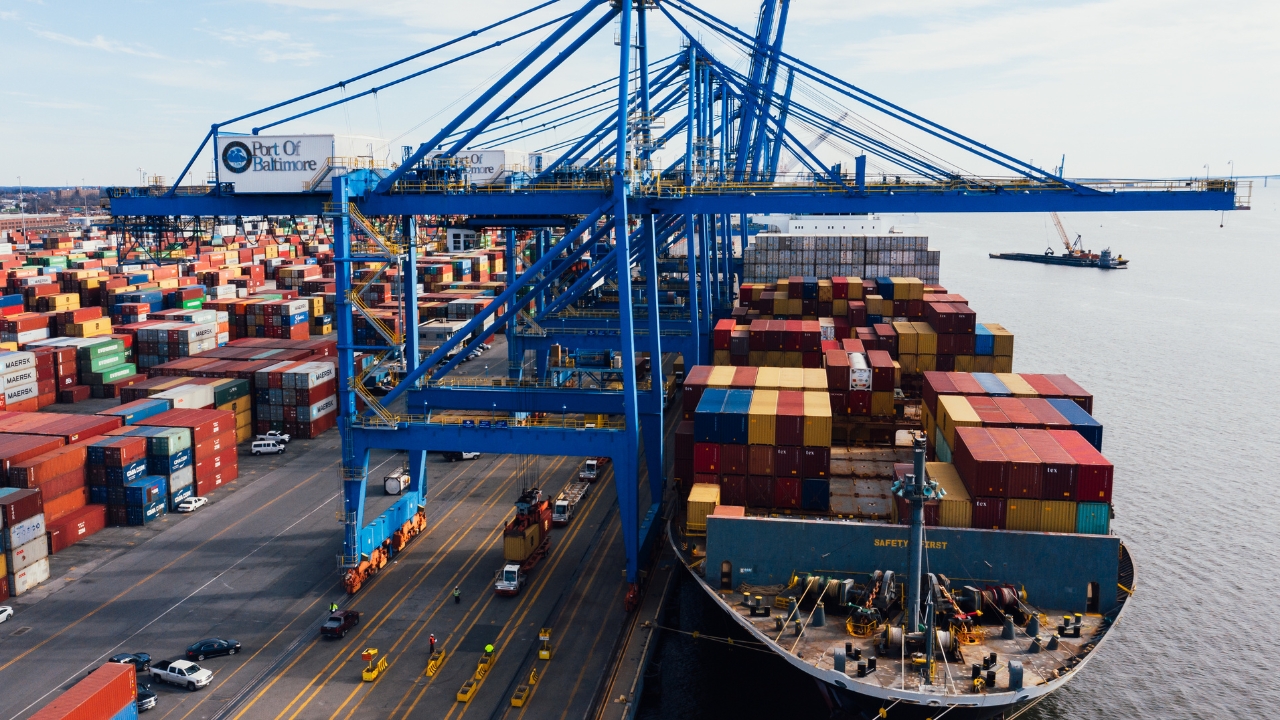
    Over 1,400 acres of land owned by the Karachi Port Trust (KPT) have been illegally occupied. This amounts to one-third of KPT’s total land mass, while approximately 30 acres of Port Qasim Authority’s (PQA) land is illegally occupied, according to reports.
     
    The land has allegedly been seized over time by individuals who had the aid of political figures. As per reports, sources from within the Defence Ministry have revealed that Prime Minister Shehbaz Sharif has been informed of the seizures.
     
    The premiere has allegedly authorised a motion which will allow paramilitary forces from Sindh and other relevant officials to free up the encroached land. KPT’s land, which may now be the focus of paramilitary operations, is highly prized, given its proximity to the coast. This could help explain why this land was seized in the first place, as residents in the area are aware of the high price of land in the area.
     
    According to reports, structures on the illegally occupied land include hotels, commercial businesses, warehouses, cattle farms, houses and even mosques. These areas have grown into mini-cities of sorts, and it might be tough to vacate the premises if residents decide to pursue a legal route to extend their stay.
     
    Kachi abadis like Dock Colony, Hijrat Colony, Machar Colony, Sultanabad and Salehabad take up a vast amount of space on the occupied land. The region’s geography is attractive for land tycoons to consider encroaching as developing land close to the sea could turn into tidy profits. Kachi abadis are a ‘plague’ upon KPT’s land as space is already scarce for daily port operations.
     
    Reports also reveal that thousands of detained containers are stuck in customs clearance. This process could be expedited if more space were allocated to it; however, illegal occupants have made efficiency gain impossible.
     
    Approximately 1100 acres of KPT’s total land is under occupation, while 350 acres of federally administered land has fallen to the Sindh government. As per reports, the spokesperson for Sindh’s Chief Minister refused to comment when asked about the land disputes between KPT and Sindh.
     
    Despite KPT holding legal authority over Baba Island and Kaka Peer, the government of Sindh has allegedly issued ‘unauthorised’ documentation for parcels of land in these areas. KPT has retorted by filing an appeal in Sindh’s high court. However, authorities have done little to help port officials. 
     
    In 2002, as per the Port Security Force Ordinance, officials were to be appointed to note any illegal occupations at the port. However, appointments have not been made, leaving this position vacant.
  • Inflation hits nine-year low, falling to 2.14 percent

    Inflation hits nine-year low, falling to 2.14 percent

    Pakistan’s year-on-year (YOY) Consumer Price Index (CPI) inflation rate dropped down to just 2.41 percent in January with reports indicating that this is its lowest level in over nine years.

    The fall in inflation- disinflation- is a result of falling price levels in the economy. Data from the Pakistan Bureau of Statistics (PBS) revealed that the CPI inflation rate stood at a staggering 28.3 percent just a year prior in January 2024.

    However, PBS reported a rise in monthly CPI inflation from 0.1 percent in December 2024 to 0.2 percent in January 2025. While marginal, this represents a 100 percent rise in Month on Month inflation over the aforementioned period.

    The fall in inflation rates can be linked to the sky high interest rates which the State Bank of Pakistan (SBP) set to tackle an issue that had been plaguing the economy – rising price levels. SBP had raised interest rates to approximately 22 percent in 2024.

    However, the SBP has effectively slashed interest rates down to just 12 percent in the past six and a half months as disinflation took charge. The 1,000 basis point cut by the SBP has sent inflation into a downward spiral which spells great news for a vast majority of Pakistanis.

    A drop in inflation effectively increases the purchasing power of consumers as their income can procure more goods and services with lower price tags. However, while the general level of prices in the economy has fallen, prices for certain commodities has increased.

    On a YOY basis, food items such as potatoes, besan and pulses displayed significant increases in prices both in rural and urban areas. For instance, in the urban areas, the YOY price of potatoes, besan and pulses skyrocketed by an extortionate 45.12 percent, 44.72 percent, and 41.73 percent respectively. The corresponding YOY rise for rural areas was 49.32 percent for Potatoes, 45.85 percent for besan and 45.24 percent for pulses.

    Despite rural areas having a lower income (on average) compared to urban areas, these regions witnessed a larger increase in prices depicting the financial plight of their residents. However, data revealed that the reverse was true for non-food items.

    As per data, urban prices rose primarily because of Motor vehicle tax rising by a staggering 168.79 percent. Services in urban areas such as medical tests and dentist visits underwent a modest rise of 15.16 percent and 26.16 percent respectively.

    In comparison, rural prices for non-food items rose conservatively as motor vehicle tax rose by 126.61 percent while the prices of dental services increased by 18.41 percent.

  • FBR misses revenue target by Rs85 billion

    FBR misses revenue target by Rs85 billion

    The Federal Board of Revenue (FBR) failed to meet its revenue target by a staggering 85 billion rupees. As per reports, the reason behind the failure was the economy’s ‘lower than expected’ inflation rate.

    The revenue watchdog collected just 872 billion rupees despite its target collection level sitting at 957 billion rupees. The 85-billion-rupee gap translates into an approximate 10 percent deviation from target revenue levels.

    While the gap seems alarming, provisional data revealed that collection levels are, in fact, 26 percent higher compared to last year. As per reports, collection levels sat at a measly 677 billion rupees last year, outlining the progress the FBR has made over the past year.

    The gap between revenue collection levels and the target amount has surged to 468 billion rupees during the first half of Fiscal Year (FY) 2024-25. Reports claim that meeting the target revenue levels might now be a herculean task.

    Furthermore, recent controversies surrounding a purchase order of automobiles by the department might make it difficult for officials to perform their daily operations efficiently. Senator Faysal Vawda levelled corruption allegations against the board while also alleging that certain FBR officials threatened him for being a whistle-blower.

    FBR chairman Rashid Mahmood Langrial ordered an internal investigation into these allegations, which might divert precious resources away from tax collection purposes. The procurement of cars would have reportedly boosted collection figures, which, according to provisional data, sit at 6.497 trillion rupees for the first seven months of FY 2024-25.

    Experts have revealed that the revenue shortfall stems from a fall in import-based taxes, suboptimal growth in the manufacturing sector and, most importantly, low inflation levels.

    Owning to Islamabad’s crackdown against illegal exchange operations and the SBP’s high interest rates, inflation has remained in single digits in the past few months.

    As per reports, analysts have dubbed Islamabad’s revenue target of 12.313 trillion rupees for FY 2024-25 as ‘overly ambitious’. The revenue target stands 40 percent higher than the one set by Islamabad last year.

    Islamabad believes that it can extract another 3.659 trillion rupees in revenue during FY 2024-25 from three main avenues. This will be possible if Gross Domestic Product (GDP) grows at a rate of three percent, the import growth rate touches 16.9 percent, and the manufacturing sector grows by 3.5 percent.

    According to reports, real revenue collection levels in FY 2024-25 might touch 12 trillion rupees. The shortfall is likely to be remedied by cutting back on expenditures rather than levying additional taxes.

  • Agricultural credit hits record high, sector growth declines to 1.2 percent

    Agricultural credit hits record high, sector growth declines to 1.2 percent

    Governor of State Bank of Pakistan (SBP) Jameel Ahmad has revealed that agricultural credit disbursement reached a staggering 2.216 trillion rupees in the first half of FY 2024-25. As per reports, financial institutions issued 25 percent more credit to the agricultural sector compared to the previous year.

    The governor attended an Agricultural Credit Advisory Committee (ACAC) meeting where he reiterated the SBP’s will to support the agricultural sector via additional financing. He explained that 2.86 million debtors had already received 1.266 trillion rupees in the third quarter of FY 2024-25.

    According to Jameel, the agricultural sector partially serves as the backbone of the economy as it eradicates issues pertaining to food security while supporting rural households that are not integrated with larger sectors.

    The senior SBP official conceded that there were numerous issues currently plaguing the agricultural sector that need to be addressed, including climate change, subpar productivity and the lack of strong formal financial institutions.

    While speaking at the meeting, Jameel urged banks to strongly consider agricultural finance as a primary business operation. Currently, however, a large number of banks issue loans to the agricultural sector as a secondary business activity and prefer to refrain from providing credit to smaller farmers.

    Analysts explain bank behaviour by pointing towards the costly nature of enforcement and monitoring while lending to the rural sector. Often, the costs exceed the revenues, making it unprofitable to lend money to farmers.

    Jameel outlined the importance of commercial banks in the quest to expand the financial system, especially in rural areas. The governor explained that banks could achieve this by increasing the number of branches and credit officers in areas with limited financial coverage. If implemented, the governor believes that the measure will greatly support smaller farmers.

    According to reports, agricultural growth stagnated in the third quarter of FY 2024-25, declining to a measly 1.2 percent compared to a respectable 8.1 percent growth rate in the same period last year. The drop in growth rates reportedly resulted in a suboptimal GDP growth rate of under one percent during the third quarter of FY 2024-25.

    Jameel outlined three factors financial institutions and relevant stakeholders need to consider in order to support the neglected agricultural sector: tackling climate change issues, modernising farming tools and focusing on the livestock sector.

    As per reports, the governor mentioned the need for the sector to be provided with green financing and training to tackle food security issues.

    Further, he stressed the importance of implementing state-of-the-art facilities to transform the agricultural sector. These facilities include geospatial technologies as they allow farmers to monitor their crops efficiently while reducing production-related risks.

  • ‘Economic revival’: Govt boasts drop in inflation rates

    ‘Economic revival’: Govt boasts drop in inflation rates

    Islamabad has taken credit for the drop in inflation from 28.8 percent to just 7.2 percent during the first half of fiscal year (FY) 2024-25. The government asserts that falling inflation rates can be attributed to the crusade against smuggling, hoarding and illegal foreign exchange operations.

    According to the announcement made by the Finance Ministry, the slowdown in inflation was made possible by the federal government’s responsible fiscal policies. Furthermore, the stabilisation of the exchange rate, coupled with improved procurement for essential commodities, helped control rising prices.

    The announcement further revealed that Islamabad’s crackdown on illegal foreign exchange companies was able to instill confidence in the market, allowing for the supply of goods to stabilise.

    Data from the finance ministry show that the long-term inflation rate will sit close to approximately seven percent in the upcoming half of the fiscal year. This is likely to create an environment that will assist business growth.

    The reasoning behind this is that high inflation rates erode customer purchasing power, leaving consumers to allocate their funds to more essential goods and services.

    Furthermore, as inflation peaked at approximately 29 percent in 2023, businesses had to make the tough decision of either raising prices to maintain profit margins or to keep prices unchanged while absorbing the difference. The latter practice, while helpful in retaining customers, results in smaller profit margins.

    However, experts predict that low inflation rates, coupled with declining policy rates, can bolster economic growth. Businesses and consumers will increase their expenditures, resulting in a rise in aggregate demand.

    Falling inflation rates outline the federal government’s achievements, as this outcome could not have been achieved without fiscal consolidation. The State Bank of Pakistan (SBP) should also be credited for controlling the rate of inflation as well.

    This is because the SBP raised the interest rate to about 22 percent, easing the inflationary pressures in the economy. Funds previously used for consumption purposes were diverted to savings accounts in an attempt to capitalise from the high interest rates in the economy.

    This allowed the inflation rate to decline to a more manageable 7.2 percent in the first half of FY 2024-25. Rising interest rates also brought vast amounts of foreign currency into Pakistan, as foreign investors purchased local treasury bills to benefit from their high profit rates. This helped stabilise the exchange rate as well.

    However, the SBP has slashed interest rates over the past six and a half months to boost investment levels once again. Reports have revealed, however, that even falling interest rates have not derailed the downward trajectory of inflation rates.

  • Islamabad halts FBR’s ‘scandalous’ car purchase amid corruption probe

    Islamabad halts FBR’s ‘scandalous’ car purchase amid corruption probe

    Islamabad has halted the purchase of approximately 1,100 cars which the Federal Board of Revenue (FBR) wanted for its employees. The purchase order has been suspended until claims into corruption at the federal level can be investigated thoroughly.

    Senator Saleem Mandviwala chaired the meeting of the Senate’s Standing Committee on Finance and Revenue to look into allegations raised against government officials.

    The agenda of the meeting revolved around dissecting the scandalous purchase order made by the FBR and its subsequent approval. As per reports, the initial purchase order was made for only 1010 cars after which officials tacked on an additional 70 cars to the order to boost the total number of cars to 1080.

    Senator Faisal Vawda had received threats as he brought the suspicious matter to light. Furthermore, reports revealed that raids against a rival car manufacturer had occurred around the time of the purchase order. These matters warrant a probe and investigations are underway.

    Faisal Vawda who had initially ‘blown the whistle’ surrounding the purchase process made additional allegations. He revealed that FBR officers had issued him death threats and he substantiated his claims naming multiple senior officers.

    The Senate Secretariate released the names of the three officers whom Faisal Vawda had named. The officers were identified as Ali Saleh Hayat, Shahid Soomro and Hayat Siddiqui – and were indeed working for the FBR.

    In light of the allegations, FBR Chairman Rashid Mehmood Langrial said that the purchase order would be suspended immediately. In addition to the suspension, reports reveal that he also pledged to conduct an extensive investigation into every single allegation made in the senate meeting.

    He requested that the Federal Investigation Agency (FIA) should look into Faisal Vawda’s allegations regarding threats made on his life. The senator has remained extremely vocal throughout the process. According to Vawda, FBR officials even raided Toyota Indus’ offices once he made allegations against the revenue watchdog.

    Langrial suggested that in addition to the FBR’s internal review, the Senate Panel could order an ‘external agency’ to look into the matter as well. Given Faisal Vawda’s position on the matter, it is likely that an external investigation will be launched soon.

    Langrial also highlighted the need for the automobiles by suggesting that tax officials could not ensure compliance with taxation laws without physically visiting business premises. He cited the existence of a “cash economy” as the reason behind the compliance issue.

    The FBR’s revenue shortfall for the first half of fiscal year (FY) 2024-25 surged to 384 billion rupees. The revenue target was set at approximately six trillion rupees however, the FBR was only able to collect 5.624 billion rupees as per reports.

  • Expected rise in fuel prices as bullish trends grip the international market

    Expected rise in fuel prices as bullish trends grip the international market

    Business owners and citizens may witness yet another hike in fuel prices. According to reports, the prices of Petrol, High-Speed Diesel (HSD) and Kerosene are all expected to rise for the next fortnight on Friday.

    Owing to higher international prices of petroleum products, experts are predicting a hike of up to six rupees per litre. Reports state that the ex-depot price of petrol may increase by a conservative three rupees per litre while HSD and kerosene prices may rise sharply – approximately six rupees.

    The hike will increase the price of petrol to 256.13 rupees per litre while the official rate of kerosene will come to rest at 169.25 rupees per litre. HSD will be priced at an extortionate 260.95 rupees per litre.

    These are only estimates, however, as actual prices depend on final calculations, which will be made on January 31. Analysts cite the expected rise in prices as being associated with the bullish trend in the international market.

    Over the past two weeks, Brent prices have surged by two dollars per barrel to rest over $76. The resultant rise in the average price of HSD is projected to sit close to $2.5 per barrel. However, the increase in petrol prices per barrel was just half a dollar.

    As per reports, the import premium on petrol has gone up to $8.84 after officials tacked on an additional 40 cents to the premium. However, import premiums on diesel and petrol have not been altered.

    Islamabad charges a tax of approximately 76 rupees per litre on both HSD and petrol. The bulk of this tax, a staggering 60 rupees per litre, is charged under the category of ‘Petroleum Development Levy’ (PDL), whereas the other charge of 16 rupees goes towards customs duty fees.

    Pakistan is a net importer of petroleum-based fuels. However, it produces some of its fuel, too. Interestingly, the customs duty is levied on fuel produced domestically as well.

    Islamabad does not charge consumers General Sales Tax (GST) on any petroleum products. However, fuel suppliers and distributors tack on an additional 17 rupees on each litre as a markup.

    The rise in petrol prices cannot be attributed to fluctuations in the rupee’s value, as the exchange rate has enjoyed relative stability for over a year now. This will reduce the impact of the rising petroleum import bill.

    Business owners involved in fuel-intensive operations are expected to suffer. For instance, transportation companies will be hit hard by the HSD price hike as their operating costs will rise, causing their profit margins to shrink.

  • Foreigner investors withdraw money from T-bills amid interest rate cuts

    Foreigner investors withdraw money from T-bills amid interest rate cuts

    Foreign investment withdrawal picked up pace in Pakistan as investors pulled their funds out of treasury bills (T-bills). As per reports, investors withdrew 87 percent of their funds out of the economy owing to the recent trend of declining interest rates.

    Investors do not consider the new profit rates to be attractive since they have dropped by approximately 50 percent over the past seven months. Profit rates on T-bills have declined as interest rates have been locked in freefall since June 2024 – dropping 1,000 basis points.

    During the auction of T-bills held prior to the announcement of the interest rates, the return on six month T-bills was slashed down to just 11.4 percent which represents a 39 basis points cut.

    Analysts claim that rates could fall by an additional 100 basis points. This might exacerbate the current issue pertaining to investment outflows as investors will consider parking their funds in other countries where profit rates are higher.

    Inflows up to January 17 stood at $72 million while outflows for the same period exceeded $120 million. According to reports, this is not the first time where large outflows have been recorded as over four billion dollars left Pakistan within four months during Covid.

    While plummeting interest rates spell great news for businesses, outflows of this magnitude usually apply a downward pressure on the value of the rupee. However, outflows were unable to significantly impact the exchange rate as the rupee remains stable.

    Experts have claimed that factors other than declining interest rates could be responsible for foreign investors suddenly pulling their funds out of Pakistan. One of these is the looming possibility of further interest rate cuts in the economy.

    Analysts are speculating that the State Bank of Pakistan (SBP) may slash interest rates following the next monetary policy meeting as the inflation rate stands at a controlled 4.1 percent. Further cuts will reduce the profit rates on T-bills yet again.

    Data from the SBP revealed that during the first half of Fiscal Year (FY) 2024-25, T-bills have attracted a staggering $984 million. Outflows for the corresponding period stood dangerously high at $852 million.

    Over a period of approximately seven months, while interest rates were declining, T-bill inflows from the United Kingdom (UK) stood at a respectable $630 million. This makes the British investors responsible for 64 percent of total T-bill inflows during the aforementioned period.

    Reports highlighted how UAE, Bahrain and Australia also added to the T-bill inflow amounts over the past seven months. These countries are destinations for Pakistani migrant workers, partially explaining their motivations for investing in the country.

  • Commerce Minister meets EU envoy to strengthen trade ties

    Commerce Minister meets EU envoy to strengthen trade ties

    In a meeting with Ambassador Olaf Skoog, the European Union’s (EU) Special Representative for Human Rights, Commerce Minister Jam Kemal Khan, attempted to strengthen preexisting trade ties. Jam Kemal vowed to follow the 27 international conventions that allow Pakistan to remain the beneficiary of numerous trade benefits.

    These benefits fall under the umbrella of the Generalized Scheme of Preferences Plus (GSP+) and are vital for the growth of Pakistani businesses and the economy. The minister explored further avenues of economic integration with the EU via increased trade and commercial cooperation.

    As per the commerce ministry, officials from both sides discussed matters pertaining to the advancement of commercial benefits to Pakistan in exchange for Pakistan’s continued commitment to certain international conventions.

    These conventions cover a broad range of issues, such as good governance, environmental standards, and human and labour rights. According to reports, Pakistan is already a signatory, and further assurances outline Islamabad’s commitment to following the rules in exchange for economic incentives.

    The timing of the meeting is crucial as the United States (US) seems to be backing out of aid initiatives. President Donald Trump froze funding for all USAID initiatives while issuing directives to organisations working to halt their operations.

    Donald Trump’s decision will significantly impact Pakistan’s economy as USAID was involved in numerous projects in the country. According to reports, USAID funds were being utilised to strengthen human rights, democracy and good governance.

    The EU requires Pakistan to follow conventions that coincidentally are the ones that USAID was funding. With aid payments frozen, Islamabad may find it difficult to stay on the right roadmap, which could jeopardise concessions from the EU. As such, ensuring the continued economic support of the EU was necessary as a moratorium on concessions to Pakistan could significantly hinder economic growth.

    In 2023, the EU’s parliament extended Pakistan’s GSP+ status until 2027, along with other developing countries. The four-year extension allowed for Pakistani exports to face minimum duty or even no duty on their products.

    Data has revealed, however, that despite possessing this trade advantage, the export value of goods from Pakistan to the EU declined to $8.240 billion, which translates to a drop of approximately three percent.

    The EU’s office in Islamabad announced that 30 percent of all Pakistani exports end up at the EU’s shores. This explains Jam Kemal’s comment regarding commitment to international conventions being ‘beneficial’ for Pakistan.

    The commerce minister reaffirmed to follow through on all initiatives enacted by the Treaty Implementation Cell. The commerce minister’s efforts seem to have been convincing; however, many analysts are wondering if the EU will extend Pakistan’s GSP+ status when it nears expiration in 2027.