Category: Business

  • Leading British architects behind Cambridge, Oxford University projects to design student accommodation in Lahore

    Leading British architects behind Cambridge, Oxford University projects to design student accommodation in Lahore

    Recognised for their award-winning educational designs, including projects at Cambridge and Oxford Universities, Walters & Cohen Architects have been named by One Homes as the lead design partner for Lahore’s first purpose-built student housing.


    With expertise in designing inspiring, student and community-centric spaces, this collaboration is positioned to establish a flagship development for educational infrastructure in the region.


    One Homes recently announced their foray into Pakistan’s student accommodation market with a plan to pioneer investment into the country’s Purpose Built Student Accommodation (PBSA) asset class and develop a nationwide portfolio that meets international standards. 


    Walters & Cohen are recognised globally for their work on educational and community projects, including the Dorothy Garrod Building at Cambridge’s Newnham College, which received the prestigious RIBA National Award. Their designs combine innovation, sustainability, and a deep understanding of student needs, making them an ideal choice for this groundbreaking project.


    Commenting on the collaboration, Aqib Hassan, Chief Commercial Officer of One Homes, said, “Purpose-built student accommodation is globally recognised as the preferred asset class, for institutional and retail investors alike searching for stable yield-driven returns whilst driving meaningful social impact. We’re delighted to collaborate with a world-leading specialist like Walters & Cohen to deliver this first-of-its-kind development in Pakistan.

    Leveraging the expertise and knowledge of those who have delivered in this space on a global level will ensure we develop top-in-class assets that deliver long-term value for One Homes and our investors.”


    Cindy Walters, Director of Walters & Cohen Architects, shared her excitement about the project, “At Walters & Cohen, we are passionate about designing environments that not only inspire academic excellence but also create meaningful, lasting impact.

     Pakistan’s first purpose-built student accommodation goes beyond architecture; it provides an extraordinary opportunity to create an environment where young women can thrive academically, socially, and personally, and feel confident about their ability to shape a brighter future for themselves and their communities. We are proud to have been entrusted with the concept design for this development which reflects global standards and has the capacity to deliver profound social change.”


    At present, the lack of adequate living options creates significant barriers for students striving to access quality education. By introducing Pakistan’s first purpose-built student accommodation for women, this project not only addresses a critical infrastructure gap but also demonstrates how impact investing and responsible entrepreneurship can drive meaningful social progress.


    This project will include a host of thoughtfully curated amenities, such as a fitness centre, 24/7 security, a shuttle service, and community spaces. Its strategic location in Lahore’s vibrant university district, home to over a dozen universities, addresses a critical gap in Pakistan’s $30 billion student housing market.


    One Homes, founded by serial entrepreneur Zeeshaan Shah, continues to redefine Pakistan’s real estate market by integrating global expertise with local impact. Their portfolio includes landmark developments like One Canal Road, Lahore’s most exclusive residential address, and Amaya Residences and Panoramas in Islamabad.
  • Islamabad pushes industrial power relief as Discos seek 400 percent security-deposit hike

    Islamabad pushes industrial power relief as Discos seek 400 percent security-deposit hike

    State-owned power distribution companies (Discos) have asked for substantial security deposit increases, which they want to raise by more than 400 percent for all consumers. As per reports, however, Islamabad is pushing for low industrial power rates and to ‘rationalise’ the tax burden on the salaried class.

    Power companies have petitioned the National Electric Power Regulatory Authority (NEPRA) to raise security deposits substantially for customers in lower consumption categories. The proposed changes would base deposit amounts on asset values because electricity rates have risen by a staggering 300 percent since 2008.

    The proposed per-kilowatt deposit increase from 1220 rupees to 5179 rupees would significantly raise upfront costs for consumers who need new connections, reconnections, or wish to change their tariff category.

    During a Pakistan Business Council (PBC) event, Power Minister Awais Ahmad Khan Leghari revealed that multiple power projects had been launched without following the least-cost principle. According to reports, the government intend to tackle this issue by halting the purchase of electricity from new power plants starting in April while also hosting auctions to sell excess capacity.

    The power ministry proposed industrial users pay electricity rates based on marginal costs and additional discounts for Greenfield projects, including data centres and IT businesses. The transition to a competitive electricity market will start in April and should fully implement itself within two to three years.

    In order to combat the growing circular debt, Awais Leghari said that the government would conduct a review of tariffs surrounding nuclear power and hydropower facilities. According to him, industrial tariffs have declined by 11 rupees already, and more reductions could follow if Pakistan successfully negotiates better terms for the energy debt held by China.

    The minister states that establishing a single national electricity rate is impossible because Pakistan needs to advance its privatisation efforts. Reports indicate that eight out of ten DISCOS will transition to private management during the following two to three years.

    Finance Minister Muhammad Aurangzeb, also present at the PBC event, declared that salaried people face extortionate taxes, which require immediate easing. Reports suggest that tax slab modifications face uncertainty because of Pakistan’s ongoing International Monetary Fund (IMF) program however, officials are working to simplify the tax filing system. He outlined how Islamabad aims to eliminate the need for tax consultants by developing simpler procedures for tax compliance.

    Muhammad Aurangzeb expects that policy rates will continue to decrease because inflation is projecting a downward trend. Data shows that large businesses have obtained financing at rates below 11 percent while foreign exchange reserves now stand at $13 billion.

    The current level of reserves provides three months of import protection, which is better than what analysts had predicted earlier based on old reserve amounts. He emphasised that these advancements create essential conditions for Pakistan’s credit rating improvement.

  • Business community unhappy with minimal interest rate cut by State Bank

    Business community unhappy with minimal interest rate cut by State Bank

    The State Bank of Pakistan (SBP) cut its policy rate on Monday by 100 basis points, bringing the interest rate to just 12 percent. However, members of the business community expressed their dissatisfaction with the cut as they believe it does not match the decline of inflation in the economy.

    Prior to the Monetary Policy meeting, business owners insisted that the SBP slash its policy rate to single digits. Industry representatives believe that the country can’t grow efficiently, with interest rates sitting above 10 percent.

    Martin Raiser, South Asia’s Vice president at the World Bank, mentioned Pakistan’s inability to grow if it does not boost investment levels. The meagre cut in interest rates may prove the senior official’s remarks correct, as a small cut might not be able to spur a significant amount of investment within the economy.

    President Atif Ikram Shiekh of the Federation of Pakistan Chambers of Commerce and Industry (FPCCI) mentioned a premium of 7.9 percent, as the inflation rate istands at just 4.1 percent. The premium is the gap between the interest rate and the inflation rate in the economy.

    The SBP’s conservative behaviour represents their commitment to lowering inflation rates, as the current policy rate is curbing excessive borrowing by businesses and industries alike.

    FPCCI initially wanted the SBP to slash the interest rate by five percent, which would have helped Prime Minister Shehbaz Sharif’s plan to revive the economy. This would have lowered the premium down to a more reasonable 3.9 percent, allowing more businesses to borrow funds for expansion purposes.

    As per reports, the chamber’s request for a large cut in interest rates was made to align the new monetary policy with initiatives from the Special Investment Facilitation Council (SIFC).

    The demand for a cut is not meritless, as core inflation is reported to drop to as low as three percent in January. This drop can be associated with the high rates of interest and the stabilisation of oil prices in the global economy.

    While rising inflation levels are harmful to the economy, disinflation can detrimentally affect the economy too. President Muhammad Jawed of the Karachi Chamber of Commerce and Industry commented on how the SBP has kept interest rates high despite Shehbaz Sharif assuring that the rates would drop.

    While the low cut displays the SBP’s lack of urgency in aligning the monetary policy with Shehbaz Sharif’s aims, the Prime Minister can not be held liable as the SBP is an independent body free from government influences.

    Analysts are predicting a further cut in the interest rates in the coming periods, which may grant business demands of single-digit rates soon enough.

  • Challenges and recovery in Pakistan’s key sectors: State of economy report

    Challenges and recovery in Pakistan’s key sectors: State of economy report

    Islamabad has revealed that two of Pakistan’s three major economic sectors contracted, with the industrial and agricultural sectors showing lower growth rates compared to targetted levels.

    The Ministry of Finance (MOF) released its biannual State of Economy Report, which associated the slow growth rates in agriculture with the decline of cotton, maize, sugarcane and rice yields. Data from the report revealed that growth in important crops shrank by upwards of 11 percent during the first quarter of the year.

    Cotton production dropped by almost 30 percent, while Maize yields recorded a decline of about 16 percent. Rice and Sugarcane yields declined marginally, posting a drop of 1.2 percent and 2.2 percent, respectively.

    Furthermore, according to the report, the slowdown could be a result of the high ‘base-effect’ in the sector because of the last fiscal year. For reference, the base effect is a statistical phenomenon where growth in the current period seems to be subpar because of the exceptional growth rate a sector experienced in the previous period.

    While the report highlights the negative growth rate in Pakistan’s industrial sector, it also downplays the severity by mentioning that the rate of contraction declined from 4.43 percent in the previous year to a little over one percent.

    The ‘gradual improvement’ stated in the report is a result of moderation across sectors such as the agricultural sector.

    According to reports, the government commented on how well Pakistan is positioned to post higher growth rates in the current year because of a multitude of reasons. These reasons stem from Islamabad’s efforts to consolidate fiscally while stringently following the targets set by the International Monetary Fund (IMF).

    Furthermore, the State Bank of Pakistan’s (SBP) implementation of an expansionary monetary policy might boost growth rates to respectable levels. The SBP has been able to cut its policy rate by a staggering 1,000 points as it has successfully controlled the rate of inflation in the economy.

    As per reports, global commodity prices have declined steadily allowing for Pakistan’s exchange rate to stabilise. Analysts are citing these factors as reasons for anticipating a possible growth surge in Pakistan.

    Moreover, the report highlighted that the existence of a ‘more favorable environment’ for both consumer and industrial sectors is going to help fast-track economic growth.

    Amid the plethora of negative news, Islamabad was able to find the silver lining in the statistics. Remittance inflows and foreign direct investment (FDI) helped keep the current account balanced. According to reports, businesses in energy and Finance have witnessed a 20 percent growth rate because of FDI.

  • Pakistan’s growth depends on doubling investment, economic stability: World Bank

    Pakistan’s growth depends on doubling investment, economic stability: World Bank

    The World Bank’s (WB) Vice President for South Asia, Martin Raiser, has reportedly claimed that Pakistan could witness a sharp increase in its growth rate if it doubles investment levels and efficiently uses its human capital and assets. According to reports, the senior official quoted that the cash-strapped nation’s annual growth rate could surge to as high as eight percent.

    Commenting on the potential increase in Pakistan’s investments, the official explained that this could be achieved if Islamabad streamlined its investment regulations and created a stable, predictable economic environment.

    His soothing remarks turned sour as he criticised the economic roadmap Pakistan was on. He explained that the economy will not be able to grow if investment levels hover at an abysmal “12 percent of Gross Domestic Product (GDP),” implying that only a miracle could help the country attain a respectable growth rate if low levels of investment persist.

    Data from the Finance Ministry serves to prove Martin Raiser correct. Currently, Pakistan has the lowest average investment-to-GDP ratio in the region. The ratio has fallen dangerously low, beyond 15 percent, in the recent past because of a multitude of factors.

    Falling investment levels show that investors do not perceive Pakistan as an attractive destination for them to park their funds. This, along with other macroeconomic factors, has led economists to forecast Pakistan’s growth rate at just three percent this year.

    While the growth rate seems alarmingly low, Pakistan has posted a significant economic recovery since 2023, when the economy actually shrank, according to reports. Lawmakers in Islamabad successfully pulled the economy out of the quagmire and stabilised it, to the point that analysts are now forecasting positive growth rates for Pakistan’s economy.

    After successfully preventing the country from defaulting with the help of international creditors, Prime Minister Shehbaz Sharif has set a growth target of 3.6 percent which he wants to achieve by the end of Fiscal Year (FY) 2024-25. However, following the conditions laid out by the International Monetary Fund may make boosting investments a tough task.

    As part of the IMF extended fund facility, the government has to boost tax collection levels, which might create downward pressure on investment levels. However, the privatisation drive associated with the IMF programme could bring in investments, especially from abroad.

    The WB recently approved a partnership framework for Pakistan along with a $20 billion loan. According to Martin Raiser, the framework could assist Islamabad in creating a more stable business environment.

  • Gross-metering policy: A tug of war between grid users and solar owners

    Gross-metering policy: A tug of war between grid users and solar owners

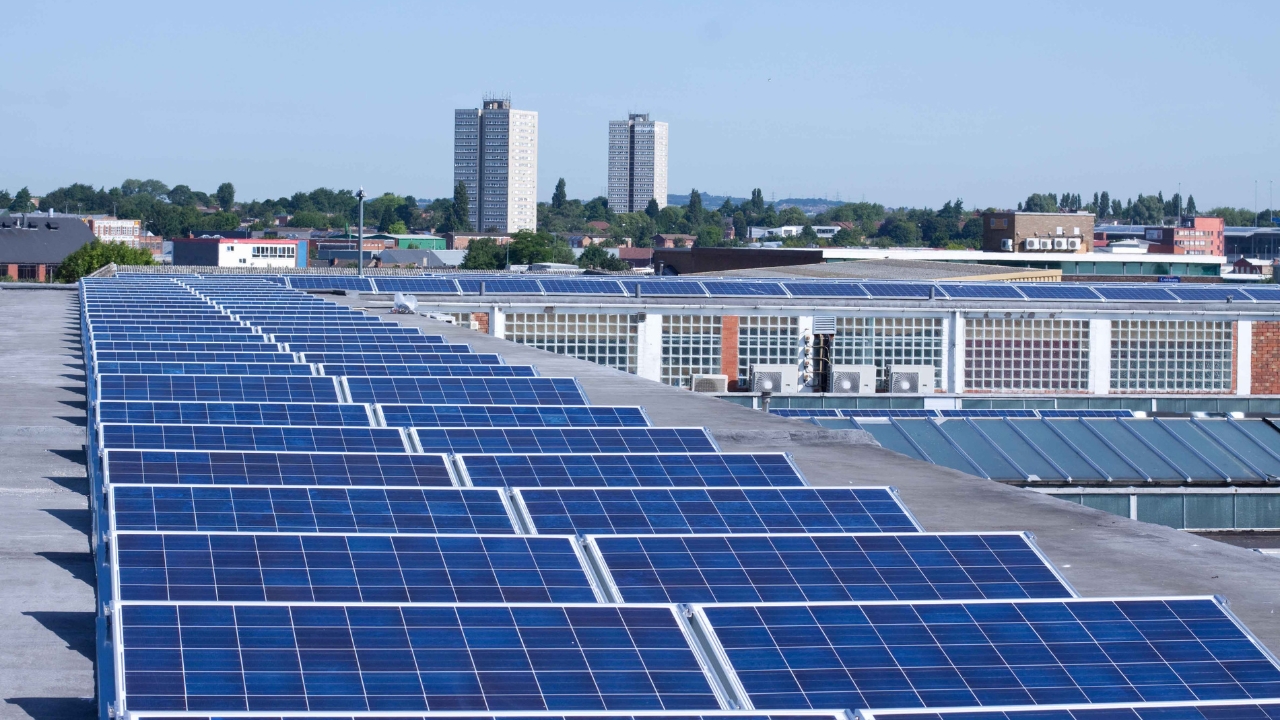
    Electricity consumers with rooftop solar installations may be struck hard as Islamabad is preparing to replace the existing net-metering system with a gross-metering system. According to reports, the rooftop solar buyback tariff could be revised soon as net-metering has imposed a financial burden of 103 billion rupees on grid consumers.

    If Islamabad approves the proposed policy, users of the national grid will buy electricity from rooftop solar power producers at approximately eight rupees per unit. The proposed price will be 160 percent lower as the current price that net-meter owners get is 21 rupees per unit.

    The move will significantly hurt users who have installed solar panels in the past few months as it will take approximately five years to recoup the investment amount. For reference, the time frame to breakeven on solar investments under the current policy is just 18-24 months.

    Under the current system, net-meter owners provide excess electricity to the national grid for 21 rupees per unit and buy it back at 42 rupees per unit. This has disproportionately benefitted households with large solar panel installations as they consistently provide more power to the grid compared to their consumption.

    As per reports, this has resulted in a shifting of costs to those who do not have solar installations. Documents from the Power Division have revealed that under the current policy, tariffs have increased for underprivileged consumers by over one rupee per unit.

    The proposed changes will implement a gross-metering system, which means net-meter holders will no longer be able to achieve zero electricity bills. This is because in a gross-metering system, power from solar panels must be routed to the national grid and must be bought back from the grid for consumption.

    The current policy is favorable for net-meter owners as consumers are allowed to divert power from their panels to household consumption and only export surplus power to the grid. This mechanism allowed for solar users to consistently witness zero or extremely low electricity bills.

    Data from the Power Division revealed that solar capacity rose from 321 Megawatts in 2021 to 3,277 Megawatts by 2024. This rise has been witnessed because of an increase in net-metering connections.

    Currently, there are 226,400 net-meter owners in Pakistan which translates into just 0.6 percent of electricity users. Analysts fear how high tariffs on underprivileged consumers could rise because of the rising trend of solar power adoption.

    Officials have warned that the financial burden on grid users could cross half a trillion rupees over the next decade if regulations are not passed. Islamabad will finalize a plan to tackle the ‘problem’ of net-metering and rooftop solar plants by February.

  • Amendments empower commerce minister to grant trade exemptions, streamline import process

    Amendments empower commerce minister to grant trade exemptions, streamline import process

    Islamabad has amended two parliamentary acts allowing the commerce minister to grant one-time import and export waivers. Previously, this power could be exercised only by the federal cabinet to prevent its misuse.

    The exemptions can be applied to any type of good, but their primary use is expected to be reserved for vehicles. Parliament passed the bills in 2023; however, then-President Dr Arif Alvi refused to sign them. According to reports, his decision was based on the fact that the commerce minister was not allowed to exercise cabinet power.

    President Asif Ali Zardari, however, has signed the bills to complete the motion set forth by the parliament. The decision took effect immediately, meaning that the commerce minister can exercise this authority from today on.

    Reports also revealed that exemption requests will be granted only in certain circumstances where trade outcomes will serve to benefit commercial activities. The commerce minister can issue exemptions by writing an official notification along with reasons for granting the exemption.

    The exemption will grant traders the permission to export, re-export, import or re-import goods without facing any restrictions. Analysts have outlined the importance of stringent vigilance surrounding the exemption process, as a misuse of authority could allow for certain goods to enter Pakistan that violate the law.

    Reports have highlighted that this power was initially transferred to the federal cabinet to provide more oversight over the exemption process and ensure that it was used for genuine situations only.

    Prior to the amendment, the commerce ministry had to request approval from the federal cabinet. While this allowed for more transparency, cases would not always get reviewed immediately.  The commerce ministry has outlined the importance of being granted this authority as it will help expedite the import process.

    A vast majority of cases that require exemptions surround the import of automobiles into the country, as a small fraction of cars violate the Import Policy Order.

    Experts are speculating that misuse of authority could cause a slight reduction in the demand for locally assembled cars. Since the import process has become more streamlined, Pakistan could see a rise in the import of vehicles. This poses a significant threat to local automobile giants such as Toyota Indus, Honda Atlas and Suzuki Motor Company.

    Reports have revealed that the act also allows the secretary of commerce and director general of trade organisations to oversee the daily operations of traders. Essentially, the commerce division can now make decisions that will affect industries across Pakistan.

  • Surge in private sector lending as banks issued credit to avoid taxes

    Surge in private sector lending as banks issued credit to avoid taxes

    A record number of loans were issued to the private sector within the first half of fiscal year (FY) 2024-25, with the textile sector receiving the majority of this credit.

    According to reports, the textile sector recieved the majority of this newly issued credit.

    Despite being the largest borrower, the textile sector revealed that 40 percent of spinning mills have shut down. The halting of operations cannot be attributed to the lack of credit alone, as government policies are also responsible.

    According to the All Pakistan Textile Mills Association (APTMA), the closing down of approximately 40 percent of spinning mills was for a multitude of reasons, one of them being the reported 18 percent sales tax on inputs, which is considered the primary reason for the closures.

    Furthermore, the association outlined the dire effects of closures on Pakistan’s economy, as exports will be hurt. There is merit to this claim as the textile sector currently brings in the lion’s share of export revenues for the cash-strapped country.

    As per reports, the flow of loans from banks to non-financial institutions was the highest during the first half of FY 2025 as opposed to bank loans during the last three years.

    Analysts are speculating that the result of the loan injections will become apparent during the next 1-1.5 years. The time duration, however, is not explicitly specified as financial experts are not aware of where the loan amounts have been invested.

    Banks have been lending vast amounts of credit as they aim to avoid an additional tax of 15 percent which Islamabad was keen to impose. Banks were facing this tax as a result of low Advance-to-Deposit Ratios (ADR), which they had to correct by December 2024 to 50 percent.

    ADR refers to the fraction of funds banks have lent out to the private sector. Low levels of credit being extended to the private sector were hampering the growth of businesses, which could translate into a stagnation of the economy.

    Another reason for the rise in the issuance of loans is the slashing of interest rates by nine percent since June 2024. Reports reveal that banks have injected a staggering 1.467 trillion rupees into non-bank financial institutions (NBFI). The corresponding amount for the same period last year stood at just 1.398 trillion rupees. This translates into a rise in the issuance of loans by approximately five percent.

    During the first half of FY 2025, conventional bank lending reached 722 billion rupees, while Islamic Bank lending crossed 625 billion rupees.

    Islamabad has been borrowing less than the maturity amount as per reports. This has allowed for funds to be allocated to private-sector projects instead.

  • ‘Uraan Pakistan’: Ahsan Iqbal stresses boosting private sector confidence

    ‘Uraan Pakistan’: Ahsan Iqbal stresses boosting private sector confidence

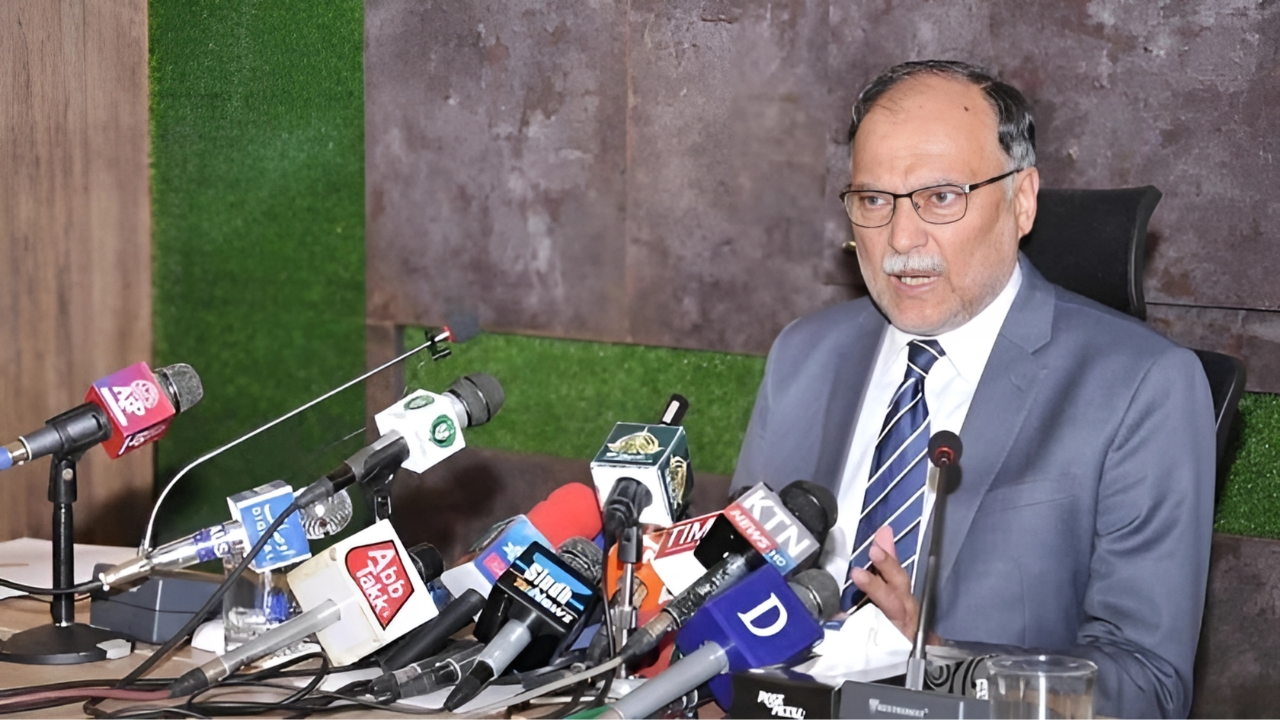
    Planning and Development Minister Ahsan Iqbal met with members of the Overseas Investors Chambers of Commerce and Industry. He outlined the policies Islamabad is committed to following to assure foreign investors of Uraan Pakistan’s success.

    In a press conference, the minister highlighted how three similar plans had failed in the past because of political instability and inconsistency in following the plan’s roadmap. He announced that to make Uraan Pakistan a success, it is imperative to create a politically stable environment where investors do not fear ‘policy reversals’ every one to two years.

    He further highlighted the success of the federal government’s macroeconomic policies, which he claims brought about economic stability. Economic indicators lend credibility to his claim as inflation rates remain largely controlled while the GDP is beginning to grow again.

    He also commented on how fluctuating exchange rates in previous periods restricted investors from even carrying out investment feasibility studies. However, he outlined how foreign investors were now returning to Pakistan because of the stability which the rupee has displayed over the past year.

    The Minister highlighted Islamabad’s intent to initiate a phase of economic growth. He pointed out that growth would only be possible if the government actively designed policies which would restore the confidence of the private sector.

    Informing the press of the government’s progress, Ahsan Iqbal announced that a mechanism has been set up where a group will actively review problems faced by the business community and investors every month. He also said that businesses will be informed of policies and steps will be taken to remove any ‘bottlenecks’ that investors face.

    Stressing the importance of public-private engagement, he said that this plan would be the first step towards Pakistan’s larger goal of attaining economic growth.

    Ahsan Iqbal mentioned that the government was looking into ways to leverage Pakistan’s low cost of production to “accelerate export-led development”. He reiterated one of Islamabad’s objectives: To double exports in the next five years.

    Currently, Pakistan has a low average national income relative to developed economies, allowing Islamabad to attract significant investments. For instance, South Korea recently expressed its interest in shifting its industrial base from East Asia to Pakistan.

    With the World Bank’s 20-billion-dollar loan package, Uraan Pakistan has the financial backing it needs to bring about actual economic change. Funding from supranational institutions and Ahsan Iqbal’s commitment to fostering an environment conducive to business growth might allow Islamabad to follow Uraan Pakistan’s roadmap.

  • Pakistan records massive agricultural export growth amid rising local prices

    Pakistan records massive agricultural export growth amid rising local prices

    The agricultural sector exported a large volume of raw food during the first half of the current Fiscal Year (FY) 25. According to reports, food exports surged to $3.96 billion from July to December 2024-25, representing a 13.83 percent growth from the same period last year.

    Despite prices of raw food rising significantly, food export volumes have grown consistently over the past 17 months, with rice exports being the main driver of agriculture-based export revenue.

    However, local consumers are suffering as they have to pay higher prices amid the existing gaps between the level of supply and demand. Recent trade agreements with Bangladesh have raised the level of demand for agricultural produce in Pakistan, causing prices to rise.

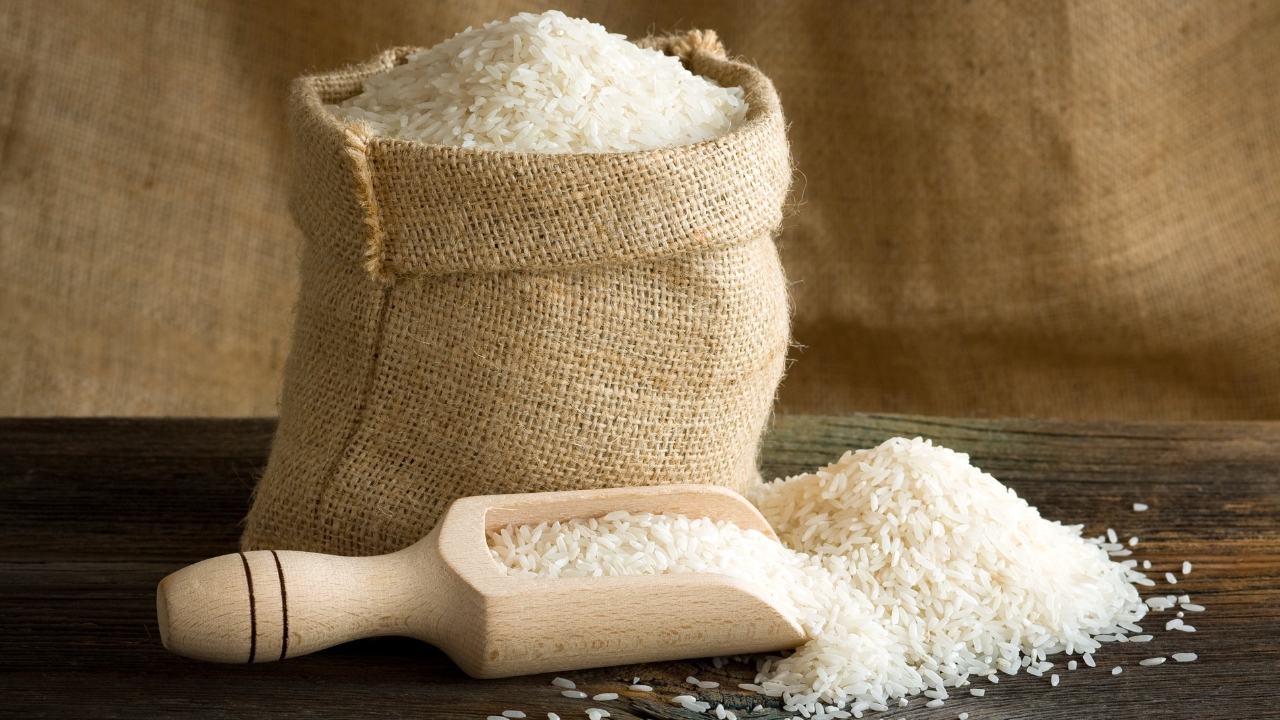
    Reports have revealed that rice exports grew by 14.5 percent on a year-on-year basis to settle at a respectable $1.87 billion. Data from the Pakistan Bureau of Statistics revealed that higher rice shipments boosted food exports as farmers exported a staggering 416,491 tons of basmati rice alone during the first half of FY 25.

    This represented a growth of 30.62 percent in the export volume of the commodity. Basmati rice also brought in a staggering $433 million, which translates into an 18 percent growth in export value.

    Similarly, non-basmati rice displayed positive growth in terms of export value and quantity. As per reports, the export quantity of non-basmati rice grew by 17.35 percent to settle at 2.643 million tons. Rice export values over the corresponding period rose by approximately 14 percent, causing export revenues from the commodity to surge past $1.4 billion.  

    Pakistani exporters’ largest clients are markets in the European Union and the United Kingdom. However, with Commerce Minister Jam Kemal Khan working tirelessly to boost export revenues, new avenues for bilateral trade have opened up, resulting in Pakistani rice being sold in Bangladeshi markets as well.

    While this spells great news for Islamabad, as export revenues stabilise the exchange rate, consumers are likely to suffer. As per reports, prolonged export growth has caused the average price of basmati rice to rise from just 150 rupees per kg to an astronomical 400 rupees per kg.

    Experts are predicting that the gap in Pakistan’s trade deficit is expected to improve as rice is not the only commodity that has experienced a rise in export volumes. During the first half of FY 25, the volume of sugar exports rose from just 33,101 tons to a whopping 632,804 tons, representing a colossal 1,811 percent increase in sugar exports.