Category: Business

  • Taxed for holding back: Banks face 197 billion rupee bill for avoiding private sector loans

    Taxed for holding back: Banks face 197 billion rupee bill for avoiding private sector loans

    Bankers across Pakistan grow uneasy as their pleas to get tax exemptions fall on deaf ears.

    The government, as per the conditions attached to the IMF loan, can not exempt banks from the “additional” tax of PKR 197 billion.

    The reason why banks find themselves in this situation is because of their excessive lending to the government. As per lending regulations, banks are not supposed to withhold loans from the private sector while extending credit to the government.

    To discourage this practice, the government introduced a tax rule in 2022 to encourage banks to increase the number of loans to the private sector. Three major banks alone face a staggering PKR 71 billion tax bill alongside other banks that did not comply with this rule.

    While lawmakers in Islamabad have expressed interest to relieve banks of these additional taxes, IMF rules have their hands tied. Earlier in the year, tax exemptions were in the works. However, Prime Minister Shehbaz Sharif scrapped the idea.

    Following the glaring silence and lack of action regarding the exemption of additional taxes, banks might now scramble to give out billions in loans to the private sector to avoid the tax.

    This spells great news for businesses who are seeking loans as the current situation will likely ease borrowing. With the two per cent State bank slash in interest rates last month and the possibility of future decreases, it seems like high time for businesses to start expanding using debt.

    The primary beneficiaries of the potential loans will most likely be small businesses. The reason behind this is their lack of assets to pledge as collateral to secure funding alongside the lack of good will that currently exists as a result of a non-existent credit history.

    Ultimately, though, through paying taxes or extending loans, the banks will have to contribute. Either way, the economy is likely to benefit – whether by reducing the federal budget deficit or by fueling business activity.

    The choice may not favour the banks, but the country is likely to benefit regardless.

  • Foreign currency deposits rise to nearly $6.7 billion in September

    Foreign currency deposits rise to nearly $6.7 billion in September

    Foreign currency deposits witnessed slight increase of $55 million, or 0.83 per cent, reaching $6.69 billion as of September 2024, according to the latest data released by the State Bank of Pakistan. 

    On an annual basis, deposits surged by $303 million, showing a 4.75 per cent rise. 

    The data shows that resident foreign currency deposits stood at $5.84 billion during the month under review, marking a 1.05 per cent increase from the previous month’s total of $5.78 billion. Compared to the same period last year, the rise was 4.15 per cent, up from deposits of $5.6 billion. 

    For those unaware, these deposits play a crucial role in financing Pakistan’s fiscal and external current account deficits. In September 2024, $647 million was utilised to support the country’s exports, while $1.38 billion went towards import financing.

    Read more: Gold price jumps to record high of Rs277,200 per tola

    Furthermore, $1.06 billion was placed with the SBP, with $84 million and $393 million held within Pakistani banks and abroad, respectively.

  • Blackboards to profit boards: Defunding public universities can save 61 billion rupees

    Blackboards to profit boards: Defunding public universities can save 61 billion rupees

    International lenders have informed lawmakers in Islamabad to defund public universities as part of the austerity measures of the new loan agreements. Businesses engaged in the provision of higher education are likely to eye these negotiations with great interest as they stand to benefit enormously if these measures are to be implemented by the government.

    If the Ministry of Finance makes this budget cut, large sums of money can be freed up for cash-strapped Pakistan. This is because the current budget to fund public universities stands at a staggering PKR 61 billion annually.

    While unpopular, the argument for budget cuts does have its merits: 80 per cent of public universities are expected to default in 3-4 years.

    Is it better to just cut losses and let the universities fend for themselves?

    International lenders certainly think so as they suggest that universities, after being defunded, should boost enrollment levels, fire unwanted staff and most importantly, increase tuition fees to stay afloat.

    In the absence of government funding, will these measures alone save public universities from going bankrupt?

    The provision of education is a multibillion-rupee business in Pakistan. Following these new developments, education businesses are preparing to mint money off of the wave of students that will likely come their way.

    If public universities are to implement fee hikes, students are likely to opt for private universities. This is due to the fact that private universities are more likely to possess better facilities than their public counterparts.

    Furthermore, if public universities start to default, private universities will get a further boost in enrollment levels, as students will be forced to switch institutions to continue their education. This migration of students from public to private universities will result in higher profit levels.

    This influx of students into these private institutions will serve to benefit their owners directly. However, the same cannot be said for students who will have to bear a higher cost to earn their degree. More concerningly, the closure of public universities might result in the monopolisation of the education sector as public institutions will cease to be valid alternatives.

    For now, all eyes are on the Ministry of Finance. Will public universities be defunded to appease international lenders, or will budget cuts be sought elsewhere?

  • Gold price jumps to record high of Rs277,200 per tola

    Gold price jumps to record high of Rs277,200 per tola

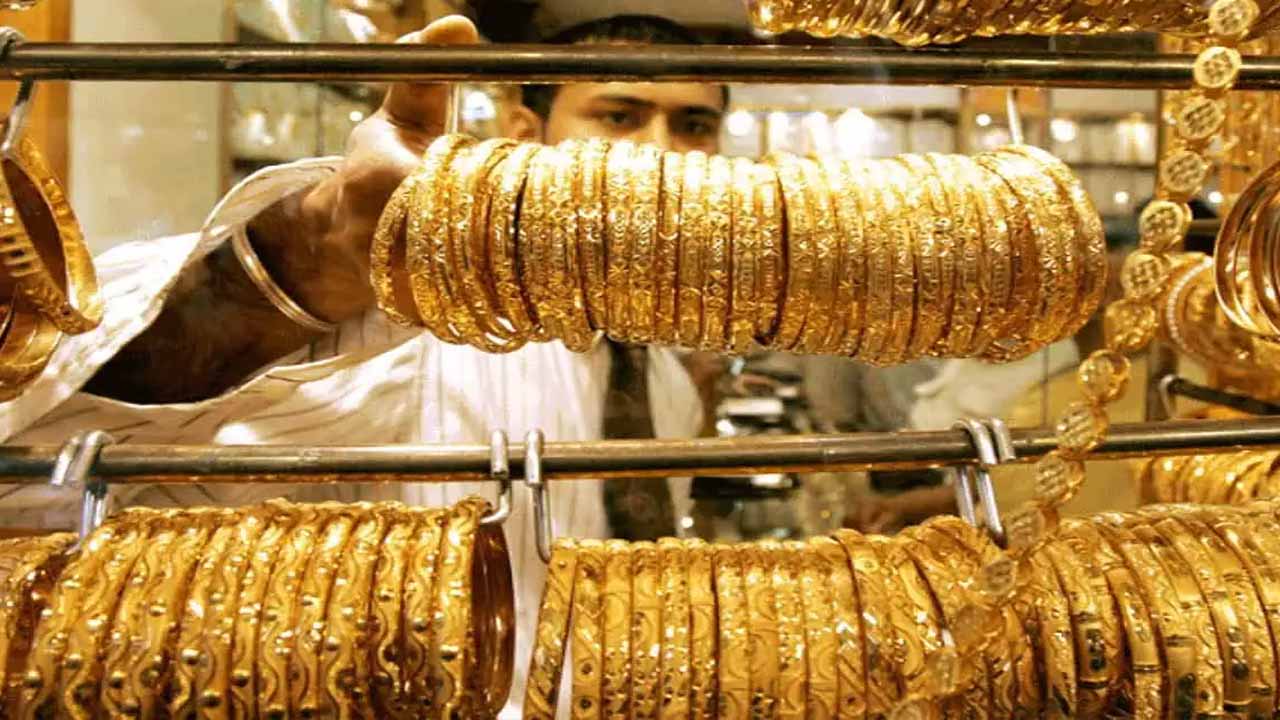
    Gold price in Pakistan unexpectedly surged by Rs2,200 per tola to its new record high following an increase in the international bullion rates.

    According to the  All-Pakistan Gems and Jewellers Sarafa Association (APGJSA), after the big rise seen in yellow metal’s rate in local market, the price of 24 karat gold was recorded at a new all-time high of Rs277,200 per tola on Wednesday.

    The latest rate is Rs200 per tola higher than the last record high observed in the month of September 2024.

    APGJSA said that the price of 10-gramme gold also increased by Rs1,886 to Rs237,654.

    In the last trading session, the precious metal’s price was recorded Rs700 per tola higher than Monday’s, clocking in at 275,000 per tola.

    Read more: Exchange rates: PKR drops over two paisa against US dollar

    On the international front, gold rate surged by $22 per ounce, as the APGJSA quoted the new rate at $2,675. This price also includes a premium of $20 per ounce.

    Silver prices in Pakistan witnessed no change and stayed at Rs3,050 per tola.

  • New fuel prices announced

    New fuel prices announced

    The government of Pakistan has announced the prices of petroleum products, under which the price of petrol will remain the same.

    Petrol price in Pakistan today

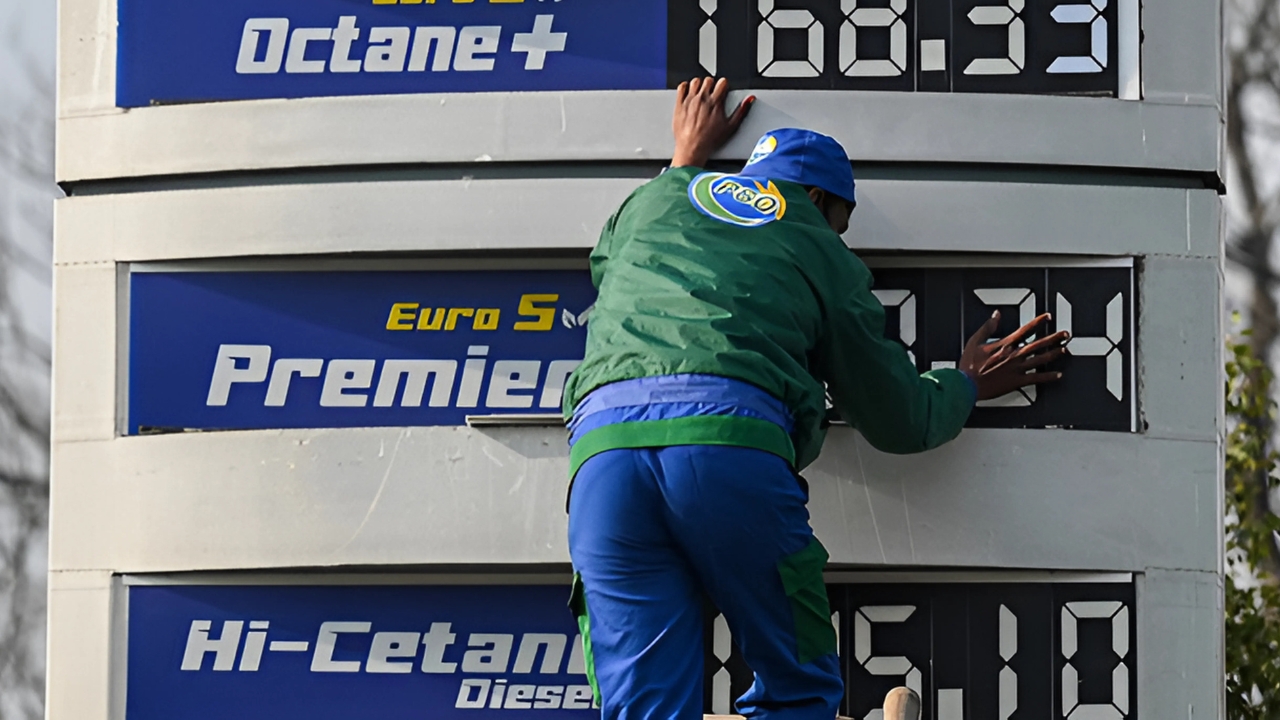
    The cost of gasoline per litre has been maintained at 247.3 Rupee while the price of diesel has been increased.

    The price of high-speed diesel has been increased by Rs 5 per litre, after which the new price of high-speed diesel has risen to 251. 29 Rupee per litre.

    According to the notification issued by the Ministry of Finance, the prices will be applicable from October 16 to October 31.

    Record increase in crude oil production:

    Apart from this, an increase in crude oil production in Pakistan has been recorded on a weekly basis. According to Pakistan Petroleum Information Service (PPIS) and industry data, the average daily output of crude oil in the country for the week ended September 30 was recorded at 63,898 barrels, which is one per cent higher than the previous week. The average daily production of crude oil was recorded at 63376 barrels.

  • Pakistani rupee sheds over eight paisa against US dollar

    Pakistani rupee sheds over eight paisa against US dollar

    The Pakistani rupee (PKR), continuing the trend of minor fluctuations against the US dollar (USD), dropped more than eight paisa on the second trading day of the week.

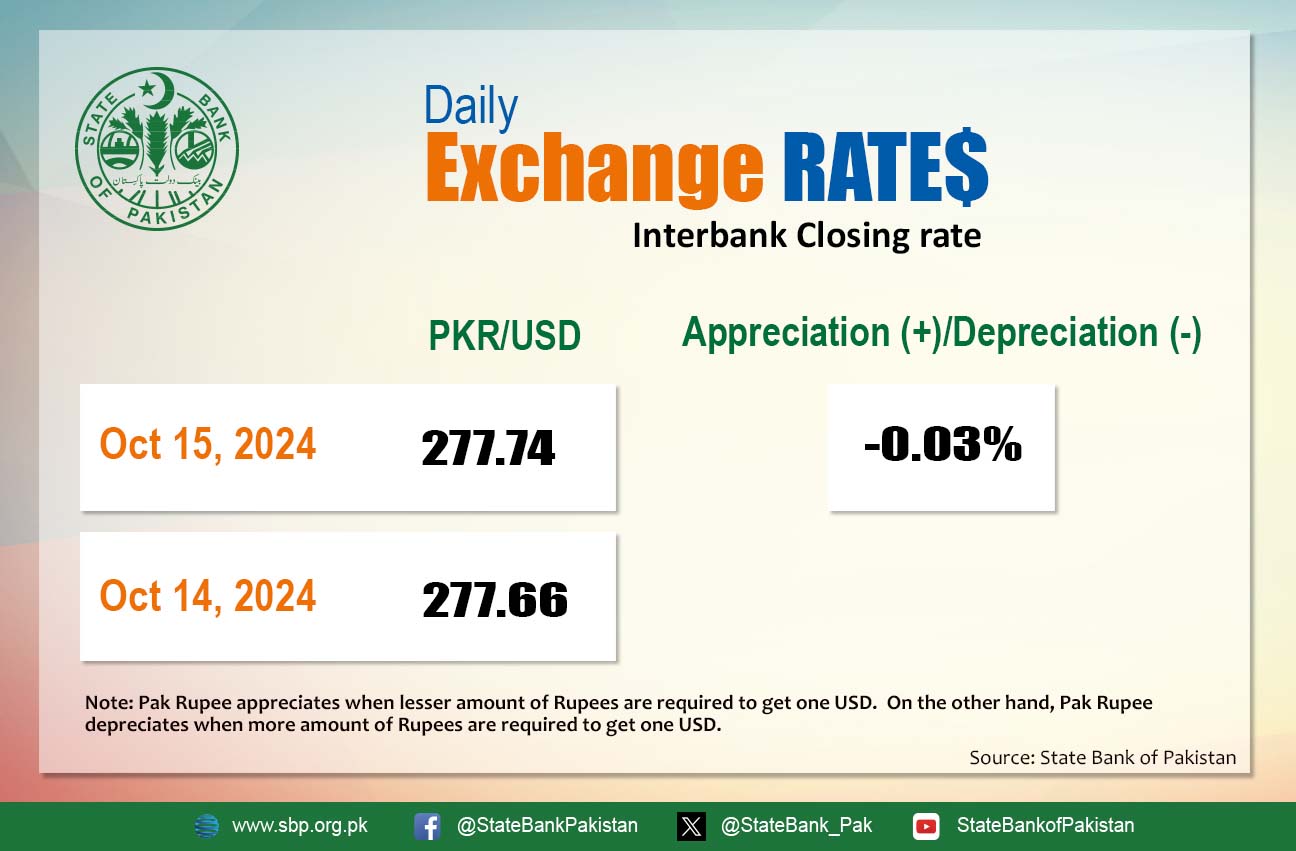
    The latest exchange rate shared by the State Bank of Pakistan (SBP) showed the Pakistani currency down by about 0.03 per cent, or more than eight paisa, on Tuesday, as the local unit settled the trade at Rs277.74 against the greenback.

    This is slightly lower than Monday’s closing rate of Rs277.66 per USD. The highest value of the US dollar was quoted at Rs277.85, while the lowest rate was reported at Rs277.75.

    Money exchangers bought the USD for Rs277.86 and sold it for Rs279.35.

    In terms of other foreign currencies, PKR’s performance, as expected, was not that impressive as the home unit remained largely stable.

    PKR’s performance versus other foreign currencies

    CurrencyDifferencePercentage changeTuesday’s closingPrevious rate
    British Pound-42.61-0.12%363.22362.79
    Euro+42.46+0.14%303.04303.47
    Swiss Franc+67.43+0.21%322.45N/A
    Chinese Yuan+17.73+0.45%39.0439.22
    Japanese Yen-0.43-0.23%1.86321.8589
    UAE Dirham-2.32-0.03%75.62N/A
    Exchange rates

    Against the British pound, the rupee dropped by 42.61 paisa or 0.12 per cent, closing at PKR 363.22 compared to PKR 362.79 on Monday.

    The PKR gained 42.46 paisa or 0.14 per cent against the euro, closing at PKR 303.04 from the previous rate of PKR 303.47.

    Against the Swiss franc, the rupee strengthened by 67.43 paisa or 0.21 per cent, closing at PKR 322.45.

    The PKR appreciated by 17.73 paisa or 0.45 per cent against the Chinese yuan, ending at PKR 39.04 from PKR 39.22.

    However, the local currency fell by 0.43 paisa or 0.23 per cent against the Japanese yen, closing at PKR 1.8632 from the previous close of PKR 1.8589.

    Lastly, the rupee declined by 2.32 paisa or 0.03 per cent against the UAE dirham, closing at PKR 75.62.

  • Filling tanks and pockets: Pump owners anticipate PKR 3.95 petrol price hike

    Filling tanks and pockets: Pump owners anticipate PKR 3.95 petrol price hike

    With fuel prices anticipated to rise, travel buses and apps like Uber may see a hike in their fare, too. As PSO (Pakistan state oil) drafts up price revisions, fuel suppliers prepare to celebrate. This is because the expected price increases will boost profit margins to PKR 9.22 for oil companies and PKR 10.04 for petrol dealers, respectively.

    Reportedly, petrol prices are expected to be revised by PKR 3.95 per litre, kerosene oil by PKR 7.85 per litre, and LDO (light diesel oil) by PKR 8.33 per litre and the most significant of all, HSD (High-speed diesel) by PKR 10.

    It is to be noted that fuel is a good that is inelastic in demand. Simply put, any hikes in fuel prices are not likely to cause a reduction in consumption as it is considered a necessity. Moreover, it is unlikely that vehicles are utilising multiple fuel sources (barring the age-old combination of Petrol-CNG), which makes it impossible to switch to a cheaper alternative.

    It is this very principle that will allow business owners involved in the trade of fuel to benefit from the expected rise in prices.

    However, these profits will come at the cost of the rest of the economy. People will still have to consume petrol and other such products regularly. The higher prices will result in a decline in the purchasing power of customers. This would spell bad news for non-fuel businesses, as a higher proportion of the consumer budget would be allocated towards the purchase of fuel, which would mean fewer revenues for non-fuel businesses.

    This is likely to cause businesses to suffer as their customers will have less money to spend on their products.

    Moreover, businesses are expected to suffer as transport costs of goods from warehouses to stores will rise. Businesses will either have to absorb these extra costs, resulting in a drop in profits, or this additional cost will have to be passed onto consumers in the form of higher prices, resulting in a rise in inflation.

    Nevertheless, it’s not a win either for businesses or customers. However, it’s great news for businesses trading fuel.

  • Pakistani rupee closes at Rs277.64 against US dollar, Rs362.79 versus Pound

    Pakistani rupee closes at Rs277.64 against US dollar, Rs362.79 versus Pound

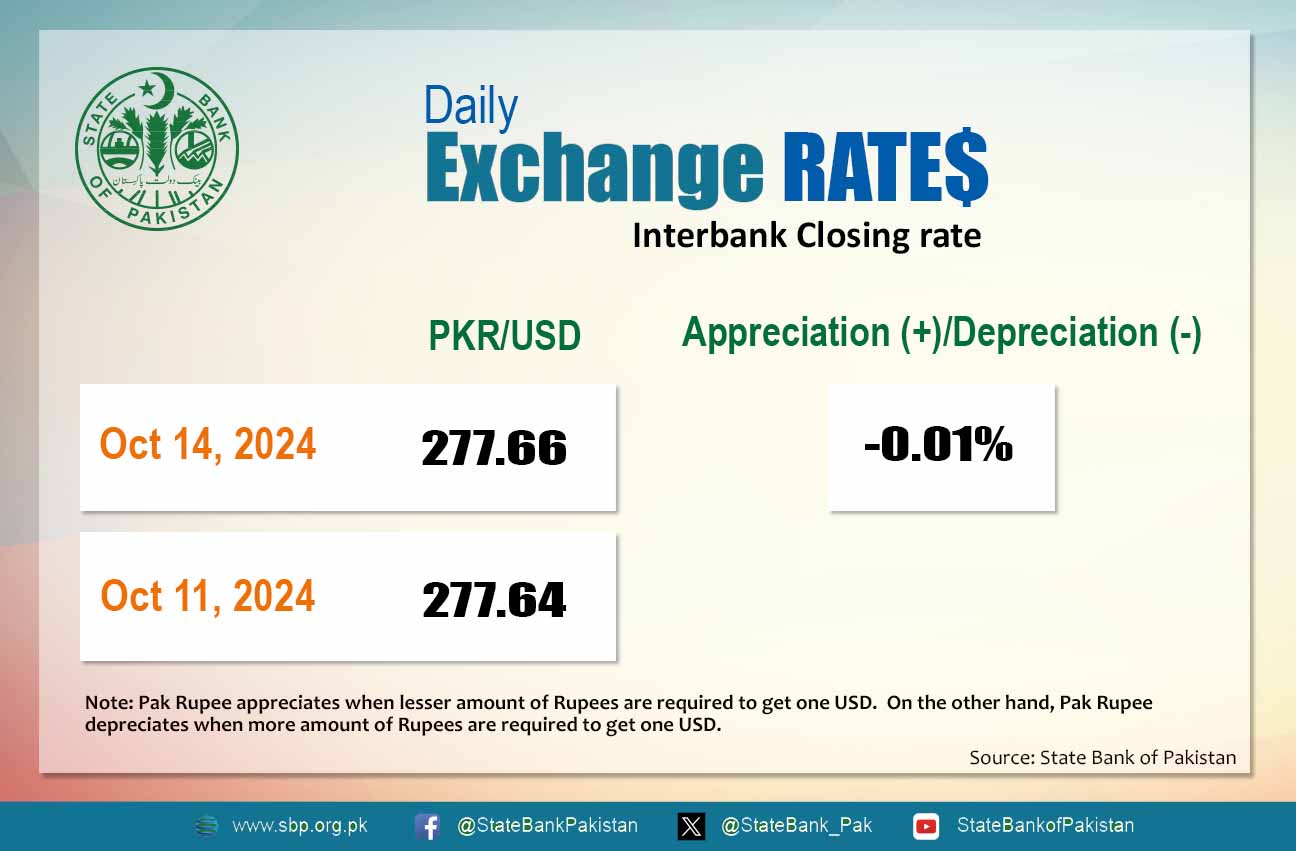
    The Pakistani rupee dropped more than two paisa or 0.01 per cent against the US dollar (USD) in Monday’s interbank session to settle the trade at PKR 277.66 per USD, compared to previous closing of Rs277.64.

    During the day, the Pakistani currency saw an intraday high of Rs277.75 and low of Rs277.50.

    US dollar to Pakistani rupee exchange rate today

    Speaking of the open market, local exchange companies quoted greenback value at Rs278 for buying and Rs279.5 for selling.

    During the ongoing fiscal year, PKR appreciated against the USD by 68.06 paisa or 0.25 per cent. While the current calendar year has seen PKR appreciate by Rs4.2 or somewhat around 1.5 per cent.

    In comparison to major foreign currencies, the home unit gained 47.48 paisa against the Euro, closing at 303.47 compared to the previous value of 303.94 on the last trading day (Friday).

    Dirham in PKR: The UAE Dirham surged in value by 0.41 paisa from 75.59 a day ago to 75.59.

    Pound in PKR: The British Pound was seen in red as it became cheaper by 26.18 paisa closing at 362.79 compared to 363.05 from a day ago.

    Franc in PKR: The Swiss franc saw losses of 93.52 paisa, closing at 323.12 compared to 324.06 from the previous session.

    Yen in PKR: Against the Japanese Yen, PKR gained 0.6 paisa, closing at 1.8589 versus 1.8649 a day ago.

    Yuan in PKR: The Chinese Yuan lost 6.62 paisa, closing at 39.22 against 39.28 from the previous session.

    Saudi Riyal in PKR: Lastly, the Saudi currency ended at 73.94 with gaining 0.41 paisa in its previous value of 73.94.

  • Saudi fast food giant AlBaik to shake up Pakistan’s fast food scene

    Saudi fast food giant AlBaik to shake up Pakistan’s fast food scene

    Saudi Arabia’s renowned fast food chain, AlBaik, famous for its fried and broasted chicken, is set to challenge Pakistan’s existing fast food market. According to latest reports, the company is planning to open several restaurants across the country and is currently in discussions with government to facilitate this expansion.

    A reliable source disclosed that a memorandum of understanding (MoU) has already been signed between AlBaik Food Systems Company and Gas and Oil Pakistan Ltd (GO), the same company behind GO petrol stations in Pakistan.

    Founded in 1974 by Shakour Abu Ghazalah in Jeddah, AlBaik has grown into a beloved household name, with over 120 outlets worldwide. Its popularity is such that many Saudis prefer it over international chains like KFC and McDonald’s.

    The MoU between AlBaik and GO petroleum is part of a larger framework of 27 agreements, valued at more than $2 bn, signed between Pakistan and Saudi Arabia. These agreements were finalised during the visit of a Saudi delegation led by the Minister for Investment, Sheikh Khalid Bin Abdul Aziz Al Faleh.

    Prime Minister Shehbaz Sharif stated on Thursday that the MoUs, which focus on boostin bilateral investment, are expected to significantly boost trade and economic cooperation between the two nations.

  • Weekly inflation slows as prices of eight essential items drop across local markets

    Weekly inflation slows as prices of eight essential items drop across local markets

    Short-term inflation in Pakistan has somewhat eased, as the Pakistan Bureau of Statistics (PBS) reported a decrease in the prices of eight essential items.

    According to data collected through the Sensitive Price Indicator (SPI), weekly inflation was recorded as 0.8 per cent lower on a weekly basis. However, SPI-based inflation increased by 12.74 per cent on a year-on-year (YoY) basis.

    The SPI tracks price movements of key items on a weekly basis. In the week ending on October 10, the prices of 15 items increased, while the prices of 8 items decreased compared to the previous week. Moreover, the prices of 28 items remained unchanged during the week.

    These prices were collected from nearly 50 markets across Pakistan.

    The most prominent reductions were observed in the prices of tomatoes, which saw a decline of over 19 per cent. Prices for bananas, sugar, pulse mash, and chicken were also recorded lower.

    However, a notable increase was seen in the prices of onions, wheat flour, pulse gram, and potatoes.