Category: Business

  • Pakistan faces ‘one of the deadliest debt traps in the world,’ warns Ex-SBP governor

    Pakistan faces ‘one of the deadliest debt traps in the world,’ warns Ex-SBP governor

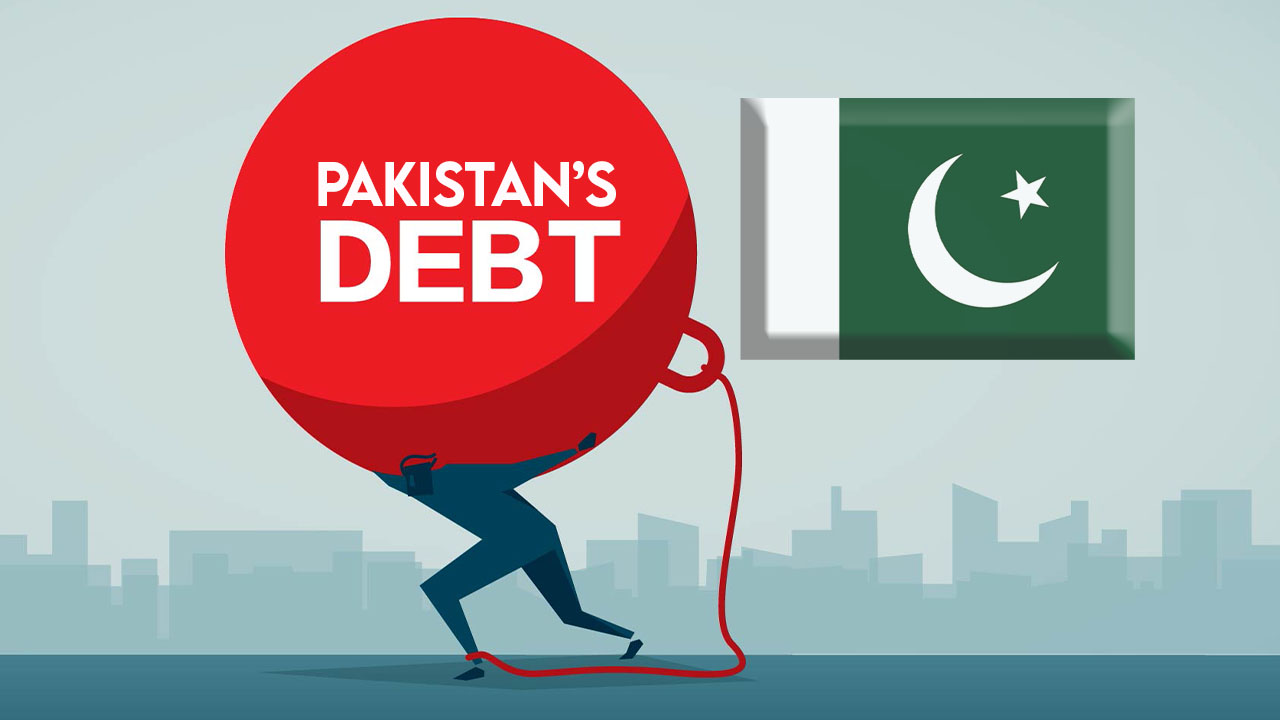
    Dr Murtaza Syed, former Governor of the State Bank of Pakistan, has raised significant concerns about Pakistan’s alarming debt situation, describing it as one of the most severe debt traps globally.

    In a series of tweets, he highlighted the country’s excessive borrowing and criticized the misuse of funds on non-productive expenses, leading to a situation where servicing the debt takes precedence over crucial developmental and climate-related investments.

    According to Dr Syed, Pakistan currently spends more on servicing its debt than any other country globally, a burden that is expected to persist for years. This high debt servicing obligation has necessitated heavy taxation and severely limited resources for essential social expenditures, such as education and health.

    He pointed out that Pakistan’s spending on interest payments vastly exceeds allocations for education and health, indicating a prioritization that hampers human capital development and public health.

    Citing data from the UNCTAD, Dr Syed highlighted that Pakistan’s government spends a disproportionate amount of its revenue on interest payments, second only to Sri Lanka. This financial strain not only constrains immediate social spending but also impedes long-term economic growth by limiting investments in infrastructure and other critical sectors.

    Despite fluctuations in global interest rates, Dr Syed emphasized that Pakistan’s debt burden remains among the highest globally, indicating a systemic issue rather than a temporary financial challenge.

    He cautioned that even with potential increases in government revenue, a significant portion would still be consumed by interest payments, further squeezing resources available for developmental initiatives.

    In conclusion, Dr Syed proposed a strategic restructuring of Pakistan’s debt to alleviate the fiscal pressure and redirect funds towards sustainable development and climate resilience.

    This, he argued, would require a balanced approach, avoiding over-reliance on taxation and instead focusing on optimizing debt management strategies to foster economic stability and social progress in Pakistan.

  • Pakistan raises plane ticket prices for foreign trips

    Pakistan raises plane ticket prices for foreign trips

    Today, the National Assembly of Pakistan has approved the Finance Bill 2024-25, introducing significant changes to taxation on foreign travel.

    Effective July 1, 2024, travelers will encounter increased excise duties when purchasing international flight tickets.

    Under the new regulations, economy and economy plus class tickets will now incur an excise duty of Rs12,500. Business and club class tickets face higher taxation rates, particularly for destinations such as the United States and Canada, where travelers will pay Rs350,000 in excise duty.

    For European destinations, this duty rises to Rs210,000, marking an increase of Rs60,000. Similarly, flights to New Zealand, Australia, China, Malaysia, and Indonesia will also see a standard excise duty of Rs210,000 on business and club class tickets.

    Furthermore, flights to the Middle East and Africa, including popular routes like Dubai and Saudi Arabia, will experience a significant increase in excise duty, climbing from Rs30,000 to Rs105,000 for business and club class tickets.

    These taxes are part of the government’s efforts to boost revenue under the new fiscal year’s budget, which has been set at Rs18,870 billion.

    Minister for Finance and Revenue Muhammad Aurangzeb presented the Finance Bill, 2024 in the National Assembly, which was subsequently passed after thorough deliberation and voting. Amendments proposed by opposition members were not adopted, ensuring the bill’s passage in its original form.

    Travelers are advised to factor in these additional costs when planning their international trips starting July 1, 2024, as the excise duties will be levied at the time of ticket purchase.

  • Packaged milk prices set to rise with 18% GST implementation from July 1

    Packaged milk prices set to rise with 18% GST implementation from July 1

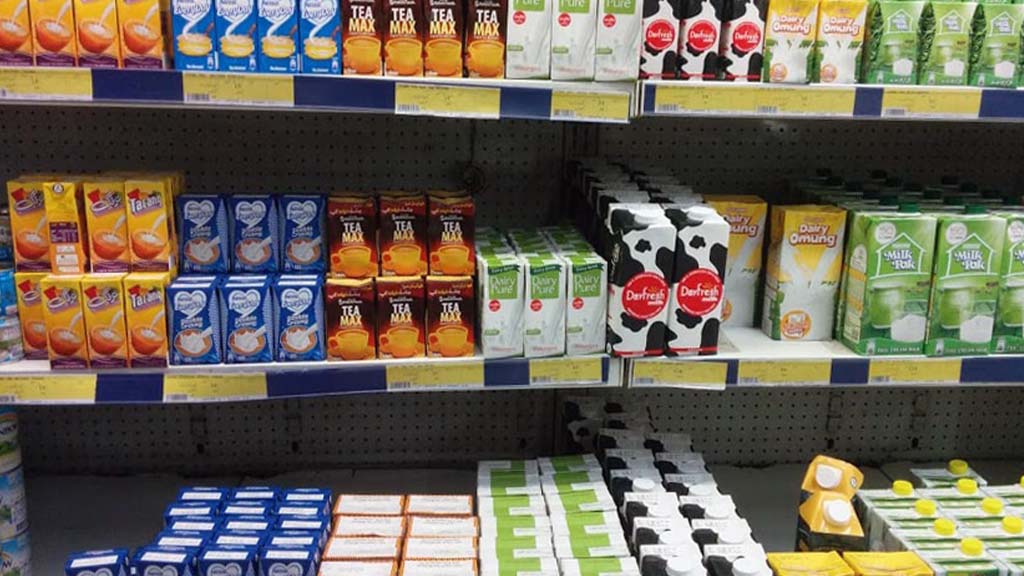
    The prices of packaged milk and other essential items in Pakistan are set to rise following the government’s decision to impose an 18 per cent General Sales Tax (GST) in the Budget 2024-25, effective from July 1.

    The National Assembly (NA) approved the Federal Budget for the fiscal year 2024-25 today, which includes this new tax measure.

    Along with packaged milk, the 18 per cent GST will also be applied to herbal and homeopathic medicines, and food items such as branded flour, packaged rice, and lentils. The sales tax will additionally extend to charitable and welfare hospitals.

    Despite the Senate Standing Committee on Finance rejecting the proposal, the government has moved forward with the decision. This move is anticipated to increase the cost of living, particularly affecting low-income families who rely on these essential goods.

    The approval of the Federal Budget comes amidst rising concerns over inflation. Reports indicate that the International Monetary Fund (IMF) has urged Pakistan to further reduce sales tax exemptions, which is likely to contribute to the inflationary trend in the coming fiscal year. Consequently, the prices of milk, tea, sugar, rice, and flour are expected to rise.

    The National Assembly passed the Finance Bill, 2024, following a clause-by-clause reading and amendments process.

    All amendments proposed by opposition members were rejected. Minister for Finance and Revenue Muhammad Aurangzeb presented the motion for the consideration of the Finance Bill, which was passed by a majority vote.

    The budget has a total outlay of Rs18,870 billion and aims to address various economic challenges facing the country.

    However, the imposition of the 18 per cent GST on essential items is likely to put additional financial pressure on the population, raising concerns about the affordability of basic necessities for many Pakistanis.

  • Pakistan stock market posts largest annual gain since 2003

    Pakistan stock market posts largest annual gain since 2003

    The Pakistan Stock Exchange (PSX) has reported its most impressive annual return in over twenty years, driven by optimism over improved economic conditions, attractive valuations, and a shift to monetary easing by the central bank.

    The KSE-100 Index surged by 89.2 per cent, adding 36,992 points to reach 78,444.9 in the fiscal year ending June 2024. This represents the largest yearly gain since FY 2003. In USD terms, the index rose by 94.4 per cent, the highest increase since FY 2003.

    According to Mettis Global, this historic bull run commenced when Pakistan narrowly avoided a sovereign debt default, thanks to a rescue package from the International Monetary Fund (IMF) towards the end of the last fiscal year.

    The IMF’s $3 billion loan programme also facilitated additional multilateral and bilateral funding, boosting the country’s foreign exchange reserves by 99 per cent to $8.9 billion.

    The benchmark index reached its first record high in seven years in November 2023 and continued to set new highs throughout the year without significant pullbacks.

    Market participation remained robust in FY24, with the average traded volume on the PSX surging by 140 per cent to 272.5 million shares.

    Traded value in PKR terms increased by 154 per cent to 15.6 billion. In USD terms, the volume was recorded at $55.2 million, a gain of 118 per cent compared to the previous year.

    The strong performance of the PSX reflects investor confidence in Pakistan’s economic recovery and the positive impact of the IMF’s support programme.

  • Gold price increases by Rs700 to Rs241,700 per tola

    Gold price increases by Rs700 to Rs241,700 per tola

    Gold prices in Pakistan have risen for the second consecutive session, mirroring an upward trend in the international market.

    On Friday, the price of gold per tola reached Rs241,700, marking a single-day increase of Rs700.

    Similarly, the price of 10-gram gold rose by Rs600, bringing it to Rs207,219, according to the All-Pakistan Gems and Jewellers Sarafa Association (APGJSA).

    This follows a Rs400 increase on Thursday, when the price per tola reached Rs241,000.

    Internationally, gold prices climbed on Friday. According to the APGJSA, the international rate stood at $2,326 per ounce, including a $20 premium, after a $22 increase during the day.

    Meanwhile, silver prices remained stable at Rs2,850 per tola.

    In April, gold prices in the local market hit an all-time high of Rs252,200 per tola.

  • World Bank forecasts 7% growth in Pakistan’s remittances for 2024

    World Bank forecasts 7% growth in Pakistan’s remittances for 2024

    Remittance flows to Pakistan are expected to rebound and grow by approximately 7 per cent, reaching $28 billion in 2024, with a further increase of 4 per cent to around $30 billion in 2025, according to the World Bank’s ‘Migration and Development Brief 40’ released on Wednesday.

    In 2023, Pakistan experienced a 12 per cent decline in remittance inflows, dropping to $27 billion, due to weak economic conditions, including a balance of payments crisis. Despite these challenges, Pakistan emerged as one of the top five recipient countries for remittances in 2023.

    “The top five recipient countries for remittances in 2023 are India with an estimated inflow of $120 billion, followed by Mexico ($66 billion), China ($50 billion), the Philippines ($39 billion), and Pakistan ($27 billion),” the report stated.

    Despite the global demand for labour in countries like the USA and those within the OECD, Pakistan’s internal economic struggles caused remittances to drop.

    The World Bank noted that many remittances were likely sent through informal channels in 2023, due to robust labour market conditions in destination countries.

    “Recent economic crises in Pakistan highlighted that delays in reforms not only deterred Foreign Direct Investment (FDI) but also negatively impacted formal remittance flows,” the report added.

    Home remittances play a crucial role in supporting Pakistan’s external account, stimulating economic activity, and supplementing the incomes of remittance-dependent households.

    During the first 11 months of FY24, workers’ remittances recorded an inflow of $27.093 billion, a 7.7 per cent increase compared to $25.146 billion during the same period in FY23.

    The report also revealed that with a share of 8 per cent of GDP, Sri Lanka and Pakistan are tied as the second most remittance-dependent countries in South Asia. Overall, remittances to South Asia grew by 5.2 per cent in 2023, reaching $186 billion, though this growth rate slowed from 12 per cent in 2022.

    This growth was primarily driven by India, which saw a 7.5 per cent increase to $120 billion, supported by strong labour markets in the United States and Europe.

    The slowdown was partly due to reduced outflows from GCC countries, impacted by declining oil prices and production cuts. Remittance flows to South Asia are projected to grow by 4.2 per cent in 2024.

    The World Bank highlighted that the economic conditions in South Asia’s largest recipients—India, Pakistan, and Bangladesh, which collectively receive 91 per cent of the region’s remittances—will be crucial in driving remittance growth.

    However, a weak economic recovery in Pakistan and Bangladesh poses a significant risk, potentially leading migrants to favour informal money transfer channels, thus reducing formal remittance growth.

  • SBP’s forex reserves decrease by $239 million in a week due to debt repayments

    SBP’s forex reserves decrease by $239 million in a week due to debt repayments

    Foreign exchange reserves held by the State Bank of Pakistan (SBP) fell by $239 million, reaching $8.896 billion as of June 21, according to data released by the central bank on Thursday.

    The total liquid foreign reserves held by Pakistan stood at $14.207 billion, with net foreign reserves held by commercial banks at $5.311 billion. The central bank attributed the decline to external debt repayments.

    “During the week ended on June 21, 2024, SBP reserves decreased by $239 million to $8.896 billion due to external debt repayments,” the SBP stated.

    This comes after a $31 million increase in the central bank’s reserves the previous week. In May, the SBP’s reserves had surged by $1.114 billion, surpassing $9 billion for the first time in nearly two years.

    This increase was primarily due to the disbursement of the last $1.1 billion tranche from the International Monetary Fund (IMF) under its $3 billion Stand-By Arrangement.

    The fluctuating reserves highlight the ongoing financial challenges faced by Pakistan, particularly in managing its external debt obligations and maintaining a stable economic outlook.

  • Gold price surges to Rs241,000 per tola with Rs400 increase

    Gold price surges to Rs241,000 per tola with Rs400 increase

    The price of gold in Pakistan saw an uptick on Thursday, with 24-karat gold being sold at Rs241,000 per tola, marking an increase of Rs400 per tola.

    The Karachi Sarafa Association reported that the price of 24-karat gold per 10 grammes rose to Rs206,619, reflecting an increase of Rs343.

    The price of 22-karat gold also experienced an increase, being quoted at Rs189,400 per 10 grammes.

    In contrast, silver prices in the domestic market remained stable. The price of 24-karat silver stood unchanged at Rs2,850 per tola and Rs2,443 per 10 grammes.

    On the international front, spot gold traded near $2,304 an ounce, registering an increase of $5.6 or 0.24 per cent from the previous session.

  • Govt may freeze non-filers’ bank accounts for not responding to tax notices

    Govt may freeze non-filers’ bank accounts for not responding to tax notices

    The government is contemplating new measures to enforce tax compliance and amend taxation policies as part of the amended Finance Bill 2024.

    Among the key proposals is the potential blocking of bank accounts for non-filers of tax returns, and changes to the sales tax on mobile phone imports.

    According to informed sources, the proposal to freeze bank accounts of non-filers was initially included in the original Finance Bill 2024 but was not passed. Under the new plan, if non-filers do not respond to tax notices, their bank accounts may be blocked until they are listed on the Active Taxpayers List (ATL).

    Non-filers would still be able to deposit money into their accounts but would be prohibited from withdrawing funds until they comply with filing requirements and their names appear on the ATL.

    The Federal Board of Revenue (FBR) will issue an income tax general order (ITGO) listing the names of non-filers whose accounts are to be blocked if this proposal is incorporated into the amended Finance Bill 2024.

    Additionally, the amended Finance Bill 2024 proposes replacing the current 18 percent sales tax on imported mobile phones with a fixed sales tax amount, which will vary depending on the brand of the imported phones.

    The government is also revising the policy on disallowance of sales promotion and advertising expenses. In the 2024-25 budget, 25 percent of these expenses under royalty arrangements were disallowed. The government is now considering three options to amend this policy.

    Firstly, the FBR may reduce the disallowance rate from 25 percent to 20 percent, subject to specific conditions being met. Secondly, the FBR could restore the original status of the law prior to the Finance Bill 2024, which would grant the FBR the authority to create rules for handling such cases.

    Lastly, the government might permit a certain percentage of sales promotion and advertising expenses to be allowed.

    These proposed changes aim to improve tax compliance and adjust tax policies to better suit economic conditions and business needs. The final decisions will be confirmed once the amended Finance Bill 2024 is formally presented and approved.

  • 24 karat gold rate drops by Rs900 per tola to Rs240,600

    24 karat gold rate drops by Rs900 per tola to Rs240,600

    On Wednesday, gold prices in Pakistan experienced a slight decrease. The price of 24 karat gold dropped by Rs900 per tola, bringing the new rate to Rs240,600 per tola.

    According to the Karachi Sarafa Association, the price of 24 karat gold per 10 grammes fell by Rs771, settling at Rs206,276. Additionally, the price of 22 karat gold was reported at Rs189,086 per 10 grammes, reflecting a decrease.

    This decline is attributed to a reduction in purchasing power, leading to the price being set Rs1,500 below its actual cost.

    In contrast, silver prices remained stable. The price of 24 karat silver stood at Rs2,850 per tola and Rs2,443 per 10 grammes.

    On the international market, spot gold traded near $2,316 an ounce, down by $14.4 or 0.62 per cent from the previous session.

    This trend highlights the ongoing fluctuations in precious metal prices, influenced by both local and global economic factors.