Category: Editorial

  • We are with you, Mr PM, but take a look back at home too

    We are with you, Mr PM, but take a look back at home too

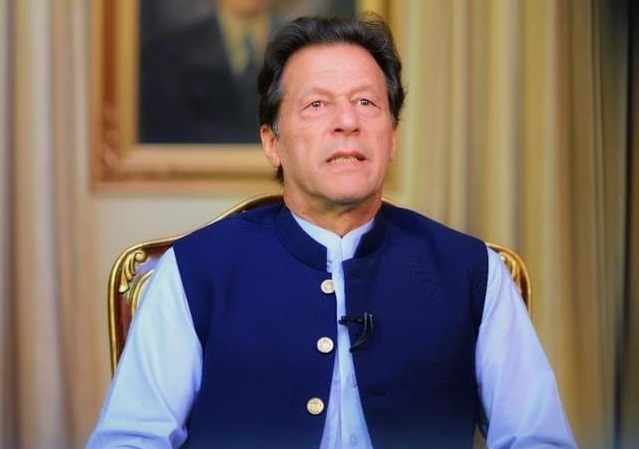
    Prime Minister (PM) Imran Khan has addressed the United Nations General Assembly (UNGA), warning India against any misadventures.

    “I want to make it clear that any attempt by the fascist totalitarian RSS-led Indian government to aggress against Pakistan will be met by a nation that will fight for its freedom to the end,” he said, exposing India’s fascism.

    “While the Nazis’ hate was directed at the Jews, the RSS directs it at the Muslims, and to a lesser extent, the Christians.”

    Talking about Islamophobia around the world, PM Imran said India is the one country in the world where “the state sponsors Islamophobia”.

    On the Kashmir issue, he emphasised that Pakistan had always called for a peaceful solution to the Kashmir dispute. He said that India must repeal the measures it had instituted since August 5, 2019, end its military siege and other gross human rights violations, and agree to “resolve the Jammu and Kashmir dispute in accordance with the relevant UN Security Council resolutions and, of course, the wishes of the people of Kashmir”.

    He also pointed out that what India did on August 5 last year was in violation of the UN Charter, council resolutions and international law, particularly the 4th Geneva Convention. “Changing demographic structure of occupied territory is a war crime.”

    PM Imran is right about the atrocities in India being committed against religious minorities, especially the Muslims in India. From beef lynchings to Delhi riots to Modi himself laying the foundation stone of the Ram Mandir on the one-year anniversary of revoking the special status of Indian-occupied Kashmir (IoK), the message that the Indian government is giving to its Muslim citizens is quite clear: the Hindutva supremacy brigade is in charge and you can only live here on our terms.

    This is a grave indictment of the so-called world’s largest democracy where the rights of minorities now are almost non-existent. The media in India has largely become pliant, a few honourable exceptions aside. We hardly see them questioning the state on issues that matter the most.

    PM Imran’s comments on India are spot on. We do hope that he would also take notice of the new sectarian fire that is roaring in Pakistan these days.

    The huge anti-Shia rallies that were taken out in Karachi and Islamabad should be a wake-up call for our state. It took a long time for the state to put out the sectarian conflict in the country. It would be extremely dangerous if sectarianism starts again. We cannot forget the target killings of Shia Hazaras in dozens just a few years ago.

    The state must end this before it becomes uncontrollable again. Interfaith harmony as well as sectarian harmony is important for any society and for people to co-exist peacefully. Pakistan’s media has been quite responsible in the recent sectarian rift. We hope that the state, too, will play its part.

  • Nawaz Sharif’s moment

    Nawaz Sharif’s moment

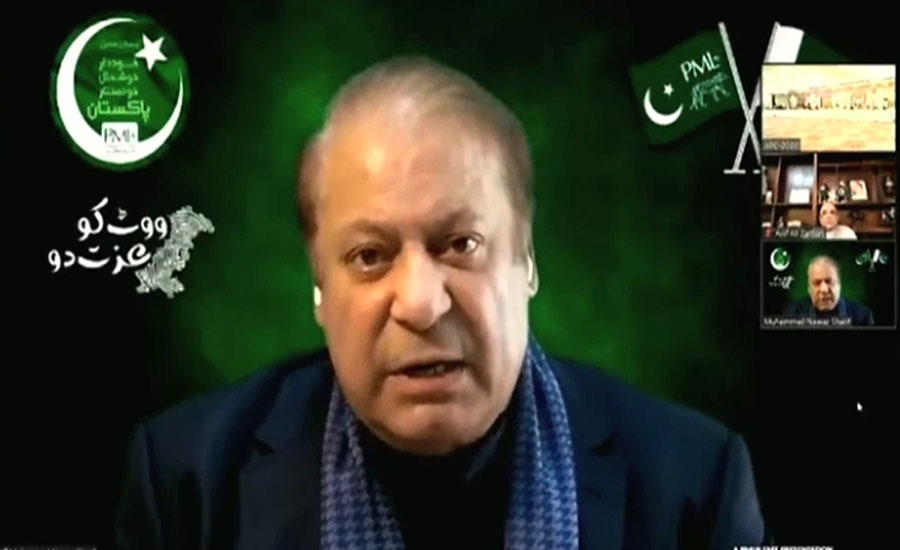
    An All-Parties Conference (APC) took place on Sunday. Hosted by Pakistan People’s Party (PPP) chief Bilawal Bhutto-Zardari, the moot was attended by all major opposition parties.

    Former president Asif Ali Zardari and Pakistan Muslim League-Nawaz (PML-N) supremo Mian Nawaz Sharif addressed the conference via video link. PML-N President Shehbaz Sharif, Vice President Maryam Nawaz, Jamiat Ulema-e-Islam-Fazl (JUI-F) chief Maulana Fazlur Rehman, Mahmood Khan Achakzai of the Pakhtunkhwa Milli Awami Party (PkMAP), Mohsin Dawar and several other opposition leaders also participated.

    It was, however, Nawaz’s speech that set the tone, reflecting in the APC’s joint resolution.

    Just days ago, the APC was being dismissed as just another show without much substance but the former prime minister’s speech changed that perception. The foremost reason why the APC was being dubbed a mere show was due to the opposition’s failure in the Senate (no-confidence move) and the passage of the recent FATF bills in the joint session despite protests. The opposition may not have been successful in these two endeavours but they seem to be on a mission now and they want to do it before the Senate elections in March 2021.

    Nawaz said their struggle is not against Imran Khan but against those who brought Imran Khan to power by manipulating the elections. He said there is now a parallel government because there is “a state above the state now”.

    The 26-point charter of demands by the APC announced the formation of the Pakistan Democratic Movement (PDM), which will be an anti-government movement. APC resolution states that the establishment’s role in politics must end. All state institutions should stay within their constitutional limitations. It also mentions how media is facing the worst censorship, the opposition demands that accountability of Lt Gen (r) Asim Bajwa be ensured, among other things.

    The way the government has reacted to the APC and especially Nawaz’s speech shows there is panic among their ranks. From calling the APC “a flimsy attempt to put pressure on the government to back off on accountability” to asking institutions to take notice of Nawaz’s speech, it is quite evident that the opposition has unnerved the government.

    The opposition has also given a roadmap and an action plan for the future. From countrywide protests starting soon to resignations from assemblies to vote of no-confidence to a long march in January, the opposition says all democratic options to get rid of the government are on the cards.

    It seems that the opposition has decided to finally get serious. It remains to be seen how it all pans out and whether they will give real tough time to the government in the coming weeks and months. But the opposition cannot be written off.

  • Gang-rape that shook Pakistan

    Gang-rape that shook Pakistan

    On Wednesday, a woman was gang-raped in front of her children on the Lahore-Sialkot Motorway. This incident has shaken the entire country. The details of the incident are so horrific that the women of this country are feeling unsafe, especially after the shocking statement made by CCPO Lahore Umar Sheikh. Mr Sheikh had the unbelievable audacity to tell the rape survivor that she should not have driven so late at night, she should have taken the busier GT Road instead of the stranded motorway and that she should have checked her car’s fuel tank before leaving the house. As if this was not enough, CCPO Lahore went on numerous channels to defend his statement, say that the survivor thought this was France and not Pakistan where society is different. And to add insult to injury, several ministers and cabinet members came to his defence.

    SAPM Shahzad Akbar stood by the CCPO’s side at a press conference and also said his statement was being turned into a controversy unnecessarily. Planning Minister Asad Umar went on to ask that should the CCPO be removed for a bad statement when he has not done anything illegal. Rallies were taken out all over the country on Saturday, asking for the removal of CCPO Lahore. He has shown zero remorse and he sounds extremely confident that he is going nowhere. While the CCPO has been issued a show-cause notice for his remarks about the rape survivor by the IG Punjab, the question remains: why has he not been removed yet? Even if his appointment was political, the government should have removed him to make the women of this country feel safe.

    CCPO Lahore’s statement has made each and every woman of this country feel unprotected and his casual sexism has laid bare the mindset prevalent in the police force about rape survivors. No wonder then that women who are raped do not report these crimes. When the police chief of the country’s second largest city is so dismissive of rape incidents, when he blames the survivor for an attack that could have been prevented with better policing and timely help, when many men on our televisions screens and online spaces are actually saying he said nothing wrong and this is what we were also thinking, how does it make a woman feel? In Punjab alone, there have been at least 2,043 registered cases of rape and 111 cases of gang rape this year. And these are the reported cases. What about those cases that are not reported because women and their families are afraid of the misogynist police mentality?

    When the government stands by a man who thinks women should not step out at night, it means that the government is protecting a misogynist. It gives a clear message to the women of Pakistan: you are on your own, we cannot protect you. Unless and until the CCPO is not removed, the police force will not change its mindset when it comes to violence against women and gender-based crimes. 

  • Shaheena Shaheen’s murder

    Shaheena Shaheen’s murder

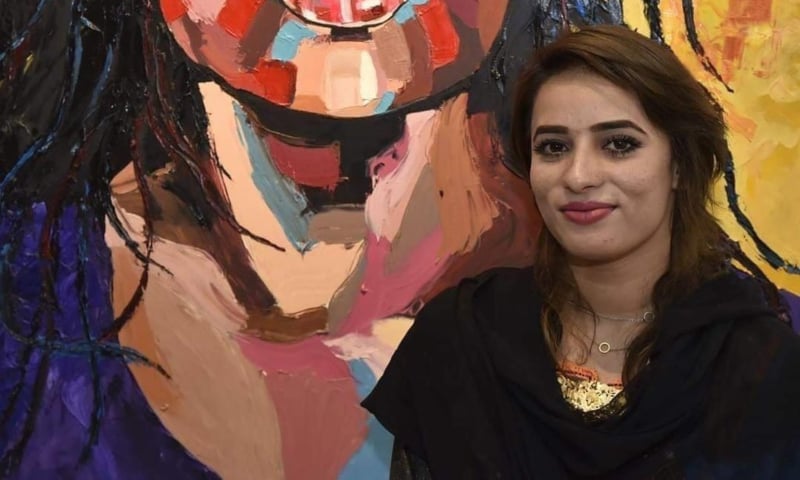
    Yesterday, a female journalist in Balochistan was shot dead. A social activist, an anchorperson at PTV and editor of a Balochi language magazine Dazgohar, Shaheena Shaheen was shot three times in Turbat on Saturday. She succumbed to her bullet injuries at the hospital. According to media reports, Kech Superintendent of Police Najeebullah Pandrani said the killing was the result of domestic violence. Shaheena’s family has nominated her husband in the First Information Report (FIR), whom she married just five months ago.

    Spokesperson of the Government of Balochistan Liaquat Shahwani tweeted that the murder seems to be due to a domestic issue and promised that justice would be served. Federal Minister for Information and Broadcasting Senator Shibli Faraz also condemned Shaheena’s murder. He said the government would fulfil its responsibility and bring the culprits to justice.

    Shaheena achieved a lot during her short but meaningful life. She was a talented artist, a brave social activist, and a talented journalist. Shaheena’s murder brings forth multiple issues plaguing our society, especially domestic abuse.

    Domestic violence is a serious issue in Pakistani context. According to a report released by SSDO in August and titled ‘Tracking Numbers: State of Violence Against Women and Children in Pakistan’, violence against women increased 10 times in just three months in Pakistan. A large number of women are victims of domestic abuse at the hands of their husbands but suffer silently due to multiple reasons, which include family ‘honour’, children’s future, lack of financial independence and the taboo attached to divorce. It is because of their silent suffering and lack of repercussions that these men continue to commit this crime. Some, like Shaheena’s husband, are emboldened enough to even commit murder. Apart from domestic violence, ‘honour killing’ by family members is not an uncommon practice in Pakistan. On Friday, the Supreme Court observed that the killing of women in the name of honour had never been an honourable practice and that such murders should not be categorised as honour killings. “It will help deter such killings if the term ‘Ghairat’ is not used to describe them,” observed Justice Qazi Faez Isa.

    Why is it that ‘honour’ is always attached to a woman’s actions and not that of any man in our society? Why is a woman expected to suffer at the hands of her abuser just to save family’s honour? Our lexicon is filled with phrases like, ‘Log kya kaheinge?’ [what will people say?], which make women think twice before leaving an abusive relationship. We wonder what these ‘people’ will say when a woman is murdered by her husband?

    The Ministry of Human Rights launched an awareness campaign about domestic abuse and violence in March this year, asking the victims to call their helpline. We have laws against domestic violence and honour killing in place but the major issue is under-reporting of these cases by the victims themselves who choose to stay silent due to societal pressures. It is time to raise awareness across the country and let these women know that they are not alone. The state as well as society stands with them. Shaheena, we hope your murderers are brought to justice. Rest in power, Shaheena!

  • Karachi: Resilient no more

    Karachi: Resilient no more

    A city once known as the ‘city of lights’ has now been without electricity for almost three days and counting.

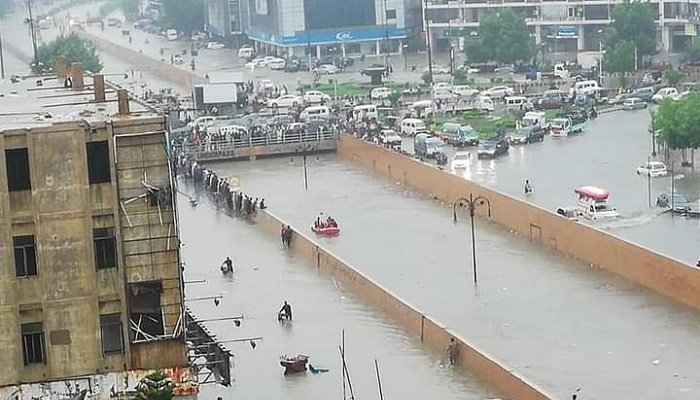
    Karachi resembles a dump now with dilapidated roads, virtually no sewerage system, no government public transport, buildings on top of each other without following any safety laws, no emergency response system, nothing. Recent visuals on our television screens, social media and WhatsApp following the monsoon rains in Karachi are horrendous. Cars floating around, houses drowning in sewerage water and rainwater, people being electrocuted, no electricity, no food, no relief in sight. A wheelchair-bound woman drowned in her house due to the mismanagement of those in power, someone who had a heart attack could not reach the hospital in time due to flooding…each story is worse than the other. More than 80 people have so far lost their lives.

    The ‘resilience’ of the people of Karachi has been taken for granted but Karachi has had enough!

    The Pakistan People’s Party (PPP) has been in power in Sindh for the last 12 years. In those 12 years, we have not seen the provincial government take any responsibility whatsoever for the woes of the provincial capital. Blaming the Muttahida Qaumi Movement (MQM) because it ruled Karachi for almost a decade before the PPP government came to power can only be done so much. If the Opposition parties tell the ruling PTI to stop blaming past governments and focus on their own performance, then the same rule should apply in Sindh. The MQM may not have done as much as it should have back then but it is no excuse for a government that has been ruling the Sindh province for over a decade now.

    It will also not paper over the fact that the local bodies system is so weak that no city government can be blamed for anything catastrophic. If the PPP wants to shift the blame, it should have had a fully empowered local bodies system in place. When a government does not want to devolve power and then not do anything itself, then who is to blame? Climate change may be another reality but it is not something that has come out of the blue. Where is the emergency relief system to work in times of natural disasters? If it were not for the Edhi foundation and Chhipa and other private organisations, the city of Karachi would have been an orphan city. Private citizens are helping each other out rather than the government. Where is the empathy of the rulers? Some of the tweets by provincial ministers are full of apathy towards the people of Karachi; clearing a few roads of rainwater do not make the problems of Karachi go away.

    Now that a committee has been formed with all stakeholders to address the issues plaguing the largest city of Pakistan, it is hoped that regardless of their political affiliations, all stakeholders would work towards reaching a solution and not play politics at the cost of innocent lives. The people of Karachi have witnessed ethnic warfare, sectarian killings, mafias, crime and much worse. They deserve a break now. The Sindh government and all other stakeholders need to work together in order to bring some semblance of normalcy back to a city that is the heart of Pakistan. 

  • Targeting women

    Targeting women

    A large group of Pakistani women in media have released a joint statement about organised trolling, abuse and harassment they face online. The statement says, “Vicious attacks through social media are being directed at women journalists and commentators in Pakistan, making it incredibly difficult for them to carry out their professional duties.”

    The statement further says that online attacks are instigated by government officials and then amplified by a large number of Twitter accounts, which declare their affiliation to the ruling party.

    They asked the government to restrain its members from repeatedly targeting women in the media, send out a clear message to all party members, supporters and followers, to desist from launching these attacks, whether directly or indirectly and, hold all such individuals within the government accountable and take action against them. #AttacksWontSilenceUs, the hashtag used by the women who released the statement, trended at No 1 on Twitter.

    Targeting women in media is easy as there are only about five percent of women who are journalists in Pakistan. They not only face vile abuse related to their gender, but they also face a barrage of allegations that they take ‘lifafa’ or are paid by Opposition parties. These bullying tactics are used to either silence them and/or discredit them. Last year, a report titled ‘Hostile Bytes – a study of online violence against women journalists’ by Media Matters for Democracy (MMfD) said that 95 percent of women journalists feel online violence has an impact on their professional choices, while 77 percent self-censor as a way to counter online violence. In the recent statement by women media practitioners, self-censorship was identified as a problem as well as hacking attempts of their social media accounts. The mental toll it must take on those who are at the receiving end of this constant abuse is another factor that leads to self-censorship.

    Targeting women is a worldwide phenomenon. In neighbouring India, the trend is quite similar. Amnesty International published a report earlier this year, which said that women politicians in India face a shocking scale of abuse on Twitter. “Women are targeted with abuse online not just for their opinions – but also for various identities, such as gender, religion, caste, and marital status.” It has also been seen how women journalists who do not toe the official government line in India are viciously trolled by the ‘Modi Bhakts’ on social media platforms, especially Twitter.

    The National Assembly’s Human Rights Committee has invited women media practitioners who released the statement to come and highlight their issues in a meeting on Tuesday. Federal Minister for Human Rights Shireen Mazari also lent her support to the women media practitioners in her tweets. It is important that these issues are raised at the right platforms so that Pakistani online spaces can be safe for women from all spheres of life. A civil discourse is the need of the hour instead of online abuse. We hope that those who are behind such campaigns can actually get past their political differences and ensure that online spaces are used for meaningful discourse instead of bullying.

  • Modi’s Hindu Rashtra

    Modi’s Hindu Rashtra

    This year, August 5 marked the one-year anniversary of occupied Kashmir’s illegal annexation and subsequent lockdown.

    Last year, India changed the special status of the troubled valley to union territories. The gross human rights violations that followed and are still taking place is no secret. Pakistan has tried highlighting the issue internationally.  Unfortunately, the international community is least bothered because of economic reasons; every country wants a share in the Indian market pie.

    The myth of Muslim Ummah was also shattered when except for countries like Turkey and Malaysia, nobody raised voice for the plight of the Kashmiris. The same led to what appeared to be a major foreign policy shift for Pakistan as Foreign Minister Shah Mahmood Qureshi asked Saudi Arabia-led Organisation of Islamic Cooperation (OIC) to stop dragging feet on the convening of a meeting of its Council of Foreign Ministers (CFM) on the Kashmir issue.

    READ: VIDEO: FM Qureshi says Pakistan ready to ‘ditch’ Saudi Arabia for Kashmir’s sake

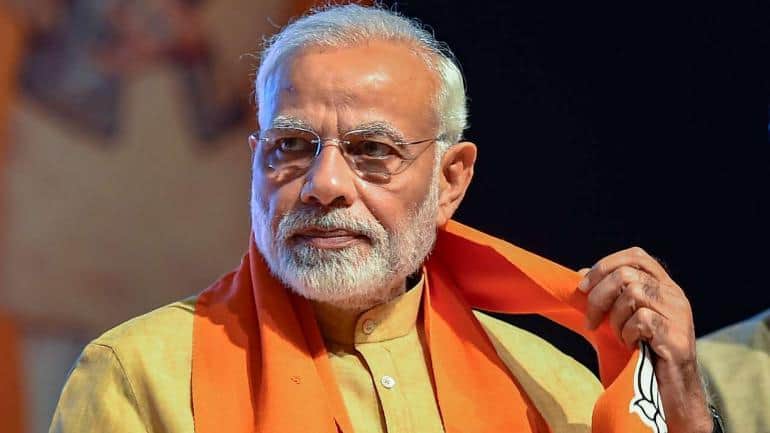
    Revoking the special status of held Kashmir was a step towards establishing Modi’s Hindu Rashtra. The first five years of Modi paved the way for an India that shattered all foundations of secularism. Modi regime’s six years have resulted in a wave of palpable fear amongst the Muslim minority in India. Modi’s Gujarat — where Muslims were killed as if it was a sport — is now being replicated in other parts of India; from beef lynchings to riots, the Muslim minority in India is being subjugated endlessly.

    Modi chose August 5, 2020, as the day of laying down the foundation of the Ram Mandir in Ayodhya. As the New York Times put it, “In a moment of triumph that India’s Hindu nationalists had worked toward for years, Prime Minister (PM) Narendra Modi on Wednesday set the ceremonial cornerstone for a new Hindu temple at the site of a destroyed mosque in Ayodhya.”

    This gesture was a slap in the face of the Muslim minority of India as well as the last nail in the coffin of Indian secularism. Modi’s Hindu nationalism has destroyed the fabric of Nehruvian secularism. It is a reminder that when a fascist ruler is in power, even strong traditions and constitutions cannot guarantee fundamental rights, human rights, freedom of speech and all other traditions of a free society.

    The cataclysmic shift of the Indian polity towards the right under Modi’s rule is not a surprise. In fact, what was surprising was the denial of Indian liberals when Modi was first elected in 2014. They were of the view that India’s secular traditions and constitution could never be destroyed but many pointed out how Modi’s victory was an indictment of the majoritarianism in India.

    This is happening all over the world. From Trump’s America to Brexit in Britain, the world’s shift to right-wing politics is quite disappointing. We hope that some day, sane voices of India and the world will take a stand against Modi’s fascism.

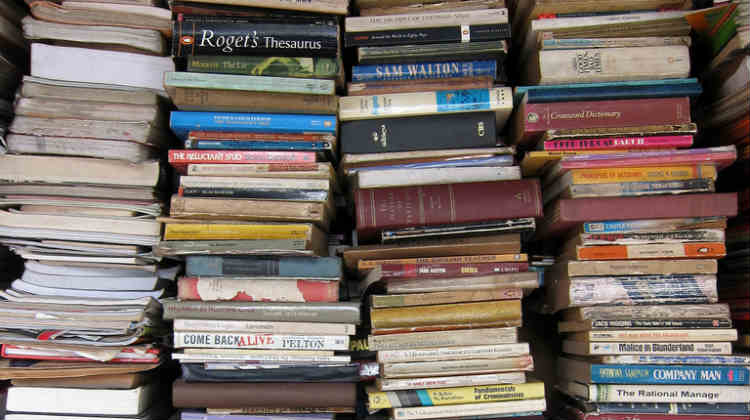
  • Banning books

    Banning books

    German poet Heinrich Heine once warned, “Where they burn books, they will in the end also burn people.”

    In Pakistan’s case, we may not be burning books, but we are banning them. From banning online apps to games, from media censorship to censoring books, Pakistan is on a downward spiral. According to Geo, the Punjab Curriculum and Textbook Board (PCTB) banned a hundred school books in a single day for containing content deemed “anti-national” and “blasphemous”.

    “We are currently examining over 10,000 books being taught in private schools,” said PCTB Managing Director Rai Manzoor Hussain Nasir. “So the banned textbooks could be in thousands once we are done.”

    Rai is taking these steps under the Punjab Curriculum and Textbook Board Act, 2015, which was passed by the Pakistan Muslim League-Nawaz (PML-N) government. It seems that both the Pakistan Tehreek-e-Insaf (PTI) and the PML-N do not value critical thinking and fundamental freedom.

    This policy is a complete disaster. We saw what happened under the Zia regime back in the 1980s when our curriculum was infused with extremist ideology. It changed our society and led to intolerance. Now we are seeing a repetition of something along the same lines. Rai Manzoor has a problem with a book of mathematics where counting concepts were explained to the young students showing pictures of pigs. He also has a problem with Gandhi’s quotes being taught in another book. Gandhi was India’s founding father but he fought for the rights of Muslims in India and was consequently killed by an RSS extremist for propagating peaceful co-existence with the Muslim minority. Are we demonising someone just because we want to see him from the prism of animosity towards India?

    If we want to keep our children isolated in a globalised world by teaching them only about ourselves, and not any non-Pakistanis, the solution was not to ban books with Gandhi’s quotes but probably to add more quotes from Pakistani historical figures. Do we not want to teach our children about the struggles of Nelson Mandela, who is quite often quoted by Prime Minister Imran Khan? Banning books or taking out quotes of non-Pakistanis is ridiculous at best and dangerous in the long term. The path we are taking today will impact our coming generations.

    The power of deciding curriculum and books is a grave power. For it to be in the hands of someone who is no Chomsky or any other learned figure, we must raise our voice at this grave injustice that is being inflicted upon our future generations. Our national interests are not so weak that they will be endangered by some quotes from non-Pakistanis. But it seems that we want to ban critical thinking. We want to ban the foundation of learning, i.e. asking questions and being inquisitive. We want to produce robots instead of intelligent human beings. We must resist this type of indoctrination. Closed minds cannot lead this country to progress. Stifling freedom of expression and censoring books will push Pakistan back by decades. Let us not go down this dark path. 

  • Destroying Buddha

    Destroying Buddha

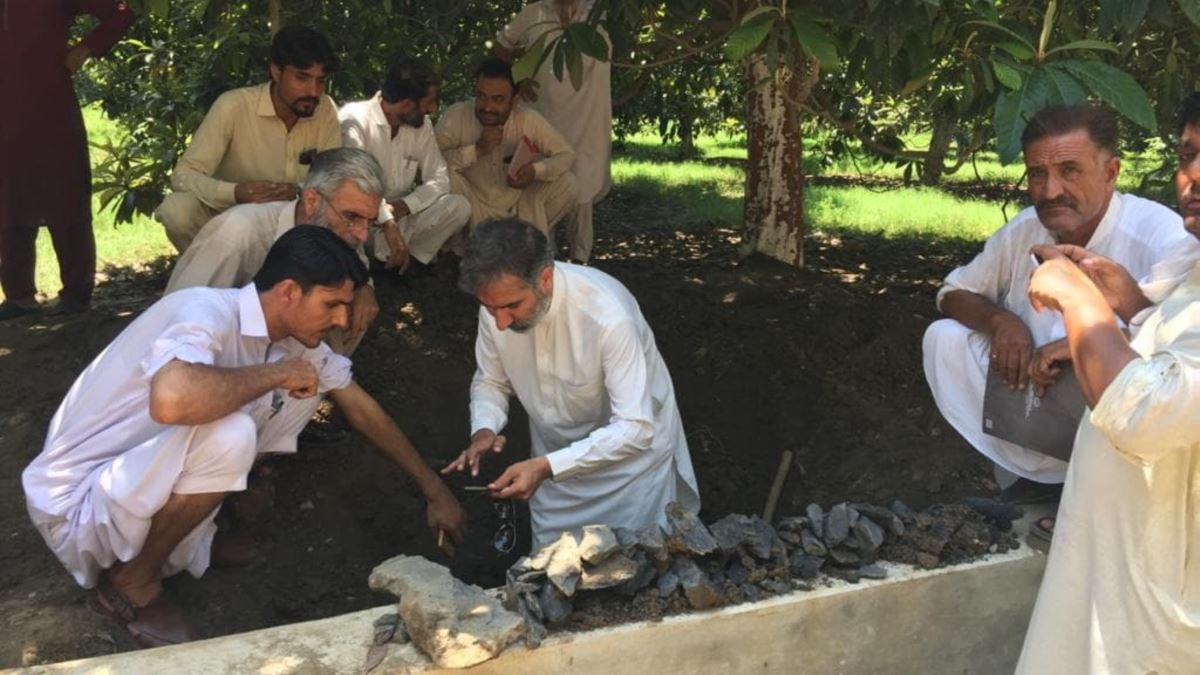
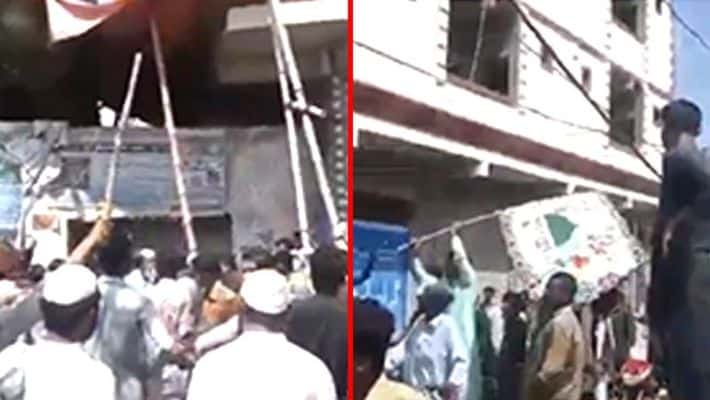
    Police in Khyber Pakhtunkhwa (KP) on Saturday arrested four men involved in smashing an antique Gandharan Buddha statue found during construction work in Mardan. The remaining parts of the 1,700-year-old statue have also been recovered by Mardan police.

    When videos of a man breaking the antique statue surfaced on social media, many Pakistanis expressed their anger and disappointment at the blatant vandalism of an ancient cultural heritage. According to reports, the man who broke the Buddha statue was instigated by local cleric[s]. The video reminded one of the Bamiyan Buddhas in Afghanistan, which were once the world’s tallest Buddhas but were blown up and destroyed by the Taliban in 2001 on orders by Mullah Omar.

    Federal Minister for Science and Technology Fawad Chaudhry tweeted that if the progressive people of Pakistan remain silent observers and neutral, all hopes of a progressive and modern Pakistan will be dashed. Chaudhry added that “social degradation is immense and silence is not an option unless you want this society to be as dead as [a] graveyard”. His words about a dead or decadent society should be pondered over. Pakistani society is fast turning into a reactionary and intolerant one. The construction of a Hindu temple was halted just a week ago in Islamabad after protests by religious groups and now we have witnessed the destruction of a Buddha statue.

    While the KP government must be appreciated for its quick response in arresting those involved in this crime, we must ask ourselves if we want Pakistan to be a country envisioned by founder Muhammad Ali Jinnah or if we want it to turn it into a land of bigotry. The mistreatment meted out to our religious minorities renders the white in our flag meaningless. Unless and until all citizens are treated equally, regardless of their colour, caste, creed, religion and ethnicity, Pakistan cannot prosper.

    It was also unfortunate to see some of our lawmakers, including Leader of the Opposition Shehbaz Sharif, justify and defend the conversion of Hagia Sophia into a mosque in Turkey by citing Turkey’s laws and system of judiciary. This kind of obfuscation leads to the justification of bigoted acts. The progressive people of Pakistan do speak out against injustices but they are a minority, or so it seems. We used to say that the ‘silent majority’ in Pakistan is tolerant and against discrimination of religious minorities but in the past few years, we have seen that the so-called ‘silent majority’ actually nods in agreement with the reactionaries.

    It is rather sad to see Pakistan spiral into a regressive society. We must go back to the vision of our founding father who wanted to see a progressive and pluralist Pakistan.

  • Minorities & Pakistan

    Minorities & Pakistan

    Last month, Prime Minister (PM) Imran Khan approved a grant of Rs100 million for the construction of Islamabad’s first Hindu temple, which Minister for Religious Affairs Pir Noorul Haq Qadri had requested. Plan of the Sri Krishna Mandir complex was approved under the government of PML-N but the construction was delayed due to protests by religious groups and some administrative hurdles. Once again, there has been an uproar by religious groups who petitioned the Islamabad High Court (IHC) to stop its construction. The IHC disposed of three petitions filed against the construction of the temple and observed that it required the approval of the regulator, which in this case, is the Capital Development Authority (CDA).

    Religious affairs minister has said there was no need to debate on the rights of minorities as they were protected by the PTI government. “The party’s manifesto calls for removing all obstructions in the implementation of constitutional provisions regarding the rights of minorities.” Qadri insists that the construction of the Hindu temple has been stopped due to technical reasons and some issues with the CDA. Minister for Human Rights Shireen Mazari also asked “if we don’t protect and defend our own minorities then how will we fight the case of other Muslims across the world.”

    Islamabad has about 3,000 Hindus and due to there being no temple within the capital, they face many issues on religious festivals. We have had several prominent Hindu members of parliament, a former Hindu chief justice and military officers as well. Hindus make a large number of our minority population. We must not give in to reactionary forces.

    Pakistan’s founder Quaid-e-Azam Muhammad Ali Jinnah in his August 11 speech made it clear that there will be no discrimination in Pakistan on the basis of religion. “You are free; you are free to go to your temples, you are free to go to your mosques or to any other place or worship in this state of Pakistan. You may belong to any religion or caste or creed – that has nothing to do with the business of the state,” he said and all of us know, but still we fall short of respecting those who are equal citizens of the state.

    Unfortunately, Pakistan’s track record of protecting its religious minorities is not too good. Forced conversions of Hindu girls has become a norm in the country, mobs have burned down minorities’ places of worship in the past, religious minorities face discrimination quite regularly – incidents of such discrimination were recently shared by some cricketers as well.

    It is unfortunate that Muslim majority countries sometimes do exactly what is happening to Muslim minorities in other countries. The recent example of changing the status of Hagia Sophia in Turkey is an example – whether it is a politically calculated move or not, the religious connotations are quite obvious. We hope that the PTI government will go ahead with the construction of the temple in Islamabad. The premier has been quite committed to protecting the rights of religious minorities. We are hopeful that he will not disappoint the minorities, who are equal citizens of Pakistan.