Category: Editorial

  • Nobel Peace Prize for journalists

    Nobel Peace Prize for journalists

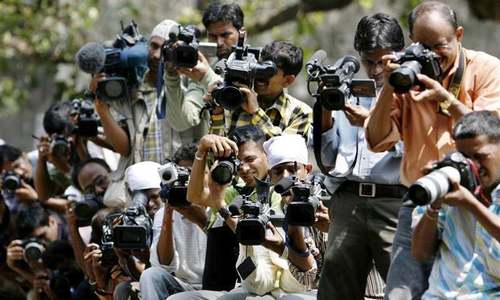
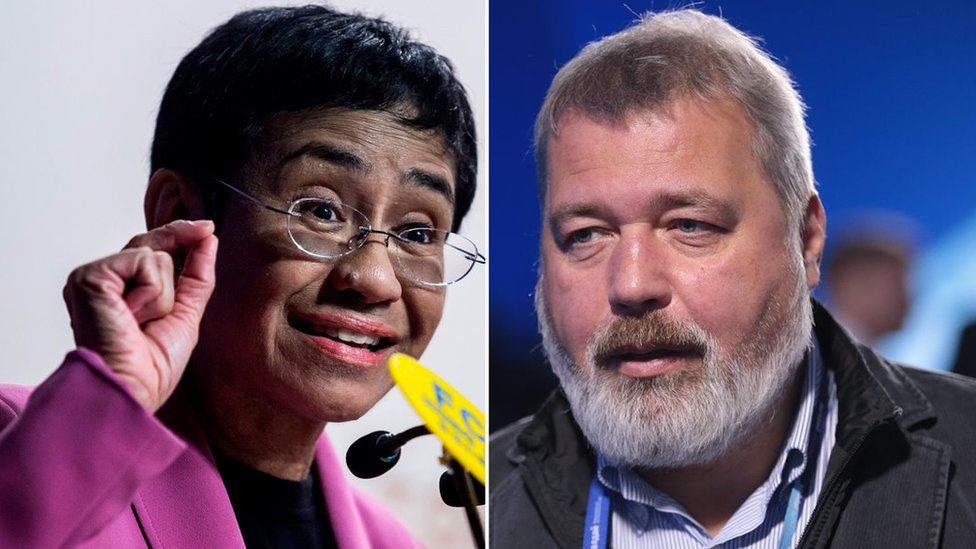
    The importance of free media and freedom of expression was highlighted once again when journalists Maria Ressa and Dmitry Muratov won the Nobel Peace Prize for their fights to defend freedom of expression in the Philippines and Russia. Both of them have done work that led to threats from the rulers of their respective countries.

    The Norwegian Nobel Committee said in a statement that Ressa and Muratov won the Nobel for “their efforts to safeguard freedom of expression, which is a precondition for democracy and lasting peace”. The statement added that “they are representatives of all journalists who stand up for this ideal in a world in which democracy and freedom of the press face increasingly adverse conditions”.

    It is an honour for journalists around the world that people of their fraternity were awarded the most prestigious award for standing up for free media. At a time when journalists are facing problems and many countries are clamping down on free media, it gives journalists more strength and courage when their struggle is recognised. 

    Read more- Journalists Maria Ressa and Dmitry Muratov win 2021 Nobel Peace Prize

    Unfortunately, like many other countries, the space for free media is fast shrinking in Pakistan. The government claims that the Pakistani media is more independent than even western countries but the fact of the matter is that censorship has increased over the years, journalists have faced physical attacks in the capital but no one has been arrested, and relentless attacks against journalists continue online as well.

    The government claims that they do not shy away from sharing facts with the media but in a recent report published in The News, it says that when Geo News sent approximately 400 different queries to 36 key institutions in the past nine months under the Right to Information (RTI) law but 90 per cent of them were either not responded to or simply declined by them. Only 43 (10 per cent) queries were partially responded to by them through either very little or patchy information in 2021.

    It is pertinent that the government realises that the media is not its enemy. Media will act as a watchdog and it is media’s job to report the truth. Journalists will continue to do their job and such tactics will not make them stop. A free and vibrant media is critical for democracy. One should believe in more freedom, not less. Long live media freedom.
  • Forgiving TTP: Never forget!

    Forgiving TTP: Never forget!

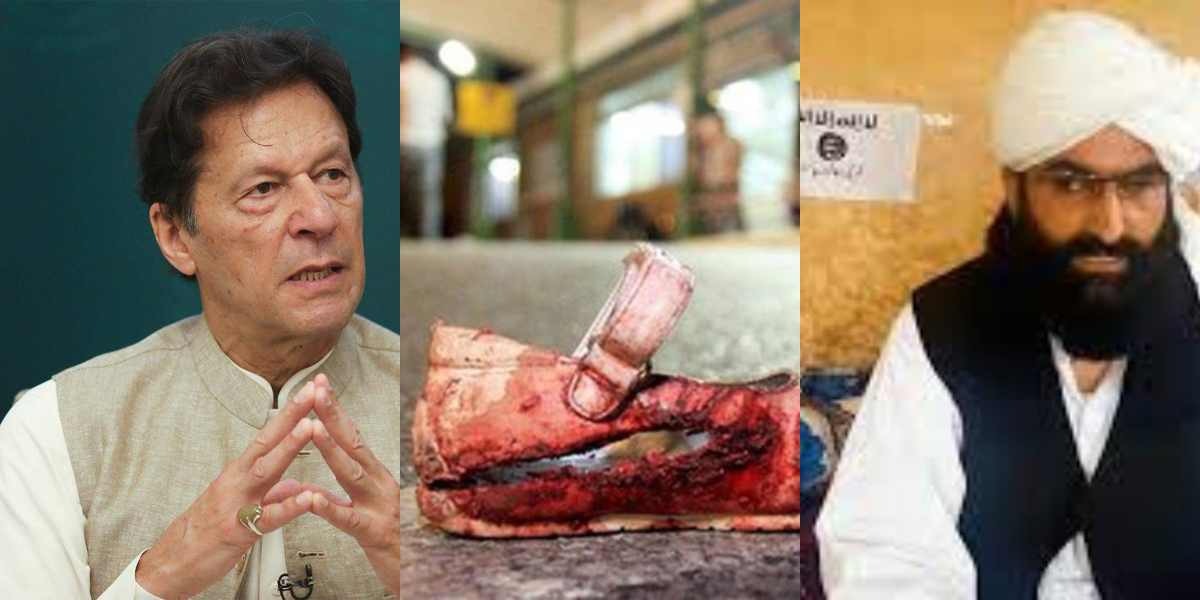
    Prime Minister Imran Khan has said that the government is in talks with some groups of the banned militant outfit, Tehreek-e-Taliban Pakistan (TTP). In an interview with TRT World, PM Khan said there are different groups that form the TTP and some of them want to talk to our government for peace. “So, we are in talks with them. It’s a reconciliation process.” Before PM’s interview, both President Arif Alvi and Foreign Minister Shah Mahmood Qureshi had talked about giving amnesty to TTP members if they lay down their arms and follow the Constitution of Pakistan.

    These statements warrant a lot of questions: why did the president, prime minister, and foreign minister disclose such important information in interviews to media outlets and not in parliament? TTP is no ordinary terrorist outfit. The entire country came together after the horrific APS attack in December 2014, in which more than 150 people were martyred – most of them children. All the political forces of Pakistan reached a consensus, after which the National Action Plan (NAP) came about. There was a massive crackdown on TTP and other terrorist outfits. We finally managed to eliminate the TTP in Pakistan. Those from the TTP who survived the crackdown ran away to Afghanistan. At that time, the government in Kabul was not friendly towards Pakistan.

    The state told us that the TTP was supported and funded by India and Afghanistan – when Ehsanullah Ehsan first surrendered to Pakistan, he confirmed in a video that Afghan and Indian intelligence agencies [RAW and NDS] gave funds and other assistance to Pakistani Taliban to fight Pakistan. Last year, after sharing a dossier containing ‘irrefutable proofs’ of Indian funding of terrorism in Pakistan, Shah Mahmood Qureshi said: “The [specific] evidence presented by Pakistan provides a concrete proof of Indian financial and material sponsorship of multiple terrorist organisations, including UN-designated terrorist organisations Jamaat-ul-Ahrar, Balochistan Liberation Army and Tehreek-e-Taliban Pakistan.”

    What is the reason for Pakistan to hold talks with a RAW and NDS-funded/supported terrorist outfit when we have broken its back in our country? And now that we have a friendly government in Kabul, what is the need to hold talks with an enemy outfit? Should the Afghan Taliban not help reign in the TTP and take action against those who are carrying out attacks against Pakistan from Afghan soil? Or, is it true that the Afghan Taliban and the Pakistani Taliban both have the same ideology, even if the targets of their attacks are different? The people of Pakistan – who have been killed and maimed by the TTP over the years – deserve an answer.

    The government needs to be transparent. This decision cannot be taken just by the government alone. All political parties must have a debate on this issue and the people of Pakistan have to be taken on board as well. We cannot forget what the TTP did to our nation. We lost more than 70,000 lives at their hands. There must be a consensus about the talks and also the government should be transparent about the negotiations. Don’t keep us in the dark, dear government, for we were told that we will never forget their heinous crimes.

  • New Zealand’s disappointing decision

    New Zealand’s disappointing decision

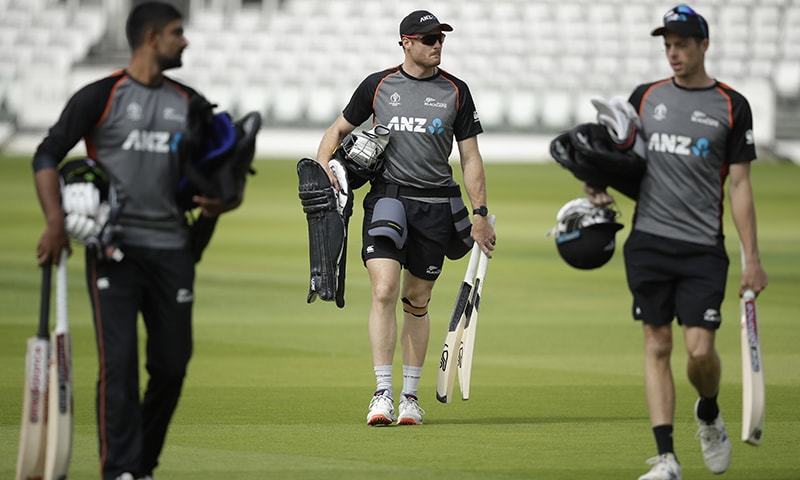
    Yesterday was a dark day for Pakistan cricket when New Zealand unilaterally decided to abandon the Pakistan series over “security threats” just minutes before the first One-Day International (ODI) match was about to begin in Rawalpindi. This decision was taken without sharing any details of the security threat with the host country. New Zealand was visiting Pakistan after 18 years.

    Chairman Pakistan Cricket Board (PCB) Ramiz Raja tweeted how frustrating it was and said that New Zealand will “hear us at ICC”. Prime Minister Imran Khan also spoke with his New Zealand counterpart Jacinda Ardern but could not convince her to reconsider this unilateral decision. “When I spoke with the Prime Minister of Pakistan, I conveyed our thanks for taking care of the New Zealand Cricket team. I know how disappointing it will be for everyone that the game hasn’t gone ahead, but we totally support the decision that’s been made. Player safety has to be paramount,” PM Ardern told Reuters.

    New Zealand’s decision is a huge blow and setback to Pakistan cricket. The terrorist attack on the Sri Lankan cricket team in Lahore in March 2009 left Pakistan cricket in chaos for years. There were no international cricket matches in Pakistan and it took us many years to convince smaller cricketing nations to gradually but surely bring back cricket to Pakistan. Former PCB Chairman Najam Sethi managed to convince teams and international players to visit Pakistan. Our security forces, police, cricket management, and many others made sure that all visiting teams and players were given fool-proof security, even if it meant shutting down cities.

    Cricket fans did not complain about the inconvenience either because they understood how vital it was to make the visiting teams feel safe so as to make sure that international cricket properly returns to Pakistan. This year was going to be extremely important with New Zealand and English cricket teams’ tours. Next year, Australia is also supposed to tour Pakistan. Now – with New Zealand abandoning its tour – the England tour is also up in the air for another 24 hours as the England and Wales Cricket Board (ECB) said yesterday that due to the security threat to New Zealand, the ECB will “decide in the next 24-48 hours whether our planned tour should proceed”.

    PCB officials told Dawn that Pakistan will suffer financial losses in millions. And it is not just about the financial loss but the loss of so many years of efforts made by the security officials, PCB, Pakistani players, and many other unsung heroes who made sure that cricket comes back to Pakistan. Pakistani cricket fans are disappointed, angry and depressed, and rightly so. We know that Pakistan cricket will overcome this. But it hurts. Pakistan Zindabad!

  • Pakistan judiciary’s missed moment

    September 9, 2021, could have been a historic day for Pakistan had Justice Ayesha Malik of the Lahore High Court (LHC) been elevated to the Supreme Court (SC). Unfortunately, the Judicial Commission of Pakistan (JCP) could not elevate the first woman judge to the country’s highest court due to an equal split in voting with four votes in her favour and four against her elevation. An elevation requires a majority vote by JCP members. Justice Qazi Faez Isa, who is also part of the JCP, could not attend the meeting as he was out of the country for his wife’s medical treatment. He could have voted in writing or through a video link.


    According to the Human Rights Watch (HRW), Pakistan is the only nation in South Asia to have never had a female Supreme Court judge. HRW also says that only about four percent of Pakistan’s High Court judges are women. “Of the 3,005 Pakistani judges in the lower and higher courts, only 519 – or 17 percent – are women.”


    It just shows how — like other professions in the country — the legal fraternity, too, suffers from gender imbalance and gender inequality. It is unfortunate that an institution that has to dispense justice to society is bereft of doing justice to the women in the legal fraternity. If a woman judge cannot make it to our top court, how are we to expect a just system for women who face extensive abuse in the country? When there is so much sexism in the country, so much misogyny all around us, a woman making it to our top court would have given us some confidence in our systems, in our institutions. It is a sad reflection of our society that when it comes to equal participation of women in courts, men get to decide their fate. Not one single member of the JCP is a woman. The decision-making for such high offices is left in the hands of a few men. 


    Some in the legal fraternity say that the process of judges’ appointments is problematic and should be more transparent instead of a pick and choose a principle that is being applied at the moment. We hope that the judiciary and bars and the legal fraternity will address these issues, resolve them and also make sure that women are equally represented in Bars as well as the judiciary. And we hope that Justice Ayesha Malik will be nominated again to the apex court. It is the 21st century and our judiciary should not be seen as a boy’s club. More power to Justice Ayesha Malik!

  • PMDA: Why all the secrecy?

    PMDA: Why all the secrecy?

    The mystery shrouding the elusive proposed draft of the Pakistan Media Development Authority (PMDA) is quite intriguing. Some consultations have been held with journalists, civil society members, and parliamentarians but without a copy of the proposed draft. Members of the National Assembly (NA) Standing Committee on Information and Broadcasting on Thursday demanded that the draft be shared instead of verbal briefings by the Information Ministry. Chairman of the NA standing committee Mian Javed Latif then formed a sub-committee, which will be headed by Marriyum Aurangzeb with Nafisa Shah and Kanwal Shozab as its members. Let’s see if the proposed draft will now be shared with the sub-committee. 


    Last month, representatives of media organisations issued a joint statement that rejected the proposed media authority. They said that it was unconstitutional and deemed it as a draconian law. It seems that this is yet another tactic by the government to curb media freedom. Human Rights Watch (HRW) recently also issued a statement on the PMDA saying that the Pakistani government is “seeking broad new powers to control the media as part of its crackdown on freedom of expression. Journalists, human rights activists, and political leaders across that country have raised the alarm about proposed legislation that would bolster powers of the government to censor and restrict the media.” The government reacted to HRW’s statement by issuing a rejoinder through the Pakistan Embassy in the US challenging the human rights organisation’s assertions on PMDA. Patricia Gossman, HRW’s associate director for the Asia division, asked for a draft, which has so far not been shared with anyone. 

    It is quite worrying that in a country where media freedom is already quite curtailed, where interviews have been stopped from going on air or stopped mid-way, where anchors have been taken off-air, where there are now so many red lines that media organisations have to tread very carefully, where attacks on journalists have become frequent and culprits are still at large, where online trolling of journalists has become a norm, where the government issues reports of social media trends and hashtags it deems anti-state, where government officials keep on targeting journalists and media organisations without any shred of evidence, a new media authority with immense powers is being proposed without sharing the details of the proposed law and/or taking the main stakeholders on board.


    We hope that the government will share the proposed draft with all stakeholders so that the mystery shrouding this media authority ends once and for all. There is already a lot of mistrust between the government and the media. We hope the government will listen to the legitimate concerns of media organisations and not dismiss them. A free and independent media is essential for any democracy. Pakistan is a democracy and we hope the government will not undermine it in any way. 

  • Stop moral policing

    Stop moral policing

    One of the favourite pastimes in Pakistan seems to be moral policing. We really don’t believe in the principle of ‘live and let live’. No, we have to interfere in others’ lives, we have to comment on others’ life choices, we have to judge everyone around us and we have to somehow make life difficult for others. 


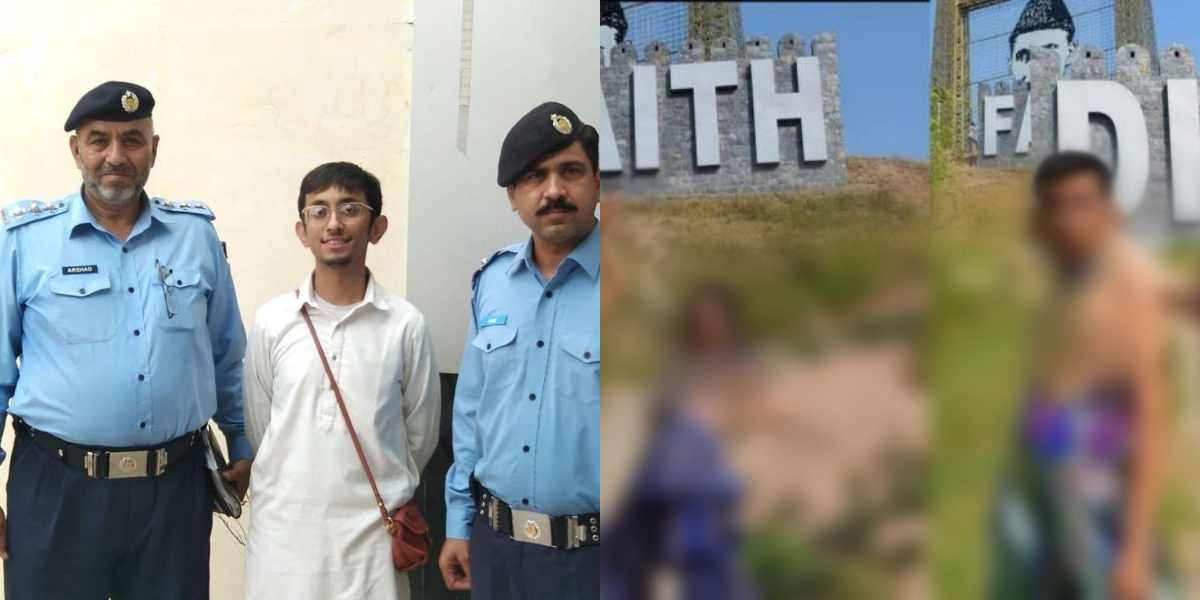
    Just recently, we saw social media outrage regarding a photoshoot that was deemed ‘obscene’ by senior journalist Ansar Abbasi. Mr Abbasi somehow keeps finding everything ‘obscene’ under the sun, be it a video, an advertisement, a YouTube show, a photoshoot — you name it and Mr Abbasi has seen it. Mr Abbasi tweeted to Deputy Commissioner (DC) Islamabad that the couple must be arrested as they “displayed extreme obscenity in public in the federal capital”. As if on cue, DC Islamabad asked people to share any information they had about the couple and/or photoshoot. Both of them did not think for a second how they could be endangering the lives of the young girl and boy in the pictures. We live in a society that believes in mob justice. But our senior journalists and officials really don’t care, it seems. 


    The Islamabad police booked the couple for an indecent photoshoot under Section 294 of the PPC, which makes “engaging in obscene acts, or singing, reciting or uttering obscene songs, ballads or words, in or near any public place, to the annoyance of others, an offense punishable with imprisonment for a term which may extend to three months, or with fine, or with both”. The law is so vague that anything can be deemed obscene as there is no clear definition of the word in PPC. And this is why it was used against the kids in the photoshoot.


    At around 5:30am on Tuesday (August 24), 10 police officers — one SHO, one ASI, and eight constables — reportedly arrived at the house of the boy, Zulfi, in Lahore to arrest him. They had come to arrest him from Islamabad. The boy’s lawyers got a protective bail from a court so he could not be arrested. But look at the priorities of our state that 10 police officials were sent to Lahore to arrest someone for a photoshoot. A photoshoot!!! Let that sink in. Zulfi is not a terrorist, not a murderer, not a rapist, not a child abuser, but an activist. And the police wanted to arrest him for a photoshoot. We must thank the Islamabad Police for making us feel so safe.

    A woman was assaulted by hundreds of men at Minar-e-Pakistan and the police did not come to help her despite calls, another woman was forcibly kissed by a man while sitting in a rickshaw but nobody helped her, but one photoshoot and one tweet by a vigilante journalist and our police can swiftly be seen in action. 
    We hope that our officials would stop moral policing and let people express themselves however they want. There is already so much intolerance around us. Do not make this society more suffocating than it already is.

  • Pakistan has failed its women

    Pakistan has failed its women

    Just this week, we wrote about the heart-wrenching incident of sexual assault and harassment of a woman at Minar-e-Pakistan on August 14. As if this was not enough, two new videos surfaced yesterday — one in which a woman was forcefully kissed by a man when she was travelling on a Chingchi rickshaw on August 14.

    The man jumped on the Chingchi while it was stuck on the road due to traffic and tried to kiss the woman and we heard another woman’s scream, who was sitting with her. Another video shows a mob trying to harass a woman at Minar-e-Pakistan and she is only saved because she keeps waving a stick to disperse them and keep them at bay. 


    When we say that the women of Pakistan feel unsafe, we hear that these are just odd incidents and should not be used to distort the image of Pakistan. What exactly is the image of Pakistan if women of the country are being harassed, assaulted, and attacked every single day, in multiple incidents? These are not odd incidents. These incidents and their aftermath depict the reality of Pakistan: women are blamed after each incident.


    A TikToker gets sexually assaulted by hundreds of men for more than two and a half hours at Minar-e-Pakistan and no one helped her but she is blamed for going there for a meet and greet session with her fans. So, is a meet and greet session now forbidden for women in Pakistan, and does it warrant hundreds of men sexually assaulting a woman? When Noor Mukadam was beheaded, the women of Pakistan demanded justice. But there were those who started blaming a dead woman for being killed: ‘Why did she go there, why was she with a man alone, she had no family values.’ These were the disgusting comments being made to justify — JUSTIFY — a gruesome murder of an innocent woman. 


    When we hear such comments even after the most heinous crimes, it shows that Pakistan is no place for women. We do not respect our women. We do not like independent women. We dislike opinionated women. We justify crimes against women. We blame women for society’s ills. 


    Our leaders pass extremely violent and misogynistic comments against their women opponents and are still lauded instead of being reprimanded. When our top leader issues a rape apology, he is defended by women parliamentarians. When such is the attitude of the people on top, imagine what message it gives to the common people. They think they can do anything with women and get away with it. And they do get away in almost all cases. 
    This is our sad reality. Dear women of Pakistan, we are sorry. We have failed you.

  • Enough!

    Pakistani women are angry and rightly so. We feel violated, we feel triggered, we are seething, we are shouting but we feel as if no one listens. Every day, there is a hashtag asking for justice for women who have been victims of abuse, domestic violence, sexual violence. We are not mere hashtags; violence against women in Pakistan is an epidemic now. 


    On August 14, a female TikToker was sexually assaulted and harassed by hundreds of men at Minar-e-Pakistan in Lahore. An FIR has been registered. Prime Minister Imran Khan and Punjab Chief Minister Usman Buzdar have vowed to catch the culprits. But is this enough? No, it is not! A woman was groped, assaulted, harassed for more than two hours by 300-400 men and nobody could stop it. Let this sink in. Hundreds of men and more than two hours! Imagine her trauma, imagine her pain, imagine her helplessness, imagine how she has been scarred for life. We cannot even imagine what she must be going through and can only show solidarity with her by our words. The state has to act against the culprits who committed this heinous crime. 

    We are angry because there is a societal and systematic rot that we must fight every second, every minute, every hour, every day! Women in Pakistan are not safe in their graves, they are not safe in public spaces, they are not safe in their homes, they are not safe in their cars, they are not safe. Period.
    This is a country where the prime minister says that if a woman is wearing very few clothes, it will have an impact on men unless they are robots. When he is called out for being a rape apologist, women parliamentarians come out to defend his statement. When he later changes his stance and says that no matter what a woman wears or “how provocative she is”, the person who commits rape is responsible, we are told that his statement is a “slap in the face of the detractors and critics”. Should we celebrate that the prime minister did not indulge in victim-blaming again and for once laid the responsibility on the perpetrator instead of women? We live in a society where women are blamed for stepping out of their house, for their dress, for just being a woman! When women question this mindset, all we hear are justifications for the crime! 


    Let it be said once and for all: ENOUGH! We have had enough of this. We ask our state and our leaders and our society to end this epidemic. 

  • Anti-state trends

    Anti-state trends

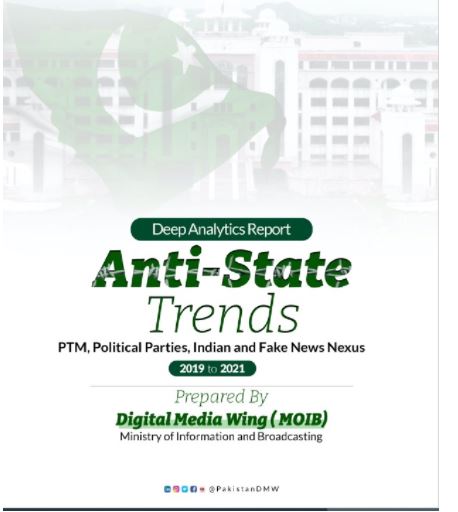
    Earlier this week, a report was released by the Digital Media Wing (DMW) of the Ministry of Information and Broadcasting titled, ‘Anti-State Trends: Deep Analytics Report’. The report had glaring errors as it tried to ‘analyse’ hashtags on Twitter to determine anti-state activities. The Current published an analytical report after going through the report page by page. The report mostly had screenshots of tweets that the government has deemed ‘anti-state’ and included tweets that were responding to some hashtags. Some hashtags in the report were there just for the sake of putting them there and labelling people ‘anti-state’. Information Minister Fawad Chaudhry has clarified that no Pakistani was declared anti-state in the DMW report but it was done to expose Indian bots. A disclaimer was also added after journalist Fereeha Idrees raised the issue as her name was also part of the report. Despite the disclaimer, the report’s name and a press conference by the Information Minister as well as National Security Adviser Dr Moeed Yusuf show that the government takes Twitter too seriously, as seriously as it takes media criticism.


    Leaders of the Pakistan Muslim League-Nawaz (PML-N) slammed the report for including journalists and political opponents in this report. It is indeed worrying that this trend of dishing out patriotism certificates has not stopped despite the fact that we have seen how dangerous it can be. Today is Pakistan’s Independence Day. We hope that our leaders will understand that all Pakistanis love Pakistan and their love or dissent does not mean it makes their patriotism any less. We all want Pakistan to prosper and we should not think that criticising the flawed policies of a state does not mean that such people should be labelled ‘traitors’ or ‘anti-state’. These tags have very serious repercussions in Pakistan.

    It was also disturbing to see that the Noor Mukadam case was also mentioned in the report just because Indian channels also made reports about the case. It should not have been part of the report. The US did not call the Black Lives Matter movement ‘anti-state’. It was covered the world over. A state should not be so insecure. Dissent is a fundamental part of strengthening democracy. On this Independence Day, let us hope our leaders are more tolerant of dissenting views and objective criticism. Pakistan Zindabad!

  • ‘Restore the Mandir’: minority rights in Pakistan

    ‘Restore the Mandir’: minority rights in Pakistan

    A week from now, Pakistan will be celebrating 74 years of independence from the British. Quaid-e-Azam Muhammad Ali Jinnah, in his August 11 address to the Constituent Assembly, promised the people of Pakistan that we will live in a country where there will be religious freedom and no intolerance. “You are free; you are free to go to your temples, you are free to go to your mosques or to any other places of worship in this state of Pakistan. You may belong to any religion or caste or creed — that has nothing to do with the business of the state,” said the Quaid. Our founder was a great proponent of minority rights but it seems that the people of Pakistan do not want to pay any heed to his words.

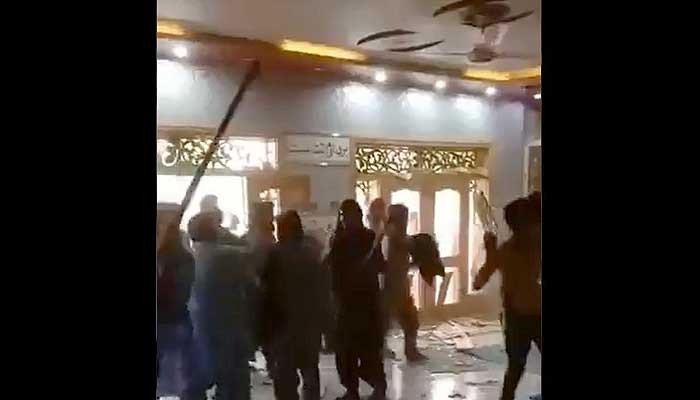
    On Wednesday, a mob attacked a Hindu temple in Rahim Yar Khan district after a court granted bail to an eight-year-old Hindu boy who was accused of allegedly urinating in a local seminary. The main door of the temple was burned down and statues of Hindu deities were also damaged. Prime Minister Imran Khan condemned the incident and ordered the police to take action against the culprits. PM Khan also announced on Twitter that the government will “restore the Mandir”. Chief Justice Pakistan Gulzar Ahmed reprimanded the police and the local administration for just standing there and watching. CJP Gulzar also said that we should imagine what would have been the reaction of Muslims, had a mosque been demolished like the Hindu temple was. The Supreme Court also directed the police to arrest the culprits.

    This is not the first temple attack in Pakistan. Since last year, there have been several attacks on temples all across the country. August 11 has been declared as the National Minorities Day in Pakistan since 2009. Imagine, how our Hindu brethren would have felt that their place of worship was attacked just days before we pay lip service to the rights of minorities. As per the 6th Population and Housing Census 2017, there are 96.47 per cent Muslims in Pakistan. As for the minorities, there are 1.27 per cent Christians, 1.73 per cent Hindus, 0.09 per cent Ahmadis, 0.41per cent scheduled caste, and 0.02 per cent others. In a country dominated by Muslims, why can we not respect the rights of other religious minorities? It is unfortunate how we continue to fail our own citizens, our minorities. We hope the authorities will arrest the culprits and the government will protect our minorities.