Category: Editorial

  • Gaza under attack

    Gaza under attack

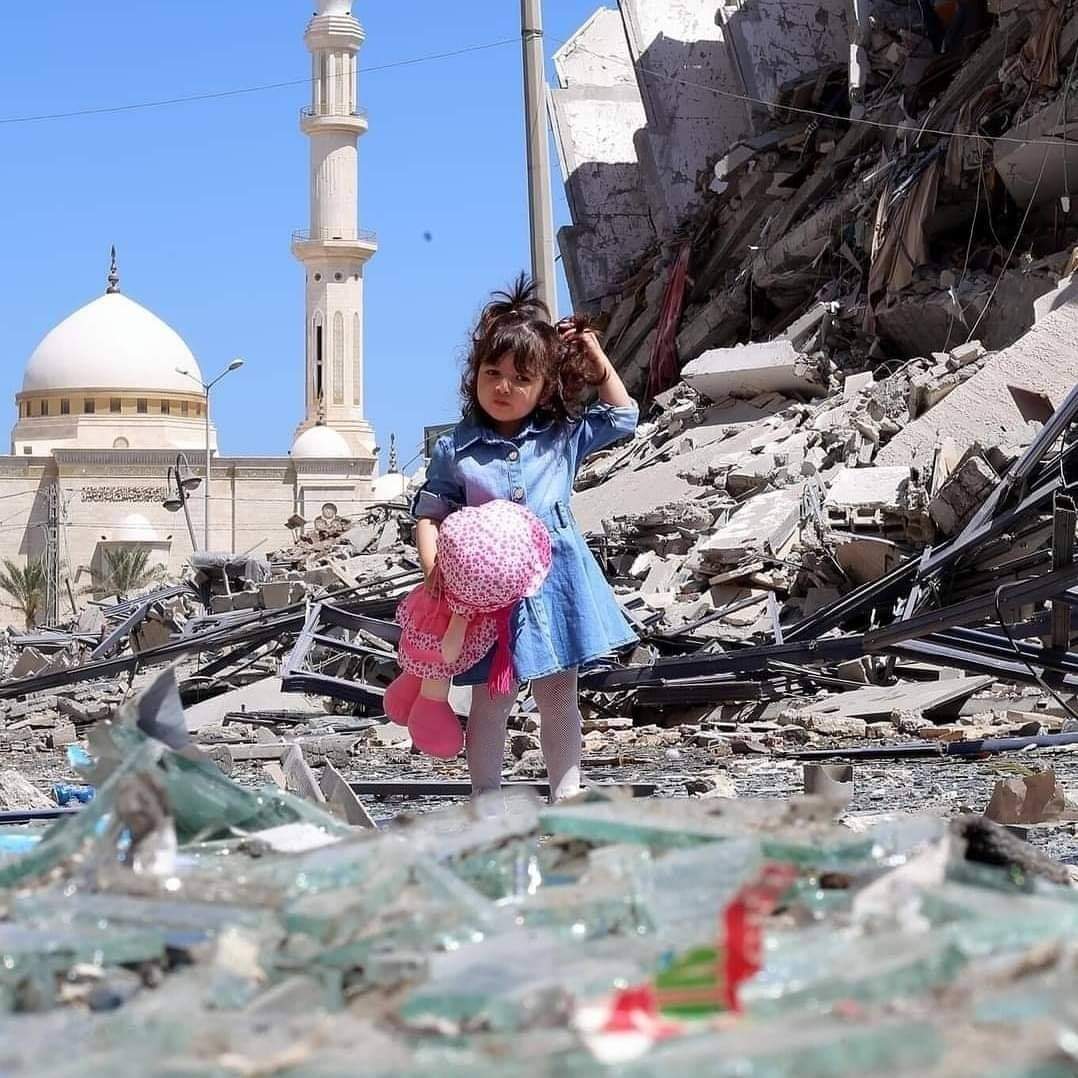
    Israeli airstrikes on Gaza City demolished three buildings and killed at least 33 people on Sunday, including12 women and eight children. This has been one of the deadliest attacks since the start of the recent attacks against Palestinians by the Israeli forces.

    On May 12, Israeli airstrikes a building in Gaza that housed the offices of 14 media organisations. According to a report in TRT World, on May 7 and May 10, Israeli security forces fired rubber bullets and injured at least eight Palestinian and international journalists covering the protests at the Temple Mount complex and Al Aqsa mosque.

    Yesterday, Israeli forces a building in Gaza that housed several media outlets, including Al Jazeera and the Associated Press (AP). A statement by AP President and CEO Gary Pruitt said: “We are shocked and horrified that the Israeli military would target and destroy the building housing AP’s bureau and other news organisations in Gaza.” White House Press Secretary Jen Psaki tweeted that the US government “communicated directly to the Israelis that ensuring the safety and security of journalists and independent media is a paramount responsibility”.

    These words by the White House Press Secretary sound hollow because ever since the Israelis started attacking hapless Palestinians during the Holy month of Ramzan, the international community, especially the US, has not condemned Israel for its aggression. We did not hear the US or others condemn the attack on journalists when Arab journalists in Palestine were being attacked by the Israeli forces. The way the Al Aqsa mosque was stormed by the Israeli forces during the final Friday prayers in Ramzan, the way the unarmed Palestinians were sprayed with rubber-coated steel bullets and tear gas, the world community should have condemned it unequivocally. But what do we hear: US President Joe Biden saying: “Israel has a right to defend itself.” There was no mention of how Israel is an occupying force that will continue to attack and kill unarmed civilians, including children.

    In a report released last month, the Human Rights Watch said Israeli authorities are committing crimes against humanity of apartheid and persecution. The 213-page report titled, ‘A Threshold Crossed: Israeli Authorities and the Crimes of Apartheid and Persecution’, should be read by every world leader in order to understand the gravity of the situation. Today, the Organisation of Islamic Cooperation (OIC) has opened an emergency meeting over the situation in Palestine. Several countries that are part of the OIC have recently had recognition deals with Israel. No wonder we have seen a muted response from those countries. Pakistan has been asking the world to come to the aid of Palestine and stop this madness. Unfortunately, the world has become a silent spectator when it comes to Israel’s war crimes. Silence is not an option. We all must speak up for Palestine.
  • Modi Administration exposed – India’s COVID crisis

    Modi Administration exposed – India’s COVID crisis

    The visuals from our next-door neighbour, India, are just horrendous. The record-breaking surge in coronavirus cases and the reports from India have left the entire world in shock. According to the Indian health ministry, 3,689 people have died within the past 24 hours. Last month, India became the first country in the world to register over 400,000 coronavirus infections in a single day. The situation in India continues to get worse. The second wave of coronavirus has exposed the Modi administration.

    The Modi administration gravely mishandled the COVID-19 crisis in India. From declaring a premature victory after the first wave, the Modi government is now downplaying the crisis. According to a report published in the New York Times, “Interviews from cremation grounds across the country, where the fires never stop, portray an extensive pattern of deaths far exceeding the official figures. Nervous politicians and hospital administrators may be undercounting or overlooking large numbers of dead, analysts say. And grieving families may be hiding Covid connections as well, out of shame, adding to the confusion in this enormous nation of 1.4 billion.”

    We have seen how journalists in India are being attacked online for telling the truth. The Modi government, it seems, is more worried about its international image than handling the crisis. From pro-Modi actors like Kangana Ranaut to media channels like Times Now to websites acting like the government’s mouthpieces, we have seen journalists Rana Ayyub and Barkha Dutt being attacked for their journalism. What is worse is how Indian government is also directly involved in intimidating those critising it. The police in Uttar Pradesh (UP) – a state run by BJP’s Yogi Adityanath – filed a criminal case against a man who used Twitter to appeal for an oxygen cylinder for his grandfather. CM Adityanath also asked the UP administration to “crack down” on hospitals that discharge patients due to shortage of oxygen or “complain” about it to the media. Just a week ago, India’s Ministry of Electronics and Information Technology said it had asked Twitter, Facebook and other social media platforms to remove some posts “in view of the misuse of social media platforms by certain users to spread fake or misleading information”. Such sort of censorship and intimidation just points to one thing: the Modi government is more interested in its image-building than addressing the disastrous COVID-19 crisis. Hospitals across India have run out of beds, oxygen supply is dwindling, the vaccination rollout programme is slow. All of this combined with election rallies and large gatherings that were allowed by the government in recent months led to catastrophic results.

    Pakistan government has offered relief and support to India. Prime Minister Imran Khan as well as others expressed their solidarity with India in this difficult time. We hope and pray that the situation changes for the better in India. 

  • The deadly COVID-19 third wave

    The deadly COVID-19 third wave

    On Sunday, 5,611 people tested positive for COVID-19. The third wave of coronavirus seems to be spreading quite fast. On Saturday, 157 people died due to coronavirus in Pakistan. This was the highest number ever recorded since the pandemic broke out in the country. Last year the highest number of deaths was 153 in June. 
    On the other hand, people are not following basic SOPs like wearing masks or sanitising hands or maintaining social distancing. The interior ministry has notified army deployment for the implementation of COVID-19 SOPs. Hopefully, people will now follow SOPs. 

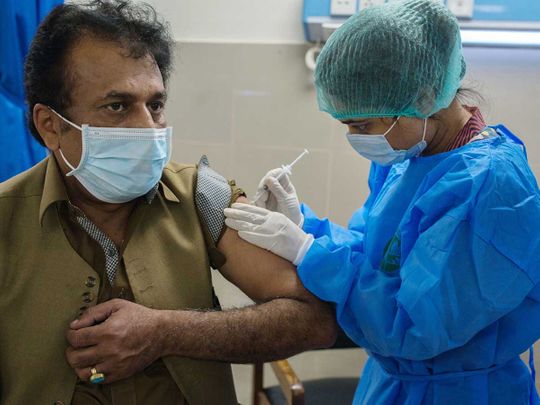
    In the wake of the third coronavirus wave, the government has started walk-in vaccination for those between the age of 60 to 64. But the problem is that the vaccination process in Pakistan is quite slow. According to a report in Dawn, if Pakistan continues its vaccination drive at this rate, “it will take more than three years to cover 20 per cent of the country’s population”. Even the private vaccines are not much in numbers. Unless and until we accelerate our vaccination drive, it will be very difficult to deal with this pandemic.
    We have seen how horrible the situation is in neighbouring India. Prime Minister Imran Khan and several cabinet ministers as well as many Pakistanis expressed their solidarity with India. Foreign Minister Shah Mahmood Qureshi tweeted: “As a gesture of solidarity with the people of India in the wake of the current wave of COVID-19, Pakistan has officially offered relief and support to India, including ventilators, Bi PAP, digital X-ray machines, PPEs and other related items.” Qureshi added that Pakistan believes in a policy of humanity first. 
    We should not take the situation in India lightly. No hospital beds and acute oxygen shortage in India is scary. Unfortunately, the hospital capacity in Pakistan as well as oxygen supply is  also reaching its capacity. Some hospitals in cities like Islamabad are full. ICU beds were more than 90 per cent full a few days ago in Lahore. Oxygen supply ended in two hospitals in Quetta. This is all frightening but real. 
    We need to be more careful and follow SOPs strictly while the government needs to focus more on the vaccination process.

  • Cabinet reshuffle, again

    Cabinet reshuffle, again

    The Pakistan Tehreek-e-Insaf (PTI) government has had another cabinet reshuffle this past week. The news of another reshuffle was doing the rounds for some weeks and finally it was announced on Friday, April 16. Except for one new but expected addition, all other portfolios have been given to already serving cabinet ministers. Only their portfolios have been changed.

    Hammad Azhar, who had just been appointed the finance minister less than three weeks ago after the ouster of Hafeez Shaikh, has now been removed and given the portfolio of energy. Shaukat Tarin, who served as the finance minister in the Pakistan People’s Party (PPP) regime, has been appointed as minister for finance. He has been given the additional charge of revenue as well. Tarin is the fourth finance minister under the current regime and the second ex-PPP finance minister after Shaikh. Asad Umar was originally appointed the finance minister by PTI before being removed unceremoniously after a few months into his tenure whereas Hammad Azhar’s stint as finance minister was the shortest of all in this government. Tarin will be finance minister for at least six months and then the government will have to get him elected for him to remain in the ministerial position. Tarin has been extremely critical of PTI’s economic management. We will have to wait and see how he turns around the economy.

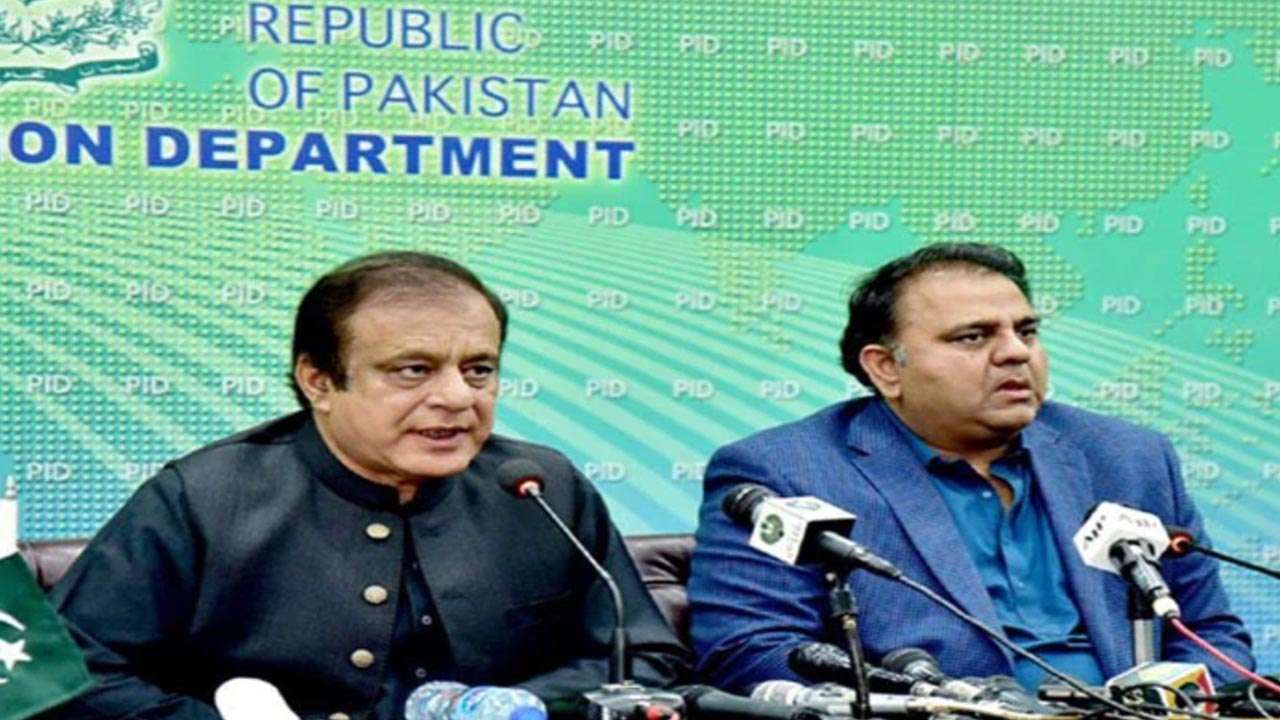
    Omar Ayub has been made the minister for economic affairs; he was previously energy minister. Khusro Bakhtiar, who held Ayub’s portfolio has now been given the portfolio of industries and production – a portfolio held earlier by Hammad Azhar, who now has Ayub’s portfolio. If this does not make your head hurt, do not fret for we now have Fawad Chaudhry back as the Information Minister while his ministry – Science & Technology – has been given to former information minister Shibli Faraz. Musical chairs, much?

    Fawad Chaudhry was an asset as the information minister when the PTI government came to power but he was replaced by Dr Firdous Ashiq Awan. Shibli Faraz later replaced Firdous. Chaudhry is the fourth – yet the original – information minister. When Chaudhry took on the science ministry, he brought his ministry to the limelight by starting many new projects. One of Chaudhry’s feats was his tussle on moonsighting for Ramzan and Eid with Mufti Muneeb. Chaudhry won in the end through his use of technology. Unfortunately, the new science minister Shibli Faraz thinks that moonsighting and the use of technology for this should not be the science ministry’s concern. We hope that Faraz will not rollback all the good work done by Chaudhry.

    We also hope that we will not need a new finance minister or a new information minister anytime soon.

  • Covid-19: Rising cases and vaccination process

    Covid-19: Rising cases and vaccination process

    Yesterday there were 3,568 Covid-19 patients in critical care in Pakistan, tweeted Asad Umar.

    “This is the highest number since covid started.”

    The Sindh government has also decided to suspend physical classes till grade 8 of all schools — public and private— for 15 days starting from April 6.

    Last month, Federal Education Minister Shafqat Mahmood had announced that all educational institutions will remain closed till April 11 in all districts where corona positivity and infectivity rate was high. According to a report in Dawn, a total of 19,367 under-18 children have tested positive for the coronavirus in Punjab so far. A large number of recent cases amongst minors and teenagers have contracted the UK-variant in the past three months.

    The third wave of coronavirus in Pakistan is turning out to be extremely dangerous. It is indeed spreading like wildfire across the country. NCOC recently banned wedding functions — both indoor and outdoor — from April 5 onwards in areas with a three-day rolling average of an 8 per cent positivity ratio. Many cities now have a high positivity rate. The UK government has now banned entry of passengers from Pakistan from April 9.

    The government’s vaccination programme for people above the age of 50 has been launched across the country. The Punjab government has launched a mobile vaccination service for senior citizens aged above 80 years and for differently-abled persons aged above 50 in four cities. Media reports say that while the government’s vaccination programme is going on smoothly, around 1,400 doses of the vaccine donated by China have either been administered to people out of turn or have went missing from three state-run hospitals in Lahore. Hopefully, such scams will stop now that private vaccines are also for sale.

    Privately-imported Russian vaccine Sputnik V is now available in a few cities in the country, including Karachi, Lahore and Islamabad. The cost of the vaccine has been fixed at Rs 12,268 for two doses. Some facilities are charging an additional amount to administer the vaccine. Those who are above the age of 18 can get the private vaccine if they can afford it. We hope that those who can afford it will get the vaccine and others who qualify for the government’s vaccine programme will also get vaccinated at the earliest.

    The pandemic is not going anywhere anytime soon. Despite this, we have seen how people are flouting SOPs. Markets are crowded with people who are not wearing masks and that is just the tip of the iceberg when it comes to SOPs violations. This can be dangerous. We must all act in a responsible manner and continue to follow SOPs — even after being vaccinated. This is the least that we can do.

  • PDM at war

    PDM at war

    The Pakistan Democratic Movement (PDM) is at war with itself, it seems. The opposition alliance that was formed last year as an anti-government alliance now seems to be fighting a battle within its ranks.

    The two largest parties — Pakistan Muslim League-Nawaz (PML-N) and the Pakistan People’s Party (PPP) — have had a falling out of sorts in recent weeks.

    While we saw over the months since the formation of the PDM that the PML-N leadership took a rather strong stand on the establishment meddling in politics, the PPP was being cautious when it came to naming anyone directly. The strategies of both parties also seemed to be different, which is understandable given the fact that PDM is a mix of different parties with different ideologies. But one of their common goals was to get rid of the government.

    There were of course differences in strategies as to how to do it: the PML-N and Maulana Fazlur Rehman believed in resignations but the PPP believes that it should be done within the democratic framework while remaining in the system. It is understandable that the PPP would not want to resign given that it is the only Opposition party that is in power in a province. It has more at stake in parliamentary system at the moment than other parties of PDM.

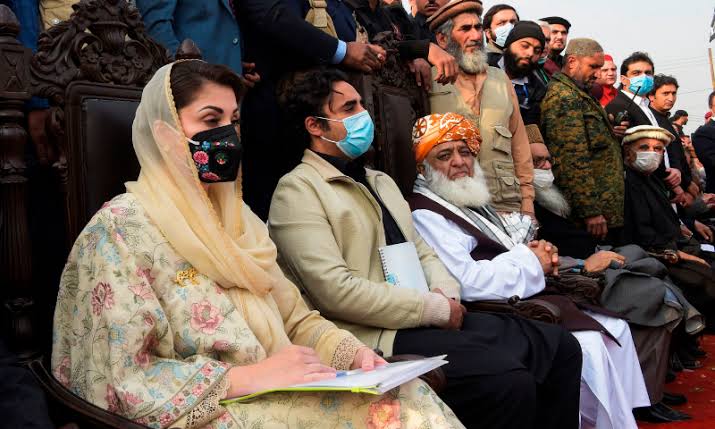
    These issues have now come back in public again after the recent PDM meeting where former president Asif Zardari asked former premier Nawaz Sharif to return to Pakistan when the issue of resignations from assemblies was proposed once again by the latter. What ensued was a public war of words. From a tweet by Maryam Nawaz warning PM Imran to be wary of a ‘substitute’ being fostered, to Bilawal Bhutto saying he will not respond to a PML-N vice president’s statement and his party VP could respond.

    Then Bhutto-Zardari said a family from Lahore has a track record of being selected, quite obviously taking a jibe at the Sharifs. Things escalated even faster when the PPP went against the consensus decision of PDM on the Leader of the Opposition in Senate being from the PML-N. First they said they do not agree on the name of Azam Nazeem Tarar as he is defending two police officers accused in Benazir Bhutto’s assassination case, who have been accused of negligence after her murder.

    The PML-N says that if the PPP could have a deputy PM who was directly nominated in BB’s letter, then why would they have an issue with Tarar’s name who is not defending any murderers. The PPP’s Yousaf Raza Gilani recently became the Leader of Opposition in Senate after securing votes from the government’s ally, BAP. Apart from the ANP and Jamaat-e-Islami, the rest of the Opposition parties supported Tarar in Senate.

    Now it remains to be seen whether the PDM decides that PPP will remain part of the Opposition alliance or not. The government, it seems, is having fun at the PPP’s expense. However, it is important that instead of this infighting, the Opposition parties should sit with the government and work on electoral reforms, accountability reforms, judicial reforms, among other things. Every democratic government must complete its tenure and bring about reforms.

    It is high time that the PDM stop thinking about a change in government and think long term so that it can benefit the system. Any elections without proper reforms would lead to finger-pointing by those who lose. It is important that all parties put aside their differences for the greater good of democracy.

  • Ignore conspiracy theories; get vaccinated!

    Prime Minister Imran Khan and First Lady Bushra Bibi tested positive for COVID-19 on Saturday. They are both self-isolating at home and are feeling “comfortable with mild symptoms” according to government spokespersons.

    the news of PM Imran testing positive was announced by Dr Faisal Sultan on Twitter, we saw that a lot of people started questioning the efficacy of the coronavirus vaccine as the premier had just been administered the first dose two days ago.

    It also led to a lot of conspiracy theories. In a country where the anti-vaxxers have led a vicious campaign against polio drops, it is extremely crucial that these myths be busted. Thus it was good to see the Government of Pakistan’s official social media accounts as well the Ministry of National Health’s social media account give a clarification about the vaccination process.

    They tweeted that PM Imran “was not fully vaccinated when he contracted the virus”. They explained that he only got the first dose merely two days ago, which is too soon for any vaccine to become effective. They also clarified that anti-bodies develop 2-3 weeks after the second dose.

    We have seen the mistrust surrounding the global pandemic in our country. When the pandemic broke out, many people bought into the false theories that this was some kind of conspiracy by the west. Then we saw how many people refused to follow SOPs like wearing masks because they thought it was just a “flu”.

    It was only when a strict lockdown was imposed and when we saw deaths around the world that it was taken seriously. Luckily, Pakistan managed to control the virus after the first wave. When lockdowns were relaxed, we saw another wave, though that too was relatively controlled. Now there is a third wave and this time the UK-variant, which is said to be quite deadly, has also been found in the country. The government has started a vaccination drive for the elderly — those who are above 60 are eligible and need to register themselves to get the vaccine.

    While many people have opted to get themselves vaccinated, there is still hesitation among some. And when the PM got COVID-positive, just two days after his first vaccine dose, it led to some unbelievable theories.

    The government has so far countered the false propaganda about vaccines but it should also start countrywide awareness campaigns busting these myths.

    We hope that all those affected by coronavirus remain healthy. Our prayers are with the PM and First Lady as well as all patients. And we hope that all those who are eligible for vaccination do get vaccinated at the earliest.

  • Endangering innocent lives

    Endangering innocent lives

    Aurat March has rattled many a misogynist over the years. Women out on the streets, marching for their rights and raising their voice is somehow considered ‘vulgar’ and ‘obscene’. This year, though, what the anti-women brigade did was unforgivable. By their false and malicious propaganda, they have put the lives of thousands of women at stake.

    Last week, a doctored video of Aurat March was widely shared on social media. Some men from mainstream media with a large following on social media platforms like Twitter shared the video without verifying it. Their tweets amplified the propaganda against Aurat March organisers and participants so much so that the banned terrorist outfit Tehreek-e-Taliban Pakistan (TTP) issued a threat to the women and told them to “fix their ways”. It is indeed criminal how a doctored video and false propaganda was carried out about the Aurat March even on the media where the flag of the Women Democratic Front was falsely misrepresented as the French flag, a poster about child sexual abuse and a video with slogans were misrepresented as being blasphemous. Right-wing groups took out rallies and threatened the Aurat March organisers as well as participants.

    Organisers of the Aurat March released a statement that said that the Aurat March faces severe backlash every year. “Our videos and posters are targeted and manipulated, spreading misinformation and maligning the March. This year, one of our videos was doctored and heinous allegations are being placed on us.” They demanded an immediate apology and retraction from all those who shared the doctored video as well as a retraction by all journalists and media houses that shared this disinformation.

    The Human Rights Commission of Pakistan (HRCP) said that this campaign was not just repugnant but an incitement to violence. “We demand that action be taken against all such persons.”

    It is a no-brainer why a majority of our society would propagate such false accusations against women. How dare women ask for their rights, how dare they fight for equality, how dare they raise their voice for issues related to women’s health, how dare they talk about sexual harassment and rape, how dare they talk about child abuse and child marriage, how dare they ask for the rights of the marginalised… how dare they? No wonder why Pakistan ranks so low on the gender gap index as well as other indicators related to gender. We have weaponised an entire society against women. There was so much outrage about a doctored video, the misrepresentation of a flag and a poster but have we ever seen such outrage over domestic violence, child marriage, rape, sexual harassment, lack of health facilities for women, child molestation, low wages for women workers, etc? No, we have not. Because our patriarchal society will only reserve this misplaced anger and outrage at women.

    Read more – ‘Ek hee dafaa sari aurton ko ban ker do’: Meesha Shafi defends Aurat March

    It is time that we all raise our voice against this dangerous and vicious campaign against Aurat March. Some from media have tendered an apology for sharing the doctored video and deleted their tweets but is a mere apology enough for putting the lives of thousands of women at risk with allegations of a topic as sensitive as blasphemy? These people must be held accountable. The government should not only provide protection to these women but must also take action against all those who took forward the false propaganda against Aurat March.

  • Women of the world, unite!

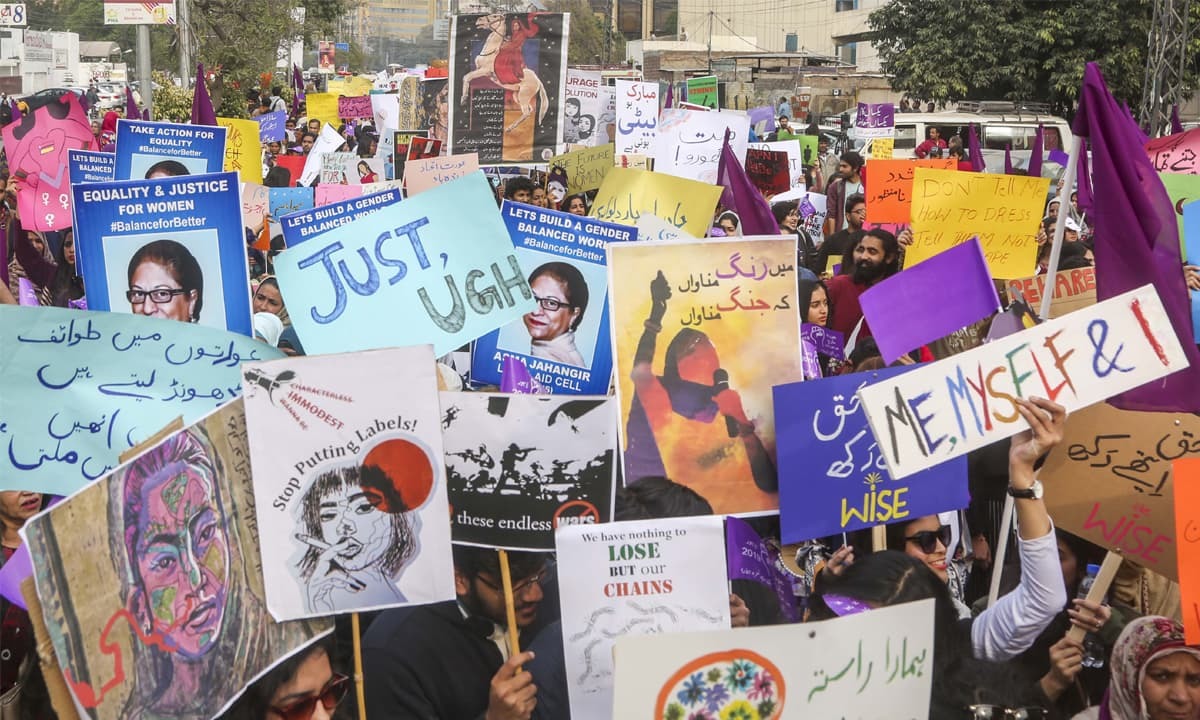
    Tomorrow is International Women’s Day, which is celebrated worldwide. In Pakistan, many events are organised to mark Women’s Day. Aurat March, which has been held since 2018, will be marked with rallies in several cities, including Lahore, Islamabad and Karachi.

    This year, Aurat March Lahore’s theme is women’s health and the issues faced by women and gender minorities. They are demanding that the health budget be increased to 5 per cent of the GDP. Aurat March organisers have highlighted how violence has always existed for women and gender minorities in Pakistan since before COVID-19 but the lockdowns and social isolation resulting from the pandemic have further exacerbated physical, emotional and sexual violence against them across the country.

    It is quite unfortunate that Pakistan ranks 151 out of 153 countries on the Global Gender Gap Index Report 2020 index, published by the World Economic Forum. The only two countries lagging behind Pakistan are Iraq and Yemen. This is not a surprise given the way our patriarchal society treats women. From blaming rape survivors to practices such as honour killing, vinni and swara (exchange of women, especially young girls, to settle disputes between families), child marriage, domestic violence and many other such anti-women practices, Pakistani society does not make life easy for women.

    Sexual harassment cases when reported or talked about are brushed under the carpet. We have seen how women don’t just face offline harassment and violence but online harassment of women has increased manifold. It is but a manifestation of the anti-women bias in society. Women politicians, journalists and activists are targeted online on a regular basis. But it is good to see Pakistani women breaking these chains and raising their voices for women empowerment and their rights.

    From leading lights such as Fatima Jinnah, Benazir Bhutto, Asma Jahangir, Malala and many others who paved the way for women and young girls in our society, the struggle continues. It will take a long time to achieve equal rights for women but there is no reason to lose hope. We have seen that when women take a stand, it leads to the betterment of society at large.

    For an inclusive, tolerant and progressive Pakistan, women have to be treated as equal human beings. Women of the world, unite, for you have nothing to lose but your chains.

  • Ceasefire, at last

    Ceasefire, at last

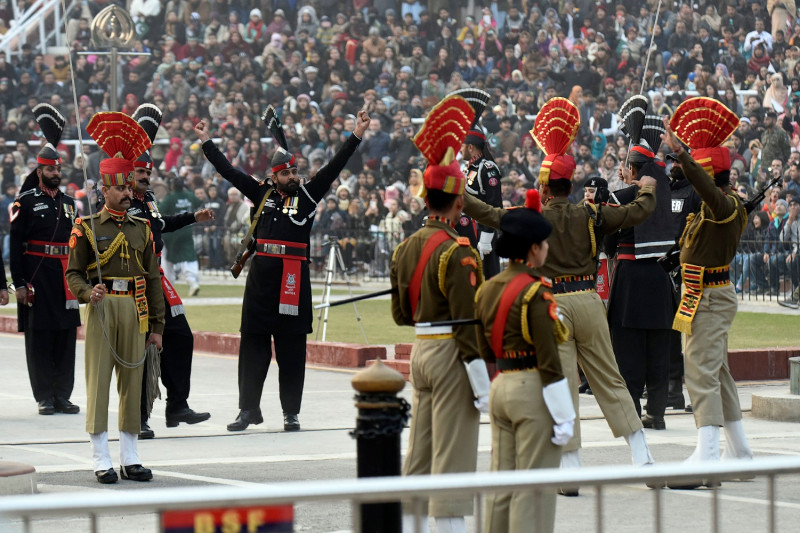
    On Thursday, Pakistani and Indian director generals of military operations (DGMOs) issued a rare joint statement declaring ceasefire along the line of control (LoC).

    The joint statement said: “Both sides agreed for strict observance of all agreements, understandings and cease firing along the Line of Control and all other sectors with effect from midnight 24/25 Feb 2021…In the interest of achieving mutually beneficial and sustainable peace along the borders, the two DGsMO agreed to address each other’s core issues and concerns which have propensity to disturb peace and lead to violence.”

    The ceasefire agreement between the two countries was originally reached in November 2003.

    The joint statement was welcome by Prime Minister Imran Khan, who tweeted: “I welcome restoration of the ceasefire along the LOC. The onus of creating an enabling environment for further progress rests with India. India must take necessary steps to meet the long-standing demand & right of the Kashmiri people to self determination acc to UNSC resolutions.” (sic) The US and the UN also welcomed this positive development.

    To say that the relationship between Pakistan and India is complex would be an understatement. The two nuclear neighbours have come to the brink of war many a time and have also fought conventional wars as well as unconventional ones. It has been two years since the Balakot strikes when they came close to a full-blown war. India could not do any damage to our territory despite falsely claiming otherwise but Pakistan managed to capture Indian Air Force (IAF) Wing Commander Abhinandan after the Pakistan Air Force shot down his aircraft.

    In a joint session of parliament, Prime Minister Imran Khan announced that as a peace gesture, Pakistan was going to release the Indian pilot. PM Imran also reiterated that there is no victory in a war. “Pakistan wants peace. Our interest lies in peace and de-escalation,” he said back in 2019.

    Pakistan has continued to extend a hand of peace towards India over the years but the Modi administration in India has not been very forthcoming.

    Thus, it was a surprise to see the joint statement, which could not have taken place without backdoor diplomacy.

    Innocent people across the LoC have lost lives due to the Indian violations of the 2003 ceasefire agreement. Now with this joint statement, it will be good for the people living across the LoC. We don’t know yet what prompted the Modi government to agree to this but we do hope that both countries eventually restart dialogue.

    Peace in the South Asian region cannot be achieved if India continues its strongarm tactics. Pakistan is committed to peace in the region. Let’s hope this ceasefire is just the first step in the restoration of peace.