Tag: education

  • School principal arrested after blackmailing, raping women

    School principal arrested after blackmailing, raping women

    The principal of a private school in Gulshan-i-Hadeed, Karachi has been taken into custody after allegations of raping and blackmailing women, DAWN has reported.

    The news outlet spoke with Steel Town police Station House Officer (SHO) Nand Lal on Monday. The school principal was detained as videos of the alleged rape incidents made rounds on social media.

    The principal has admitted to the allegations that he raped women after promising them job opportunities, then recording their videos to blackmail them.

    The principal himself has been blackmailed by an extortionist who demanded Rs 10 lacs after acquiring the videos. Details of the alleged blackmailer, however, have not been revealed.

    The school principal had filed an application against the alleged extortionist at Malir City Police Station. But before the two parties could possibly reach an agreement, the police became involved in the case and arrested the principal.

    The SHO further said that a First Information Report (FIR) is to be registered against him on behalf of the state through a police officer. None of the man’s victims have resorted to the police as of yet.

    Meanwhile, according to Malir Senior Superintendent of Police Hassan Sardar, 25 videos have been recovered from the suspect. Through these video, five of the women allegedly raped have been identified.

    Further action taken:

    Sindh Governor Kamran Tessori and Sindh Inspector General of Police Riffat Mukhtar Raja have taken notice of the case and have called for action against the culprits.

    Additionally, the Sindh Education and Literacy Department has sealed the school “immediately” and held a probe into the matter.
    Dawn quoted from a letter from the Education and Literacy Department acting Director General, Muhammad Afzal addressed to Malir deputy commissioner (DC):

    “As per the record of this directorate, the school is not registered with the relevant authority and it is functioning without any legal status,”

    The DC has also been asked to probe into the case “with full length and immediately seal the school premises”.

  • Young Pakistanis in the UK lead in unemployment, govt stats confirm 

    Young Pakistanis in the UK lead in unemployment, govt stats confirm 

    Official data from the United Kingdom’s government shows that among different ethnic groups in the country, young Pakistanis are the least active in terms of work and education. 

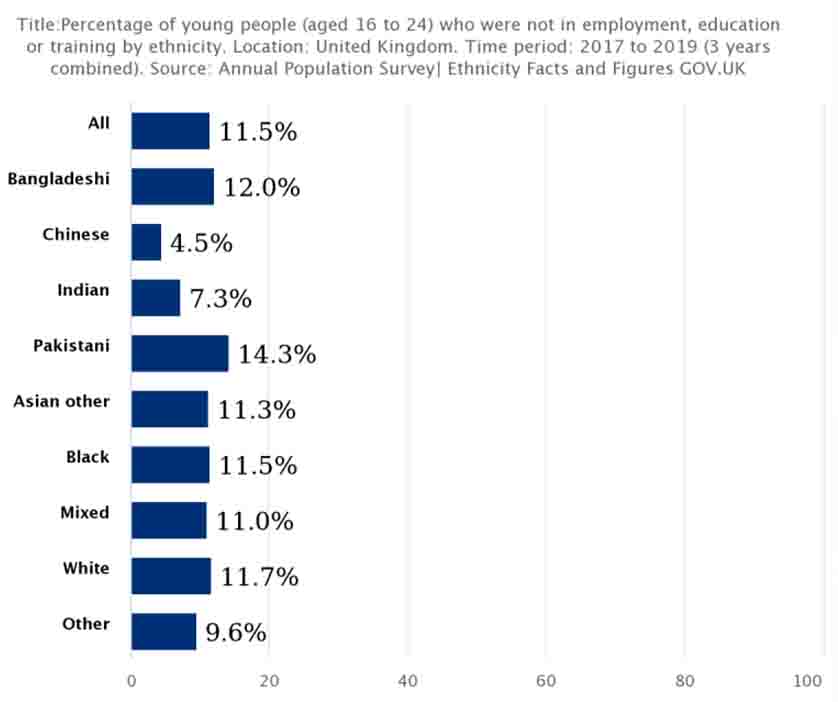
    The dataset in question is categorised as “unemployment,” encompassing individuals aged 16 to 24 who are neither employed nor engaged in any form of training or educational pursuits. This data was systematically collected over a three-year period spanning from 2017 to 2019. 

    Notably, within the spectrum of ethnic backgrounds in the UK, individuals of Pakistani origin stand out with the highest unemployment rate at 14.3 per cent, surpassing their counterparts from nine other nations. The next highest rate pertains to individuals of Bangladeshi descent at 12 per cent, while young individuals of Indian heritage exhibit a comparatively lower inactivity rate of 7.3 per cent, as indicated by the data. 

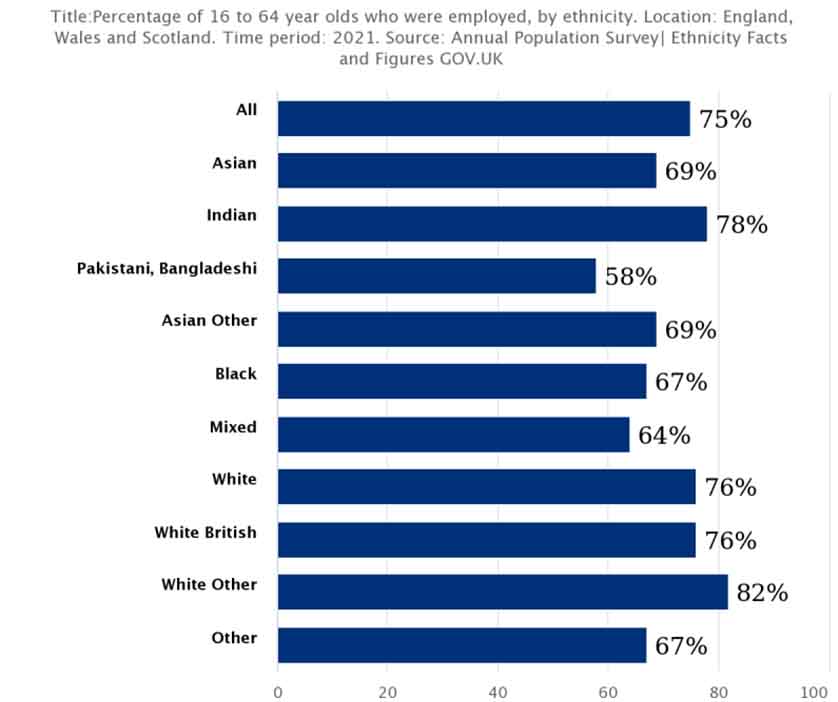
    A similar pattern is discernible when examining the overall employment data for the country, which encompasses individuals aged 16 to 64. In this context, Pakistani and Bangladeshi individuals are grouped together and collectively exhibit the lowest employment rate, standing at a mere 58 per cent, the lowest among ten defined categories. In contrast, individuals of Indian descent display a more favourable employment rate at 78 per cent, trailing only those of non-British white origin, of whom 82 per cent are gainfully employed. 

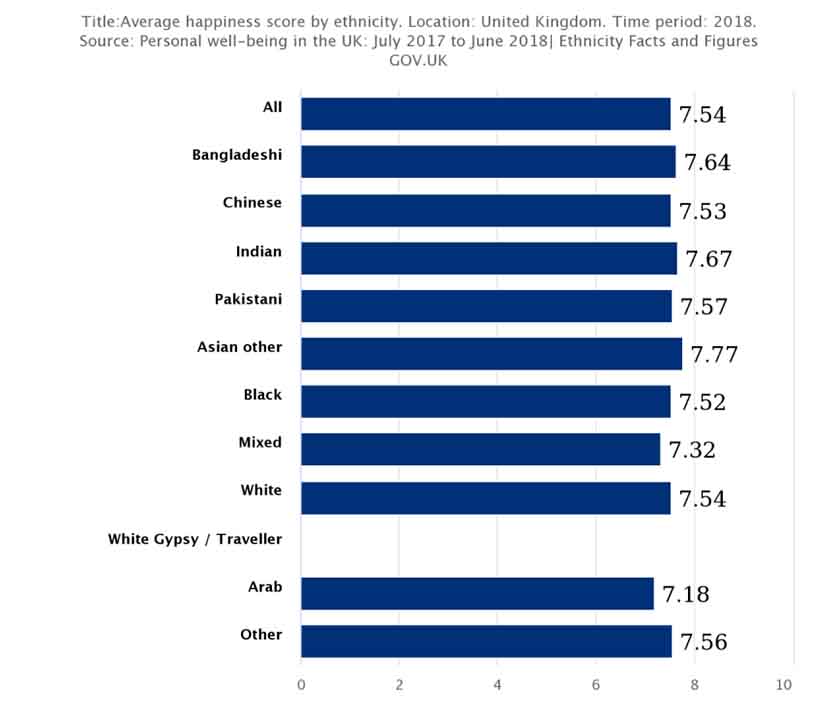
    It is worth noting, however, that the observed trends in employment and unemployment figures do not appear to have a conclusive impact on the overall happiness score, as the data does not differentiate by age and represents the broader community. The happiness index assigns a score on a scale of 10, and according to the data, individuals of Pakistani descent in the UK have a happiness score of 7.57, ranking as the fourth highest among the ten surveyed ethnic groups. 

    While individuals of Indian, Bangladeshi, and other ethnic backgrounds report higher levels of happiness than those of Pakistani origin, individuals of Arab, black, Chinese, and even white ethnicities exhibit lower happiness scores in comparison. 

  • IBA, AAA Associates collaborate to financially aid students

    IBA, AAA Associates collaborate to financially aid students

    The Institute of Business Administration (IBA), Karachi and a real estate organisation, AAA Associates, have collaborated to introduce a scholarship endowment fund: AAA Associates Scholarship Endowment.

    A Memorandum of Understanding (MoU) was signed between Executive Director, IBA, Dr S Akbar Zaidi and Managing Director, AAA Associates, Shahzad Ali Kiani, at the main campus. According to the press release, the motive of this initiative is to push forward the university’s financial assistance programme for meritorious students with the aid of the AAA.

    Dawn News has reported that IBA supports approximately 30% of its student body every year through its financial assistance program.

  • Girls from Peshawar take lead in annual SSC examinations

    Girls from Peshawar take lead in annual SSC examinations

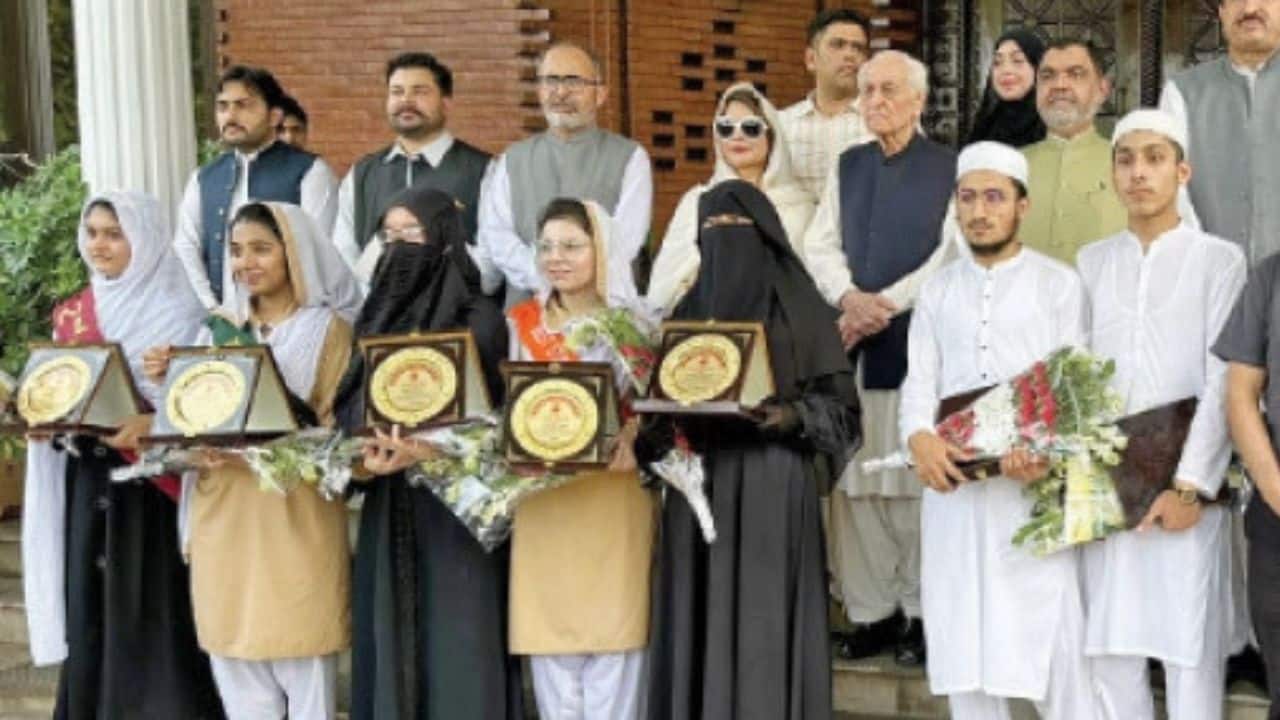
    As results were declared by all educational boards in Khyber Pakhtunkhwa, girls from Peshawar Model Schools secured the top three positions in the annual secondary school certificate (SSC) examinations.

    According to Dawn News, this is the first time in the history of the province that SSC examinations results were announced simultaneously by all the educational boards.

    Adan Shahid from Peshawar Model Girls High School-II Dalazak Road secured the first position by obtaining 1,086 marks out of 1,100. Lubna Alam of Peshawar Model School Charsadda is the runner up with 1,083 marks.

    The third position was taken by Aneeba Asad and Musfira Gul of PMS-II Dalazak Road by with 1,082 marks each.

    The four students not only topped the Board of Intermediate and Secondary Education Peshawar but also secured maximum marks in all the boards in the province. 

    A formal ceremony was held at the Chief Minister’s House on Tuesday. Chief Minister Mohammad Azam Khan was chief guest on the occasion.

    According to a statement issued by the Chief Minister’s House, the overall success rate in the examination under the BISE Peshawar is 86 percent.

  • Afghan women under Taliban rule: two years later

    Afghan women under Taliban rule: two years later

    15 August 2023 marked two years of the fall of Kabul when the Taliban seized the capital, capturing the government in Afghanistan in 2021.

    While the Afghan government tried to ward off the assault for the longest time, the inevitable took place, leaving many sections of society devastated. Among them were women who knew what the Taliban takeover would mean for their freedom.

    “We are going to allow women to study and work within our framework. Women are going to be very active in our society,”, the Taliban had promised in their first press conference following their takeover. But as many feared, these words never became a reality.

    So, what have the Afghan girls and women endured since 15 August 2021?

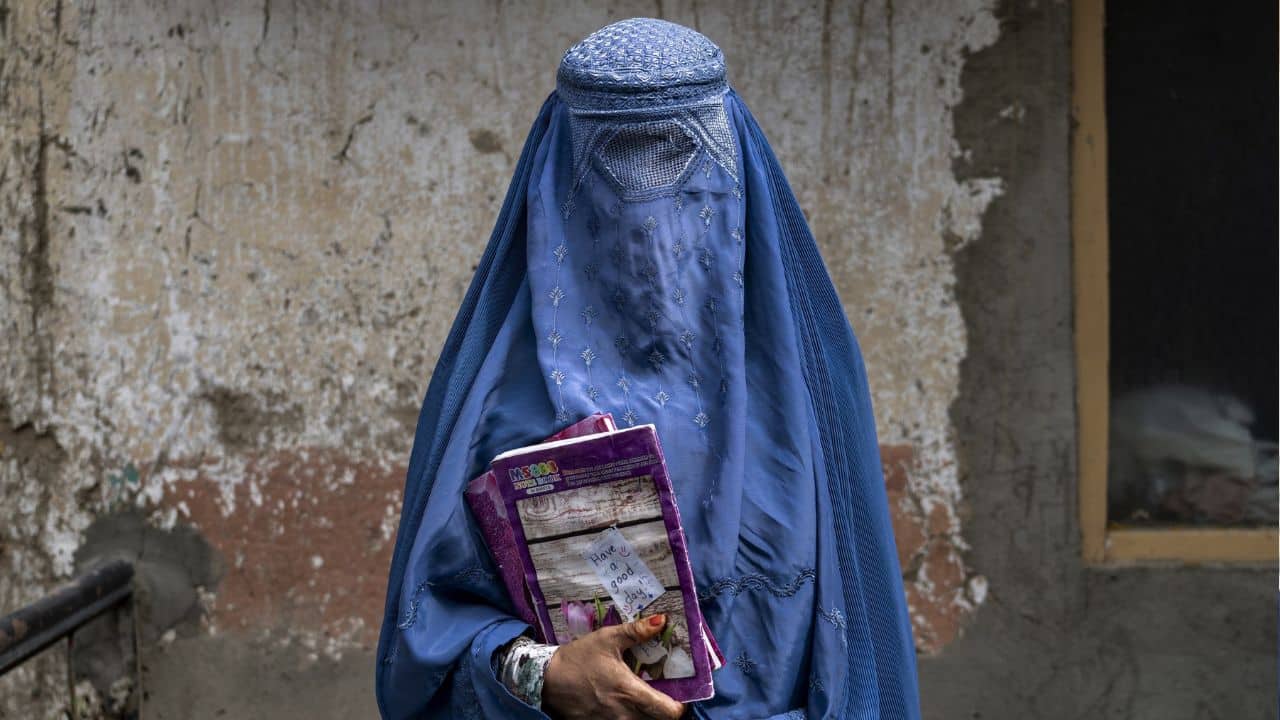
    In March 2022, a ban on girls’ secondary education was imposed moments after the education ministry reopened schools for both girls and boys. The ban further barred girls from joining universities.

    Women were denied entry in the job market. This includes exclusion from NGOs as well as the government sector. Ban on beauty salons left women even more helpless. While Afghanistan’s economy has been in shambles, families have been struggling to make ends meet and with women’s exclusion from the job market, especially sole breadwinners like widows or single mothers, are in serious financial crisis. Out of options and desperation, some women have resorted to the profession of nursing and midwifery just to escape the four walls of their house and earn.


    Not only Afghan women cannot leave their house without a male chaperone (a mahram), but it is mandatory for them to wear burqas. They are also not allowed to wear make-up or heels, and are barred from accessing public places such as parks, gyms, marketplace etc.


    Having nothing to do with their lives as a result of numerous socio-political restrictions, young girls are forced into marriage. Others are sold in order to cover finances or compensate for debts. Parents fear for their daughters’ lives as they often know little about the families they are married into or sold to, but they find themselves to be powerless.


    There is a sense of fear and trauma amongst young girls and women which is leading to mental health issues.

    Following the takeover, valiant Afghan women have, nonetheless, taken their fight to the streets and have protested time and again. Resultantly, they have been threatened and even beaten, but two years on, their anger trumps fear and their struggle continues.

  • Cambridge grading system under fire after outrage from Pakistani students

    Cambridge grading system under fire after outrage from Pakistani students

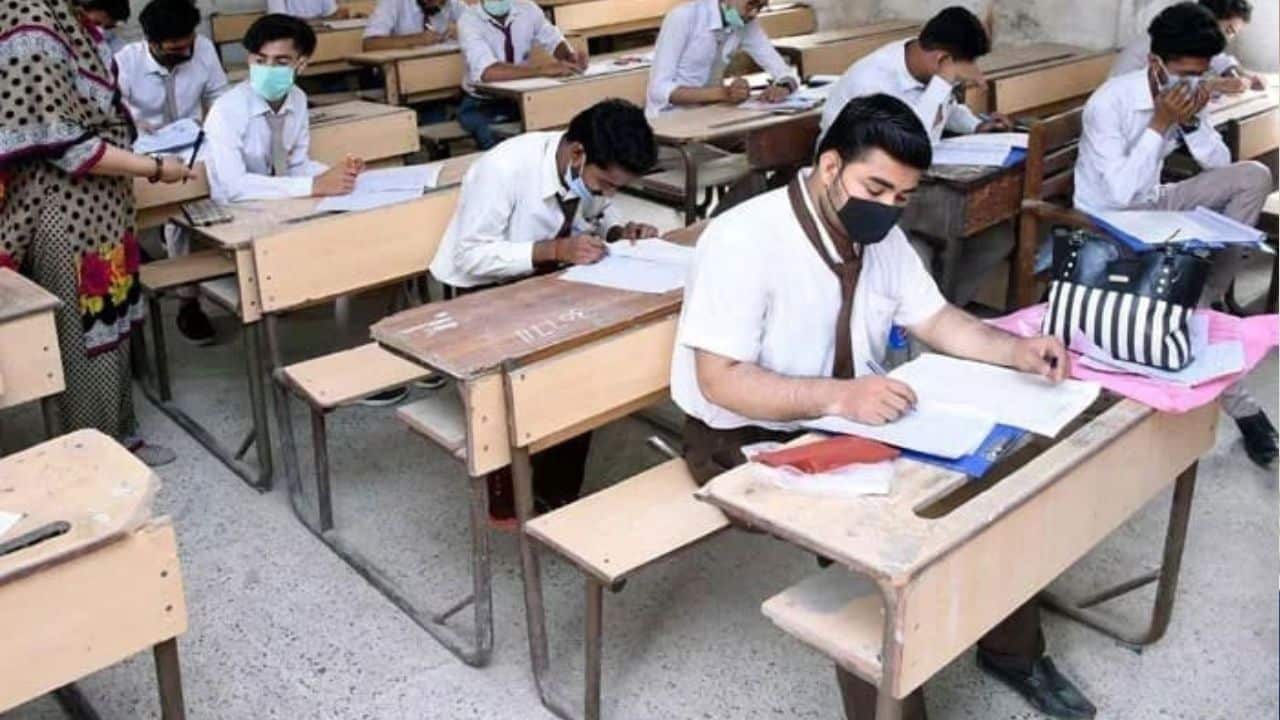
    Pakistani students have slammed Cambridge International Examinations (CIE) after results for 2023 examinations came to light.

    Cambridge exams were disrupted in Pakistan due to riots on May 9 and 12. However, instead of rescheduling the affected papers, Cambridge allegedly opted to allocate average marks.
    The announcement of the results, on August 10, has stirred frustration among students across Pakistan, as only a small number managed to attain A and B grades. More than 45,000 students appeared in the exams.

    In response, students expressed their intent to stage peaceful protests in Karachi, Islamabad, and Lahore, to highlight what they perceive as an injustice done by Cambridge.

    Outraged students have turned to social media, urging a rescheduling of the exams to provide them with a fair opportunity to showcase their capabilities and receive grades reflective of their performance.

    Students took to X (formerly known as Twitter) to run an online campaign and raise their concerns regarding the issue.

    X user, Muhammad Awais Sial mentioned that Cambridge graded them on components where scoring marks are inevitable.
    https://twitter.com/MASial34789939/status/1690045360998322176?s=20

    https://twitter.com/MASial34789939/status/1690045360998322176?s=20

    Senior Vice President of Pakistan Muslim League (N), Maryam Nawaz, also expressed concerns, stating that numerous students have reached out to her. She urged the CIE to consider the conditions in which students sat during these exams while reviewing the results on fairgrounds.

    Chief organiser of President Punjab PML(N), Mohammad Sarwar mentioned that he has been contacted by students who are disheartened after receiving E grades. The former chief minister of Punjab stated that he has reached out to a member of the House of Lords, Wajid Khan, for support in urging CIE to review their grading process.

    Activist and lawyer Jibran Nasir explained the issue in detail while demanding that “Cambridge Assessment International Education and British Council Pakistan needs to provide details and transparency in the mechanism adopted this year and it must ensure that students of Pakistan did not suffer in particular due to some discriminatory or flawed policy.”

    Addressing the concerned Cambridge students, Uzma Yousuf, the Country Director for CAIE Pakistan, stated, “Cancelling the exams on 10, 11 and 12 May has been a difficult decision for the British Council. Your safety and well-being come first, and that’s why this decision was taken.”

    She further added, “Our team is continuously monitoring the situation, and we will keep you updated as we have more information. We are completely committed to providing a safe and secure environment for you to sit for your exams.”

  • Swift approval of 24 universities without proper discussion sparks debate

    Swift approval of 24 universities without proper discussion sparks debate

    In an unusual move that contradicts customary legislative protocol, the National Assembly of Pakistan has sanctioned the establishment of twenty-four new universities across various cities within a single session. These approvals, though hailed as a massive boost to the nation’s educational infrastructure, have ignited debates over the abruptness of the process.

    The approval of the bills occurred in an unusually sparse session, without the traditional discourse within respective Standing Committees, raising questions about the abrupt nature of the process.

    Critics are questioning the urgency that bypassed the usual deliberations associated with such significant decisions.

    The newly approved institutions include Metropolitan International Institute of Science and Technology, Askari Institute of Higher Education, Federal Ziauddin University, The Indus University of Science and Technology, The Institute of Management and Technology, and Pak China Gwadar University.

    Other notable approvals were for Lahore, University of Shaheed Benazir Bhutto, Institute of Health and Professional Studies, Sheikhupura Institute of Advanced Studies, Cosmic Institute of Science and Technologies, Balhe Shah International University, The Ravi Institute, and The International Islamic Institute for Peace.

    Also given the green light were Shah Bano Institute Jardanwala, International Memon University, Umm Abiha Institute of Health Sciences, Mufti Azam Islamic University, Islamabad International University, Islamabad Institute of Modern Sciences, Al Biruni International University, National University of Health Emerging Sciences and Technologies, National Institute of Technology, Pakistan Institute of Management Sciences and Technology, and The Horizon University.

    As the debate continues, it remains to be seen how these newly approved universities will contribute to the country’s higher education landscape.

  • ‘I was not targeting anyone particularly’: Kajol provides clarification on ‘educated political leaders’ comment

    ‘I was not targeting anyone particularly’: Kajol provides clarification on ‘educated political leaders’ comment

    Bollywood actress Kajol recently said in an interview to The Quint that people are steeped in traditions, and politicians are uneducated which is why there isn’t a clear viewpoint on how to move forward in India:

    “You have political leaders who do not have an educational system background. I’m sorry but I’m going to go out and say that. I’m being ruled by leaders, so many of them, who do not have that viewpoint, which I think education does give you, at least the chance to look out for a different viewpoint.” 

    While some applauded the DDLJ actress for making a strong case for why its important to have educated leaders, some Twitter users were enraged by her comments and pointed out that Kajol herself was a school dropout.

    https://twitter.com/Kesariya_Meenu/status/1678107374186373120?s=20

    Kajol took to Twitter to post a clarification, saying that she was emphasising the importance of education, and was not targeting any politician.

    “I was merely making a point about education and its importance. My intention was not to demean any political leaders, we have some great leaders who are guiding the country on the right path.”

  • Govt allocates only Rs97 billion for education affairs and services in budget 2023-24

    Govt allocates only Rs97 billion for education affairs and services in budget 2023-24

    The federal government has designated a budget of only Rs97.098 billion for education affairs and services in the fiscal year 2023-24. This allocation reflects a 5.5 per cent increase compared to the revised allocation of Rs91.777 billion for the current fiscal year.

    Pakistan’s public expenditure on education, as a per centage of GDP, is estimated to be 1.7 per cent in the fiscal year 2022-23, a slight increase from 1.4 per cent in the previous year. However, this figure remains the lowest in the region.

    Of the total allocation, the bulk of expenditure amounting to Rs76.589 billion has been allocated for Tertiary Education Affairs and Services in the budget for 2023-24, accounting for 79 per cent of the total allocation under this category.

    Furthermore, the government has designated Rs4.468 billion for pre-primary and primary education affairs in the upcoming fiscal year, compared to Rs3.786 billion in 2022-23. Additionally, Rs10.778 billion has been earmarked for Secondary Education Affairs and Services in 2023-24, as opposed to Rs8.863 billion in the previous year.

    The budget for administration has also increased, with Rs3.698 billion allocated compared to the revised figure of Rs2.010 billion for 2022-23, which was later revised to Rs2.430 billion.

    Since the implementation of the 18th Constitutional Amendment, education has been devolved to the provinces, making the federal government primarily responsible for financing higher education.

    According to budget documents, the Higher Education Commission (HEC) has been allocated Rs59.71 billion under the Public Sector Development Programme (PSDP) for 2023-24, a significant increase from the previous year’s allocation of Rs44.718 billion.

  • How to use familiar language with children to tell them about good and bad touch

    How to use familiar language with children to tell them about good and bad touch

    It seems that instances of child molestation and sexual abuse will never end.

    An 8 year girl in Islamabad was sexually assaulted in Shahzad Town area on Friday. The rapist managed to escape from the crime scene, in the presence of area residents.


    This should worry us all. As parents, as guardians, as relatives and as friends of people who have baby girls, who we dote on, we should all be alarmed.
    When discussing the topic of good touch and bad touch with your minor kids, it’s important to approach the conversation in a gentle and age-appropriate manner. Here are some suggestions on how to have a soft and conversational discussion:

    Choose an appropriate time and setting


    Find a calm and comfortable environment where your children feel at ease and can focus on the conversation without distractions.

    Use simple and understandable language:


    Adapt your language to the age of your children. Use words and phrases that they can easily understand and relate to. Avoid using complex or scary terms.

    Start with positive touches:


    Begin the conversation by talking about different types of touches that are generally considered good or positive. For example, you can mention hugs from family members, holding hands with friends, or receiving a pat on the back.

    Define personal boundaries


    Explain to your children that their bodies are their own and that they have the right to decide who can touch them and how. Teach them to recognize and trust their instincts when they feel uncomfortable with a touch or a situation.

    Introduce the concept of bad touches


    In a calm and reassuring manner, explain that there are certain touches that are not appropriate or safe. Emphasize that no one should touch their private parts (parts covered by a swimsuit) except for medical reasons and only in the presence of a trusted adult, like a doctor or parent.

    Encourage open communication


    Let your children know that they can always come to you or another trusted adult to talk about any uncomfortable experiences or if they have any questions. Assure them that they won’t get in trouble for speaking up and that you are there to support and protect them.

    Role-play and practice scenarios


    Engage in role-playing activities where you and your children can practice different scenarios. Teach them to say “no” assertively and to seek help from a trusted adult if they encounter an uncomfortable touch.

    Reinforce the message over time


    Remember that this conversation is not a one-time event. As your children grow and develop, it’s important to reinforce the message regularly and adapt the conversation to their increasing understanding.

    Use age-appropriate resources


    Consider using age-appropriate books, videos, or online resources that discuss the topic of good touch and bad touch in a child-friendly manner. These resources can complement your conversation and help reinforce the concepts.

    Remember, the goal is to create a safe and open space for your children to ask questions and understand the importance of boundaries and consent.