Tag: education

  • ‘They don’t like being told what to do’: Imran Khan holds back from criticising Taliban ban on girls’ education

    Pakistan Tehreek-e-Insaf (PTI) Chairman Imran Khan, in an interview with Matt Frei for Channel 4, talked about the rigid ban imposed by Afghanistan Taliban on girls’ education.

    When asked whether he will tell them to let the girls go to school, he responded by saying that he knows Afghan character much more than anyone else in the West. “They dont like being told what to do,” Imran Khan said.

    He then urged the world to engage with the Taliban, stressing that only then the group will listen to them.

    He said, “If the West wants to influence them, they must mainstream them. I kept telling them to engage. If you isolate them, what influence are you going to have on them.”

    “My advice is to get them involved, give them a stake in the international community so when you tell them to educate girls, they will listen to you.”

    According to him, right now they react when the world questions their policy toward women.

    We are heading toward martial law: Imran Khan

    In the interview, the deposed prime minister said that the postponement of elections by the Election Commission of Pakistan (ECP) is a violation of the constitution.

    He said that five judges of the Supreme Court categorically said that elections should be held on April 30.

    “The worry right now is that we are heading towards martial law”, said Khan.

  • Lahori students to get free rides on Orange, Metro line

    In a bid to provide easier access to transportation, public train systems Orange Line and Metro Line in Lahore will provide free transportation facilities to students in school uniforms, Samma has reported.

    The decision was announced by the Caretaker CM Punjab Syed Mohsin Raza Naqvi on Sunday, in order to help students attend their schools punctually and also lessen the financial burden of travelling costs on their families.

    Students will only need to be dressed in school uniforms in order to receive a free ride.

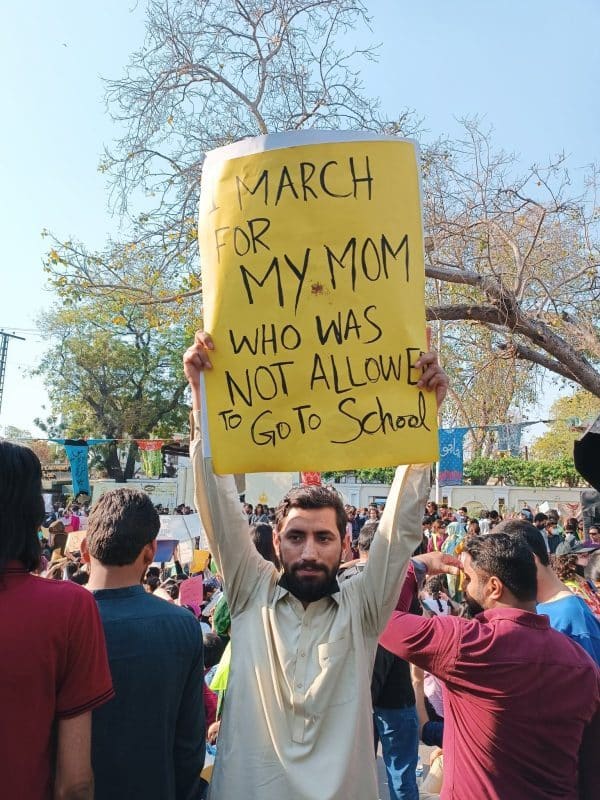
  • Man behind viral Aurat March poster shares inspiring story about his mother

    Man behind viral Aurat March poster shares inspiring story about his mother

    ‘I march for my mom who was not allowed to go to school’; so stated a placard at the Aurat March, pictures of which went viral on Twitter.

    Now Ehtesham Hassan, the man behind the poster, has taken to Twitter to share the inspiring story of his mother.

    Hassan revealed that since the age of 10, his mother was fond of reading and writing and had wanted to go to school like her brothers did.

    When his mother expressed her desire to her grandmother, she purchased a takhti for her because of which the mother was able to go two school for two days. Hassan revealed that every night, his mother would clean the takhti with mud so that she could use it again the next day.

    However, Hassan said it was Maulana Fazal Rehman heard about his mother going to school and forbade her family from sending her because this way the girl would write letters to the men and violate the honor of her family.

    Hassan narrated that his mother was restricted from going to school, a fact that she is sorrowful about to this day. Hassan said that being deprived of her fundamental right to receive an education, and not being supported by her family is the reason why he choose to march today so that no other woman would be treated this way.

    Since the story was posted yesterday, women on Twitter have praised Hassan for pasionately defending the right of women to receive education, calling his thread a moving tribute to his mother.

    Many women said they had witnessed the same in their families.

    “This is the story of both my maternal & paternal grandmothers. They were both not allowed to go to school after 8th grade. They made sure their daughters were highly educated – they advocated for them against hell or high water,” this user wrote.

    Another user wrote: “Mother’s carried the burden of thier broken dreams and planted seeds of hope for future generations. She might not have gone to school but her son’s daughter would! Women have been forebearers of a silent revolution for generations.”

    We hope that more men out there step out of their bubble and follow the lead of Hassan to empower the women of their lives to never stop reaching for their dreams.

  • Sampling campaign to monitor drug addiction among students launched in Lahore

    Sampling campaign to monitor drug addiction among students launched in Lahore

    The District Administration has initiated a campaign of random sampling in the provincial metropolis to monitor drug addiction among students. According to Deputy Commissioner Rafia Haider, a total of 215 samples were collected from public and private schools and sent to the health department for analysis.

    The samples were taken from various educational institutions, with 50 from Tehsil City, 50 from Shalimar, 50 from Raiwind, 52 from Model Town, and 13 from Cantt.

    Haider has directed ADC (G) Zeeshan Ranjha to ensure strict monitoring and better coordination. She also informed that an awareness lecture was conducted during the sampling process, and drug dealers were under surveillance, apart from random sampling. In addition, monitoring of shops around educational institutions was being carried out, and any suspicious activity should be reported immediately.

    DC Lahore expressed that the young generation is the future and should be safeguarded from drug addiction, which poses a threat to both life and the country’s future. Meanwhile, the District Administration Lahore was actively preparing for the seventh digital census in the city. The DC chaired a meeting where it was reported that thousands of tablets were being distributed for the census, with 1271 tablets already distributed in Tehsil City, 168 in Cantt, 253 in Cantonment, 808 in Tehsil Model Town, 725 in Shalimar, and 382 in Raiwind.

    The DC was informed that tablet distribution was completed 100 per cent in Lahore Cantonment, 92 per cent in Raiwind Tehsil, 86 per cent in City, 85 per cent in Walton Cantonment, 71 per cent in Model Town, and 75 per cent in Lahore Cantt and Shalimar, respectively. All necessary steps were being taken to ensure a 100 per cent success rate for the online census, with officers evaluating performance in the field themselves. The concerned officers were directed to speed up the delivery of the remaining modern tablets.

  • Govt launches paid internship programme to support 30,000 unemployed graduates

    Govt launches paid internship programme to support 30,000 unemployed graduates

    Federal Minister for Planning and Development Ahsan Iqbal announced on Thursday that the government is initiating the “Talented Youth Internship Program” for 30,000 graduate students who are unemployed.

    The minister announced the internship would last six months and pay a monthly stipend of Rs25,000 to the youngsters while presiding over a meeting of representatives from the private sector.

    He claimed that because two-thirds of Pakistan’s population is under the age of 30, the future of the nation hinges on the youth acquiring meaningful education and skills.

    According to Ahsan Iqbal, the Ministry of Planning’s primary responsibility is to prepare for the youth’s future, and he said that the private sector and the youth’s active participation are essential for Pakistan’s growth.

    He claimed that with this scheme, 30,000 young people would have the chance to work in the industry.

    The minister emphasised the necessity of putting aside differences and cooperating to end the country’s economic problems.

    He said, “When there is a fire in the house, the first thing to do is to extinguish the fire. The economy of a country with a population of 220 million does not sink in 8 months.”

    Every Pakistani, according to him, should contribute to the effort to end the nation’s economic predicament. “Every Pakistani citizen must support the Turnaround Pakistan Campaign.”

  • Why do educated girls scare the Afghan Taliban?

    Why do educated girls scare the Afghan Taliban?

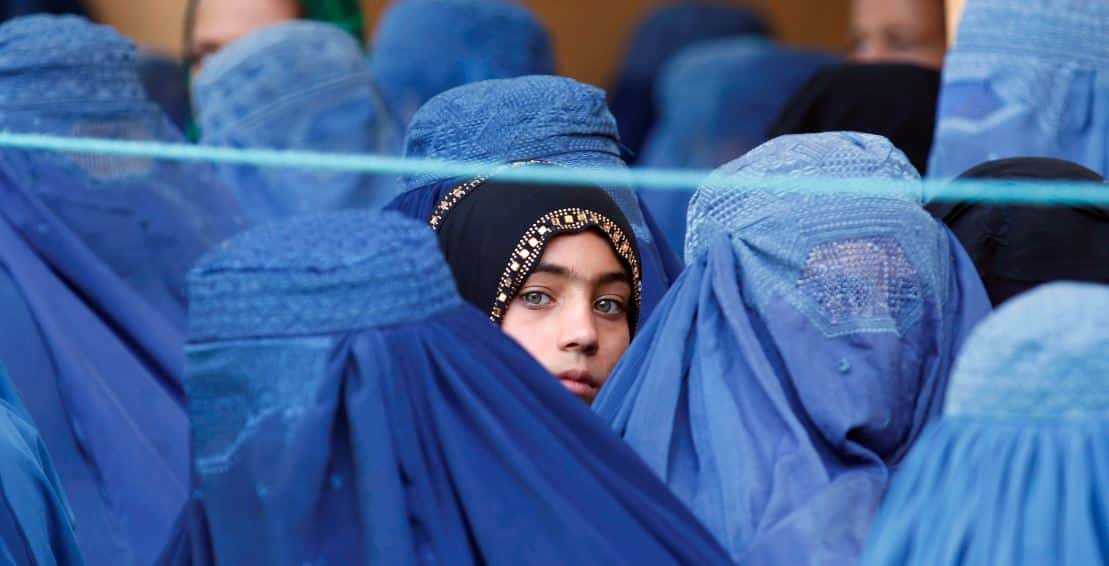
    Afghanistan’s Taliban-run higher education ministry has said that female students would not be allowed access to the country’s universities until further notice, barring them from getting education, something that is their right and a basic necessity.

    Where the Afghan Taliban’s takeover poses threat to many, people questioned what will happen to the women? Will their needs be sabotaged? Will they be treated as a lesser entity of the state? Will the women have freedom to live and recover from the torments of the past? Will the women be given the chance to have a good life? Looking at the present situation, one can only think: Why are the Afghan Taliban so afraid of a woman’s mind? If you educate a woman, you educate an entire generation. But this notion fails to prevail in the region.

    The ban on female education has drawn international condemnation and people across the world are angry at how Afghan women are being treated.

    After the Taliban seized control of Afghanistan in August 2021, they closed schools across the country. Most schools eventually reopened, but girls in secondary school were told to stay at home until conditions— which the Taliban didn’t define— were ready for them to return to classes. The announcement to return to school never came.

    In addition to barring women and girls from education, the Taliban have imposed a raft of rules to govern female behaviour.

    We can only hope that the Taliban recognise women as equals and give them their due right and recognition.

  • Police ranked Pakistan’s most corrupt sector once again in 2022

    Police ranked Pakistan’s most corrupt sector once again in 2022

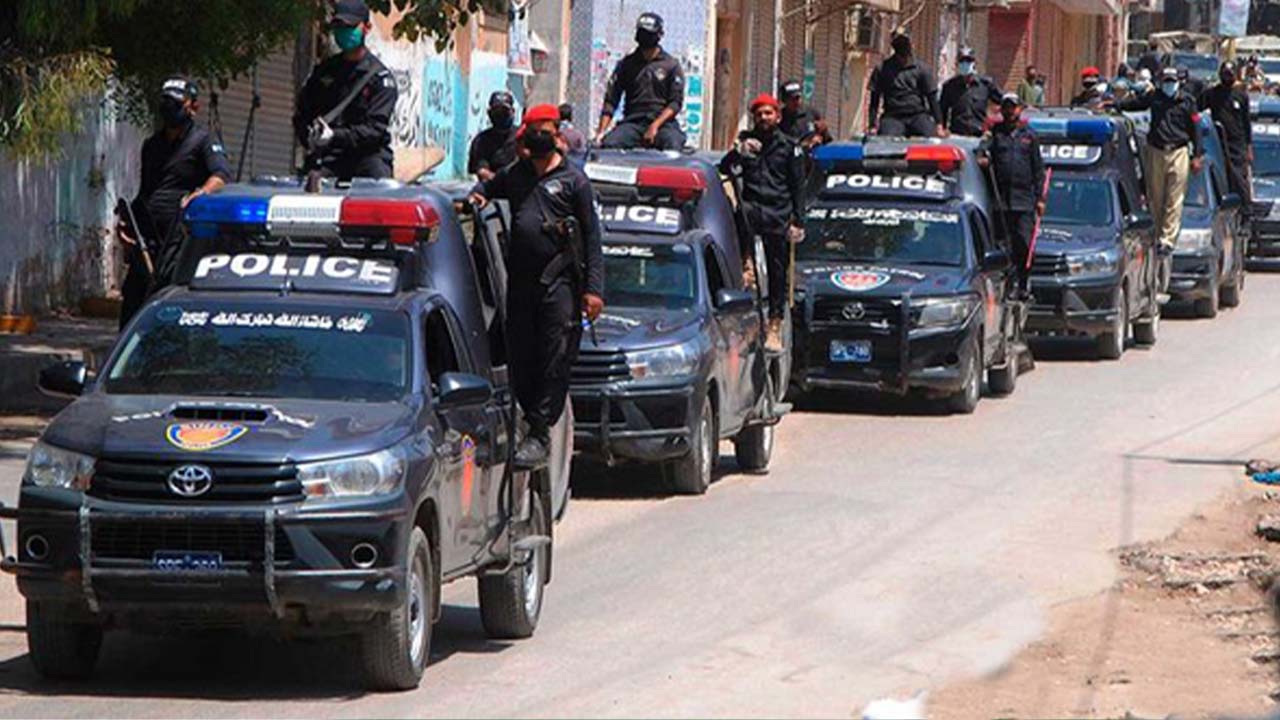
    Police were found to be on the top rung of the corruption ladder in Pakistan, according to Transparency International Pakistan’s (TIP) National Corruption Perception Survey (NCPS).

    The police ranked the highest in the previous year’s survey as well.

    According to Geo, education was identified as the “most corrupt” sector in Sindh, followed by the police and tendering and contracting, according to a provincial analysis of the three “most corrupt” sectors.

    In Punjab, the police once more took first place, followed by tendering and contracting and the courts.

    The judiciary was thought to be the most corrupt institution in Khyber Pakhtunkhwa, with the police coming in second and tendering and contracting coming in third.

    In Balochistan, contracting and tendering claimed the top spots, with the judiciary and police coming in second and third, respectively.

    The 2022 survey was given to partner organisations by TI Pakistan’s chairman, Justice (retd) Zia Pervez, with the aim of boosting the NCPS’s legitimacy and educating partner organisations on public survey processes.

    He hoped that other government agencies would use the survey’s findings to implement reforms.

    “This will help in reducing corruption and making the lives of the public a little better,” he said.

  • HEC to relaunch PM’s Laptop Scheme soon

    HEC to relaunch PM’s Laptop Scheme soon

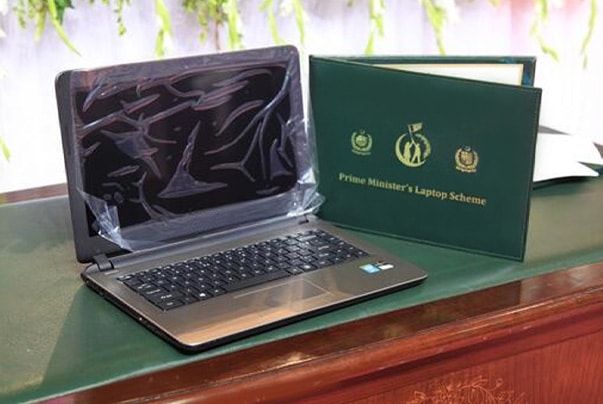
    The Prime Minister’s Laptop Scheme would be relaunched under the Youth Development Initiative, according to Higher Education Commission (HEC) Chairman Dr Mukhtar Ahmed, within the next few days.

    Speaking to the media, he further stated that HEC would launch a programme for online courses for students in Pakistan’s institutions with assistance from Microsoft and other international organisations.

    The declaration follows the historic Prime Minister (PM) Laptop Scheme’s restoration by the Federal Government, which is governed by the Pakistan Muslim League-Nawaz (PML-N).

    Details indicate that the programme, which has a budget of Rs 10 billion, will distribute laptops to students pursuing BS, Masters, M Phil, PhD, and undergraduate degrees.

    A committee headed by Dr Mukhtar Ahmed, the chairman of the Higher Education Commission (HEC), has been formed by the government to complete all issues, including the requirements for students to be eligible for laptops.

    According to Academia Mag, the 14-member committee comprises the Executive Director of HEC, Additional Finance Secretary (Budget) of the Government of Pakistan, a member from Planning and Development Division, Science and Technology, Secretary Higher Education Department Punjab, Secretary Higher Education Department Sindh, Secretary Higher Education Department Balochistan, Secretary Higher Education Department Khyber Pakhtunkhwa, a representative from the National Information Technology Board (NITB), Secretary Higher Education Department Azad Jammu and Kashmir, a representative from Punjab Information Technology Board (PITB) and others.

    The procedure for verifying degrees and issuing certificates of equivalency is likewise being shifted entirely online.

    A growing number of educational institutions were causing financial problems for HEC, he continued, and public universities would henceforth be given funding according on how well they performed.

    “We would request the federal and provincial governments to not establish more public universities until the country’s financial issues are resolved,” he said.

  • Pakistan inflation hits highest level since 1973

    Pakistan inflation hits highest level since 1973

    According to the Pakistan Bureau of Statistics (PBS), Pakistan’s Consumer Price Index-based inflation (CPI) climbed by 27.3 per cent on a year-over-year basis in August 2022 as opposed to an increase of 24.9 per cent the previous month and 8.4 per cent in August 2021.

    Inflation has increased by an average of 26.1 per cent in the first two months of the current fiscal year 2023 compared to 8.36 per cent in 2022. August’s inflation rate was the highest since November 1973.

    According to brokerage house Arif Habib Limited (AHL) the Consumer Price Index (CPI) for the month of Aug’22 clocked in at 27.26 per cent YoY (+2.45 per cent MoM). This takes 2MFY23 average inflation to 26.1 per cent compared to 8.36 per cent in 2MFY22.

    CPI inflation

    Urban

    In August 2022, urban CPI inflation was 26.2 per cent on an annual basis, up from 8.3 per cent in August 2021 and 23.6 per cent the month before.

    It climbed by 2.6 per cent month over month in 2022, compared to 4.5 per cent the month before and 0.5 per cent in August 2021.

    Rural

    In addition, rural CPI inflation reached 28.8 per cent on an annual basis in August 2022, up from 8.4 per cent in August 2021 and 26.9 per cent in the preceding month.

    In August 2022, it climbed by 2.2 per cent month over month, compared to 4.2 per cent the month before and 0.7 per cent in August 2021.

    Further increase expected

    Rising inflation has become a major worry for Pakistan’s economy, which is already experiencing a loss of foreign exchange reserves.

    In the midst of severe flash floods that have resulted in at least 1,100 fatalities, extensive destruction, and millions of displaced people, experts have cautioned that the country will experience additional increases in food costs.

  • We have not invested enough in education, health and infrastructure: PM Shehbaz

    In an interview to The Economist on Pakistan’s Independence Day, Prime Minister (PM) Shehbaz Sharif highlighted the root problems of the economic crisis gripping the nation nowadays.

    Titled “Pakistan’s prime minister on his drive to modernise the country“, PM Shehbaz mainly talked about critical structural flaws that hindered the state’s economy. According to him, the first reason is that Pakistan’s political environment has become increasingly polarised.

    “Instead of debating how to run Pakistan better and rid the country of poverty, political parties have been at each other’s throats,” he pointed out.

    “We have not invested enough in the nuts and bolts of development: education, health and infrastructure. This is in part due to an abysmally low tax take, but it also reflects our priorities in public spending.”

    PM Shehbaz further highlighted the fact that Pakistan has not enjoyed the benefits of globalisation.

    “Today, we hardly make anything that the world wants and our companies remain very comfortable only operating within our borders, often protected by barriers to competition,” he stressed.

    He pointed out that Pakistan’s exports are just 10 per cent. Shehbaz said that where “two out of every three people are below the age of 30 and full of aspirations and where every third person lives on less than $3.20 a day and less than a quarter of our women work outside the home,” it is a moment that merits “serious introspection”.

    Pakistan was one of the biggest victims of state-sponsored terrorism’: PM Shehbaz

    In an interview with Newsweek’s senior foreign policy writer Tom O’Connor, PM Shehbaz said it was no secret that Pakistan was “one of the biggest victims of state-sponsored terrorism that is planned, supported and financed by hostile intelligence agencies”.

    He went on to say that terrorist attacks against Chinese nationals were “aided and abetted by forces inimical to the Pakistan-China strategic partnership”.

    Talking about friction between the US and China, the premier said: “While the Pakistan-China relationship is very special, Pakistan and the US have also maintained a long-standing historic bilateral relationship which covers all issues of mutual interest.”

    He was of the view that the world cannot afford to go back into another “era of Cold War or bloc politics”.

    The premier called for all parties to agree to the “minimum rules of the game in which the welfare of the people remains paramount”.

    “Systematic problems can be fixed through engagement and consultations among all political stakeholders. This course may take time, but is the only way forward for the system to become strong, resilient and efficient.”

    Â