Tag: SBP

  • Pakistani rupee becomes best performing currency after recording impressive gains

    Pakistani rupee becomes best performing currency after recording impressive gains

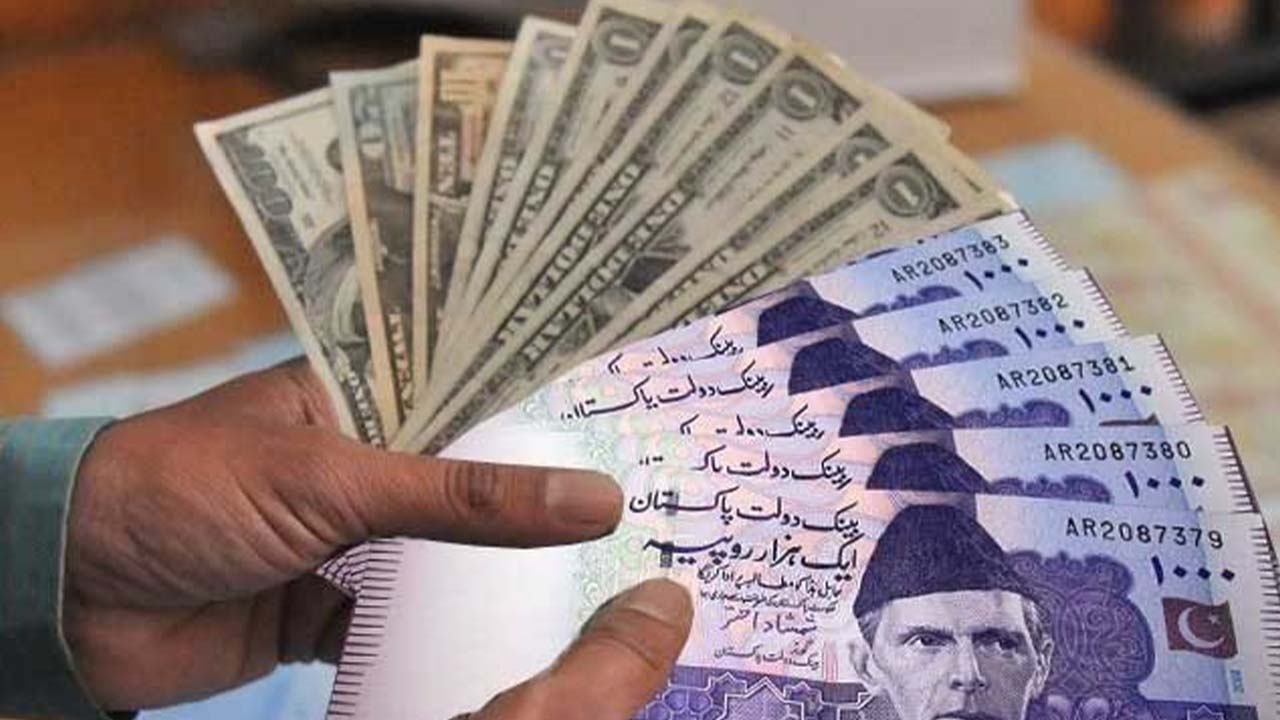
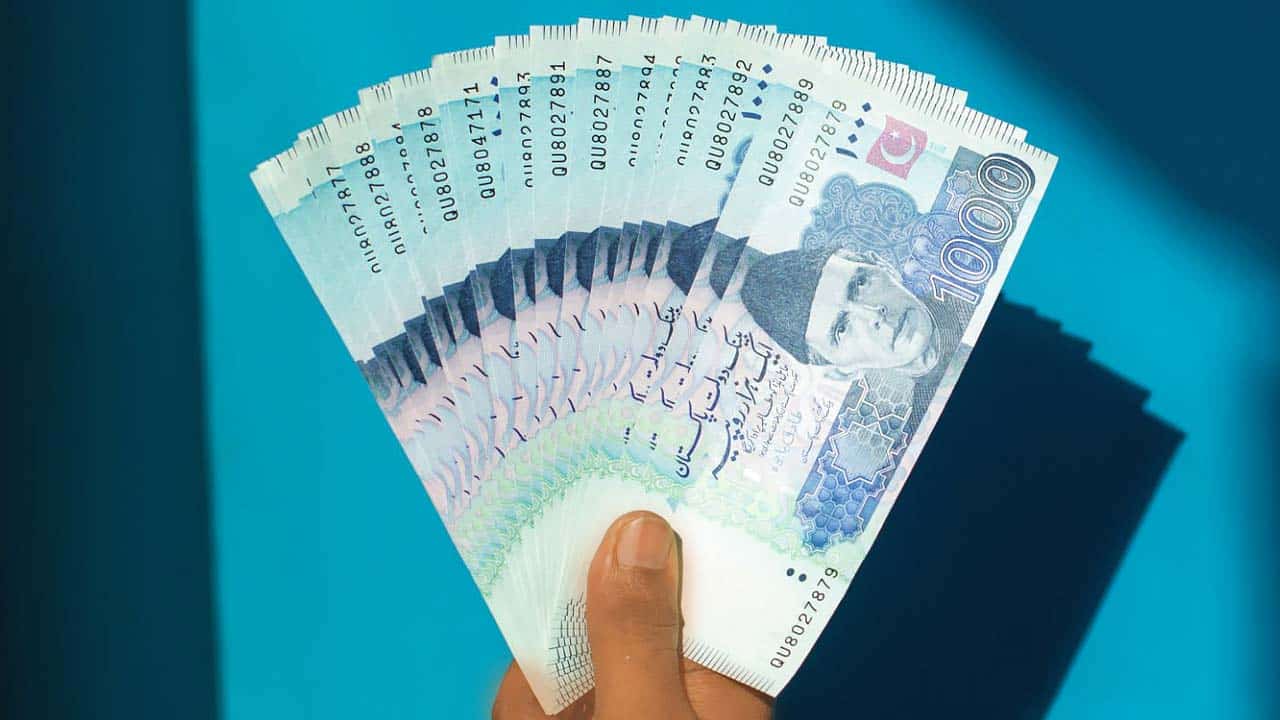
    The unpredictable Pakistani rupee, which made the highest rise of 3.9 per cent over five working days to Rs219.92 against the dollar on anticipation of sizable inflows of foreign cash, was dubbed the “world’s best-performing currency” in the week that concluded on Friday.

    According to analysts monitoring currency movements, the rupee proved to be the best-performing currency throughout the week.

    Friday marked the rupee’s 11th straight successful working day since the current finance minister, Ishaq Dar, announced his return to Pakistan by ending a five-year self-exile last month, according to the Express Tribune.

    Clearly, Dar continued his previous strategy of defending the rupee from the assault of the US currency after assuming power. He thought the rupee was undervalued at its all-time low of roughly Rs240 to the dollar in July and suspected commercial banks of manipulating the rupee’s value to advance their own interests.

    In a swift move, Pakistani officials notified Moody’s that during recent meetings with multilateral creditors, the government had received an additional funding commitment of more than $2.5 billion from the Asian Development Bank.

    This was done while strongly responding to Moody’s downgrading Pakistan’s credit rating to Caa1. The World Bank has also committed to providing an additional $1.3 billion in finance for infrastructure improvement and other projects during the current fiscal year.

  • Pakistani rupee maintains winning streak against dollar for 8th consecutive session

    Pakistani rupee maintains winning streak against dollar for 8th consecutive session

    On Tuesday, the Pakistani rupee (PKR) gained against the US dollar for the eighth session in a row, finishing more than 0.7 per cent stronger.

    According to the State Bank of Pakistan (SBP), the rupee strengthened by Rs1.55, or 0.73 per cent, to close at Rs225.64. The rupee has gained a total of Rs14.06, or 6.23 per cent, over the last eight trading sessions.

    For the seventh consecutive session, the Pakistani rupee appreciated versus the US dollar on Monday, finishing at Rs227.29 after gaining Rs1.16 (or 0.51 per cent) in the inter-bank market.

    Ishaq Dar’s return, who is renowned for supporting a strong rupee, and the reduction in speculation activity, according to analysts, are to blame for the currency’s recent increase.

    On Monday, the country’s newly appointed finance minister even predicted that the rupee may increase to less than Rs200 versus the dollar.

    In an interview, he claimed that the rupee’s actual worth is less than Rs200 (against dollar), and that it will fall to Rs200 soon.

    He continued by saying that because speculation had caused the present rate to rise, the rupee would be supported by policies.

    Experts claim that the dollar’s international strength has decreased, which is reflected in the currency market. Still, it would be very difficult to drive the rupee below Rs200, even if the speculative aspect is taken out of the equation.

    Despite the UN’s $816 million request, Pakistan has only received between $100 and $150 million in flood aid.

    The dollar index, which compares the value of the dollar to six other currencies, including the pound and the euro, remained roughly unchanged at Rs111.55, not far from the low set on Monday of Rs111.46, which was last seen on September 23.

    Oil prices, a major factor in defining currency parity, increased on Tuesday as optimism over OPEC+’s potential Wednesday agreement to significantly reduce crude output outweighed worries about the state of the world economy.

  • Rs75 commemorative banknote is now officially available

    Rs75 commemorative banknote is now officially available

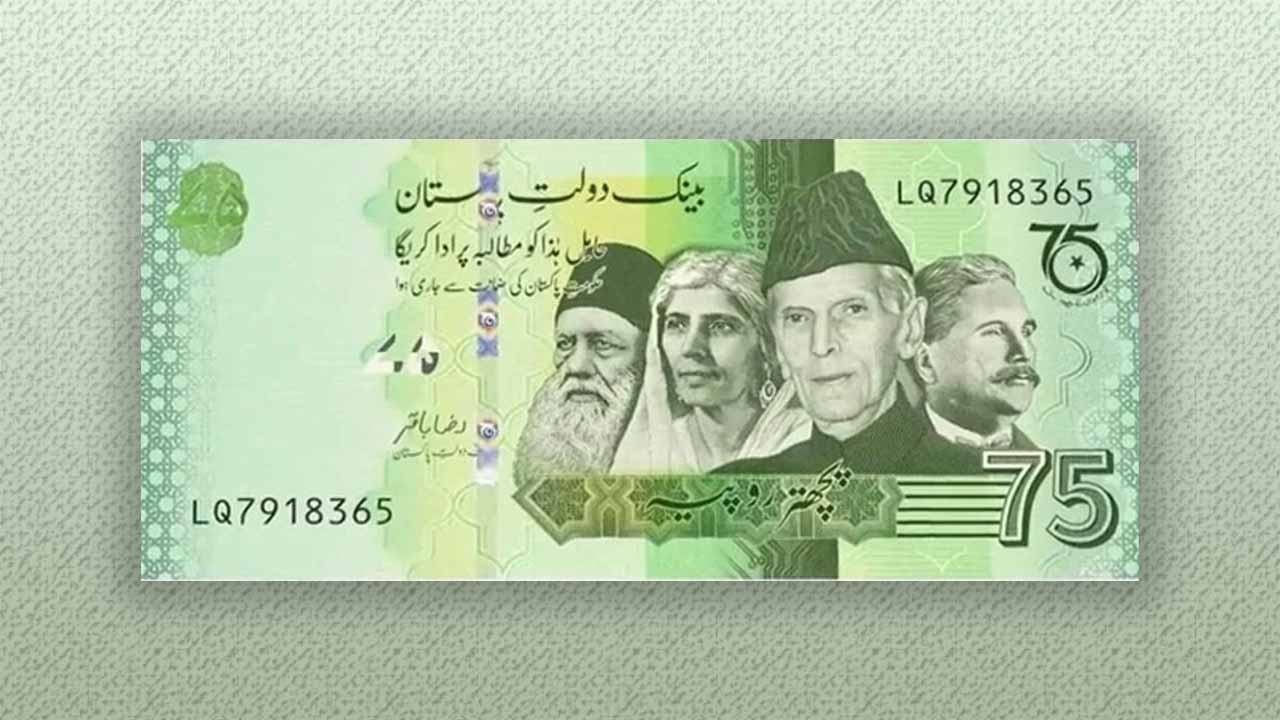
    The commemorative banknote of Rs75 is available for the general public from September 30 (today), which was released by the State Bank of Pakistan (SBP) on August 14th to mark Pakistan’s 75th Independence Day.

    At a ceremony held at the SBP offices in Karachi on August 14, 2022, the design of this commemorative banknote was presented.

    The SBP announced in a statement that starting on September 30, the general public can get the commemorative Rs75 banknote from SBP BSC offices and commercial banks’ branches.

    As a result, the Quaid-e-Azam Muhammad Ali Jinnah, Allama Sir Muhammad Iqbal, Mohtarma Fatima Jinnah, and Sir Syed Ahmed Khan are shown on the banknote’s obverse, according to the statement.

    According to SBP, the reverse of the banknote emphasises the nation’s commitment to combating climate change and its effects on Pakistan. This issue has become even more urgent in light of the unprecedented loss brought on by the recent torrential rains and flooding that affected large portions of Pakistan, according to SBP.

    The portraits of the national animals Markhor and Deodar on the reverse also draw attention to the threat of extinction and the necessity of protecting these species.

  • Pakistani rupee crashes against US dollar for 11th day in a row

    Pakistani rupee crashes against US dollar for 11th day in a row

    For the eleventh session in a row, Pakistan’s rupee has lost value versus the US dollar, falling 0.41 per cent on Friday in the interbank market as the dollar gained momentum throughout the world and investors’ concerns about the increasing trade imbalance intensified.

    The rupee dropped by Rs0.96, according to the State Bank of Pakistan (SBP), and ended the day at Rs236.84. The rupee has lost Rs18.24, or 7.7 per cent, overall over the last 11 trading sessions against the US dollar.

    In the interbank market on Thursday, the Pakistani rupee declined against the US dollar for the tenth straight session as investors expected funding from allies and foreign creditors. It ended the day down 0.66 per cent at Rs235.88.

    The local currency increased in value last month as a result of Pakistan fulfilling all previous IMF requirements, which allowed the programme to resume. This development enabled Pakistan to receive $1.17 billion under the Extended Fund Facility (EFF).

    The local currency has recently, however, been under intense pressure once more and is currently hovering close to its all-time low as funding anticipated from allies has not yet materialised.

    Additionally, the State Bank of Pakistan’s (SBP) foreign exchange reserves decreased by $176 million, reaching $8.62 billion as of September 9, 2022, according to information made public on Thursday.

    According to the SBP, the nation possessed $14.32 billion in liquid foreign reserves. Commercial banks held $5.7 billion in net foreign reserves.

    Globally, the dollar remained close to recent highs on Friday as Treasury yields rose and the demand for the currency persisted on expectations that the Federal Reserve would need to raise rates further to control inflation.

    The US dollar index, which compares the value of the dollar to a basket of other currencies, increased to Rs109.69, which is not far from its two-decade high of Rs110.79.

    In the meantime, oil prices—a crucial factor in determining currency parity—were largely stable on Friday, but they were headed for a weekly decrease due to worries about sudden interest rate hikes that would likely slow global economic growth and fuel demand.

  • Pakistan’s current account deficit shrinks to $1.2 billion, reflecting decline in imports

    Pakistan’s current account deficit shrinks to $1.2 billion, reflecting decline in imports

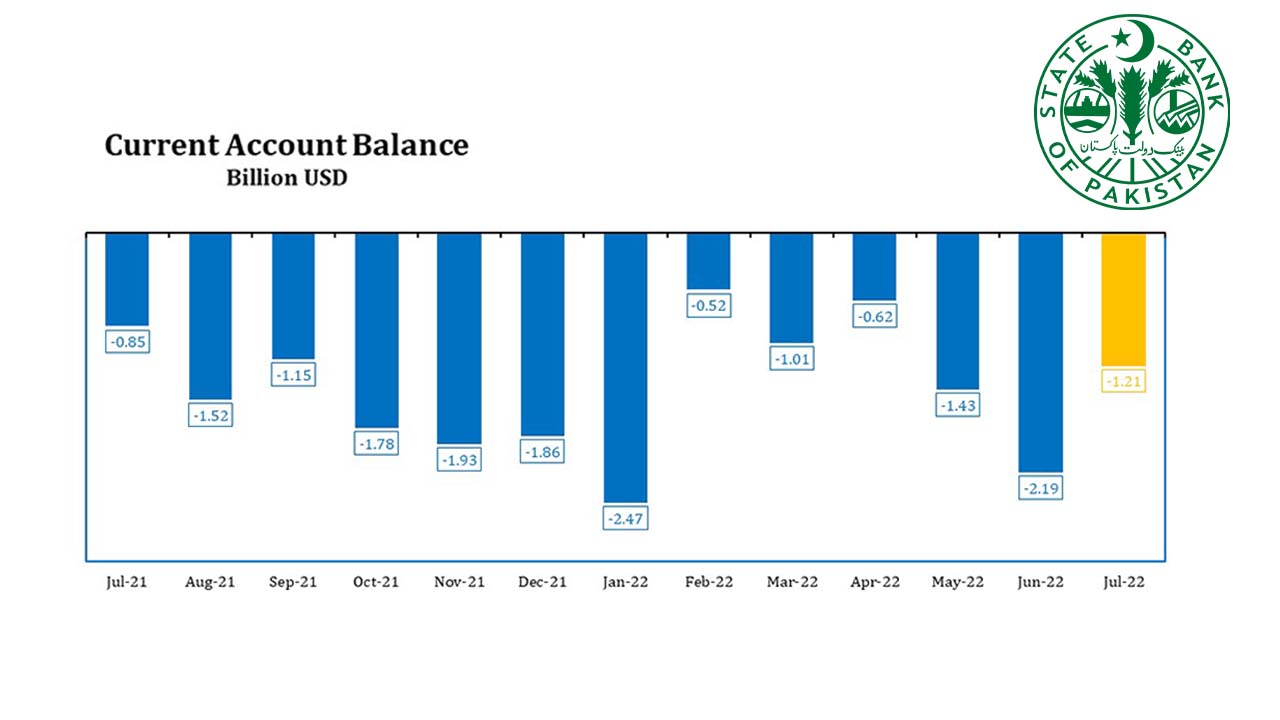
    According to figures provided by the State Bank of Pakistan (SBP) on Wednesday, Pakistan’s current account deficit (CAD) decreased to $1.2 billion in July from $2.2 billion in June, reflecting a 45.45 per cent month-over-month decrease.

    The SBP ascribed the dip to a significant reduction in energy imports and ongoing moderation in other imports.

    “The narrower deficit is the result of wide-ranging measures taken in recent months to moderate growth and contain imports, including tight monetary policy, fiscal consolidation & some temporary administrative measures,” it said in a tweet.

    But the current account deficit widened by 42 per cent year over year. In July 2021, a deficit of $851 million was reported as opposed to a deficit of $1.1 billion this year, according to the online financial statistics and analytics portal Mettis Global.

    The trade deficit in services, which is still negative, decreased by 62 per cent month over month as a result of a 40 per cent decline in imports and a 17 per cent decline in exports. According to the figures, the trade balance in services was $260 million in July as opposed to $682 million in June.

    The Mettis Global study showed a 9 per cent reduction in the trade deficit year over year.

    It also pointed out that worker remittances, which it referred to as the foundation of the economy, fell by 9 per cent from one month to the next, coming in at $2.52 billion in July as opposed to $2.76 billion in June.

  • IMF to send Letter of Intent soon to release $1.17 billion tranche

    IMF to send Letter of Intent soon to release $1.17 billion tranche

    The International Monetary Fund’s (IMF) agreement with Pakistan to release two tranches totaling $1.17 billion as part of a loan facility that was stalled is nearing completion, as the Letter of Intent (LoI) from the fund may arrive in a few days.

    Pakistan is likely to receive the LoI, which the governor of the State Bank of Pakistan (SBP) and the Finance Minister, Miftah Ismail, will jointly sign, according to The News.

    The IMF mission leader had to rush to Australia for a personal engagement, according to senior officials at the Finance Ministry, thus the Fund was likely to submit the LoI “anytime soon.”

    The IMF board would also discuss adding $1 billion to a $6 billion programme agreed upon in 2019 at its meeting scheduled for August 24.

    The government may impose higher taxes on cigarettes, tobacco leaves, fertiliser, and other items in order to appease the IMF.

    Additional taxes are being considered for a variety of sectors. Through a Presidential Ordinance, tax rates on cigarettes and the processing of tobacco leaf might be increased.

  • Pakistan to overcome $4 billion external financing gap soon: SBP

    Pakistan to overcome $4 billion external financing gap soon: SBP

    In the midst of intense pressure on foreign currency reserves, Pakistan will soon close its $4 billion shortfall in external finance with the assistance of friendly nations under IMF conditions, according to Acting Governor of the State Bank of Pakistan (SBP) Dr Murtaza Syed.

    He also acknowledged that inflation will continue to be higher for the ensuing 11 to 12 months, which is why the central bank was aiming for an average inflation target of 18 to 20 per cent for the current fiscal year 2022–2023

    According to The News, acting SBP Governor Dr. Murtaza Syed stated that Pakistan has already met its gross external financing requirements of $34 to $35 billion.

    However, Islamabad is also attempting to secure confirmation of $4 billion in inflows from friendly nations like Saudi Arabia, the UAE, and Qatar. According to him, these extra dollar inflows will be used to boost foreign currency reserves and build a safety net in case of a crisis-like circumstance.

    He resisted providing a specific timeline but assured that the $4 billion finance deficit will be closed quickly. He argued that urgent attempts were being made by the government and IMF high-ups to secure confirmation from their respective nations.

    Denying that the scenario was similar to Sri Lanka, he praised Bangladesh and claimed that nation performed properly, chose to return to the IMF, and also increased utility costs while maintaining enough levels of foreign exchange reserves.

    Speaking of increasing inflation, he believed that supply interruptions abroad had set the way for a global super cycle of commodities, leaving Pakistan with no choice but to concentrate on agriculture productivity in order to secure food security.

    According to Murtaza Syed, people would have to deal with this challenging moment because there is no immediate magic wand to manage increased inflation. He said that while it is a challenging time, there is no alternative way to prevent the country from entering a more challenging situation if nothing was done.

    According to the official, the SBP has loosened the cash margin requirements for opening L/Cs for imports and offers incentives to individuals who do so. According to him, the IMF opposed trade restrictions and took action to prevent the depletion of foreign exchange reserves.

    The current pressure on foreign reserves is now anticipated to end within the next two months. He also promoted energy saving as a way to ease the burden of high import costs.

    The senior official believed that as long as the economy’s structural issues persisted, Pakistan will continue to see boom and bust cycles. He gave a recent example in which the nation’s GDP increased by 6 per cent, indicating that the overheating of the economy led to imbalances known as the budget deficit and current account deficit. Although a recession is not imminent, he continued, the economy must be managed carefully.
  • Rupee gets stronger by Rs2.11 to close at Rs224.04 against US dollar

    Rupee gets stronger by Rs2.11 to close at Rs224.04 against US dollar

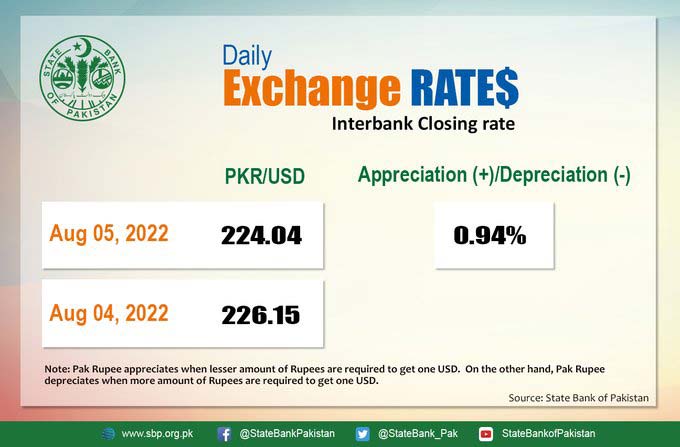
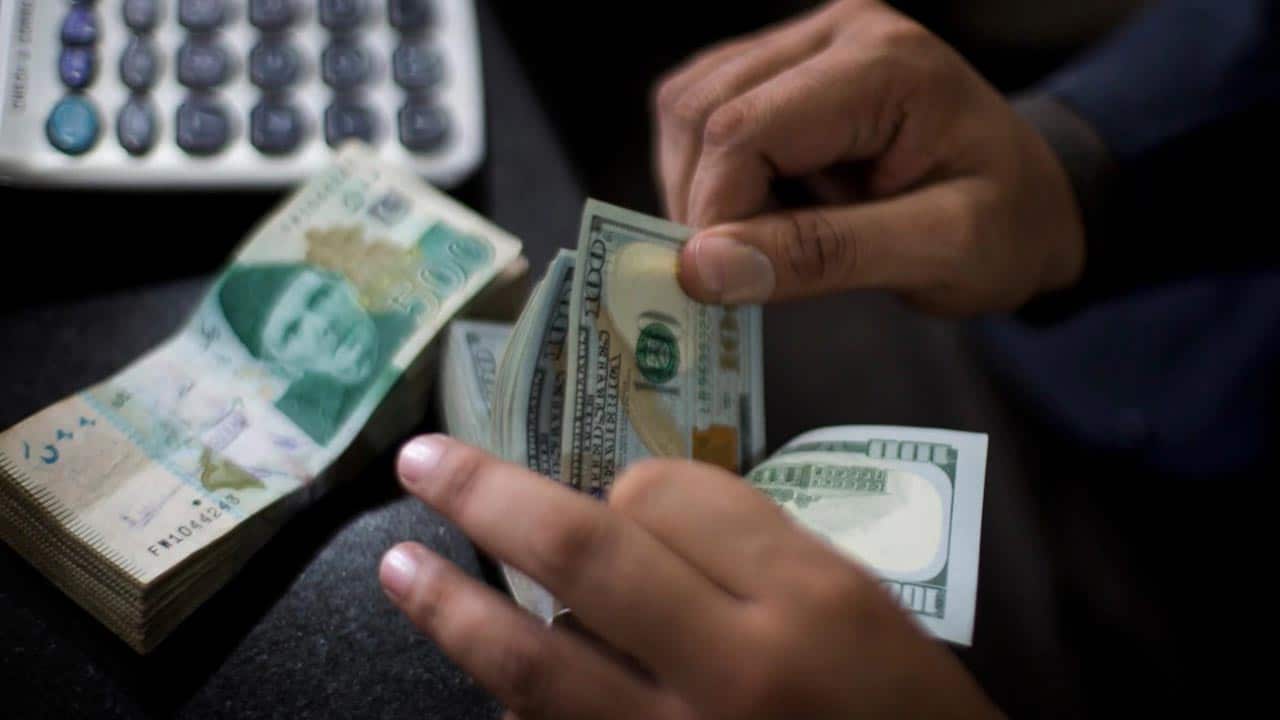
    During intraday trade on Friday in the interbank market, the Pakistani rupee (PKR) climbed by Rs2.11 against the US dollar for the sixth session in a row.

    In the course of the day’s trading, the local currency gained Rs2.11 or 0.94 per cent versus the dollar and closed at Rs224.04, down from Thursday’s closing of Rs226.15.

    Dollar to PKR rate – Friday 8 August 2022

    At yesterday’s closing, the rupee marginally increased by Rs2.65 or 1.17 per cent.

    Following the government’s austerity measures, which caused a sharp rise in inflation but also prevented the nation’s economy from collapsing, the rupee has been on the upswing.

    On Wednesday, PKR increased by Rs9.58 against the US dollar, the local currency saw a significant gain. The biggest one-day rise since 1999, it grew by 4 per cent.

    In his speech at an event at the Pakistan Stock Exchange (PSX), Finance Minister Miftah Ismail said that if the nation can manage imports, exports may be increased through a number of strategies.

    After the coalition partners made unpopular decisions, Miftah stated Pakistan was “on the right track” and that the pressure on the rupee will continue to lessen in the days ahead as it strengthened against the dollar.

  • State Bank of Pakistan fines major banks for violating regulations

    State Bank of Pakistan fines major banks for violating regulations

    Banks operating in Pakistan have been slapped with hefty fines from the State Bank of Pakistan (SBP) totaling Rs131.4 million as a result of enforcement action against infractions of its established policies.

    According to the specifics, SBP fined JS Bank Limited Rs85.148 million, the highest sanction of the three banks, for breaking regulator guidelines regarding CDD/KYC, Asset Quality, FX, and General Banking Operations. Additionally, the central bank has recommended JS Bank Limited to improve its processes and controls in the areas that have been highlighted.

    In addition, Habib Bank Limited was fined Rs29.035 million for disobeying regulatory directives regarding CDD/KYC. The bank has been urged to tighten its controls and procedures in the highlighted areas in addition to the punitive action.

    Last but not least, the Bank of Punjab was additionally penalised Rs17.243 million for breaking regulatory guidelines relating to Asset Quality & CDD/KYC. Along with taking legal action, the bank has been urged to tighten its procedures and controls in the highlighted areas.

    The SBP has previously imposed fines totaling more than Rs100 million on four banks for regulatory violations.

    Read more: Rupee gains ground against dollar for second day, closes at Rs238

    Earlier, due to a breach of asset quality regulations, the National Bank of Pakistan (NBP) was fined Rs19.26 million. Additionally, U Microfinance Bank Limited which is owned by Ufone was fined Rs10.26 million and given the go-ahead to launch an internal investigation into any violations of regulatory directives as well as to discipline any indiscreet employees.

    According to SBP, these actions are based on shortcomings in the observance of regulatory directives and do not reflect poorly on the businesses’ financial soundness.

  • Rupee gains ground against dollar for second day, closes at Rs238

    Rupee gains ground against dollar for second day, closes at Rs238

    Following days of increases in the interbank and open markets, the US dollar fell against the Pakistani rupee on Tuesday as a result of assurances from the government and State Bank of Pakistan (SBP) that the nation will have enough money for FY2022-23 after receiving IMF tranches.

    For the third straight session, the Pakistani rupee appreciated versus the US dollar in the interbank market on Tuesday. This occurred as a result of the market’s stability following the government’s assurance that it would successfully tackle the challenging economic situation.

    After the rupee dropped for 10 straight sessions in the final days of July and depreciated by about 5 per cent just last week, the dollar began to lose strength on Friday.

    Tuesday’s interbank trading ended with the rupee up a pitiful Rs0.46 or 0.19 per cent, reaching Rs238.38, from 238.84 in the previous trading session. In the meantime, the open market exchange rate remained constant at Rs241.

    Forex dealers report that the US dollar lost Rs0.94 in interbank trading and is now trading at Rs237.90. The banks are offering to sell dollars for Rs238.50.

    The US dollar dropped to Rs239 in the open market after crossing the Rs250 threshold.