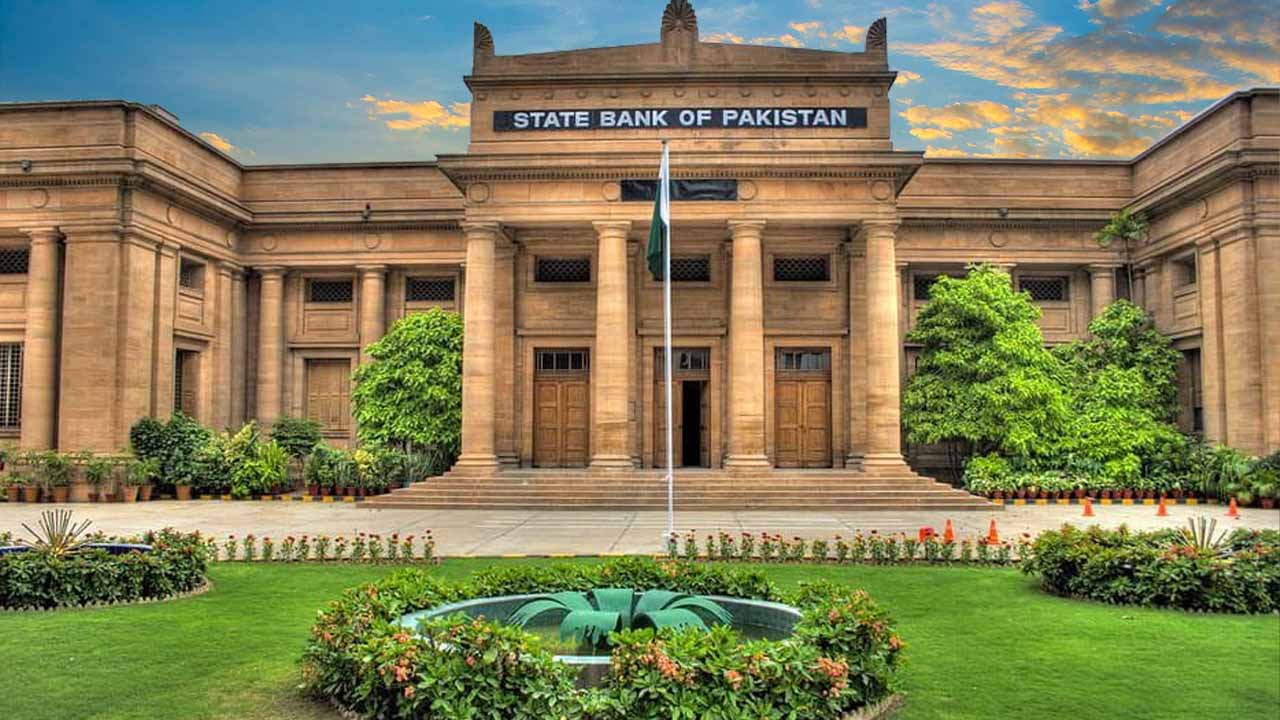
During an emergency meeting convened on Monday, the State Bank of Pakistan (SBP) made the decision to raise the policy rate by 100 basis points (bps), resulting in a new rate of 22 per cent.
1/3 MPC of #SBP convened an emergency meeting today, where it noted that potential upside risks to the inflation outlook have increased from the last meeting, and accordingly decided to raise the policy rate by 100bps to 22%.https://t.co/unuS6xmJHz#SBPMonetaryPolicypic.twitter.com/FWenKLqdkt
The announcement was made subsequent to a gathering of the bank’s Monetary Policy Committee (MPC).
The SBP clarified that the MPC acknowledged a heightened potential for upward risks to the inflation outlook compared to its previous meeting held on June 12.
The committee highlighted that these risks primarily stem from the implementation of new measures in the fiscal and external sectors, which hold significant importance in the context of concluding the ongoing programme with the International Monetary Fund (IMF).
“MPC noted that today’s action is necessary to keep the real interest rate firmly in positive territory on a forward-looking basis that would help in bringing down inflation towards the medium-term target of five to seven per cent by the end of fiscal year 25,” the SBP said.
The National Assembly has passed an amended Finance Bill 2023, marking a significant milestone in the country’s ongoing financial saga. With the revised bill meeting the rigorous conditions set forth by the International Monetary Fund (IMF), hopes are high that this last-ditch effort will unlock a vital infusion of bailout funds.
The IMF had previously voiced its disappointment with the country’s initial budget, deeming it a missed opportunity to implement a more progressive and comprehensive tax framework.
However, determined to rectify this setback, Finance Minister Ishaq Dar introduced a series of new taxes and expenditure cuts, which were instrumental in garnering the Assembly’s approval.
Undoubtedly, the standout feature of this momentous bill is the introduction of fresh taxation measures projected to generate an impressive Rs215 billion in revenue.
In a bold move towards fairness and equity, the Finance Bill also sanctions an increase in tax rates for higher income brackets within both the salaried and non-salaried classes.
Outlined below are the revised income tax slabs for the year 2023, reflecting a more balanced approach to income taxation:
Taxable income range
Tax rate
Not exceeding Rs600,000
0% (Tax-free)
Rs600,001 – Rs1,200,000
2.5% of the amount exceeding Rs600,000
Rs1,200,001 – Rs2,400,000
Rs15,000 + 12.5% of the amount exceeding Rs1,200,000
Rs2,400,001 – Rs3,600,000
Rs165,000 + 22.5% of the amount exceeding Rs2,400,000
Rs3,600,001 – Rs6,000,000
Rs435,000 + 27.5% of the amount exceeding Rs3,600,000
Exceeding Rs6,000,000
Rs1,095,000 + 35% of the amount exceeding Rs6,000,000
1. Tax-free threshold:
Individuals with a taxable income not exceeding Rs600,000 are exempt from income tax obligations.
2. Progressive tax rates:
For those with taxable incomes exceeding Rs600,000 but not surpassing Rs1,200,000, a tax rate of 2.5 per cent will be levied on the amount exceeding Rs600,000.
3. Unchanged tax rate for salaried individuals:
Salaried individuals with taxable incomes ranging from above Rs1,200,000 to Rs2,400,000 will continue to face a tax rate of Rs15,000 plus 12.5 per cent of the amount exceeding Rs1,200,000.
4. Moderate income brackets:
Taxpayers with taxable incomes exceeding Rs2,400,000 but not surpassing Rs3,600,000 will experience a tax rate of Rs165,000 plus 22.5 per cent of the amount exceeding Rs2,400,000.
5. Higher income brackets:
Individuals falling within the income range of Rs3,600,000 to Rs6,000,000 will face a tax rate of Rs435,000 plus 27.5 per cent of the amount exceeding Rs3,600,000.
6. Top earners:
Those with taxable incomes exceeding Rs6,000,000 will be subject to a tax rate of Rs1,095,000 plus 35 per cent of the amount exceeding Rs6,000,000.
With this bold and progressive tax structure, the Finance Bill 2023 promises to forge a more equitable financial landscape.
As the nation eagerly awaits the release of the much-needed bailout funds, this resolute step taken by the National Assembly stands as a testament to the government’s determination to safeguard the country’s economic well-being and chart a path towards sustainable growth.
Google is exploring the possibility of earning revenue through online games on YouTube, as per a recent Wall Street Journal report.
YouTube, a well-known platform for hosting videos, has apparently invited its employees to test a new feature called Playables. This feature allows users to play games directly on YouTube itself. Notably, this feature can be accessed on different devices such as mobile phones and desktop computers, as mentioned in an internal email obtained by the Journal.
Users will have the convenience of playing these games either through a web browser on the YouTube website or via the YouTube app on both Android and iOS devices. Although the report suggests that several games are currently available for testing, it specifically highlights one called Stack Bounce. This arcade game, supported by ads, challenges players to demolish layers of bricks with a bouncing ball.
While YouTube already generates revenue through gaming livestreams, this new product will provide an additional avenue to capitalise on the gaming industry, particularly as advertising spending experiences a downturn.
It is worth noting that this venture differs from Google’s unsuccessful Stadia games streaming service, which was eventually discontinued. With YouTube’s existing vast and dedicated user base, attracting attention to this new feature should not pose a challenge.
Playables bears some resemblance to Netflix’s gaming offering, where paying subscribers gain access to casual mobile games. In a similar vein, Netflix is reportedly exploring the expansion of its gaming initiative beyond mobile devices by testing TV games that employ smartphones as controllers, demonstrating ambitious plans for the future.
The federal government has implemented a considerable increase in excise duty on vehicle registration for vehicles with engine capacities exceeding 2000cc in the Finance Bill for the fiscal year 2023-2024.
Under the new regulations, a fixed tax rate of six per cent has been imposed on vehicles ranging from 2001cc to 2500cc. Individuals who file their taxes will be subject to a tax payment of Rs0.25 million for vehicles falling within this range.
For vehicles with engine capacities between 2501cc and 3000cc, the government has introduced an eight per cent fixed tax rate. Previously, filers were required to pay Rs0.2 million, while non-filers were subjected to a higher tax amount of Rs 0.4 million. Furthermore, a substantial ten per cent fixed tax has been imposed on the registration of vehicles with a capacity of 3000cc.
The National Assembly has already approved the Finance Bill for the upcoming fiscal year, incorporating vital budgetary proposals. Finance Minister Ishaq Dar presented the bill to the House, outlining a total outlay of Rs14,480 billion.
The passage of the federal budget in the House was a crucial step taken to address the concerns of the International Monetary Fund (IMF) and secure the revival of a suspended loan program. In light of these developments, revisions were made to the tax collection target, raising it from Rs9,200 billion to Rs9,415 billion.
To accommodate increased pension payments, an allocation of Rs801 billion has been designated, reflecting a significant rise from the previously allocated amount of Rs761 billion. These measures demonstrate the government’s commitment to addressing pressing fiscal matters and ensuring financial stability.
Amid scorching heatwave conditions, the prolonged power cuts have aggravated the misery of citizens, exacerbating the energy shortfall, which now exceeds 6,500 megawatts.
According to sources from the Power Division, the country’s total electricity production stands at 20,402MW, while the demand has surged to 27,000MW.
Presently, private sector plants contribute 8,900MW of electricity, and hydropower accounts for 6,200MW.
Additionally, nuclear power plants generate 3,164MW, government thermal plants produce 956MW, and wind projects contribute 1,245MW, as per the sources.
Meanwhile, the Pakistan Meteorological Department (PMD) has forecasted pre-monsoon rains accompanied by dust thunderstorms in the central and upper regions of the country.
It is expected that the heatwave conditions will alleviate starting from June 25.
In a recent development, the State Bank of Pakistan (SBP) has taken the decision to lift all import restrictions as part of fulfilling a condition set by the International Monetary Fund (IMF).
The central bank issued a circular to officially end these restrictions, thereby satisfying another requirement put forth by the IMF.
To facilitate the release of over 6,000 containers, the federal government has granted permission to banks for remittance provision. The circular issued by the SBP states that remittances will be provided for all imports following the implementation of this latest order. The central bank has instructed authorised dealers to process remittances based on the recommendations of stakeholders.
It came to light yesterday that Pakistan and the IMF are facing challenges in reviving a loan program, leading to disagreements between the Ministry of Finance and the IMF. Sources revealed that the plan to bridge the external financing gap relied on funds received from a donor conference held in Geneva.
The primary objective of the conference was to garner support and contributions for Pakistan’s financial requirements. As part of this plan, the IMF was tasked with securing $500 million by June through the Geneva Donor Conference. However, efforts to obtain funds for the Ministry of Planning and Treasury have encountered obstacles. Delays in finalising contracts and agreements under the Donor Conference have further impeded the financing process.
Sources within the Ministry of Finance report that the amount received through the Geneva Donor Conference currently stands at $150 million, falling short of the expected sum. This has raised concerns from the IMF, which has expressed dissatisfaction with the level of financial support obtained through the conference.
According to ARY News, the funds acquired from the Donor Conference will be allocated to crucial recovery and rehabilitation projects in regions affected by floods. The aim is to address the needs of these communities and provide support for their restoration efforts.
On Friday, the price of gold in Pakistan witnessed a decline of Rs1,500 per tola, losing its luster due to a decrease in the international market.
The All-Pakistan Sarafa Gems and Jewellers Association (APSGJA) released data indicating that the price of 24-carat gold dropped by Rs1,500 per tola and Rs1,285 per 10 grammes, settling at Rs217,000 and Rs186,043, respectively.
Concurrently, the international market saw a $10 decrease, with the yellow metal settling at $1,919 per ounce.
Recent times have seen the gold rate in Pakistan fluctuate amidst ongoing political and economic uncertainty, as well as high inflation. Consequently, individuals tend to view this precious commodity as a secure investment and a hedge during such periods. The association’s data revealed that the price of silver remained unchanged at Rs2,550 per tola and Rs2,186.21 per 10 grammes.
Furthermore, the data highlighted that the cost of bullion in Pakistan is Rs4,000 per tola lower than the Dubai market, indicating that the Pakistani gold market currently offers more affordable prices than the global market.
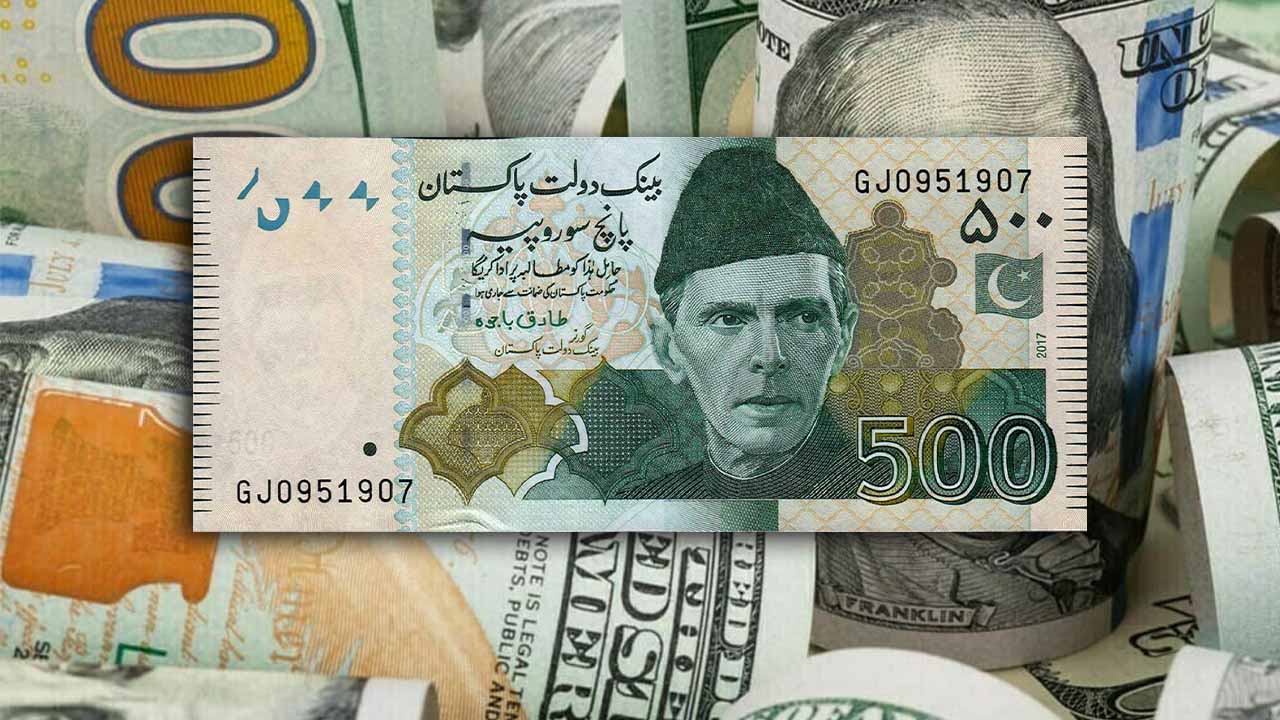
In terms of foreign exchange, the Pakistani rupee maintained stability against the US dollar, experiencing a nominal increase of Rs0.01. The interbank market closed on Friday with the exchange rate at Rs286.74.
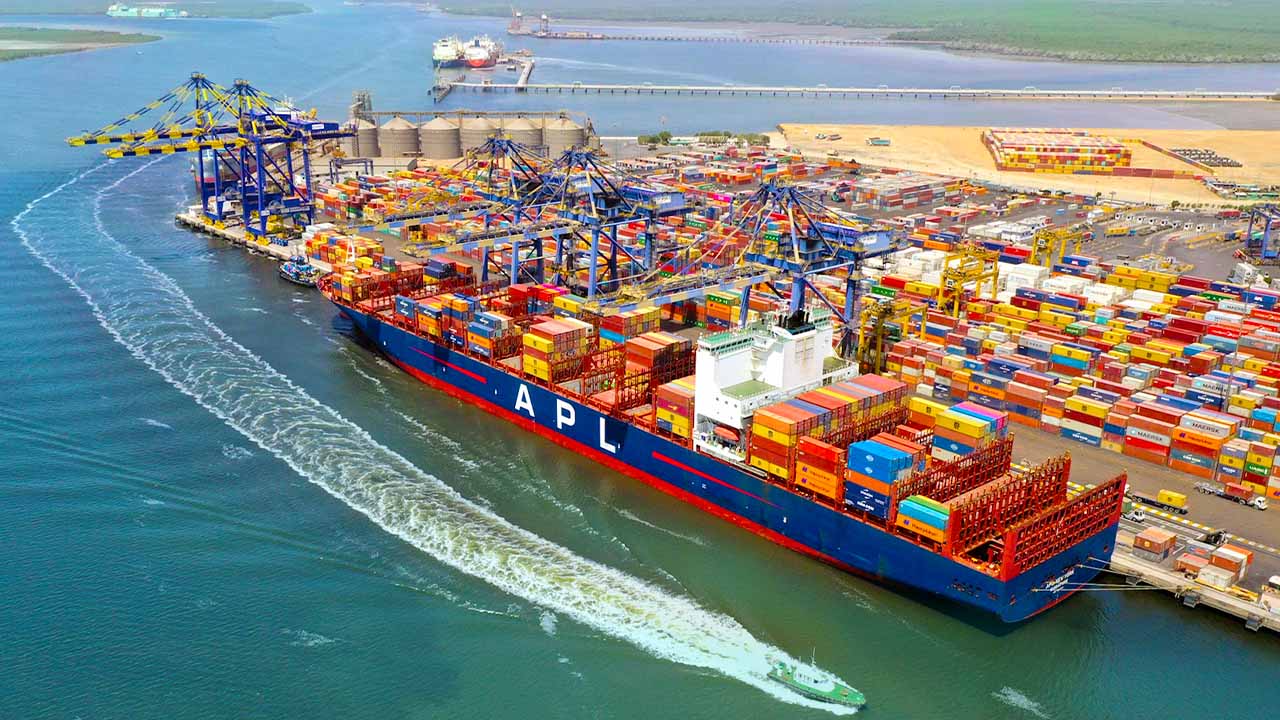
The AD Ports Group, based in the United Arab Emirates (UAE), has entered into a 50-year concession agreement with the Karachi Port Trust (KPT) to manage and develop the Karachi Gateway Terminal Limited (KGTL).
The group will invest $220 million in infrastructure development over the first 10 years of the agreement. This agreement is particularly significant as Pakistan seeks external financing to support its struggling economy.
According to the terms of the agreement, a joint venture has been established between AD Ports Group and Kaheel Terminals, a UAE-based company, with AD Ports Group as the majority shareholder. The joint venture will oversee the management, operation, and development of the KGTL, specifically berths 6-9 at Karachi Port’s East Wharf.
The infrastructure investment will focus on deepening berths, extending quay walls, and expanding the container storage area. These enhancements will enable the terminal to accommodate larger vessels and increase its annual container capacity from 750,000 to 1 million TEUs.
Captain Mohamed Juma Al Shamisi, the Managing Director and Group CEO of AD Ports Group, expressed enthusiasm about the concession agreement, stating that it aligns with the group’s strategy of investing in strategic maritime trade routes. He believes that this agreement has the potential to bolster the economies of both the UAE and Pakistan, foster stronger relationships with key trading partners, and drive economic growth and prosperity.
The terminal’s operations are denominated in US dollars, minimising exposure to fluctuations in the Pakistani rupee. The terminal has historically generated revenues of approximately $55 million and an annual EBIDTA of around $30 million.
The UAE and Pakistan have a robust trade relationship, with the UAE serving as Pakistan’s leading regional trading partner in 2021. Bilateral trade between the two countries accounted for over 40 per cent of Pakistan’s trade with Arab nations. In 2022, non-oil exports from the UAE to Pakistan amounted to nearly AED 4.8 billion ($1.3 billion), while re-exports from the UAE to Pakistan reached AED 10.6 billion (US$2.9 billion), demonstrating a 7.7 per cent growth compared to 2021.
According to Geo, the agreement between AD Ports Group and KPT has been hailed as a significant milestone by Syed Syedain Raza Zaidi, Chairman of Karachi Port Trust. Zaidi believes that this collaboration will pave the way for a thriving container terminal, driving efficiency, attracting investment, and stimulating economic development in Karachi.
The State Bank of Pakistan (SBP) has raised concerns about commercial banks jeopardising depositors’ funds by allowing unauthorised mobile phone applications to offer online banking services to clients.
The central bank issued a notification to regulated entities (REs) that provide digital banking services, warning about the use of unlicensed digital lending mobile applications and platforms.
These applications integrate with customers’ bank accounts for loan disbursement, creditworthiness checks, and collections, posing consumer protection risks and potential harm to banks’ reputation.
Regulated entities encompass commercial banks, microfinance banks (MFBs), payment system operators, payment service providers, and electronic money institutions (EMIs).
The central bank explicitly stated that REs should not provide services such as deposits, lending products, mobile application integration with third parties, payment gateway services, credit scoring and creditworthiness checks, wallet services, and/or API integration services to unlicensed digital lending platforms, whether directly or indirectly.
IT expert Noman Ahmad, speaking to The Express Tribune, emphasised the need for the central bank to disclose the names of financial institutions offering services through unlicensed applications. By doing so, depositors would have the opportunity to withdraw and safeguard their deposits before any unexpected events occur. He expressed surprise that unauthorised mobile platforms were offering banking services despite the SBP’s status as a responsible regulator.
Banks in Pakistan manage deposits totaling approximately Rs23 trillion and serve 67.52 million depositors in a population of 227 million. The country has 103 million branchless banking accounts, while EMIs oversee 1.60 million accounts (e-wallets).
The SBP’s notification advises REs to verify the licensing status and authorisation of digital lending platforms and mobile applications from relevant regulatory bodies, including the Securities and Exchange Commission of Pakistan and the central bank itself. This verification should be conducted as part of the know-your-client and customer due diligence processes.
Furthermore, REs are urged to implement reasonable measures during customer onboarding and transaction monitoring to prevent unauthorised financial service providers from utilising their banking channels and platforms, either directly or indirectly.
The Pakistani rupee continued its upward trend against the US dollar for the third consecutive session in the inter-bank market on Thursday, appreciating by 0.09 per cent. According to the State Bank of Pakistan (SBP), the currency settled at Rs286.73 at the close, showing an improvement of Rs0.25 compared to the previous day’s rate of Rs286.98.
In a significant development, Finance and Revenue Minister Ishaq Dar met with US Ambassador to Pakistan Donald Blome on Wednesday to discuss the economic ties between Pakistan and the United States, as well as the International Monetary Fund (IMF) loan program.
This meeting took place following the IMF’s criticism of Islamabad’s budget proposals for the fiscal year 2023-24. Esther Perez Ruiz, the IMF’s Resident Representative for Pakistan, expressed dissatisfaction with the budget proposals, describing them as a missed opportunity to broaden the tax base. She also criticised the new amnesty scheme, stating that it sets a damaging precedent.
Separately, Prime Minister Shehbaz Sharif stated on Wednesday that the immediate goal, with the assistance of the Special Investment Facilitation Council (SIFC), is to increase Foreign Direct Investment (FDI) in the country to $5 billion.
On the international front, the US dollar remained close to a one-month low against a basket of currencies on Thursday. This followed Federal Reserve Chair Jerome Powell’s testimony, where he maintained his usual stance and offered little room for surprise.
Powell’s comments to lawmakers on Capitol Hill aligned with the central bank’s previous policy meeting, indicating that further rate increases are likely if the economy continues its current trajectory. As a result, the greenback depreciated by nearly 0.5 per cent against six major peers in the previous session.
Meanwhile, oil prices slightly declined on Thursday. Market expectations of further interest rate hikes were balanced by potentially bullish US oil inventory data, which indicated a decrease in stocks.