Category: Business

  • US expresses confidence in Pakistan’s economic policies and offers support for bilateral relations

    US expresses confidence in Pakistan’s economic policies and offers support for bilateral relations

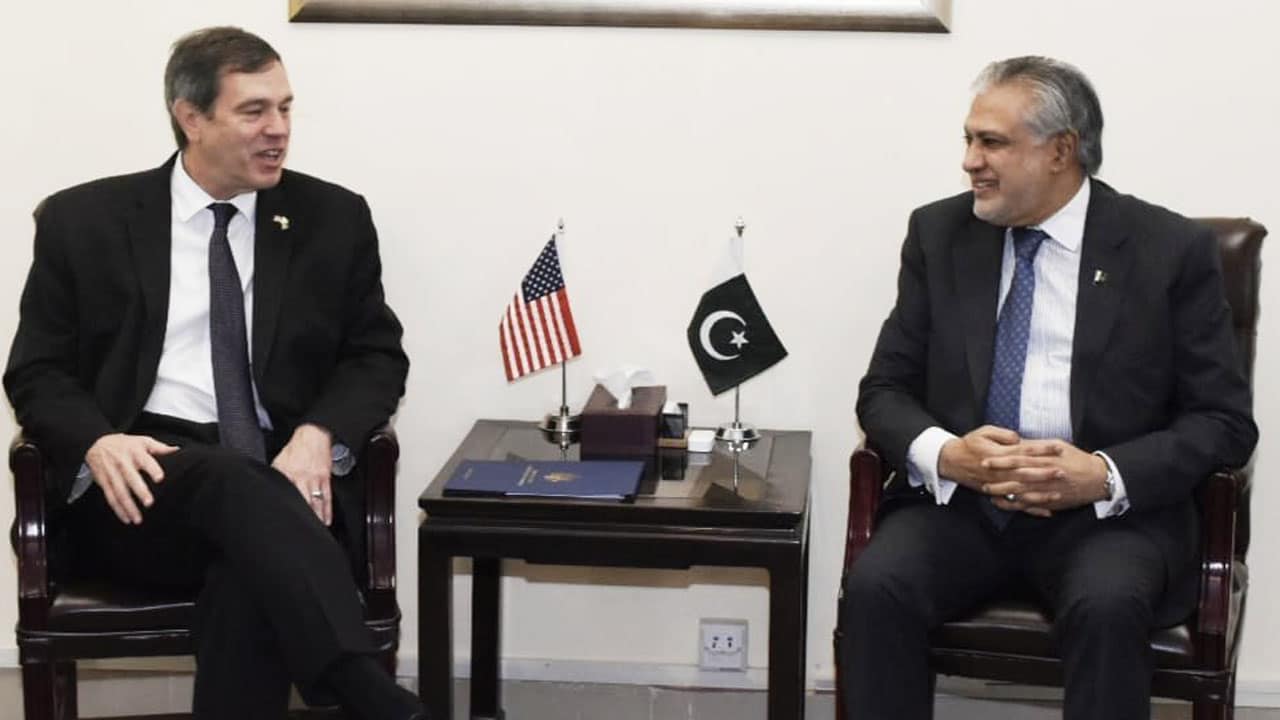
    On Wednesday, Finance Minister Senator Ishaq Dar reaffirmed the federal government’s commitment to the International Monetary Fund (IMF) programme during a meeting with US Embassy Charge’d Affaires Andrew Schofer at the Finance Division.

    Dar informed Schofer about the ongoing programme and assured him that the government was dedicated to completing it. Schofer expressed his confidence in Pakistan’s economic policies and programs and offered his support to strengthen economic and trade relations between the two nations.

    The finance minister also discussed the current economic challenges and policy decisions taken by the government to stabilize and promote sustainable and inclusive growth. Both parties exchanged their views on the notable bilateral relations between the US and Pakistan.

    Dar thanked the US Charge’d Affaires and reiterated the government’s desire to expand bilateral trade and investment ties. The meeting followed a report published by The News that stated the IMF and Pakistani authorities were holding each other responsible for the delay in reviving the stalled programme.

    It is still uncertain how Pakistan will proceed to accomplish the current IMF programme, which expires on June 30, 2023.

  • SSGC, SNGPL customers face load shedding and low gas pressure

    SSGC, SNGPL customers face load shedding and low gas pressure

    Many households in Pakistan served by the Sui Southern Gas Company (SSGC) and Sui Northern Gas Pipelines (SNGPL) are experiencing low gas pressure or no gas supply in the month of May. SSGC customers are facing seven to eight hours of load shedding, from 10 pm to 5-6 am, while SNGPL residential consumers are encountering a similar situation.

    The SSGC is facing a gas shortfall of 265 mmcfd as its demand is 1,165 mmcfd, but its supply is only 900 mmcfd, including 90 mmcfd of RLNG. The Sui Northern system has also lost 85 mmcfd gas for 12 days due to annual maintenance.

    A spokesperson from SSGC stated that the gas load shedding is being done for seven to eight hours to maintain the gas line pack so that the gas supply can be provided for 16-17 hours. Balochistan is receiving only 109 mmcfd of gas. The Sui Northern system’s situation is also vulnerable due to the suspension of supply from the Nashpa plant for 12 days.

    An official from Sui Northern stated that the gas companies are only providing gas for cooking times as per their agreement with residential consumers and not for 24 hours. However, the gas companies used to supply gas for 24 hours, which was not agreed upon by the domestic consumers.

    According to The News, the Punjab power sector is receiving 605 mmcfd RLNG, while the fertiliser sector is receiving 88 mmcfd. The power sector’s RLNG consumption has reduced to 605 mmcfd due to low temperatures. The government is receiving 900 mmcfd gas, but it has a purchasing capacity of 1,200 mmcfd. Pakistan is receiving RLNG of nine cargoes on long-term agreements, eight from Qatar and one from ENI.

    Despite the decline in RLNG prices to $12-13 per barrel in the international market, Pakistan LNG Limited (PLL) is reportedly unable to purchase spot cargoes due to a dollar liquidity crisis.

  • Future of Jobs Report: 83 million jobs to be eliminated globally by 2027

    Future of Jobs Report: 83 million jobs to be eliminated globally by 2027

    The World Economic Forum (WEF) has published its Future of Jobs Report 2023, which examines how global trends and technologies may impact the job market, including in Pakistan. The report predicts that artificial intelligence (AI) and big data will be vital for companies’ skills strategies worldwide. The report also warns that 83 million jobs may disappear in the next five years across the world, with some jobs becoming obsolete.

    The report indicates that 23 per cent of jobs are expected to change by 2027, with 69 million new jobs created and 83 million eliminated. The green transition and localisation of supply chains are expected to generate a net increase in jobs. Cognitive skills, such as analytical and creative thinking, will be the most crucial skills for workers in the next five years, with companies focusing on AI and big data in particular.

    The study provides a comprehensive evaluation of Pakistan’s performance related to the Future of Jobs in 2023 and predicts how the job market will unfold in the next 5-7 years. Pakistan has the most negative outlook globally, with a lower skill stability than the global average. The report identifies several global trends and technologies that will affect Pakistan’s job market, such as digital platforms and apps, big-data analytics, and education and workforce development technologies. These trends and technologies will play a crucial role in creating new employment opportunities and driving industry transformation.

    WEF’s report suggests that while reskilling and upskilling towards green skills is growing, it is not keeping pace with climate targets. The working-age population in Pakistan is 85.78 million, indicating a vast pool of potential talent. The country’s labor force participation rate is 57 per cent, with 55 per cent of the workforce in vulnerable employment. However, the unemployment rate remains relatively low at 5 per cent. It also highlights that 82 per cent of companies plan to adopt education and workforce development technologies in the next five years.

    Mishal Pakistan, the Country Partner Institute of the Center for New Economy and Societies Platform, World Economic Forum, has announced plans to develop a comprehensive report on the Future of Jobs for Pakistan in the third quarter of 2023.

    Amir Jahangir, Chief Executive Officer of Mishal Pakistan, believes that by strengthening the education system, investing in vocational and technical training, and fostering a culture of innovation, Pakistan can better equip its population to excel in the global job market. Saadia Zahidi, Managing Director of the World Economic Forum, emphasises that investing in education, reskilling, and social support structures will ensure individuals are at the heart of the future of work.

  • US could default by next month unless debt ceiling is raised

    US could default by next month unless debt ceiling is raised

    Janet Yellen, the United States Treasury Secretary, has written to Republican House Speaker Kevin McCarthy, warning that the federal government may exceed its spending limit by June 1 if Congress does not raise the debt ceiling. Yellen’s letter, which was published on Monday, noted that available data suggests that the government will no longer be able to cover its expenses in early June if Congress does not raise the limit before then.

    Yellen emphasised the importance of Congress taking action to increase or suspend the debt limit as soon as possible, to ensure that the government can continue to make its payments. While Yellen’s letter indicates the US could enter default as early as June 1, she also noted that it is impossible to predict the exact date when Treasury will be unable to pay the government’s bills.

    The potential for a default has raised concerns among experts about its possible impact on the US economy. It could lead to a fall in the US credit rating, resulting in higher interest rates and a possible recession. The process of raising the US spending limits is typically routine, but it has become increasingly contentious in recent years. Republicans in Congress are pushing for steep cuts to social programs in exchange for their support to raise the debt ceiling this year. In contrast, the Biden administration has called for an increase to the debt ceiling without conditions, stating that debates over various programs can be hashed out during negotiations on the yearly budget.

    Last week, the Republican-led House of Representatives passed a bill that agreed to raise the debt ceiling by $1.5 trillion in exchange for $4.5 trillion in spending cuts for programs like healthcare for low-income communities, renewable energy and transportation. The bill is considered dead on arrival in the Democrat-controlled US Senate, and Biden has stated that he would veto it. However, its passage in the House is considered a victory for McCarthy, who has since called for Democrats to approve the bill and avoid a default.

    Democrats have called for a “clean” debt limit increase without haggling or addendums. Virginia Senator Mark Warner tweeted on Monday that the US has about a month until it defaults on paying its debt and emphasised that this is not new spending, but about paying bills already incurred. On May 9, US President Joe Biden reportedly called for a meeting with Democratic and Republican leaders to discuss spending and the debt limit. The Congressional Budget Office has also stated that it sees an increased risk of the government running out of funds by early June due to tax receipts that were lower than expected.

  • Pakistan’s IMF bailout programme revival delayed: blame game between Pakistani authorities and IMF

    Pakistan’s IMF bailout programme revival delayed: blame game between Pakistani authorities and IMF

    Pakistani authorities and the International Monetary Fund (IMF) are blaming each other for the delay in reviving the IMF bailout programme. The IMF approved a $6.5 billion bailout package for Pakistan in 2019, of which $1.1 billion is still outstanding.

    However, issues related to fiscal policy adjustments have delayed the release of the funds since November. The delay has raised concerns as Pakistan has less than a month’s worth of foreign exchange reserves and needs the IMF package to avert defaulting on external payment obligations.

    With the expiry of the existing IMF programme on June 30, 2023, Pakistan’s options for reviving the IMF programme are shrinking with every passing day.

    While Pakistani authorities argue that the IMF is playing politics, IMF sources say they are still waiting for confirmation on the remaining $2 billion from the World Bank and Asian Infrastructure Investment Bank, as well as seeking commercial loans from banks.

    According to Geo, Dr Khaqan Najeeb, former adviser Ministry of Finance, has called for short-term measures, such as funding from friendly countries, the revival of the IMF programme, clarity on programme completion dates, and work on the budget for 2023-24 to be undertaken to avoid Pakistan being near the brink of default.

  • Petrol price unchanged, diesel price slashed by Rs5 per litre

    Petrol price unchanged, diesel price slashed by Rs5 per litre

    The federal government has announced a reduction in the price of diesel by Rs5 per litre, effective immediately, while maintaining the price of petrol for the next two weeks.

    Finance Minister Ishaq Dar said that the prices are revised to provide “maximum relief” to the public, following the directives of Prime Minister Shehbaz Sharif. In addition to the decrease in diesel prices, there will be a reduction of Rs10 per litre in the prices of Kerosene oil and Light Diesel Oil (LDO).

    The new prices have been set at Rs282 per litre for petrol, Rs288 per litre for high-speed diesel, Rs176.07 per litre for kerosene oil, and Rs164.68 per litre for light diesel oil. Diesel is widely used in the transport and agriculture sectors, so the price reduction could have a positive impact on inflation and provide some relief to farmers, particularly as the crop-harvesting season is underway.

    However, consumers are already facing high prices, which are especially burdensome for the low-income group who use motorbikes and small cars.

    In its previous fortnightly announcement, the federal government increased the price of petrol by Rs10 and the price of kerosene oil by Rs5.78, citing the increase in petroleum prices in the international market and exchange rate variations as the reason for the increase.

  • Delayed IMF deal, depreciating rupee push gold price to Rs219,500 per tola

    Delayed IMF deal, depreciating rupee push gold price to Rs219,500 per tola

    As the economic crisis in Pakistan persists and the International Monetary Fund (IMF) programme remains in limbo, the price of gold has surged to new heights. The All Pakistan Sarafa Gems and Jewellers Association (APSGJA) reports that the rate of gold (24 carats) has increased by Rs800 per tola and Rs686 per 10 grams, reaching a settlement of Rs219,500 and Rs188,186, respectively. Similarly, the international market witnessed a $6 increase in the price of gold, bringing it to $1,990 per ounce.

    This steady uptrend in gold prices can be attributed to the weakening of economic fundamentals, the depreciation of the rupee, and the record-high inflation rates. During times of economic uncertainty, individuals often turn to precious metals like gold to protect themselves against inflation and currency depreciation.

    The delay in the IMF agreement has further exacerbated the economic crisis, leading to a negative impact on the currency market and increased demand for gold. Without a much-needed economic bailout, the country risks defaulting, adding to the already tense economic situation.

    While the price of silver remains stable at Rs2,600 per tola and Rs2,229.08 per 10 grams, the rise in gold prices highlights the growing economic concerns in Pakistan.

  • Inflation worsens in Pakistan, affecting purchasing power of millions

    Inflation worsens in Pakistan, affecting purchasing power of millions

    The citizens of Pakistan, a poor country with a population of 220 million, have been struggling with record-high inflation due to the government’s inability to control prices. According to the weekly bulletin released by the Pakistan Bureau of Statistics (PBS), the weekly inflation increased by 46.82 per cent year-on-year and 0.15 per cent week-on-week, ending on April 27.

    The rise in the sensitive price indicator (SPI) was attributed to the increase in the prices of potatoes, chicken, wheat flour, gur, bread, and rice irri-6/9. On the other hand, there was a decrease in the prices of tomatoes, bananas, onions, sugar, LPG, pulse masoor, and mustard oil during the same period. The SPI for the week under review was recorded at 252.20 points, up from 251.83 points the previous week and 171.78 points recorded during the week ended on April 28, 2022.

    Fahad Rauf, head of research at Ismail Iqbal Securities, attributed the moderate increase in SPI mainly to the rise in the prices of potatoes and mutton. The price trend of perishable food items during the Eid week has been mixed, with the prices of some items going up and some going down. Ismail Iqbal Securities predicted that the CPI for April 2023 would come around 38 per cent, up from 35.4 per cent in March 2023, due to house rent revisions and higher wheat prices.

    The absence of the International Monetary Fund (IMF) programme and persistent inflationary pressures may result in another rate hike, as per Ismail Iqbal Securities. An interest rate hike could further discourage businesses, which have already postponed their expansion plans and hiring. Import restrictions have also added to the woes of industries and businesses that have faced frequent shutdowns, resulting in uncertain or no wages for millions of workers.

    The SPI is compiled by PBS by collecting prices of 51 essential items from 50 markets in 17 cities of the country. During the week, prices of 21 items increased by 41 per cent, while prices of seven items decreased by 13.73 per cent, and prices of 23 items remained unchanged, accounting for 45.10 per cent of the total. Various weightages are assigned to different commodities in the SPI basket, with milk, electricity, wheat flour, sugar, firewood, long cloth, and vegetable ghee having the highest weights for the lowest quintile. The price of milk and wheat flour increased, while the price of sugar decreased. The prices of electricity, firewood, long cloth, and vegetable ghee remained unchanged. However, the prices of all these commodities increased on a yearly basis.

  • China’s $57.7 billion railway project aims to boost Pakistan’s economy

    China’s $57.7 billion railway project aims to boost Pakistan’s economy

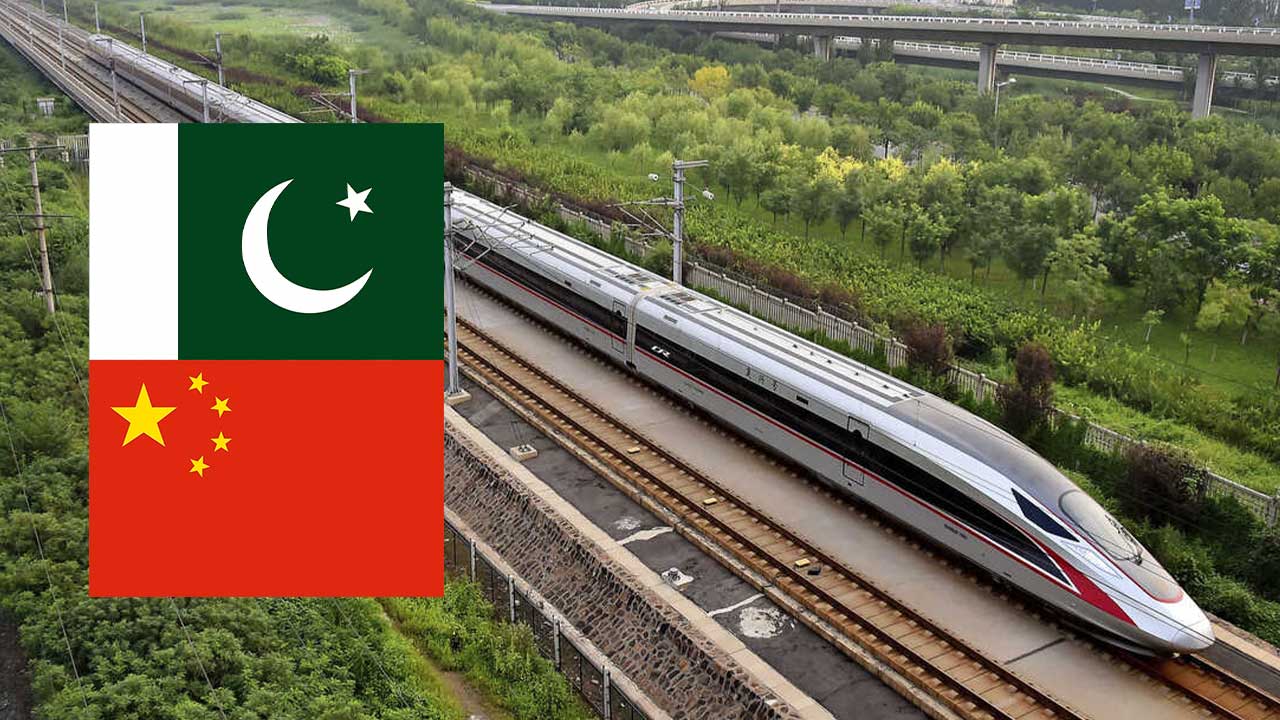
    A study conducted by scientists from China Railway First Survey and Design Institute Group has estimated the cost of a proposed China-Pakistan railway project to be $57.7 billion. The railway will connect Gwadar Port with Xinjiang’s Kashgar, and is expected to have strategic significance, potentially reshaping trade and geopolitics. The project will improve connectivity among the countries along the ancient Silk Road trade routes and is part of a plan to reduce dependence on Western-dominated routes.

    The study urges the Chinese government and financial institutions to provide strong support for the project, including increasing coordination and collaboration among relevant domestic departments and striving for the injection of support funds. Pakistan’s economy is expected to receive a much-needed boost from the infrastructure and will easily trade with China. The researchers said the project is expected to create more jobs, boost infrastructure investment, and increase trade.

    However, the study notes that Pakistan’s GDP last year was just six times the estimated cost of the project, making sufficient financing difficult. Pakistan is mainly relying on Chinese enterprises for investment and construction, as it is unable to provide sufficient financial and material support.

    Moreover, the security issues in Pakistan pose a risk to Chinese workers and investments, which may hinder the railway project. Despite these challenges, the study emphasizes the strategic significance of the railway project and urges strong support and policy guarantees for its construction.

  • US urges Pakistan to implement IMF reforms as economic crisis deepens

    The United States has urged Pakistan to take urgent action to implement the necessary reforms required by the International Monetary Fund (IMF) to address the country’s rising economic crisis. Inflation has been a major issue for Pakistan, and discussions between the two parties have been ongoing since January to find a consensus on multiple conditions before signing a deal that includes external financing from friendly nations.


    Elizabeth Horst, the State Department official in charge of Pakistan, stressed the importance of Pakistan’s compliance with the IMF’s agreed-upon reforms to ensure the country’s financial stability and avoid falling further into debt. She emphasised that although the reforms may not be easy, they are essential for the growth of Pakistan’s economy.


    Horst also expressed the US government’s concern over Pakistan’s economic situation and promised support for the country, particularly in policy, business, and transparency. She pointed out that the trade relationship between the two countries is already worth over nine billion dollars and will continue to increase.


    Highlighting the close cooperation between the US and Pakistan in areas such as trade and investment, climate change, and security, Horst revealed that the Pakistan-US Green Alliance has been initiated to further enhance these relations. She emphasised the importance of Pakistan’s sovereignty and that it is free to make its own choices.


    The State Department official also emphasised that both countries are working together to ensure regional security, counter-terrorism, and counter-narcotics. She expressed concern over the rising number of terrorist incidents in Pakistan and stressed the importance of continuing cooperation between the two countries to prevent Afghanistan from becoming a haven for terrorists.


    Horst concluded by stating that a peaceful and stable Afghanistan is in the interest of both Pakistan and the US. She emphasised the importance of pushing the Taliban to fulfill their promises for peace and stability, as thousands of lives have already been affected by terrorism.