Category: Business

  • Real estate in Pakistan is ‘parking lot’ for untaxed money with support of DHAs and Army, says former FBR chairman

    Real estate in Pakistan is ‘parking lot’ for untaxed money with support of DHAs and Army, says former FBR chairman

    Shabbar Zaidi, the former Chairman of the Federal Board of Revenue in Pakistan, stated that only 300 companies out of the entire business sector in the country pay 70 per cent of the total taxes collected.

    According to Dawn, Zaidi dismissed the claims of some businesses that there were too many taxes in Pakistan and no dividends. He pointed out that the real estate was the “parking lot” of untaxed money, and that with the support of the DHAs and army, a system had been developed to officially launder money through real estate, which had perpetual amnesty in the country.

    He called for removing DHAs from the real estate business as there could not be fair competition between a state institution and private businesses in real estate, and also suggested that plots of land should be confiscated if construction was not done on them.

    Kashif Anwar, the president of the Lahore Chamber of Commerce and Industry, argued in favor of amnesty on undeclared foreign reserves to bring money back to the country.

    In another session, Tassaduq Hussain Jillani, the former Chief Justice of Pakistan, acknowledged that criticism of the Supreme Court for messing up big corporate cases was justified as the judges were not expert at finance and economics.

    Jillani suggested the formation of commercial benches in the SC and high court for such cases. In a session on local governments, Ammar Ali Jan, the general secretary of Haqooq-i-Khalq Party, criticized the absence of local government in the country, citing examples of polluted water and waste management issues.

  • Nawaz gets a Mercedes, Zardari BMWs: New list of Toshakhana gifts reveals what previous govts kept for themselves

    On Sunday, the government officially released long-awaited records regarding the gifts received by public office holders from foreign governments and dignitaries since 2002.

    The Toshakhana, established in 1974, is a department under the administrative control of the Cabinet Division and is responsible for the storage of precious gifts given to rulers, parliamentarians, bureaucrats, and officials by heads of other governments and states, as well as foreign dignitaries.

    As per the Toshakhana rules, gifts, presents, and other such materials received by persons to whom these rules apply must be reported to the Cabinet Division.

    The department has been in the news in recent months due to the proceedings against former Prime Minister Imran Khan for “not sharing details” of Toshakhana gifts. The Prime Minister of Pakistan, Shehbaz Sharif, announced last month the government’s plan to release the entire record to the public. In addition, officials have been barred from retaining gifts worth more than $300.

    Below are some of the noteworthy gifts kept by political leaders over the years from the Toshakhana:

    Nawaz Sharif

    Nawaz Sharif, the three-time former Prime Minister and PML-N chief, has retained several expensive items over the years. In April 2008, he kept a Mercedes Benz worth Rs4.2 million after paying Rs636,888 for it. In November 2013, he retained a Rolex wristwatch valued at Rs1.18 million after paying a total of Rs243,000 for it and some other items.

    In January 2015, he kept a Piaget wristwatch worth Rs1 million after paying Rs240,000 for it and a box of perfumes. In January 2016, he retained a Christopher Claret watch (Rs2 million), a ring (Rs19.5 million), and a pair of cufflinks (Rs16 million) after paying a total of Rs7.6 million for them and some other items.

    In February 2016, he kept a Dela Cour watch (Rs3.2 million), a ring (Rs8 million), and a pair of cufflinks (Rs5 million) after paying Rs3.2 million for them.

    In October 2016, he retained two Rolex watches, one worth Rs1.2 million and the other Rs850,000, after paying Rs469,000 for them and some other items. In March 2017, his son Hussain Nawaz retained a Rolex watch worth Rs940,000 after paying Rs186,000 for it.

    In May 2017, Nawaz retained a Rolex wristwatch worth Rs4 million after paying Rs808,000 for it.

    Additionally, in January 2016, Nawaz’s wife Kulsoom Nawaz retained a bracelet worth Rs12.7 million and a necklace and earring valued at Rs41.6 million after paying Rs10.8 million for them. In March 2017, Nawaz retained a diamond necklace worth Rs1 million after paying Rs207,560 for it and a table watch.

    Imran Khan

    In September 2018, Imran Khan, the former Prime Minister and Chairman of Pakistan Tehreek-e-Insaf (PTI), retained several items from the Toshakhana including a Graff wristwatch (Rs85 million), a pair of cufflinks (Rs5.6 million), a pen (Rs1.5 million), and a ring (Rs8.75 million) by paying Rs20 million for them.

    In the following month of October 2018, he retained a Rolex watch, valued at Rs3.8 million, by paying Rs754,000 for it. He then retained another Rolex watch (Rs1.5m) in the same month by paying Rs294,000 for it. In November 2018, Imran retained another Rolex wristwatch (Rs900,000) by paying a total of Rs338,600 for it along with other items. In October 2019, he retained a boxed watch, assessed at Rs1.9m, by paying Rs935,000 for it.

    In September 2020, Imran retained another Rolex watch, assessed at Rs4.4 million, along with other gifts by paying Rs2.4 million for them. In the same month, his wife Bushra Bibi retained a necklace (Rs10m), bracelet (Rs2.4m), ring (Rs2.8m), and a pair of earrings (Rs1.85 million) by paying Rs9 million for them.

    Asif Ali Zardari

    In January 2009, former President and co-chairperson of the Pakistan People’s Party (PPP), Asif Ali Zardari, retained a BMW car (Rs57.8 million) and a Toyota Lexus (Rs50 million) after paying a total of Rs16.1 million for them. Additionally, he retained another BMW car (Rs27.3 million) after paying Rs4 million.

    In March 2011, Zardari retained a wristwatch (Rs1 million) after paying Rs158,250 for it and other items. Later, in June 2011, he retained a Corum wristwatch (Rs1.25 million) after paying Rs189,219 for it and other items. In October 2011, Zardari retained another Cartier wristwatch (Rs1m) after paying Rs321,000 for it and a gun.

    Arif Alvi

    In October 2019, Samina Alvi, the wife of President Dr Arif Alvi, retained a necklace valued at Rs1.19 million after making a payment of Rs865,000 for it, along with other items in a jewellery box.

    In February 2022, President Dr Arif Alvi retained a Rolex wristwatch valued at Rs2.5 million, after making a payment of Rs1.2 million for it.

    Raja Pervaiz

    In November 2012, former prime minister and National Assembly Speaker Raja Pervaiz Ashraf retained a Graff wristwatch, which was assessed at Rs890,000. He paid a total of Rs218,000 for the wristwatch and other items.

    Shahid Khaqan Abbasi

    In October 2017, ex-premier Shahid Khaqan Abbasi retained a Hublot wristwatch (Rs15 million), a pair of cufflinks (Rs1.2 million), a pen (Rs1.5 million), a ring (Rs3 million), and prayer beads (Rs1.85 million) after paying Rs4.5 million for them. His wife, Sameena Shahid, also retained a jewellery set (Rs99 million) after paying Rs19.99 million for it.

    In November 2017, Abbasi retained a Rolex watch boxset (Rs23 million) after paying Rs4.59 million for it. In April 2018, he retained a Rolex wristwatch (Rs25 million) after paying a total of Rs5.27 million for it and other items.

    Pervez Musharraf

    As per the official record, it was revealed that the total value of the gifts presented to the former military ruler, Gen (retd) Pervez Musharraf, in 2004 amounted to more than Rs6.5 million. Among these gifts, a watch gifted to Musharraf in 2005 was worth Rs500,000. Numerous other precious items such as watches, jewelry boxes, and various other gifts were also presented to the former president, who retained them after paying the required amount.

    In 2003, Musharraf’s wife, Sehba Musharraf, received a jewelry box worth over Rs2.6 million. Additionally, on April 6, 2006, she received gifts worth Rs1.65 million, while on August 1, 2007, the value of her received gifts stood at Rs3.4 million. On April 3, 2007, she was presented with gifts worth over Rs10 million, and on January 31, 2007, Musharraf himself received gifts valued at Rs1.4 million.

    Shaukat Aziz

    In 2005, former Prime Minister Shaukat Aziz received a watch worth Rs850,000, which was later auctioned off for Rs355,000. Aziz had kept several other gifts by claiming their value to be below Rs10,000. On September 27, 2007, he received another watch worth Rs1.35 million.

    On December 20, 2006, Aziz received gifts worth Rs3.7 million, which he chose to retain. However, during 2006, he returned several other gifts to the Toshakhana. On June 2, 2006, he received a watch worth Rs1.35 million. On January 7, 2007, the former premier received gifts valued at Rs1.8 million. On February 24, 2010, he received a watch worth Rs1.2 million but returned it to the Toshakhana.

    Yousuf Raza Gillani

    In December 2009, former prime minister Yousuf Raza Gillani’s wife, Fauzia Gillani, retained a jewellery set (Rs2 million) after paying Rs326,043 for it.

  • Pakistan’s Petroleum Division eyes discounted Russian crude oil amid high global prices

    Pakistan’s Petroleum Division eyes discounted Russian crude oil amid high global prices

    Petroleum Division is attempting to purchase Russian crude oil for approximately $50/barrel, which is at least $10/barrel below the price ceiling imposed by G7 countries on this valuable commodity originating from Russia because of its conflict with Ukraine. Presently, crude oil is being sold internationally for $82.78/barrel.

    Officials participating in the virtual negotiations with Russia have disclosed that Moscow is primarily focused on fulfilling all prerequisites, such as deciding on the method of payment, shipping costs with premium, and insurance expenses, before entering into an agreement with Pakistan. These officials, who requested anonymity, revealed that Russia will respond regarding the discount on the base price after the prerequisites are finalized. They also stated that shipping the crude oil from Russian ports will take 30 days, resulting in a $10-15/barrel increase due to transportation costs.

    The talks between Moscow and Islamabad are progressing positively, with the expectation that a government-to-government deal on Russian crude oil imports will be finalized by the end of March. When asked, officials stated that the government has decided not to disclose the payment method to Russia for crude oil imports, but authorities are considering using Pakistan National Shipping Corporation (PNSC) ships or Russian tankers for transportation.

    An official cautioned that the landed cost of Russian crude must be considered because the crude vessel will arrive in 30 days, leading to a per barrel shipping cost of $10-15. They added that Moscow has not agreed on the discount yet, and the maximum discount may be offset by the crude oil’s shipping costs.

    State Minister Musadik Malik had previously claimed that Pakistan would receive a 30% discount on Russian crude oil during a press conference. The government plans to import one Russian crude oil ship to test the landed cost compared to the existing cost of crude being imported from Abu Dhabi National Oil Company (ADNOC) of the United Arab Emirates and Saudi Aramco.

    According to Geo, the Petroleum Division secretary is currently in Karachi to further discuss the import of Russian crude oil to process it for finished products with the top management of Pak-Arab Refinery Company Limited (PARCO), Pakistan State Oil (PSO), Pakistan Refinery Limited (PRL), and other refineries. If the test ship’s cost is low enough to bring down the prices of petroleum, oil, and lubricants, Pakistan will approve Russian oil cargos within a month.

    Due to a US dollar liquidity crunch, Pakistan will pay Russia in the currencies of friendly countries such as China, Saudi Arabia, and the UAE. The officials revealed that the ship carrying Russian crude will be insured by the National Insurance Company Limited (NICL) and Pakistan Reinsurance Company Limited (PakRE). The State Bank of Pakistan (SBP), which was previously hesitant about transactions with Russian banks due to G7 restrictions, has now expressed a willingness to communicate with the Russian counterpart bank regarding a payment mechanism for oil imports in three currencies other than dollars.

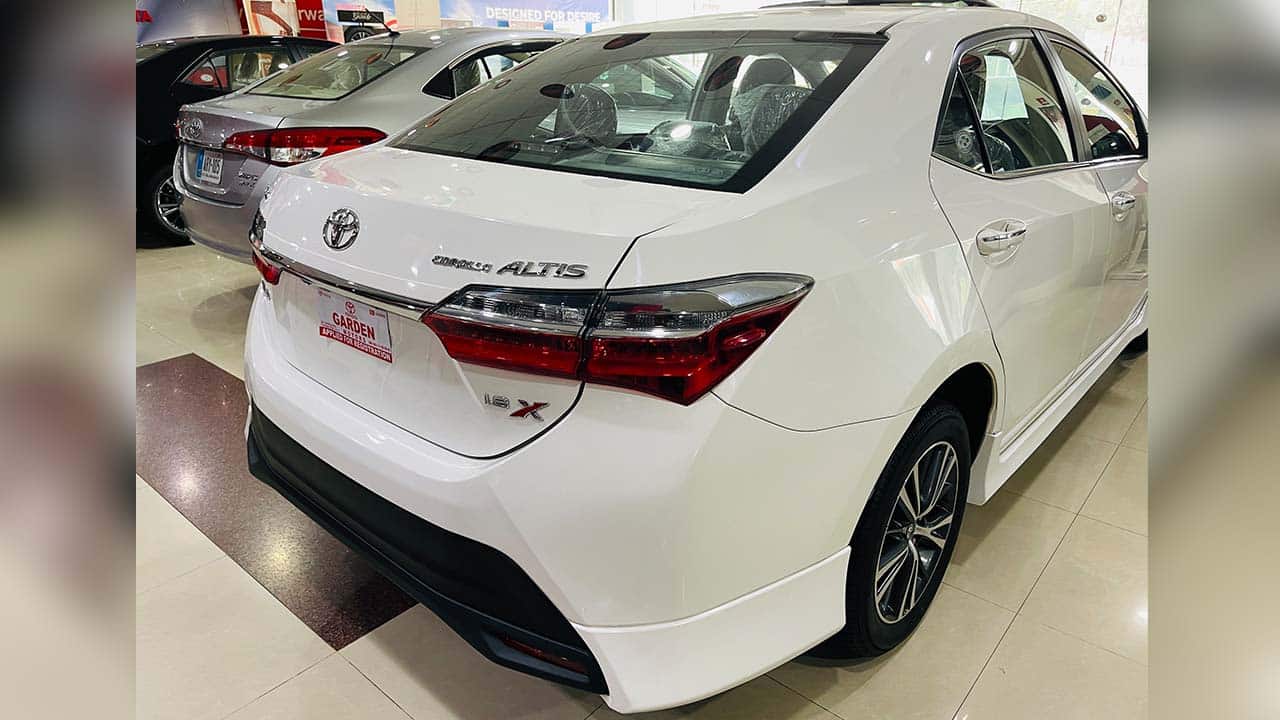
  • Toyota IMC increases car prices by up to Rs2 million due to GST hike

    Toyota IMC increases car prices by up to Rs2 million due to GST hike

    Indus Motor Company (IMC) has increased the prices of all Toyota vehicles in Pakistan due to the recent hike in the General Sales Tax (GST) from 18 per cent to 25 per cent by the Federal Government. The models affected by the price hike include Toyota Yaris, Toyota Corolla Altis X, Toyota Hilux Revo (IMV III), and Toyota Fortuner (IMV IV).

    According to a circular released by the company, the economic uncertainties and extreme volatile situation of Pakistani rupee against US dollar have adversely impacted the cost of manufacturing for IMC. The company has therefore been compelled to pass on some impact to the market.

    The government of Pakistan has also enhanced the rate of Sales Tax to 25 per cent on all CKD vehicles with an engine capacity of 1400cc and above, except for IMV-I Single Cabin.

    Toyota Pakistan has stated that the mentioned car prices are subject to change and the prevailing prices at the time of delivery shall be applicable on all orders. Any change in Government levies and taxes, tariff, fiscal policies, import policies, forex, etc. will be on account of the customer.

    Here are the new prices of all Toyota cars after tax hike:

    Toyota Corolla Altis X latest prices

    ModelOld price (Rs)New price (Rs)Hike (Rs)
    Toyota Corolla 1.6 MT5,576,0006,169,000593,000
    Toyota Corolla 1.6 CVT6,111,0006,769,000658,000
    Toyota Corolla 1.6 Special Edition6,716,0007,429,000713,000
    Toyota Corolla 1.8 CVT6,423,0007,119,000696,000
    Toyota Corolla 1.8 CVT SR6,998,0007,759,000761,000
    Toyota Corolla 1.8 CVT SR BLK7,039,0007,799,000760,000

    Toyota Yaris latest prices

    ModelOld price (Rs)New price (Rs)Hike (Rs)
    Toyota Yaris 1.3 GLi MT4,316,0004,499,000183,000
    Toyota Yaris 1.3 GLi CVT4,588,0004,789,000201,000
    Toyota Yaris 1.3 ATIV MT4,558,0004,759,000201,000
    Toyota Yaris 1.3 ATIV CVT4,790,0004,999,000209,000
    Toyota Yaris 1.5 ATIV X MT4,911,0005,429,000518,000
    Toyota Yaris 1.5 ATIV X CVT5,213,0005,769,000556,000

    Toyota Hilux Revo latest prices

    ModelOld price (Rs)New price (Rs)Difference (Rs)
    Hilux Revo STD10,316,00011,439,0001,123,000
    Hilux Revo G MT11,184,00012,409,0001,225,000
    Hilux Revo G AT11,728,00013,019,0001,291,000
    Hilux Revo V12,969,00014,389,0001,420,000
    Hilux Revo V AT ROCCO13,675,00015,179,0001,504,000

    Toyota Fortuner latest prices

    ModelOld Price (Rs)New Price (Rs)Hike (Rs)
    Toyota Fortuner G 4x2L14,230,00015,809,0001,579,000
    Toyota Fortuner V 4×416,297,00018,099,0001,802,000
    Toyota Fortuner Sigma17,175,00019,079,0001,900,000
    Toyota Fortuner Legender18,112,00020,129,0002,017,000
  • Weekly inflation in Pakistan jumps to 42.3% as prices increase ahead of Ramadan

    Weekly inflation in Pakistan jumps to 42.3% as prices increase ahead of Ramadan

    According to data released by the Pakistan Bureau of Statistics (PBS) on Friday, weekly inflation surged by 1.37 per cent week-on-week and 42.27 per cent year-on-year during the week ended March 9. This marks a 25-week high on an annualized basis, as prices of perishables have started to rise ahead of Ramadan. The surge in the sensitive price indicator (SPI) was attributed to the increase in prices of various commodities, including tomatoes, potatoes, onions, sugar, bananas, cooking oil, wheat flour, vegetable ghee, printed lawn, curd, milk, tea, shirting, broken basmati rice, and powdered salt. Meanwhile, a major decrease was observed in the prices of chicken, garlic, pulse moong, eggs, pulse masoor, LPG, firewood, and pulse gram.

    For the week under review, SPI was recorded at 243.87 points, compared to 240.57 points registered last week and 171.41 points recorded during the week ended March 10, 2022. Brokerage Arif Habib Limited noted that this was the highest weekly YoY number since September 8, 2022, when Pakistan recorded a rise of 42.70 per cent YoY on account of an all-time high in the prices of wheat flour following massive flooding across the fertile plains of Punjab and Sindh.

    The PBS data attributed the YoY rise in SPI to the jump in the prices of onions, cigarettes, gas charges for Q1, diesel, eggs, rice Irri-6/9, petrol, broken basmati rice, bananas, pulse moong, tea, pulse mash, pulse gram, and bread. Inflation has been rising sharply over the past couple of years, with Pakistanis, particularly those from lower and middle-income groups, struggling to make ends meet.

    The sticky inflation numbers, along with the stalled International Monetary Fund (IMF) programme, have pushed the State Bank of Pakistan (SBP) to raise its benchmark interest rate by 300 basis points to a 26-year high. Pakistan is desperately trying to persuade the IMF to disburse critical $1.1 billion funding, but inflation worries have led the central bank to elevate its interest rates by 10 percentage points since January 2022.

    Analysts expect that the recent decisions taken by the government to please the IMF for a meagre $1.1 billion bailout tranche could result in massive poverty, while businesspersons have also not ruled out a default despite fiscal tightening. The YoY SPI increased by 39.09 per cent, 40.98 per cent, 41.79 per cent, 42.53 per cent, and 44.14 per cent respectively for the groups spending up to Rs17,732; Rs17,733-22,888; Rs22,889-29,517; Rs29,518-44,175; and above Rs44,175.

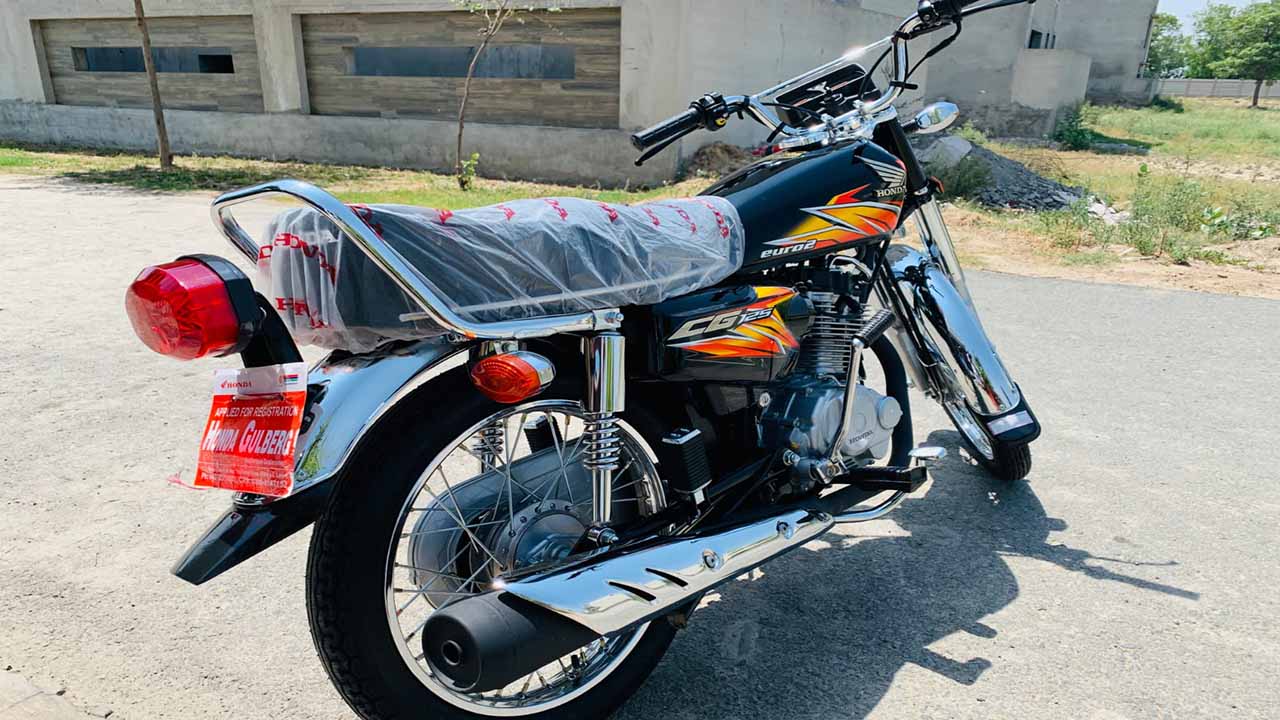
  • Motorcycle dealers reportedly demanding Rs40,000 extra for instant delivery of Honda CG125

    Motorcycle dealers reportedly demanding Rs40,000 extra for instant delivery of Honda CG125

    The market for new and used motorcycles in Akbar Road, Karachi, which is the largest in the country, is experiencing a shortage of Honda CG-125 bikes at the showrooms of the company’s authorised dealers. The dealers are reportedly not accepting fresh bookings from customers due to thin supplies from the assembler.

    Non-Honda dealers are reportedly demanding a price of Rs252,000-255,000 for instant delivery of the CG-125 bike, which is Rs40,000 more than the company’s price of Rs215,000, despite not having the bike available in their showrooms.

    Some unauthorised dealers have already acquired a large number of CG-125 motorcycles from authorized dealers, apparently under an understanding to jointly make a windfall. Some dealers have cited Afghan nationals accompanied by Pakistanis as the reason for the stock shortage. However, 70cc bikes are readily available for instant delivery at showrooms.

    According to Dawn, market sources have stated that local bike assemblers exported 25,000 units of 70cc-125cc bikes over the past 11 months, in which Honda 125cc holds the lion’s share. They also believe that the actual volume of shipments of two-wheelers is more than the official export by the companies after individual purchases of bikes by customers for Afghan markets.

    Afghan businessmen are importing Pakistan-assembled motorcycles in large numbers daily through the Chaman border amid booming demand for two-wheelers in Afghanistan. The market for Honda CG-125 bikes is experiencing price hikes and shortages across the country, including Quetta and other cities of Balochistan.

  • State Bank of Pakistan’s foreign exchange reserves rise to $4.3 billion after Chinese loan

    State Bank of Pakistan’s foreign exchange reserves rise to $4.3 billion after Chinese loan

    Pakistan’s foreign exchange reserves held by the State Bank of Pakistan (SBP) have exceeded $4 billion after the country received a $500 million loan from the Industrial and Commercial Bank of China (ICBC).

    In a weekly bulletin, the SBP reported a rise in foreign exchange reserves by $487 million, boosting the total to $4,301 million as of 3 March, providing an import cover of around a month. This was part of the ICBC’s $1.3 billion facility, which followed another loan of $700 million from the China Development Bank.

    These loans were essential as Pakistan has not received funds from any other country, except China, while the $350 billion economy struggles to revive its stalled International Monetary Fund (IMF) program.

    There are $7 billion of repayments due in the coming months, including a Chinese loan of $2 billion due in March. According to Geo, experts believe that the Pakistan rupee, which has fallen to a historic low of Rs282.30 against the dollar in the interbank market, can only recover to Rs265 if the situation improves.

    Meanwhile, the government has imposed restrictions on imports due to a shortage of dollars, which has resulted in the partial closure of textile and automobile manufacturers, raising fears of unemployment.

  • Toyota IMC records worst sales in three years, selling less than 2,000 cars in February

    Toyota IMC records worst sales in three years, selling less than 2,000 cars in February

    Toyota Indus Motor Company (IMC), a leading automaker renowned for offering the country’s best-selling sedan, has reported a significant decline in sales in February 2023, marking the worst sales month since the onset of the Covid-19 pandemic.

    Having previously sold over 7,100 units in March 2022, the company’s sales have now plummeted to a meager 1,803 vehicles in February 2023, according to Autojournal.

    It is pertinent to note that this represents the lowest sales figures for Toyota in the past three years, since the outbreak of the Covid-19 pandemic and subsequent lockdowns.

    Toyota is not the only company experiencing this phenomenon, as Pak Suzuki Motor Company has also reported a massive decline in sales, selling only 544 units in February 2023, despite having sold over 6,000 units of Suzuki Alto in a single month previously.

    Pakistan’s auto industry is currently facing significant challenges due to production halts, resulting from a lack of availability of auto parts and restrictions on imports.

    As a result, car manufacturers are facing difficulties in meeting consumer demands, leading to decreased sales figures for many companies, including Toyota and Suzuki.

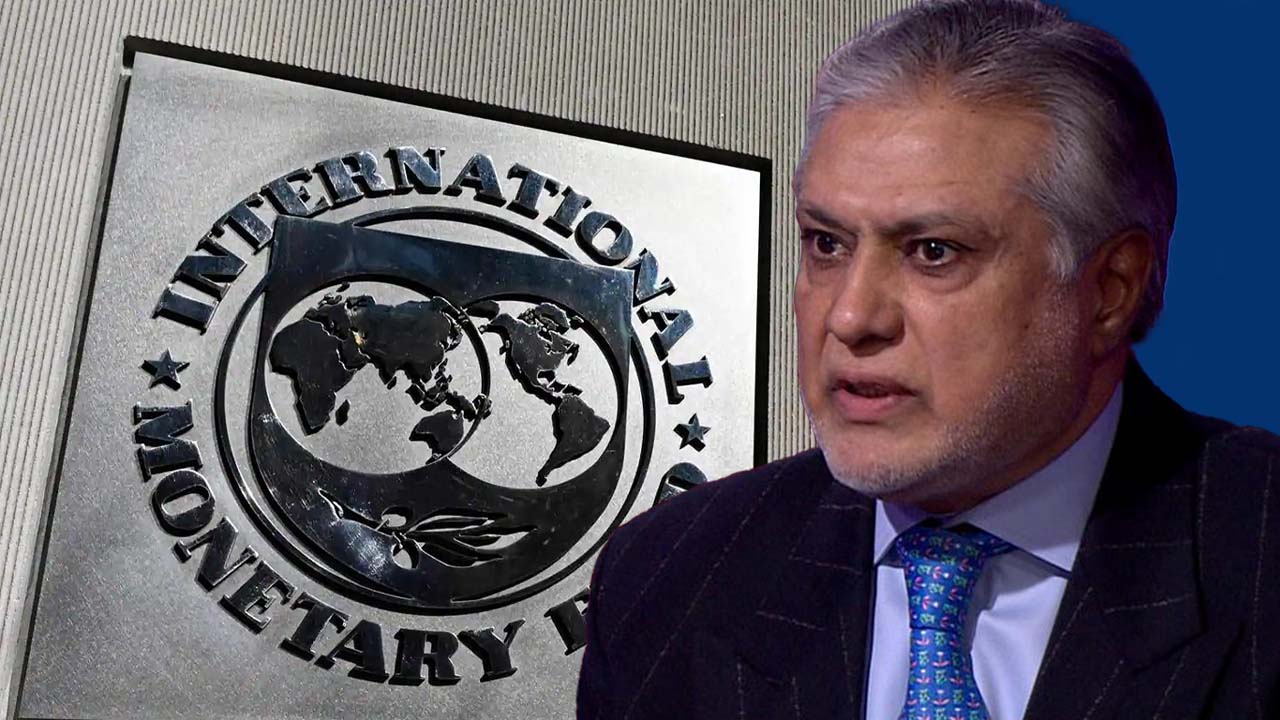
  • Pakistan ‘very close’ to signing staff-level agreement with IMF, says Finance Minister

    Pakistan ‘very close’ to signing staff-level agreement with IMF, says Finance Minister

    Finance Minister Ishaq Dar has reaffirmed his team’s commitment to completing Pakistan’s $7 billion Extended Fund Facility programme with the International Monetary Fund (IMF).

    Speaking at a seminar organised by the Finance Ministry in Islamabad, Dar acknowledged the need for swift implementation of measures to reach an agreement with the IMF as the country has reserves barely sufficient for three weeks of essential imports.

    He noted that the government had inherited an economy that was “in a shambles” and that it had decided to honour the commitments made by the previous administration, despite a serious trust deficit with the lender.

    According to Dawn, the minister also confirmed that Pakistan was “very close” to signing a staff-level agreement with the IMF, which would unlock inflows from friendly countries and lead to a disbursement of $1.2 billion. The prerequisites by the lender are aimed at ensuring Pakistan reduces its fiscal deficit before its annual budget around June. The country has already taken most of the other prior actions, including hikes in fuel and energy tariffs, the withdrawal of subsidies in export and power sectors, and generating more revenues through new taxation in a supplementary budget.

    Furthermore, Dar highlighted the need for all stakeholders to contribute to overcoming the challenges facing the country, including the implementation of austerity measures. These measures, which include cabinet members forgoing their salaries, paying their own bills, banning the purchase of luxury vehicles from 2024, and slashing current expenditure by 15 per cent, have already been implemented and notified to the Finance Ministry.

    Dar also noted that Pakistan’s economic difficulties were compounded by the devastating 2022 floods, which affected 33 billion people and caused physical and economic losses of nearly $30 billion.

    Despite fiscal constraints and limitations, Dar pledged that the federal and provincial governments had jointly allocated Rs452 billion for relief and rehabilitation work of flood affectees. International agencies have calculated that around $16 billion would be required for reconstruction and rehabilitation work in Pakistan in the next two years, half of which will be met by Pakistan from its own resources.

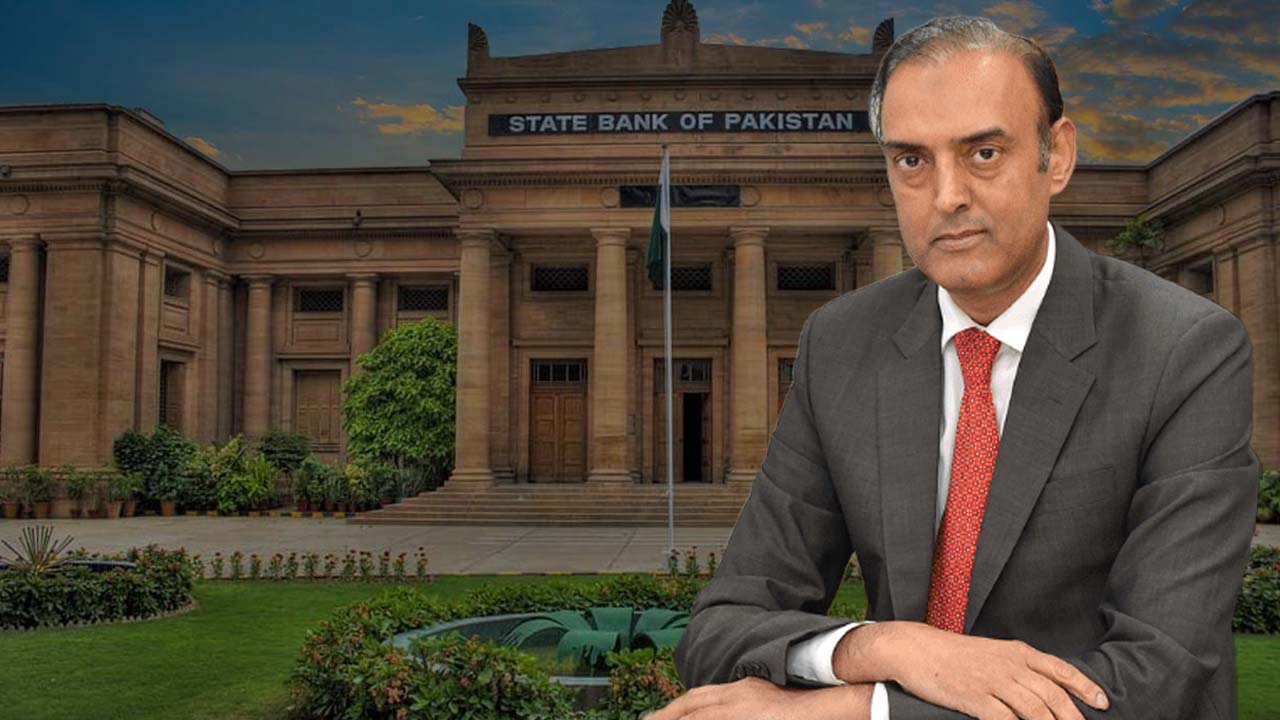
  • SBP governor says import restrictions will be eased after completion of IMF review

    SBP governor says import restrictions will be eased after completion of IMF review

    During a briefing to the Senate Standing Committee on Finance, State Bank of Pakistan (SBP) Governor Jameel Ahmed projected that the current account deficit for the ongoing fiscal year would be $7 billion, which is lower than the budgetary target of $10 billion. He attributed the lower deficit to measures taken to control imports, which he said could not continue for a longer period of time. Ahmed stated that import compression would ease after the completion of the International Monetary Fund (IMF) review.

    Ahmed also mentioned that the low inflows due to the delay in the IMF review, higher commodity prices in the international market, and the Ukraine-Russia war are major reasons behind pressure on the external account and an increase in inflation. However, he clarified that an increase of 300 per cent basis points in the policy rate was not made on the demand of the International Monetary Fund (IMF), and that the Staff Level Agreement (SLA) is close to being finalized with the Fund.

    Regarding the outflow of $2.4 billion on account of debt repayment in the first half of the current fiscal year compared to $6.3 billion inflow for the same period a year ago, Ahmed said that the decline in inflows was due to the pending review of the IMF program. He hoped that budgeted inflow would materialize after the completion of the review in the second half, thereby increasing foreign exchange reserves.

    Ahmed also mentioned that the pressure of inflation will remain for two to three months and the average inflation this year will be 26.5 per cent. He added that remittances have decreased by $2 billion and are projected at $29 billion for the ongoing fiscal year against over $31 billion for the last fiscal year. There was also a decline of 7.4 per cent in exports as the country did not have exportable goods due to flood and a decrease in the export of rice. Vegetables and fruit exports have also declined by 48 and 37 per cent respectively.

    According to The News, the committee expressed concern over the fluctuation of the dollar and said that it was the responsibility of the regulator to maintain the actual price of the dollar and take measures against black marketing and smuggling. The committee sought details of the amount of dollars smuggled to Afghanistan in the recent period. The committee members recommended seriously addressing the issue of the difference between the dollar rate in the open market and the inter-bank. The chairman of the committee recommended that instead of rupee trade with Afghanistan, either be replaced with the dollar or barter trade because trade with Afghanistan in rupee is also contributing to the external account pressure.

    Senator Mohsin Aziz highlighted that the remittances, the FDI, and the exports have been on a decline, whereas the country’s debt was increasing. He also said that imports compression and policy rate were hurting the industry and exports, and exporters are unable to compete in the global market with regional players due to government policies.

    In response to the issue of refusal of LCs to importers of pharmaceutical ingredients, the SBP said it was fully supporting the import of above articles and imports of pharma industry have considerably increased in the month of February and the first seven days of March 2023.