Category: Business

  • Pakistan faces second-highest food price inflation in South Asia: World Bank report

    Pakistan faces second-highest food price inflation in South Asia: World Bank report

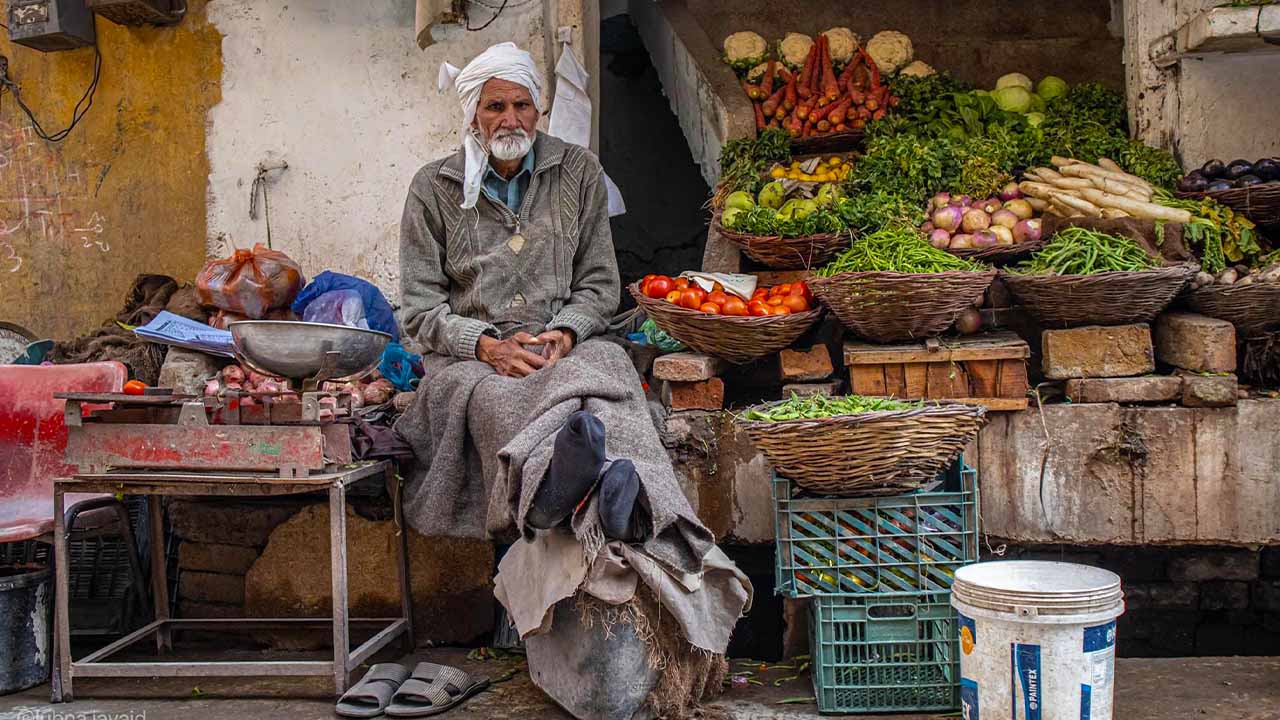
    According to the World Bank’s “Food Security Update,” the consumer price inflation for food items in Pakistan in February 2023 on a year-on-year basis was 45.1 per cent, which is the highest in South Asia after Sri Lanka, which experienced 54.4 per cent inflation.

    The report further states that domestic grain and wheat flour prices remained volatile across South Asia at the beginning of 2023, and were well above their year-earlier levels. Specifically, in Pakistan, wheat flour prices in January 2023 reached record highs and were 20 to 140 per cent higher year on year.

    The high prices of food items have been attributed to several factors, including generally stagnant production since 2018, stock losses and disrupted trade flows due to the 2022 floods, high agricultural input and transportation costs, and high headline inflation, according to the Food and Agriculture Organization of the United Nations (FAO).

    The report noted that India, Bangladesh, and Nepal experienced year-on-year consumer price inflation for food prices of 6.2 per cent, 7.8 per cent, and 5.6 per cent, respectively, in January 2023. Rice production increased in 2022 in several countries, including India, despite reductions in Pakistan and Tanzania, according to the report.

    The US Department of Agriculture predicts a 4.5 per cent contraction in rice shipments due to a decrease in exports from Pakistan, Thailand, the United States, and Vietnam, which will more than offset an increase from India. Moreover, domestic food price inflation remains high around the world.

    According to Brecorder, the latest month between October 2022 and February 2023, for which food price inflation data are available, shows high inflation in almost all low- and middle-income countries, with inflation levels above 5 per cent in 94.1 per cent of low-income countries, 86 per cent of lower-middle-income countries, and 87 per cent of upper-middle-income countries, with many experiencing double-digit inflation.

    Furthermore, about 87.3 per cent of high-income countries are experiencing high food price inflation, and the countries affected most are in Africa, North America, Latin America, South Asia, Europe, and Central Asia, according to the report.

  • Chinese bank to provide Pakistan with another $500 million loan soon

    Chinese bank to provide Pakistan with another $500 million loan soon

    A Chinese bank has committed to provide Pakistan with another refinanced $500 million loan within the next few days. This brings the total of commercial loans to $1.7 billion out of the committed amount of $2 billion.

    Pakistani authorities are currently seeking 100 per cent confirmation from friendly donor countries and multilateral creditors before moving towards an agreement with the International Monetary Fund (IMF). The IMF has set an unwritten condition that Pakistan must secure refinancing of commercial loans and a rollover on deposits from China during the program period, which is set to expire in June 2023.

    A top official from the Finance Division confirmed that another $500 million commercial loan from a Chinese bank is on its way and will be completed soon. Chinese banks have already provided refinancing of $1.2 billion in commercial loans in the past few weeks, and Beijing has given assurance on another $500 million in loan refinancing in the next few days. Pakistan has also requested a rollover on the Chinese SAFE deposit of $2 billion within the ongoing month.

    All these factors are prerequisites for moving towards the signing of a staff-level agreement between the IMF and Pakistan. The Pakistani authorities are waiting for confirmation from Saudi Arabia, UAE, and Qatar, as well as from the World Bank and the Asian Infrastructure Investment Bank, to fulfill the external financing needs of $6 billion until the end of June 2023. The guarantees for securing external financing are crucial for the sustainability of the IMF program.

    Brent crude and WTI are both down in the international market, which is good news for Pakistan’s economy. However, the IMF has secretly launched “Inclusive growth in the MENA region” at NUST. The IMF high-ups argued that state-owned enterprises (SOEs) possessing a major footprint resulted in the crowding out of the private sector. Pakistan’s budget makers have also assured the IMF that they will prepare gender-based budgeting in the next financial year.

    To meet the IMF’s demands, the CPI-based and SPI-based inflations have risen to unprecedented levels of 31.5 per cent every month and 42.3 per cent every week. The development budget of the federal government, known as the Public Sector Development Program (PSDP), has been slashed by 50 per cent for the current fiscal year in line with the Fund’s demand to curtail the budget deficit target.

  • Govt hikes petrol price by Rs5 to Rs272 per litre to match global market changes

    Govt hikes petrol price by Rs5 to Rs272 per litre to match global market changes

    As per a press release from the Finance Division, the government has decided to raise the price of petrol by Rs5 per litre to Rs272 per litre for the next two weeks, effective from March 16 (Thursday).

    The statement noted that the increase was due to the rise in Platts Singapore prices over the past two weeks and the depreciation of the Pak Rupee, resulting in a hike in petroleum, oil, and lubricant (POL) products in Pakistan.

    The notification further disclosed that the price of high-speed diesel has been increased by Rs13 per litre to Rs293 per litre, and kerosene has been raised by Rs2.56 per litre to Rs190.29 per litre by reducing government dues on them. However, the price of light diesel oil has been kept constant at Rs184.68 per litre by adjusting government dues.

    It’s worth mentioning that Finance Minister Ishaq Dar had previously announced a reduction in petrol prices by Rs5 per litre on February 28.

  • PM Shehbaz expresses concern over IMF conditions burdening people

    PM Shehbaz expresses concern over IMF conditions burdening people

    The Prime Minister, Shehbaz Sharif, has shown worry that the terms set by the International Monetary Fund (IMF) will result in an increased burden on the citizens.

    During an appearance on the Geo News program Capital Talk, the Prime Minister attributed the stringent conditions to the previous government, alleging that they had breached their commitments to the IMF.

    Consequently, the IMF is insisting that Pakistan fulfills all of the conditions regardless of the cost, according to the Prime Minister. He acknowledged that many people in Pakistan are having trouble putting food on the table, purchasing medication, and paying for their children’s education.

    The Prime Minister claimed that former Prime Minister Imran Khan almost defaulted on Pakistan and damaged the country’s relations with numerous friendly countries. However, he stated that his government had provided relief to underprivileged individuals through the Benazir Income Support Program.

    He further stated that inflation was caused by the increased cost of imported goods as commodity prices rose due to the Russia-Ukraine conflict. In Pakistan, inflation is expected to reach its highest level in nearly 50 years.

    Additionally, Pakistan is struggling to obtain funding from friendly nations, resulting in a delay in the IMF bailout. The IMF Managing Director, Kristalina Georgieva, recently urged Pakistan to increase tax revenues and distribute subsidies only to those who truly require them. She emphasized that the IMF is dedicated to protecting the impoverished people of Pakistan.

  • Donald Blome assures Pakistan of US cooperation on IMF deal

    The US Ambassador to Pakistan, Donald Blome, expressed hope for a deal between Pakistan and the International Monetary Fund (IMF), stating that Washington was prepared to support the country’s efforts to resume its stalled $6.5 billion bailout program.

    Speaking at an event on Tuesday, Blome assured journalists that the IMF bailout package for Islamabad would take its final shape in a couple of days. He added that the United States was ready to cooperate with Pakistan to help address the issue and expressed a willingness to help Islamabad with its ongoing terrorism challenges.

    Blome recently visited important cities in Pakistan to meet with groups from different walks of life and noted that there had been significant progress in diplomatic relations between the two countries.

    Pakistan and the IMF have been in discussions regarding a stalled bailout package since late last year, with the country seeking a $1.1bn tranche to address its worsening balance of payments crisis and to enable friendly affluent capitals to provide assistance to overcome ongoing financial complexities.

    Both sides are engaged in negotiations to reach a mutually agreeable package that would help the cash-strapped nation come out of its ongoing economic turmoil.

    Interestingly, Finance Minister Ishaq Dar had previously stated that Pakistan would strike a staff-level agreement (SLA) with the IMF in a few days, as the government remained committed to completing the loan program signed in 2019.

    However, after failing to convince the lender, Dar had reportedly contacted the US envoy earlier this week to get “lenient treatment” from the Fund, which has been persistent with its demands.

  • Rupee devaluation, GST hike forces Honda to increase car prices up to Rs1 million

    Rupee devaluation, GST hike forces Honda to increase car prices up to Rs1 million

    Honda Atlas Cars Limited (HACL) has announced its fourth price hike in less than 90 days, citing the government’s implementation of a 25 per cent general sales tax (GST) on luxury items.

    This time, the automaker has raised car prices up to Rs1 million. According to a recent notification, HACL has attributed the most recent price hike to the devaluation of the Pakistani rupee against the US dollar, as well as the increase in sales tax from 18 per cent to 25 per cent.

    Below are the new ex-factory and provisional prices that are applicable from March 14, 2023:

    ModelOld Price (Rs)New Price (Rs)Increase (Rs)
    Honda City M/T 1.2L4,579,0004,799,000220,000
    Honda City CVT 1.2L4,729,0004,929,000200,000
    Honda City CVT 1.5L5,019,0005,549,000530,000
    Honda City Aspire M/T 1.5L5,229,0005,759,000530,000
    Honda City Aspire CVT 1.5L5,419,0005,979,000560,000
    Honda BR-V CVT S5,949,0006,529,000580,000
    Honda HR-V VTi7,199,0007,899,000700,000
    Honda HR-V VTi S7,399,0008,199,000800,000
    Honda Civic 1.5L M-CVT7,779,0008,599,000820,000
    Honda Civic 1.5L Oriel M-CVT8,099,0008,949,000850,000
    Honda Civic RS 1.5L LL-CVT9,199,00010,199,0001,000,000
    Latest Honda Car prices in Pakistan – effective from 14 March 2023
  • Pakistan reaches out to US for assistance in obtaining IMF deal

    Pakistan reaches out to US for assistance in obtaining IMF deal

    Pakistan has requested assistance from the United States to obtain “lenient treatment” from the International Monetary Fund (IMF) due to a delay in signing the staff-level agreement (SLA).

    The international lender has asked Pakistan to confirm external financing needs of $6 to $7 billion from Saudi Arabia, the United Arab Emirates, Qatar, and multilateral creditors until the end of June 2023.

    However, Pakistan has been unable to persuade the lender to sign the agreement and has requested assistance from Washington and its western allies.

    According to The News, Minister for Finance Ishaq Dar has contacted the US diplomatic corps based in Islamabad for help in ending the stalemate.

    The IMF considers that the loan facility’s “sustainability” could not be guaranteed without full assurance of external financing.

    Furthermore, the IMF has demanded a permanent abolition of power sector subsidies, which the government had only committed to until the end of the next financial year 2023-24.

    The IMF demanded changes in the wording of the Memorandum of Economic and Financial Policies (MEFP) during the last meeting held in the previous week.

    The IMF and Pakistani sides are yet to decide on further proceedings, with each side holding the other responsible for the delay in signing the SLA.

  • Punjab govt to provide free flour to 15.8 million deserving households during Ramzan

    Punjab govt to provide free flour to 15.8 million deserving households during Ramzan

    Prime Minister (PM) Shehbaz Sharif has announced a scheme to provide free flour to impoverished individuals during the holy month of Ramzan. The premier stated that the distribution of free flour will encompass 15.8 million households throughout Punjab from 25 Sha’ban to 25 Ramzan.

    To ensure effective implementation of the scheme, the Prime Minister directed the utilisation of 8,500 utility stores and the establishment of an additional 20,000 distribution points for public convenience.

    Moreover, PM Shehbaz stressed the need for the transparent and modern distribution of free flour among the poor while also emphasising that the quality of flour provided should be of the highest standards.

    Eligibility for the program can be confirmed through SMS, and the federal government will also support other provinces in this regard.

    During a review meeting to discuss the distribution of free flour under the Ramzan package, chaired by the Prime Minister himself, the Punjab government provided a detailed briefing on the program.

    The meeting was attended by the Caretaker Chief Minister Punjab Syed Mohsin Raza Naqvi, Adviser to the Prime Minister Ahad Cheema, and other relevant senior officials.

    This decision is expected to bring much-needed relief to the underprivileged during the holy month of Ramzan. By utilising modern technology and additional distribution points, the distribution of free flour can be carried out efficiently and transparently, ensuring that the benefits reach those who are most in need.

  • Monitoring committee takes action against use of luxury cars by officials to cut expenses

    Monitoring committee takes action against use of luxury cars by officials to cut expenses

    State-run Radio Pakistan has reported that the monitoring committee responsible for overseeing the implementation of austerity measures has expressed serious concerns about some officers using vehicles above 1,800cc.

    The committee, chaired by Finance Minister Ishaq Dar, met in Islamabad on Monday to review the implementation of the decisions made at its first meeting regarding austerity measures. As part of an austerity drive to save the government Rs200 billion ($766 million) a year, Prime Minister Shehbaz Sharif had asked ministers and advisers to fly economy class and forgo luxury cars and their salaries.

    These cuts were made as Pakistan, facing a balance of payment crisis, negotiates with the International Monetary Fund (IMF) to secure $1 billion in funds that have been pending since late last year over policy issues.

    The meeting today was updated on the status of the use of luxury vehicles and was informed that a majority of the allocated vehicles have been returned by cabinet members. However, the committee expressed concerns over the non-return of the remaining luxury vehicles and directed the Cabinet Division to strictly implement the decision and retrieve the luxury vehicles within three days. The committee also discussed the withdrawal of the use of security vehicles and decided to implement the decision.

    Furthermore, the Ministry of Law and Justice was tasked with suggesting the implementation of austerity measures in the judiciary to the superior judiciary and approaching the Senate chairman and National Assembly speaker to suggest the use of teleconferences for all meetings to save time and expenditure. The Ministry of Inter-Provincial Coordination has also approached provincial governments to suggest the implementation of similar austerity measures.

    The committee also deliberated on working timings and decided that the new timing for office work will be 7:30 am to 2:30 pm, and up to 12:30 pm on Fridays, starting from the first of Ramzan and will be followed in the summer season, as per the cabinet’s decision. A notification will be issued accordingly. The finance minister, speaking at the occasion, directed all to expedite the implementation of austerity measures with sincerity and true spirit without any exception. These cuts are part of an effort to prevent an economic meltdown as Pakistan’s foreign exchange reserves have fallen below a month’s import cover.

  • Pakistani rupee reverses marginal gains, closes at Rs281.61 against US dollar

    Pakistani rupee reverses marginal gains, closes at Rs281.61 against US dollar

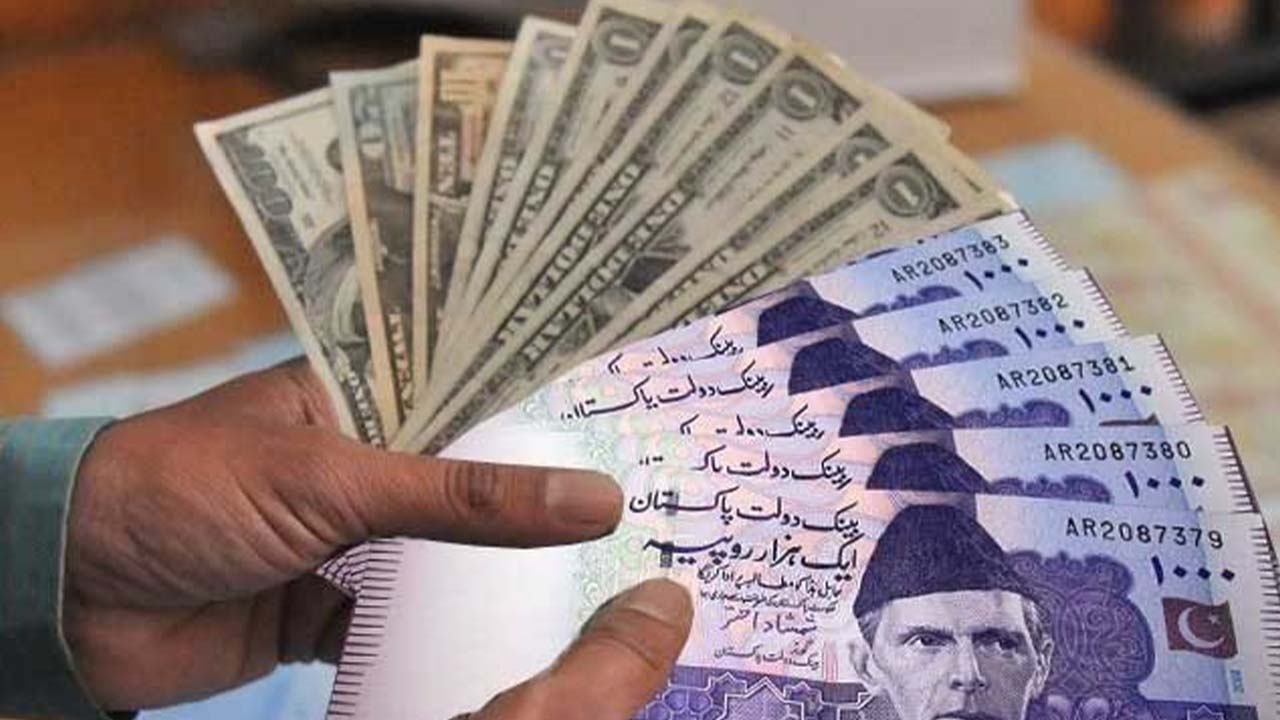
    On Monday, the Pakistani rupee faced renewed pressure against the US dollar, declining by 0.30 per cent in the inter-bank market after posting marginal gains on Friday. According to the State Bank of Pakistan (SBP), the rupee settled at Rs281.61, representing a decrease of Re0.84.

    Despite the rupee having found some relief on Friday with a 0.54 per cent appreciation in the inter-bank market, the currency had depreciated by 0.82 per cent against the US dollar during the previous week.

    The SBP has received inflows from China, which have provided support to critical levels of foreign exchange, but concerns over the delay in the International Monetary Fund (IMF) programme have continued to impact sentiment.

    Miftah Ismail, former Federal Finance Minister, suggested on Sunday that Pakistan should ensure 15 per cent tax on Gross Domestic Product (GDP) and 15 per cent exports to GDP in order to avoid the need for IMF programs.

    Internationally, the US dollar experienced a sharp decline on Monday due to the sudden collapse of Silicon Valley Bank (SIVB). The US government announced various measures on Monday to mitigate the impact of the bank’s collapse, including ensuring access to deposits for SVB customers and depositors of New York’s Signature Bank.