Category: Business

  • Ministry of Finance halts clearing of bills including salaries due to deteriorating financial condition

    Ministry of Finance halts clearing of bills including salaries due to deteriorating financial condition

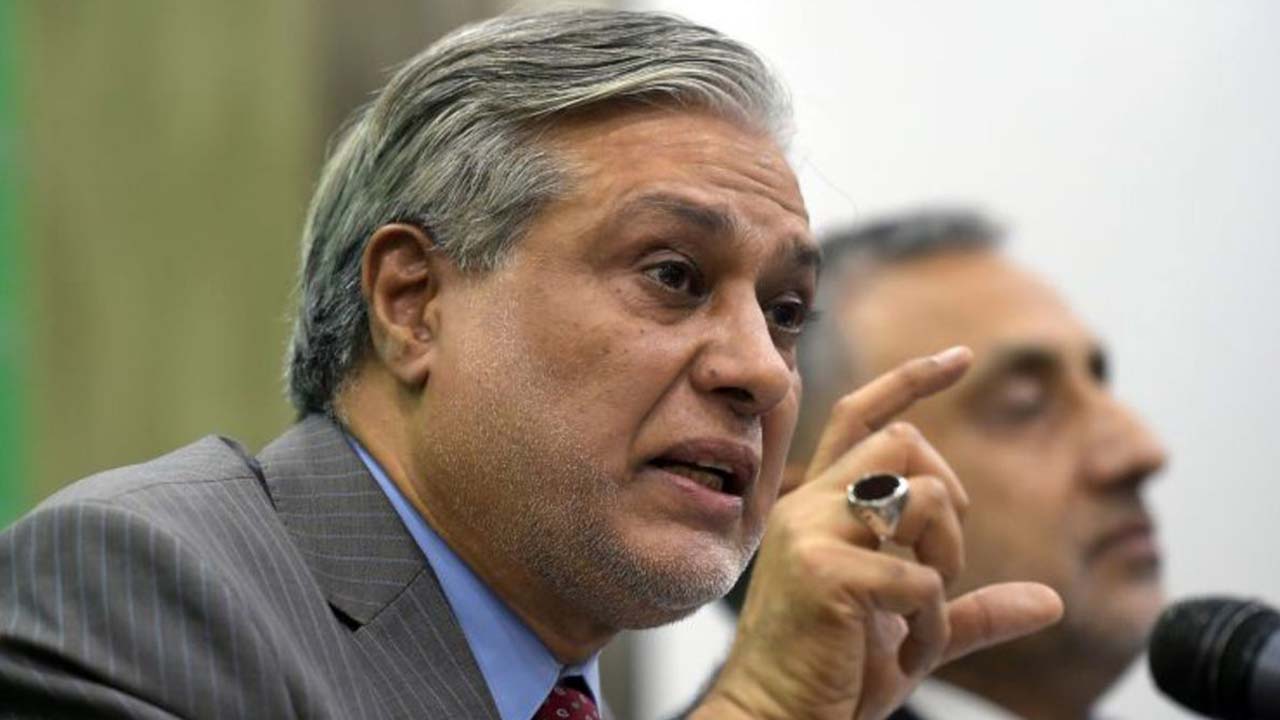
    The Ministry of Finance and Revenue has instructed the Accountant General Pakistan Revenues (AGPR) to stop clearing bills, including salaries, due to the current economic crisis and the deteriorating financial situation of the country. The ministry has also directed the halt of clearings of attached departments until further notice.

    According to The News, official sources have confirmed that operational cost-related releases have faced difficulties due to the economic hardships of the country. However, attempts to obtain a comment from Finance Division officials were unsuccessful, and the Minister for Finance Ishaq Dar promised to respond after confirming the report’s accuracy, which he had not done by the time of the report’s filing.

    Sources who went to the AGPR office for clearance of their outstanding bills were informed that the Ministry of Finance had directed them to stop clearing all bills, including salaries, due to the prevailing financial difficulties. The reasons for the immediate stoppage of the clearance of bills were not ascertained.

    The lingering financial difficulties are considered to be a significant reason for this move. However, salaries and pensions of defence-related institutions have already been cleared for the following month.

    During a meeting with a delegation of M/s Rothschild & Co on February 22, Finance Minister Ishaq Dar said that the government is committed to steering the economy towards stability and growth, and completing the International Monetary Fund (IMF) programme, and fulfilling all international obligations.

    To this end, on February 20, the National Assembly unanimously approved the Finance (Supplementary) Bill 2023, or ‘mini-budget’, which is mandatory for seeking the $1.1 billion tranche of the IMF. The bill increases sales tax from 17 to 25 per cent on imports ranging from cars and household appliances to chocolates and cosmetics, while a general sales tax was raised from 17 per cent to 18 per cent.

    As the bill was passed, the minister told the lower house of parliament that the prime minister would unveil austerity measures in the next few days, adding, “we will have to take difficult decisions.”

    UPDATE:

    The Finance Ministry has rejected the rumours that the government has instructed to stop payment of pay and pension.

    The ministry stated in a press release, “There are rumours floating around that Government has instructed to stop payment of pay, pension, etc. This is completely false as no such instructions have been given by Finance Division, which is the concerned federal ministry. AGPR has confirmed that pay and pension have already been processed and will be paid on time. Further, other payments are being processed as per routine.”

  • Gas and cigarette prices push Pakistan’s weekly inflation to 41%

    Gas and cigarette prices push Pakistan’s weekly inflation to 41%

    According to official data released by the Pakistan Bureau of Statistics (PBS), Pakistan’s weekly inflation has remained high, with an increase of 2.78 per cent week-on-week and 41.54 per cent year-on-year for the seven-day period that ended on February 23.

    The latest figures of the Sensitive Price Index (SPI) reveal that the rise is due to an increase in gas prices for Q1 (108.38 per cent), cigarettes (76.45 per cent), bananas (6.67 per cent), chicken (5.27 per cent), sugar (3.37 per cent), cooking oil 5 litre (3.07 per cent), vegetable ghee 2.5kg (2.79 per cent), vegetable ghee 1kg (2.20 per cent) and prepared tea (1.09 per cent).

    The government of Pakistan almost doubled the gas charges for up to 3.3719 mmBtu to secure the International Monetary Fund’s (IMF) approval for the $1.1 billion tranche out of the $6.5 billion bailout package under the Extended Fund Facility. Previously, the rate was Rs147.57, which now stands at Rs295.

    The PBS attributes the YoY increase in SPI to the rise in prices of onions (372.03 per cent), cigarettes (164.71 per cent), gas charges for Q1 (108.38 per cent), chicken (85.65 per cent), diesel (81.36 per cent), eggs (75.81 per cent), rice irri-6/9 (75.41 per cent), rice basmati broken (74.16 per cent), bananas (72.22 per cent), pulse moong (70.39 per cent), petrol (69.87 per cent), tea (62.76 per cent), pulse gram (57.02 per cent), bread (55.36 per cent), pulse mash (53.90 per cent) and LPG (52.59 per cent). However, there was a decrease in the prices of tomatoes (67.93 per cent), chilli powder (7.42 per cent) and electricity charges for Q1 (6.64 per cent).

    Analysts had predicted that inflationary pressures would intensify due to tax measures and adjustments in electricity, petroleum and gas prices made by the government to unlock the IMF programme.

    Consumers have been facing the burden of rising prices of essential kitchen items, particularly edibles. The average price of 1kg broiler chicken was Rs469.81 during the week under review compared to Rs446.29 last week. For the groups spending up to Rs17,732; Rs17,733-22,888; Rs22,889-29,517; Rs29,518-44,175; and above Rs44,175; WoW SPI increased 2.42, 2.86, 2.32, 2.18, and 3.10 per cent respectively.

    The YoY SPI for the expenditure groups went up 37.81, 39.80, 40.95, 41.94, and 42.98 per cent respectively. For the week under review, SPI was recorded at 241.29 points against 234.77 points registered last week and 170.47 points recorded during the week ended February 24, 2022.

  • Here’s how to pay PTA approval fees in installments with 0% markup

    Bank Alfalah’s e-marketplace, Alfa Mall, has recently launched a new service that offers interest-free installments for Pakistan Telecommunication Authority (PTA) approvals on some of the most popular and expensive smartphones. The smartphones that qualify for this service include the Samsung Galaxy S22, S22 Ultra, iPhone 13, and all iPhone 14 series phones.

    According to the Alfa Mall website, the total PTA charges for these phones range between Rs130,000 to Rs190,000, which can be paid in 3 to 6 monthly installments with 0 per cent markup. The process is simple: customers need to select an installment plan, enter their CNIC number, and also provide the IMEI code of their phone.

    It is important to note that the PTA approval process may take up to 3 to 5 working days, and customers will be notified of their approval through a confirmation call from the merchant.

    With this new service, Alfa Mall aims to provide customers with a more affordable and convenient way to purchase high-end smartphones without the burden of upfront payment for PTA approvals.

    You can visit this link for more details: How to pay PTA fees in installments

  • SBP-held forex reserves increase by $66 million as Pakistan seeks critical IMF loan tranche

    SBP-held forex reserves increase by $66 million as Pakistan seeks critical IMF loan tranche

    The State Bank of Pakistan (SBP) has reported a minor increase in its foreign exchange reserves, as the nation desperately seeks to unlock a critical tranche of funding from the International Monetary Fund (IMF).

    The central bank stated that its reserves had risen by $66 million to $3,258.5 million as of the week ended February 17, providing an import cover of around three weeks. The net foreign reserves held by commercial banks were reported to stand at $5,468.0 million, $2,209.5 million more than the SBP, taking the total liquid foreign reserves to $8,726.5 million.

    China development bank approves $700 million facility for Pakistan

    Finance Minister Ishaq Dar has announced that the forex reserves are expected to receive a significant boost in the coming week, as the Board of China Development Bank has approved a $700 million facility for Pakistan. The funds could be deposited into the SBP’s account this week.

    Pakistan takes austerity measures in a bid to resume IMF programme

    In a bid to resume the delayed IMF programme and avoid default, the Pakistani government has taken a series of steps in the past two months. These measures include adding new taxes, increasing energy prices, and loosening its control on the rupee.

    Parliament approved a supplementary finance bill that increases sales tax from 17 per cent to 25 per cent on imports ranging from cars and household appliances to chocolates and cosmetics. People will also have to pay more for business-class air travel, wedding halls, mobile phones, and sunglasses. A general sales tax was raised from 17 per cent to 18 per cent.

    Prime Minister Shehbaz Sharif also unveiled cost-cutting measures to save $764 million annually, stating that austerity, simplicity, and sacrifice are the need of the hour.

    Concerns over Pakistan’s debt and dollar crunch

    Fitch Ratings, a global credit ratings agency, has downgraded Pakistan’s $350 billion economy twice in four months, citing dwindling foreign reserves. Bloomberg data shows that Pakistan has coupon repayments of $542.5 million this year.

    In all, the country has $8 billion in dollar bonds debt due by 2051, with the next payment of $1 billion due in April of next year. Most of the nation’s external debt of about $100 billion is sourced from concessional multilateral and bilateral sources.

    Pakistan also faces a dollar crunch that tests its external stability, and supply disruptions caused by flooding, food shortages, and IMF preconditions for rescue may push inflation above 30 per cent for the first time on record, according to Bloomberg Economics.

  • Yamaha passes sales tax burden to customers: YBR 125G price increased to Rs353,000

    Yamaha passes sales tax burden to customers: YBR 125G price increased to Rs353,000

    Yamaha has recently announced its first price increase of 2023, affecting all of its motorcycles. The latest announcement marks the second increase in prices since December, with the highest increase being up to Rs3,500.

    Despite this, Yamaha has implemented the smallest price increases compared to its competitors and has only raised its bike prices once this year.

    In contrast, Yamaha increased its bike prices seven times last year. Due to the persistent economic issues in Pakistan, dealers and industry experts are anticipating further price hikes this year.

    According to recent data, a significant proportion of bike manufacturing has been localised in Pakistan. As such, there appears to be little justification for motorcycle manufacturers to frequently and substantially increase their prices.

    VariantOld Price (Rs)New Price (Rs)Increase (Rs)
    YB 125Z305,500308,5003,000
    YB 125Z DX327,000330,5003,500
    YBR 125336,000339,5003,500
    YBR 125G349,500353,0003,500
    YBR 125G (Matte Gray)352,500356,0003,500
  • President Alvi approves mini-budget amidst concerns of pushing Pakistanis into deeper poverty

    President Alvi approves mini-budget amidst concerns of pushing Pakistanis into deeper poverty

    President Dr Arif Alvi has given his approval for the Finance (Supplementary) Bill 2023, also known as the mini-budget, under Article 75 of the Constitution, which requires the president to assent to a bill presented to him within 10 days.

    National Assembly had passed the Rs170 billion mini-budget with some modifications, which will have an annual impact of about Rs550 billion.

    The budget’s approval has brought Pakistan closer to an agreement with the International Monetary Fund (IMF) but at the cost of pushing people deeper into the poverty trap.

    The majority of the taxation measures were implemented, although the president had not given his assent when the National Assembly passed the bill.

    Finance Minister Ishaq Dar admitted during his wind-up speech that inflation was unbearable for the people and blamed the maladministration of the previous government of former prime minister Imran Khan.

    Dar also admitted that the news stories about Rs675 billion to Rs700 billion taxes were not untrue and the IMF had demanded those measures, which the government did not accept. Dar added that almost all major issues with the IMF had been sorted out, and Pakistan is now very near to the staff-level agreement.

  • China’s $700 million loan to boost Pakistan’s foreign exchange reserves

    China’s $700 million loan to boost Pakistan’s foreign exchange reserves

    Pakistan’s Finance Minister Ishaq Dar has announced that the Board of China Development Bank has approved a credit facility of $700 million for Pakistan, and all formalities have been completed.

    This announcement was made through a tweet, and the loan is expected to be received by the State Bank of Pakistan this week, which will help to boost the country’s forex reserves.

    According to Reuters, the credit facility, provided by the state-owned China Development Bank, will increase Pakistan’s forex reserves by about 20 per cent. This comes at a time when the country is in talks with the International Monetary Fund (IMF) to unlock funds from a $6.5 billion bailout. The loan is in addition to other facilities that China has already extended to Pakistan, and a finance ministry official has stated that the money could arrive as early as Thursday.

    China Development Bank did not respond to a faxed request for comment. Currently, China is Pakistan’s largest creditor, and its commercial banks hold approximately 30 per cent of the country’s external debt.

  • IMF likely to announce staff level agreement with Pakistan by this week

    IMF likely to announce staff level agreement with Pakistan by this week

    According to Syed Naveed Qamar, the Federal Minister for Commerce, Pakistan has taken all necessary measures to unfreeze a $6.5 billion credit line and is expected to reach a staff level agreement (SLA) on Extended Fund Facility (EFF) with the International Monetary Fund (IMF) this week.

    Dr Aisha Ghaus Pasha, the Minister of State for Finance, stated that Pakistan and the IMF are close to reaching an SLA, but that basic structural reforms are necessary regardless of whether they are part of the IMF program or not.

    After the formal announcement, Pakistan will receive a $1.2 billion tranche under the EFF. Qamar stated that the agreement would give investors and creditors confidence in Pakistan’s stabilising economy and that their money would remain protected.

    Qamar emphasized that the IMF program is the beginning of other funds flowing in and that increased imports would benefit exports.

    However, Pakistan is struggling to meet the tough conditions set by the IMF, such as increasing its low tax base, ending exemptions for the export sector, and raising artificially low energy prices. The country is in dire need of funds as the State Bank of Pakistan-held foreign exchange reserves only cover one month of imports.

    To meet IMF conditions, Pakistan has raised taxes, cut subsidies, and devalued its currency. Additionally, a supplementary finance bill was approved that increases sales tax from 17 per cent to 25 per cent on imports and raises general sales tax from 17 per cent to 18 per cent, increasing the burden on already inflation-stricken people.

  • Gold prices rise on weaker Pakistani rupee and economic outlook

    Gold prices rise on weaker Pakistani rupee and economic outlook

    On Tuesday, gold prices rose further to reach a one-week peak achieved last week, supported by a weaker Pakistani rupee. Investors were keeping an eye on upcoming economic developments that could impact the market’s direction. The All-Pakistan Sarafa Gems and Jewellers Association (APSGJA) reported that the price of gold (24 carats) rose by Rs500 per tola and Rs429 per 10 grammes to settle at Rs197,000 and Rs168,896, respectively.

    The decline of the Pakistani rupee against the US dollar in the interbank market by 0.24 per cent to Rs262.51 boosted the appeal of the precious metal. However, the outlook for gold remained uncertain as the prospects of the rupee’s recovery against the dollar increased, driven by optimism surrounding the revival of the International Monetary Fund (IMF) programme.

    The yellow metal gained Rs3,800 per tola over the last three sessions. Silver prices in the domestic market also increased by Rs20 per tola and Rs17.14 per 10 grams to settle at Rs2,150 per tola and Rs1,843.27 per 10 grammes, respectively.

    Meanwhile, in the international market, gold prices dropped by $12 per ounce to settle at $1,832 due to the rise of the dollar, while investors awaited US economic data to determine the Federal Reserve’s interest rate strategy. The dollar index remained high, making dollar-priced gold more expensive for buyers with other currencies.

    Han Tan, chief market analyst at Exinity, said that gold’s primary driver remains the changing expectations surrounding the Fed’s policy moves, and the upcoming release of the FOMC minutes could provide more clues. If the US economy continues to defy the Fed’s rate hikes, it could lead to a higher peak for US rates, which would disappoint bullion bulls.

    The market focus this week is on the release of the Federal Open Market Committee’s January meeting minutes on Wednesday, followed by US gross domestic product data on Thursday and Friday’s core PCE price index. Although gold prices reached their highest level since April 2022 earlier this month at $1,959.60, they have dropped by approximately $130 after US data indicated a robust economy.

  • Pakistani rupee breaks winning streak, closes at Rs262.51 against dollar

    Pakistani rupee breaks winning streak, closes at Rs262.51 against dollar

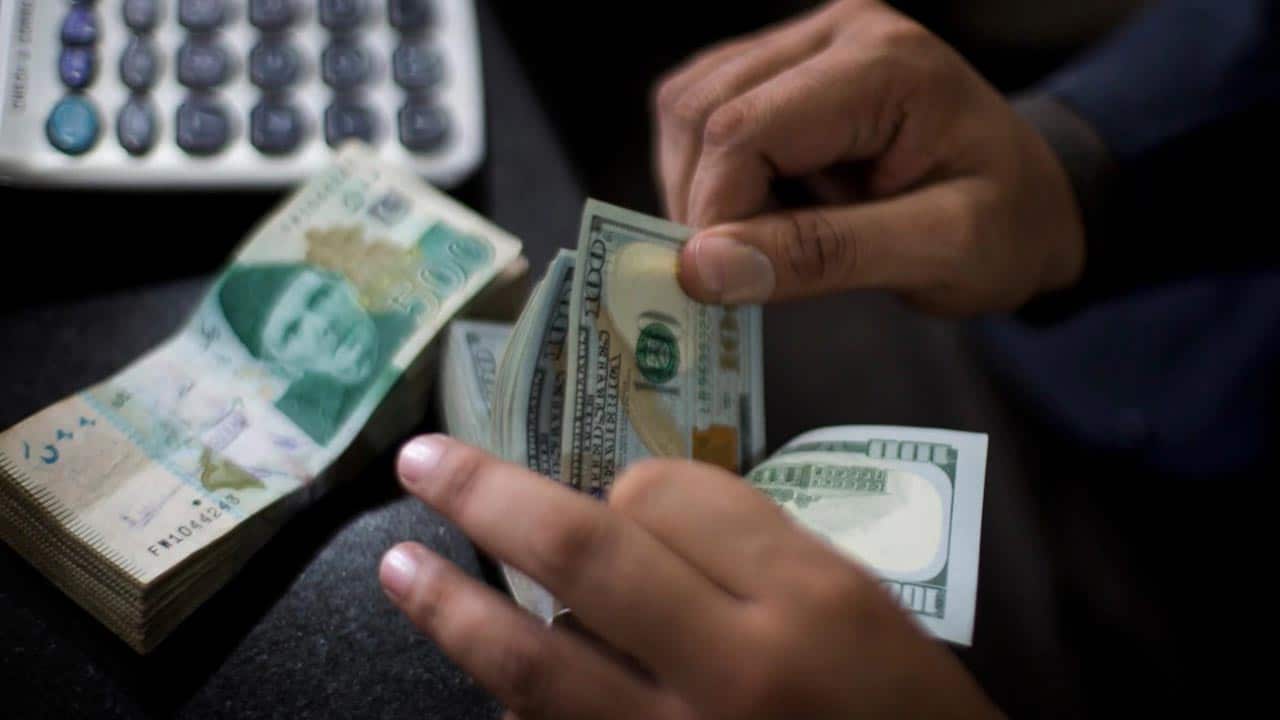
    During Tuesday’s interbank trading, the Pakistani rupee (PKR) declined and experienced losses against the dollar, reaching a low of Rs265 versus the dollar.
    The rupee lost 63 paisas versus the dollar by the time markets closed, depreciating by 0.24 per cent.

    The local currency commenced trading at Rs261.50 versus the US dollar with full red value. By lunchtime, the dollar had risen to about Rs264 versus the rupee. Before the interbank closure, the local currency was mostly bearish versus the top foreign currency after 1 PM.

    The National Assembly passed the Finance (Supplementary) Bill, 2023, on Monday, proposing extra taxes and tariffs of Rs170 billion, ending the rupee’s five-day winning streak against the dollar and clearing the way for the staff-level deal with the International Monetary Fund (IMF).

    After its record-breaking single-day plunge of Rs25 in the latter week of January, when the rupee was finally “freed” versus the US dollar in the inter-bank market, the rupee has lost more than Rs27. The PKR has decreased by 62.99 paisas today based on observable market trends and fiscal developments.

    Money exchangers claim that a further delay in the staff-level agreement with the IMF might increase pressure on the PKR as investors and exporters alike track exchange rate movements to calculate profit yields in the face of constrained revenue estimates and related import restrictions.

    The rupee may appreciate until the conclusion of the current fiscal year, 2022–2023, in the event that the rescue is successful.

    After obtaining a $2.5 billion loan, the IMF’s current loan programme will end on June 30, 2023. Pakistan will have to reapply for the new loan programme if necessary in the next fiscal year.