Category: Business

  • Suzuki Swift GLX now costs more than Rs4.7 million after latest hike

    Suzuki Swift GLX now costs more than Rs4.7 million after latest hike

    Pak Suzuki Motor Company has announced its third price hike in less than 30 days, resulting in an increase in the prices of some of its more affordable car models. This move follows the ongoing trend, with Pak Suzuki citing mounting inflation and local currency depreciation as the primary reasons for the price increase.

    With immediate effect, the revised car prices are as follows:

    VariantsOld Price (Rs)New Price (Rs)Increase (Rs)
    Alto VX2,034,0002,144,000110,000
    Alto VXR2,359,0002,487,000128,000
    Alto VXR AGS2,528,0002,665,000137,000
    Alto VXL AGS2,615,0002,795,000144,000
    Wagon R VXR2,877,0003,062,000185,000
    Wagon R VXL3,052,0003,248,000196,000
    Wagon R AGS3,348,0003,563,000215,000
    Cultus VXR3,326,0003,540,000214,000
    Cultus VXL3,654,0003,889,000235,000
    Cultus AGS3,906,0004,157,000251,000
    Swift GL M/T3,807,0004,052,000245,000
    Swift GL CVT4,092,0004,335,000263,000
    Swift GLX CVT4,462,0004,725,000263,000
    Bolan VX1,754,0001,852,00092,000

    A production halt was announced by the manufacturer last week as a result of the continued economic downturn and inventory constraint. Further days without manufacturing indicate a greater sales drop. That might result in Pak Suzuki losing a considerable portion of its market share, especially in light of the recent price increase.

  • National Assembly passes mini-budget to meet IMF targets

    National Assembly passes mini-budget to meet IMF targets

    The National Assembly of Pakistan passed the Finance (Supplementary) Bill, 2023, aimed at amending certain laws relating to taxes and duties. The bill is intended to generate an additional Rs170 billion within the next four and a half months, to fulfill the last prior actions agreed upon with the International Monetary Fund (IMF).

    Pakistan’s reserves have fallen to a critically low level of $2.9 billion, which experts believe is sufficient for only 16 to 17 days of imports. The completion of the ninth review of a $7 billion loan programme with the IMF would lead to a disbursement of $1.2 billion, as well as unlock inflows from friendly countries.

    The Finance Minister, Ishaq Dar, introduced the bill to the National Assembly on February 15, and the formal debate started on it after moving a motion by Commerce Minister Syed Naveed Qamar on February 17. In his concluding speech during the NA session, Dar said the new taxes proposed in the bill would not affect the poor segments of society, as most of the new taxes are being imposed on luxury items that they don’t use.

    The government has also proposed an increase of Rs40 billion in the budget of the Benazir Income Support Programme (BISP) to help the poor cope with rising inflation.

    The Finance Bill aims to increase the general sales tax (GST) rate from 17 per cent to 18 per cent, with an increase to 25 per cent on luxury items. The bill proposes to raise the federal excise duty (FED) on cigarettes, and aerated and sugary drinks. GST on 33 categories of goods covering 860 tariff lines, including high-end mobile phones, imported food, decoration items, and other luxury goods, will increase from 17 per cent to 25 per cent, however, the raise will be notified through another notification.

    The excise duty on cement has been raised from Rs1.5 to Rs2 per kilogram, a measure expected to generate an additional Rs6 billion. An excise tax of 10 per cent has been proposed on non-aerated drinks like juices, including mango and orange, to raise an additional tax of Rs4 billion.

    The finance bill also proposed a 10 per cent withholding tax on functions and gatherings held in marriage halls, marquees, hotels, restaurants, commercial lawns, clubs, community places, or other places, expected to raise Rs1 billion to Rs2 billion from this tax. The excise duty on carbonated or aerated drinks has been raised to 20 per cent from 13 per cent to generate an additional Rs10 billion for the government.

    The proposed increase in excise duty on business, first, and club-class air tickets will raise an additional Rs10 billion for the government, with a tax rate of 20 per cent (or Rs50,000, whichever is higher) proposed on the value of air tickets.

  • Pakistan’s current account deficit drops by over 90% amid import restrictions

    According to data released by the State Bank of Pakistan (SBP) on Monday, Pakistan’s current account deficit in January 2023 reduced by 90.2 per cent to $0.24 billion, compared to $2.47 billion in the same month last year.

    The decrease in deficit is attributed to the persisting import restrictions, which have been implemented due to the balance of payments crisis that has pushed the country towards default.

    However, the shrinking current account deficit is a result of critically low forex reserves, which stood at $3.2 billion as of February 10, barely enough to cover three weeks of imports.

    To prevent dollar outflows, the government has limited imports of essential food and medicines until the International Monetary Fund (IMF) provides a bailout to the country.

    The government’s strategy of import restrictions has affected industries that rely on imported inputs to continue their operations, leading to a suspension of operations or downsizing production levels and causing layoffs.

    During January, the country’s imports stood at $3.92 billion, a decrease of 7.3 per cent from the previous month, while exports fell to $2.21 billion, a decrease of 4.29 per cent from December’s $2.31 billion. Workers’ remittances in January 2023 amounted to $1.89 billion, which is a decline of 9.89 per cent compared to December’s $2.1 billion.

    During the first seven months of the current fiscal year, the country’s current account deficit stood at $3.8 billion, representing a 67.13 per cent decline from July-Jan FY22.

  • Pakistan to implement separate gas tariffs for rich and poor

    Pakistan to implement separate gas tariffs for rich and poor

    Dr Musadik Masood Malik, the State Minister for Petroleum, has announced that the government of Pakistan will implement a new system of gas tariffs that will differentiate between the rich and the poor. The purpose of this measure is to provide relief to low-income citizens who struggle to pay their gas bills.

    According to Dr Malik, the government will apply “various slabs” for the poor that will be “three times less than those of rich using the same or more gas under the same slabs.” He made this announcement during a press conference at the Lahore Press Club on Sunday.

    In addition to this, the government will supply locally explored gas or the reserves to be explored in the future to gas-fired power plants for cheap energy generation. The goal of this measure is to bring down the electricity tariff for the public at large. According to Dr Malik, the cost of generating electricity through LNG is Rs26 per unit, while it is only Rs7 when plants are operated on indigenous gas.

    Dr Malik also pointed out that only 1,000 super-rich people have captured the country of 220 million people. He deplored the fact that Pakistan provides gas at a much lower cost of “just 70 cents” per MMBTU, compared to rich countries like Saudi Arabia, Qatar, and Bahrain, where the cost is $2, $3, and $4 per MMBTU, respectively.

    He also criticised the government’s policies for creating a divide between the rich and the poor. He blamed Prime Minister Imran Khan for turning Pakistan into two countries, one for the rich and the other for the poor. He stated that “one Pakistan is that where a poor man is sent to jail for stealing bread for his children while the other one is that where a man involved in stealing watches and diamonds worth billions of rupees is sitting in his home.” He also stated that “one Pakistan is for the poor seeking money for medicines, while in the other, the people have been importing billions of dollars’ worth of precious vehicles.”

    As a result, Dr Malik announced that the government has decided to tax the rich and the powerful, not the poor or the weaker ones. He stated that the government stands with the poor, which represents around 60 per cent of the population, and that they have either reduced or maintained the gas tariff for them. He maintained that “we are the poor, as we were with them in old Pakistan.”

  • IMF chief wants the poor people of Pakistan to be protected

    IMF chief wants the poor people of Pakistan to be protected

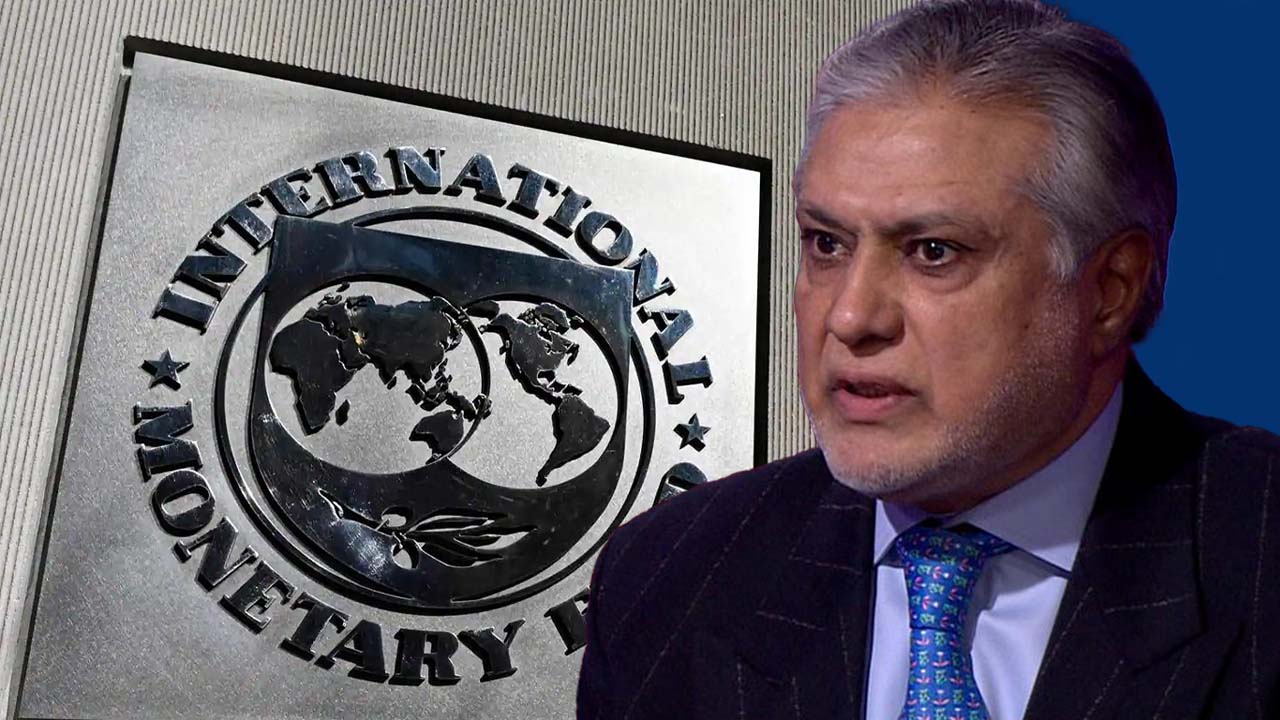
    In a recent interview with an international broadcaster, Kristalina Georgieva, the Managing Director of the International Monetary Fund (IMF), called for Pakistan to distribute subsidies more fairly, redirecting resources from the wealthy to those in need. Georgieva urged the country to increase tax revenues from those who are making good money, both in the public and private sectors, to contribute to the economy.

    The IMF is keen for Pakistan to function effectively as a country and avoid dangerous levels of debt, which could lead to the need for debt restructuring. Georgieva expressed concern for the people of Pakistan, who have been devastated by floods affecting one-third of the population.

    The IMF has recommended that Pakistan broaden its narrow tax base, with only 3.5 million return filers out of a population of over 200 million. The lender has also called for the removal of untargeted subsidies and the redirection of resources towards the poor, including the Benazir Income Support Programme (BISP), for which the government has increased the allocation from Rs360 billion to Rs400 billion to protect the poorest from inflationary pressures.

    The IMF’s review mission has made it clear that Pakistan must undertake tax revenues from all those who possess income to contribute to the national kitty.

    Pakistan faces a looming balance of payment (BoP) crisis, with external debt servicing of $27 billion required in the next financial year. The ongoing IMF programme of $6.5 billion under the Extended Fund Facility (EFF) is due to expire on June 30, 2023, and there is no possibility of any further extension in the ongoing EFF arrangement.

    The IMF could help Islamabad overcome the crisis by ensuring that the country can pay its debt obligations without plunging into default. The revival of the IMF programme will be a pre-requisite step for seeking any debt restructuring, so the government is currently focusing on it.

  • Weekly inflation increases more than 38% as prices of petrol and food items hit the roof

    Weekly inflation increases more than 38% as prices of petrol and food items hit the roof

    According to the latest data released by the Pakistan Bureau of Statistics (PBS), the Sensitive Price Indicator (SPI) based inflation for the week ended February 16, 2023, registered an increase of 2.89 per cent. The rise in inflation can be attributed to an increase in the prices of both food and non-food items.

    Food Items that saw an increase in prices

    The following food items saw a significant increase in prices during the week ended February 16, 2023:

    • Cooking oil 5 litre (8.65 per cent)
    • Vegetable ghee 1kg (8.02 per cent)
    • Bananas (8.01 per cent)
    • Chicken (7.49 per cent)
    • Vegetable ghee 2.5 kgs (6.76 per cent)

    Non-food items that saw an increase in prices

    The following non-food items saw an increase in prices during the week ended February 16, 2023:

    • Petrol (8.82 per cent)
    • Diesel (6.49 per cent)
    • Cigarettes (6.18 per cent)

    Year-on-Year Trend

    The year-on-year trend depicts an increase of 38.42 per cent mainly due to an increase in the prices of the following items:

    • Onions (433.44 per cent)
    • Chicken (101.86 per cent)
    • Diesel (81.36 per cent)
    • Eggs (81.22 per cent)
    • Rice irri-6/9 (74.12 per cent)
    • Rice basmati broken (73.05 per cent)
    • Petrol (69.87 per cent)
    • Moong (67.98 per cent)
    • Bananas (67.68 per cent)
    • Tea Lipton (63.89 per cent)
    • Pulse gram (56.93 per cent)
    • Bread (55.36 per cent)
    • Maash (53.42 per cent)
    • LPG (52.68 per cent)
    • Cigarettes (50.02 per cent)

    On the other hand, the prices of tomatoes (65.30 per cent), electricity for q1 (7.50 per cent), and chillies powdered (7.42 per cent) saw a decrease during the same period.

    SPI for the week under review

    The SPI for the week under review in the above-mentioned group was recorded at 234.77 points against 228.17 points registered in the previous week. Out of 51 items, prices of 34 (66.67 per cent) items increased, 05 (9.80 per cent) items decreased and 12 (23.53 per cent) items remained stable.

    SPI for different consumption groups

    The SPI for the consumption group up to Rs17,732, Rs17,732-22,888, Rs22,889-29,517, Rs29,518-44,175 and above Rs44,175 consumption group increased by 2.45 per cent, 2.73 per cent, 2.79 per cent, 2.88 per cent, and 2.94 per cent, respectively.

    Items that recorded an increase in average prices

    The following items recorded an increase in their average prices during the week over previous:

    • Petrol super (8.82 per cent)
    • Cooking oil Dalda or other similar brand (sn), 5 litre tin each (8.65 per cent)
    • Vegetable ghee Dalda/Habib or other superior quality 1 kg pouch each (8.02 per cent)
    • Bananas (8.01 per cent)
    • Chicken (7.49 per cent)
    • Vegetable ghee Dalda/Habib 2.5 kg tin each (6.76 per cent)
    • Hi-speed diesel (6.49 per cent)
    • Cigarettes Capstan (6.18 per cent)
  • IMF urges Pakistan to increase interest rate to move towards positive trajectory

    IMF urges Pakistan to increase interest rate to move towards positive trajectory

    The State Bank of Pakistan (SBP) and the International Monetary Fund (IMF) recently engaged in discussions concerning the possibility of tightening monetary policy and increasing foreign exchange reserves by the end of June 2023.

    As of February 10, 2023, Pakistan’s foreign exchange reserves held by the SBP stood at $3.1 billion, reflecting a $276 million increase. This was largely due to improved liquidity resulting from the reduction of discrepancies between the inter-bank and open markets following adjustments of the exchange rate.

    In accordance with the IMF’s recommendation to increase foreign exchange reserves to $12 billion by the end of June 2023, Pakistan will need to secure at least $17-18 billion over the next four-and-a-half months. This amount encompasses external debt repayment obligations of $5 billion, current account deficit (CAD) financing of $3-4 billion, and foreign exchange reserve building of $8-9 billion.

    If Pakistan’s proposal is approved by the IMF, it will require inflows of $11-12 billion in order to meet foreign debt servicing, CAD financing, and foreign exchange reserve building up to $6-$7 billion by the end of June 2023. The IMF has also suggested raising the policy rate by 300 to 400 basis points to shift towards a positive interest rate trajectory. However, SBP officials have asserted that the Monetary Policy Committee (MPC), established under the SBP Amendment Act, is empowered to make decisions based on macroeconomic fundamentals.

    According to a senior official of the finance ministry, Pakistani authorities are hoping to reach a staff-level agreement with the IMF’s review mission next week before the IMF executive board meeting in four to six weeks. Nevertheless, there is still a discrepancy on external financing projections.

    Pakistan has implemented tough measures, including increasing electricity and gas tariffs, imposing taxes worth Rs170 billion through a mini-budget, adopting a market-based exchange rate, and raising POL prices. While these steps were in the hands of Pakistani authorities, the most critical aspect now is securing confirmation from multilateral and bilateral creditors to meet the program period’s substantial external financing requirements. The EFF program is set to expire on June 30, 2023, with no possibility of extending it further.

    The IMF is pressing for a gross foreign exchange reserves target of up to $11-$12 billion by the end of June 2023, whereas Pakistan is requesting a target between $6 and $8 billion, given the possibility of reduced confirmation from bilateral partners. Both sides agree that reaching a gross foreign exchange reserves position of $16.2 billion by the end of June 2023, as requested during the finalization of the 7th and 8th reviews under the $6.5 billion EFF arrangement, is not feasible.

    The Pakistani side seeks a 50 per cent reduction in the target for the end of the program period, but the IMF insists on obtaining confirmation from all possible sources. Finance Minister Ishaq Dar is currently in Dubai, attempting to secure approval from multilateral and bilateral creditors as well as commercial banks to obtain the required dollar inflows support for the IMF program’s revival.

  • Pakistan’s export market takes a hit: Textile group exports down 14.83% in January

    Pakistan’s export market takes a hit: Textile group exports down 14.83% in January

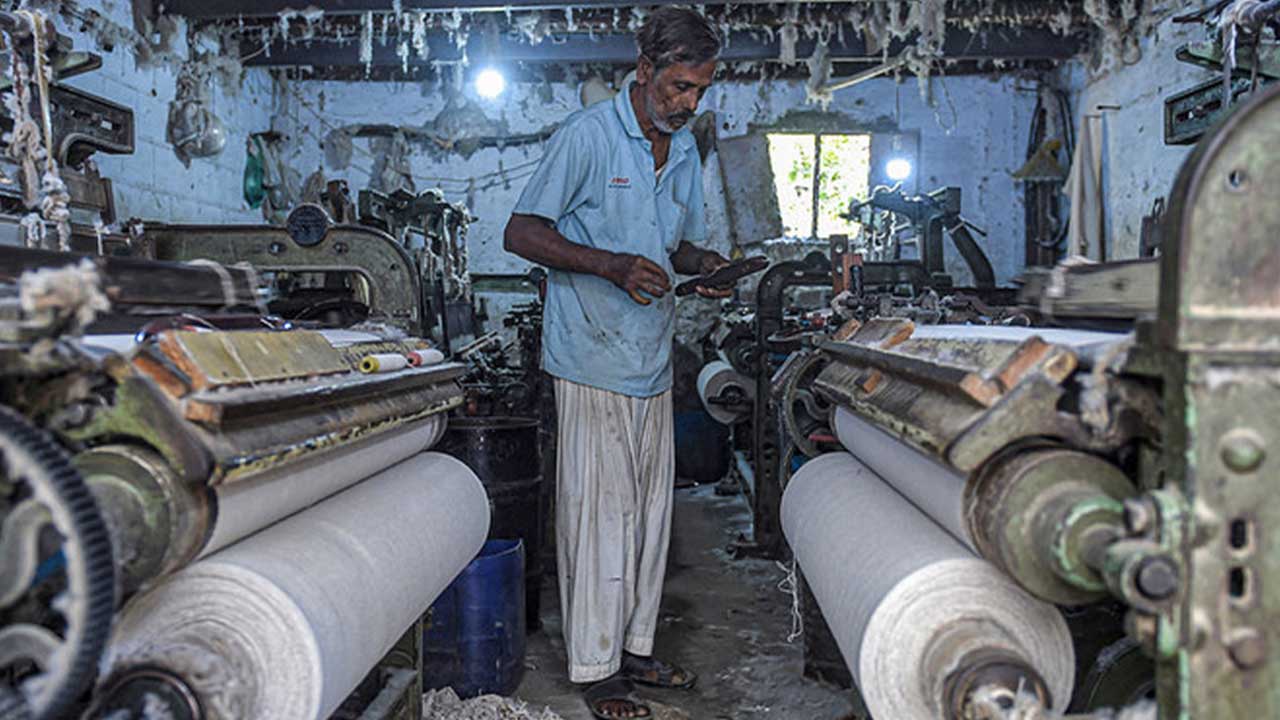
    According to the Pakistan Bureau of Statistics (PBS), the country’s textile group exports declined by approximately 8.17 per cent during the first seven months (July-January) of fiscal year 2022-23, totaling $10.039 billion as compared to $10.933 billion during the same period of the previous year.

    The data also showed that textile group exports witnessed a year-on-year decline of 14.83 per cent in January 2023, amounting to $1.321 billion, compared to $1.551 billion during the same month in the previous year. Additionally, on a month-on-month basis, the textile group registered a negative growth of 2.53 per cent compared to $1.356 billion in December 2022.

    Cotton yarn exports experienced a negative growth of 34.66 per cent during July-January, totaling $449.419 million compared to $687.857 million during the same period in the previous year. On a year-on-year basis, cotton yarn exports registered a negative growth of 12.34 per cent, while on a month-on-month basis, it registered a growth of 27.22 per cent.

    Rice exports declined by 15.82 per cent during the first seven months of fiscal year 2022-23, totaling $1.083 billion compared to $1.286 billion during the same period in the previous fiscal year. Overall, the country’s exports during July-January 2022-23 totaled $16.499 billion (provisional) compared to $17.739 billion during the corresponding period of the previous year, showing a decrease of 6.99 per cent.

    In January 2023, the country’s exports amounted to $2.244 billion (provisional) compared to $2.313 billion in December 2022, reflecting a decrease of 2.98 per cent and a decline of 14.15 per cent compared to $2.614 billion in January 2022. The primary commodities of exports during January 2023 were knitwear, readymade garments, bed wear, cotton cloth, rice others, towels, cotton yarn, made-up articles (excluding towels and bedwear), rice basmati, and surgical goods and medical instruments.

  • Honda Atlas passes on sales tax burden to customers with another massive price hike

    Honda Atlas passes on sales tax burden to customers with another massive price hike

    Honda Atlas Cars announced on Friday that it would be increasing the prices of its completely knocked down (CKD) models in response to a rise in sales tax.

    The car manufacturer cited several reasons for this decision, including the devaluation of the Pakistani rupee against the US dollar, a volatile business environment, and the increase in sales tax.

    As a result, the company will raise the prices of its CKD models by up to Rs550,000, marking the third hike.

    The new retail sale price (RSP) will be effective for all new orders placed from February 18 onwards.

    Here are the new prices of all Honda cars:

    ModelOd priceNew priceHike
    City MT 1.2LRs4,329,000Rs4,579,000Rs250,000
    City CVT 1.2L Rs4,469,000Rs4,729,000Rs260,000
    City CVT 1.5L Rs4,739,000Rs5,019,000Rs280,000
    City Asp MT 1.5LRs4,939,000Rs5,229,000Rs290,000
    City Asp CVT 1.5LRs5,119,000Rs5,419,000Rs300,000
    BR-V CVT SRs5,649,000Rs5,949,000Rs300,000
    HR-V VTIRs6,799,000Rs7,199,000Rs400,000
    HR-V-VTI SRs6,999,000Rs7,399,000Rs400,000
    Civic 1.5L M CVTRs7,299,000Rs7,779,000Rs480,000
    Civic 1.5L Oriel M CVTRs7,599,000Rs8,099,000Rs500,000
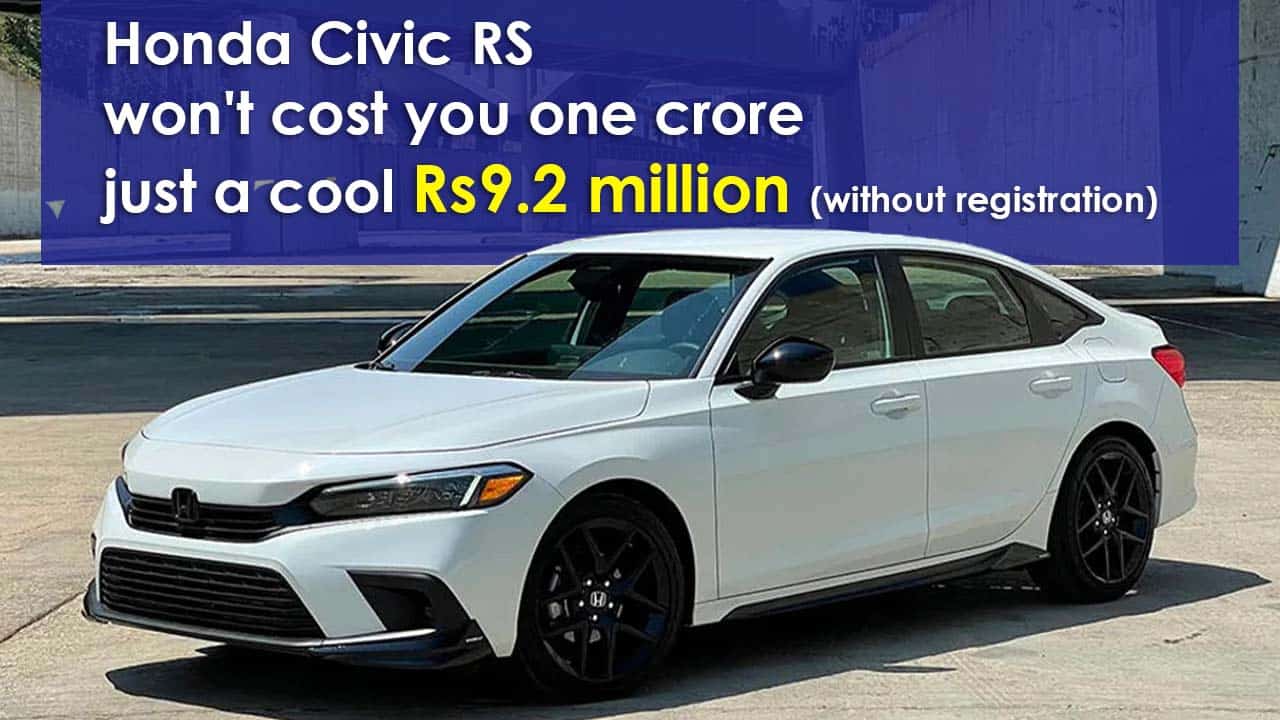
    Civic RS 1.5LL CVTRs8,649,000Rs9,199,000Rs550,000
    Honda Cars Latest Prices in Pakistan – February 18, 2023

    Customers who have existing back orders as of February 17 will also be subject to the new retail sale price. Additionally, a 1 per cent additional sales tax will be applied to all back orders that have been paid in full as of the previous price increase letter, dated February 6.

    Honda Atlas Cars stated that any unclear back orders, with the exception of the Civic model, that are due up until March 23 can be invoiced if full payment (February 6 price + 1 per cent additional sales tax) is received by February 27 (with an instrument date of February 27). However, the automaker noted that the prices are subject to change and that the prices prevailing at the time of delivery will be final. Any changes in government levies or taxes will be borne by the customers.

    Furthermore, Honda Atlas announced an increase in the rates of its motorcycles the day before.

  • Latest gas price hike will hit the rich, not the poor: Petroleum Minister

    Latest gas price hike will hit the rich, not the poor: Petroleum Minister

    Minister of State for Petroleum Dr Musadik Malik stated that the latest hike in gas tariff was implemented without imposing a burden on the low-income segment. In a media briefing, he added that the government separated the poor and rich segments to protect low-income individuals from its impact.

    However, Malik admitted that the low-income segment in Pakistan is facing tough times. He also shared that 60 per cent of the Pakistani public will remain unaffected by the gas price hike, and the low-income segment might even see a decrease in their bills.

    Malik agreed with former finance minister Miftah Ismail that Pakistan is experiencing elite capture. He emphasized that Pakistan is different for the high-income and low-income segments, and the gas tariff has mostly increased for the high-income segment.

    During the speech, Malik criticised the developed countries for fancying development and progress, which he believed have put most of the world’s population – nearly 5 billion – at peripheries.

    According to Dawn, the minister said that the development has not been inclusive and countries like Pakistan were paying the price despite having “zero” contribution in carbon emissions and lately, it became the third most affected country from global warming.

    He made these comments after the government raised gas prices in line with the International Monetary Fund’s recommendation. As a result, the weighted average cost of gas has increased by 43 per cent from Rs620 to Rs885 per million British thermal units.