Category: Business

  • Here’s how chicken prices surpassed beef prices for the first time in Pakistan

    Here’s how chicken prices surpassed beef prices for the first time in Pakistan

    Owing to a major shipment that has been stuck at Port Qasim in Karachi for several months, chicken prices have sharply increased and surpassed beef prices (with bones) for the first time in thirty years.

    A shipment of soybean seeds worth $100 million was halted in October 2022 at Port Qasim in Karachi. These oilseeds were designed to be crushed rather than planted. One of the main components of the edible oil used in Pakistan is the liquid that is produced when the seeds are pressed.

    Being one of the biggest importers of palm seeds, soybeans, and other oilseeds from nations like Malaysia, Pakistan is heavily dependent on these oilseeds to meet its demands for edible oil. But because they are also used as cattle feed, these oilseeds serve yet another crucial role in the food chain.

    The solid parts of the seeds are left behind when oilseeds like soybeans are pressed to produce edible oil. Then, “oil cakes” made from this fiber- and protein-rich material are fed to cattle and birds as food.

    The majority of these livestock’s “meals” up until 2015–16 were made from locally obtained cotton seeds. Since they are more nutritive than cotton seeds, soybean meals have gained popularity in recent years. Pakistan consumes 2 to 2.8 million tonnes of these meals each year.

    This indicated that when the soybean shipments were stopped at the port, the poultry business was also shocked in addition to the edible oil industry. Feed for chickens was suddenly unavailable, and prices began to soar.

    Since Pakistan is a signatory to the Cartagena Protocol for Biosafety, the environmental ministry was authorised to halt the exports of genetically modified soybean seeds at the port.

    Several issues arose with this. First of all, despite widespread scaremongering, GMOs have never been proven to be dangerous for human consumption. Second, these oilseeds weren’t intended to be planted solely for the purpose of extracting edible oil and as a component in the poultry industry.

    One of the worries was that since hens were being fed with these GMO oilseeds, the ‘harmful consequences’ from these GMOs would eventually move into the chickens and reach the populace, according to Food Security Minister Tariq Bashir Cheema.

    This argument has a flaw in that Pakistani poultry has been fed oilseed diets made from GMOs since at least 2005. Cottonseed meals, which are generated by genetic modification in Pakistan, are a significant component of the poultry diet.

    As things stand, a sizable portion of the population no longer has access to one of its main sources of protein because of the skyrocketing price of chicken. Mutton and beef prices have risen faster than the Consumer Price Index (CPI) during the last few decades.

    According to Profit, only chicken costs increased more slowly than the CPI during this entire period, making it the only protein source. With chicken now costing more than beef on the open market, the population’s nutritional impact might be affected in the long run.
  • Sri Lanka to reduce army by a third as financial crunch tightens

    Sri Lanka to reduce army by a third as financial crunch tightens

    In response to criticism that military spending exceeded the budgetary allotments for healthcare and education in 2023, Sri Lanka on Friday announced a plan to cut the size of its military in half by 2030 in order to create a technically and tactically sound and well-balanced defence force.

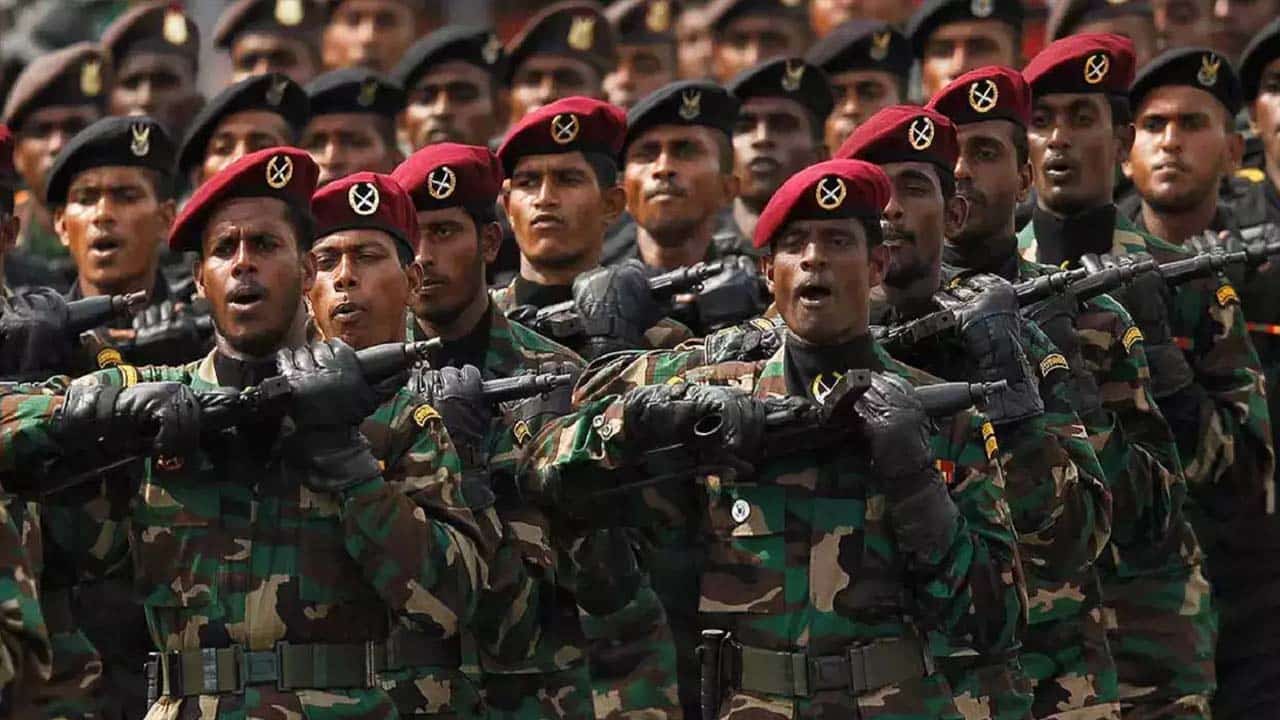
    The country will slash its army by a third to 135,000 personnel by next year and to 100,000 by 2030. “The overall aim of the strategic blueprint is to broach a technically and tactically sound and well-balanced defence force by the year 2030 in order to meet upcoming security challenges,” the statement quoting the state minister of defence Pramitha Bandara Tennakoon said.

    The share of the defence sector in Sri Lanka’s total expenditure peaked in 2021, at 2.31 per cent of gross domestic product (GDP), but fell to 2.03 per cent last year, according to Colombo-based think tank Verite Research.

    In early December, Sri Lankan media outlets announced that the Sri Lankan Army had decided to reduce troop numbers by 16,000.

  • SBP-held foreign exchange reserves dropped to 9-year low of $4.34 billion

    SBP-held foreign exchange reserves dropped to 9-year low of $4.34 billion

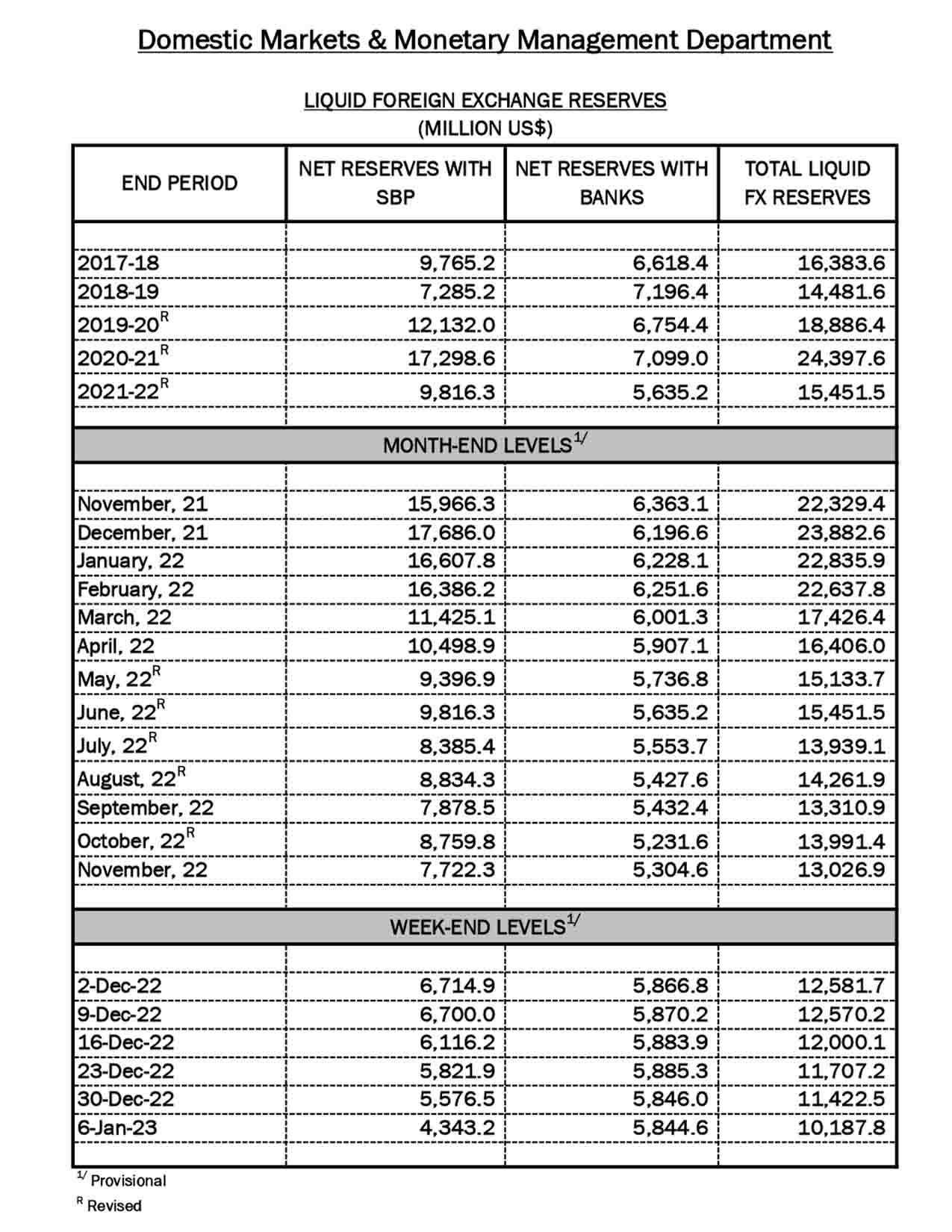
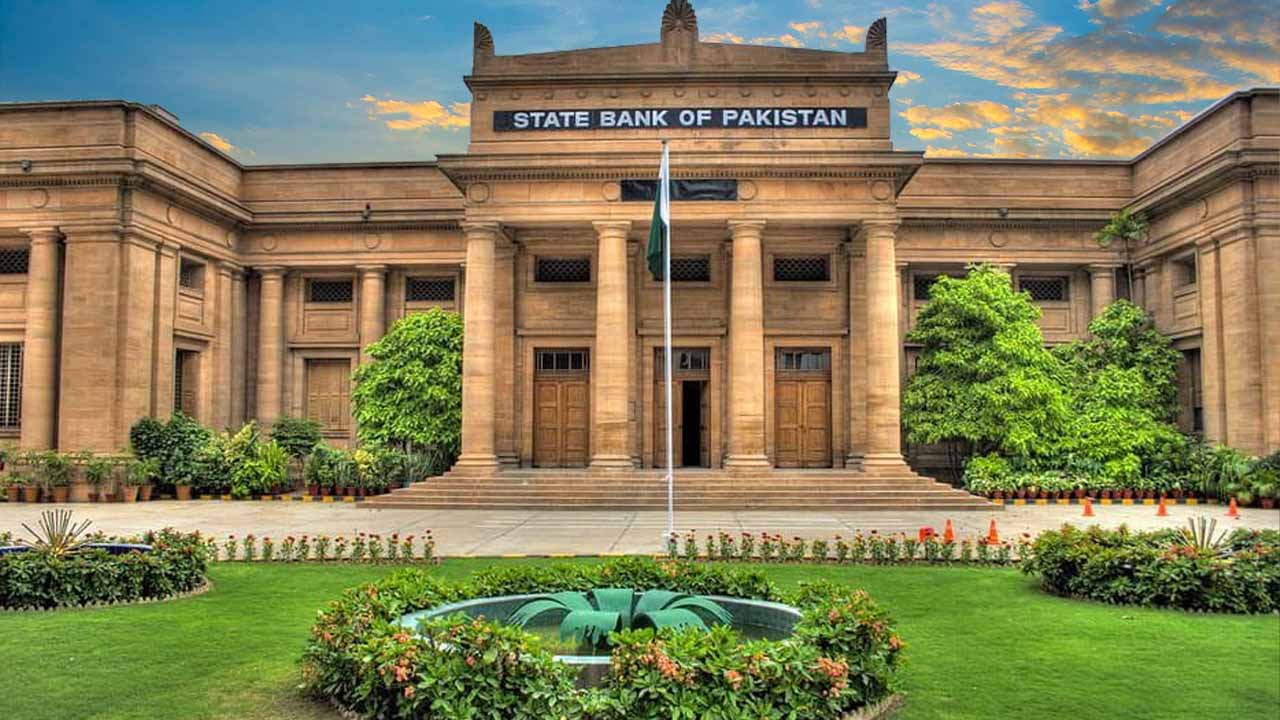
    The State Bank of Pakistan’s (SBP) foreign exchange reserves fell to $4.34 billion, its lowest level since February 2014, due to a lack of dollar inflows from the International Monetary Fund (IMF) or friendly nations.

    The SBP disclosed on Thursday that due to the repayment of external debt, its reserves fell by $1.23 billion during the week ended January 6.

    The country has been experiencing a severe dollar shortage, which is having a negative impact on the capacity to import even food and industrial raw supplies. The country doesn’t have enough dollars, according to the most recent status of foreign exchange reserves, to pay for even one month’s worth of routine imports.

    Data showed that commercial banks held $5.84 billion in net foreign currency reserves, while the overall amount of liquid foreign exchange reserves was $10.18 billion.

    Ever since the beginning of 2022–2023, reserves have been rapidly decreasing. In the upcoming months, analysts predict rising inflation and limited industrial output as manufacturing is constrained by the scarcity of imported raw materials.

    According to Geo, United Arab Emirates (UAE) will roll over the existing loan of $2 billion and give an additional $1 billion loan, which should stabilise the reserve position in the coming days.

    As the government strives to reduce imports amid a dollar shortage, the reserves, which fell to their lowest level since February 2014, would now only provide import coverage of 0.82 month.

  • Toyota Indus Motor Company increases car prices by up to Rs1.2 million

    Toyota Indus Motor Company increases car prices by up to Rs1.2 million

    Toyota Indus Motor Company has announced a significant and unexpected price increase for all of its well-known models, including all variants of the Toyota Yaris, Toyota Corolla Altis, Toyota Hilux Revo, and Toyota Fortuner.

    The first price hike from Toyota for 2023 is already in place and will be applied to all new bookings.

    Following the most recent price increase disclosed by the manufacturer, these are the latest prices for all Toyota cars in Pakistan:

    Toyota Corolla

    Altis X Manual 1.6

    New price: Rs4,939,000

    Old price: Rs4,569,000

    Increase: Rs370,000

    Altis X CVT 1.6

    New price: Rs5,369,000

    Old price: Rs4,979,000

    Increase: Rs390,000

    Altis X 1.6 CVT SE

    New price: Rs5,909,000

    Old price: Rs5,479,000

    Increase: Rs430,000

    Altis Grande X CVT-i 1.8 (Beige room)

    New price: Rs6,169,000

    Old price: Rs5,709,000

    Increase: Rs460,000

    Altis Grande X CVT-i 1.8 (Black Interior)

    New price: Rs6,209,000

    Old price: Rs.5,749,000

    Increase: Rs460,000

    Toyota Yaris

    Yaris GLI MT 1.3

    New price: Rs3,819,000

    Old price: Rs3,539,000

    Increase: Rs280,000

    Yaris GLi CVT 1.3

    New price: Rs4,069,000

    Old price: Rs3,769,000

    Increase: Rs300,000

    Yaris ATIV M/T 1.3

    New price: Rs4,039,000

    Old price: Rs3,729,000

    Increase: Rs310,000

    Yaris ATIV CVT 1.3

    New price: Rs4,239,000

    Old price: Rs3,929,000

    Increase Rs310,000

    Yaris ATIV X MT 1.5

    New price: Rs4,339,000

    Old price: Rs4,009,000

    Increase: Rs330,000

    Yaris ATIV X CVT 1.5

    New price: Rs4,609,000

    Old price: Rs4,259,000

    Increase: Rs350,000

    Toyota Revo

    Hilux Revo V Automatic 2.8

    New price: Rs11,429,000 

    Old price: Rs10,599,000

    Increase: Rs830,000

    Hilux Revo Rocco

    New price: Rs12,049,000

    Old price: Rs11,179,000

    Increase: Rs870,000

    Toyota Fortuner

    Fortuner G A/T

    New price: Rs12,509,000

    Old price: Rs.11,579,000

    Increase: Rs930,000

    Fortuner 2.7 V A/T

    New price: Rs14,319,000

    Old price: Rs13,259,000

    Increase: Rs510,000 

    Fortuner 2.8 Sigma 4

    New price: Rs15,099,000

    Old price: Rs13,969,000

    Increase: Rs1,130,000

    Fortuner Legender

    New price: Rs15,909,000

    Old price: Rs14,699,000

    Increase: Rs1,210,000

    Small hatchbacks and small sedans were already out of the reach of the average person’s budget. The most recent price hike is now anticipated to cause more problems for the country’s already-suffering people. On the other side, Toyota’s most recent announcement could possibly cause a decline in its auto sales.

  • Talibans unveil first Afghani ‘supercar’ with Toyota Corolla Altis 1.8 engine

    Talibans unveil first Afghani ‘supercar’ with Toyota Corolla Altis 1.8 engine

    Even though Afghanistan has recently made headlines for its restrictions on women, its people have now come up with something that is putting it on the map for the right reasons: a homegrown supercar called the Mada 9.

    The five-year design and development process for the sporty-looking Mada 9 prototype sports car was overseen by 30 engineers from the manufacturer ENTOP and Kabul’s Afghanistan Technical Vocational Institute (ATVI).

    The car is mostly always stationary in social media videos that are making the rounds, and ENTOP hasn’t provided any performance information at all, so it’s unclear what it can do on the road.

    Given that the Mada 9 team claims their engine is that of a very underwhelming Toyota Corolla, it is unlikely to compete with brands like Bugatti and McLaren.

    It features the same engine that Toyota employed in the Corolla Altis 1.8 (2005–2011; E140), which is likewise quite well-liked in Pakistan. The stock 1ZZ-FE is capable of producing up to 171 Newton metres (Nm) of torque and 132 horsepower (hp).

    It can produce more than 170 hp thanks to the factory-installed supercharger from Toyota.

    A spokesman for the Taliban Zabihullah Mujahid proudly shared pictures of the car on social media and said that the nation as a whole was “honoured” by its construction.

    The news of the supercar was well received in Afghanistan, and many quickly shared pictures of it on social media, claiming it was evidence of the country’s prowess in science and technology.

    However, many more users brought up the fact that the supercar was introduced as Afghanistan battled one of the worst humanitarian crises in the world and that the Taliban had revoked the rights of the nation’s women to study and work.

  • SBP instructs banks to inform customers in advance about downtime of digital banking services

    SBP instructs banks to inform customers in advance about downtime of digital banking services

    The use of banking apps and sites for carrying out day-to-day transactions has considerably increased. However, it has been noted that in cases of service outages, customers are not properly informed in a timely manner, due to which they face issues with transactions.

    Now, in order to ensure that customers are informed about service disruptions due to any scheduled or unforeseen activity, the State Bank of Pakistan (SBP) has issued fresh instructions to facilitate the customers of the financial institutions.

    According to the most recent instructions, banks must now notify customers and the SBP of any planned activity that may result in service disruptions.

    Financial institutions are required to inform customers at least two days in advance through SMS alerts, social media platforms, and in-app notifications, while SBP will be notified at least one week in advance for any maintenance activity.

    SBP, as part of its oversight responsibility, will regularly monitor the availability of digital channels itself.

    Monthly cumulative downtimes must be reported to SBP. The central banks shall be apprised of the actions taken by the relevant bank to avoid inconvenience in the future if the unforeseen outage exceeds three hours each quarter.

  • Pakistan will take fiscal measures set by IMF but there will be no burden on the common man: Ishaq Dar

    Pakistan will take fiscal measures set by IMF but there will be no burden on the common man: Ishaq Dar

    Federal Minister for Finance and Revenue Ishaq Dar has categorically denied rumours suggesting that the government is considering “access to foreign exchange held with commercial banks.”

    “It is categorically denied and clarified that there is no such move under consideration of the government,” said Dar, in a series of tweets.

    The statement come days after the finance minister said that the country’s foreign exchange reserves stand at $10 billion, a much higher amount than the SBP’s $5.6 billion reserves as of December 30, 2022, since “dollars held by commercial banks also belonged to the country.”

    This comment gave rise to fears that the government may confiscate dollars from private banks as had been done in 1998 when Dar was the finance minister.

    However, Dar said that his comment was “greatly misconstrued” and nothing like this would happen.

    Dar explained at a press conference with Prime Minister Shehbaz Sharif and other federal cabinet members that before 1999, all foreign currency was deposited with the State Bank of Pakistan (SBP), and private banks were not permitted to hold any foreign currency.

    “In February 1999, when I was the finance minister, we devised a system whereby a substantial amount [of dollars] remain with [private] banks. It was on June 30, 1999 that reserves were broken down into three columns — those with the SBP, commercial banks and total.

    “Whenever Pakistan’s reserves are quoted anywhere in the world — a survey or a document — the [total figure] is quoted and then a breakdown is given. I gave a breakdown too,” he added.

    The minister claimed that certain people were to blame for the country’s dire circumstances, which caused it to drop from the 24th to the 47th largest economy in 2016.

    “Even now, they cannot tolerate any good development. They gave such a twist [to my statement],” he said, adding that while the federal cabinet was busy working for Pakistan under PM Shehbaz’s guidance, such people were spreading rumours that the government would take dollars from commercial banks.

    “Nothing of that sort will happen. Everything is all worked out … and in order. Nothing to worry about,” he assured, urging those “spreading the rumours” to play a positive national role.

    Dar also tweeted about the reserves later, saying national foreign exchange reserves always include forex held with SBP and commercial banks.

    Furthermore, Dar tweeted about the reserves and stated that SBP and commercial bank holdings are usually included in the nation’s foreign exchange reserves.

    “Recently I quoted the forex reserves figure based on this principle. Some vested elements who ruined this country’s economy in the past, gave it a deliberate twist and started a campaign as if govt was considering access to foreign exchange held with commercial banks which indeed is the property of the citizens.

    “It is categorically denied and clarified that there is no such move under consideration of the government,” he emphasised.

    The finance minister once again claimed that Pakistan’s foreign exchange reserves would increase soon.

    As of December 30, 2022, Pakistan’s foreign exchange reserves had decreased to $5.6 billion, an eight-year low. This is equivalent to imports for three weeks.

    The swift decrease has made it impossible for the government to repay its international debts without taking out new loans from allies.

    Govt to comply with IMF conditions without burdening common man

    The International Monetary Fund (IMF) programme’s ninth review, which would release $1.18 billion, has been postponed for months due to the government’s refusal to comply with some conditions imposed by the international lender.

    In today’s press conference, Dar acknowledged the delay and claimed that it was due to revenue collection. The Federal Board of Revenue (FBR) missed its goal in December, the finance minister said, and the super tax that the administration enacted in June of last year had been declared unlawful by a high court.

    Dar said that his team informed the IMF that Pakistan could recover the amount easily after the Supreme Court takes a decision on the super tax.

    “We are not changing the fiscal budget target and we will achieve it,” he claimed.

    Dar said that the IMF suggested that the government implement fiscal measures and eliminate some subsidies. “We have identified some budgetary measures, but the average person won’t be overburdened.”

    He asserted that the measures would be very specific and classified.

  • World Bank cuts Pakistan’s GDP growth forecast from 4% to 2%

    World Bank cuts Pakistan’s GDP growth forecast from 4% to 2%

    Due to the unstable economy and floods, the World Bank predicted that Pakistan’s economic growth would drop by half, falling by 4 per cent to 2 per cent, during the current fiscal year.

    According to the Bank’s latest report, “Global Economic Prospects,” Pakistan is experiencing growing economic woes, especially those caused by the recent flooding as well as ongoing policy and political uncertainties.

    “Pakistan faces mounting economic difficulties and Sri Lanka remains in crisis. In all regions, improvements in living standards over the half-decade to 2024 are expected to be slower than from 2010-19,” the World Bank stated in Global Economic Prospects released on Tuesday.

    Pakistan’s currency declined by 14 per cent between June and December, and its national risk premium climbed by 15 per cent over this same time frame due to the nation’s low foreign exchange reserves and rising sovereign risk.

    It went on to say that growth is anticipated to pick up to 3.2 per cent in the fiscal year 2023–24 (FY24), still under previous forecasts, as the country implements policy measures to stabilise macroeconomic conditions, inflationary pressures subside, and reconstruction after the floods gets underway.

    According to the analysis, Pakistan’s recent floods are thought to have cost the country damage equal to 4.8 per cent of GDP.

  • OGRA approves 74% hike in sui gas prices amid economic crisis

    OGRA approves 74% hike in sui gas prices amid economic crisis

    The Oil and Gas Regulatory Authority (Ogra) has approved an increase in the price of natural gas of up to 74 per cent at a time when the country’s people are struggling to make ends meet owing to rising inflation.

    According to specifics, the Sui Southern Gas Company (SSGC) and the Sui Northern Gas Pipelines Ltd. (SNGPL) would each be permitted to raise gas rates by up to 74.42 per cent and 67.75 per cent, respectively.

    Ogra’s decision will be implemented after the approval of the federal government. If the federal government does not approve it within 40 days, the decision will be implemented automatically.

    The oil and gas regulator has okayed increases of Rs406.28 and Rs469.28 per million British thermal units (mmBtu) for SNGPL and SSGC, respectively.

    OGRA further said that the average gas price for SNGPL would reach Rs952.17 per unit from the current price of Rs545.89 per mmBtu, while that of SSGCL would reach Rs1,161 per unit from the current Rs692.63 per mmBtu.

    LPG price hike

    Earlier, the prices of liquefied petroleum gas (LPG) were increased by Rs5 per kg without a notification from OGRA.

    The LPG price has now jumped to Rs260 per kg from Rs255 after an increase of Rs5. Meanwhile, the prices of domestic and commercial cylinders increased by Rs60 and Rs230, respectively.

    The gas is available for Rs270 per kilogramme in Murree, while its price exceeds Rs300 per kilogramme in Gilgit-Baltistan and Skardu.

  • Diamond Industries suspends manufacturing operations due to unavailability of raw materials

    Diamond Industries suspends manufacturing operations due to unavailability of raw materials

    A major manufacturer of foam products in Pakistan, Diamond Industries Limited has announced to suspend its manufacturing operations from today owing to a shortage of imported raw material.

    The company informed the Pakistan Stock Exchange about the closure in a notice.

    “Due to adverse economic conditions in the country and non-availability of imported raw material, the company has suspended its manufacturing operations for a short term with effect from Tuesday, January 10, 2023, till further notice subject to the availability of imported raw material in the country,” read the notice.

    The announcement follows several companies announcing reductions in production or shutdowns of operations due to slow sales and low inventory.

    It is worth noting that Diamond Industries has been known for selling foam products in the country for more than three decades.

    Experts believe that the situation of industrial sector does not seem to improve soon.