Category: Business

  • Donors pledge more than $10 billion for Pakistan flood recovery at Geneva conference

    Donors pledge more than $10 billion for Pakistan flood recovery at Geneva conference

    Pakistan has secured over $10.5 billion in pledges from international creditors at the one-day International Conference on Climate Resilient Pakistan in Geneva, which will help the cash-strapped country recover from last year’s devastating floods.

    By the end of the first plenary session, Pakistan had received pledges totaling $8.57 billion, and in the second session, it had secured more than $2 billion.

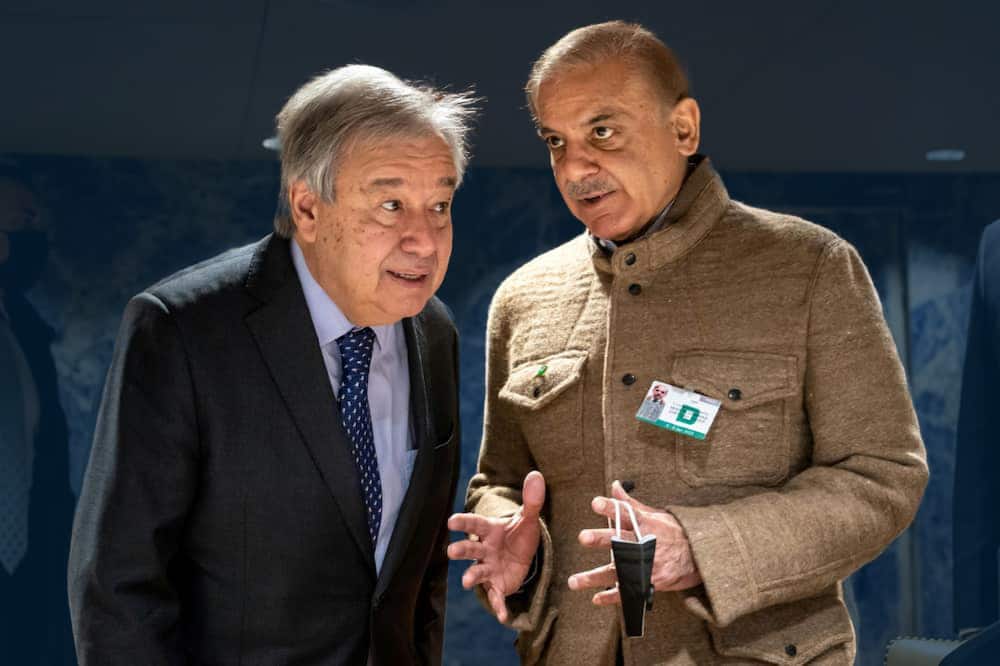
    UN Secretary-General Antonio Guterres urged the international community to help Pakistan build climate-resilient infrastructure and to grant access to the knowledge and resources needed to survive future catastrophes.

    The delegations recalled their support for the emergency relief operations during the conference and reaffirmed their commitment to Pakistan’s people in support of a strong recovery, rehabilitation, and reconstruction.

    All donations pledged at the Geneva conference

    • Islamic Development Bank: $4.2 billion
    • World Bank: $2 billion
    • Asian Development Bank: $1.5 billion
    • Asian Infrastructure Investment Bank: $1 billion
    • Saudi Arabia: $1 billion
    • France: $384 million
    • China: $100 million
    • United States: $100 million
    • EU: $93 million
    • Germany: $88 million
    • Japan: $77 million
    • United Kingdom: $10 million
    • Azerbaijan: $2 million

    The attendees voiced their solidarity and pledged financial support for the ongoing humanitarian activities as well as the achievement of the goals and key areas. The meeting was co-hosted by Pakistan and the UN.

    The World Bank has pledged $2 billion, the Asian Infrastructure Investment Bank has pledged $1 billion, and the Islamic Development Bank Group has pledged $4.2 billion over three years.

    Furthermore, Asian Development Bank has pledged $1.5 billion, while the European Union has offered $93 million, Germany has pledged $88 million, China has pledged $100 million, Japan has pledged $77 million, and so on. The French government has committed $345 million, and the United States Agency for International Development has offered $100 million.

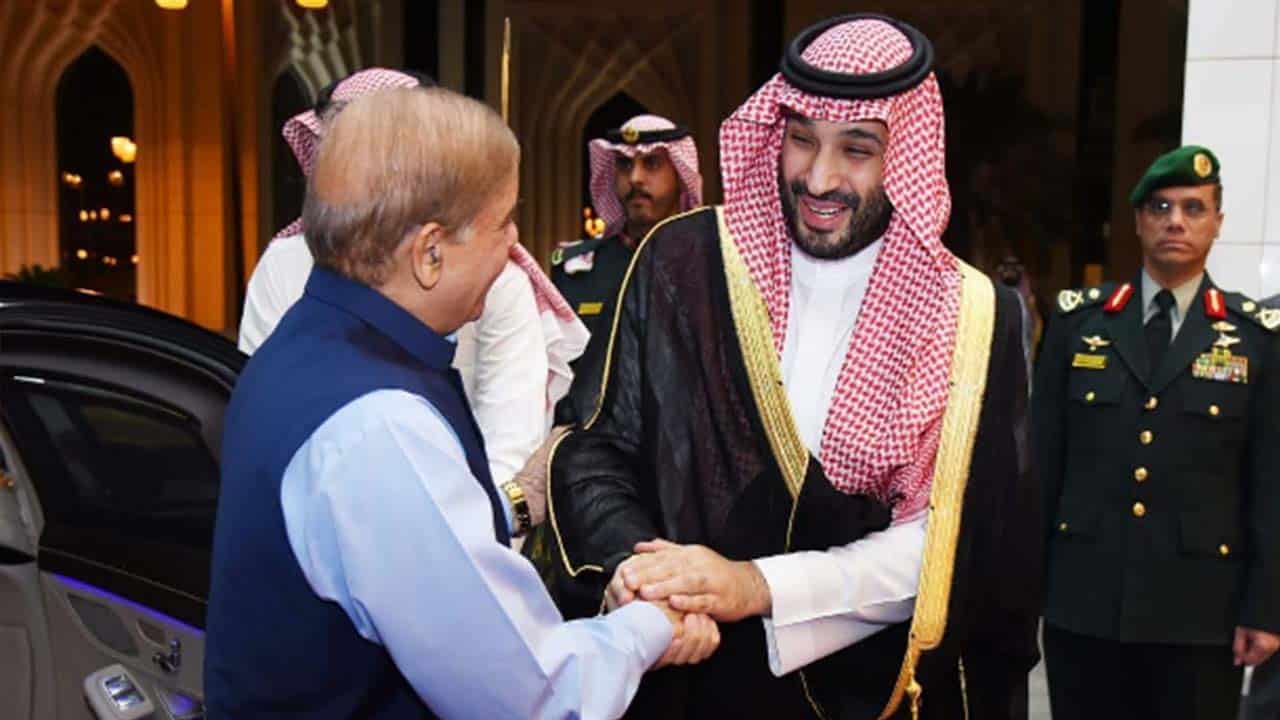
    Saudi Arabia has also committed $1 billion to assist Pakistan in reconstruction efforts.

  • Saudi Arabia mulls increasing investments in Pakistan to $10 billion

    Saudi Arabia mulls increasing investments in Pakistan to $10 billion

    Saudi Crown Prince Mohammed Bin Salman has directed the Saudi Development Fund (SDF) to study increasing the deposit amount in the State of Bank of Pakistan (SBP) to $5 billion.

    “His Royal Highness Prince Mohammed bin Salman bin Abdulaziz Al Saud, Crown Prince and Prime Minister, has directed to study augmenting the Kingdom of Saudi Arabia’s investments in the sisterly Islamic Republic of Pakistan which have previously been announced on August 25, 2022, to reach $10 billion,” it said.

    “The crown prince also directed the Saudi Development Fund to study increasing the amount of the deposit provided by the Kingdom of Saudi Arabia in favour of the Central Bank of Pakistan which have previously been extended on December 2, 2022, to hit a $5 billion ceiling,” according to Saudi Press Agency.

    The move, according to SPA, confirmed Saudi Arabia’s commitment to assist Pakistan’s economy and its sisterly people.

    The development was reached within the framework of the ongoing dialogue between Prime Minister Shehbaz Sharif and Prince Salman.

    The announcement made today comes the day after Prince Salman and Chief of Army Staff General Asim Munir met in Madina to discuss ways to strengthen bilateral ties between the two nations. Munir was on a week-long official visit to Saudi Arabia and the United Arab Emirates.

    The SBP and SFD entered into a contract in 2021 for the SBP to receive $3 billion, which would be deposited in the central bank’s account to increase its foreign exchange reserves.

    The SFD subsequently acknowledged the rollover of a $3 billion deposit for an additional year in September of last year. The deposit was supposed to maturity on December 5 but Saudi Arabia extended its term on December 2.

    Saudi Arabia had previously committed to restart its financial assistance to Pakistan in the final week of October 2021, providing $1.2 billion in oil deliveries on a deferred payment plan and around $3 billion in safe deposit boxes.

    The accord was made the same month when former prime minister Imran Khan visited Saudi Arabia.

  • Flour price may increase to Rs200 per kilogramme soon

    Flour price may increase to Rs200 per kilogramme soon

    The pirce of “chakki” flour in Rawalpindi and Islamabad has soared to Rs170 per kilogramme due to the country’s escalating inflation.

    The price of “chakki atta” (chakki flour), which was formerly sold at Rs150 per kilogramme, has suddenly increased to Rs170 per kilogramme. The new pricing is applicable as of Sunday, according to the price list published by the Rawalpindi Islamabad Chakki Atta Association and displayed at chakkis.

    Unfortunately, the administrations of the twin cities have not made any announcements. Nazakat Shah, president of the association, and Ali Raza, general secretary, have both signed the price list.

    According to The News, chakki owners in Rawalpindi claim that the association informed them that the price of flour may rise to Rs200 per kilogramme in the near future.

    An owner claimed that he only received 10 bags of wheat, each weighing 50 kilogrammes, with condolences from wholesalers that they would have to restrict the product and that things would only get harder as time goes on.

    The price of rice has also increased by Rs50 per kilogramme in less than a week, in a similar manner. The best rice can be found for between Rs340 and Rs380 per kilogramme.

  • Ishaq Dar says Pakistan’s foreign exchange reserves will strengthen soon

    Ishaq Dar says Pakistan’s foreign exchange reserves will strengthen soon

    Pakistan’s foreign exchange reserves, which currently stand at $10 billion, will strengthen very soon, according to Finance Minister Ishaq Dar.

    Dar recalled the economic achievements made by the PML-N government from 2013 to 2018, saying that during that time, the GDP of the nation increased from $244 billion to $356 billion.

    He said, “Pakistan reserves stood at a total of $10 billion — $4 billion of the State Bank of Pakistan and $6 billion of commercial banks. Pakistan is repaying its loans on time, and the foreign exchange reserves will soon boost.”

    The finance minister announced that an IMF group would soon be in the nation and that he would be seeing IMF representatives at the Geneva summit.

    The coalition administration plans to seek money at the International Conference on Climate Resilient Pakistan on January 9 in Geneva, Switzerland, in order to recover from the disastrous floods.

    Dar informed the media outlet that he will travel to the United Arab Emirates (UAE) for a three-day official tour after his visit to Geneva comes to an end.

    “Funds from Saudi Arabia and other friendly countries will soon be received,” the finance minister said, who told journalists earlier this week that he expects inflows from China “in a few days.”

  • Nearing default and lying about phone calls? Not good Pakistan, says IMF

    Nearing default and lying about phone calls? Not good Pakistan, says IMF

    The International Monetary Fund (IMF) stated on Sunday that Managing Director Kristalina Georgieva and Prime Minister Shehbaz Sharif spoke on the latter’s request, a claim that suggests Islamabad has continued to engage in politics while being on the verge of default.

    “The call took place in response to a request by the Prime Minister of Pakistan to discuss the International Conference on resilient Pakistan,” Esther Perez, the resident representative of the IMF told The Express Tribune.

    On Friday, the PM’s office issued an official handout stating that “the IMF managing director phoned premier Shehbaz on the phone” following his address at the Hazara Electric Supply Company’s (HAZECO) inaugural ceremony. The PM had also stated in his address that the managing director of the Fund had called him.

    As the country makes dubious claims of strength and has just $4.5 billion in foreign exchange reserves, it appears that the administration is still not ready to change its ways.

    Only three weeks’ worth of imports may be covered using the remaining funds. Pakistan has paid back $8.5 billion in debt during the past three months (January through March). Included in this is a $2 billion loan to the UAE for which the government is attempting to obtain a rollover.

    Given the long-standing animosity between the two parties, such factually erroneous claims might make it harder for Pakistan to persuade the IMF.

    Due to its propensity to make pledges while receiving a loan tranche but then break them after the tranche has been released, the country has had a rough history with the IMF. This has led to a significant gap.

    A spokesperson of the IMF in a statement to the media also said that “the Managing Director had a constructive call with Prime Minister Sharif in the context of the International Conference on Resilient Pakistan to be held in Geneva on Monday, January 9.”

    The MD once more conveyed her sympathies to those who were directly impacted by the floods, and it was also said that she backed Pakistan’s attempts to create a more robust recovery.

    Additionally, the PM asserted on Friday that an IMF delegation will visit Pakistan in a matter of two to three days.

    “I asked her to send an IMF team for the completion of the pending 9th review of the programme so that the next loan tranche is released. She assured that the mission will visit [Pakistan] in the next two to three days,” Shehbaz had said.

    However, in its statement to the media, the IMF spokesperson said that the IMF “delegation is expected to meet with Finance Minister Ishaq Dar on the sidelines of the Geneva conference to discuss outstanding issues and the path forward”.

    The self-claimed deadline, which ends on Monday, for the 9th review mission’s arrival in Pakistan was not mentioned in the statement.

    On Saturday, it was revealed that due to significant debt repayments, Pakistan’s official foreign exchange reserves have for the first time dropped to a perilous level of $4.5 billion.

    The sources in the finance ministry also stated that no dates for the IMF review mission had been decided upon as of the PM’s address.

    Additionally, the prime minister said that Georgieva had asked if Saudi Arabia and China were aiding Pakistan.

    After thereafter, Pakistan’s interior minister Rana Sanullah said that even foreign countries won’t assist without the IMF’s protection.

    “If we back out from these [IMF] conditionalities, then our economic survival will become next to impossible and even our friendly countries cannot extend financial help to us,” Sanaullah had said in Faisalabad.

    The interior minister had said that if the current administration tried to adhere to the strict requirements of the IMF, inflation would soar, prices would soar, and the economy would suffer.

    Since the 9th review negotiations between Islamabad and the Fund have not concluded as of yet, a $1.1 billion loan tranche has been withheld.

    In order for the World Bank and the Asian Infrastructure Investment Bank (AIIB) to disburse their funds, Pakistan is eager to finish the ninth review.

    Disagreements about import restrictions, currency rate regulations, demands for the imposition of more taxes, and raising energy costs to pay off over Rs500 billion in circular debts have caused the discussions to be postponed.
  • Pak Suzuki announces second plant closure in less than 10 days due to parts shortage

    Pak Suzuki announces second plant closure in less than 10 days due to parts shortage

    Due to a persistent lack of imported components and accessories, Pak Suzuki Motor Company Ltd (PSMCL) has prolonged the factory shutdown from January 9 to 13 after keeping manufacturing operations paused from January 2 to 6.

    However, the business stated in a stock filing on Friday that the motorbike facility will continue to be in operation.

    The State Bank of Pakistan’s restrictions on obtaining prior approval for imports, including completely knocked-down (CKD) kits, have prevented PSMCL from opening its production facilities for 30 days since August 2022. This has negatively impacted the clearance of shipments from the port and resulted in shortages of parts and accessories.

    On the fate of employees because of persistent plant closure and plummeting sales of vehicles, a PSMCL official claimed that “so far no company’s employees have been terminated.”

    In 5MFY23, Pak Suzuki’s sales decreased by 35 per cent to 37,042 units from 57,200 in the same time the previous fiscal year.

    On Friday, the Lahore Chamber of Commerce and Industry (LCCI) and the Pakistan Association of Automotive Parts and Accessories Manufacturers (PAAPAM) both voiced their concerns regarding Millat Tractors’ decision to cease operations for an indefinite period of time due to declining sales and delayed sales tax refunds.

    In a joint statement, PAAPAM Senior Vice Chairman Usman Aslam Malik and LCCI President Kashif Anwar observed that “we should save Pakistan first, then politics, before we reach the point of no return.”

    Both leaders urged the administration and the opposition parties to get together and talk about how to resolve the nation’s crisis.

    They pointed out localization as the long-term answer to economic issues. The removal of imports must be given first priority, followed by the removal of export.

  • Pakistani banks start charging dollar transactions at open market rates

    Pakistani banks start charging dollar transactions at open market rates

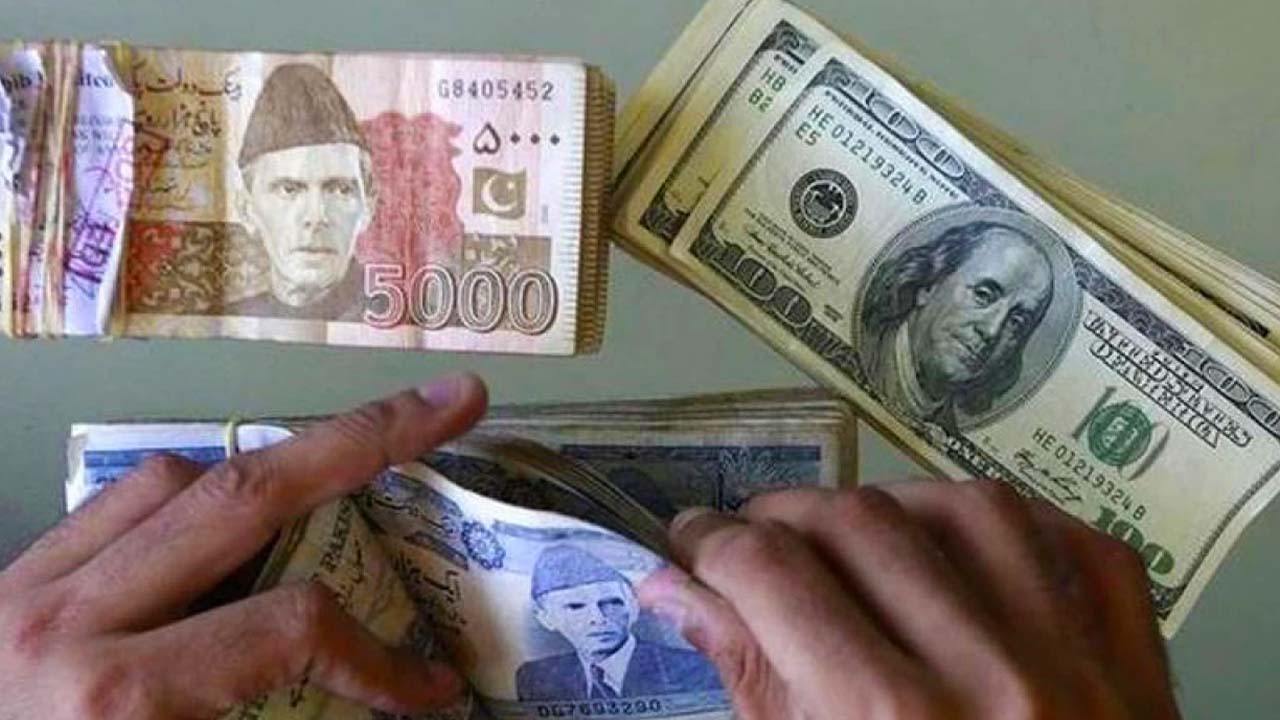
    Pakistani banks have announced that they will settle debit and credit card transactions made with foreign retailers and websites at the open market exchange rate for the US dollar.

    The conversion rate for the transactions would be calculated by the open market rate in place at the time, which might not match the rate listed on the foreign merchant’s website.

    Customers were advised by the banks in a statement that they could only settle debit or credit card purchases with foreign retailers or websites by buying dollars on the open market. As a result, the conversion rate for these transactions will be determined by the current open market rate.

    The statement, according to bankers, was made in response to several client concerns over the increased exchange rate.

    On Friday, the Pakistani rupee lost Rs0.02 to the US dollar in the interbank market, continuing its downward trajectory.

    The State Bank of Pakistan (SBP) reported that the exchange rate of the local currency for the dollar was Rs227.12. Which shows a 0.01 per cent decline from the close of Rs227.12 on Thursday.

    According to SBP, the Pakistani rupee is valued at Rs227–228 against the dollar. However, in the open market, the greenback is priced above Rs250 and goes as high as Rs275.

  • IMF team to visit Pakistan in 2-3 days to finalise ninth review

    IMF team to visit Pakistan in 2-3 days to finalise ninth review

    A delegation from the International Monetary Fund (IMF) will visit Pakistan in two to three days to “undertake and complete” the key ninth review, according to Prime Minister (PM) Shehbaz Sharif.

    PM Shehbaz said that he spoke to IMF Managing Director Kristalina Georgieva and stressed that Pakistan will complete the IMF bailout programme.

    “I told her to ease the terms of the deal because I cannot burden the common man any further. We have imposed taxes on the rich strata of the society. I requested her to send a delegation for the ninth review and she replied that a team will visit Pakistan in 2-3 days.”

    “After inquiring about Pakistan’s relations with China and Saudi Arabia, she also told me that China had urged IMF to support Pakistan,” he said.

    The IMF programme is currently stalled, with experts suggesting that the government is reluctant to implement some of the lender’s conditions over their effect on political capital in a year when elections are scheduled to take place.

    PM Shehbaz said that Pakistan was trying to mend its ties with friendly countries as well. “We should appreciate friendly countries for supporting Pakistan over the past few years but the previous government slapped allegations of corruption on Chinese firms and jeopardised the China-Pakistan Economic Corridor (CPEC).”

    He stated that the former leadership “had angered friendly nations”, adding that the contribution of Saudi Arabia, UAE and China to Pakistan’s economy is priceless.

    Pakistan needs the IMF programme to restart due to its declining rupee, shrinking reserves, and worse macroeconomic indices.

    The State Bank of Pakistan’s (SBP) foreign exchange holdings dropped by another $245 million on Thursday, down to a critically low level of $5.58 billion. Since April 2014, SBP-held reserves have never been this low.

    At the same time, the government has also been unable in obtaining crucial support from allies.

    The challenge has left Pakistani authorities scurrying to set up foreign exchange amid increased concerns over the country’s capacity to pay its debts and fund imports.

    Additionally, there are market rumours that Pakistan could possibly default, but the Pakistani government is still confident that Saudi Arabia would provide essential assistance for the country’s foreign exchange reserves.

  • Pakistan’s biggest tractor manufacturer announces to shut down operations

    Pakistan’s biggest tractor manufacturer announces to shut down operations

    The biggest manufacturer of agricultural machinery in Pakistan, Millat Tractors Limited, has stated that it will cease operations starting on January 6 and continuing till further notice, citing weak demand and cash flow issues.

    Details indicate that Millat Tractors, a producer of agricultural machinery and tractors, informed the Pakistan Stock Exchange (PSX) of the situation in a letter.

    “Due to continuing reduced demand for tractors and cash flow constraints, the company will remain closed from Friday, January 6, 2023, till further notice,” the statement added.

    The development occurred as a number of other businesses recently declared a shutdown or reduction in operations in Pakistan due to a decline in demand, a scarcity of inventory, or issues with the supply chain.

    The federal government’s import restrictions forced KSB Pumps Company Limited (KSBP) to close its production facility in Pakistan earlier on January 3.

    Due to the import ban, KSB announced that operations at its Hasanabdal factory would be temporarily suspended beginning January 2, 2023. The company also informed the Pakistan Stock Exchange of their decision.

  • Amazon to cut over 18,000 jobs citing economic uncertainty

    Amazon to cut over 18,000 jobs citing economic uncertainty

    Amazon has announced it will cut more than 18,000 jobs from its workforce, the largest set of layoffs in the US company’s history, as it battles to save costs.

    The company’s e-commerce and human resources departments will be primarily impacted by the layoff decisions, which Amazon will announce on January 18.

    The layoffs represent 6 per cent of Amazon’s almost 300,000 corporate employees and are a striking turnabout for a business that just tripled its base pay level in an effort to compete more fiercely for talent, according to BBC.

    With around 1.5 million employees overall, including warehouse workers, Amazon is the second-largest private employer in the United States (US), after Walmart Inc.

    CEO Andy Jassy claimed in the message that the unstable economy and the increased hiring over the last few years have made this year’s annual planning more difficult.

    Amazon, whose stock price has more than halved in the past year, has prepared for slower growth as rising inflation has led both businesses and consumers to reduce spending. The company’s financial situation has drastically declined. It changed from a delivery service that was deemed essential during the epidemic to one that was overbuilt in comparison to overall demand.

    Jassy’s statement was published after the Wall Street Journal reported that over 17,000 staff would be let go. He claimed that as a result of a leak, Amazon decided to break the news without first informing worried staff.

    Amazon plans to pay severance and is still required to submit some legal notices regarding significant layoffs. Jassy claims that Amazon has survived unstable and difficult economic times in the past and will do so in the future.