Category: Business

  • Gold price hits historic high of Rs169,650 per tola in Pakistan

    Gold price hits historic high of Rs169,650 per tola in Pakistan

    On Monday, the price of gold in Pakistan reached an all-time high of Rs169,650 a tola as investors continued to seek refuge in the safe-haven metal due to growing worries that the country’s economic situation will become worse.

    According to Geo, the rates of gold increased by Rs2,350 per tola and Rs2,016 per 10 grams, respectively, according to statistics supplied by the All Pakistan Sarafa Gems and Jewellers Association (APSGJA). These prices eventually reached an all-time high of Rs169,650 and Rs145,448.

    Gold has reached many heights recently and concluded the week at Rs167,300 per tola after rising by Rs4,000, or 2.49 per cent, during the week that ended December 10.

    In the meantime, silver prices rose over the key Rs1,900 per tola mark. Price increases of Rs80 per tola and Rs68.58 per 10 grams brought the price to an all-time high of Rs1,970 and Rs1,688.95.

    Investors’ attention has switched to gold as a result of the dollar scarcity since the price of yellow metal is also increasing on the global market.

  • Number of Pakistanis who think the country’s economy will become worse reduces by 20 per cent

    Number of Pakistanis who think the country’s economy will become worse reduces by 20 per cent

    About 57 per cent of Pakistanis currently hold the opinion that the country’s economic situation will continue to worsen in the future, down from 77 per cent in September. This is a 20 per cent decrease in the percentage of people who think this would happen.

    This information was provided in the quarterly report of the IPSOS Pakistan study 2022 on Consumers Confidence Survey, which included responses from over a thousand participants. In 2022, the survey was carried out between November 29 and December 4th.

    According to The News, for the first time since the PDM-led government took office, the respondents expressed optimism about the improvement of the nation’s economic and general circumstances.

    According to the survey, the per centage of people who believe that the economy will improve in the future has climbed from 10 per cent to 17 per cent, while the per centage of people who hold a moderate view has gone from 10 per cent to 26 per cent.

    Additionally, the per centage of people who are dissatisfied with the country’s present economic position has decreased from 61 per cent to 55 per cent, while the per centage of people who describe it as stable has climbed from 1 per cent to 4 per cent. In the most recent study, the per centage of people who have a moderate opinion of the economic condition in the nation has climbed by 5 per cent to reach 41.

    The IPSOS survey shows that for the first time since the PDM took office, the per centage of Pakistanis who believe their country is heading in the wrong direction has decreased by 2 per cent to 86 per cent, while the per centage who think it is heading in the right direction has increased by 2 per cent to 14 per cent.

    According to the research report, 74 per cent of Pakistanis thought the country was headed in the right direction during the 2018 elections, but the trend continued to drop following the elections.

  • MG to launch locally assembled HS in Pakistan soon

    MG to launch locally assembled HS in Pakistan soon

    Finally, MG Pakistan intends to introduce the locally built MG HS model in Pakistan very soon. Previously, the automaker exclusively offered the crossover SUV in the country as Completely Built Units (CBU) or imported models.

    According to Pakwheels, there were certain technical difficulties that prevented the government from granting the company a license. Although given that Pakwheels indicated that MG Pakistan is set to introduce the locally manufactured MG HS in Pakistan, it appears that the issue has been resolved.

    It was discovered that the government has granted the company a license, and the launch is just around the corner. Sources also stated that Pakistan will receive local HS in a matter of days, or maybe a few weeks.

    If true, this is fantastic news for the local auto market since MG HS has become a popular choice among Pakistanis despite its hefty price tag. The MG HS PHEV currently costs Rs8.5 million, while the MG HS turbo variant is priced at Rs8.9 million.

    For those unaware, the MG HS is equipped with MG Pilot, which is a comprehensive suite of driver-assist technologies. It complements the driver, lends a helping hand, and gives you added confidence on the road.

    MG PILOT’s advanced driver assistance features constantly sense your surroundings and look for unseen hazards. It offers a selection of warning and alert features to assist the driver while maintaining the highest safety standards, as shown by the 5-star Euro ANCAP rating given to the MG HS.

    Here are some unique features of the MG HS:

    1. Active Emergency Braking (AEB) – Automatically braking to assist with avoiding a collision with a vehicle, bicycle or pedestrian.
    2. Lane Keep Assist (LKA) – Detects lane markings ahead and warns the driver; will assist with steering to keep within the lane.
    3. Adaptive Cruise Control (ACC) – Maintains the speed set by the driver, automatically adjusting to other traffic.
    4. Traffic Jam Assist (TJA) – Automatically follows the vehicle in front in slow traffic.
    5. Blind Spot Detection (BSD) – Whenever there is a vehicle in the driver’s blind spot, a visual signal will show in the door mirror.
    6. Intelligent High Beam Assist – Automatically switches to low beam when it detects a vehicle ahead.
    7. Intelligent Speed Limit Assist – Actively detects speed limit signs and alerts the driver of the current speed limit.
  • Gold price hits record high as economic conditions push people to buy precious metals

    Gold price hits record high as economic conditions push people to buy precious metals

    On Thursday, the price of gold increased by 1.4 per cent to break the Rs166,000 per tola barrier as it proceeded to set new milestones.

    According to figures provided by the All Pakistan Sarafa Gems and Jewellers Association (APSGJA), the price of gold increased by Rs2,250 per tola and Rs1,929 per 10 grams to settle at record highs of Rs166,400 and Rs142,661.

    A day earlier, the price of gold reached a record high of Rs164,150 per tola as investors sought safety in the safe-haven metal amid growing worries about the nation’s economic situation getting worse.

    In the meantime, domestic silver prices held steady at an all-time high of Rs1,860 per tola and Rs1,594.65 per 10 grams.

    As the precious metal often reflects world prices, which have been under pressure this year as a result of the US Federal Reserve’s aggressive tightening efforts, the gold surge is particularly notable.

    The price of gold increased by $10 per ounce on the global market, reaching $1,784.

    The country’s gold prices were reaching new highs, but gold traders regret that the lucrative nature of the industry had vanished.

    Here, only investors are purchasing gold. In contrast, artificial jewellery is being used during weddings and other rituals.

  • Lahore to become Pakistan’s first smart city

    Lahore to become Pakistan’s first smart city

    The CEO of the Aga Khan Cultural Services Pakistan, Khawaja Tauseef Ahmad, paid a visit to Chief Minister of Punjab (CM) Ch Parvez Elahi at the CM Office. 

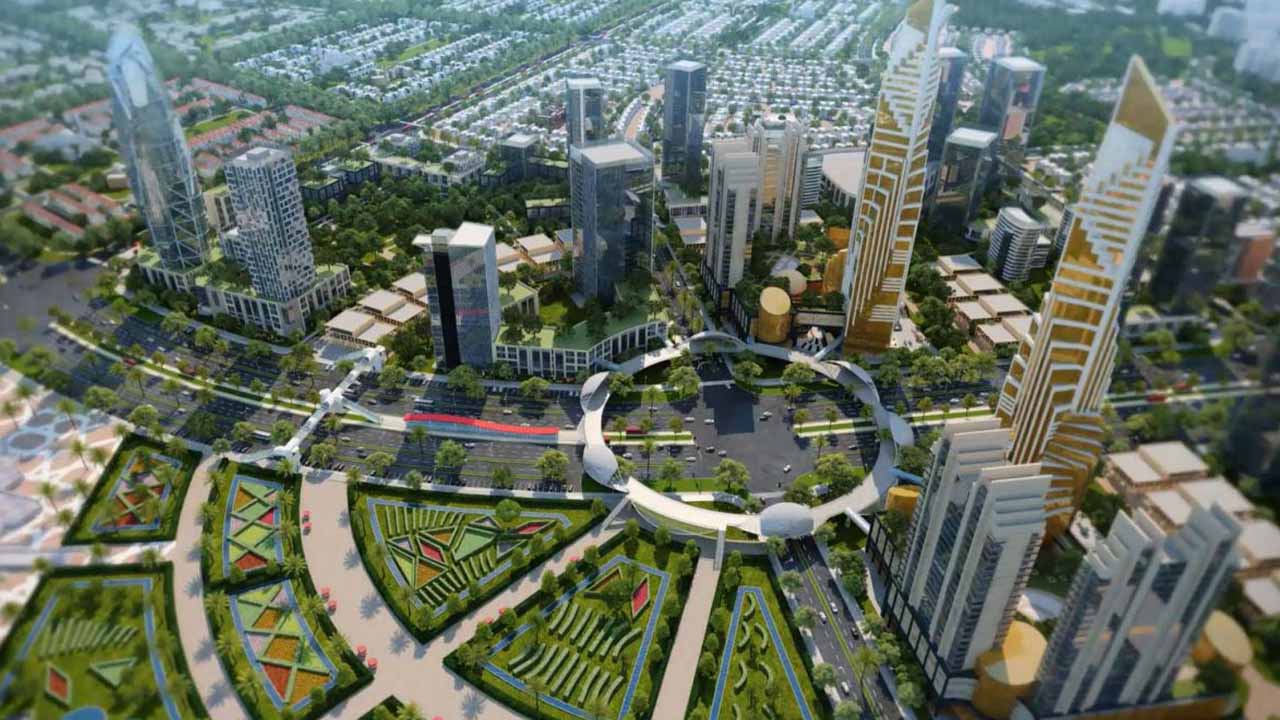
    The key decision to transform Lahore into a smart city in collaboration with the AKCSP was taken during the meeting.

    In this regard, the CM also sought a project plan. He said that Lahore would have the honour of being the first smart city in Pakistan.

    According to The Nation, he continued by saying that the Punjab Information Technology Board (PITB) will assist in the digitalization of the city of Lahore and that urban utilities will be provided via a mobile application.

    Moreover, Baba Bulleh Shah’s tomb in Kasur will also be renovated to resemble the architecture of the Wazir Khan Mosque.

    Last week, CM Punjab attended the induction ceremony of MPA Khayal Ahmad Kastro as minister at the Governor House. Khayal Ahmad Kastro was sworn in by Governor Balighur Rehman.

    The CM congratulated the newly appointed minister on taking the oath and expressed confidence that he will execute his duties responsibly while working to serve the people. The administration is focused on the welfare of the public, and it is taking every effort to provide assistance to the citizens.

    CM Elahi earlier said that Punjab is the most suitable province for investment and we have formulated a policy to give on lease uncultivated land on 30-year period.

  • Business confidence in Pakistan drops to negative 4%

    Business confidence in Pakistan drops to negative 4%

    Major multinational companies with operations across a variety of sectors in Pakistan have lost faith in the country’s economy. In the previous six months, the Business Confidence Score (BCS) as a whole decreased by 21 percentage points to a negative 4 per cent.

    In the earlier survey, which was conducted in March–April 2022, the score (BCS) was positive 17 per cent. In general, more than half of respondents (56 per cent vs. 19 per cent in the prior study) had a “poor” opinion of the business environment in the previous six months.

     “Going forward, only a net 2 per cent (versus 18 per cent in the previous survey) were ‘positive’ for the next six months and 35 per cent of respondents cited no plans to invest,” according to the “Business Confidence Index Survey Wave 22” of the Overseas Investors Chamber of Commerce and Industry (OICCI), which was held from September to November 2022.

    According to Express Tribune, political unrest, currency depreciation, and rising fuel prices were the top three factors contributing to the recent drop in business confidence. The other two top-five factors contributing to the recent drop in company confidence were the current energy crisis (high power costs) and inadequate commercial and trade policies.

    The services industry experienced a confidence decline of 24 per cent, followed by the retail and wholesale trade sectors (22 per cent), and the industrial sector (20 per cent). 25 per cent of respondents were from the retail and wholesale trade, 33 per cent from the services industry, and 42 per cent from the manufacturing sector.

    Commenting on the survey results, OICCI President, Ghias Khan said in a statement that “The substantial decline in the overall business confidence to negative 4 per cent is regrettable but not surprising considering the highly challenging political and economic situation witnessed during the past six months.”

    “The record level of rains during August leading to severe flooding in Sindh and other parts of the country further restricted business activities,” he added.

    “Foreign investors’ feedback could have been more positive but for serious concerns on a few critical issues like the undue delay in revising the pharma pricing and the extreme delays in overseas (outward) remittances for goods, services and dividends. Such actions are seriously counter-productive when trying to attract FDI (foreign direct investment) into the country,” Khan expounded.

    The main factors affecting business confidence in the country are anticipated to remain political unrest, rising fuel prices, and rupee depreciation.

    OICCI Vice President, Amir Paracha noted that “These are challenging times. Authorities are doing all they can to navigate the situation, including controlling inflation, managing the economy with restricted availability of foreign exchange and other resource constraints.”

    “The key stakeholders, especially foreign investors, will continue to support the authorities in taking long-term policy measures to streamline the economic fundamentals, including fair taxation for all, and facilitate business and investment into the country,” he added.

    According to the most recent survey results, the confidence index for business expansion (extra investment) plans over the next six months has decreased to 18 per cent from 34 per cent in the previous survey/W21.

    Similarly, capital investment (new) plans for the following six months fell sharply to 2 per cent (from 21 per cent in the previous wave).

    Compared to Wave 21, just 7 per cent of respondents in Wave 22 reported an increase in overall employment. A drop in overall employment over the previous six months was mentioned by almost 11 per cent of respondents.

    According to the trade body, “OICCI is the collective voice of major foreign investors. Over 200 members, from 31 different countries, have a presence in 14 sectors of the domestic economy and contribute over one-third of Pakistan’s total tax revenue.”

    In the meantime, on Wednesday, the interbank market saw the rupee fall 0.02 per cent (or Rs0.05), falling to a two-month low of Rs224.16 against the US dollar.


  • Pakistan is committed to completing IMF programme while meeting debt repayments on time: Ishaq Dar

    Pakistan is committed to completing IMF programme while meeting debt repayments on time: Ishaq Dar

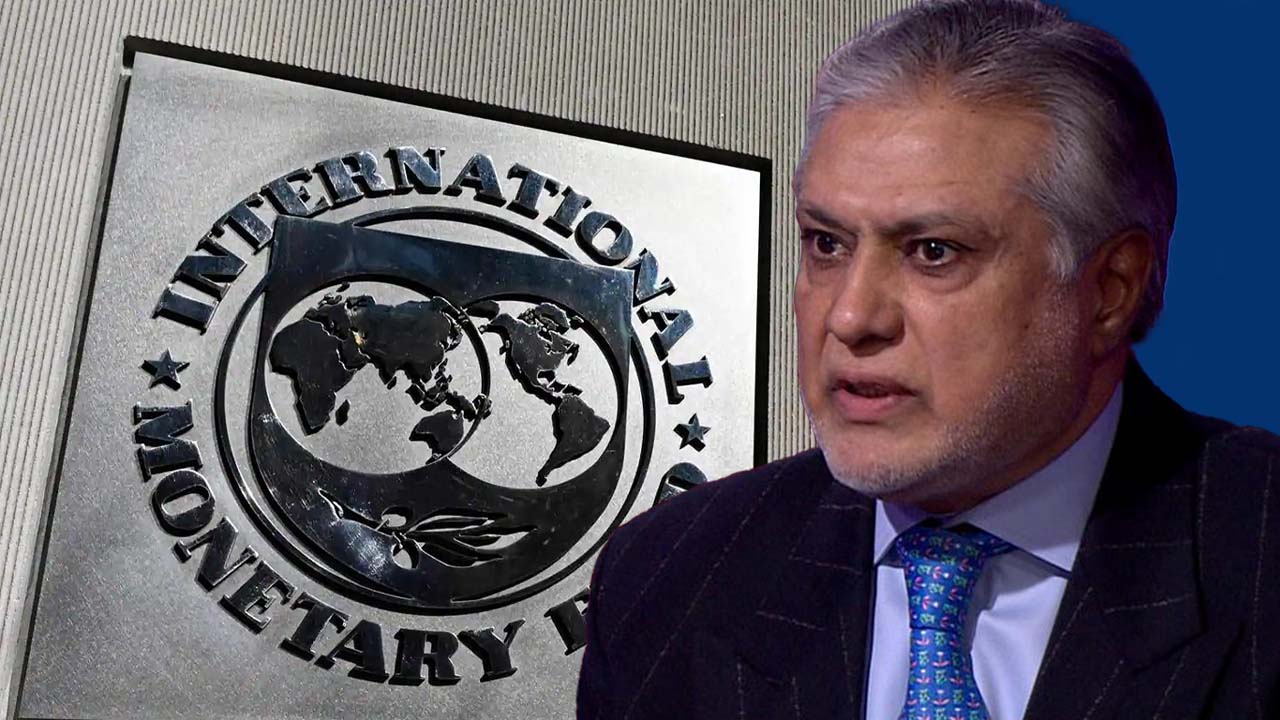
    Pakistan is committed to completing the International Monetary Fund (IMF) programme while meeting external debt repayments on time, Finance Minister Ishaq Dar said on Tuesday during a meeting with the ambassador of its top bilateral lender, China.

    The country is in desperate need of external financing as the IMF’s review for the disbursement of its next tranche of funding has been on hold since September, according to Reuters.

    Ishaq Dar, the finance minister, stated last week on local television that the IMF was “behaving abnormally” by not finishing the ninth review even though all targets had been met.

    “The Finance Minister … apprised the Chinese Ambassador that the Government remains committed to completing the IMF program while meeting all external debt repayments on time,” the finance ministry said in a statement.

    The IMF programme is “back on track,” according to a separate statement released by the finance ministry on Tuesday, and preparations for the ninth review were well underway.

    An Extended Fund Facility (EFF) bailout for Pakistan in 2019 included a $6 billion bailout that was later increased by $1 billion.

    Dar said that Pakistan’s government has a “realistic plan” for handling the costs associated with rehabilitating the areas damaged by devastating flooding a few months ago during his meeting with the Chinese Ambassador. Official estimates place the cost of flood damage at $40 billion.

    Pakistan is dealing with a balance of payments issue and a growing current account deficit. Dar announced last week that a $3 billion loan from a friendly nation will be used to bolster Pakistan’s foreign reserves, which have fallen to $7.5 billion.

    According to the finance ministry, the government has implemented austerity measures to cut non-essential spending and has prioritised energy conservation to lower its import expenses.

  • No food for chickens: Massive increase in chicken, egg prices expected

    No food for chickens: Massive increase in chicken, egg prices expected

    Due to the widespread shortage of poultry feed, poultry farmers and traders are worried that the supply of chicken and eggs may run out in a month.

    At an urgent press conference held at the Karachi Press Club, Chaudhry Ashraf, the central chairman of the Pakistan Poultry Association, former chairman Ghulam Khaliq, Sindh-Balochistan zone chairman Saleem Baloch, and others expressed their grave concerns regarding the non-clearance of soybean shipments that had been stopped at Karachi Port.

    According to Express Tribune, soybean and canola appear to be the two main ingredients in poultry feed, according to poultry owners. More than six lakh tonnes of soybeans that have not been authorised for export are currently at the port.

    Additionally, in conjunction with the purchase of soybeans, poultry owners have paid importers more than $44 million. In order to restart the feed supply to the nation’s poultry sector, the ministry of food security and other ministries should right away resolve their conflict with soybean importers and issue orders for the clearance of soybeans at the port.

    Presently, poultry owners in Pakistan generate 3.5 million eggs each day from 3.8 million chickens. If the problem of feed supply for the poultry industry is not immediately addressed, there is a potential that the supply of chicken and eggs may stop within a month.

    More than 50 per cent of the poultry business is currently closed. If this sector is entirely shut down, which would result in the loss of nearly 2.5 million jobs, there will be a greater risk of food insecurity in the country.

  • Auto financing in Pakistan declines for fourth straight month due to high interest rates

    Auto financing in Pakistan declines for fourth straight month due to high interest rates

    The number of outstanding auto loans declined for the fourth consecutive month at the end of October, according to data issued by the State Bank of Pakistan (SBP).

    At the end of November, the total amount of outstanding vehicle loan was Rs345 billion, which is Rs0.1 billion less than the Rs346 billion number for October 2021. The most recent amount owed on auto loans is 1.4 percentage points less than it was in September 2022.

    Buyers have been compelled to put off making purchases due to a sharp rise in car prices, skyrocketing interest rates, different SBP efforts to slow down auto financing, factory closures of several assemblers in recent months due to import restrictions, and delays in the delivery of vehicles.

    However, a few new automakers have recently begun to provide immediate delivery of cars in exchange for full payment following the port clearance of their imported auto kits. However, their sales may still be hampered by high pricing and a sharp rise in the benchmark interest rate last month.

    The SBP is forecasting another 100 basis point increase in the key interest rate to 16 per cent, which will cause auto demand to remain subpar for at least the coming year.

    Consumers must now make larger monthly payments on auto loans because the benchmark interest rate has increased from 7.25 per cent to 16 per cent since September 2021.

    The average 40 per cent increase in car costs since September 2021 is one of the key causes of buyer concerns.

    For instance, the price of a Honda City manual is now Rs3.77 million as opposed to Rs2.59 million in September 2021.

    In order to prevent the sale of expensive vehicles, auto loans were limited to a maximum of Rs3 million, and the length of time it took to repay them was also shortened.

  • Apple is reportedly considering transferring some of its iPad production to India

    Apple is reportedly considering transferring some of its iPad production to India

    According to two sources close to the Indian government, India is looking into ways to transfer some of Apple’s iPad production from China. The tech behemoth is reportedly in constant communication with authorities. Although no specific plans have been established, if the initiative is successful, Apple’s presence in the country would expand.

    Apple said earlier this year that it has started producing the premium iPhone 14 in southern India. For a number of years, the tech giant has produced the country’s older iPhone models.

    Following nationwide protests that have taken place over the past two weeks in response to Beijing’s tough zero-Covid policy, the tech giant has announced plans to diversify more of its supply chain away from China. Apple issued a warning in early November that iPhone shipments will be delayed as a result of the Chinese government’s lockdowns, and experts have been lowering their expectations for the important holiday shopping period.

    Over the weekend, The Wall Street Journal claimed that Apple is aggressively exploring to move production out of China to other Asian nations, including Vietnam and India.

    Even so, sources warn that similar ambitions in India could be slowed down by a shortage of highly skilled workers and people with experience in creating complicated products like the iPad. The backdrop of foreign policy, with rising hostilities between China and India, is particularly unhelpful. Due to recent territorial disputes between the two nations, the military presence near the China-India border has increased.

    10 per cent of Apple iPhones, according to Gene Munster of Loop Ventures, are produced in India, but he anticipates a gradual increase in output.

    “I think in five years, 35 per cent will be manufactured in India,” added Munster. “I think Apple will add iPhone production to other countries outside of India and China in the next five years. Perhaps Vietnam, Malaysia and the USA.” In a note to clients, Piper Jaffray’s Harsh Kumar wrote: “While Apple has made efforts to move production out of China, in our opinion, India still accounts for less than 5.”